
The Famous Chicamocha Canyon In Santander

Editor
Updated on
Are you dreaming of discovering a natural wonder of Colombia? One of the seven wonders of the world, according to the Colombians 😉
Let me introduce you to the majestic Chicamocha Canyon that I recently explored, a fabulous landscape inhabited by the soul of a charming culture.
I’ll tell you how to choose your steps based on your tastes and your hiking abilities, and plenty of other tips to fully enjoy your adventure in a unique natural setting.
We constantly explore Colombia to find what’s truly worth it — authentic places, stays and experiences, far from tourist traps. Then we build your ideal trip in a logical and optimized way, so you make the most of it, without rushing everywhere, truly connected to the country.
→ About us | ⭐⭐⭐⭐⭐ + 185 reviews | → Our service

- In Colombia since 2015
- + 1025 tested experiences
- + de 145 local partners
- + 335 trips created


Explore Chicamocha Canyon
Discover the best places and book with our local partners
GENERAL INFORMATION
A giant of stone shaped by time.
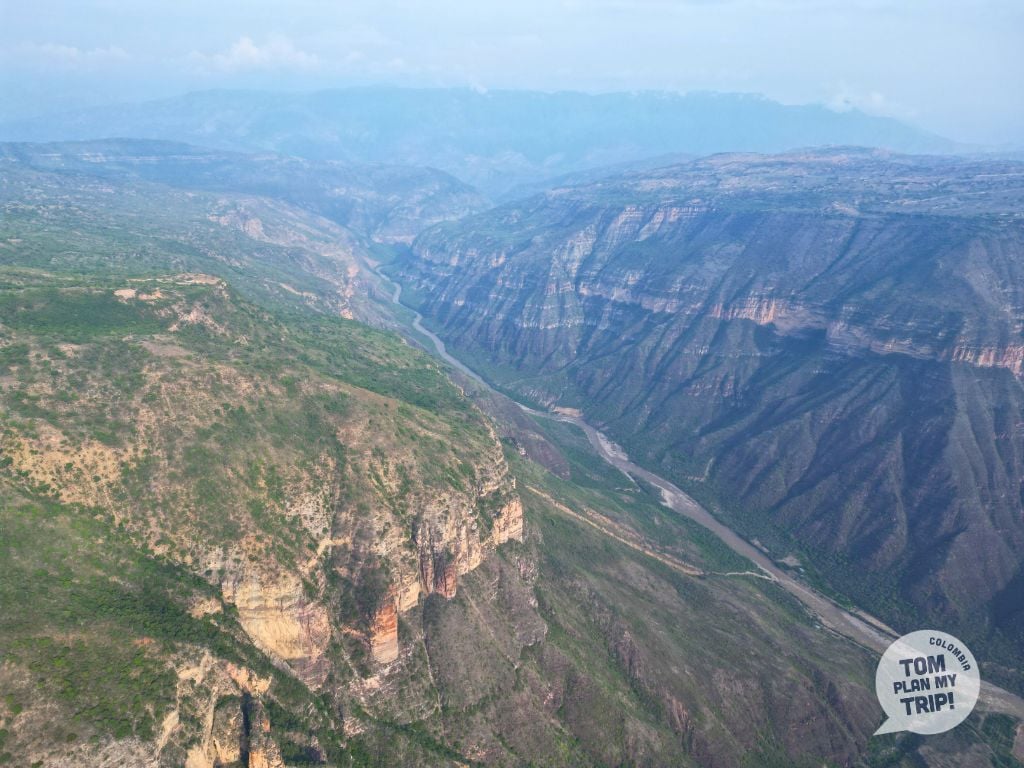
Located in the eastern cordillera of Colombia, the Chicamocha Canyon crosses the departments of Boyacá and Santander. It is 227 km long and has a maximum depth of 2000 meters, making it the second largest canyon in the world.
It results from the erosion work of the Chicamocha river, which originates in the foothills of the Sierra Nevada del Cocuy and joins the Suarez river south of Zapatoca at a geographical point called Las Juntas, to form the Sogamoso river.
The Chicamocha canyon as a whole is therefore the convergence of two canyons, Chicamocha and Suarez.
Its formation dates back to about 46 million years ago, when the region was covered by an interior sea with abundant marine life, as evidenced by numerous marine fossils such as ammonites, which are still found.
It is also a zone of very significant tectonic activity, generating frequent earthquakes that are barely perceptible due to the depth of the “seismic nest.”
The history of the canyon is intimately linked to that of the Guane people, who occupied the territory covered by the current municipalities of Los Santos, Jordán, Cabrera, Barichara, and Curití, as demonstrated by the discoveries of pictograms in rock shelters and the remains of pottery and textiles.
To trade with neighboring peoples, these agricultural people built an important network of paths paved with large stones through the canyon, used by the Spanish settlers during the Conquista and then referred to as “caminos reales”.
During the first half of the 19th century, a German engineer and merchant, Geo Von Lengerke, settled in Santander to trade goods. He then had the idea to restore the ancient Guane paths to facilitate trade between the villages of the canyon.
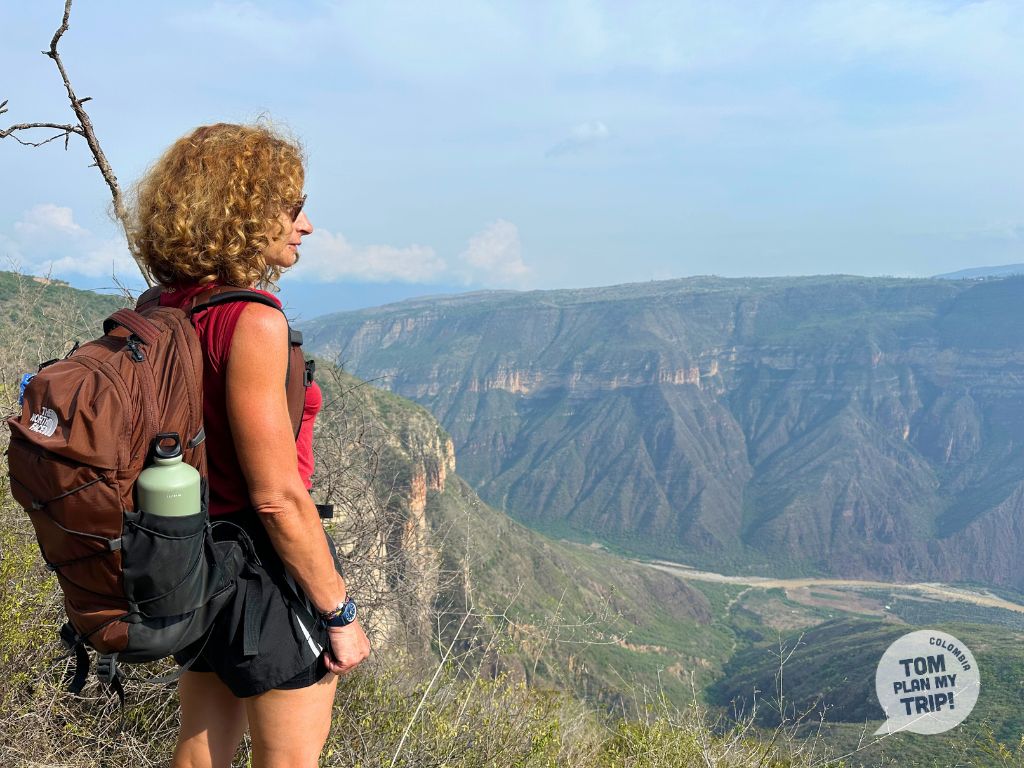
With striking beauty and contrasting landscapes between arid land and lush vegetation, the Chicamocha Canyon is a paradise for hiking enthusiasts. It is home to rich fauna and flora with endemic species, such as the Barigón tree.
It is also a place rich in history where the spirit of the Guane people and the heritage of the Spanish settlers come together in a harmonious and beautifully preserved local architecture. The tapia or bahareque houses and the cobbled streets seem to blend into the multiple colors of the canyon.
The inhabitants reflect these amazing landscapes, authentic and proud at first glance, and deeply open and warm when you approach them. They are attached to a very lively ancestral craftsmanship that they love to introduce to curious travelers.
Forests, rivers, and waterfalls make the canyon a wonderful playground for adventurers who can enjoy rafting, mountain biking, paragliding, bungee jumping, and other extreme sports in incredible locations.
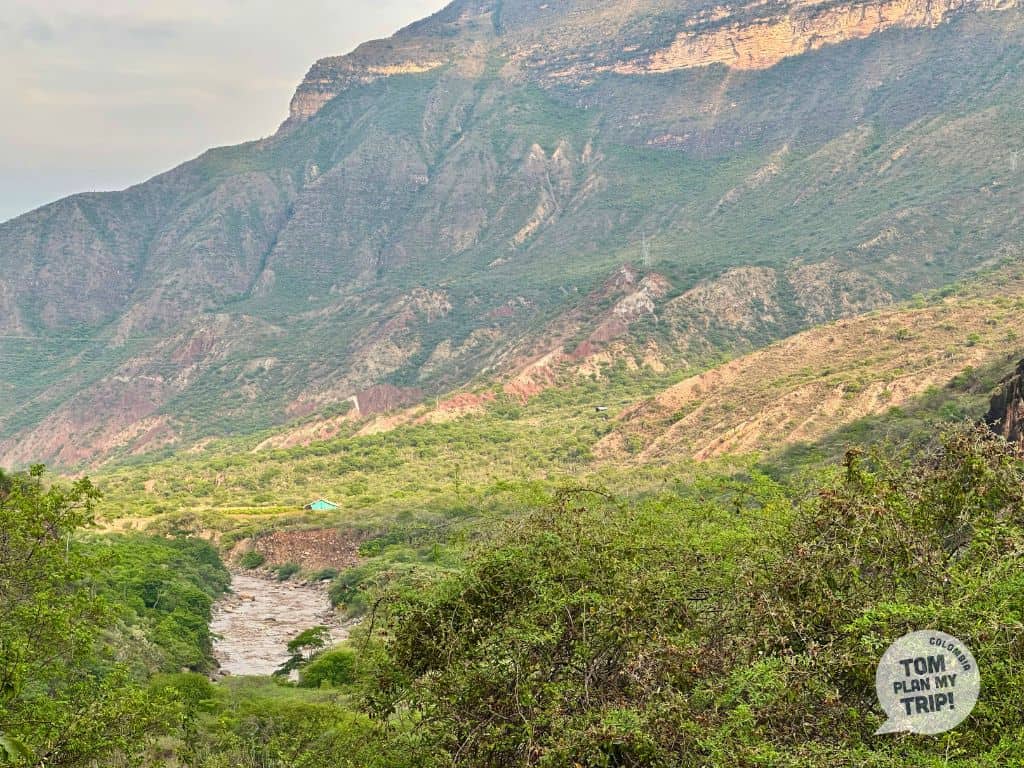
The Chicamocha Canyon has a very variable climate due to the large variations in altitude (400 to 2200 m above sea level). At the bottom, the temperature easily climbs to 30°C or higher, while at higher altitudes it remains milder, around 20°C. On average, the temperature is between 22°C and 25°C, and the sky generally remains clear.
You can visit the Chicamocha Canyon at any time of the year, but I recommend coming during the rainy season (April to November) if you want to enjoy greener vegetation and suffer less from the heat – it’s more pleasant for hiking.
Regardless of the season, the sun can be intense in the middle of the day.
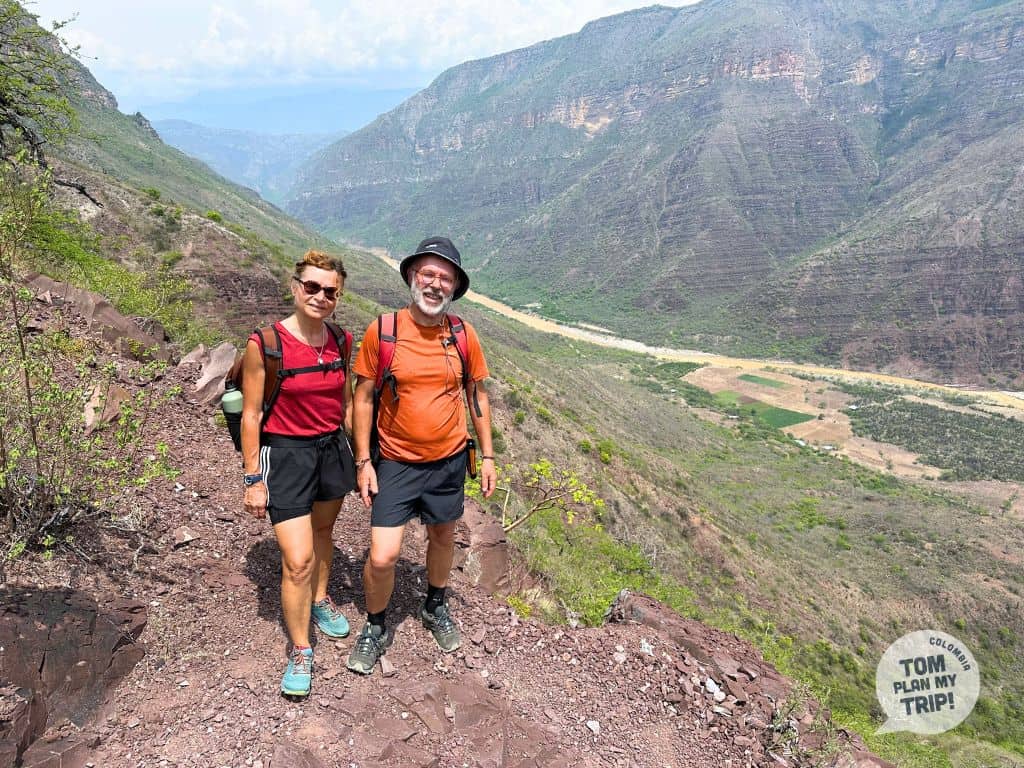
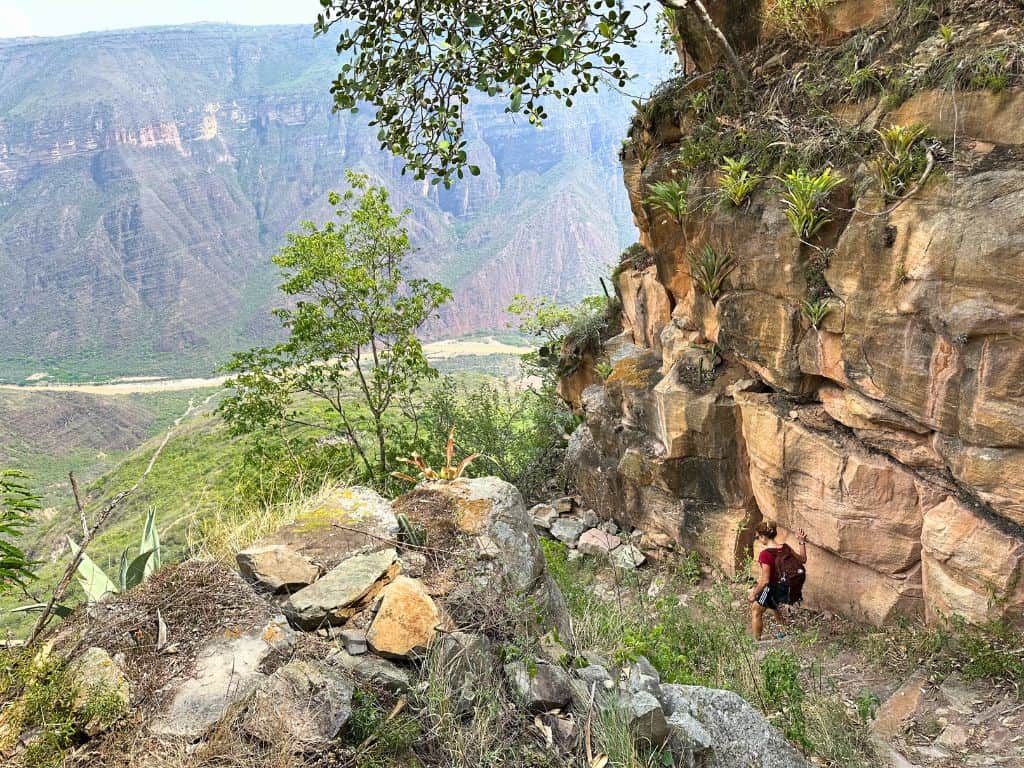
The Chicamocha Canyon can be visited on foot by mainly following the famous caminos reales or Lengerke paths. They are generally well-maintained and marked so that you can explore them without a guide.
If you’re going on a multi-day trek, you’ll find hotels to stay in the villages where you’ll make a stopover.
Depending on where you’re going, the ground signage may not be very visible, the path may get lost in the vegetation, or the route may not be indicated on the app you’re using. Get information from the locals before venturing out.
I also recommend taking a local guide if you’re not used to trekking or if you don’t speak Spanish.
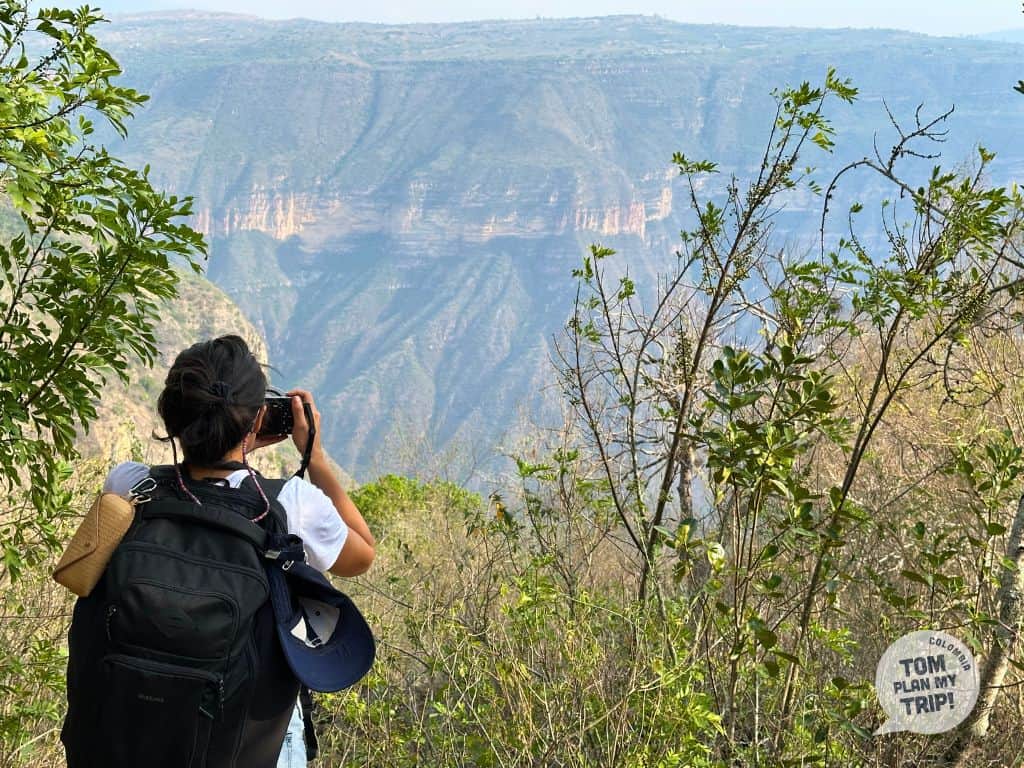
© Tomplanmytrip
Breathe, and let us take care of this beautiful adventure
Colombia is twice the size of France, with a diversity of landscapes that’ll make your head spin — and a real logistical puzzle, with roads winding through the Andes mountains.
What kind of adventure do you want to live? Is it really right for what you’re looking for? Is it safe? Is it too touristy?
Guessing and hoping you made the right call — sometimes that works. But not always.
And I won’t even get into the stressful surprises that force you to make some changes mid-trip.
Look, we’ve been doing this for years — and if you check our reviews, you’ll see we know what we’re doing. In less than an hour on a call, we figure out your ideal destinations together. We handle the rest.

© Tomplanmytrip
The Chicamocha Canyon from Barichara
A magnificent colonial village above the void.
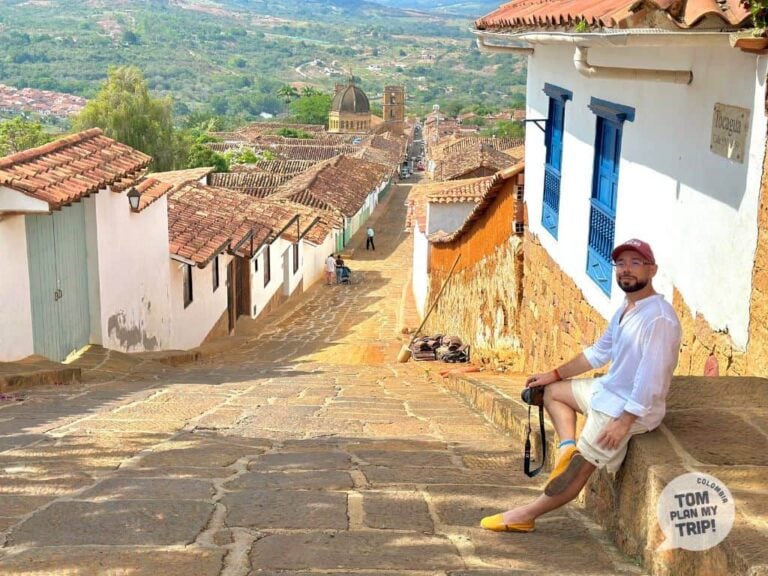
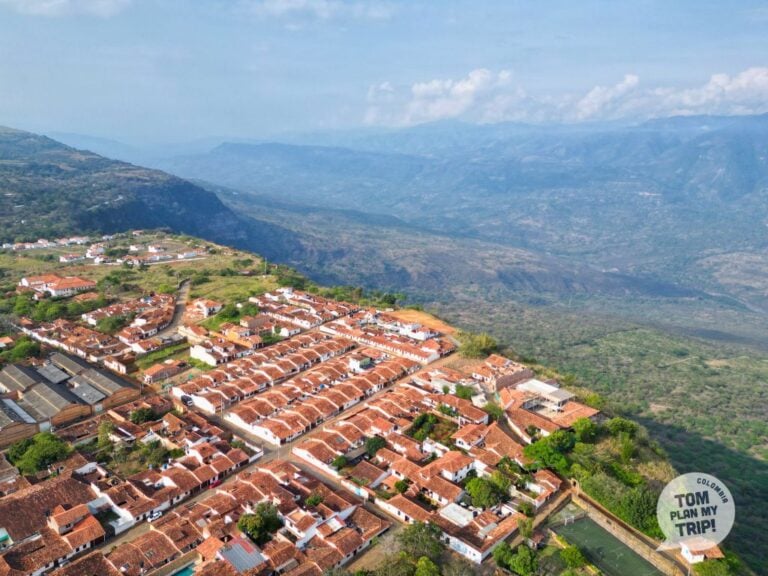
Barichara is a peaceful and picturesque village, with a superb colonial architecture perfectly preserved.
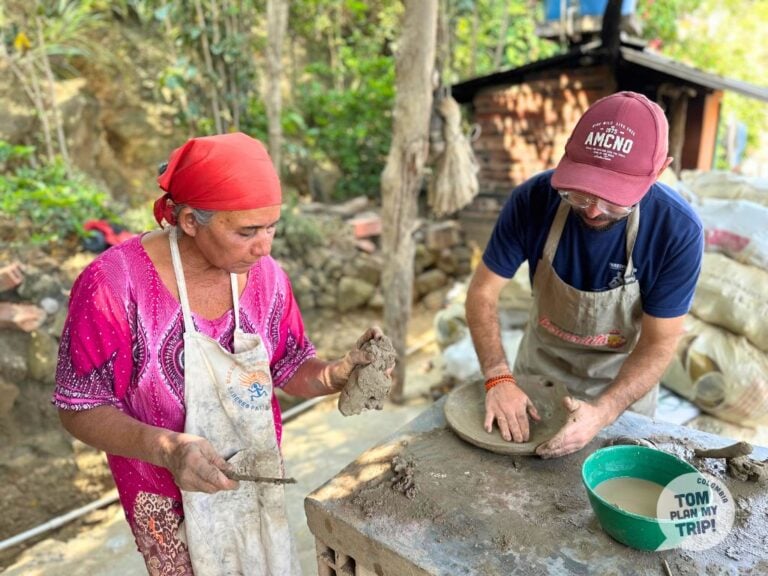
You won’t get bored there. It’s a lively place, animated by a strong tradition of craftsmanship, where you can discover workshops of pottery, weaving, paper, and basketry or even the culture of coffee and tobacco.
Its numerous cafés and restaurants serve traditional dishes from Santander, renowned for its gastronomy, but also a creative cuisine highlighting local products.
Perched on the slopes of the Suarez canyon at 1336 m altitude, Barichara offers magnificent views and unforgettable sunsets.
It is also an excellent starting point for easy treks, like the one leading to Guane, with the possibility of returning by tuktuk, bus, or taxi. If you want a bit more challenge, a trek takes you to Jordan, at the bottom of the canyon, where you can admire beautiful landscapes and incredible views.
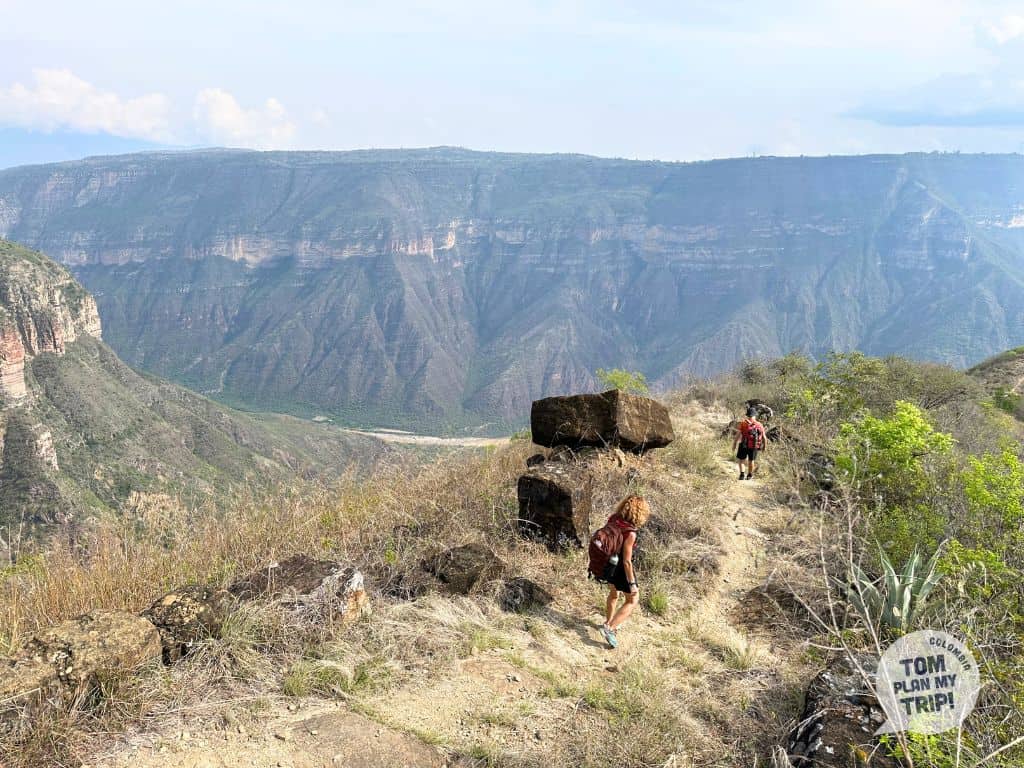
A 5.5 km route on a camino real, easy and bucolic, connects Barichara (start here) to Guane, a charming village, with stunning views of the Suárez River canyon. Allow 2 to 3 hours while strolling.
Another trek leads from Barichara to Jordan via Villanueva, but I advise you to skip the Barichara – Villanueva stage, which, in my opinion, only serves to lengthen your walking time.
From Barichara, go directly to Mirador Alto de Marta by private transport – we know a very good one – then descend to the bottom of the canyon through breathtaking landscapes and viewpoints until you reach Jordan, a ghost village. Sleep in Jordan or go back up by private transport. Plan for 4 to 5 hours of hiking and challenging conditions due to the heat.
This is not a classic stage of the canyon but an easy 7 km (2 hours) hike along a camino real through the pastures, leading from Barichara to Cabrera, an authentic village. Along the way, there are magnificent views of waterfalls and El Salto del Mico for a stunning view of the Suarez canyon.
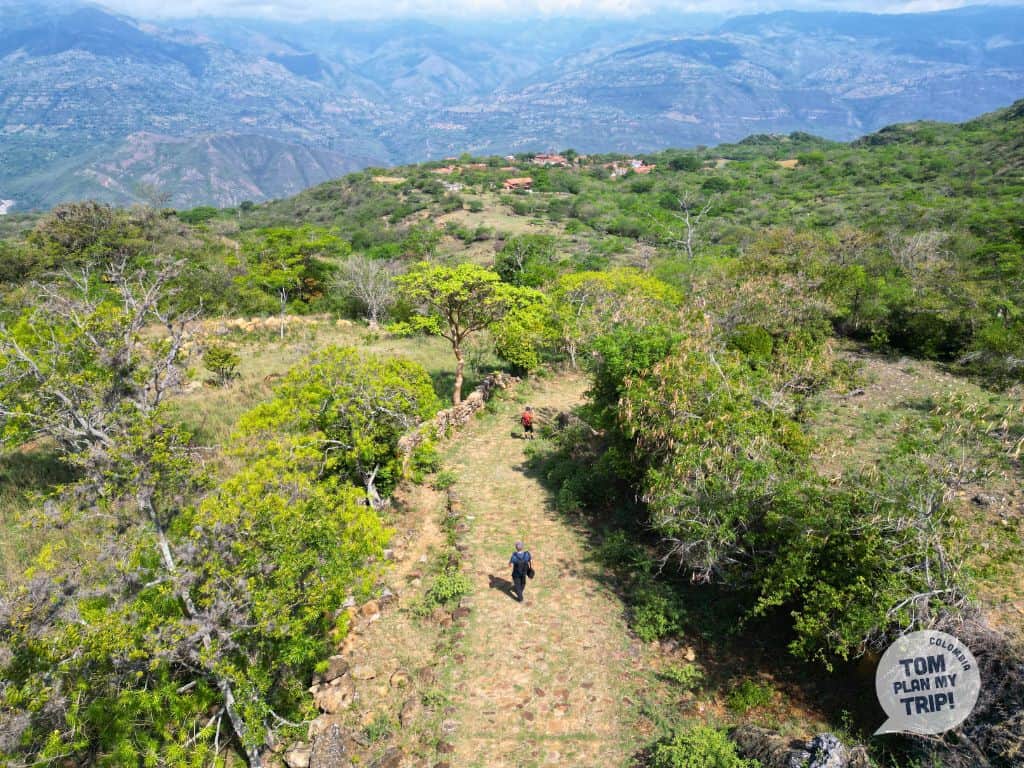
I suggest staying in the village to leave early in the morning.
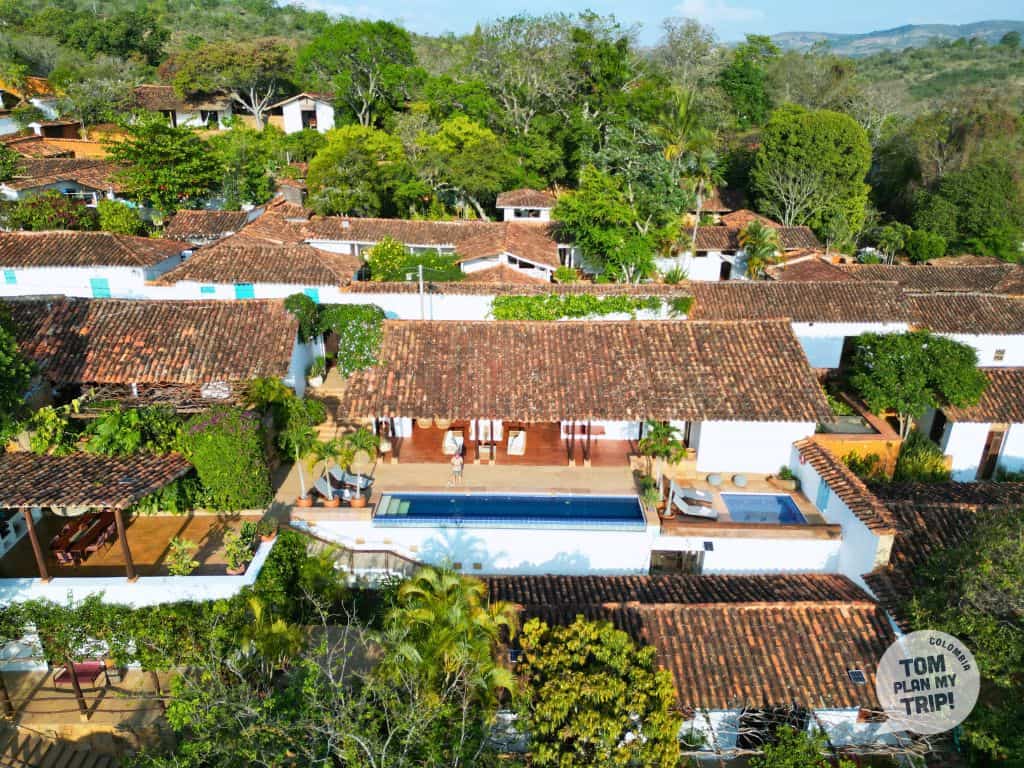
Casa Canela is the ideal option for small budgets. This traditional house, with a lovely patio and a pool, offers a cozy atmosphere. The rooms are comfortable, some with shared bathrooms. The kitchen is available in the evening.
People with an average budget can choose Masaya Collection Achiotte, near the main Parque. This peaceful building has a lovely patio with a pool. The Junior Suite, with its outdoor shower, is great. Otherwise, Casa Guatí, with its modern and bright rooms and its infinity pool, offers a stunning view of Barichara.
To treat yourself, Casa Yahri offers refined decor, spacious rooms, and a small pool to cool off. The atmosphere is intimate and the service impeccable. A true haven of peace, the elegant Casa Barichara Boutique, with its fantastic view and pool surrounded by orange trees, is a great alternative.
A direct bus from the company Cotrasangil connects Bucaramanga to Barichara (120 km – 4 hours).
If you are coming from Bogota, Santa Marta, Bucaramanga, or Tunja, you can take a bus to San Gil.
San Gil has a small airport, Los Pozos, about twenty minutes by car from downtown. The airline Satena has just opened a Medellín – San Gil route, and Nativ Air also charters a small 6-seat plane from Bogota, the flight lasts 1 hour.
Arriving in San Gil, head to the Terminalito in the center of San Gil to take a mini bus that will take you to Barichara in 45 minutes. There is a departure every hour.
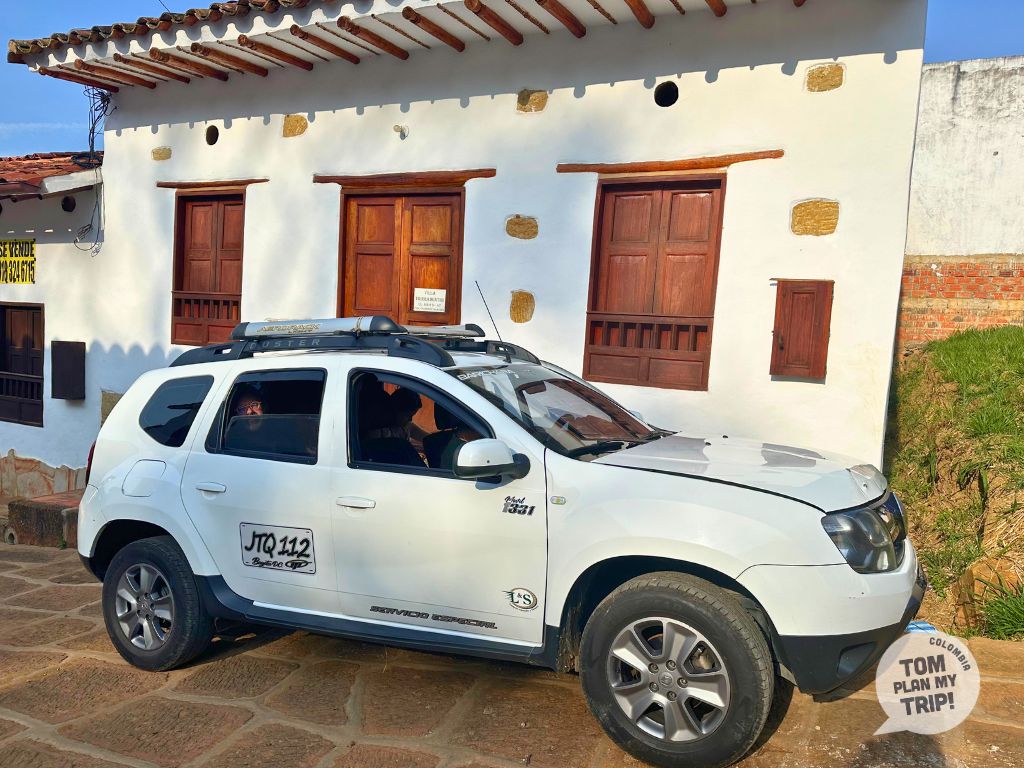
We also know excellent private transportation – the guarantee of a more comfortable trip and attractive prices when traveling with others.
© Tomplanmytrip
The Chicamocha Canyon from Jordan
Get lost at the bottom of the canyon.
In Jordan, you will be at the very bottom of the impressive Chicamocha canyon! I found the experience almost unreal. Imagine a tiny village of 54 inhabitants, forgotten on the edge of a mythical river. The heat, deserted streets, and closed houses, in short, the perfect and mysterious atmosphere of a true ghost village where time has stopped.
You can admire the superb and famous Lengerke Bridge that spans the river and is used by the Camino Real that climbs to Los Santos. One of the first bridges in Colombia (1864) with a key role in commercial exchanges and an emblematic place during the war of independence.
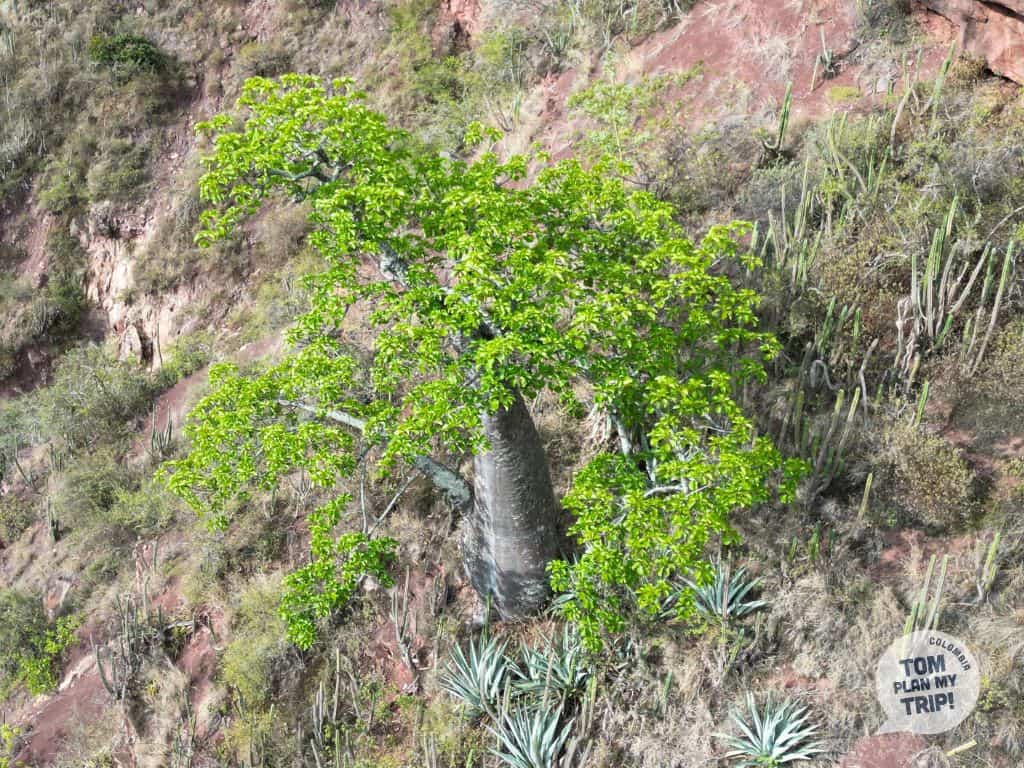
You will cross an amazing vegetation of dry tropical forest, agaves, and cacti, including the funny Englishman’s head cactus or the Ceiba Barrigona (Barigón), an endemic tree of this ecosystem with a curious swollen trunk at the base.
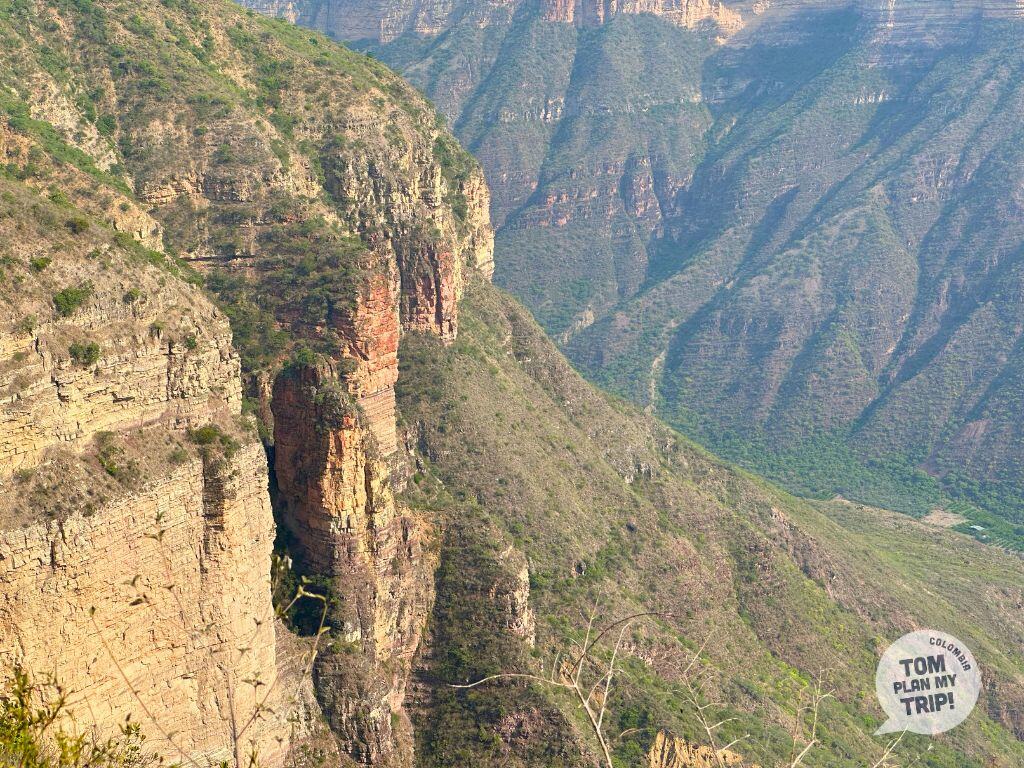
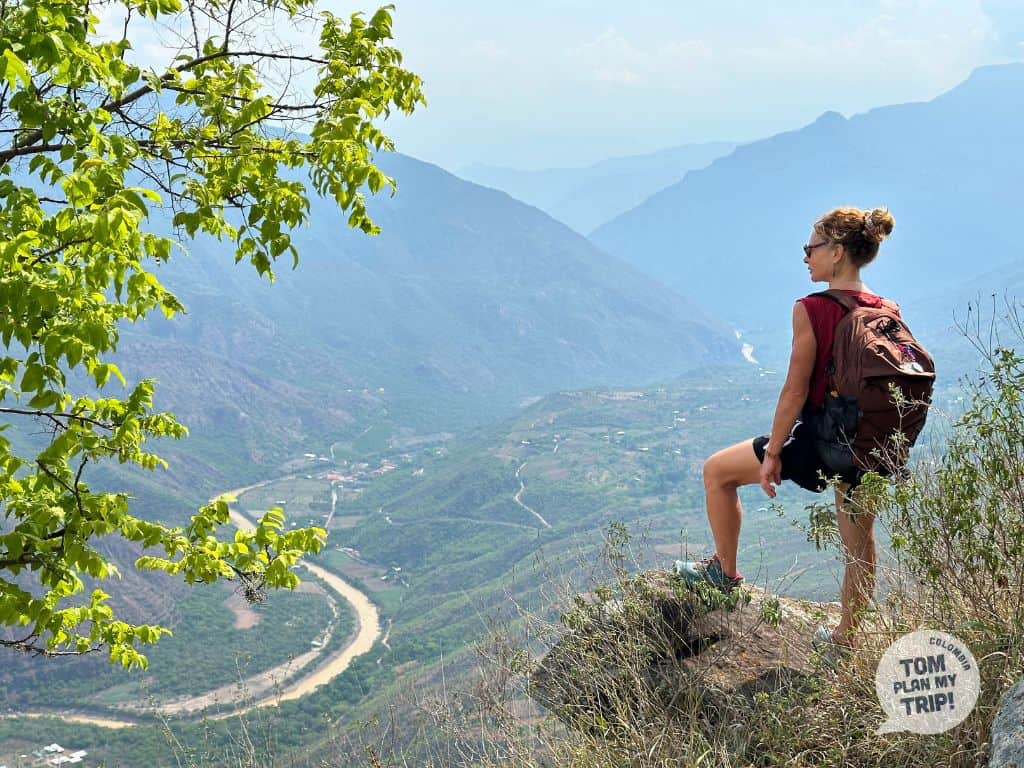
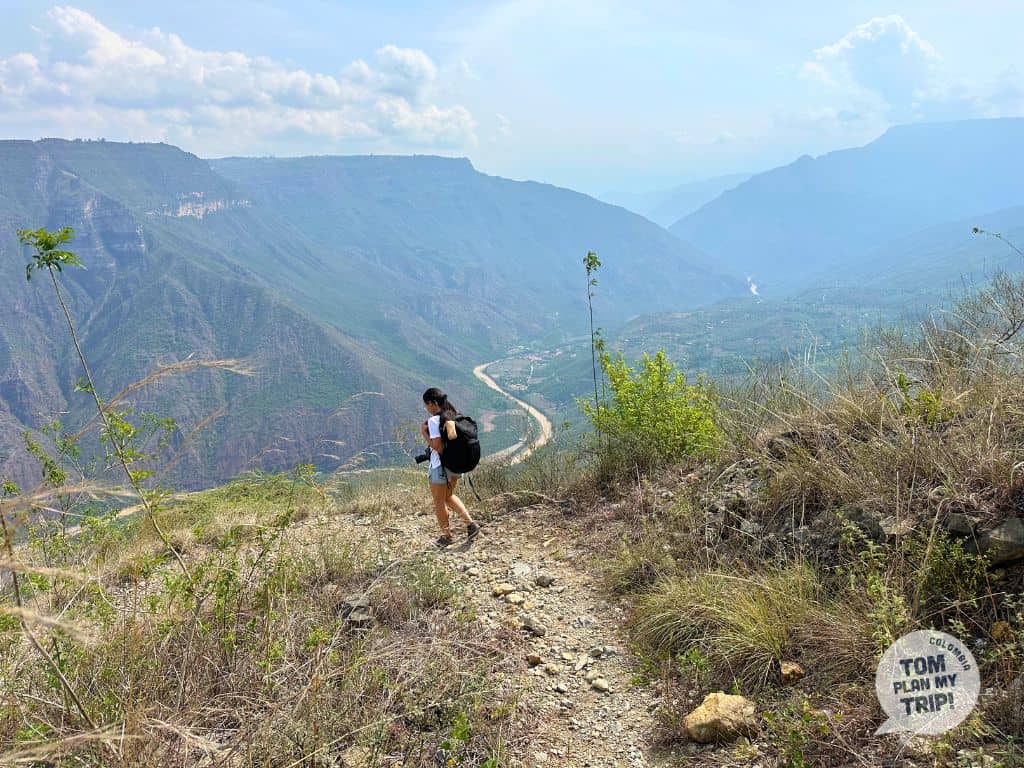
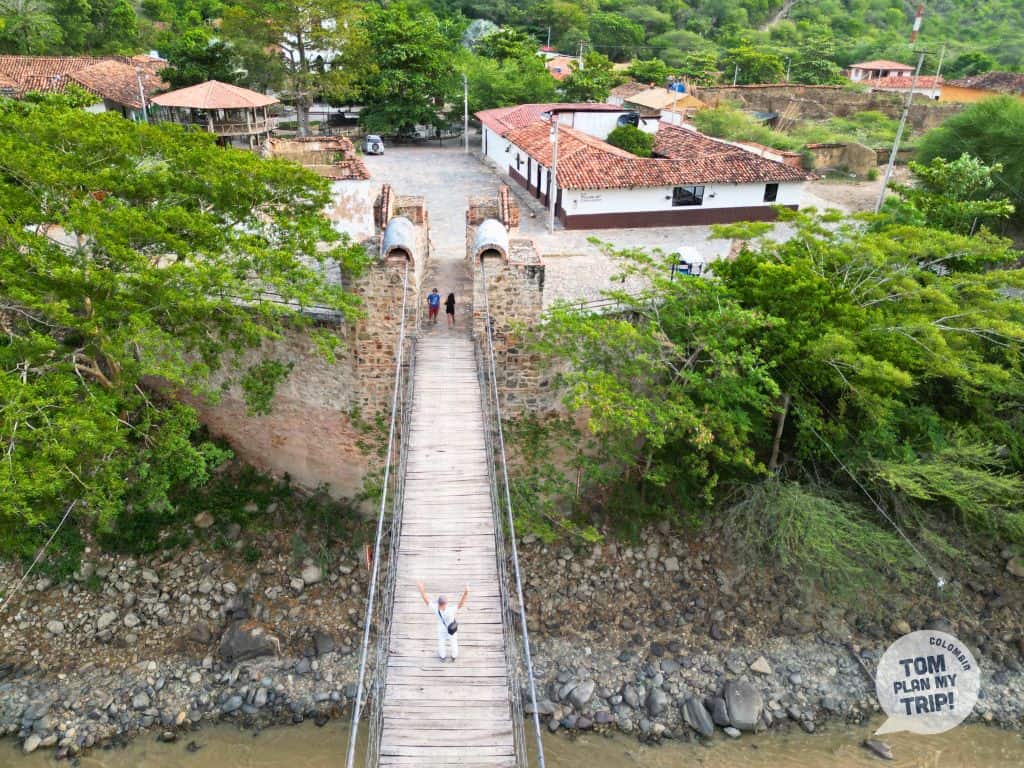
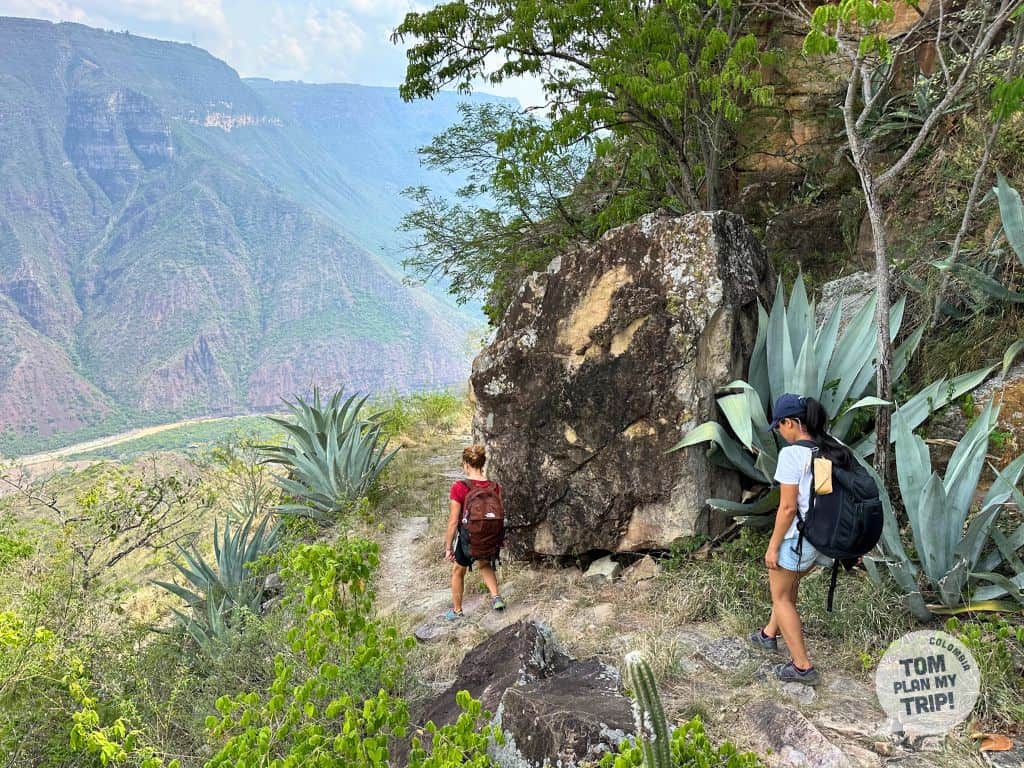
The Jordan – Villanueva stage offers amazing views of the canyon, but it’s a tough climb! (1200 m elevation gain – total length 16 kilometers). Plan for 6 to 10 hours of hiking if you want to reach Rancho Alegre or the main park of Villanueva. The path is sometimes a bit lacking in maintenance. Perfect for seasoned hikers.
From Jordan, you can climb to Los Santos. 1000 m elevation gain over 5.5 kilometers, in short, a wall 😉 Plan for 4 hours of ascent. Along the way, you’ll find shelters to catch your breath and admire the fantastic panorama.
Finally, another stage leads from Jordan to Aratoca. It’s a challenging hike – 1300 m of elevation gain over 16 kilometers, and the path is not always well marked. In fact, you’re climbing the whole time! On the other hand, I met some friendly tobacco farmers on their plantation, a super cool moment, and passed through beautiful, typical canyon vegetation.
In the village, right near the bridge of Lengerke, you will find a small, unpretentious inn in a traditional house with a patio, La Posada del Caminante. There are dormitories. Quite suitable for an overnight stop.
You can also stay and eat at Los Trinitarios, a modest hotel 500 m from the village. The atmosphere is relaxed, and the rooms are simple but clean. However, it is super hot, and you will sleep under a tin roof. I really enjoyed the pool!
For more comfort, 25 minutes on foot from Jordan, the Tamarindo ecolodge offers accommodation in a perched cabin or a fully equipped tent, in the heart of nature with natural pools. An oasis in the middle of the Chicamocha canyon.
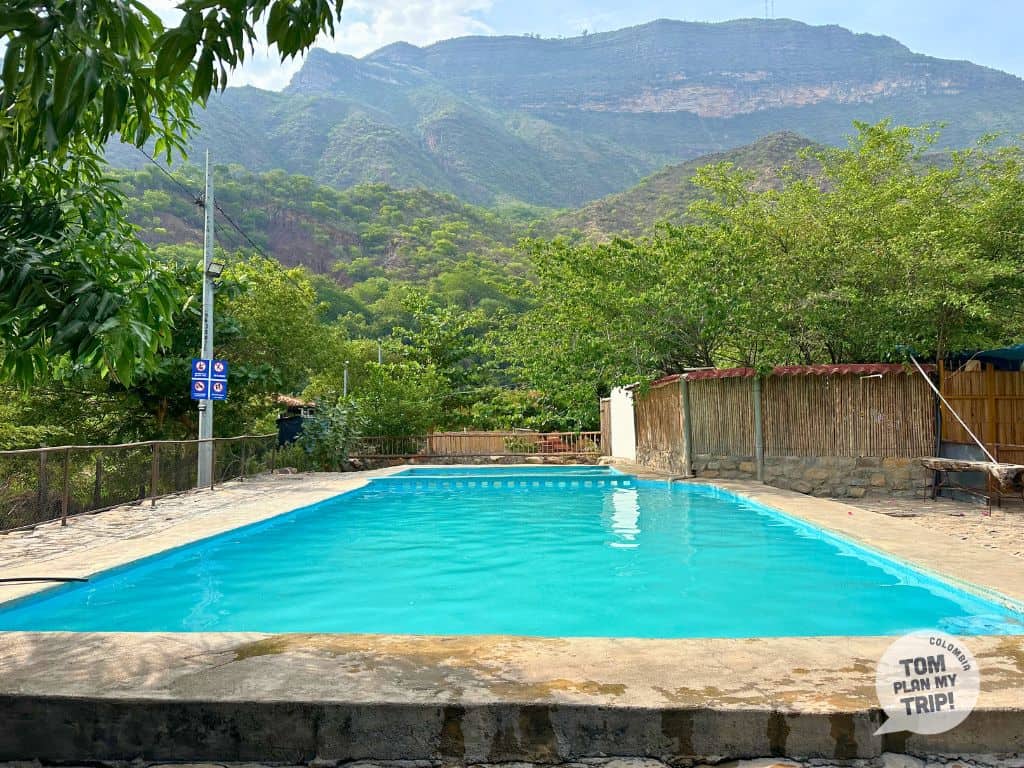
People mainly come to Jordan on foot. Jordan is mostly a stop on the trek Barichara – Los Santos.
Otherwise, every day a bus is supposed to make the Jordan – Aratoca trip.
You can also use private transportation services.
© Tomplanmytrip
The Chicamocha Canyon from Los Santos
A mythical place that is worth it.
Los Santos is a municipality at an altitude of 1300 m, offering incredible views of the canyon from La Mesa de Los Santos, the plateau on which the city is situated.
This mountainous area is popular with the residents of Bucaramanga who come here for vacation, and it is home to a beautiful waterfall, El Salto del Duende.
It is also on the Mesa de Los Santos that you will find the cable car station that allows you to cross the canyon in 20 minutes from Panachi Park, about 2 hours from Barichara on the road coming from Bucaramanga. The views are breathtaking.
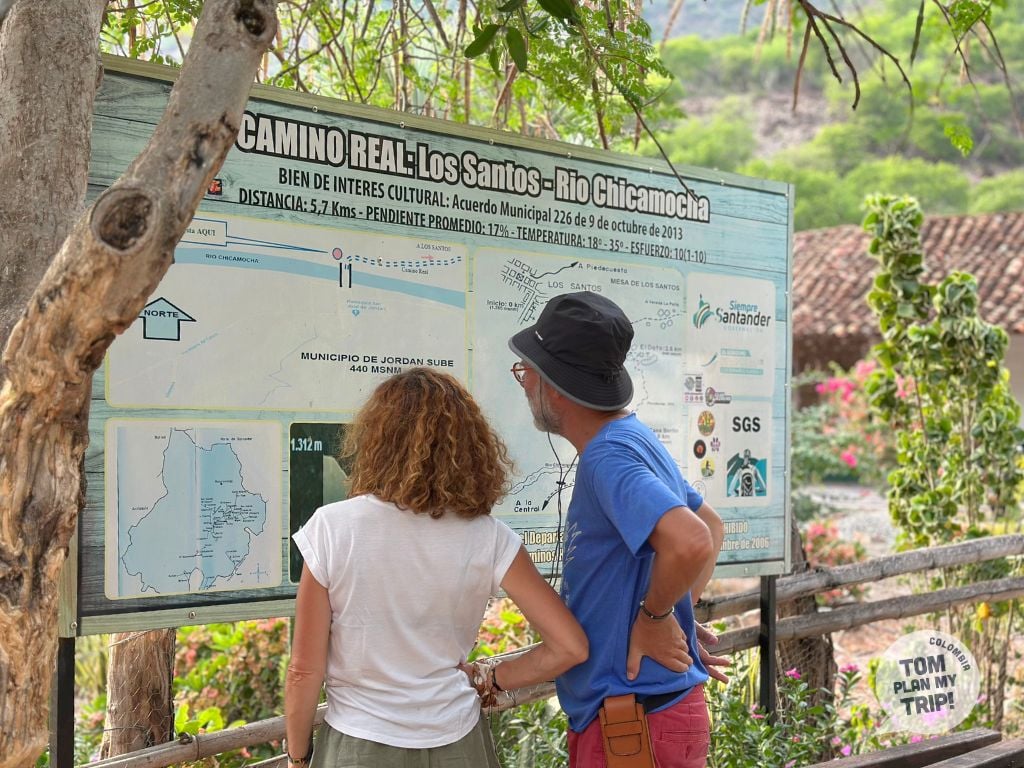
From Los Santos, you can reach Jordan at the bottom of the canyon by taking a camino real. The path is cool, it goes downhill all the way (1000 m in 5.5 kilometers) and you will be treated to wonderful views along the way.
However, once in Jordan, you will have the choice between going back up to Los Santos, which will be much less easy, or continuing towards Aratoca or Villanueva. In both cases, you will also be treated to a nice climb: 16 kilometers with an elevation gain of 1200 to 1300 m, whether you choose one or the other.
If you don’t feel like sweating, you can always arrange for a private transport to pick you up at Jordan.
In Los Santos, you’ll find several glamping sites that look nice. This is the case with Chicamocha Vibes where everything is designed for your well-being. A lovely, comfortable cabin with an incredible view of the canyon, an outdoor jacuzzi, and a beautiful natural setting, it’s the perfect place to relax. The service is excellent and the atmosphere is peaceful.
The cabins at Refugio La Roca with their tapia walls and perfectly integrated into nature, are another beautiful option. A splendid location on the edge of a cliff with an incredible view, delicious breakfasts, lovely, comfortable rooms, and a more economical dormitory. The glamping is just steps away from beautiful climbing routes.
You can also stay at a very well-known coffee finca. The traditional farm is beautiful, the tour of the coffee operation is high quality, and the cuisine is excellent. However, the reviews are quite controversial regarding the hospitality and organization.
To get to Los Santos, if you are coming from San Gil, you can take the Panachi cable car and cross the canyon (20 minutes).
You can also leave by bus from Piedecuesta, a town located 42 kilometers north of Los Santos. There is a departure every hour.
© Tomplanmytrip
The Chicamocha Canyon from Zapatoca
A peaceful village with a view of the junta.
Zapatoca is a peaceful small town at 1773 m altitude, little known to tourists. A few picturesque streets and colonial houses, a large central square with a beautiful church.
Climb the stairs leading to the Campo Santo for a panoramic view of the village; you will find the tomb of Lengerke there. Nearby, the Mirador de Los Yariguíes offers a breathtaking view of the Serranía de los Yariguíes, a national park ideal for hikers.
For an exceptional view of the canyon, walk to the Mirador Guane (10 km round trip) – clouds can sometimes obstruct the view. Otherwise, take a tuktuk to get there faster when the sky is clear.
The Zapatoca viewpoint, accessible by taxi, will offer you a spectacular view of Las Juntas, where the Chicamocha and Suarez canyons meet and form the Sogamoso – perfect for understanding the geography of the area.
Finally, in town, a very beautiful pre-Columbian museum displays superb pieces from the 7 local cultures, including the Guane.
From Bucaramanga, a tour will take you to San Vincente de Chuchuri by car (2h30) where you will spend the night. In the morning, a vehicle will take you to the entrance of the national park of Serranía de los Yariguíes. A 6-7h walk (17 km) through the rainforest, before arriving at Zapatoca. The next day a vehicle will take you to the village of La Fuente from where you will leave on foot for Guane (6-7h / 13 km), a picturesque village in the Suarez canyon, before heading back up to Barichara.
Just steps from the main park, Casa Palosanto is a beautiful colonial house full of charm. Comfortable rooms, a large and pretty garden, elegant decor, and a calm atmosphere. The hosts are welcoming, the service attentive, and the breakfast delicious, all at a reasonable price.
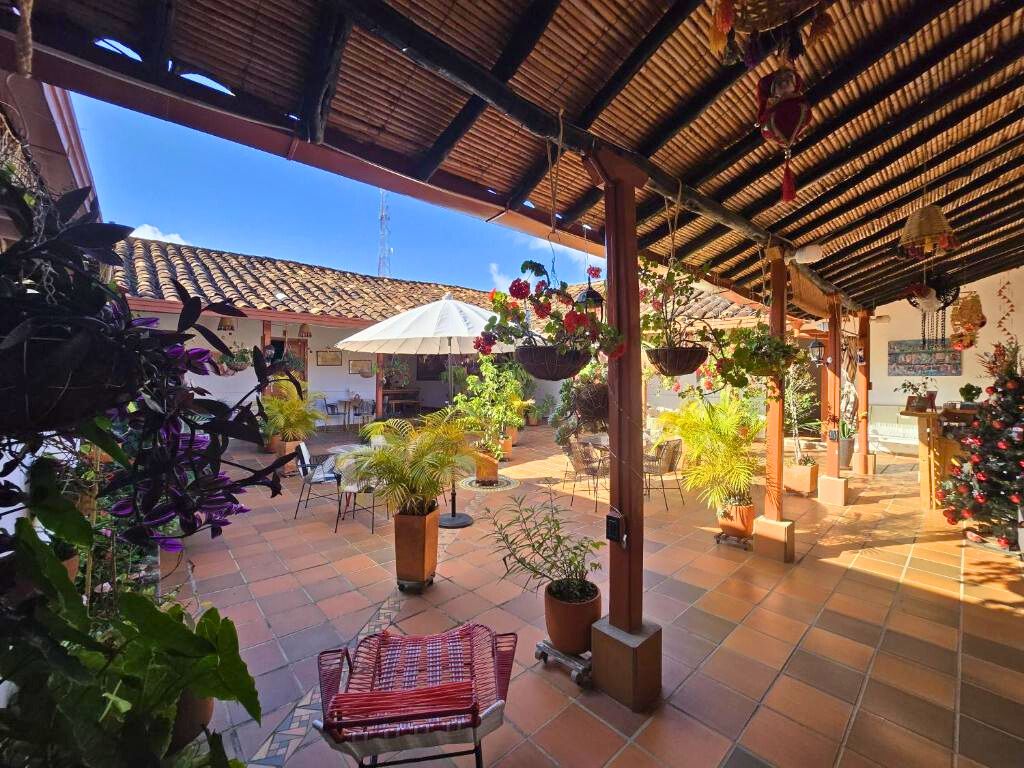
La Casona, located on a street in the center, is a traditional house with a pretty flowered patio, decorated with handcrafted items. Its rooms (double to quadruple) are simple but comfortable and spotless. The breakfast is delicious, and Lucia, the host, is always ready to share good advice. Warm and family-friendly atmosphere, excellent value for money.
Zapatoca is located 70 kilometers south of Bucaramanga. From the capital of Santander, you can take a private transport or a bus, there are several departures per day. Expect a 2h30 journey.
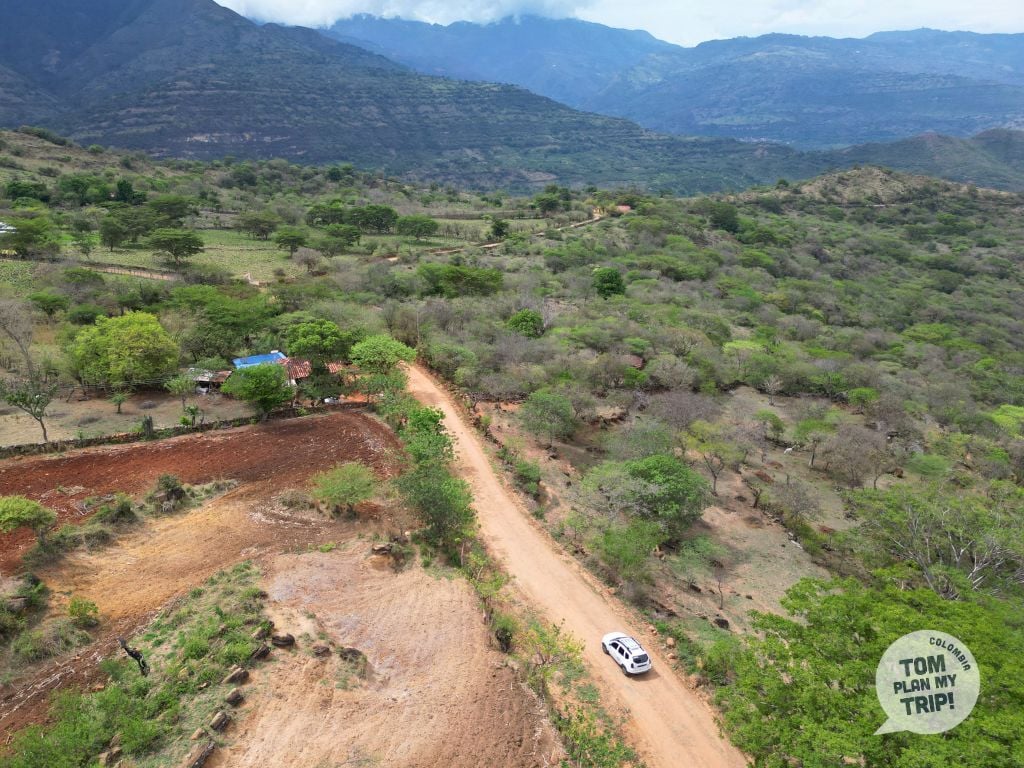
If you are coming from Barichara, on the other side of the Suarez canyon, you will need to take private transport to cover the approximately 60 kilometers that separate the two villages. The road goes down to the bottom of the canyon before going back up, you will pass through fantastic landscapes. However, it is in poor condition, expect a 3h30 chaotic journey.
Extreme Sports in the Chicamocha Canyon
A perfect setting for adrenaline lovers.
100 km south of Bucaramanga, San Gil is renowned for its rivers of varying difficulties, perfect for rafting in stunning landscapes, with experienced instructors.
Beginners and families will enjoy the waters of the Rio Fonce (classes 2/3 – 9 km)- It takes 1 to 2 hours to descend, depending on the tour and water level.
If you are more adventurous, you can tackle the rushing waters of the Rio Suarez (classes 4/5 – 15 km) – 5 hours total with 1.5h to 3h on the river depending on the water level.
You can also venture on the Rio Chicamocha at the bottom of one of the world’s most profound canyons, on class 3/4+ rapids, surrounded by fabulous landscapes and passing through lost villages. A first tour will take you from Puente Pescadero to Jordan (15 km – 7 hours including 2-3 h on the water), and a second will take you from Puente Pescadero to Las Juntas (25 km – 9 hours including 4-5h on the water).
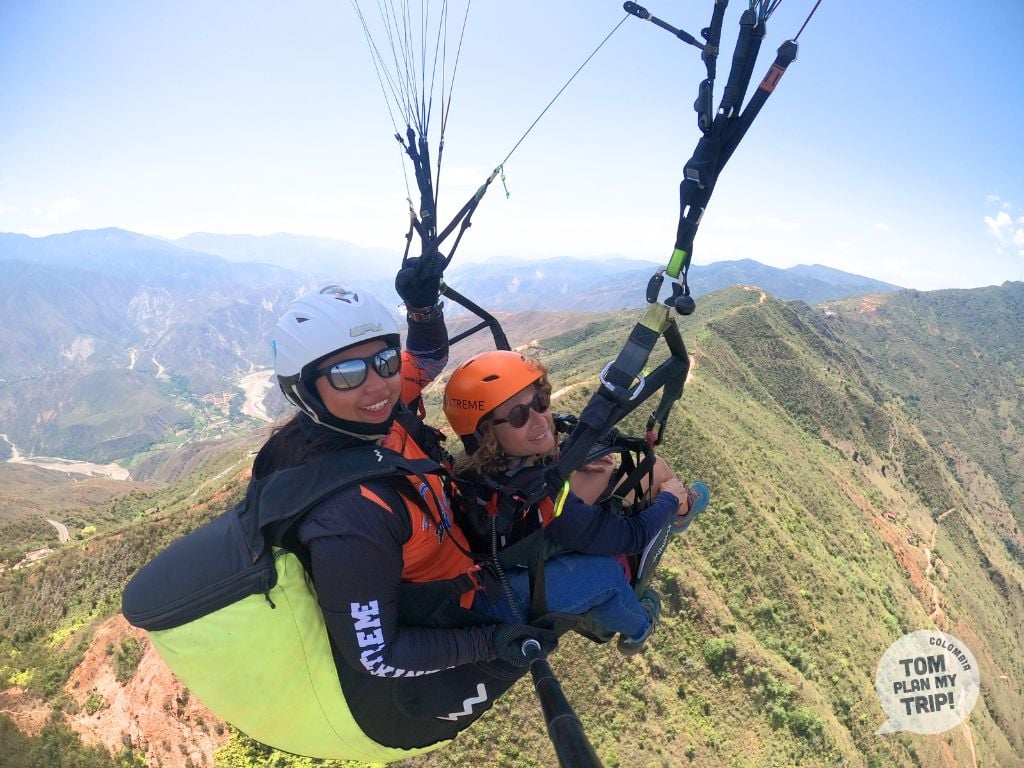
You will travel by van to the takeoff site, about 1 hour away from San Gil, at the edge of the Chicamocha canyon.
An instructor will explain the equipment, the takeoff and landing procedures, the flight process, and the safety instructions. You will then go to the takeoff site to wait for your turn. The lightest take off first, as the wind strengthens throughout the day.
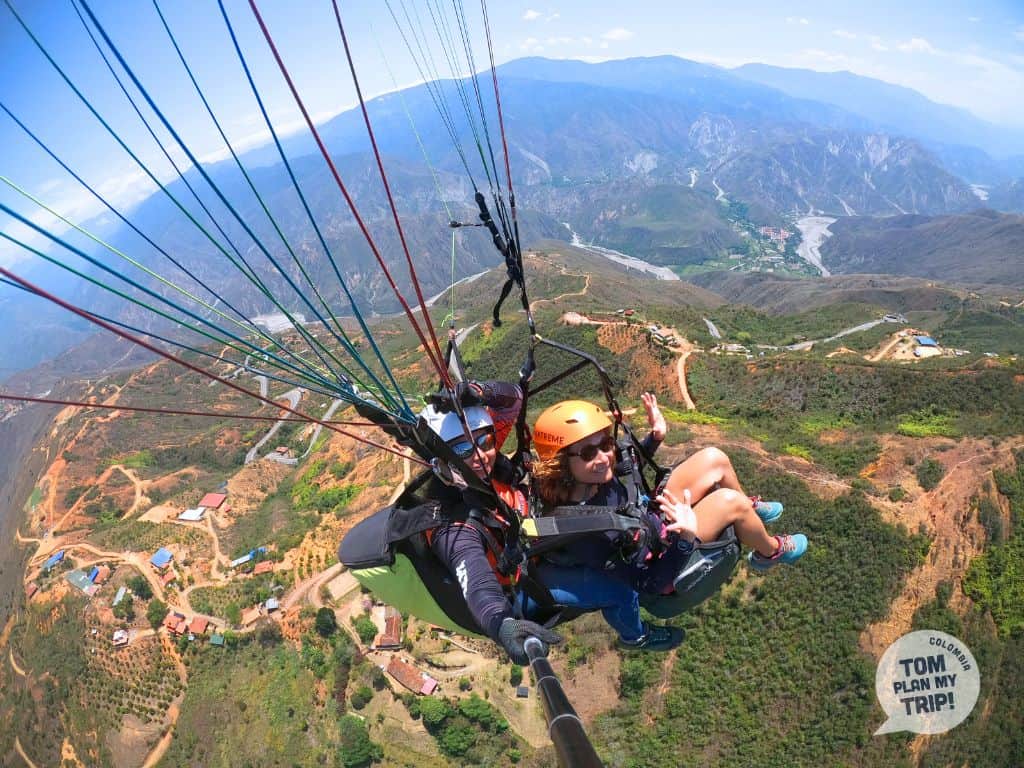
When it’s your turn, you will find yourself harnessed with your instructor and ready for the big jump! In 6 strides, you will dive into the void. You will fly in a breathtaking landscape for about 25 minutes. If your instructor feels you are confident, they will offer you an adrenaline rush by playing with the wing before returning to solid ground.
To capture your flight, you will be offered to take photos and a video.
When all the candidates in your group have flown, the van will take you back to San Gil.
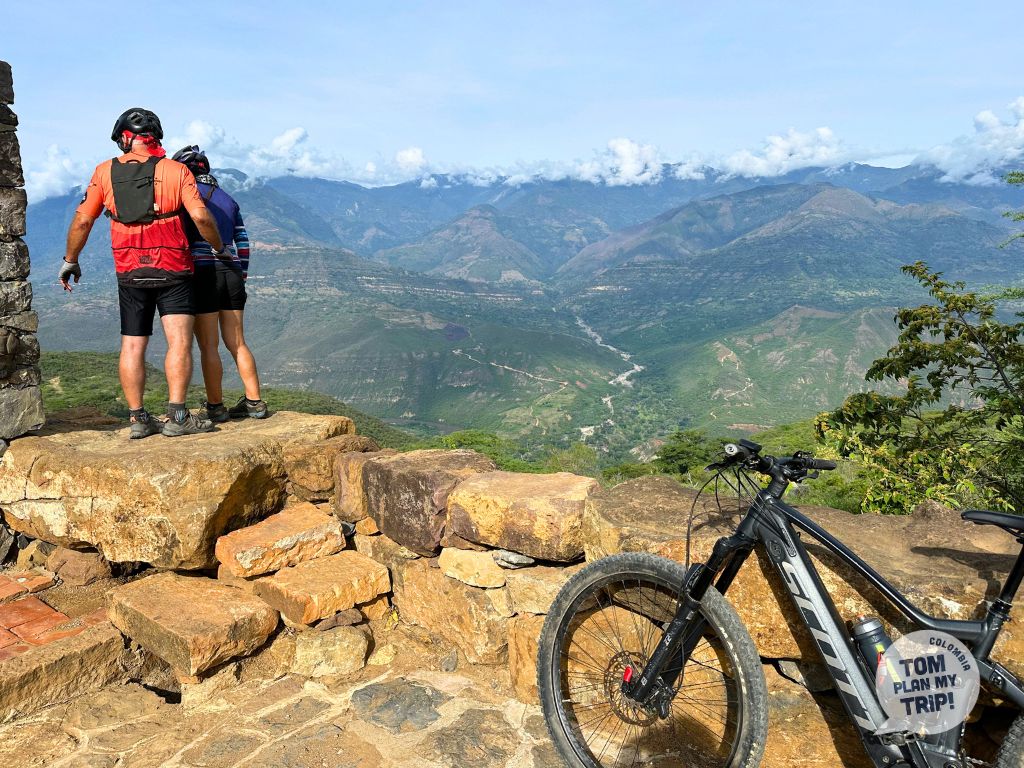
If you are a mountain biking enthusiast, you can ride down into the Chicamocha canyon.
Tours offer day trips, but you can also take a route that leads you to Jordan, at the very bottom of the canyon, or to La Fuente.
We know a great guide from Barichara. He took me to Guane, I had a blast and the equipment is top-notch.
For fans of extreme thrills, the Parque Extremo El Peñón Guane, 5 kilometers north of San Gil, has a bungee jumping site. With a 140-meter drop, it’s the highest in South America.
The safety is very well ensured, and the staff is experienced and very reassuring. Plus, you jump into a fantastic landscape.
© Tomplanmytrip
Safety in the Chicamocha Canyon
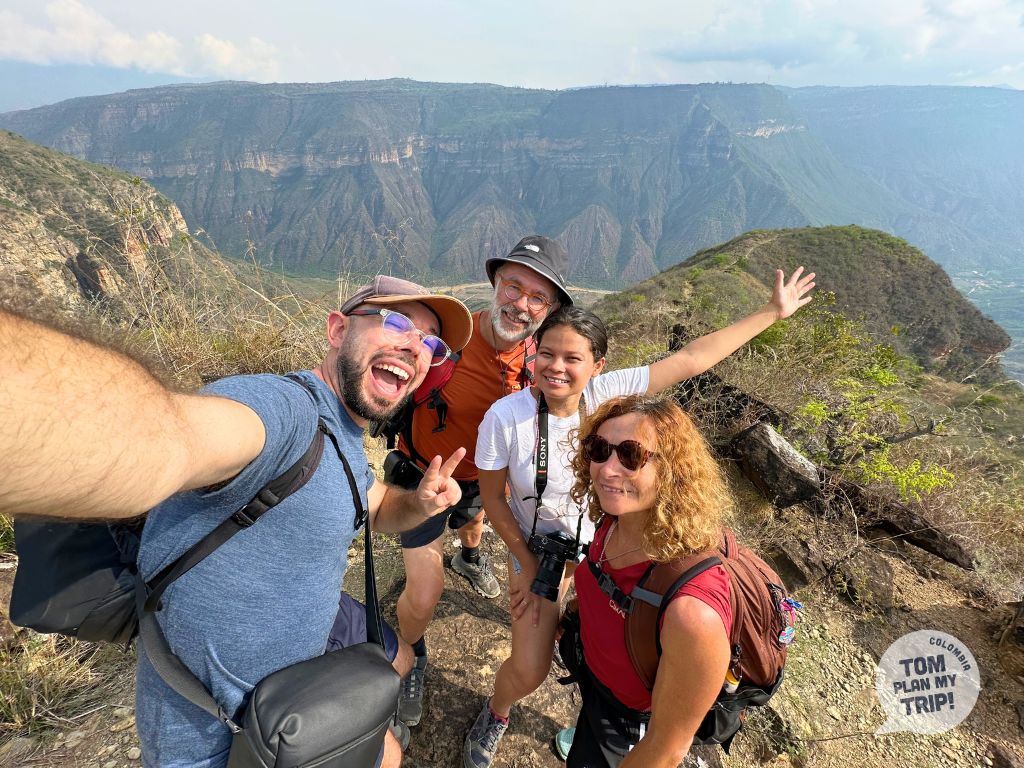
Be very careful of the heat, which can be intense in the canyon, especially if you venture to the bottom.
Most of the caminos reales are fairly well marked, but the canyon is immense, and sometimes, less well-maintained paths get lost in the vegetation or are not indicated on the app you use on your phone. Be careful not to get lost.
You can also confirm the route with the locals in the villages you pass through, they will always be willing to help you. I suggest you work on your Spanish 😉
© Tomplanmytrip
Tips for the Chicamocha Canyon
To be fully ready to explore this giant of stone.
To fully enjoy your adventure in the Chicamocha Canyon, bring comfortable shoes suitable for walking, light and flexible clothing for the daytime – opt for long sleeves to protect yourself from the sun, and a vest for the cooler evenings.
Don’t forget your swimsuit, a cap or hat, your sunglasses, sunscreen, and an environmentally friendly mosquito repellent.
Also, remember to bring a reusable water bottle to stay hydrated and reduce waste.
To orient yourself, rely on online applications such as maps.me or Wikiloc. Download the mapped area before you leave, this will prevent any surprises in case you lose network coverage.
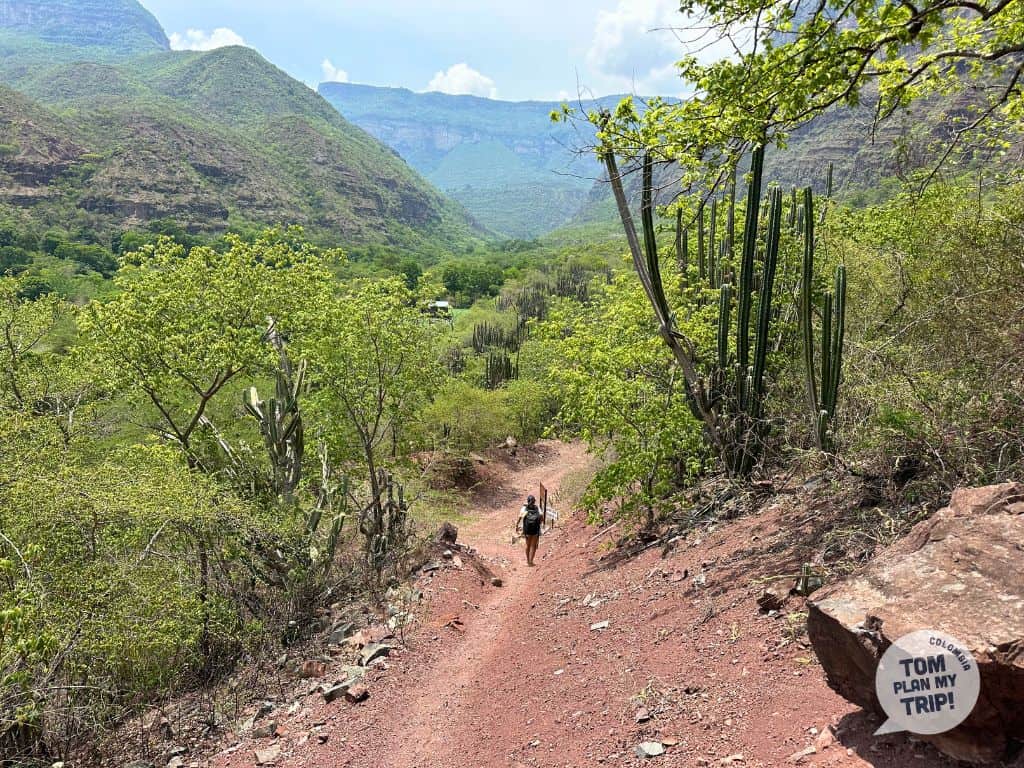
I advise you to leave very early in the morning (sunrise), so you can enjoy the coolness while walking. Believe me, the heat can be very intense as early as 10 a.m., especially when you are approaching the bottom of the canyon.
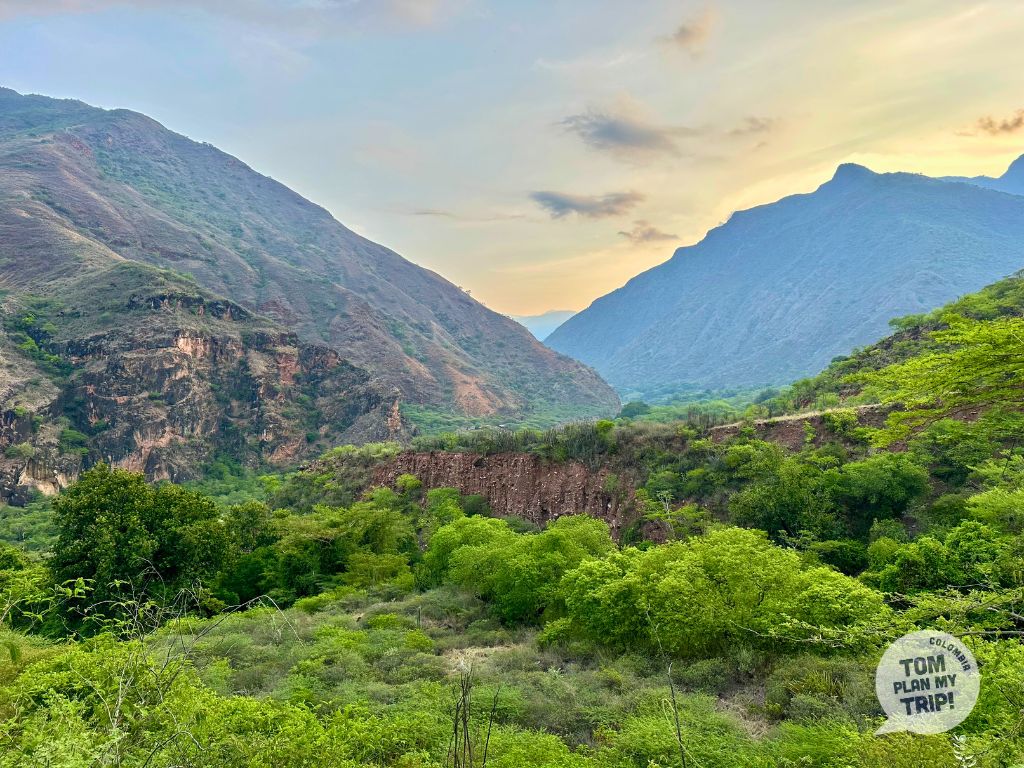
Of course, it’s super cool to go on an adventure alone, without a guide. But you shouldn’t overestimate your abilities at the risk of ruining your fun 😉
It’s safer if you’re not experienced in trekking, if you’re afraid of getting lost, or if you’re worried about fatigue due to the heat.
Your guide can organize your transportation according to the stages you’ve planned in the canyon, which isn’t always easy to do on your own, and they can also help you discover sections less traveled than the classic Barichara – Guane.
Additionally, by hiring a guide, you will participate in the local economy.
Even if you’re not a passionate botanist like my father, if you venture into the Chicamocha Canyon, you will surely be intrigued by this imposing tree with the funny swollen trunk at the base. I encountered my first Ceiba barrigona, or Barigón, when leaving Jordan on the trail that runs along the Chicamocha River before climbing into the forest towards Aratoca.
You can also spot it on the canyon slopes by its lighter foliage.
This amazing tree is endemic to eastern Colombia and thrives in the harsh conditions of the Chicamocha canyon. Since 2011, it has been a protected species, and there are very few of them.
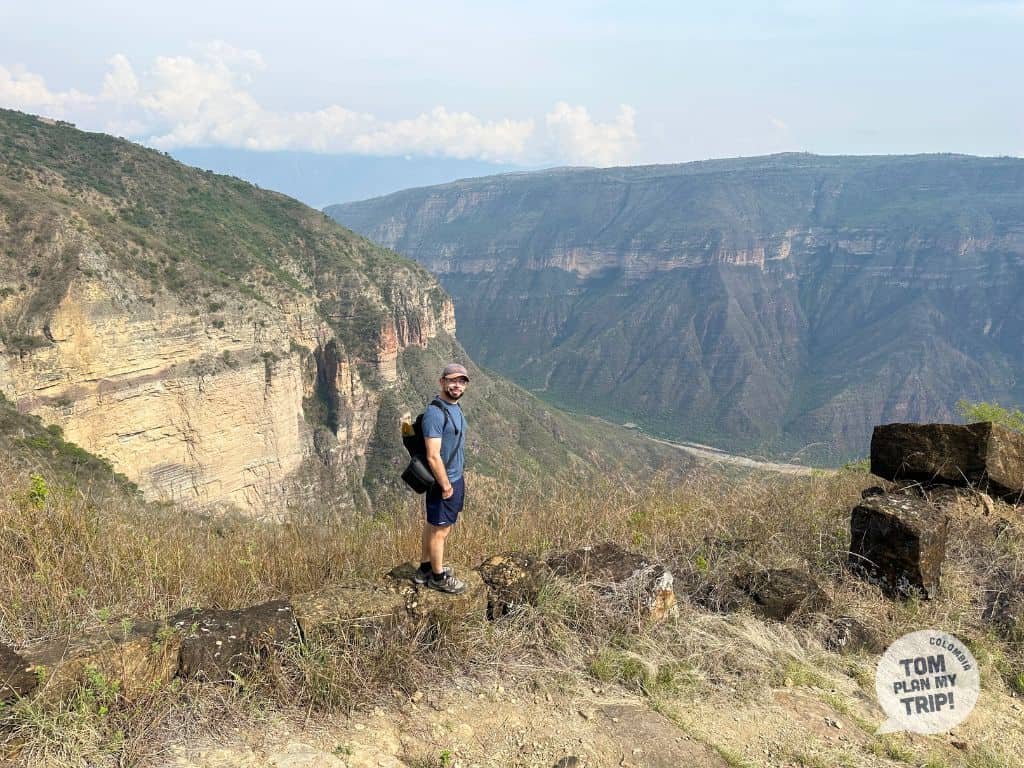
To help you prepare for your adventure in the Chicamocha canyon, I have made a list of the main stopover villages:
Barichara – Guane – Villanueva – Jordán – Mesa de Los Santos – Aratoca – La Fuente – Zapatoca San Miguel – Pescadero – Cepitá.
And don’t hesitate to check out this excellent site.
© Tomplanmytrip
My Adventures in the Chicamocha Canyon
I was fascinated by my hikes and the viewpoints over the Chicamocha Canyon. Here is a compilation of my favorite photos.
TOM’S TIPS
If you love incredible hikes, have you thought about trekking in Los Nevados or the Lost City? Contact us to find out more!

My Best Photos of the Chicamocha Canyon
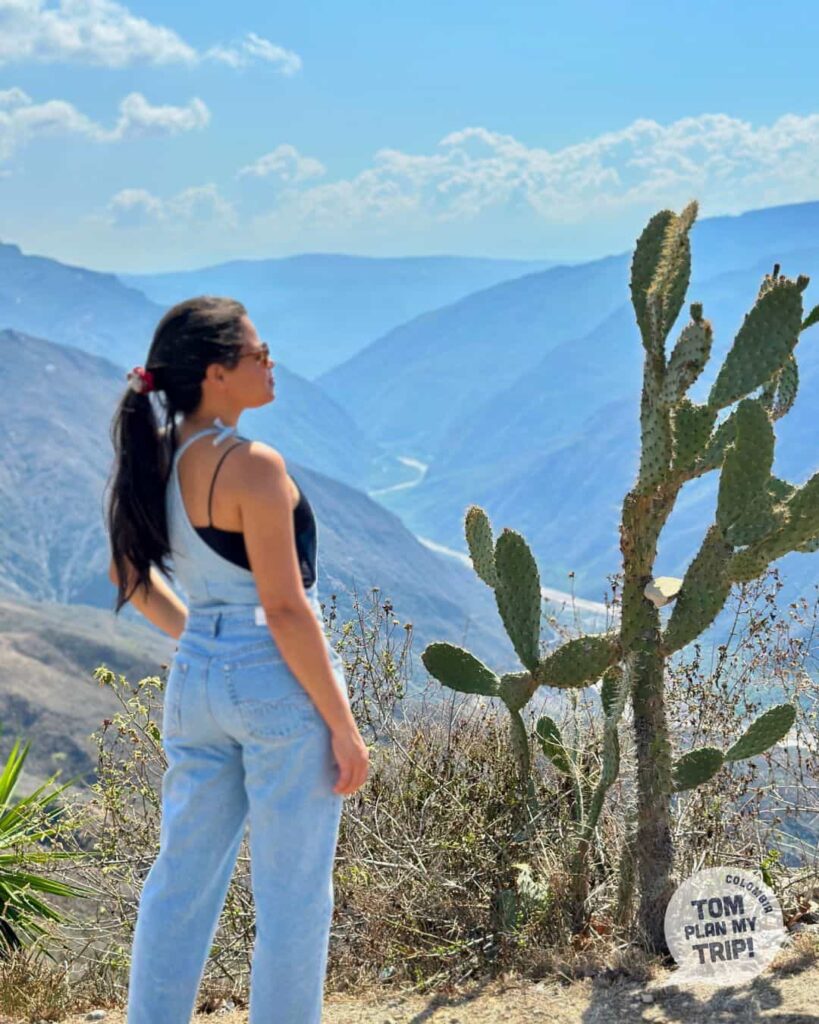
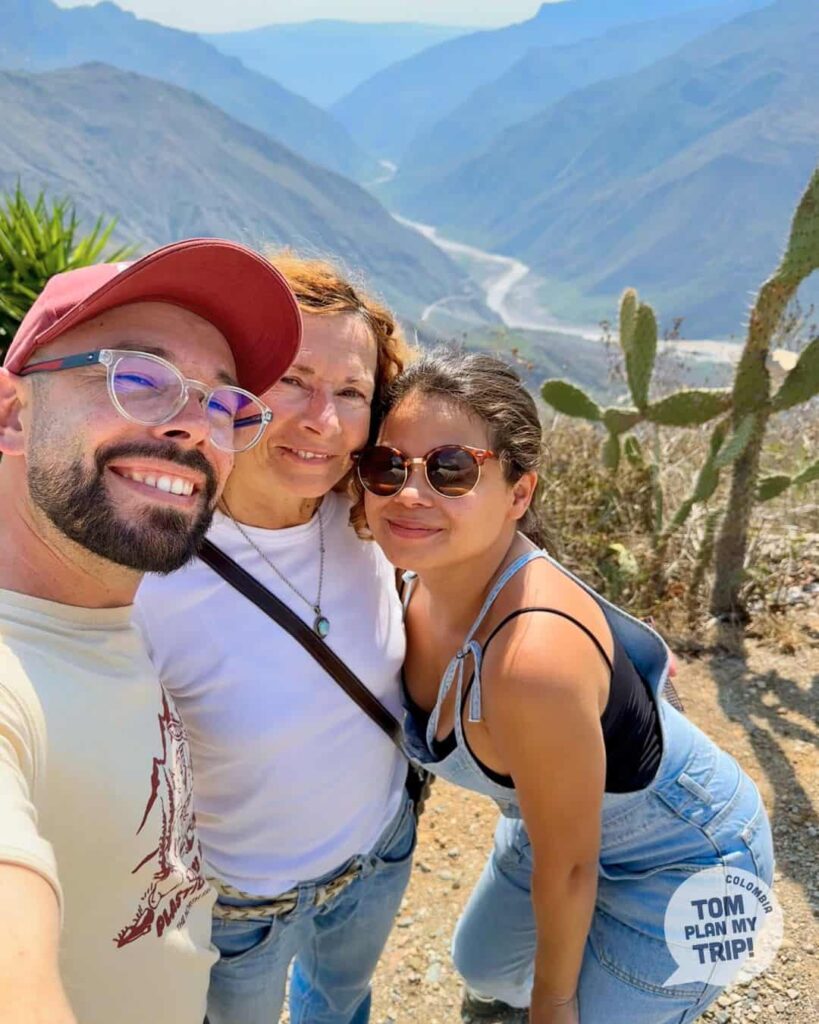
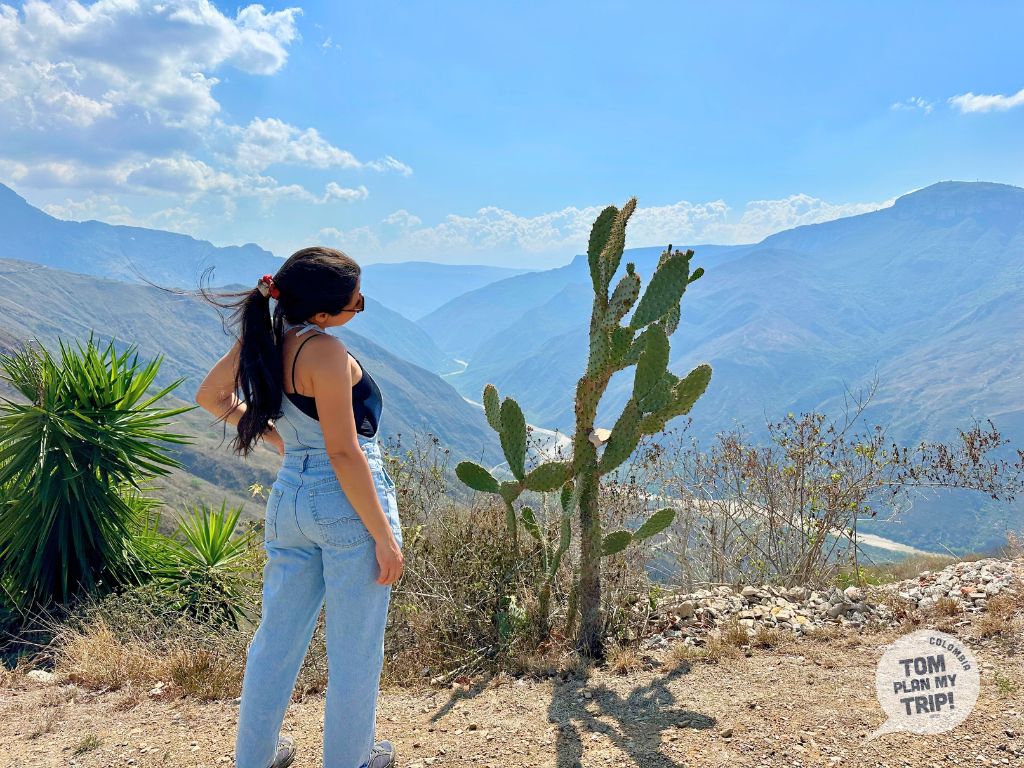
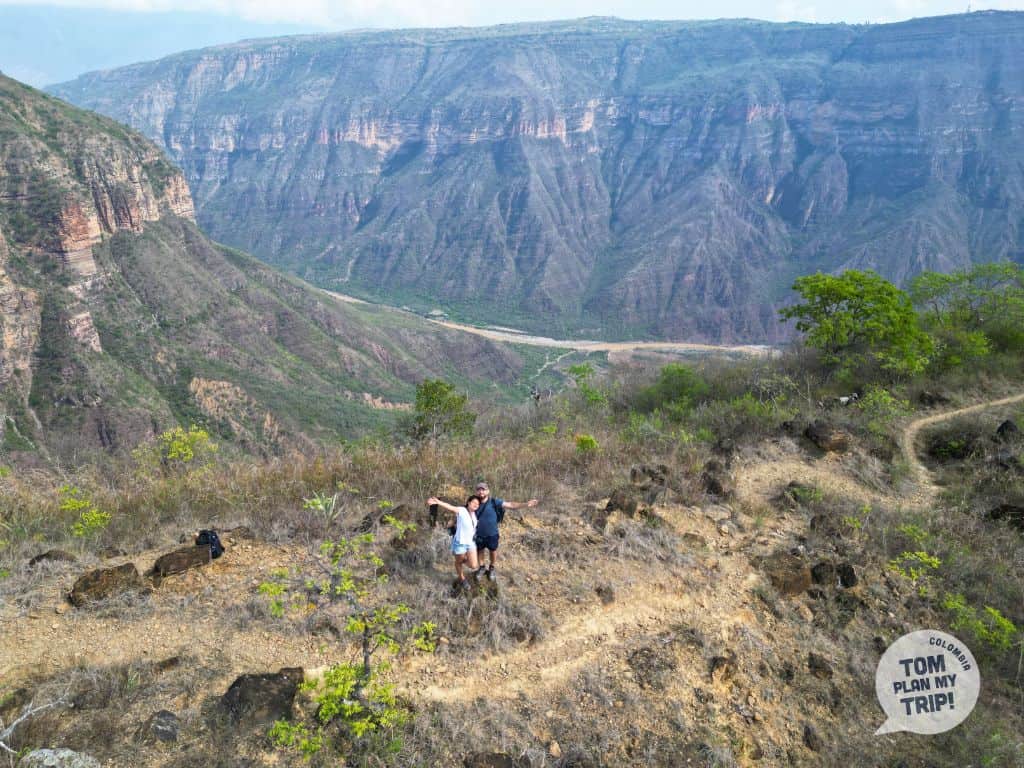
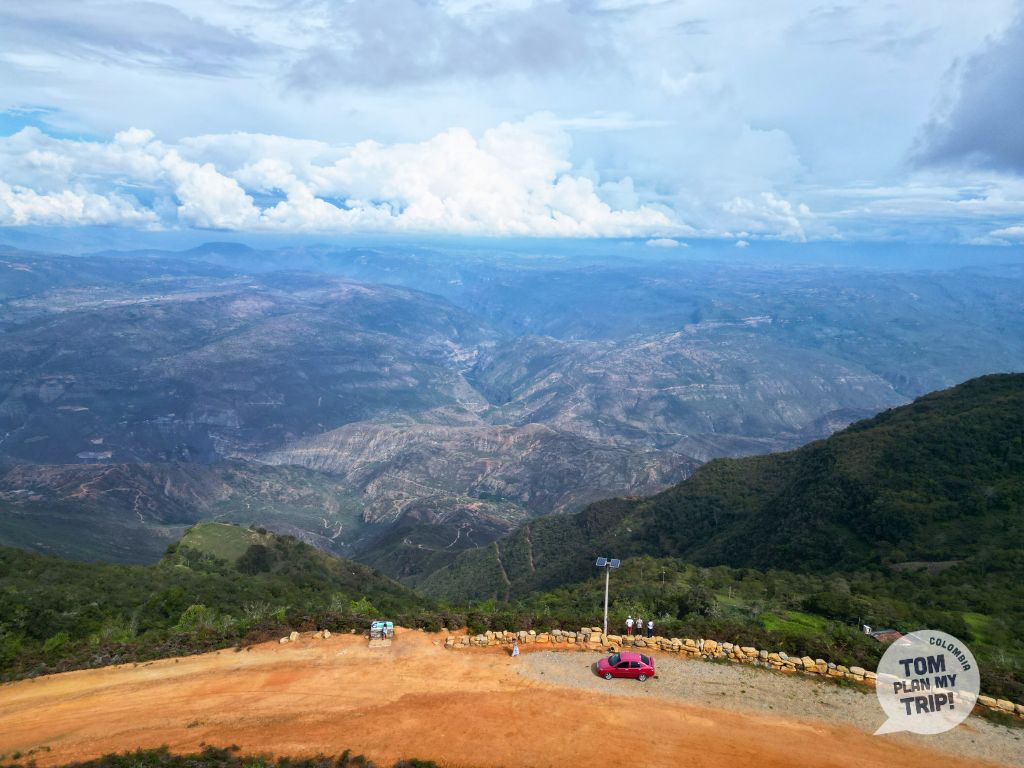
Short break to admire the Chicamocha Canyon during the transfer from Bucaramanga to Barichara. Look at these views!
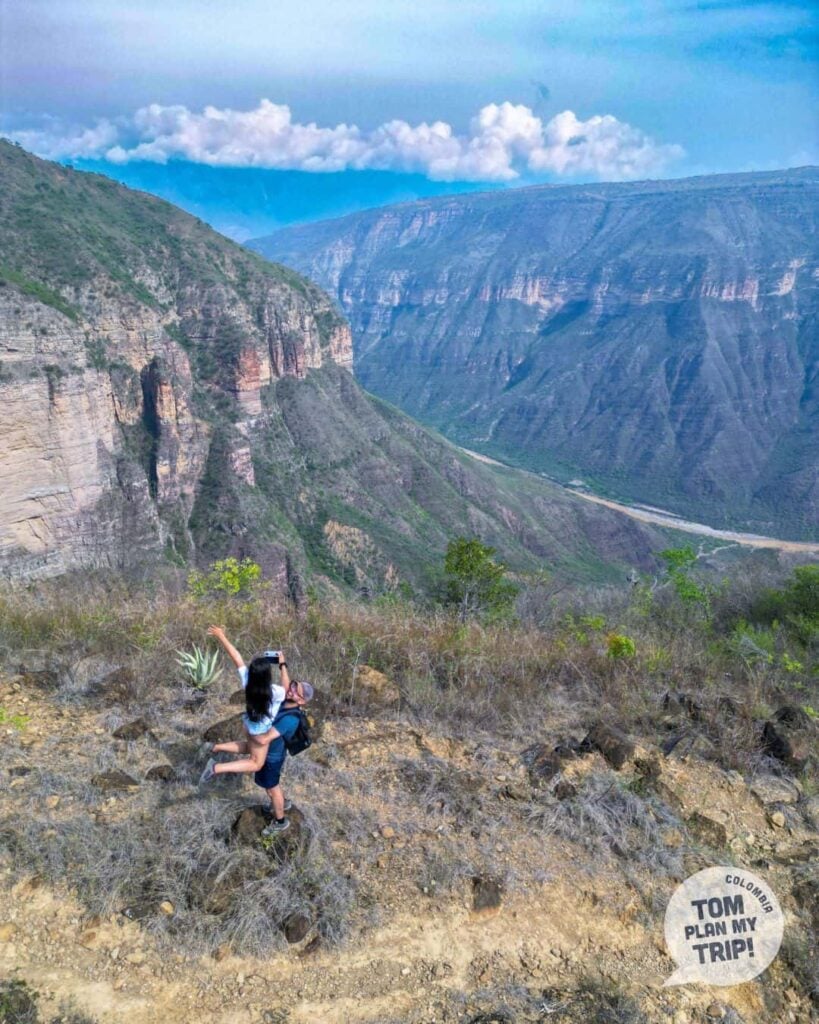
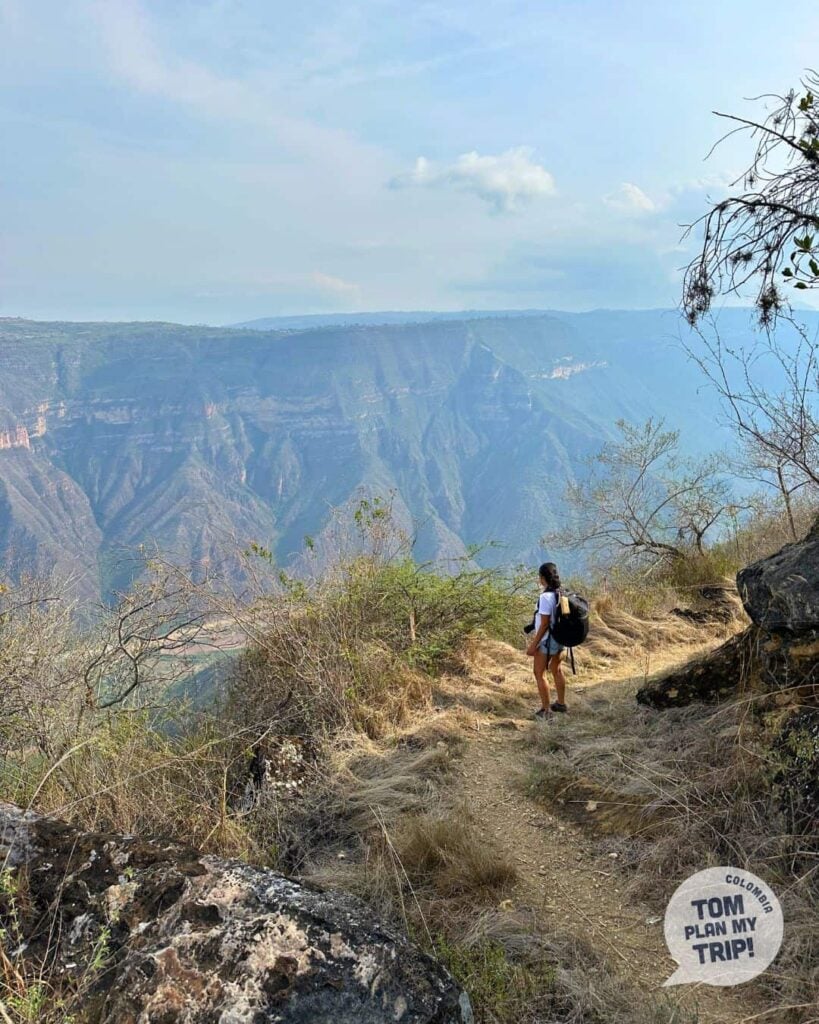
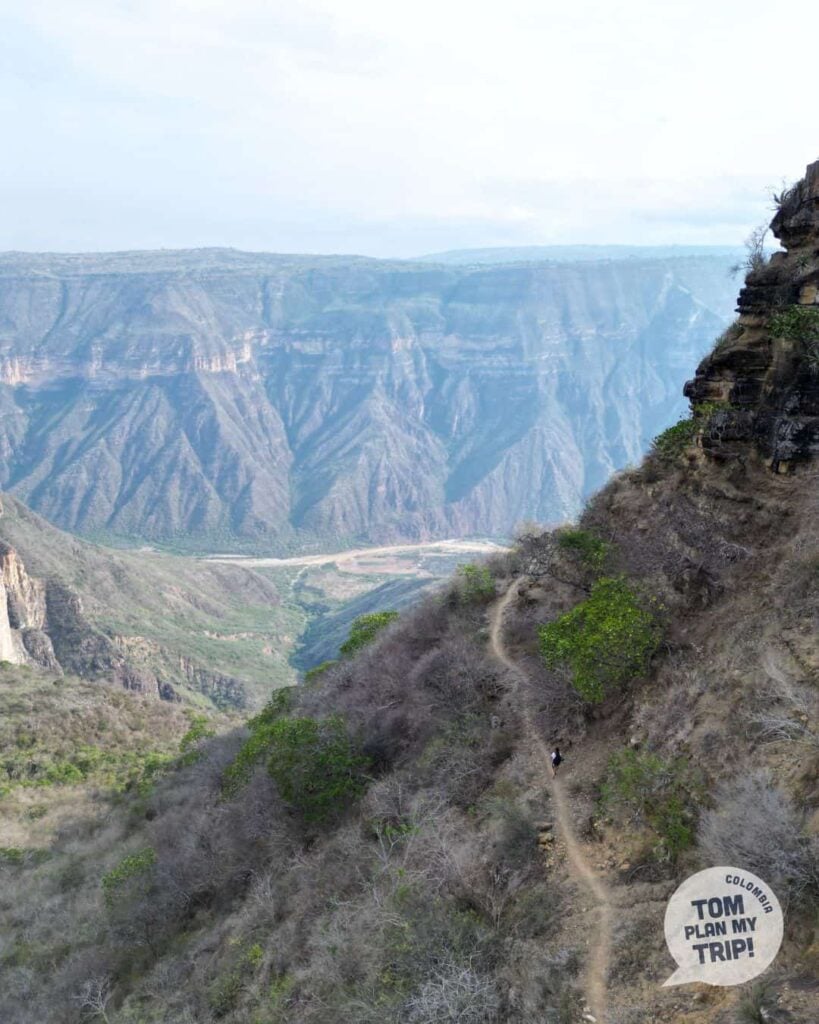
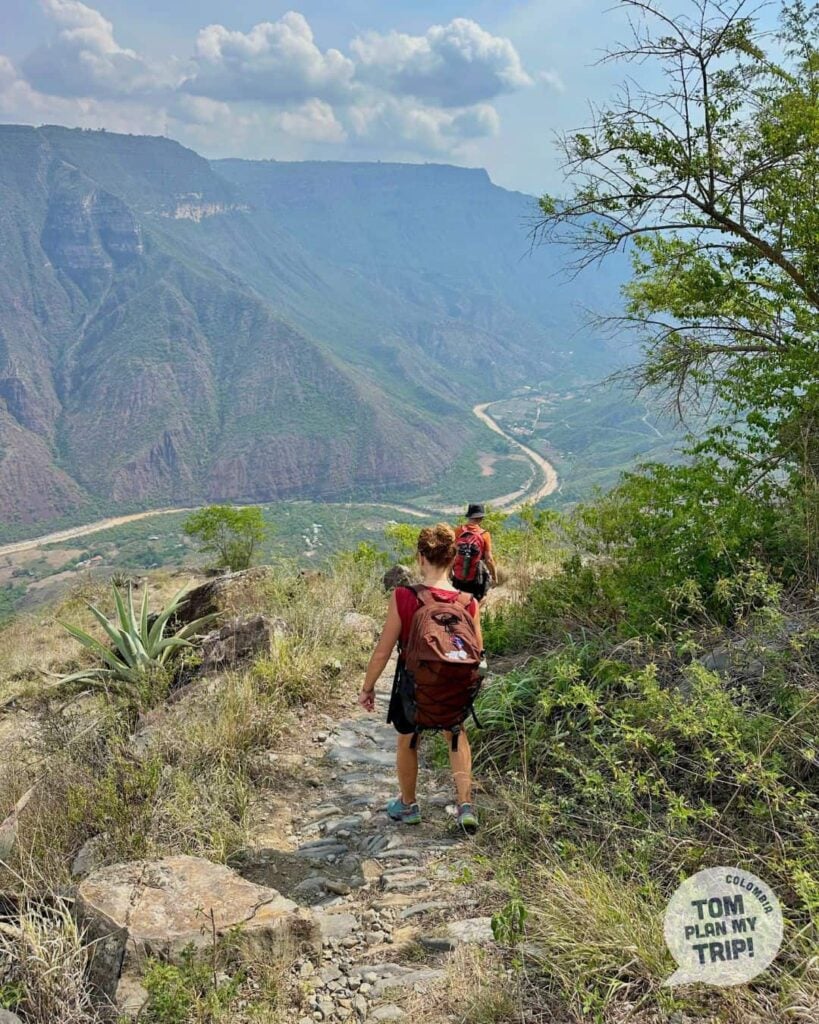
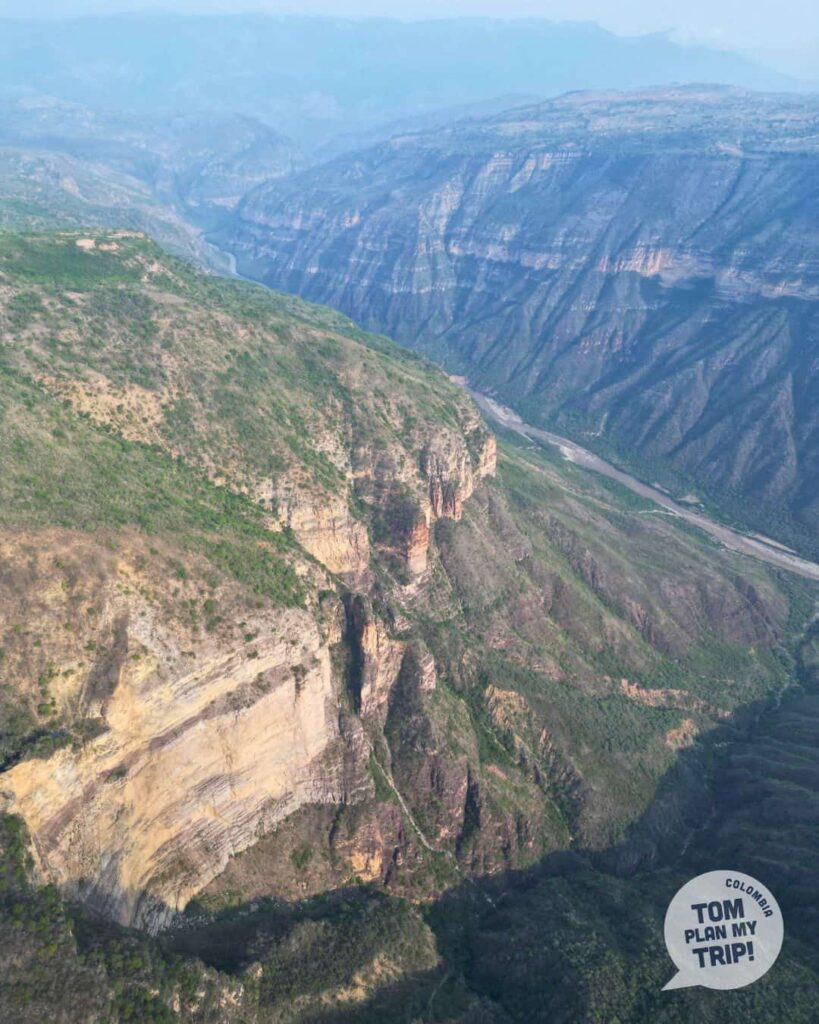
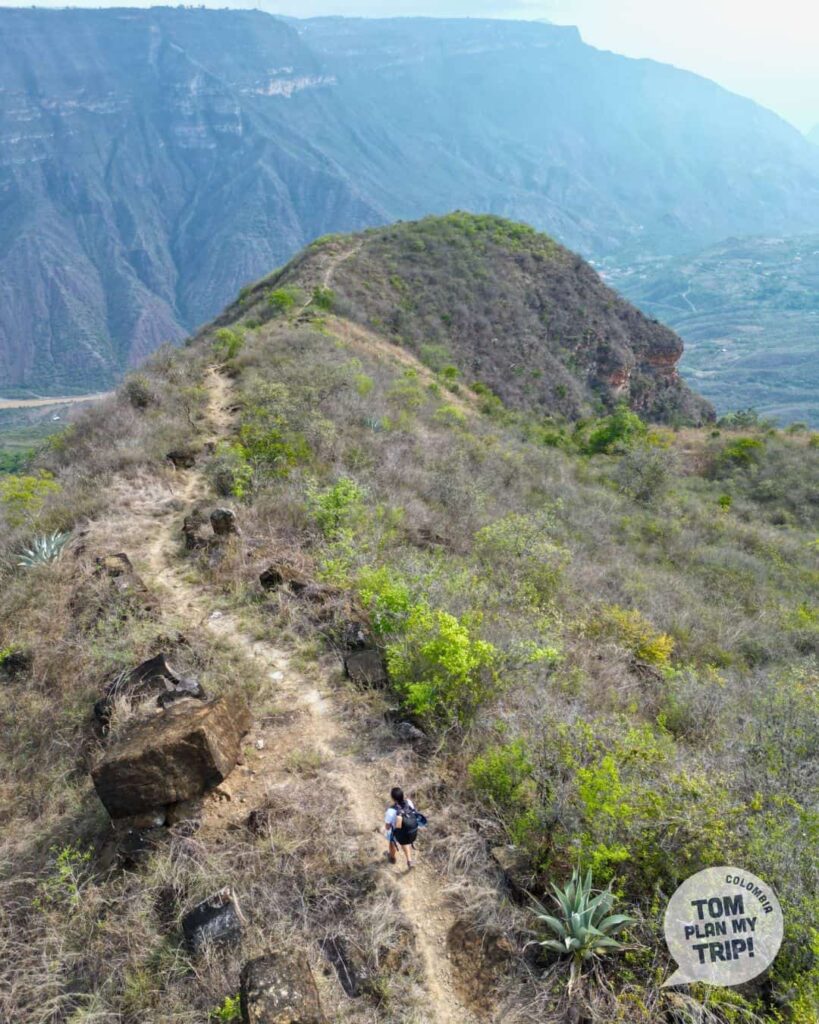
This trek from Villanueva to Jordan is one of the most beautiful treks I’ve done. But what heat! It’s really important to start super early! Around 6 am if you can.
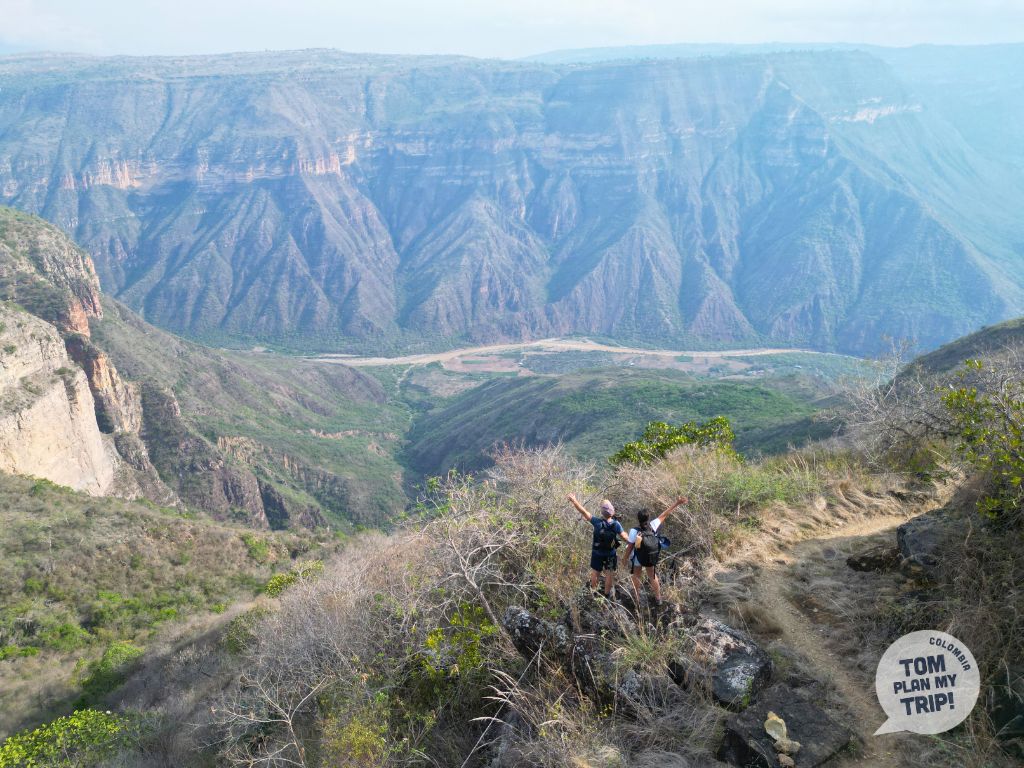
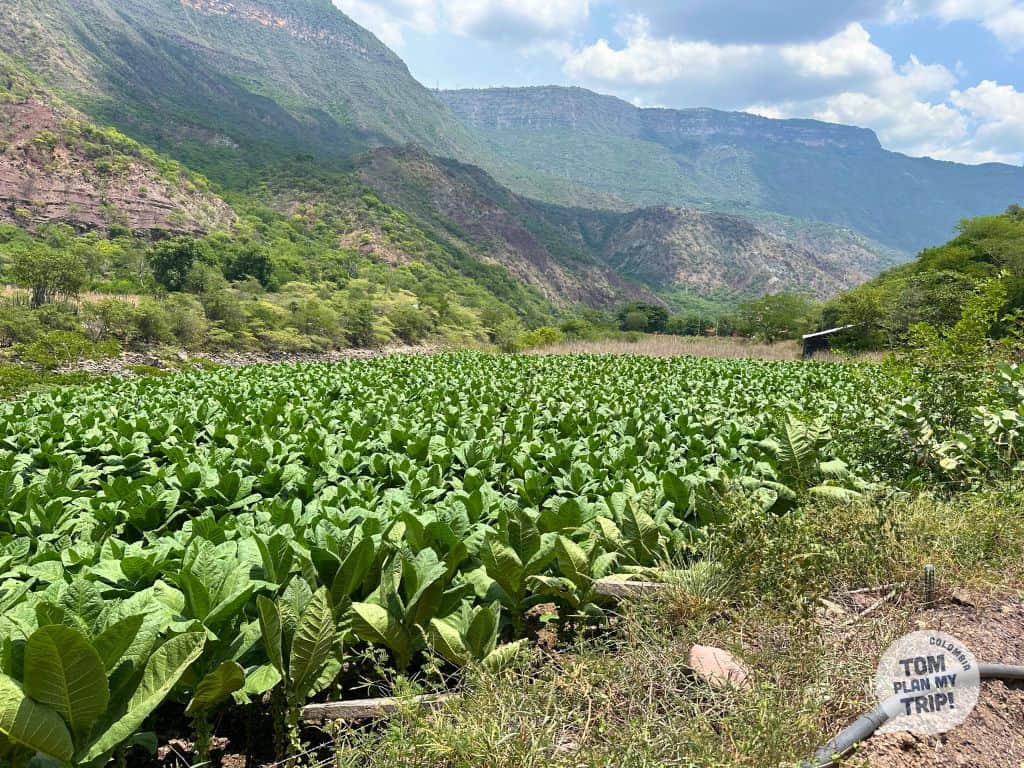
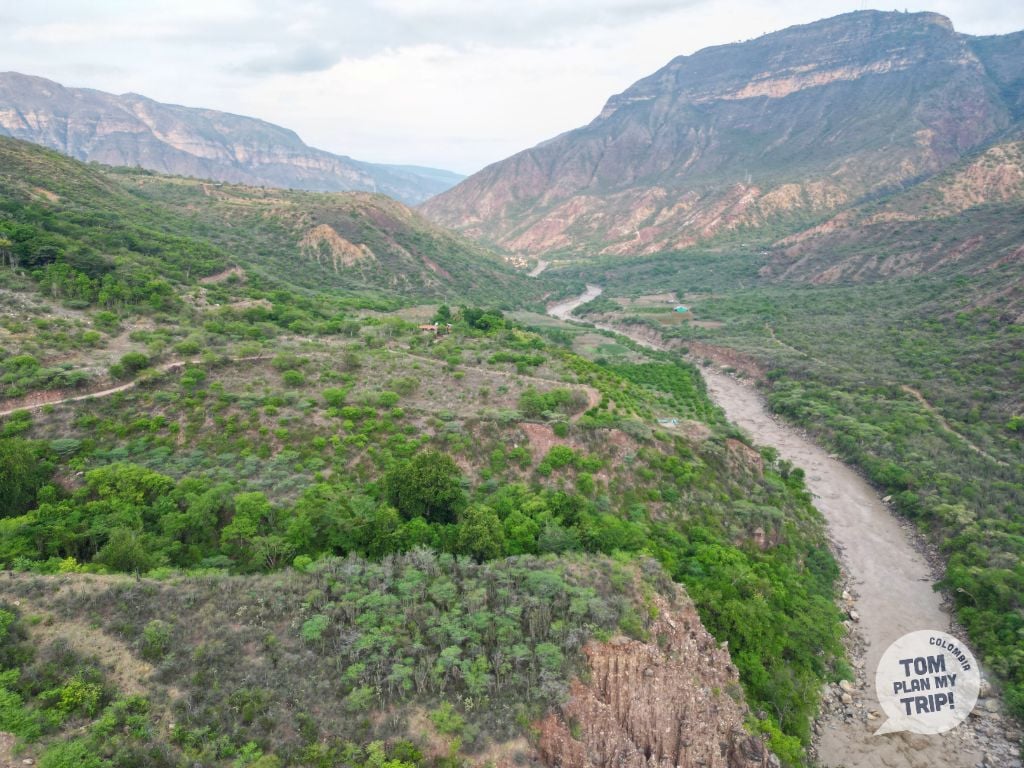
Jordan is a small village located at the bottom of the Chicamocha Canyon. It’s one of the few places where there are still tobacco plantations.
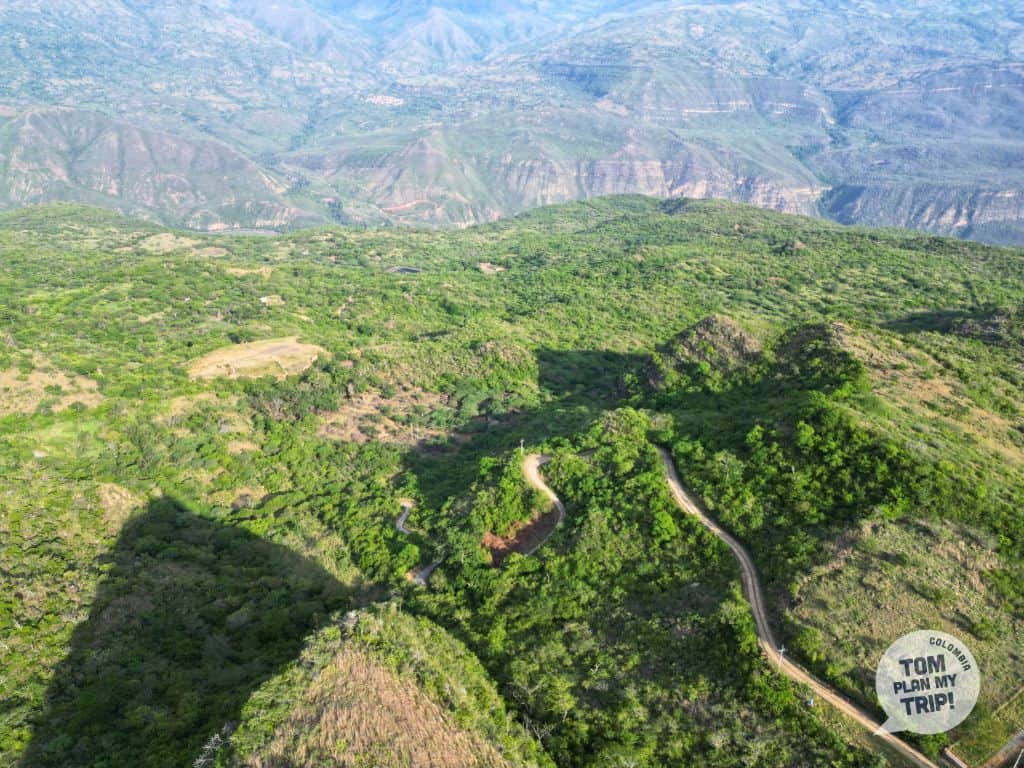
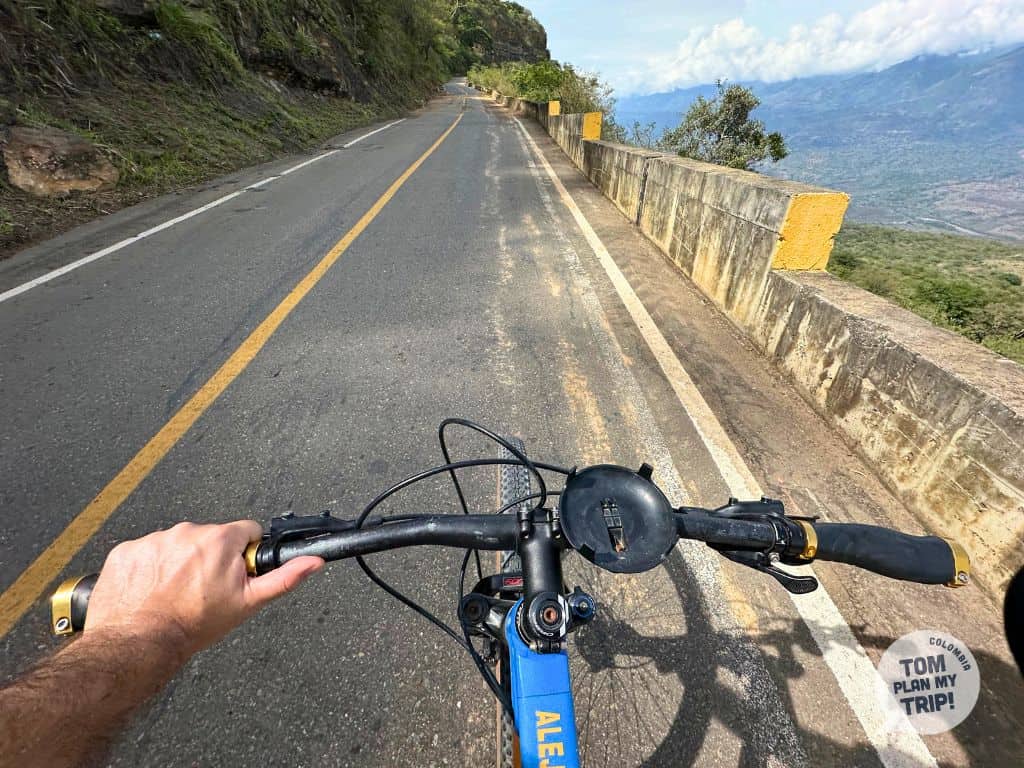
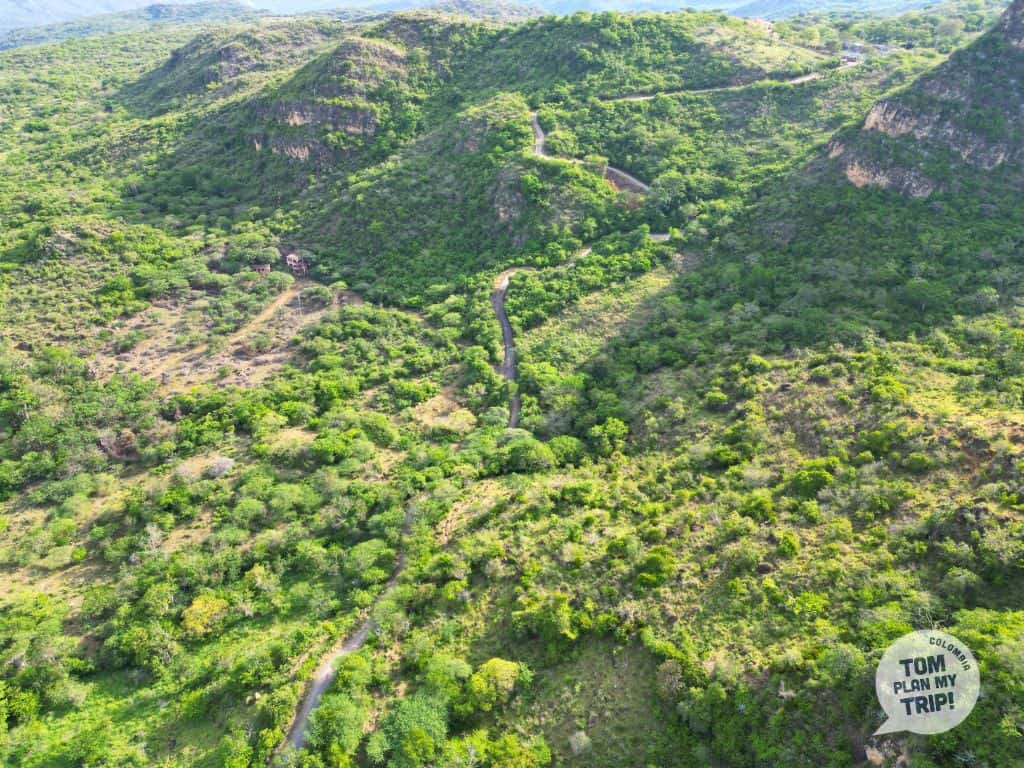
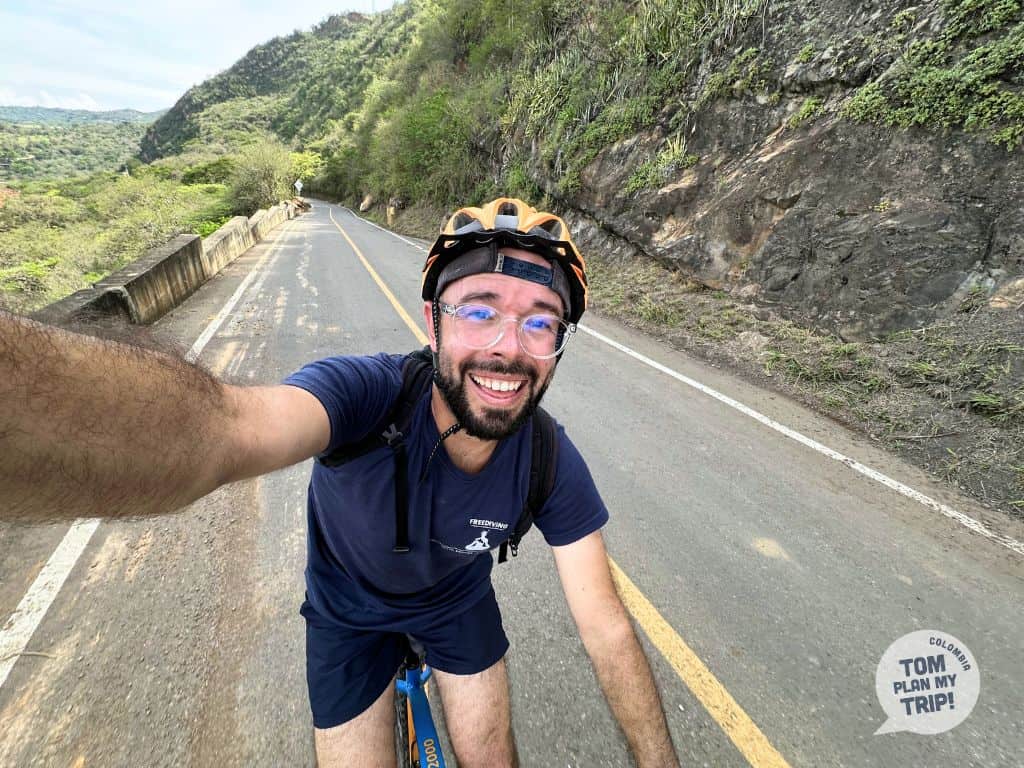
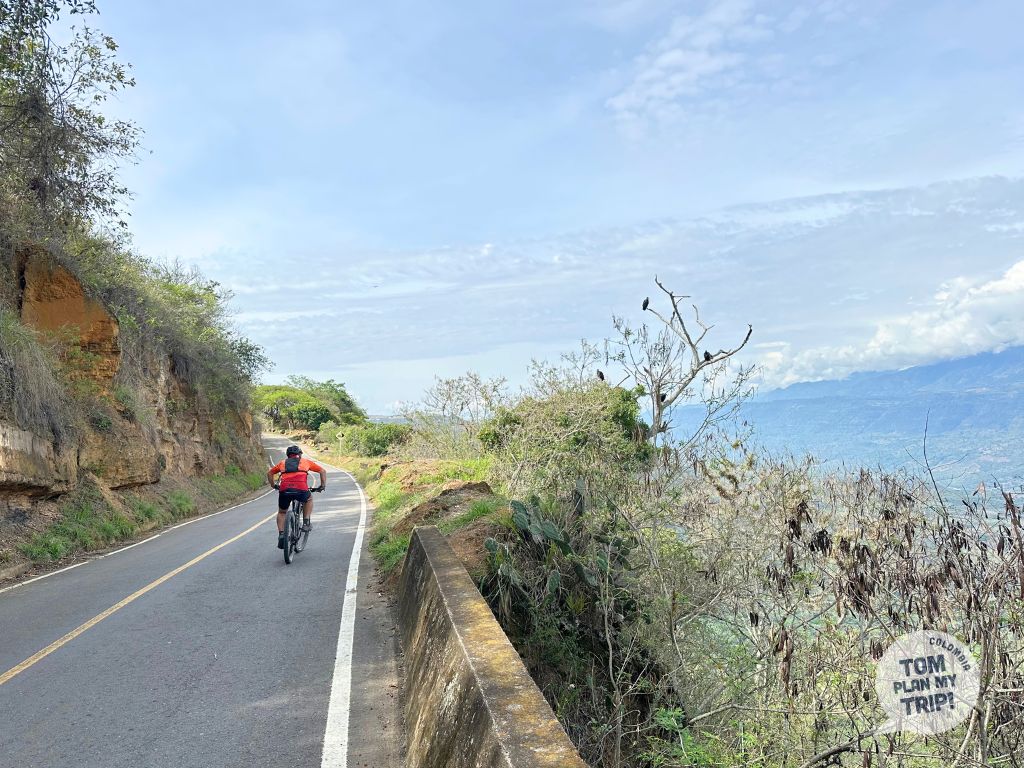
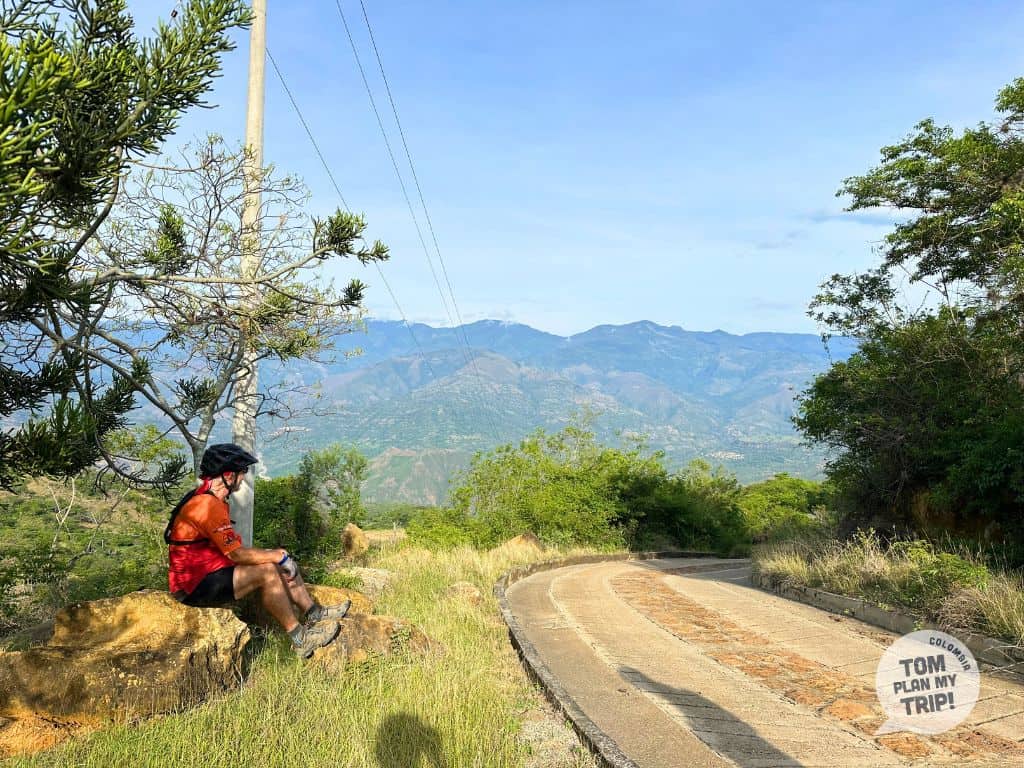
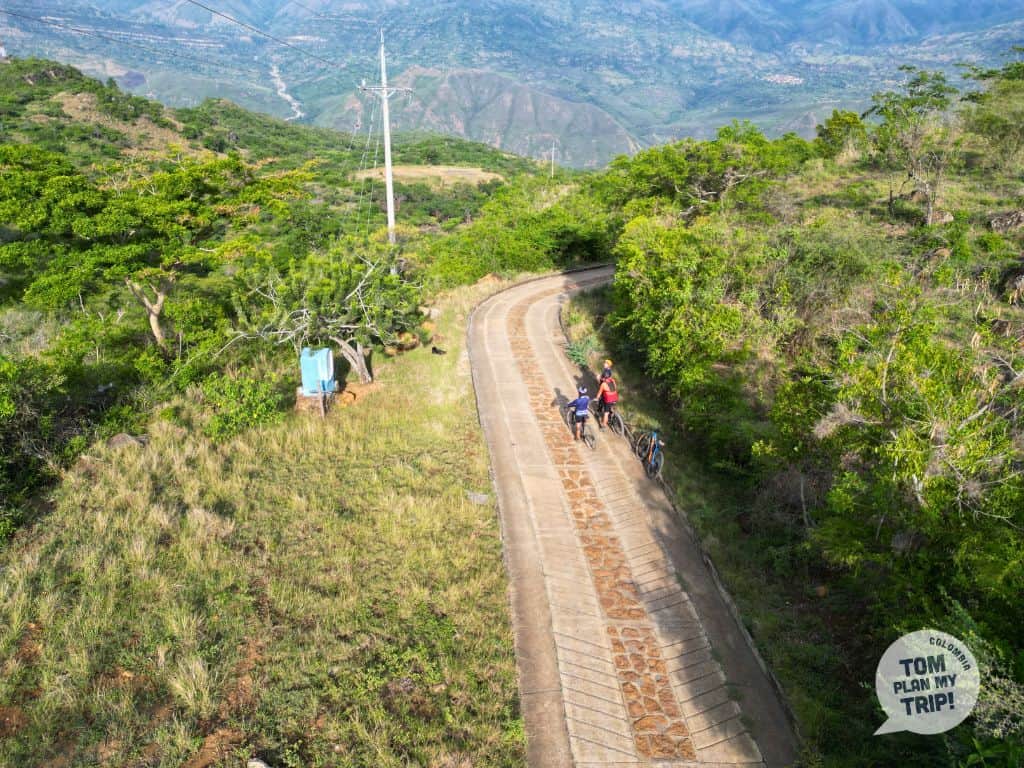
I left Barichara for Guane, descending part of the Suarez Canyon. The descent is pure bliss—you zip between the cacti and ochre rocks with the wind in your hair.
But be careful, you have to go back up to Barichara afterward! It can be a bit tough on the legs (well, okay, a lot), but it’s just about ten km. The thing is to take your time and stay hydrated regularly. The view of the canyon is well worth the effort!
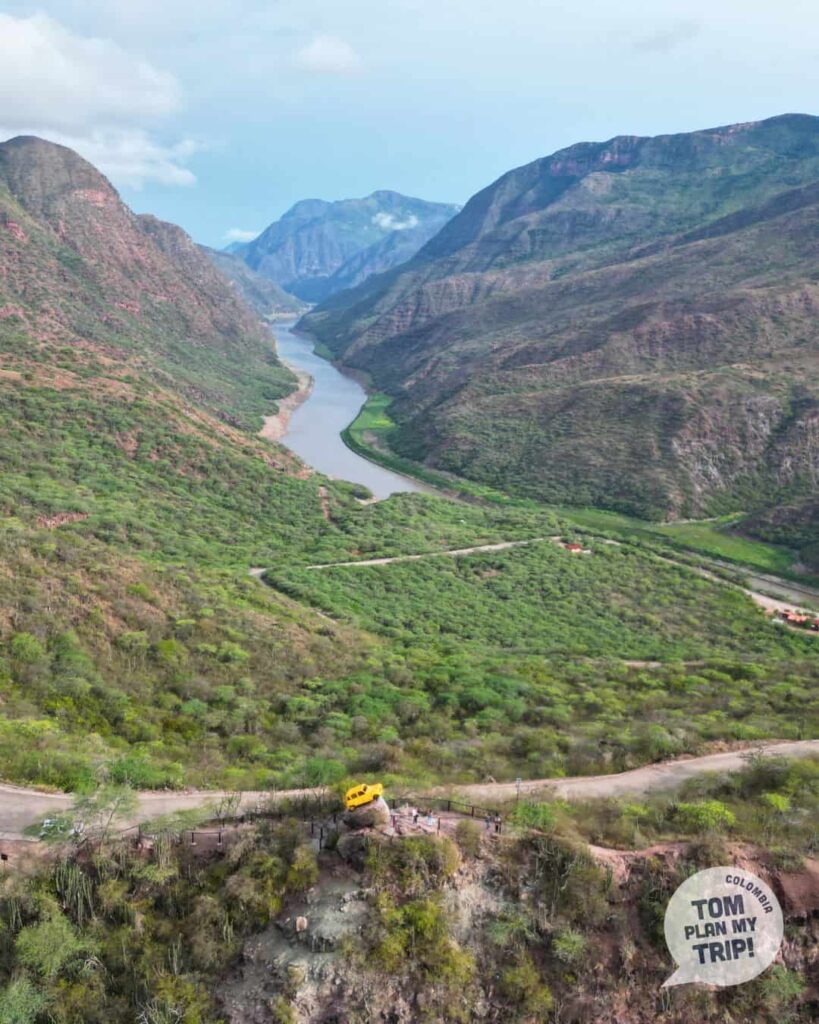
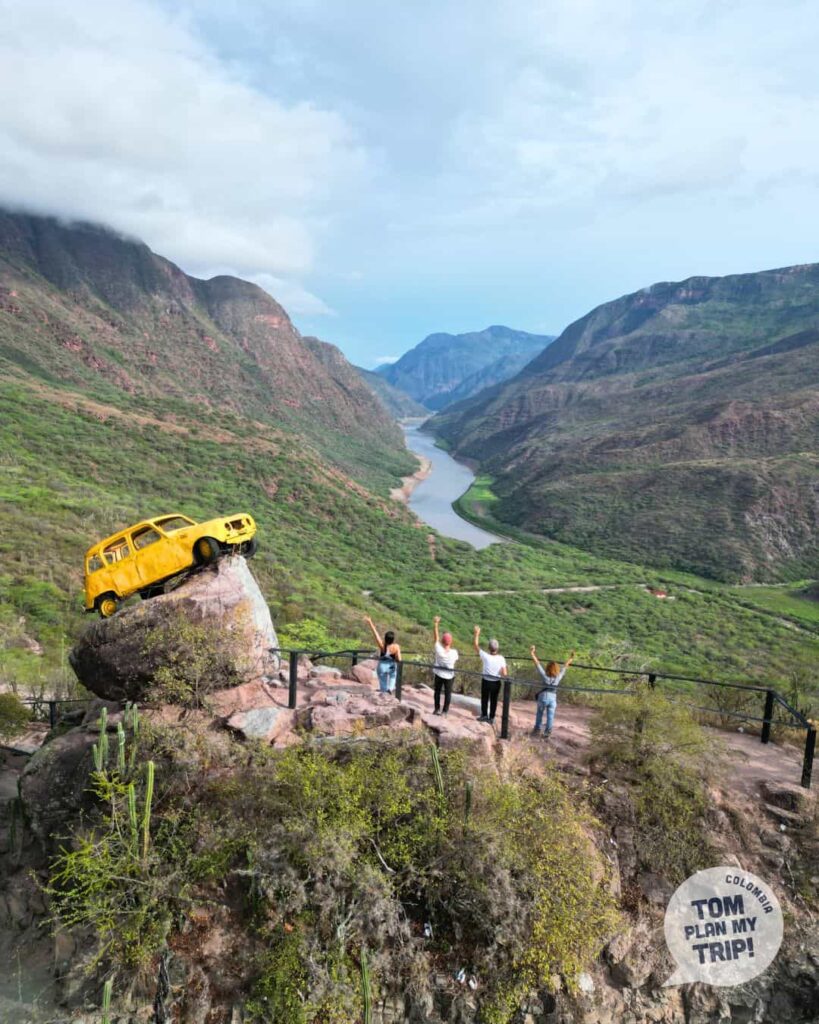
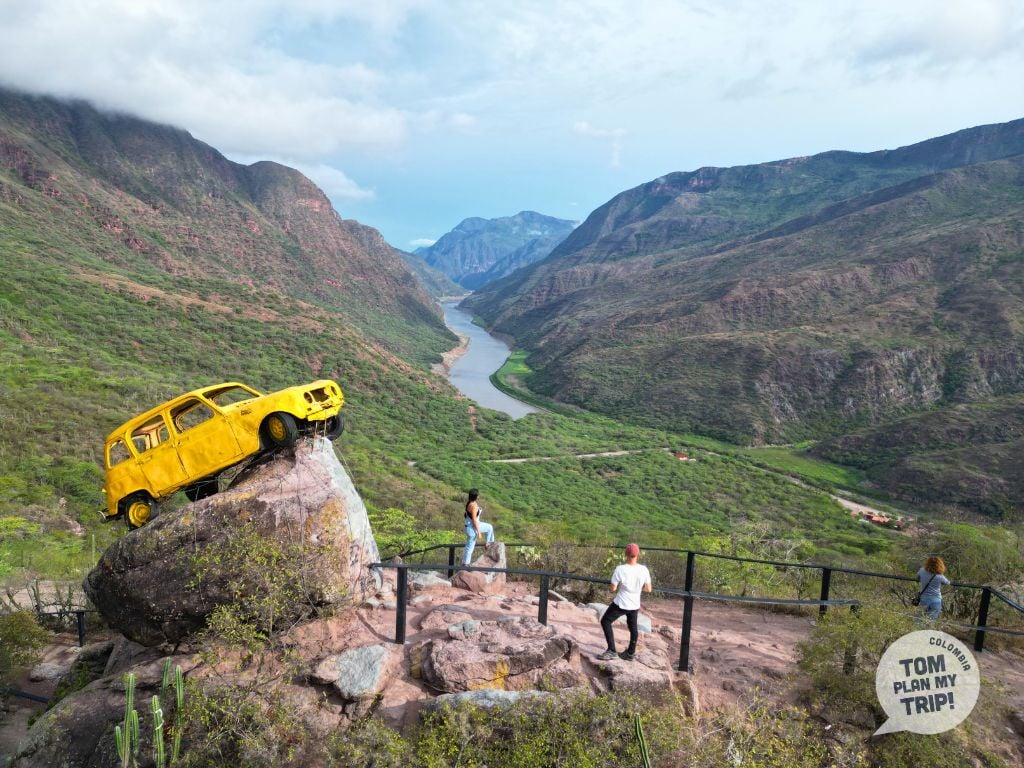
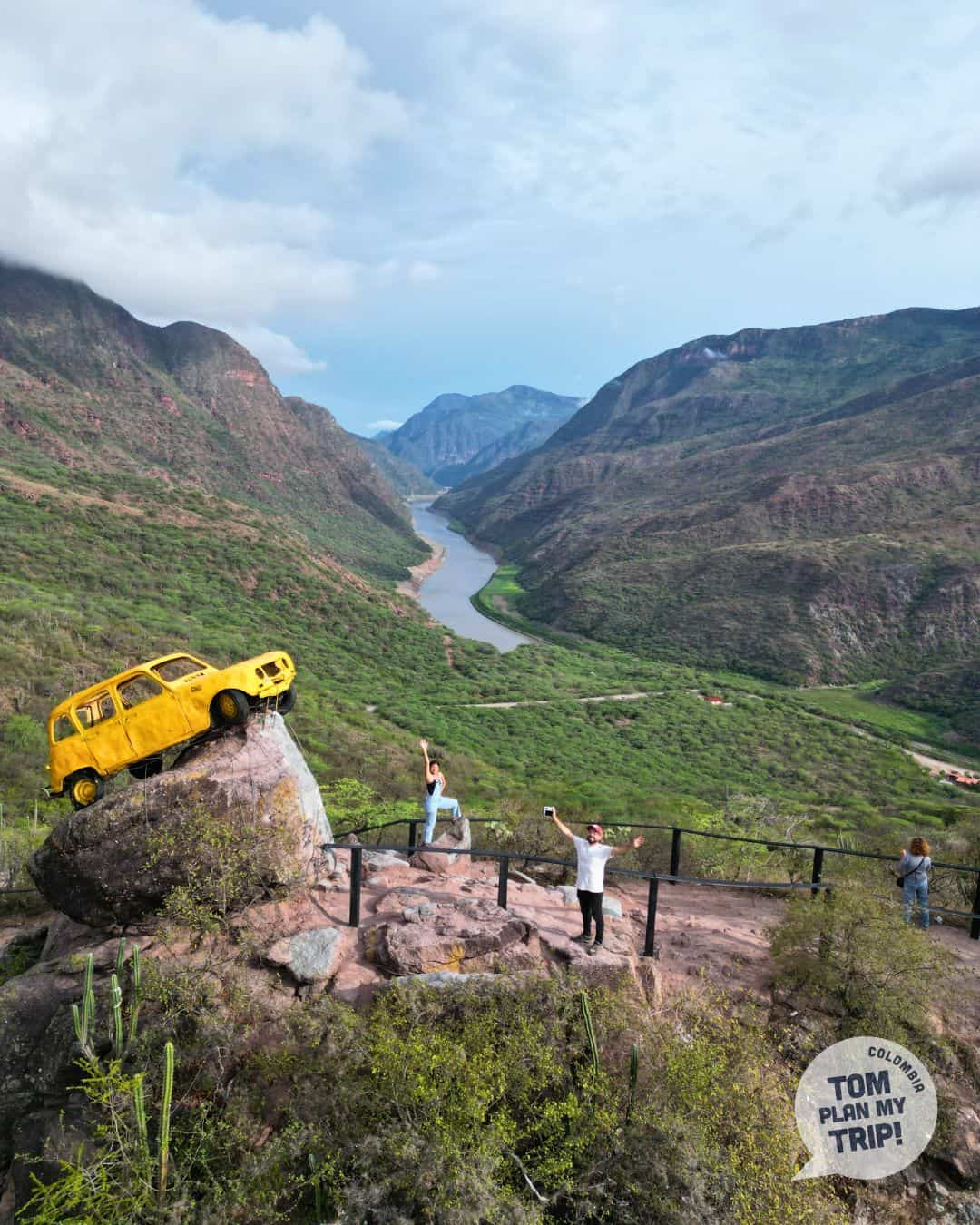
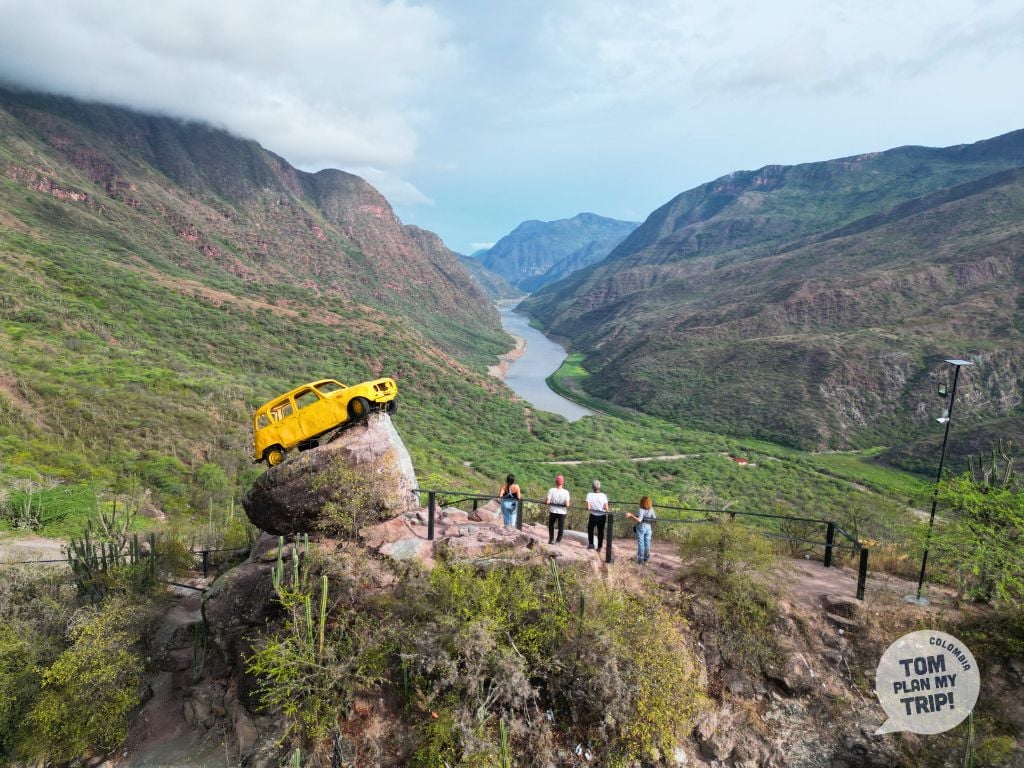
A funny thing in Santander (well, especially in Barichara): it’s the kingdom of the Renault 4. They’re everywhere! These iconic little cars from the 70s-80s keep running like the first day. You see them on every street corner, often in improbable colors and with bodies that have lived a thousand lives.
But the highlight is on the way back between Zapatoca and Bucaramanga. There, in the middle of nowhere, there’s this Renault 4 placed like a sculpture with an incredible view of the Chicamocha canyon in the background. A surreal moment that made me smile!
By the way, this whole road is incredibly beautiful. You wind along the canyon with breathtaking views at every turn.
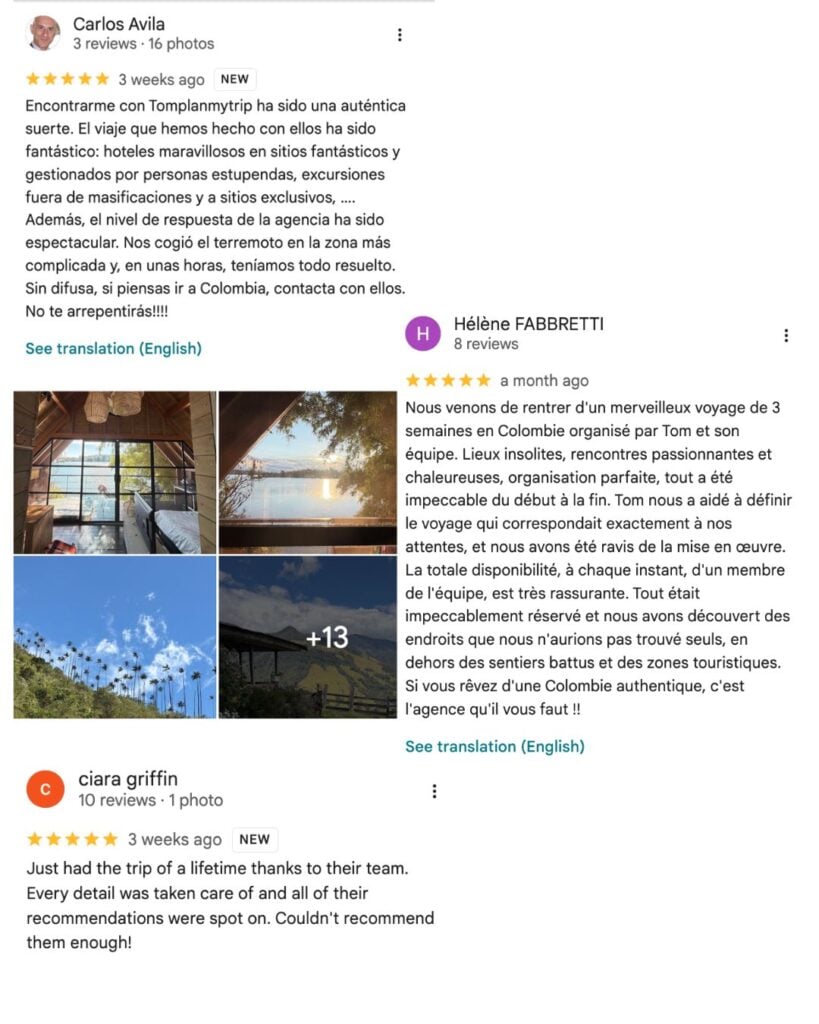
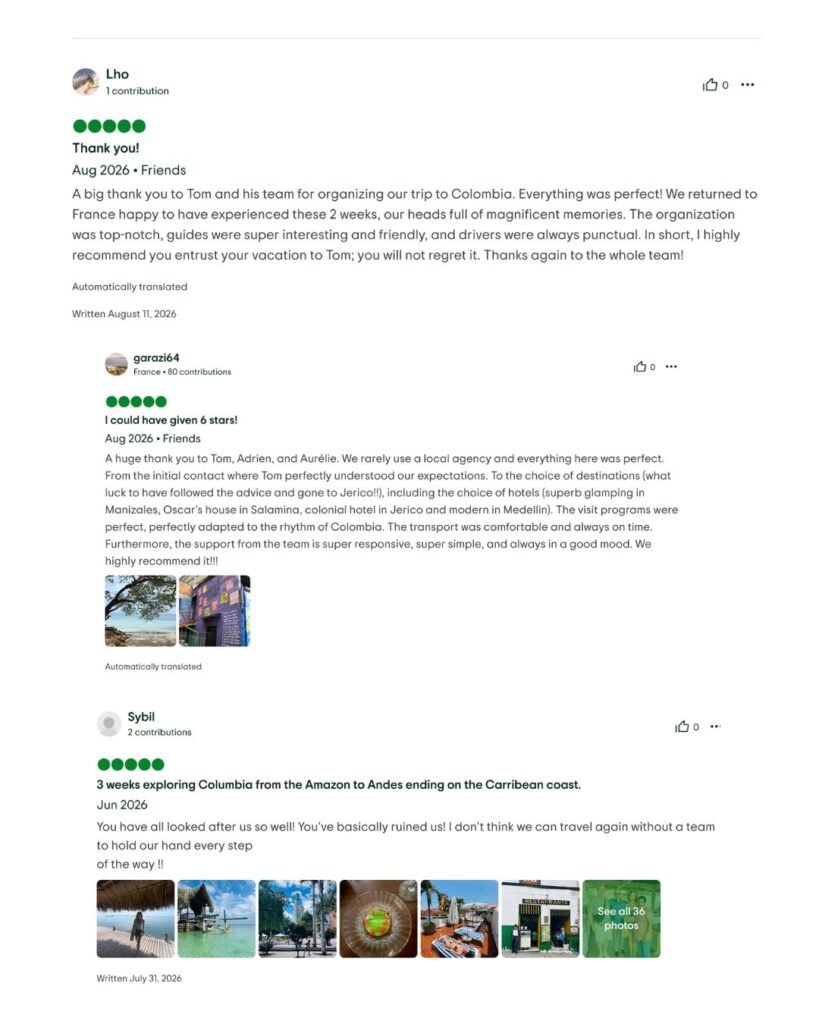
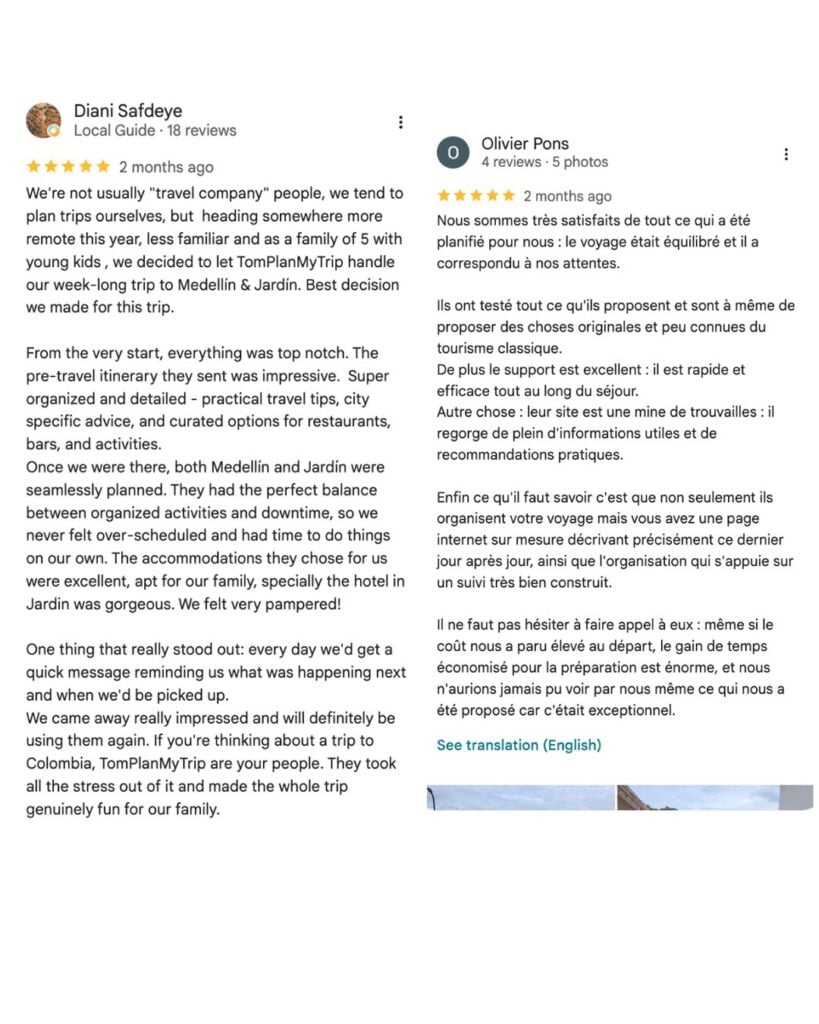
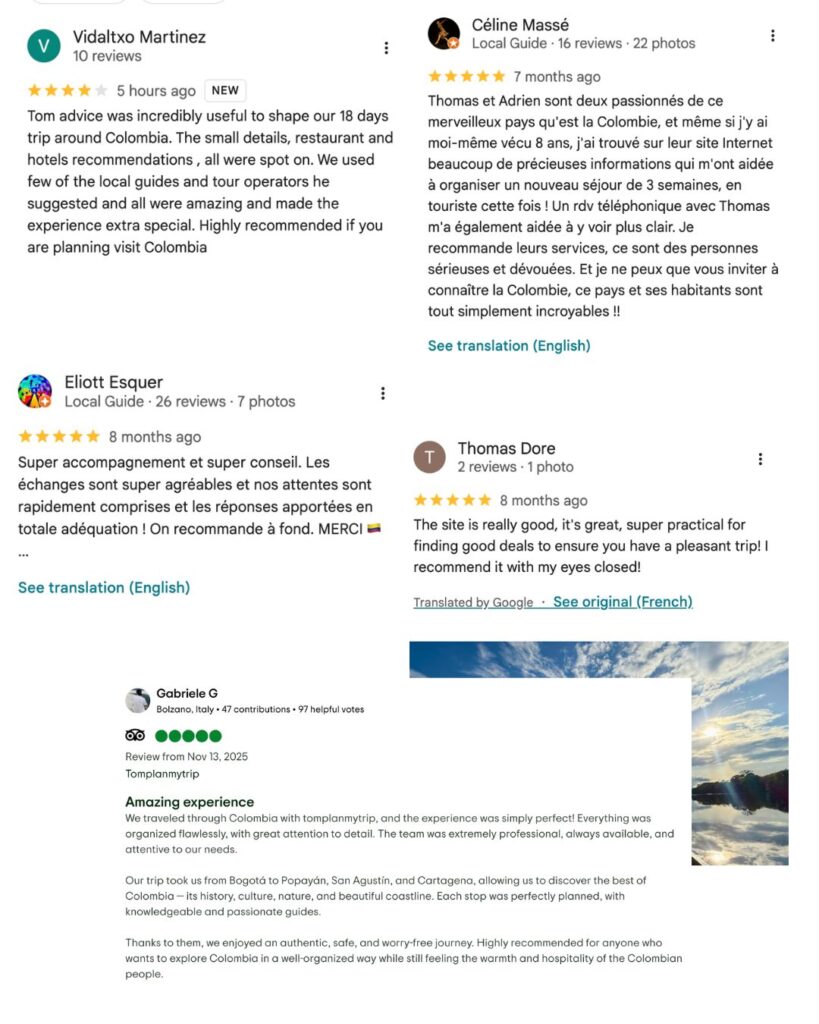
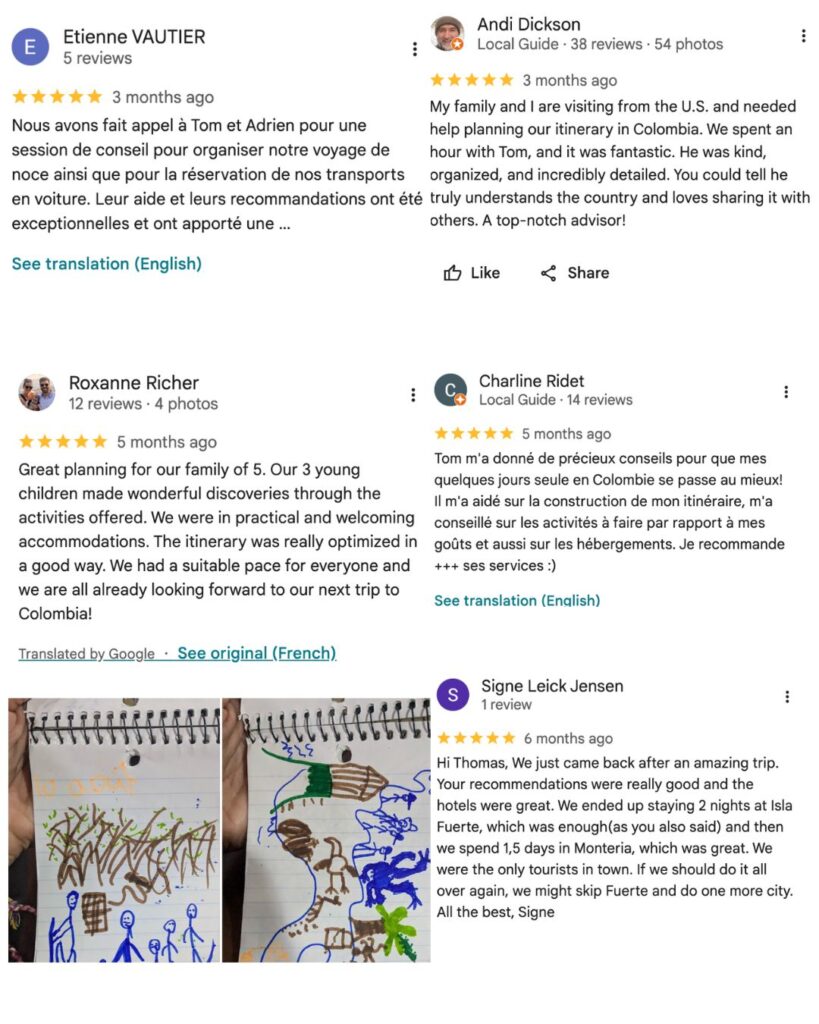
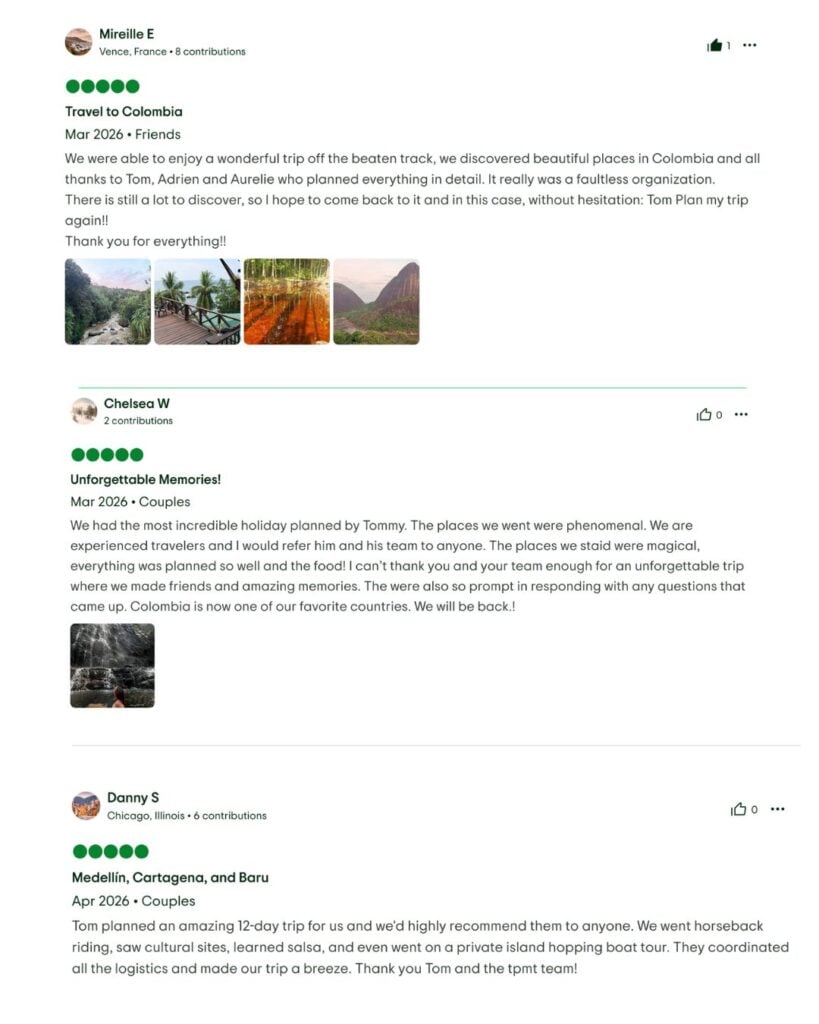
+185 five-star reviews on Google Maps

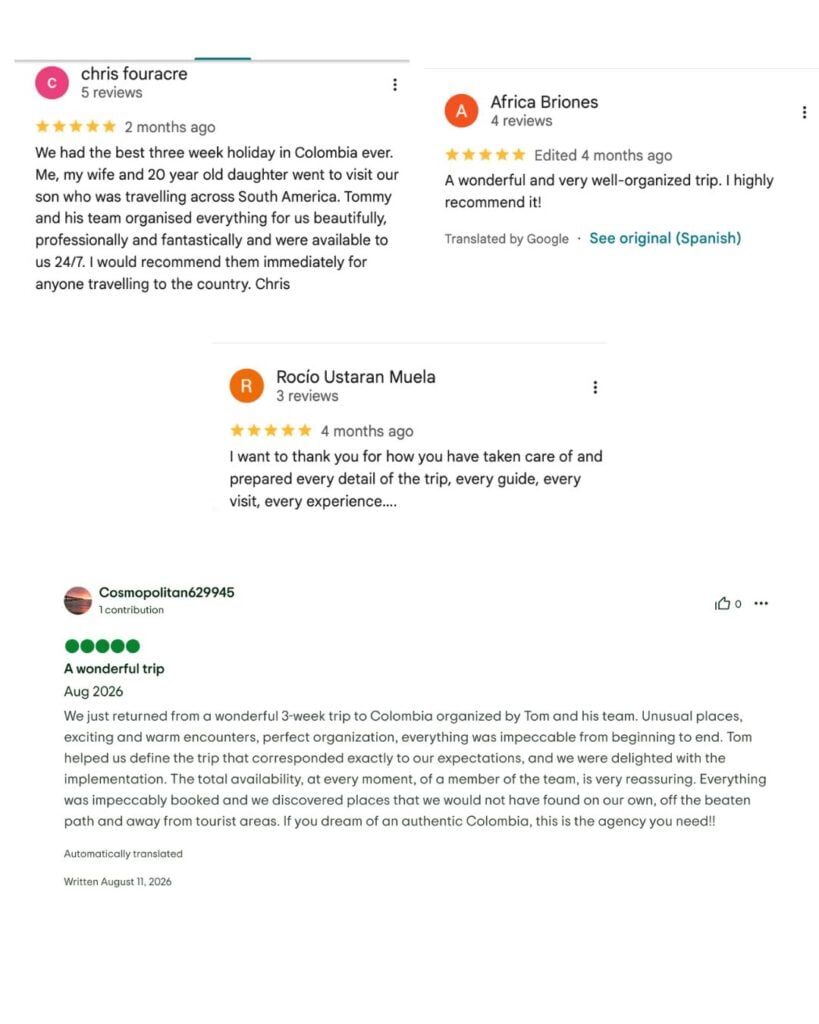
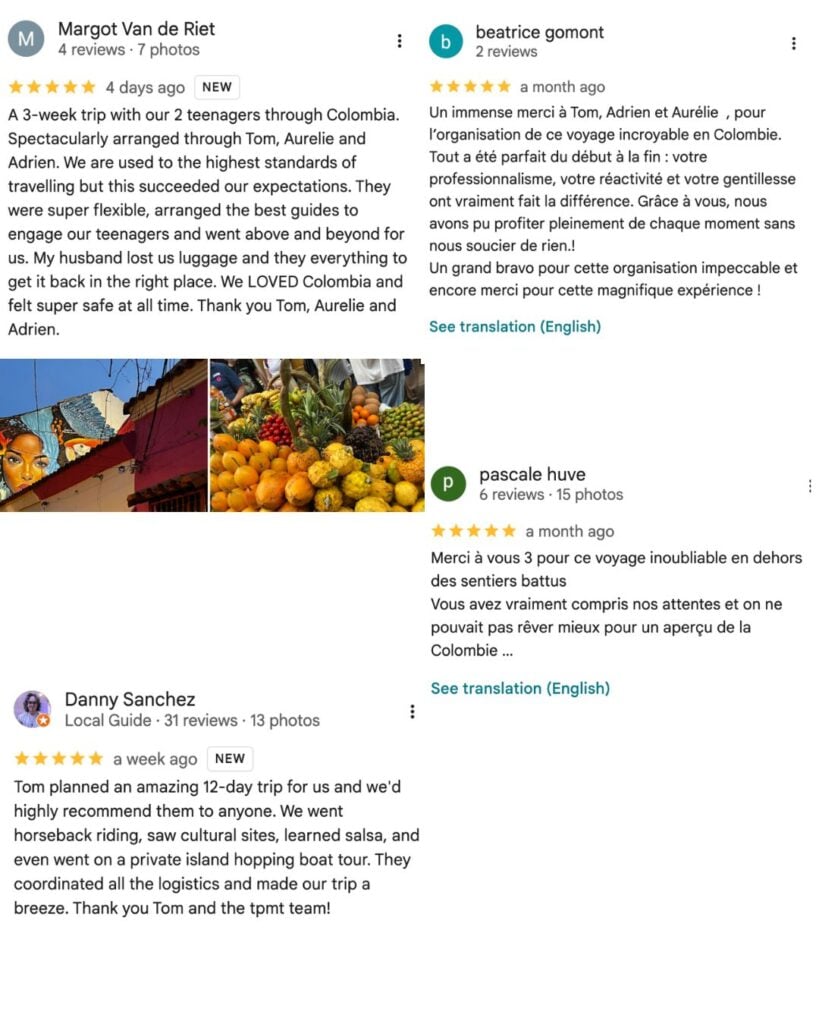

The solution for a successful Colombia trip
“Usually, I don’t go through a travel agency. But for Colombia, I needed help — and this agency transformed my experience in this country.”
That’s the kind of comment you’ll find most often in our reviews (we’ll let you read them 😉).
Let’s explore together for a quality, one-of-a-kind trip that lets you truly connect with the country:
- Undiscovered Colombia — adventures off the beaten path
- Easy Colombia — stress-free, fully comfortable
- Premium Colombia — high-end that stays authentic
What type of trip suits you?
Every trip is unique, but you might see yourself in one of these themes.
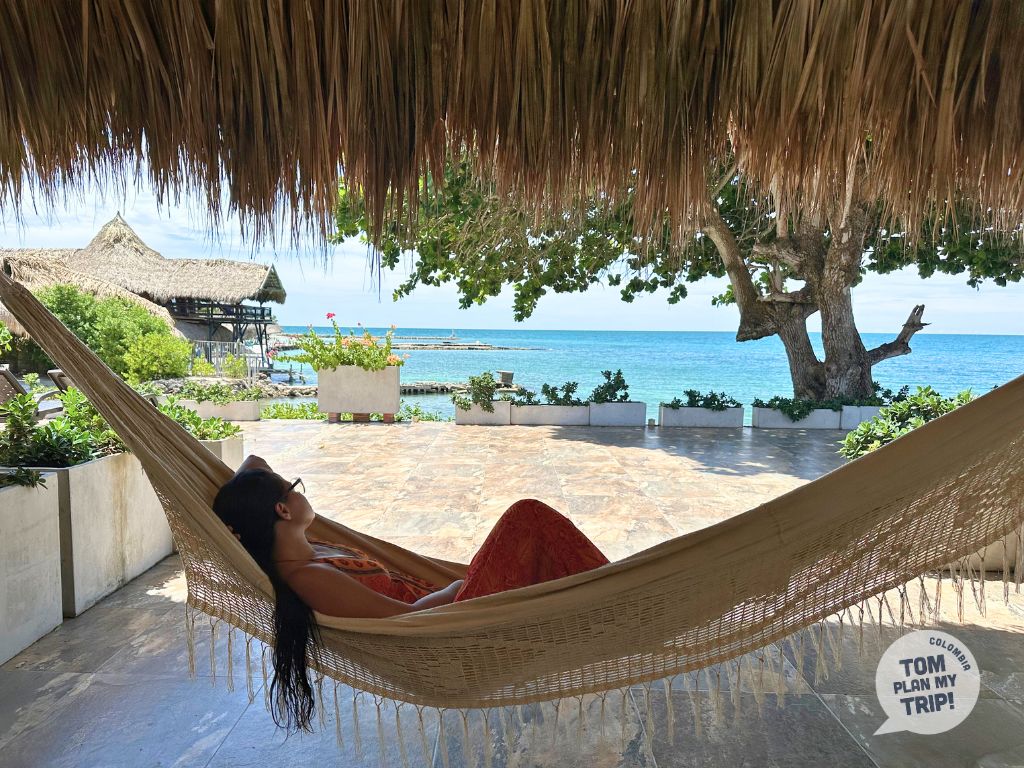
EASY
Colombia stress-free, comfortable and at your own pace — Say goodbye to vacations that leave you drained. We design a trip where every day is a pleasure, balancing exploration and relaxation.
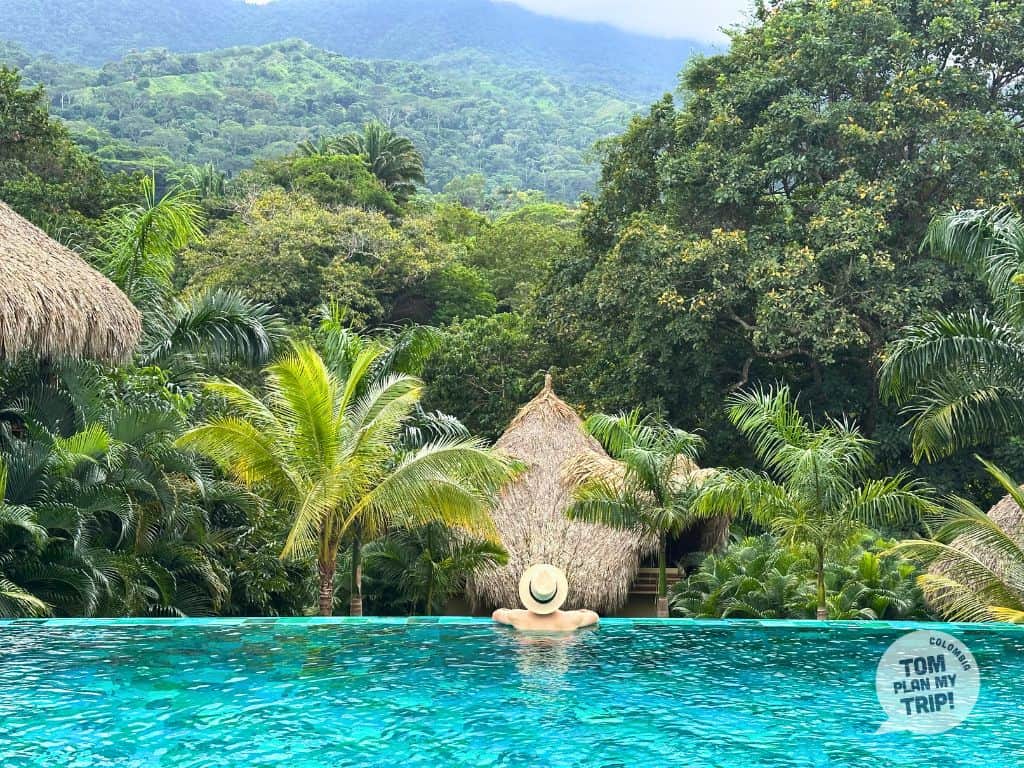
PREMIUM
Premium journeys through the heart of Colombia — Comfort, character, authenticity. You shouldn’t have to choose between a luxury experience and a genuine connection with the country. We give you both.
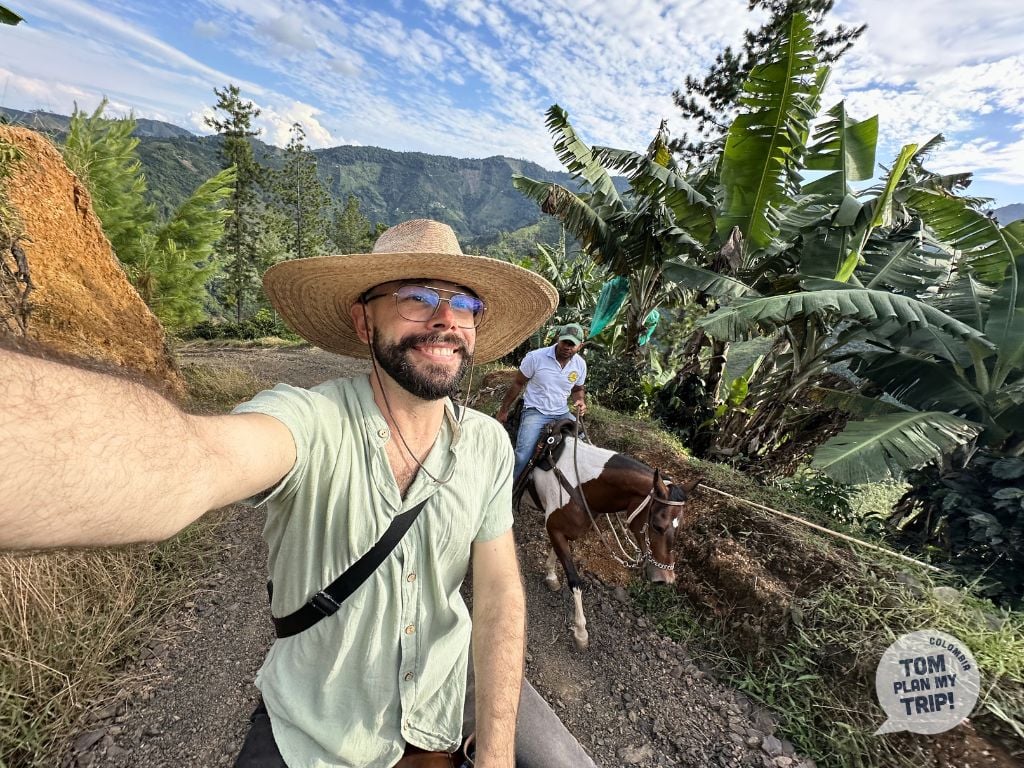
HIDDEN
The Colombia beyond the tourist trail — We don’t take you on a tour of Colombia. We immerse you in it, sharing unforgettable moments with your loved ones in stunning places you’d never have discovered on your own.
Learn moreWhat our clients say
Visit Santander & Boyaca

Barichara
Colombian Destinations Listed Alphabetically
Places from A to I
Places from J to P
Places from R to Z
Follow us on Instagram!


Our secret to actually enjoying your Colombia vacation
Colombia is twice the size of France. There’s no point trying to see it all in 15 days. Our trips distill 11 years of boots-on-the-ground exploration into the essentials: the very best of the country, without the stress of racing around.
