

Colombian Food: Traditional Dishes

Editor
Updated on
Colombian food reflects its people: generous, colorful, and full of life.
From the great classics simmered with love to snacks nibbled on the street corner, and the most surprising recipes, it tells the story of a mixed country, rich in fruits and home to some of the world’s finest coffee.
The flavors are bold, the dishes hearty, the tables festive. And while Colombians remain deeply attached to their traditional recipes, a new generation of chefs is fearlessly reinventing this heritage.
Thanks to this guide, discover a cuisine that is an invitation to travel and to meet people.
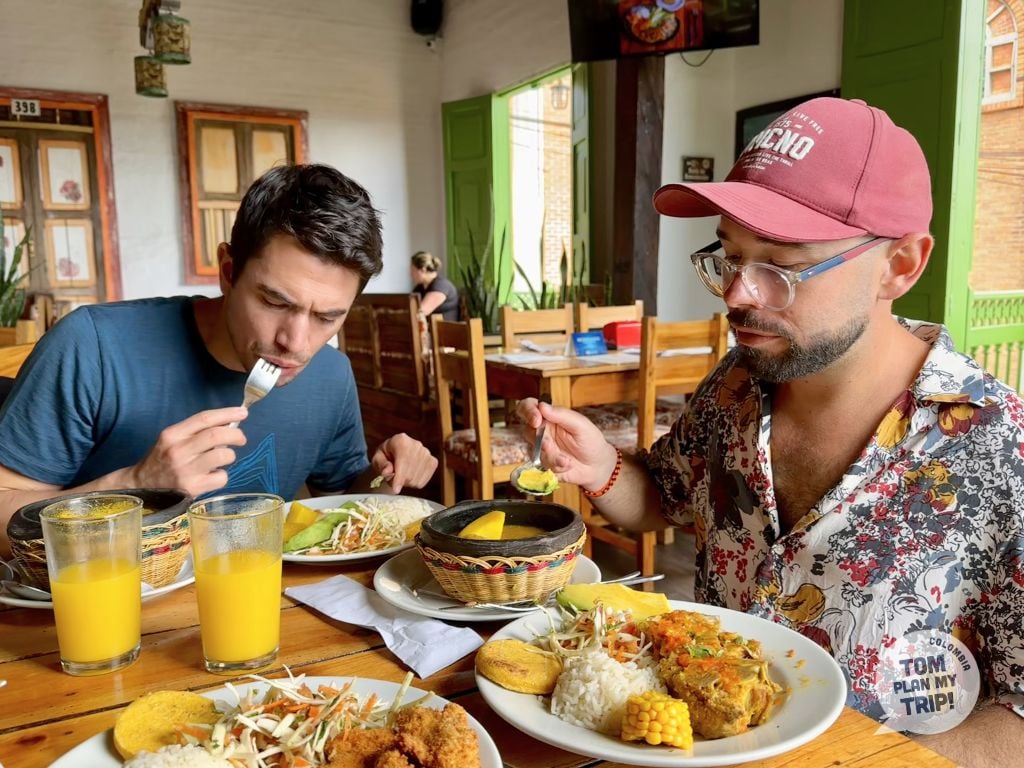
We constantly explore Colombia to find what’s truly worth it — authentic places, stays and experiences, far from tourist traps. Then we build your ideal trip in a logical and optimized way, so you make the most of it, without rushing everywhere, truly connected to the country.
→ About us | ⭐⭐⭐⭐⭐ + 185 reviews | → Our service

- In Colombia since 2015
- + 1025 tested experiences
- + de 145 local partners
- + 335 trips created


COLOMBIAN FOOD: WHAT YOU NEED TO KNOW
A lively, gourmet cuisine proud of its roots
THE GREAT CLASSICS OF COLOMBIAN FOOD
The dishes that tell Colombia’s story.
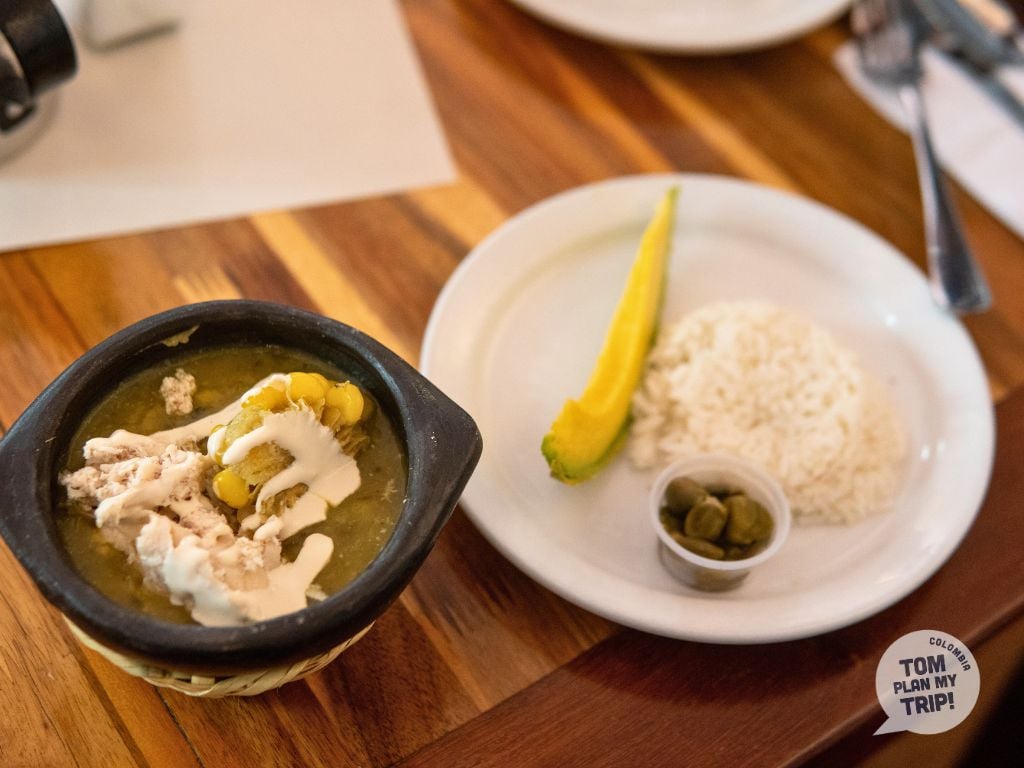
Aleja, my Colombian wife, says it without hesitation: ajiaco, a popular dish from Bogotá, is one of the best soups in the country.
Inherited from the Muiscas of the highlands of Cundinamarca, this soup traditionally combines three varieties of local potatoes and corn, not to mention the dried guasca, an endemic South American herb with a grassy and slightly earthy taste.
The Spaniards later added shredded chicken, fresh cream, and capers, transforming a peasant soup into a complete and delicious dish.
Long reserved for special occasions, this hearty dish is now enjoyed at Christmas but also on Sundays with family.
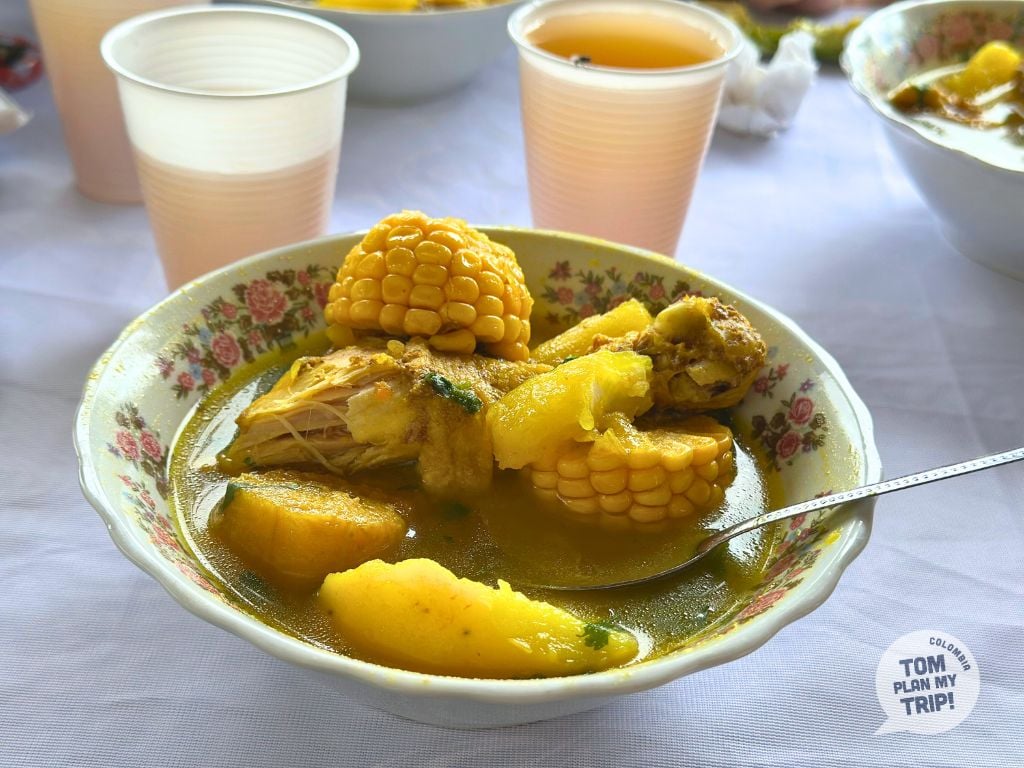
In Colombia, sancocho has a well-established reputation: it’s the levanta muertos — literally, the “resurrector of the dead”!
In a less sinister way, it’s the perfect broth to start fresh after a night of partying.
Born from the blending of indigenous, Spanish, and African traditions, this hearty stew combines tubers, corn, plantain, and meat — chicken, pork, beef, or fish, depending on the region. Because you should know that there are as many sancochos as there are Colombian regions.
Dish for celebration, family gathering, or picnic by a river on Sunday, a great Colombian tradition, sancocho is always cooked in large quantities — it is above all a dish for sharing.
La Bandeja Paisa is Colombia in all its exuberance: generous and without complexes.
Originally from the mountains of Antioquia, it once fed the peasants and muleteers of the Andes after their hard days of work.
On the same large plate come red beans, rice, ground beef, chicharrón, chorizo, blood sausage, fried egg, arepa, avocado, and fried plantains! Take your time to savor it, and believe me, you’ll be full for a while.
A culinary heritage blending indigenous, Spanish, and African influences, which almost became the national dish in 2005 — a distinction that many Colombians refused, considering the dish too regional to represent the entire country.

Honestly, it took me a while to discover this mostly local dish, and since I tasted it, it has become one of my favorites!
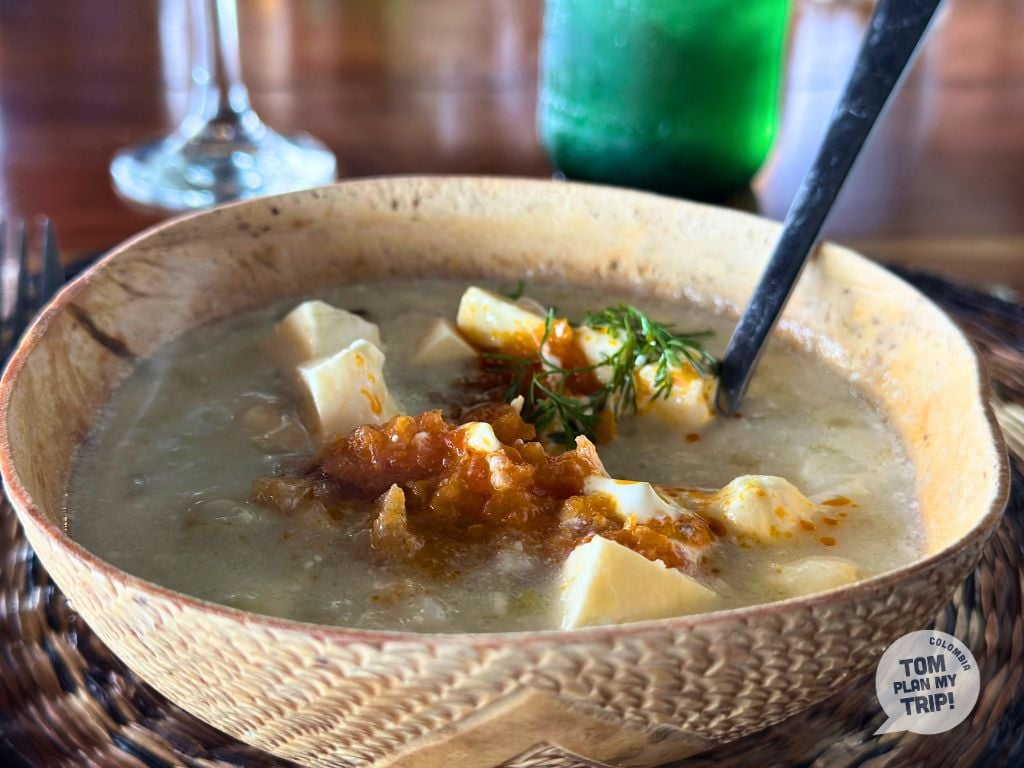
The mote de queso is typical of the savanna of the Colombian Caribbean coast — mainly from Sucre and Córdoba — while, during the Guerra de los Mil Días, the famine drove the inhabitants to feed on a simple yam porridge.
Once peace returned, this survival soup was enriched with yuca, suero (fermented dairy product), and queso costeño. A good mote de queso is thick, generous with pieces of cheese, and is enjoyed accompanied by rice and, for seasoning, tomatoes, onions, and garlic.
A dish worthy of the gods, according to the costeños; the mote de queso from my Colombian mother-in-law proves it to me every time.
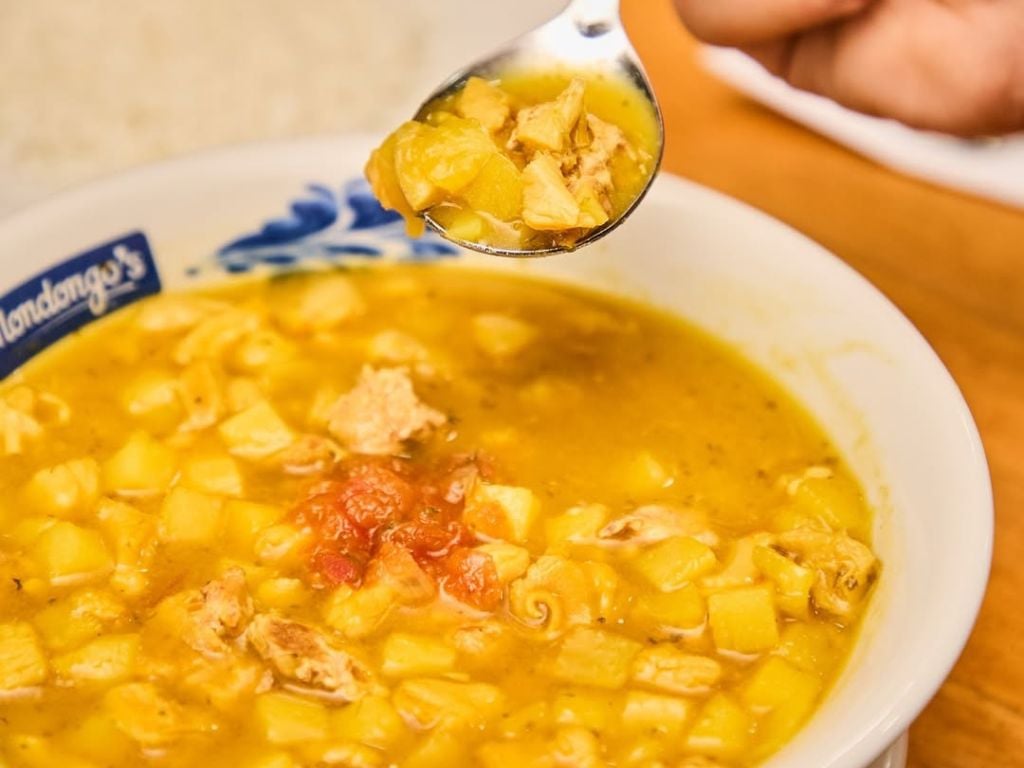
You either love it or hate it, but mondongo leaves no one indifferent.
Mondongo is a soup made from beef tripe that is a direct descendant of callos, a Madrid tripe stew, transformed over the centuries through contact with indigenous and African traditions.
In the pot: beef stomach slowly simmered, pork ribs, chorizo, corn, peas, potatoes, and yuca, all flavored with cumin and coriander.
Popular throughout the Andean region — and particularly in Antioquia — this dish is enjoyed with white rice, avocado, and a slice of plantain.
For tripe lovers, it’s a hit. For others, the broth alone is worth the trip.
© Tomplanmytrip
Breathe, and let us take care of this beautiful adventure
Colombia is twice the size of France, with a diversity of landscapes that’ll make your head spin — and a real logistical puzzle, with roads winding through the Andes mountains.
What kind of adventure do you want to live? Is it really right for what you’re looking for? Is it safe? Is it too touristy?
Guessing and hoping you made the right call — sometimes that works. But not always.
And I won’t even get into the stressful surprises that force you to make some changes mid-trip.
Look, we’ve been doing this for years — and if you check our reviews, you’ll see we know what we’re doing. In less than an hour on a call, we figure out your ideal destinations together. We handle the rest.

© Tomplanmytrip
THE SURPRISES OF COLOMBIAN FOOD
When Colombian food surprises your eyes and your palate.
Among the most unusual Colombian recipes, the hormigas culonas — literally the big-butt ants — hold a special place, even in the eyes of many Colombians, except in Santander, where these insects are a gastronomic tradition over 500 years old, inherited from the Guanes.
For these indigenous people, it served as a wedding gift and an aphrodisiac remedy — today, it is one of the most sought-after and expensive dishes in the region.
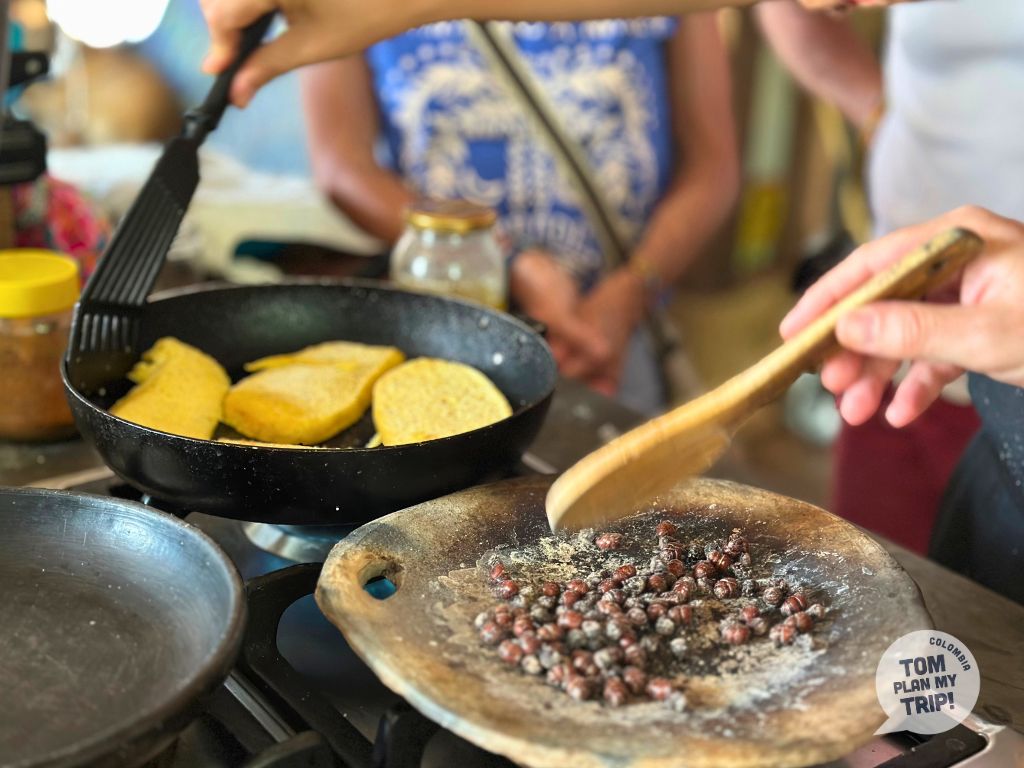
Once a year, with the first rains, a massive swarm occurs: it’s the signal for the harvest. They are frozen, the wings and head are removed before grilling them with salt and a pinch of spices in a clay pan.
At Margarita’s in Barichara, I tasted several stages of cooking — the half-cooked, frankly, is to be avoided. Well grilled, however, they resemble gray shrimp. Not bad at all.
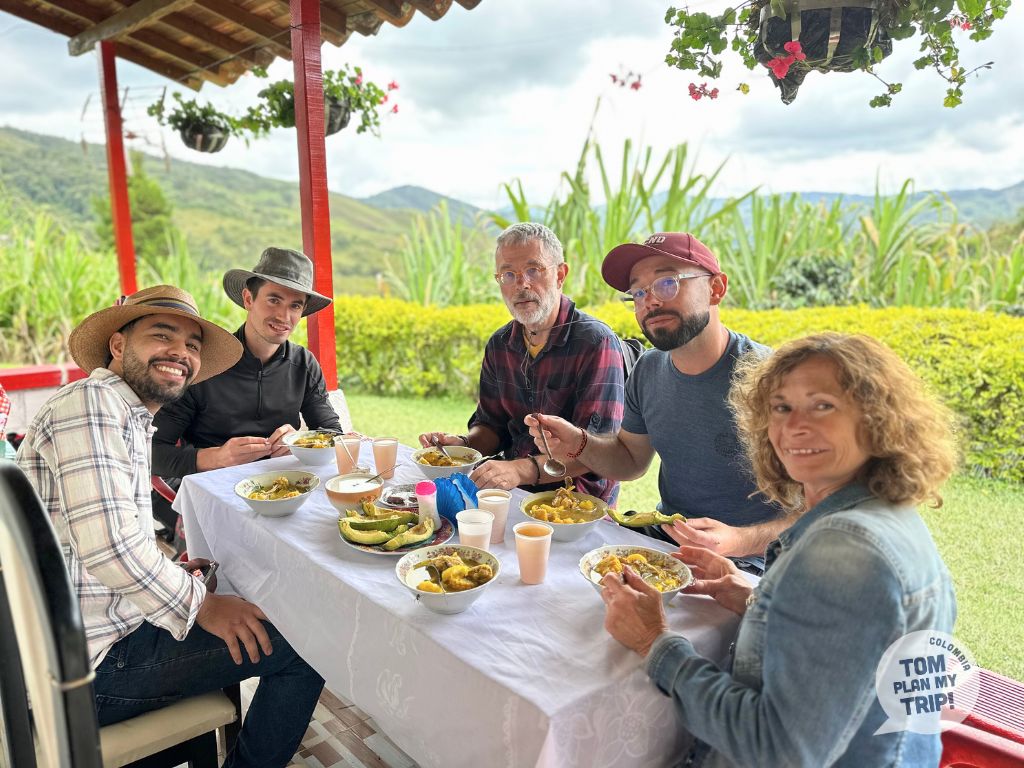
It’s an activity we recommend to our travelers staying in Barichara. A true human encounter.
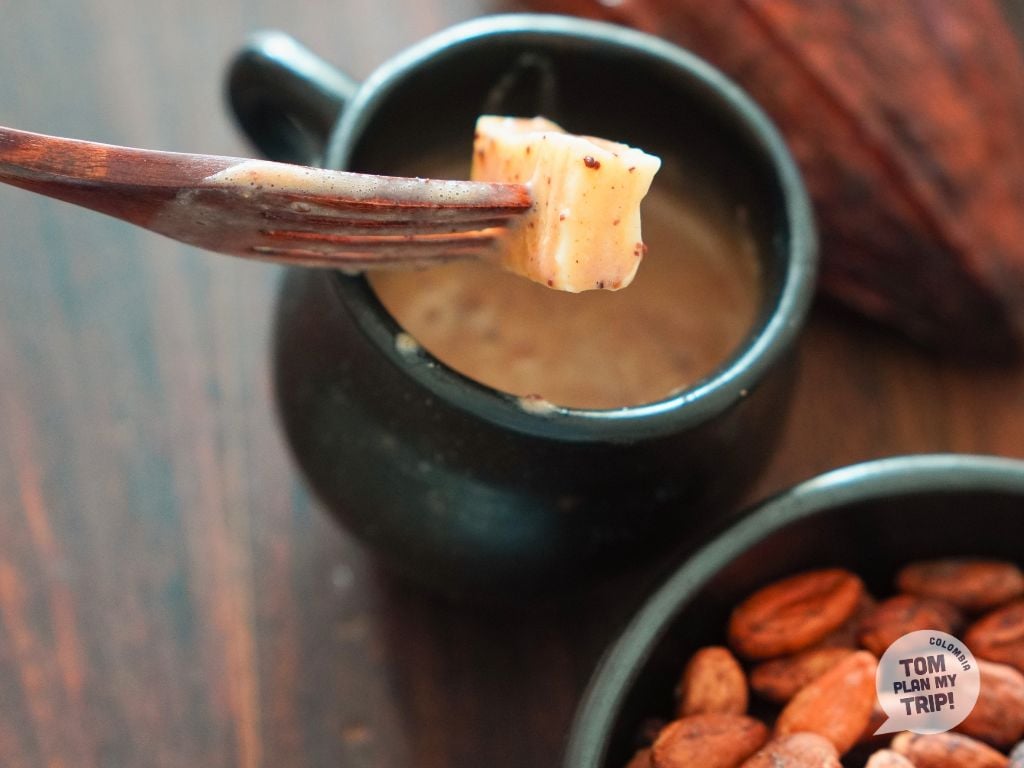
Hot chocolate with cheese inside. Said like that, it doesn’t really sound appealing — and yet it’s one of the iconic breakfasts of the Andean region.
The story is simple: Colombia produces one of the best cacaos in the world, and fresh cheese is a staple of daily life. One day, someone placed pieces of cheese at the bottom of a cup and poured boiling chocolate over it.
The result is astonishing: the cheese melts slowly; the saltiness balances the sweetness; all that’s left is to enjoy it with a spoon or to dip your arepa to catch the cheese strings, like a Savoyard fondue.
A rainy day in Bogotá means ordering a comforting snack in the cafes.
It’s Adrien’s favorite Colombian dish.
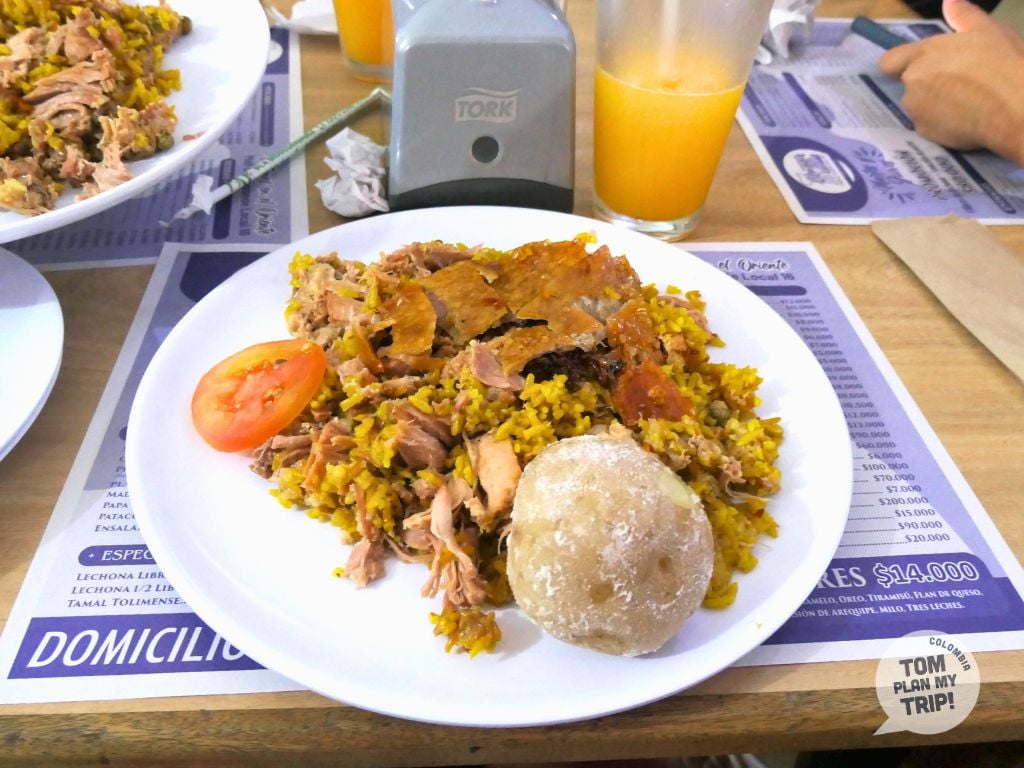
La lechona is a whole pig deboned, stuffed with pork meat, peas, and spices, then roasted for twelve hours in a clay oven until the skin is crispy and the meat is tender.
Originally from Tolima and Huila, this hearty dish is a legacy of the asado castellano, a roast suckling pig typical of the Castilian region in Spain, reinvented over the centuries with local ingredients.
Served with a white corn arepa and l’insulso — a sweet cream made from corn and panela — it’s a generous festive dish. On special occasions, the head of the lechona was traditionally drawn by lot among the guests.
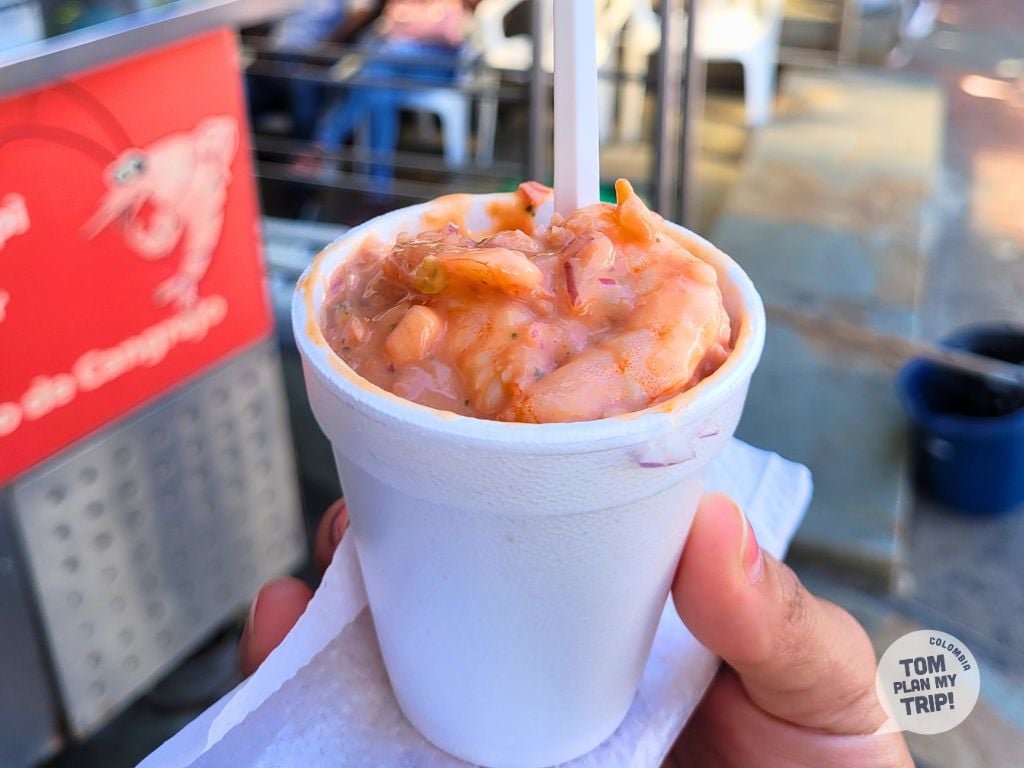
The shrimp cocktail is one of the dishes that are ordered without even looking at the menu on the Colombian coast.
It is one of the most popular appetizers and its recipe includes only a few ingredients: cooked shrimp, pink ketchup-mayo sauce, onions, lime, cilantro — all served cold in a glass.
Born in the American ports of the 1940s, this classic snack traveled to Colombia to become the must-have snack of the markets and beaches of the Pacific and Caribbean coasts.
The Colombian originality comes from the accompaniment: the galleta saltín, a slightly salty cracker, which is dipped or crunched between bites. A combination that surprises at first but is immediately requested again.
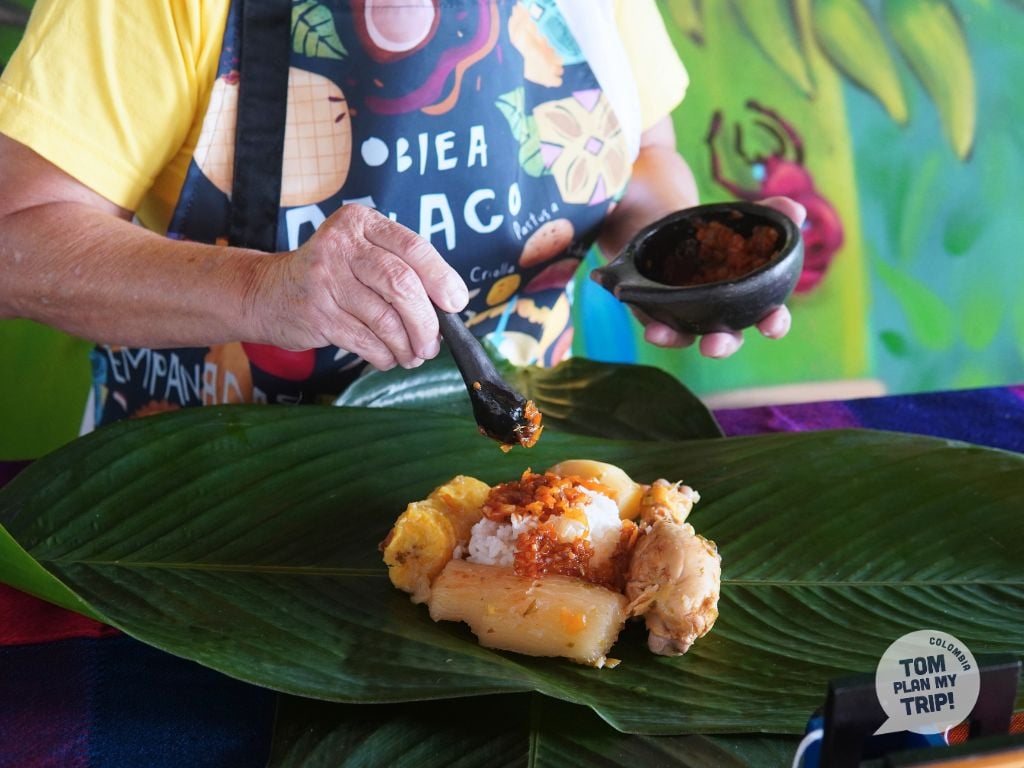
There is something clever and deeply Colombian about the fiambre.
This rustic dish, born among muleteers and coffee pickers who roamed the Andes, gathers, in a banana leaf — tied with cabuya, a string made from agave fibers —, a generous assortment of starches, meats, eggs, and vegetables depending on the region.
The leaf retains the heat, flavors the food, and composts naturally. The result: a complete picnic dish that smells of wood fire and the great outdoors with zero waste.
I understood the ingenuity of the muleteers when, after 3 h 30 of walking in the jungle on the Amargal trek from Arusi in the Pacific, Samy, our guide, took out our packed lunches from the bag for our lunch break at the foot of a waterfall.

© Tomplanmytrip
COLOMBIAN STREET FOOD
What every Colombian loves to snack on in the street.
The arepa is sacred in Colombia.
Like bread in France, it’s found at every meal and Colombians defend it as a national treasure — so definitely don’t say you don’t like it 😉
Corn cake, inherited from the indigenous peoples, this Colombian recipe has hardly changed in 3,000 years. There are nearly 70 varieties — sweet or savory, grilled or fried, simple or stuffed — and the vast majority of Colombians eat one first thing in the morning.
My favorites: the choclo (corn) arepa grilled with cheese, the arepa stuffed with meat, cheese, and avocado for dinner, and when I’m on the Colombian Caribbean coast, I always eat an arepa de huevo for breakfast — a fried arepa with an egg inside.
The arepa paisa, more neutral, is a must in Antioquia, for breakfast, with cheese and huevos pericos (scrambled eggs). I confess it’s not my favorite.

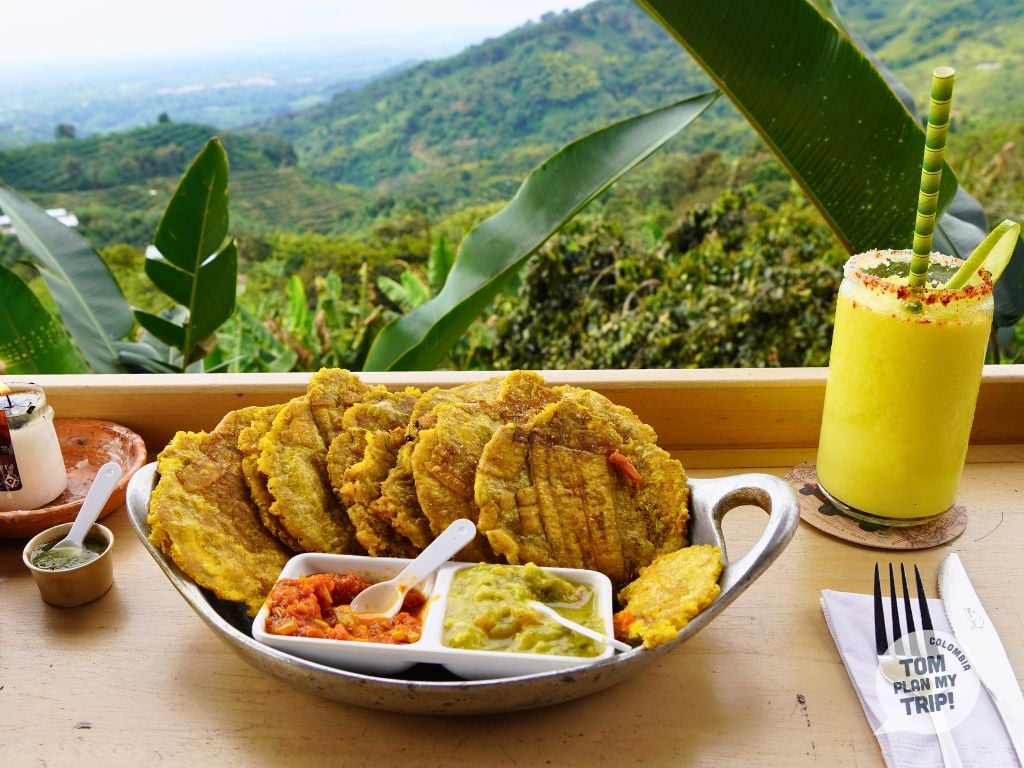
The patacón is one of my favorite Colombian recipes.
Typical of the Caribbean coast, it is made from green plantain cut into pieces, fried once, flattened, and then fried again — until you get a large golden and crispy patty.
You can top it with cheese, shrimp, meat, or sauces, depending on your mood, but for me, the winning combination remains the simplest: queso costeño and hogao, a tomato-onion sauce that accompanies dozens of Colombian dishes.
Served as a snack on the beach or as a side to a main dish, the patacón fits any occasion. As soon as you arrive on the Caribbean coast, it’s the first thing to order — personally, I’m lucky that Aleja makes delicious ones.

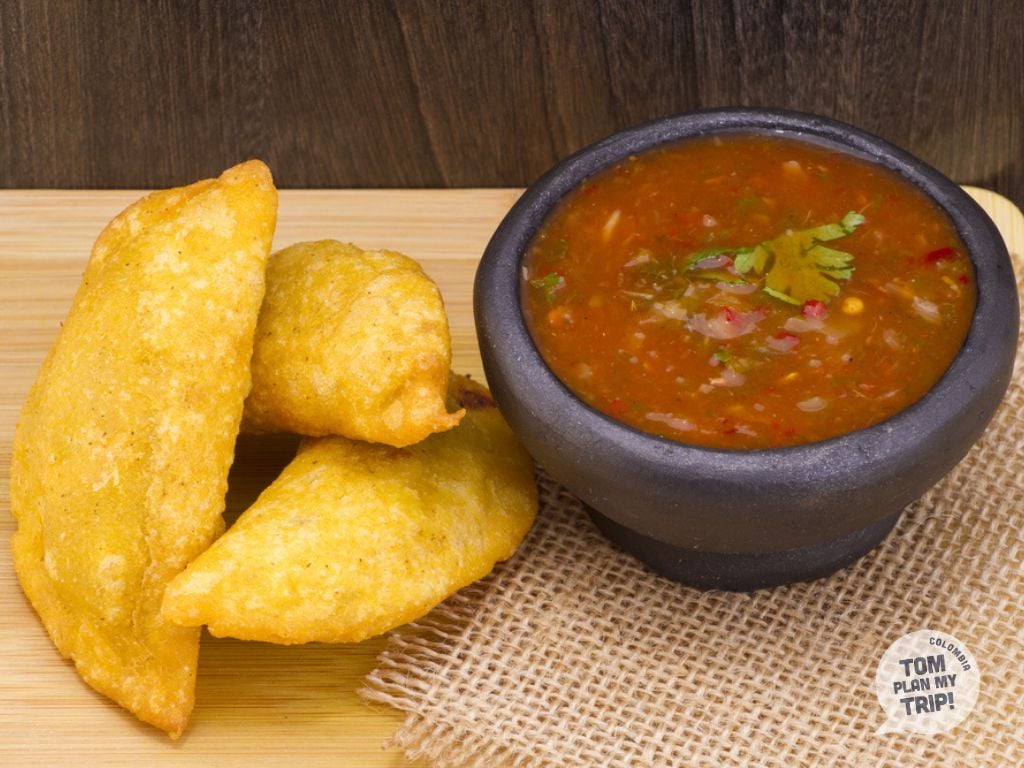
The empanada is Colombian social life condensed into a fried pastry.
You eat them standing, with friends in front of the church, at the street corner, in the late afternoon.
The dough is made from yellow corn; the filling changes depending on the region — hogao and carne desmechada (shredded meat) in Antioquia, meat and cheese on the coast, rice in Cali, red potato with roasted peanuts and achiote, a natural coloring that tints dishes reddish-orange in Cauca.
Every Colombian has their favorite empanada. Mine: the classic “carne-papa-hogao” and the paisa with chicharrón (grilled pork ribs), not to mention a tuna empanada, eaten at Inés’s in Nuquí, in the Pacific — a hut, two tables, empanadas made to order. Unforgettable.
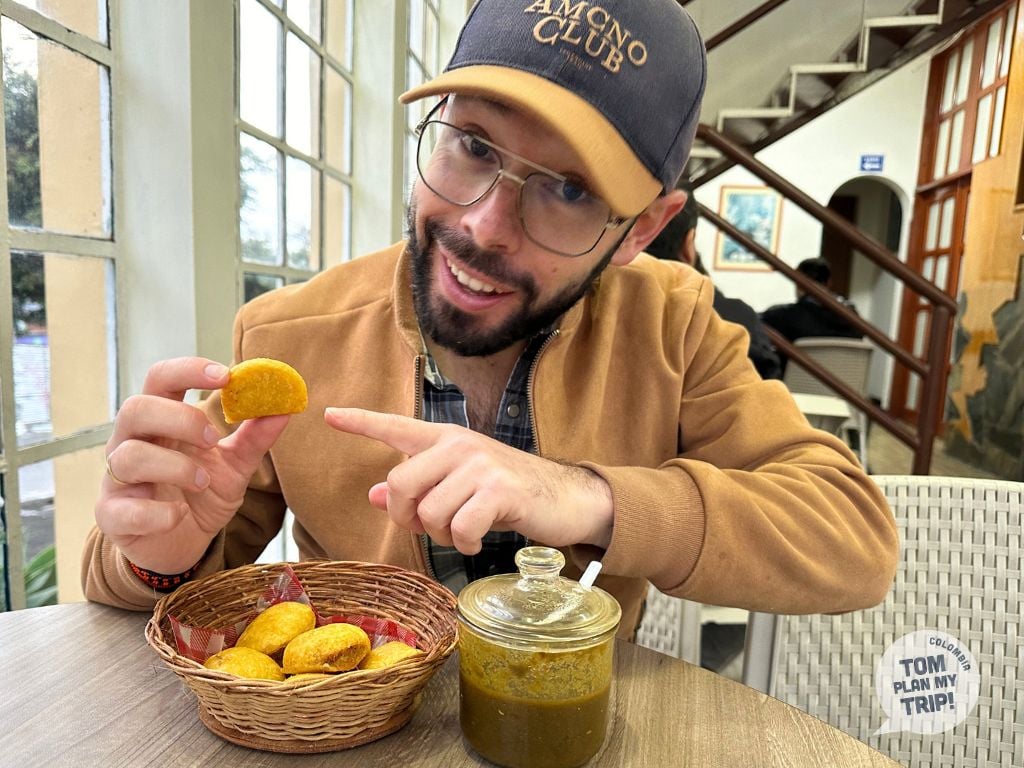
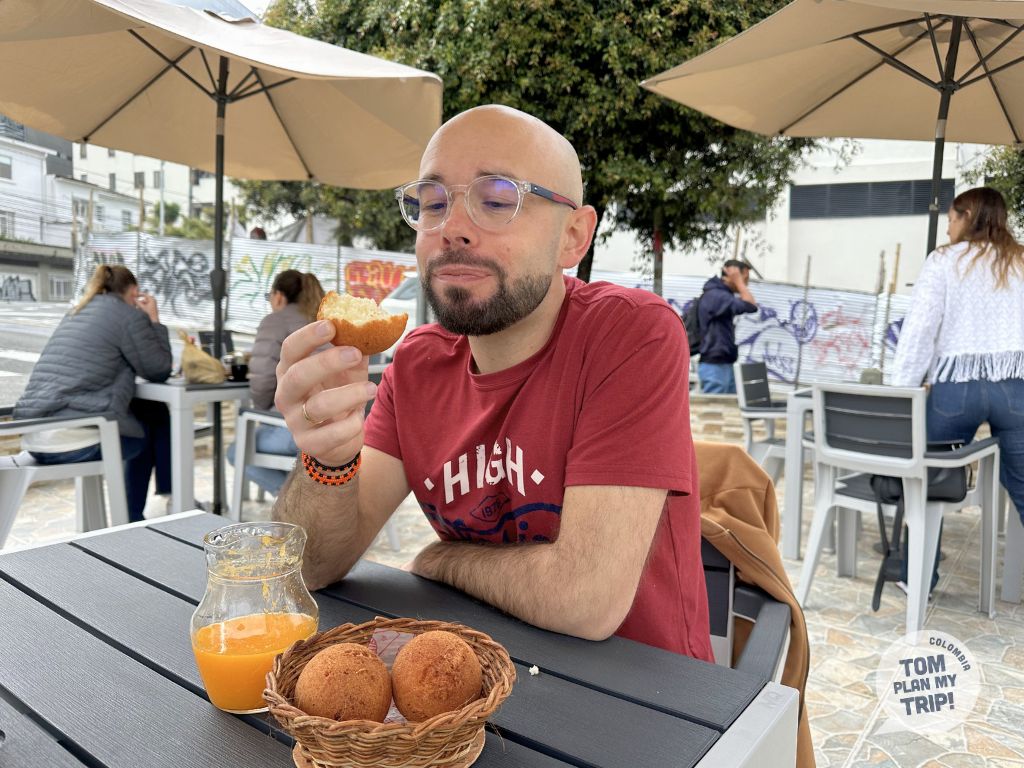
Small fried balls with cheese, crispy on the outside and soft on the inside — buñuelos are one of the most addictive Colombian snacks.
The dough mixes cheese, corn starch, and yuca flour — simple, but the frying temperature must be perfect, otherwise the buñuelos explode in the oil.
Popular all year round, throughout the country, at breakfast time, with a hot chocolate or, Colombian style, a Pony Malta — a non-alcoholic malted drink — well chilled, I love them. Their true fans are the inhabitants of Antioquia, where you can find them in bakeries throughout the day.
Accompanied by natilla, a sweet cinnamon cream, they are an essential Christmas specialty. Colombians joke that it’s the fruit of the season.
The salchipapa is an icon of Colombian street food — this dish, probably born in Peru in the 50s, has been adopted and reimagined throughout South America.
The base is simple: fries and slices of sausage, topped with ketchup, mayo, and mustard. But since Colombians never do things halfway, you can find chorizo, chicken or other meat, bacon, eggs, melted cheese. In short, anything can end up in a salchipapa — gigantic!
My father, always curious about new culinary experiences, ordered one in Ciénaga, in Magdalena, near Santa Marta — his face when the server placed the dish in front of him!
A tip: if you try the experience, specify the size if you don’t want to end up with a huge dish. Colombians love to gather with friends around this dish.

© Tomplanmytrip
THE ESSENTIAL COLOMBIAN SNACKS
These childhood-scented treats for every Colombian.
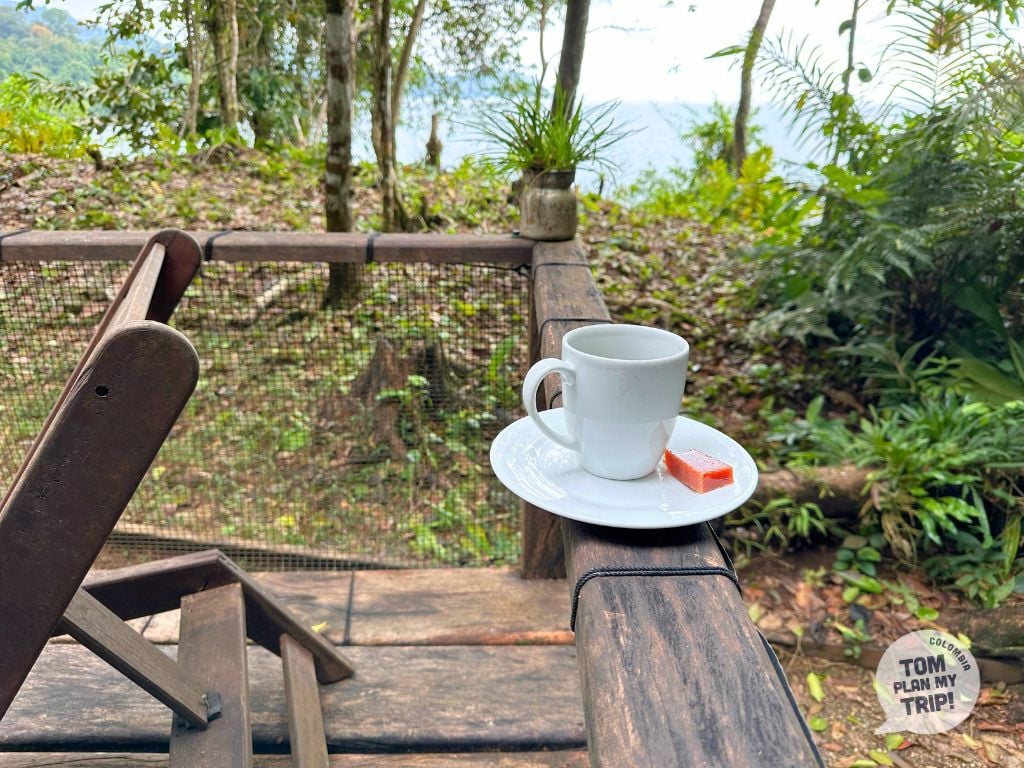
The snack is the little square of guava paste that every Colombian has in their pocket or in their bag.
Made since the 17th century in Santander, its recipe is simple: guava pulp and panela (unrefined cane sugar) cooked for a long time until a firm, bright red paste is obtained, wrapped in leaves of bijao (tropical plant).
Iconic, it almost became a national cultural symbol in 2006, before obtaining its Designation of Origin in 2017. It is eaten alone or in Colombians’ favorite version: with a piece of fresh cheese. Sweet, salty, and incredibly addictive.
Besides being delicious, it’s a true little energy booster! I tested it before facing “La pared” (the wall), a very steep staircase, set up on a part of the trail leading to the summit of the paramo of Iguaque, near Villa de Leyva in Boyacá 😉
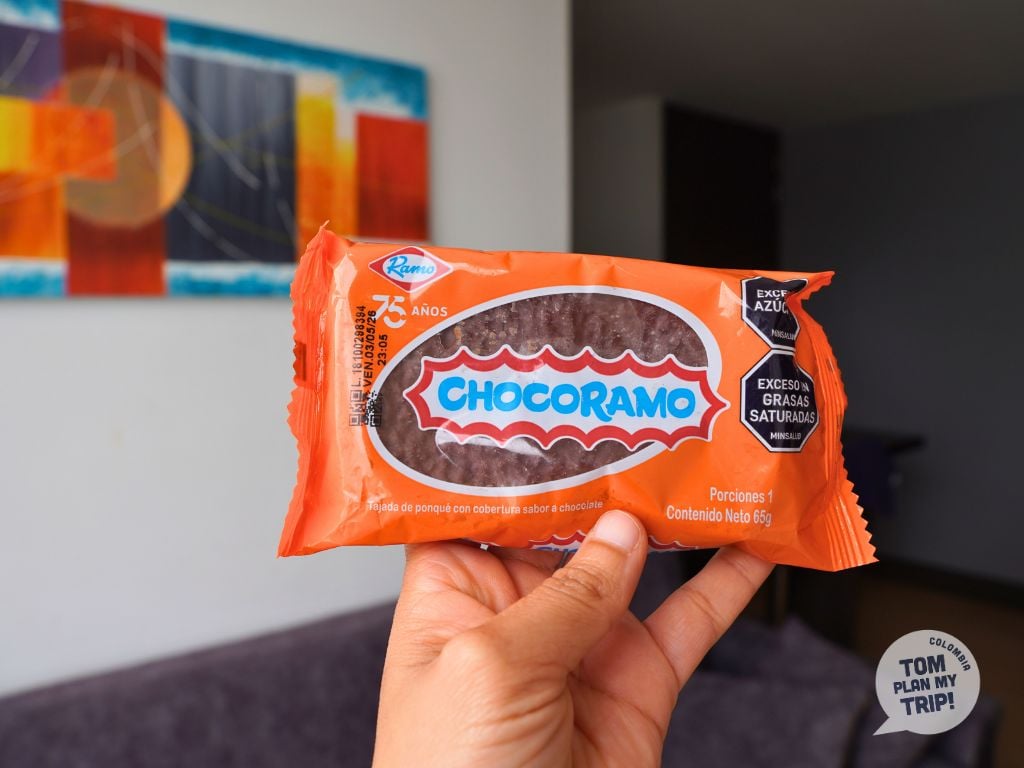
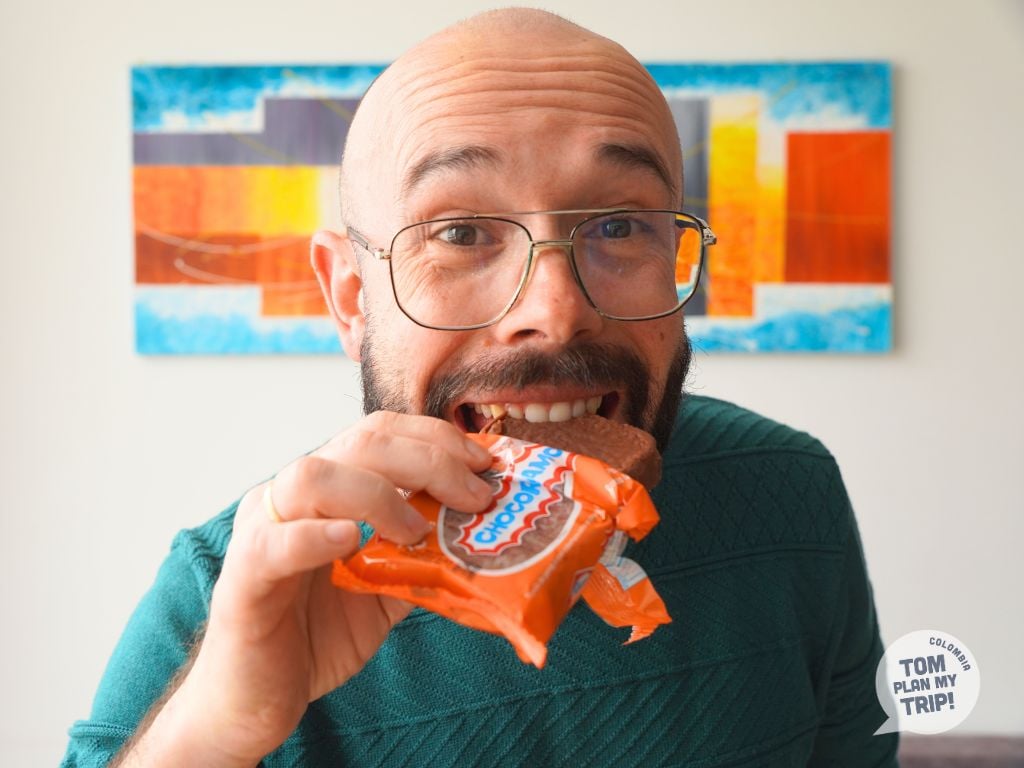
Chocoramo is 65 grams of Colombian nostalgia in its orange packaging, the Proust madeleine for Colombians 😉
Born in 1972, this iconic little industrial soft cake is made of flour, vegetable fats, powdered milk, eggs, and natural flavors, and is coated in chocolate. It took its creator, Don Olimpo López, six months to make the chocolate stick to the dough without cracking it.
Since then, several tens of millions of Chocoramos are sold every year in Colombia. Frozen, this nourishing treat is even better — the chocolate becomes crunchy.
In 2022, an internet user dared to criticize it on Twitter, calling it a “dry cake with greasy chocolate.” Bad idea: all of Colombia rose up to defend it.
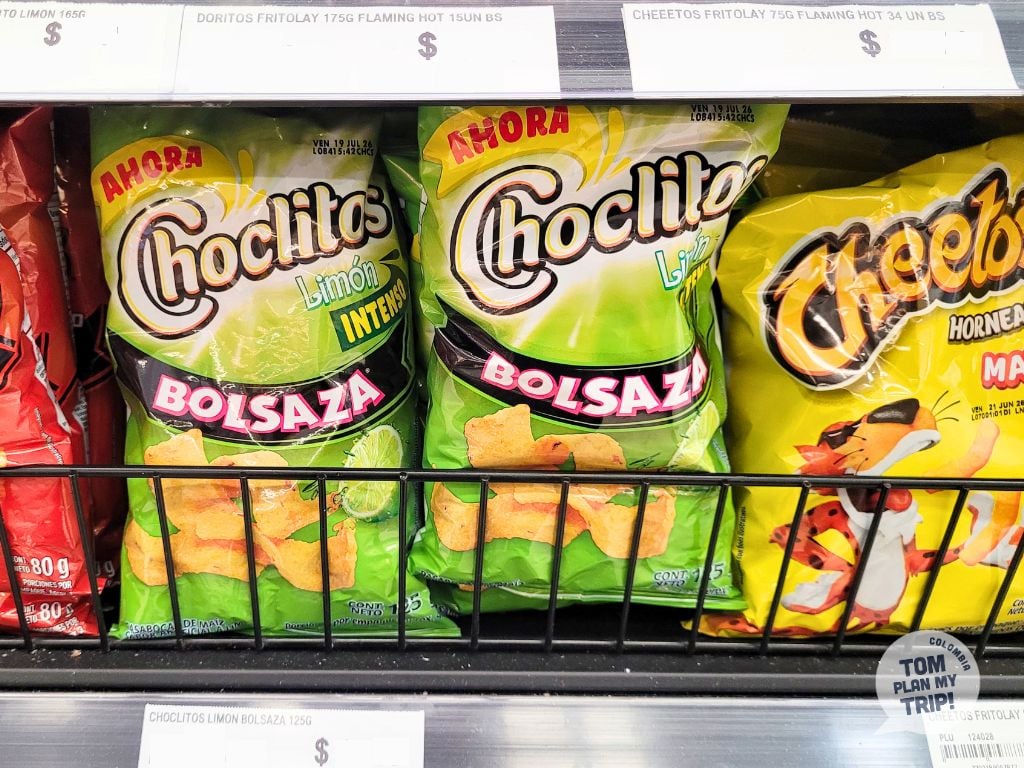
It’s hard to find Colombian food more Colombian than Choclitos, an industrial snack sold in a bag!
You will find these little corn chips with lime — crispy, slightly tangy — in all the grocery stores, all the high school lunchboxes, all the night buses.
Produced by a Colombian company, then taken over by an American multinational after the country’s economic opening in the 1990s, they have become a generational marker.
Ask any Colombian what the smell of a Choclitos bag reminds them of: they will answer “childhood” straight away.
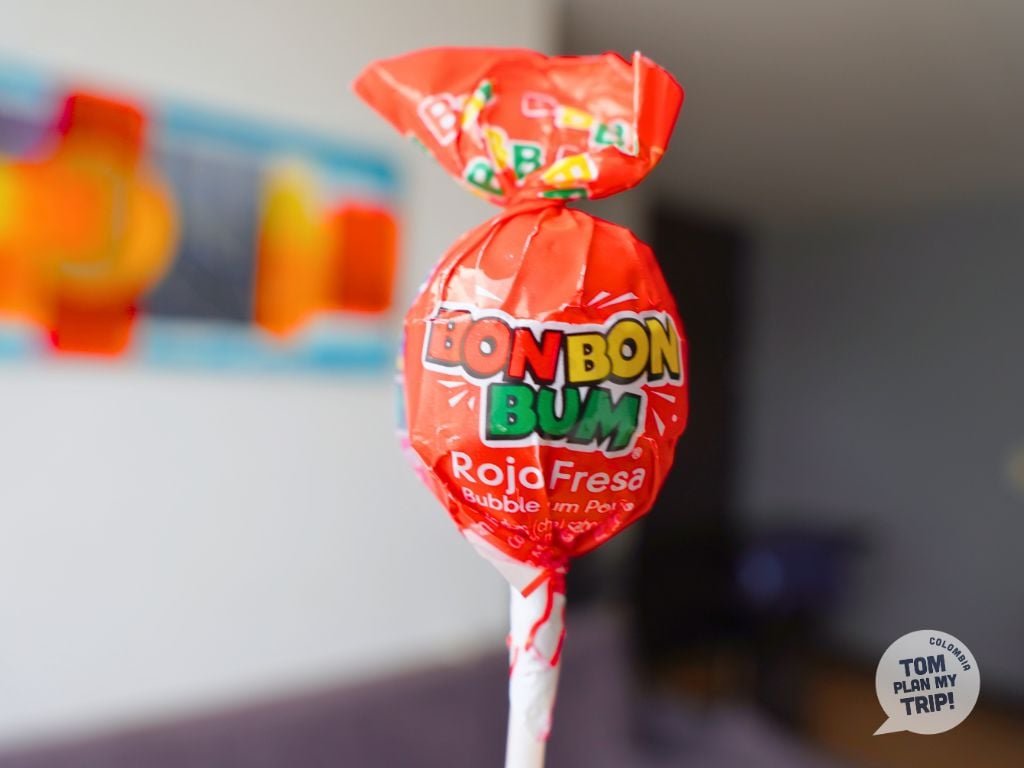
The Bon Bon Bum is the lollipop symbol of Colombia.
This lollipop with fruity caramel, filled with gum, was born in 1970 in the family confectionery Colombina, from Valle del Cauca, which worked with sugar cane. Jaime Caicedo, its owner, brought back from Holland a machine to make round caramels on a stick.
He had the idea to fill them with gum. After months of trials, when the formula was finally perfected, Caicedo exclaimed: “This bon bon is going to be a BUM!” — and the name was found.
The Bon Bon Bum tripled the company’s sales in one year. More than half a century later, 170 million units are produced each month.
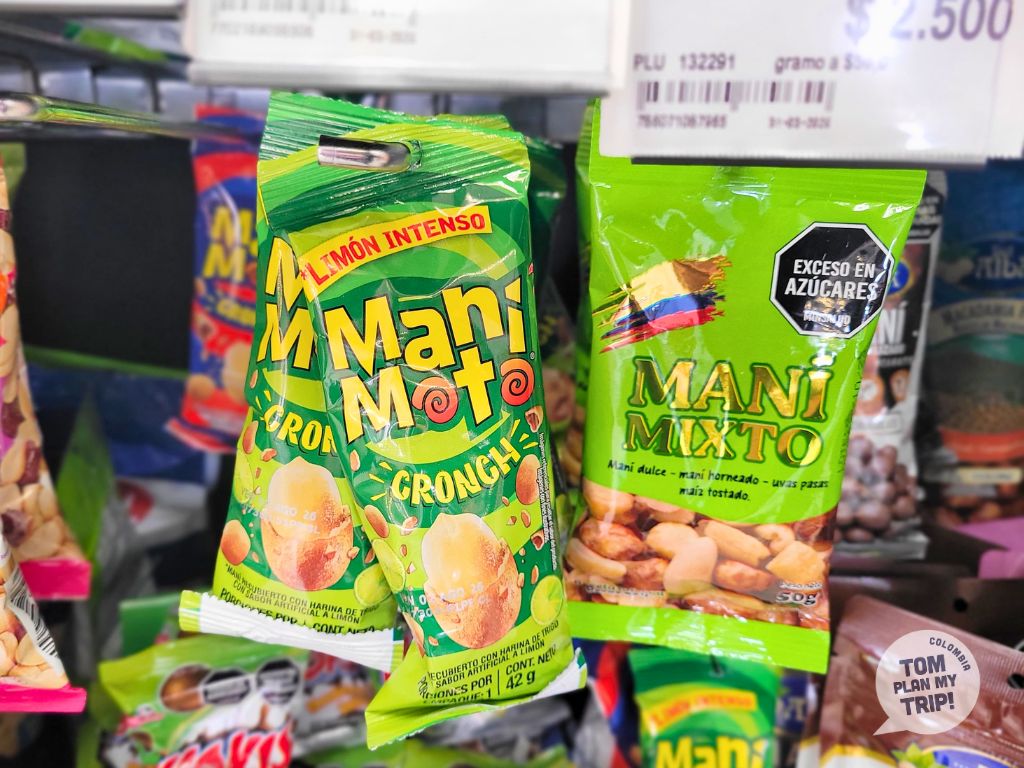
Maní Moto is the story of an idea that traveled around the world before landing in Colombia.
In 1945, a Japanese immigrant in Mexico invented the peanut coated with wheat flour and soy sauce — the famous Japanese peanut.
The recipe crossed borders, and an American multinational adapted it in Colombia under the name Maní Moto: a peanut coated with a thick layer of flour, slightly sweet and salty. Simple, crispy, irresistible.
Today, number one in the peanut segment in Colombia, it can be found in every neighborhood grocery store and at every bus stop.
© Tomplanmytrip
THE TRADITIONAL COLOMBIAN BREAKFAST
Enough to keep you going for the day.
Los huevos pericos are scrambled eggs Colombian-style.
Mixed with a hogao, a traditional Colombian sauce made with tomato and onion, they are served with bread or an arepa.
Why are they called that? I have no idea, but they are a staple of Colombian breakfasts and personally, I love them.
A little funny warning: in Colombia, “perico” also means cocaine, a little parrot, or a coffee with milk. So it’s best to be specific when ordering 😉

El calentado is the art of using leftovers.
Born in the Colombian Andes, this peasant breakfast finds its roots with the arrieros of Antioquia — those muleteers who crossed the coffee region at dawn without allowing any waste.
They reheated the frijoles (beans) and rice from the day before, which formed the base of their diet, and added a fried egg, an arepa, chorizo, or chicharrón — a hearty breakfast.
This dish is also called frijoles trasnochaos — the beans that spent the night.
Served everywhere in Colombia, El Calentado is more typical of the villages of Antioquia, enough to give you the energy needed for your hike of the day.

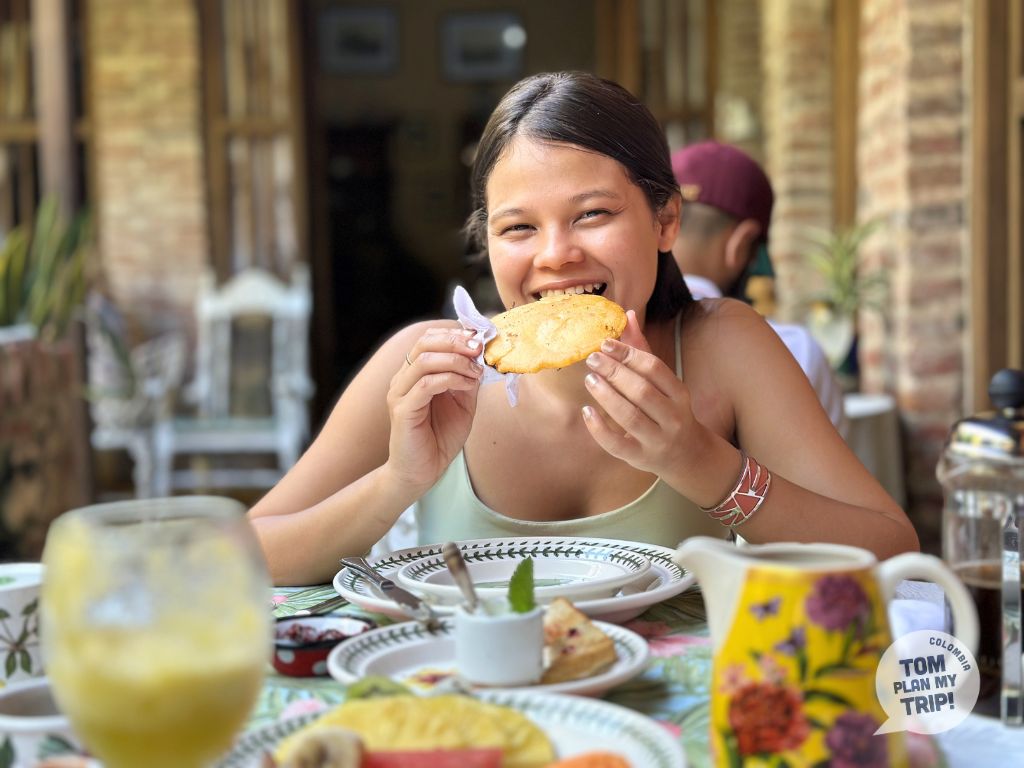
Slide a whole egg into a partially cooked arepa — a fried corn cake — close it without breaking it, then plunge it back into boiling oil — simple in theory, challenging to master.
This culinary feat was born nearly 200 years ago in Luruaco, Atlántico, where a festival has been dedicated to it since 1988.
It’s one of my favorite arepas. Aleja, my Colombian wife, makes it quite well and, of course, like any good costeño, I savor it with suero — a tangy sauce with fresh cheese.

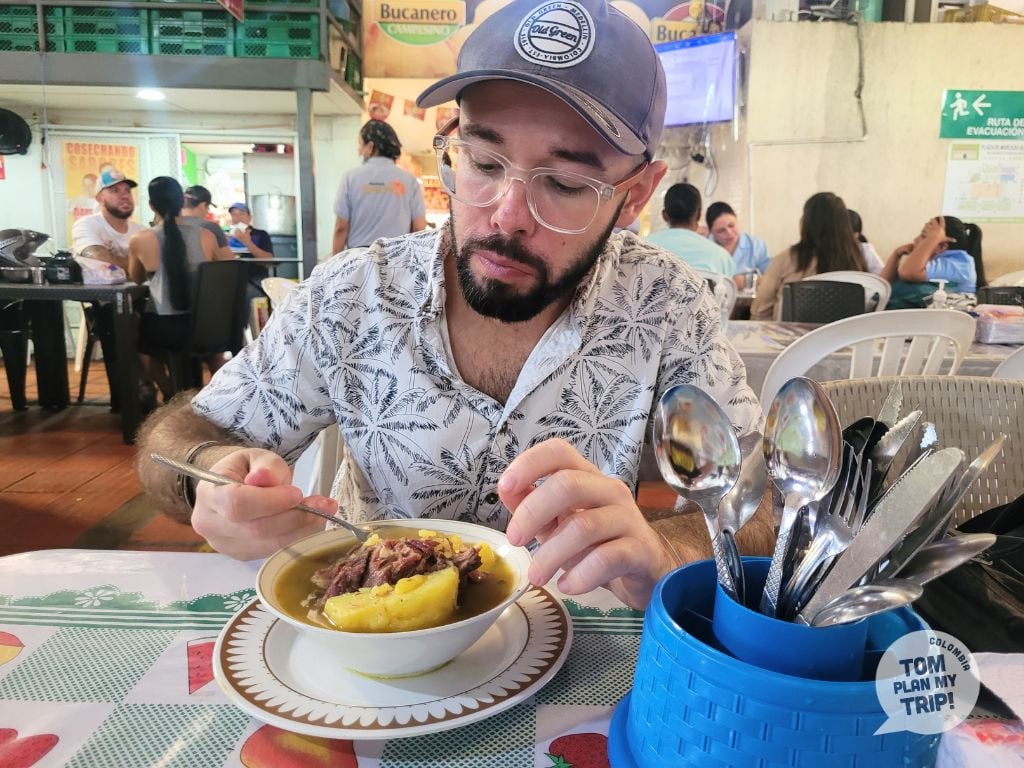
Beef ribs stewed with potatoes, garlic, onion, and cilantro — rib broth is the farmer’s breakfast for cold mornings in the Colombian Andes. It is eaten with an arepa, bread, and accompanied by hot chocolate.
Like sancocho, it holds the title of levantamuertos — raiser of the dead. Restaurants near bars stay open until dawn and offer this antidote to hangovers to party-goers. It works, they say.
In the markets, the fondas serve rib broths from dawn — these small, popular diners without pretension, where you can eat simple and hearty meals for cheap.
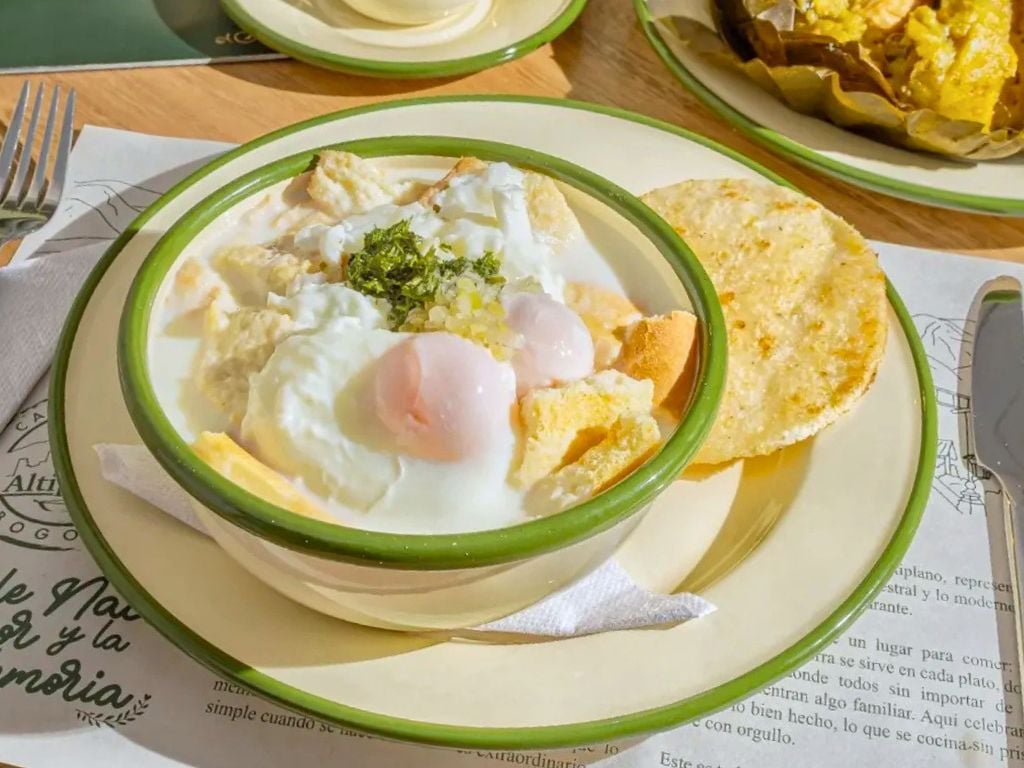
La changua, you either love it or hate it — TasteAtlas — this guide that rates traditional dishes from around the world — even named it one of the worst breakfasts.
The people of Bogotá, however, don’t care. This milk broth, with water, poached egg, onion, and cilantro, is their weekend breakfast, but you can eat it at any time of the day.
Inherited from the Chibchas of the high plateaus of Cundinamarca and Boyacá, its name comes from the Muisca: xie (water) and nygua (salt) — literally “aguasal“.
It is served with bread, calados — slightly sweet buns — or cheese, and accompanied by a hot chocolate. Rather disconcerting.
© Tomplanmytrip
TYPICAL COLOMBIAN DRINKS
From morning coffee to evening aguardiente.
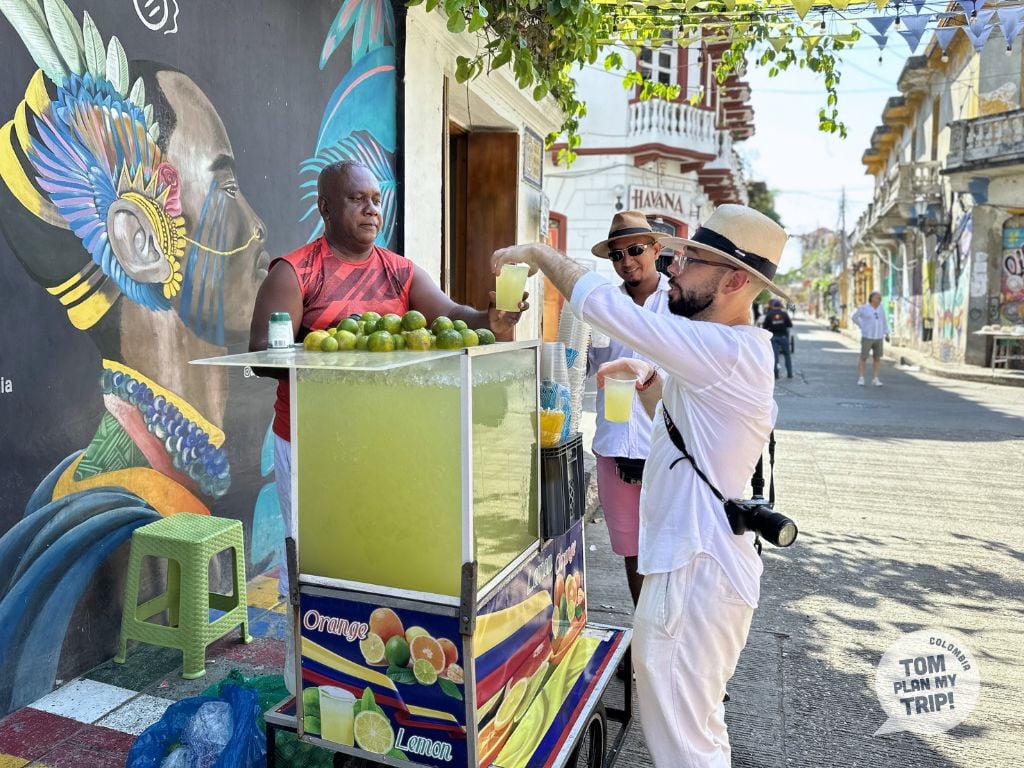
Colombia has more than 400 species of edible fruits.
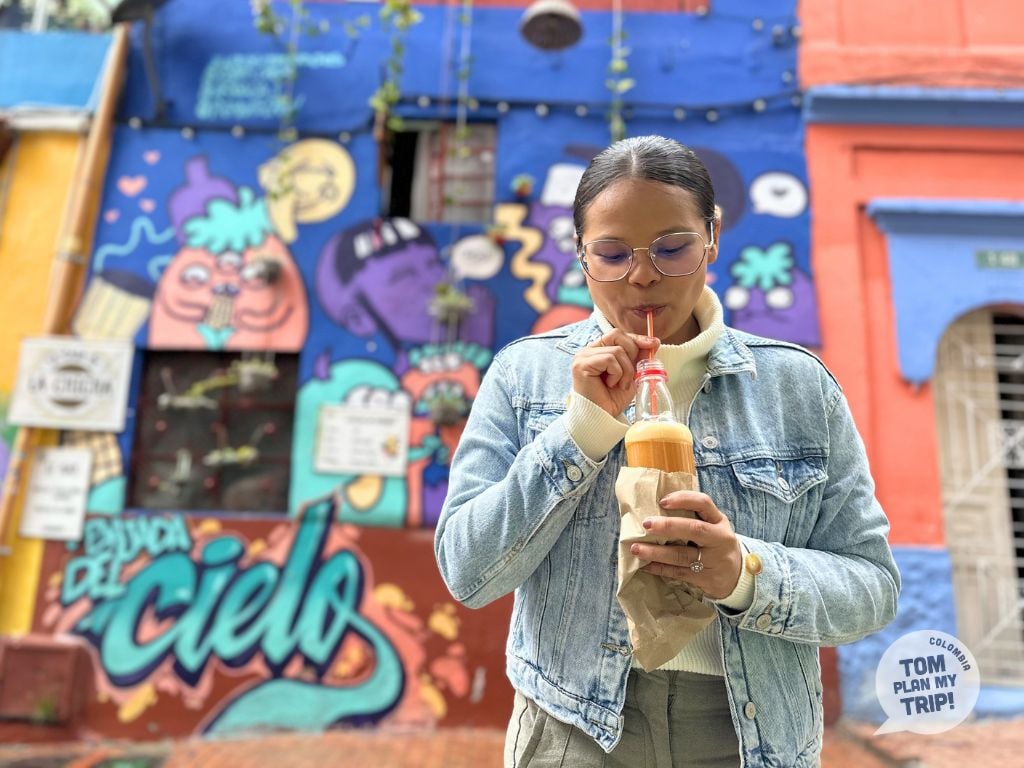
Result: in any restaurant in the country, you can order a freshly prepared juice of practically any fruit — passion fruit, soursop, mango, tree tomato, feijoa, lulo — I love it.
You can also enjoy delicious fruit cocktails — inventive and often surprising combinations that reveal the country’s full richness of fruits.
In the streets of many cities, like Cartagena, street vendors sell fresh fruits and juices at any time.
These juices are drunk with water or milk depending on the fruits and regions. You’ll also be asked if you want to sweeten it or not. Colombians have a weakness for milk + sugar 😉
Two iconic fruit juices:
Lulada, the signature drink of Cali made from hand-crushed lulo — tangy, thick, served very cold.
Borojó juice, fruit from Chocó with thick pulp and a strong taste, nicknamed “jugo del amor” for its alleged aphrodisiac properties.
Aguardiente — literally “burning water” — is the Colombian national drink.
Distilled from sugarcane and flavored with anise, aguardiente is an easy-drinking beverage, which partly explains its popularity. With an alcohol content between 24 and 30°, it warms the mouth and leaves a long sweet-anise finish.
Each department has its own, and every Colombian defends the one from their region.
It is drunk neat, in a shot, on any occasion: parties, family meals, outings with friends. In bars, you don’t order a glass but a bottle, or more, that the whole table shares until the end of the night — a round that is quite cheap considering the very affordable price of Aguardiente.
Before aguardiente, there was chicha.
Sacred drink of the indigenous muiscas people, chicha is a fermented corn beer whose recipe dates back several centuries. Forbidden, clandestine, but never disappeared, this drink, both thick and slightly acidic, is still drunk in the historic center of Bogotá.
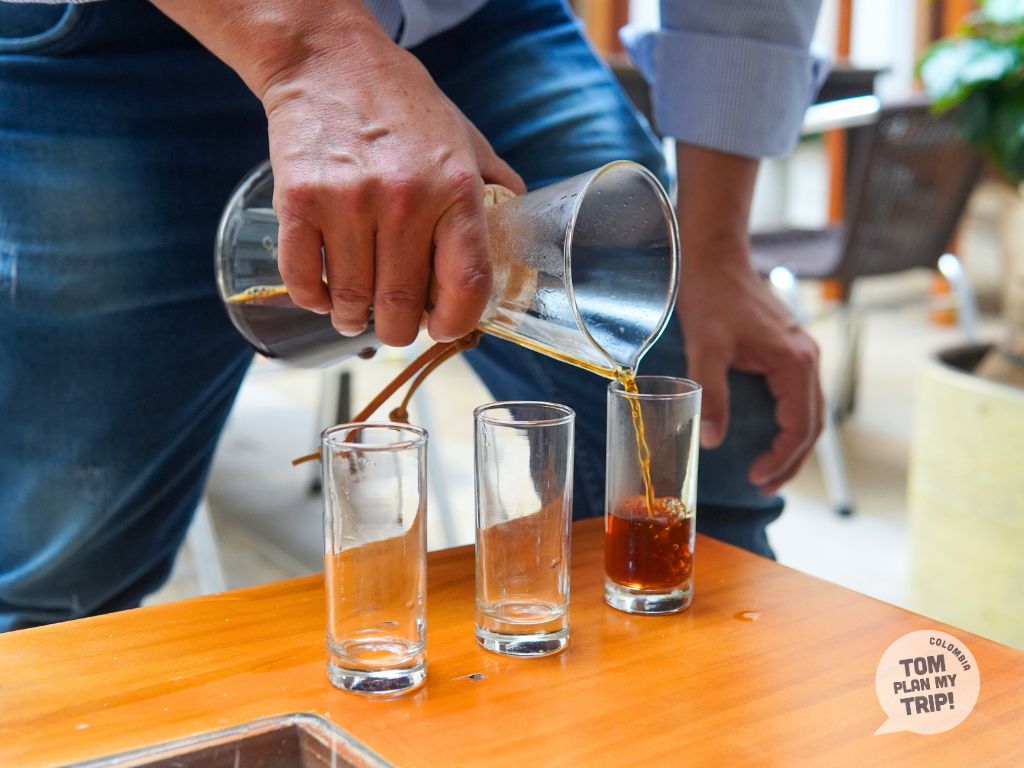
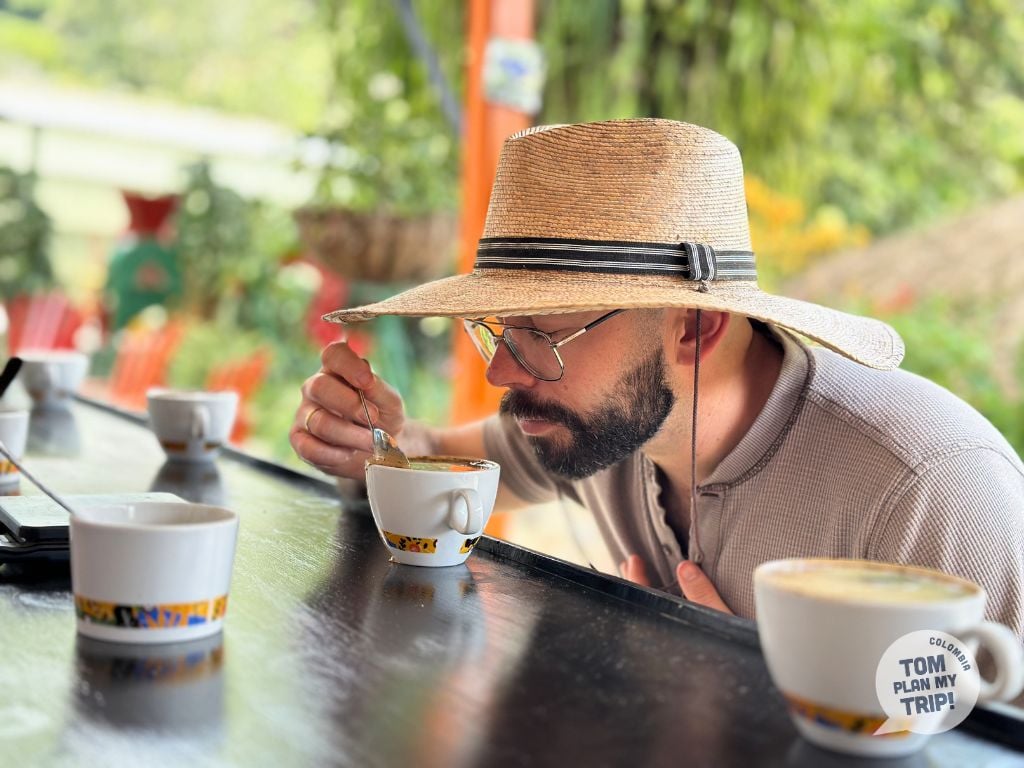
In Colombia, coffee is much more than a drink — it’s an identity.
The third-largest coffee producer in the world, the country grows only Arabica, hand-picked, balanced, not very bitter, with fruity and floral aromas, on high-altitude volcanic soils.
Culture introduced by the Jesuits in the 18th century, the coffee triangle, or Eje Cafetero, a mountainous region in the central-west of Colombia ,formed by three departments: Caldas, Quindío, and Risaralda, is now listed as a UNESCO World Heritage site.
Irony: 93% is exported. But in the big cities, more and more cafes are valuing the local bean by offering different methods of preparation — filter, Chemex, cold brew — to reveal all its aromas.
We often recommend to our travelers to visit a coffee finca; it’s a great way to discover Colombia.
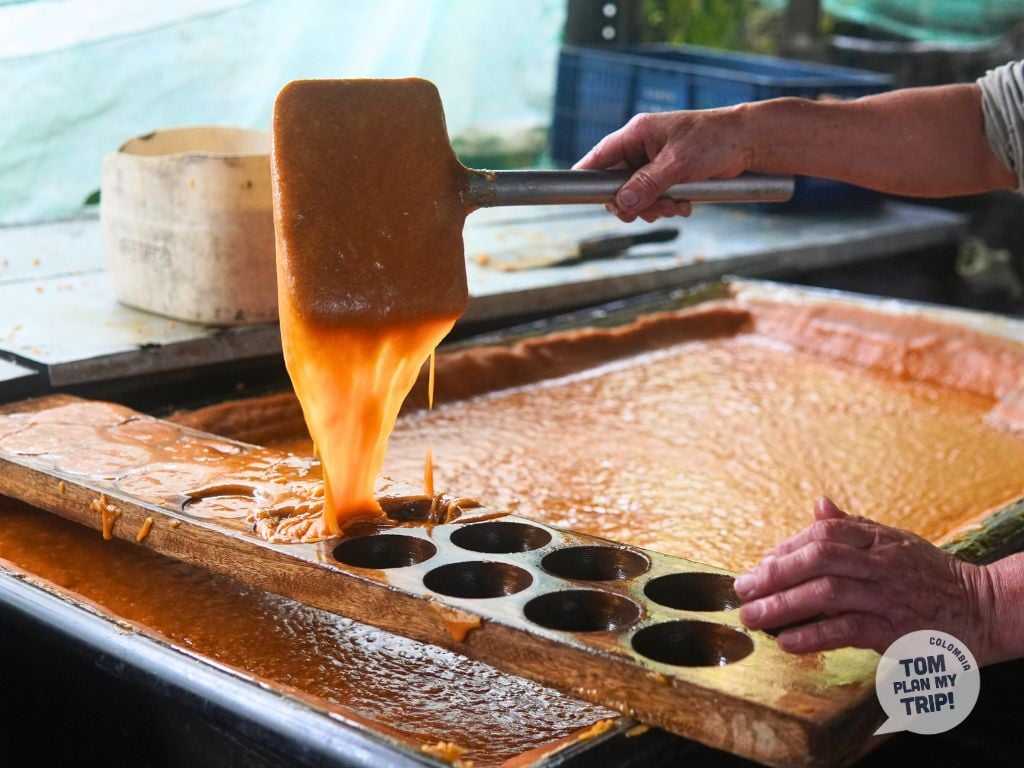
Agua panela and guarapo are both derived from raw sugarcane, a staple of popular Colombian cuisine.
Agua panela is the drink of the Colombian people, across all social classes and regions.
Nothing is simpler to prepare: just dissolve a block of panela — raw, unrefined cane sugar — in water.
At breakfast, after sports, hot with lemon for the flu, cold with ice for scorching days, or even with a piece of melted cheese. And to warm up in the evening at high altitude, with a dash of aguardiente and cinnamon (canelazo).
Guarapo is the ancestor of Aguardiente. Fermented cane juice, this ancestral drink oscillates between a slightly tangy lemonade and a countryside alcohol depending on the fermentation time.
A drink for field workers, popular festivals, and the Carnaval de Riosucio, today, guarapo is making a strong comeback in contemporary Colombian gastronomy.
I remember a memorable guarapo, drunk in the patio of a house in Barichara among regulars with bright eyes 😉
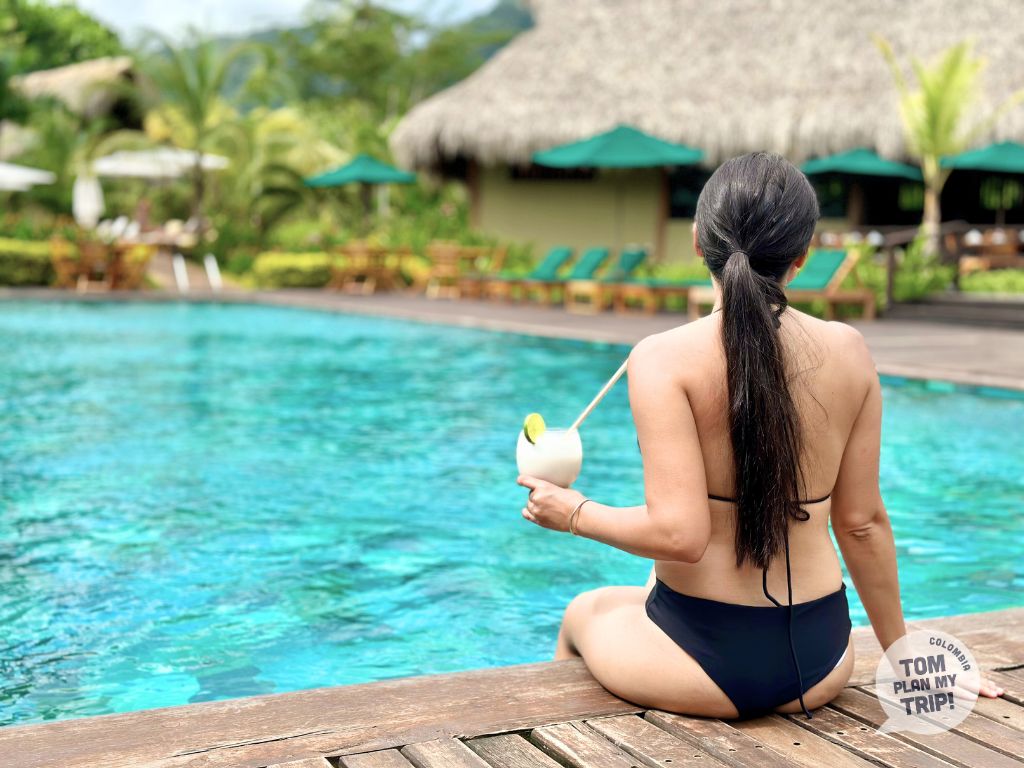
In Colombia, coconut lemonade is not just a simple lemonade — it’s the drink that gets everyone’s approval when it’s hot.
Born on the Caribbean coast, it has become popular throughout the country: lime juice, coconut milk, sugar, crushed ice, blended together until achieving a creamy and icy texture, halfway between a cocktail and a smoothie.
Refreshing, slightly sweet, and subtly exotic, it is ordered in restaurants, juice bars, and beach bars.
Aleja is a fan — hard to find a better critic than a palate as trained as hers.
© Tomplanmytrip
AN ABUNDANCE OF FRUITS
Some signature fruits of Colombia.
It’s impossible to miss the guanábana on the stalls of Colombian markets: bulky, green, covered with small spines, it looks like nothing else.
Inside, a white, fibrous, and juicy flesh, with a unique taste between pineapple, mango, and coconut, with a slight acidity.
Native to Tropical America, it grows everywhere in Colombia, from the coasts to the inter-Andean valleys. Colombians love it and consume it mostly in juice, smoothie, or ice cream, and rarely plain.
They also attribute medicinal properties to it, and some consider it one of the healthiest fruits in the local natural pharmacopeia.
It is often a favorite of travelers.

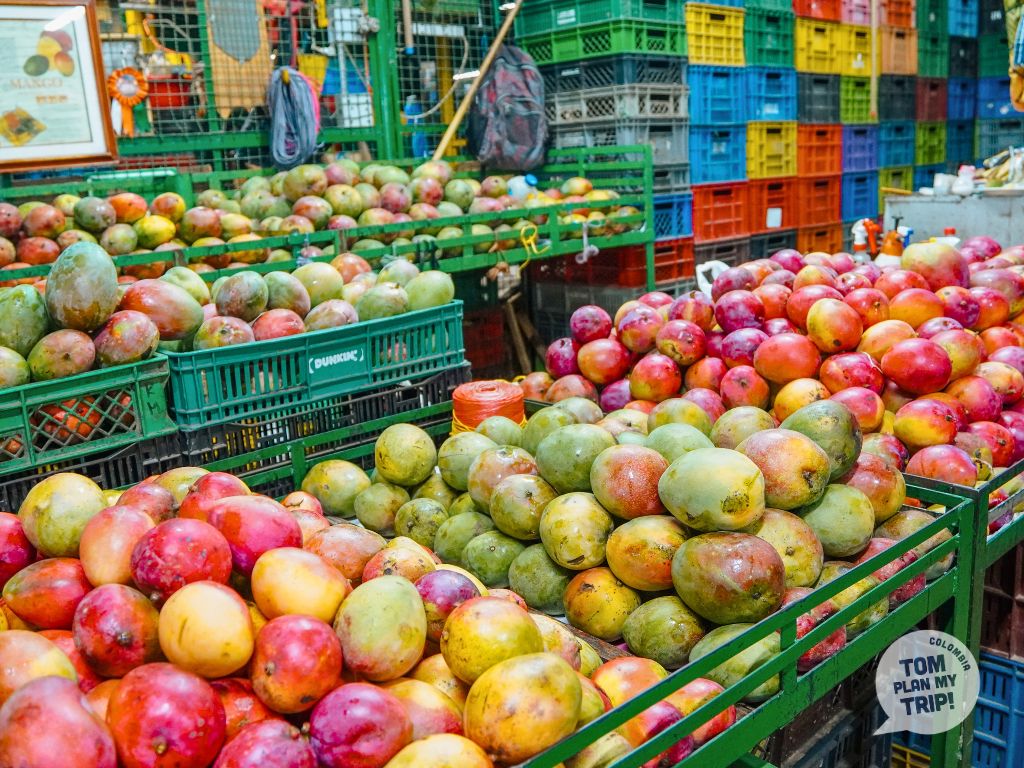
It’s hard to imagine Colombia without its mangoes.
Grown from the coastal plains to the Andean slopes, the country produces dozens of varieties. The mango de azúcar, a small and incredibly sweet mango, is considered by many to be the best in the world.
Natural, in juice, in ice cream, in sauce, or as mango biche — green, with salt and lemon —, it is found everywhere: in markets, on the streets, in glasses, and on plates.
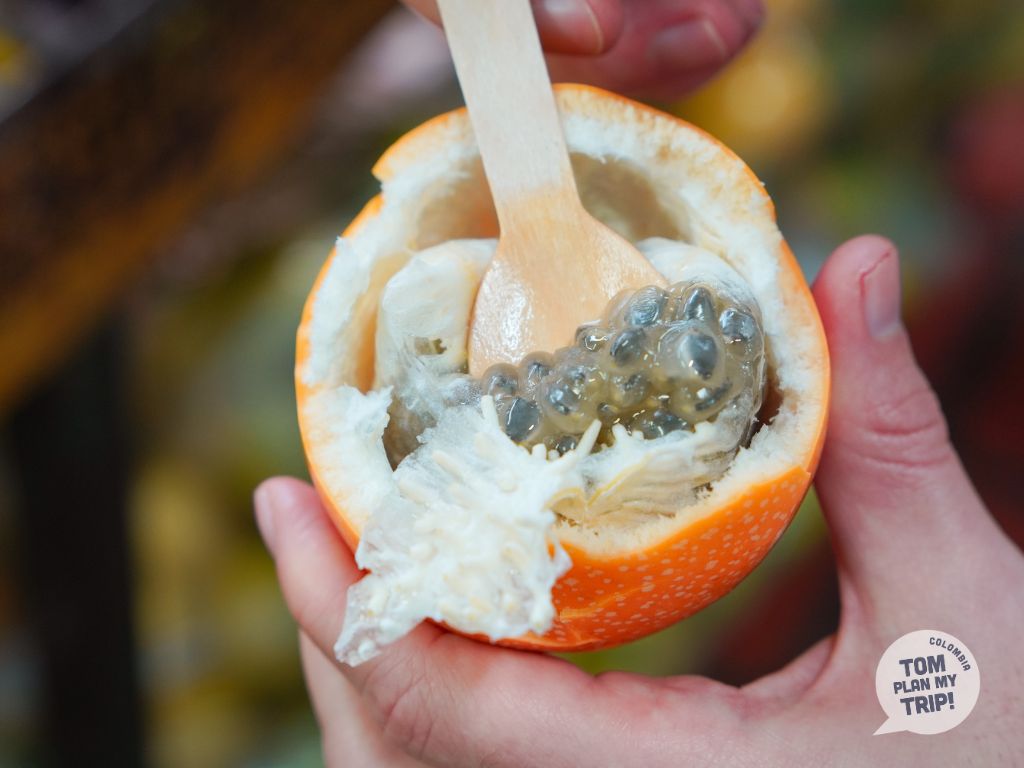
The granadilla is one of those fruits you don’t know how to eat unless someone shows you.
Small, round, and with its orange shell, the granadilla is the Andean cousin of the passion fruit, but much less tangy — more sweet, more floral, almost honeyed.
Grown at altitude in the Colombian mountain ranges, it is enjoyed by breaking the top with your thumb to suck out the translucent, gelatinous pulp and black seeds, which are bathed in a sweet and fragrant juice.
It’s natural that it reveals all its character, even if it is also found in juice or dessert.
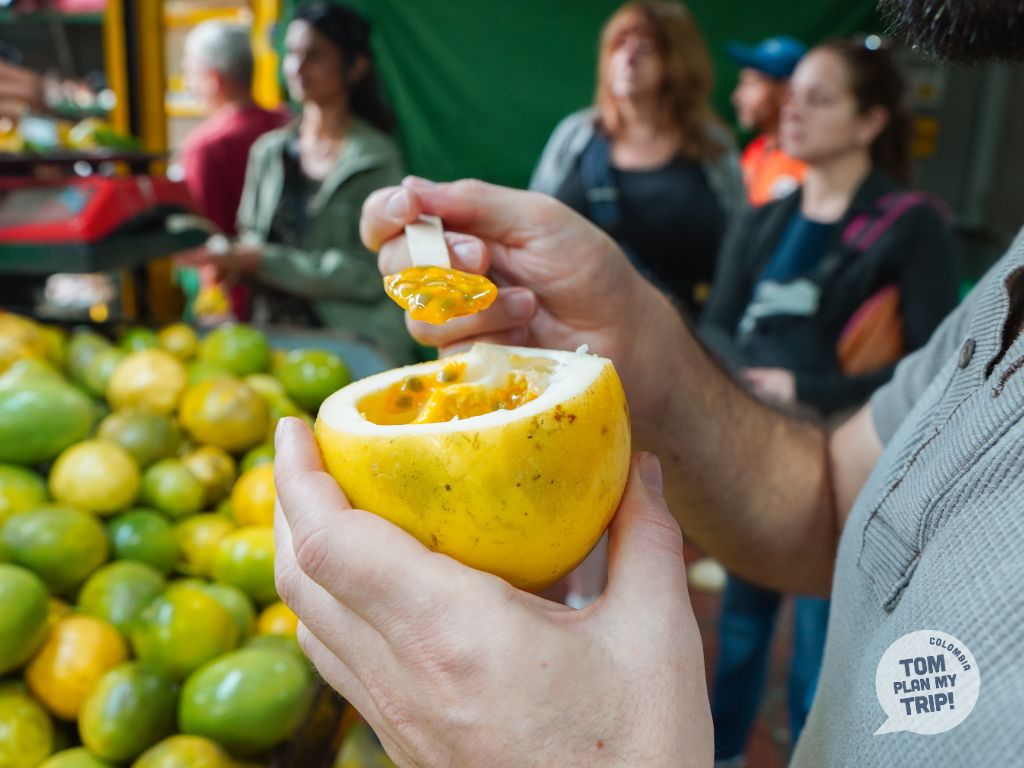
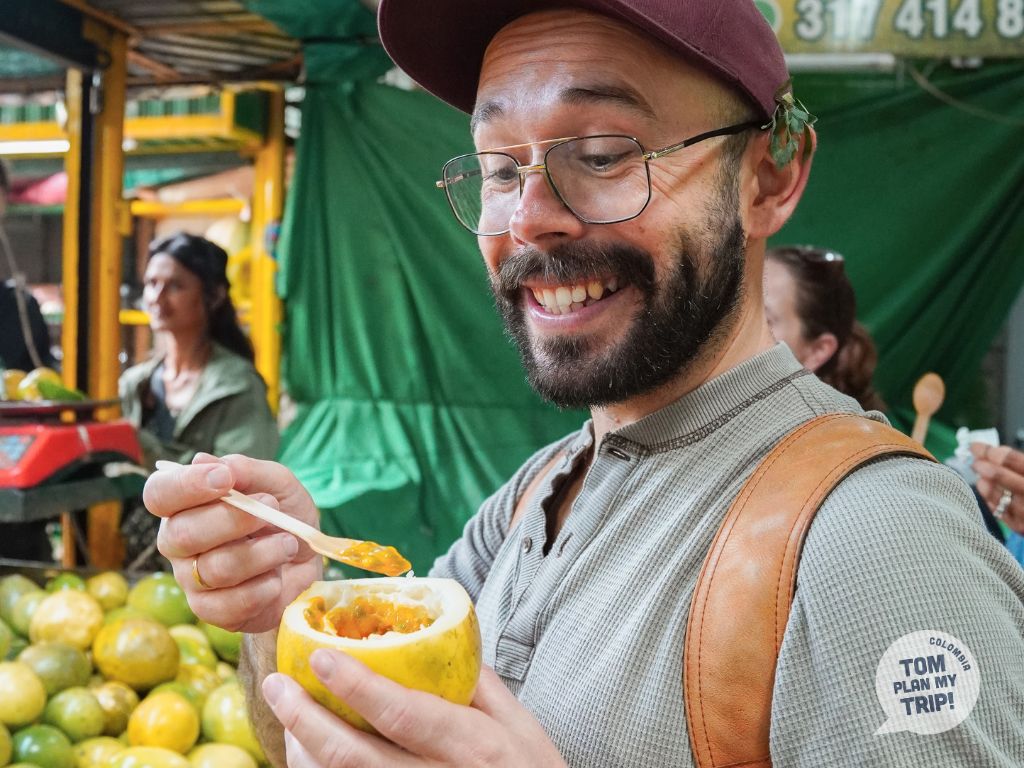
With its yellow wrinkled skin and captivating smell, the passion fruit does not go unnoticed in Colombian markets.
Inside, an orange pulp, full of juice, with a distinct acidity and an intense tropical fragrance that asserts itself as soon as you open it.
Cousin of the granadilla but with a very different character — more lively, more acidic, more expressive —, it is cultivated in the warm areas of the country.
It is ubiquitous in Colombian food. It is drunk as juice diluted with water and sugar to soften its natural acidity, and it is incorporated into sauces, desserts, and cocktails.
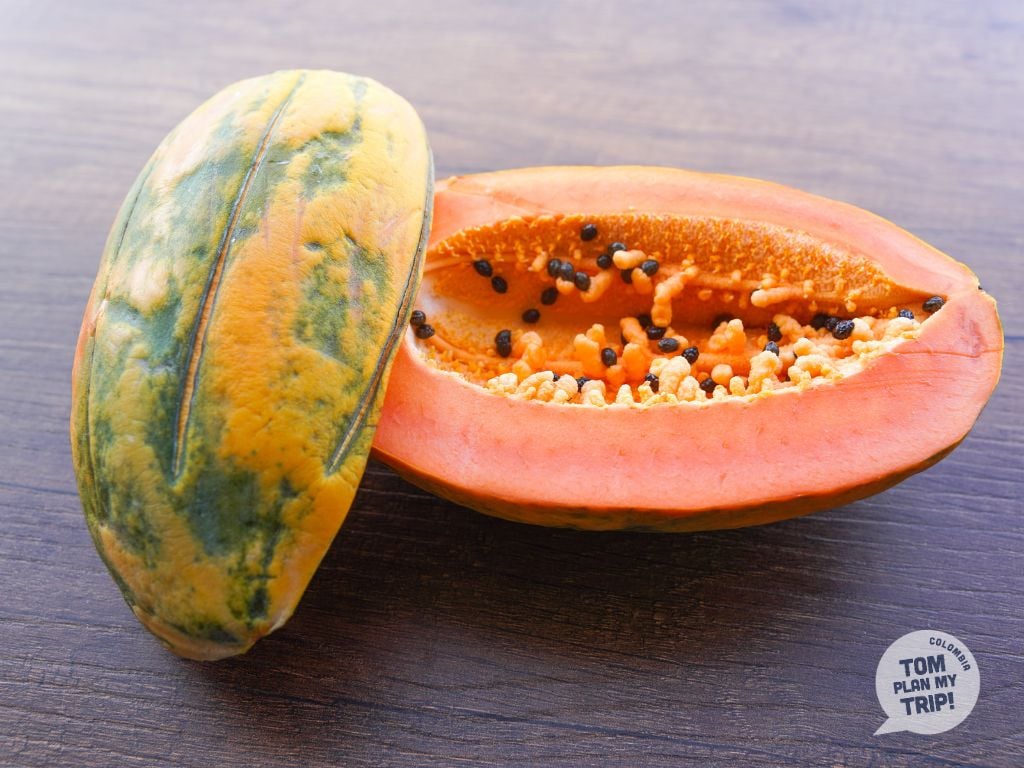
If you thought you didn’t like papaya, wait until you taste the one from Colombia.
Here, it is fleshy, juicy, a deep orange, with a straightforward sweetness and a musky fragrance that is immediately recognizable.
Grown in the warm regions of both coasts and the inter-Andean valleys, it grows year-round and is found in all markets.
Colombians eat it plain for breakfast, in juice, in fruit salad, or with lime.
For anecdote, its musky scent divides: some love it, others can’t stand the smell — literally. A sensitivity that’s partly genetic. It’s up to you to test if you have the papaya gene 😉
© Tomplanmytrip
DELICIOUS COLOMBIAN DESSERTS
Colombians and desserts, a love story.
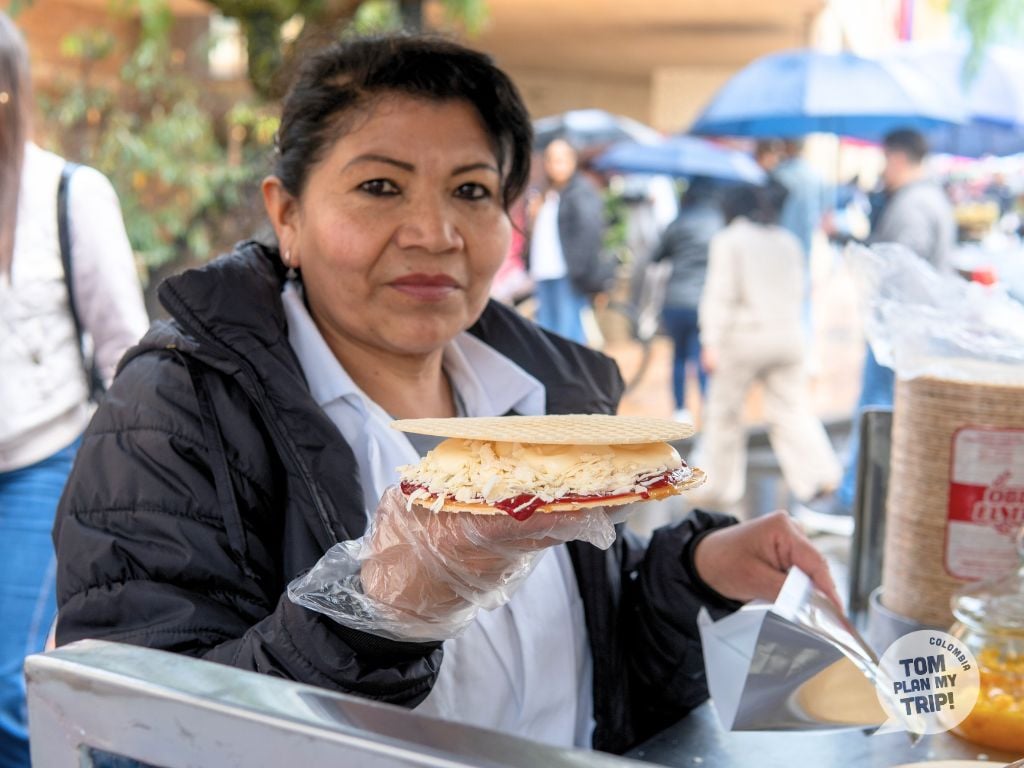
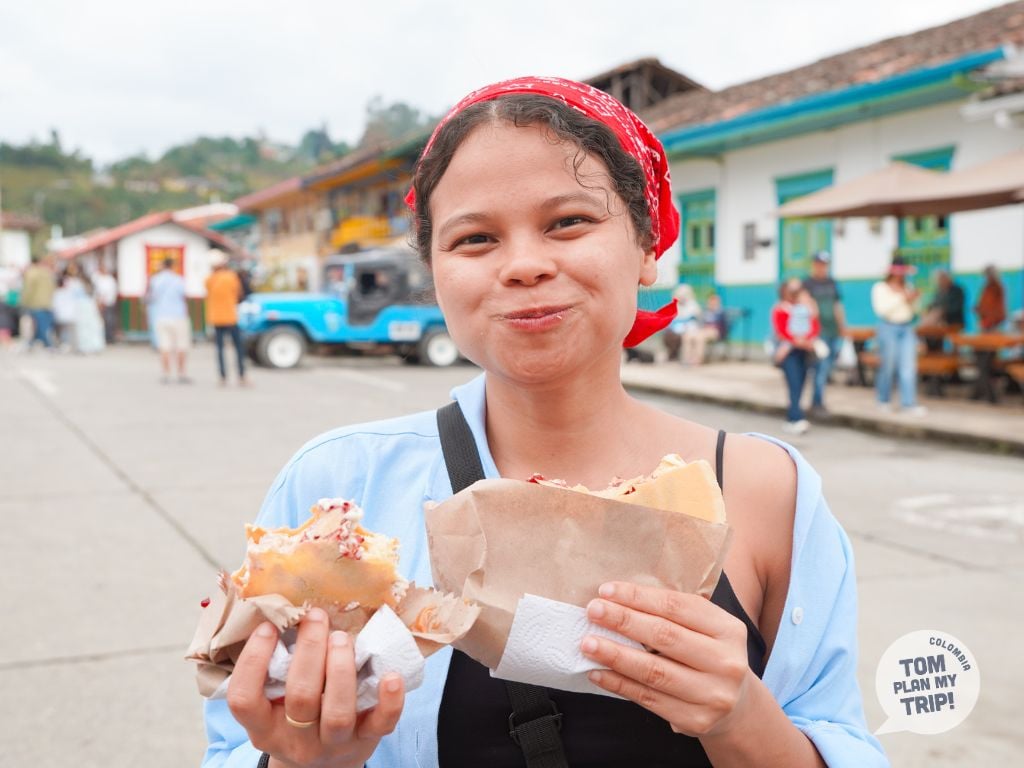
An oblea is two thin, crispy, round wafer cookies generously filled with arequipe — the Colombian dulce de leche (milk caramel) — and a combination of toppings of your choice: cheese, fruit jams, whipped cream, chocolate…
This quintessential street dessert has its origins in medieval Europe; the word comes from the Latin oblata — “offering” — and the recipe was introduced in Colombia during the colonial era.
Floridablanca, in Santander, is considered the capital of the oblea.
I had some delicious ones in Barichara — my favorite version: arequipe, queso, dulce de mora (blackberry), and whipped cream.
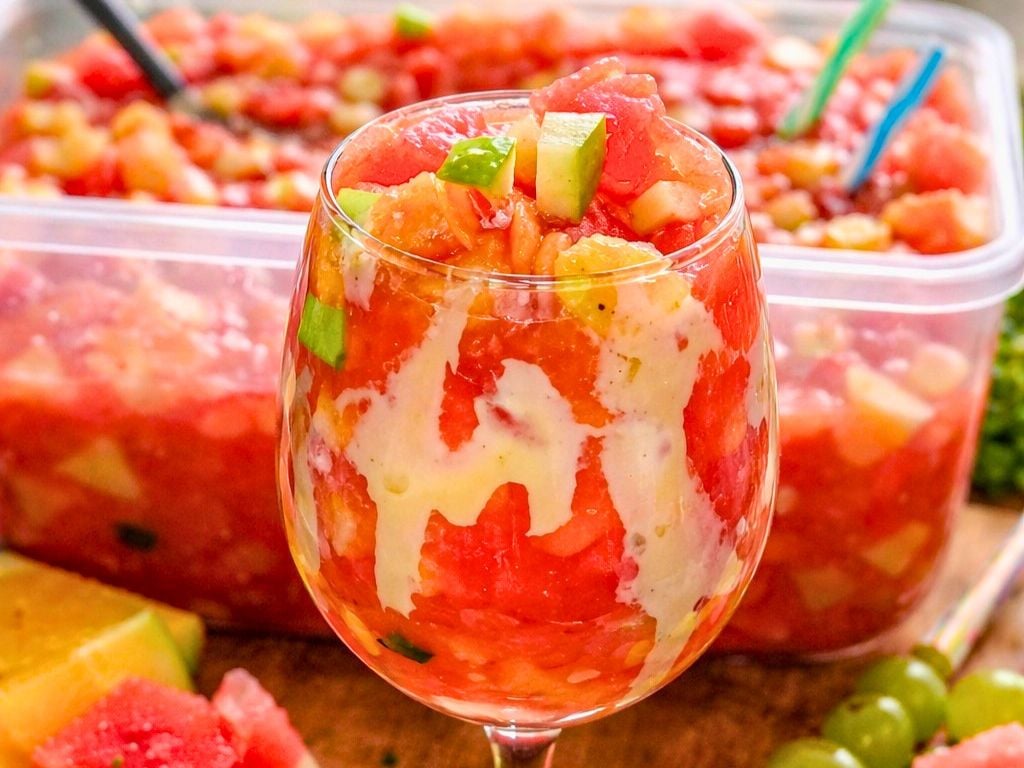
The salpicón is Colombia in a glass.
Papaya, watermelon, mango, pineapple, banana — the tropical fruits are cut into pieces and drowned in watermelon juice or in Colombiana, the country’s iconic red soda.
You can add a scoop of ice cream, condensed milk, and grated cheese. Between a drink and a dessert, this popular refreshment is sold on the streets of all Colombian cities, especially during the great heat.
Typically Colombian.
Just writing “mango biche” makes my mouth water — and yet, at first, the idea seemed strange to me. Salt on a green mango?
Aleja, a true Colombian, loves it. After a few tries, thanks to her, I converted.
Biche means “not ripe” in Colombian slang: the mango is picked green, sliced into sticks, seasoned with salt and lemon.
Street vendors sell mango biche in the streets of the Colombian Caribbean. You can also buy a mango and prepare it at home like any Colombian.

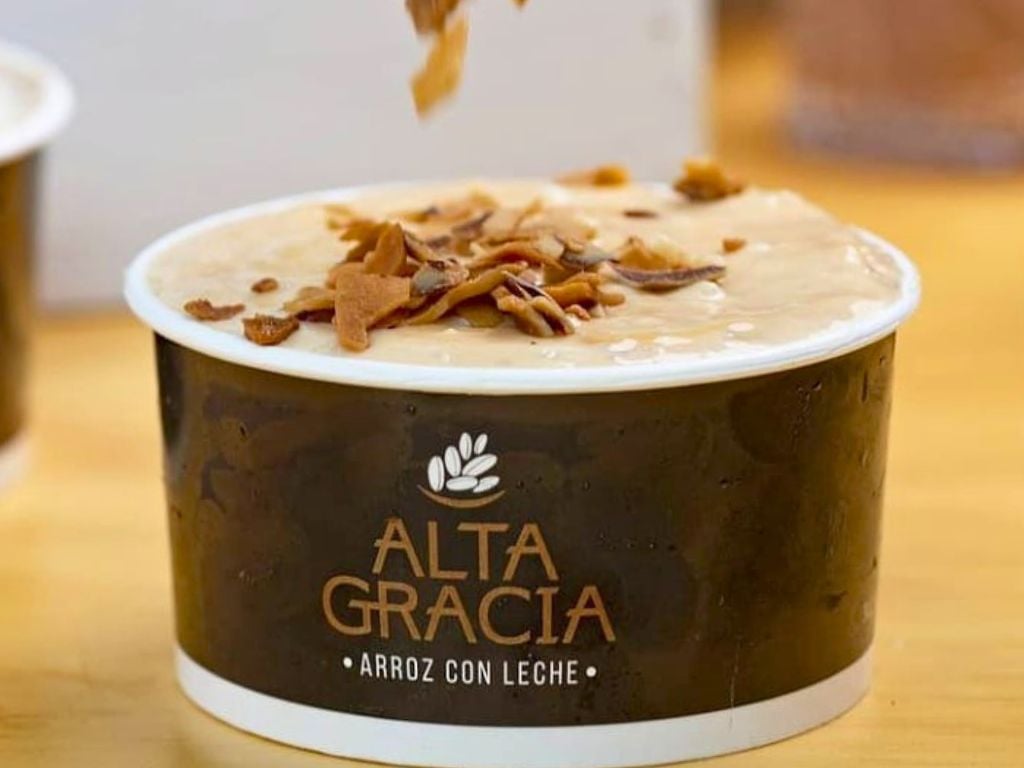
Arroz con leche is one of those dishes that smells like childhood.
Rice simmered in milk with cinnamon, sugar, and lemon zest — simple, creamy, and comforting. Every Colombian family has its own recipe.
This dessert has Arab roots: it was the Moors — Arab-Berber populations who occupied the Iberian Peninsula for eight centuries — who introduced rice and cinnamon to Spain before these ingredients crossed the Atlantic with the conquistadors.
A children’s nursery rhyme bears its name and echoes in all the playgrounds: “Arroz con leche, me quiero casar…”
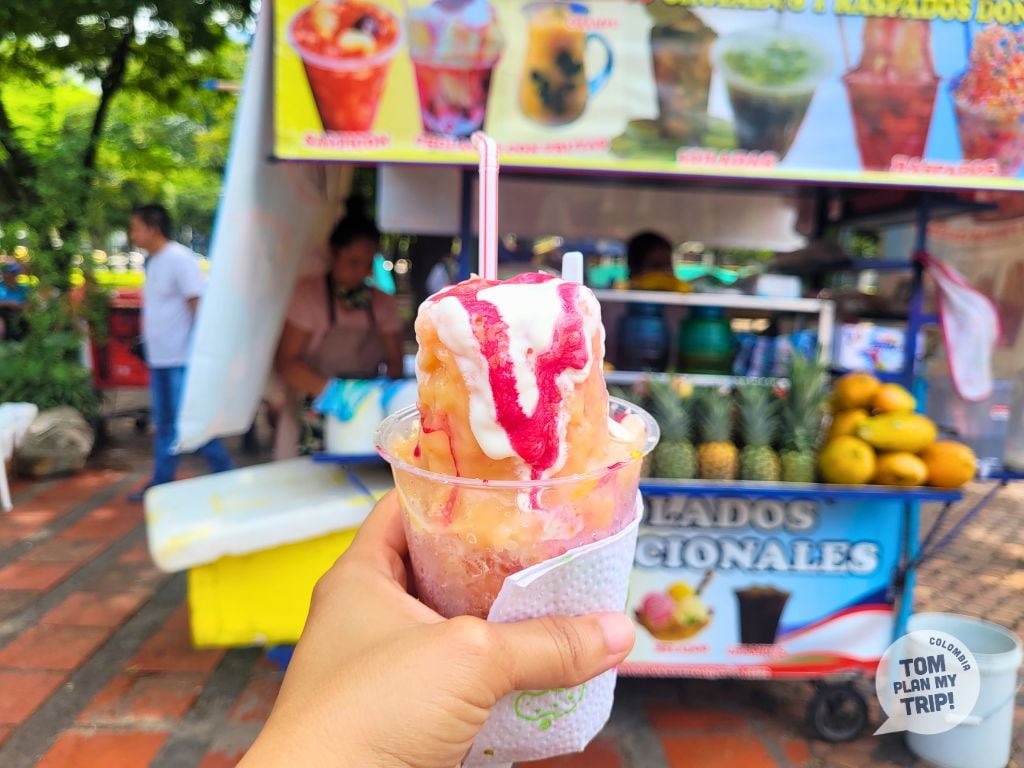
Shaved ice, fruit syrup, pieces of fresh fruit, condensed milk, and barquillo — that crispy rolled wafer stuck in the ice — the cholado is the iconic dessert-drink of Valle del Cauca, a department in the Pacific region.
It’s said to come from Cali, but in reality, it was born in Jamundí, a nearby small town, where the Bonilla family sold it under the name mata guayabo — the “hangover cure.”
Its name is said to come from the fusion of cholos — a term of endearment for indigenous and mixed-race populations — and helado (ice cream).
Today, it’s at the Canchas Panamericanas, a sports complex in Cali that has become a popular gathering place, where you will find the best cholados.
© Tomplanmytrip
THE TYPICAL SAUCES OF COLOMBIAN FOOD
These sauces that enhance every Colombian recipe.
There is a jar of homemade ají on almost every Colombian table.
This homemade sauce is made of fresh peppers, cebolla larga (chive or long-stemmed green onion), cilantro, tomato, vinegar, and lime — all finely chopped, mixed cold, never cooked.
The result is a sauce with a lively, fresh, and spicy taste, to be measured by oneself. Each family has its version, each region its secret ingredient — ají dulce (sweet pepper) on the coast, rocoto (hot and fleshy pepper) in the Andes.
This sauce accompanies empanadas, arepas, soups, grilled meats, patacones. In reality, it accompanies everything. It’s the soul of Colombian popular cuisine.
Mayonnaise and ketchup — that’s the base of salsa rosada, which gets its name from its color.
Nothing original at first glance, yet Colombians have made it their essential table sauce. You find it on everything: empanadas, patacones, hot dogs, arepas, fried chicken, salchipapas.
Every cook, every restaurant, every street food vendor has their secret touch — lime, mustard, pickles, cream, paprika.
It has become a marker of Colombian street food.
Hogao is the mother sauce of Colombian cuisine.
Ripe tomatoes, cebolla larga (chive or long-stemmed green onion), garlic, cumin, simmered over low heat until a thick and fragrant sauce is obtained — simple, rustic, essential.
Hogao is both a condiment and a cooking base: it accompanies patacones, arepas, and grilled meats, and is used in the preparation of frijoles, empanadas, and countless everyday dishes.
Its name comes from the verb rehogar — “to cook over low heat, stewed.” Used throughout the country, it is at the heart of many traditional Colombian recipes.
© Tomplanmytrip
FEATURES AND TIPS ON COLOMBIAN FOOD
The practical guide to Colombian restaurants.
Some expressions and codes to know for ordering and paying at the restaurant, without looking like a lost tourist or a rude person.
First reflex in Colombia: forget “quiero” when ordering. Colombians say “¿me regalas…?” — “will you give me…?” — a gentle phrase that reflects their sense of politeness.
For the rest, a few essentials:
“¡Disculpe!” to call the waiter,
“¿La carta, por favor?” for the menu,
“¿La cuenta, por favor?” for the check.
Remember to check the payment methods — “¿Aceptan tarjeta?” — Do you accept cards? — because cash is still king in many restaurants.
And if you want to please your host: “¡Está riquísimo!” — it’s delicious!
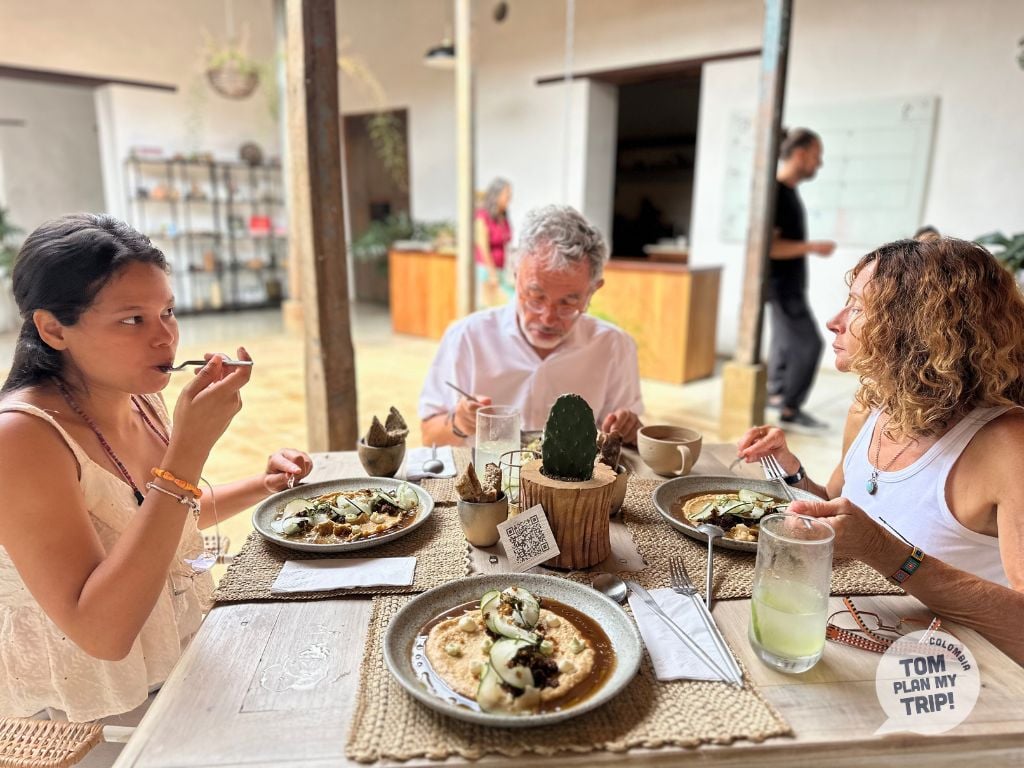
In Colombia, you can eat without breaking the bank.
The street food — empanadas, arepas, mango biche — costs between 2,000 and 4,000 pesos each, which is less than one euro.
Throughout the country, for 20,000 to 30,000 pesos (5 to 7 euros), you can enjoy a great ” menu del día.” Traditional in small popular restaurants, it includes a soup and a meat or fish dish with vegetables, as well as a fresh fruit juice. A complete and hearty meal.
In a good restaurant, a plato fuerte — main dish of meat or fish with sides — ranges between 50,000 and 80,000 pesos.
An Águila or a Club Colombia — the two national beers — will cost you between 6,000 and 12,000 pesos.
In Colombia, restaurants come in several categories.
In rural fondas and restaurantes de comida corriente (classic popular restaurants), you’ll be served home-style cooking without fuss, mainly offered as a single menu.
Some restaurants specialize: asaderos serve grilled dishes, and picadas offer assortments of small dishes to share.
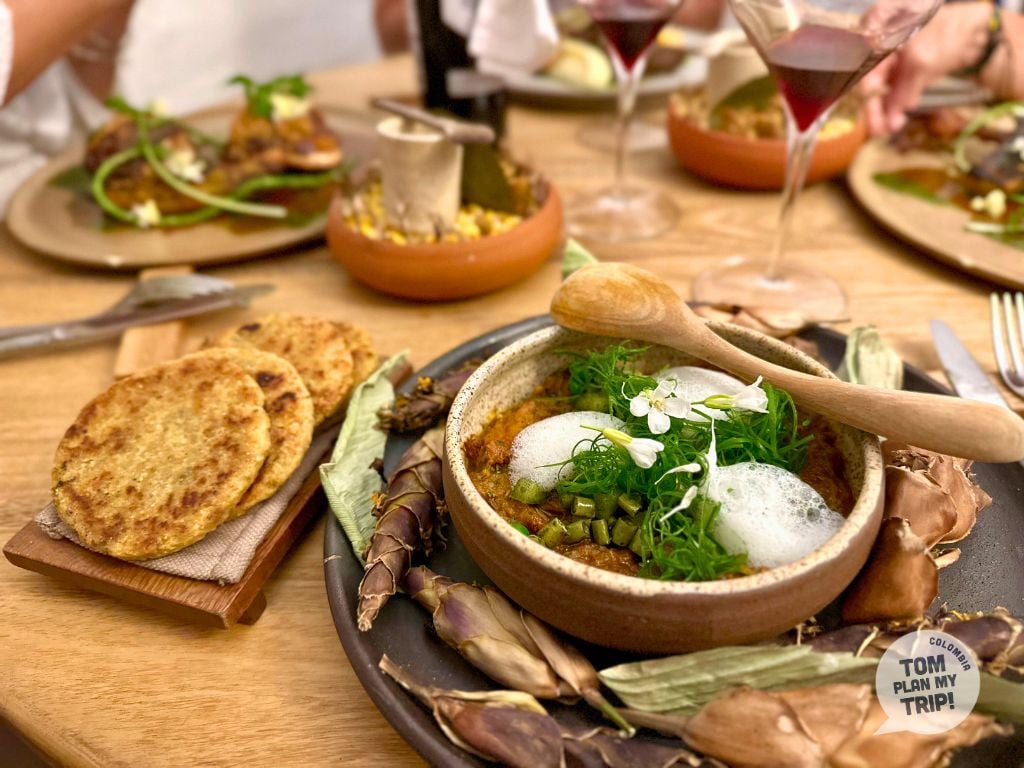
In the big cities and in Bogotá in particular, creative chefs are reinventing traditional recipes by highlighting local products — the capital is establishing itself as one of the most sought-after culinary destinations in Latin America.
These inventive chefs are inspiring followers throughout the country. In Barichara, in Santander, I tasted the innovative and refined cuisine of a young female chef. In Arusí, deep in the Pacific, Francis delighted me with his reinterpretation of the flavors of Chocó.
A small detail: your plate is taken away quickly as soon as you are finished — a sign of efficiency, not rudeness.
Outside the big cities, remember to have cash — credit cards are not always accepted.
The menu of the day is the lunch of the day, served in Colombian popular restaurants — fondas, neighborhood canteens, family restaurants. You can find them everywhere in the country.
You are entitled to a soup and a main dish, typically including: meat or fish, white rice, frijoles, patacones or fried plátano maduro, yuca or potatoes, a small tomato and onion salad, and sometimes a slice of avocado. Simple, hearty, balanced.
Most of the time, you will be served a fresh fruit juice, sometimes even unlimited.
Attention: if you have a small appetite, specify “sin sopa” — without soup — because it is often a dish in itself (reused vegetables and meats).
Honestly, the value for money is unbeatable and it’s the best way to eat like a local — I’m a fan!
© Tomplanmytrip
CHARACTERISTICS AND TIPS ON COLOMBIAN FOOD
Flavors and traditions: the soul of Colombian food.
Good news for sensitive stomachs: Colombian food is not spicy.
Unlike in Mexico or Peru, traditional dishes — ajiaco, sancocho, bandeja paisa — are flavorful and well-seasoned, but rarely hot. The country’s aromatic DNA includes cumin, cilantro, and hogao — round, deep flavors without aggressiveness.
The chili pepper does exist, of course — it’s el ají — but it is almost always served on the side, in sauce, so everyone can adjust to their liking. You can eat Colombian without tears in your eyes.
The cilantro — fresh coriander — is the queen of aromatic herbs of Colombian cuisine.
Its bright green leaves give off a fresh, slightly lemony, herbaceous aroma. Its taste divides: some love it, others avoid it — a genetic variation makes them hypersensitive to its aromatic compounds, giving them an unpleasant perception.
In Colombia, the question doesn’t arise: cilantro is everywhere. In hogao, ají, soups, empanadas, frijoles — generously sprinkled on almost every dish, often at the last moment to preserve its aroma.
It’s hard to cook Colombian-style without it. My wife, Aleja, is, of course, a staunch supporter of cilantro, and I’ve become one too!
In Colombia, Christmas is much more than a holiday — it’s an institution.
The festivities begin on December 7th with the Noche de las Velitas and stretch until New Year’s, punctuated by family novenas, songs, and endless feasts.
On the tables, a few essentials:
The buñuelos — small fried balls of cheese and corn starch, crispy outside, soft inside — which Colombians call “the fruit of Christmas.”
The natilla, a creamy dessert made with milk, panela, corn flour, and cinnamon, always served alongside.
The lechona — stuffed suckling pig, roasted for hours.
The tamales — corn-based dough with chicken, pork, and vegetables wrapped in banana leaves.
The hojuelas — thin strips of fried dough, crispy and slightly sweet, sprinkled with powdered sugar or honey.
And finally, the sabajón, a type of Colombian eggnog, creamy and slightly alcoholic.
© Tomplanmytrip
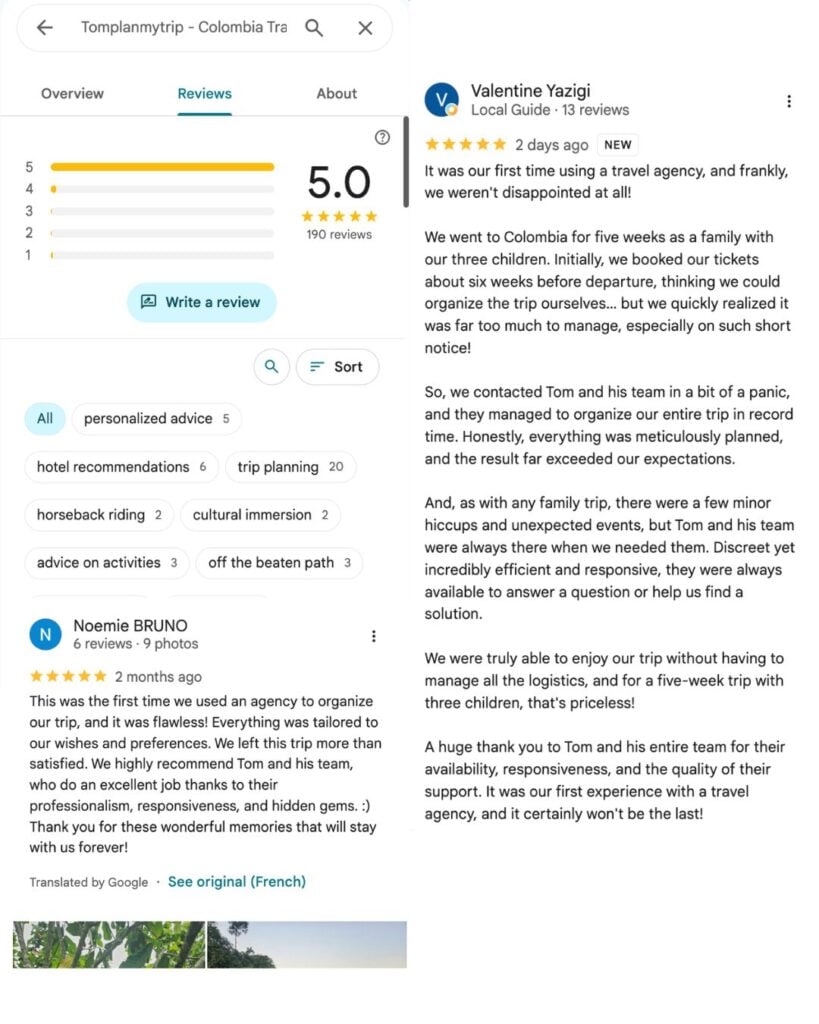
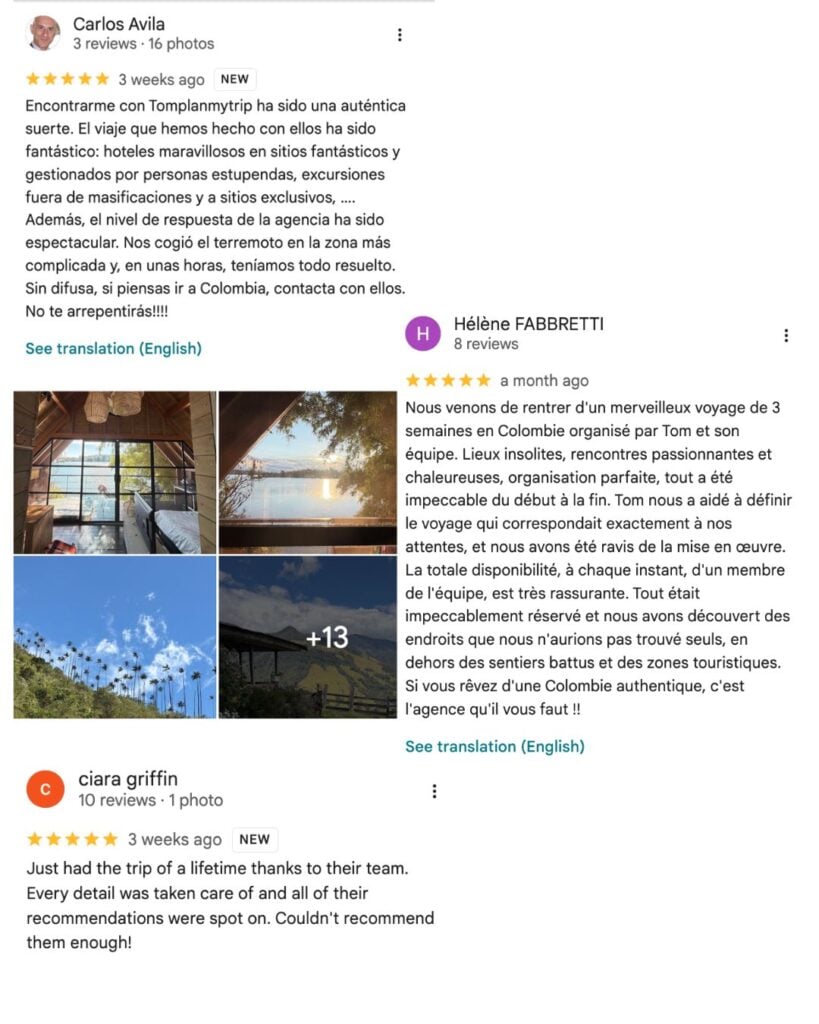
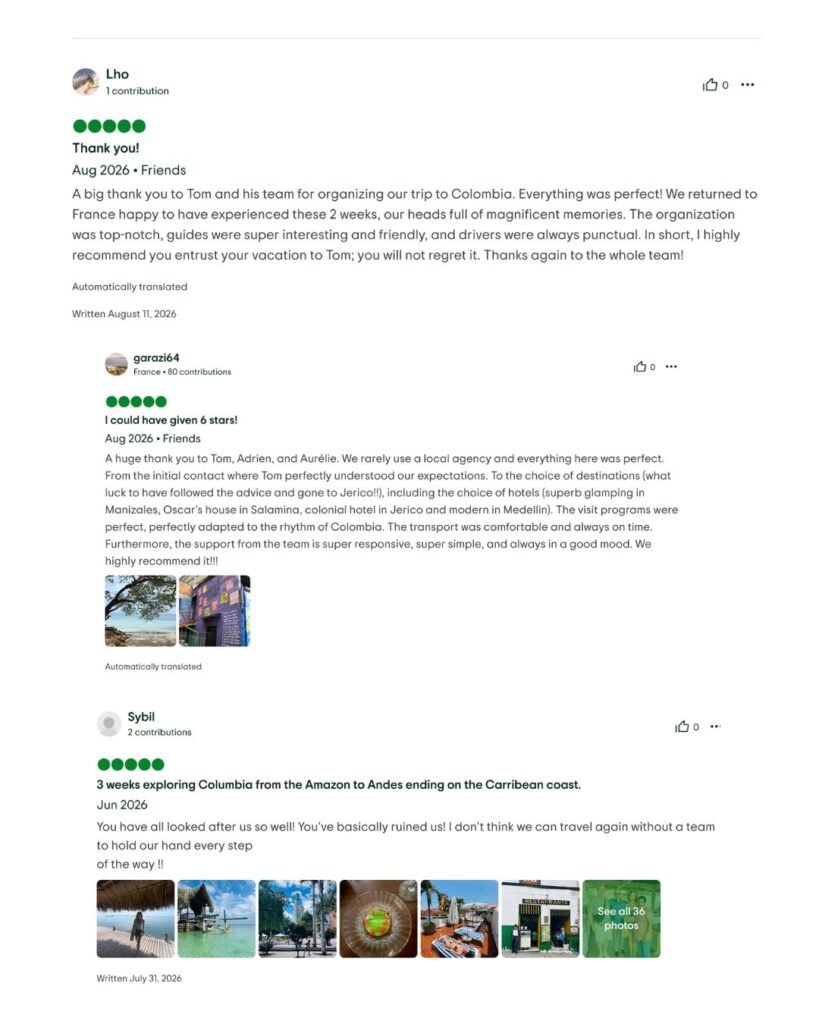
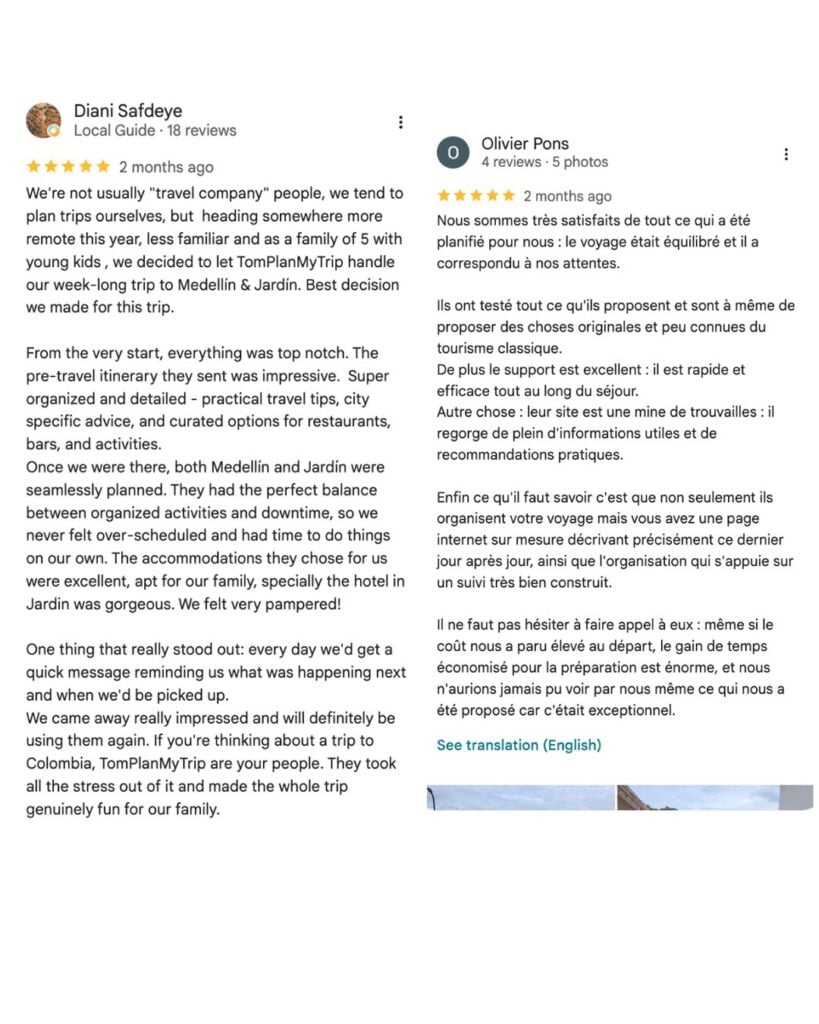
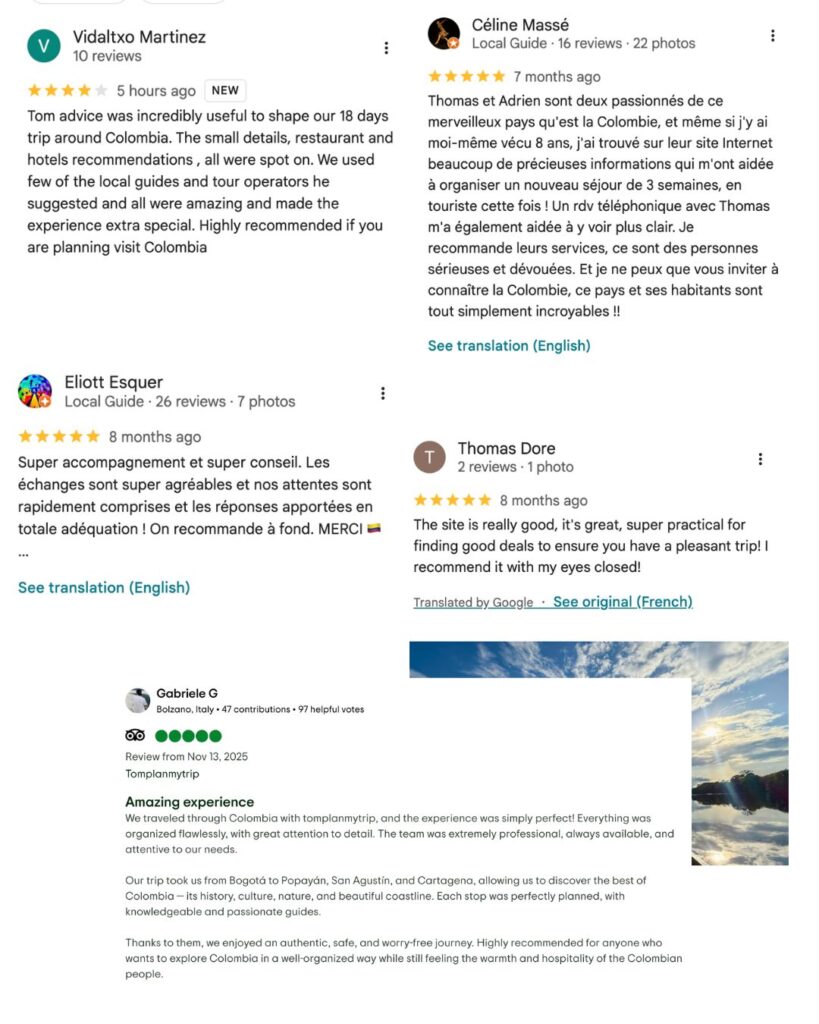
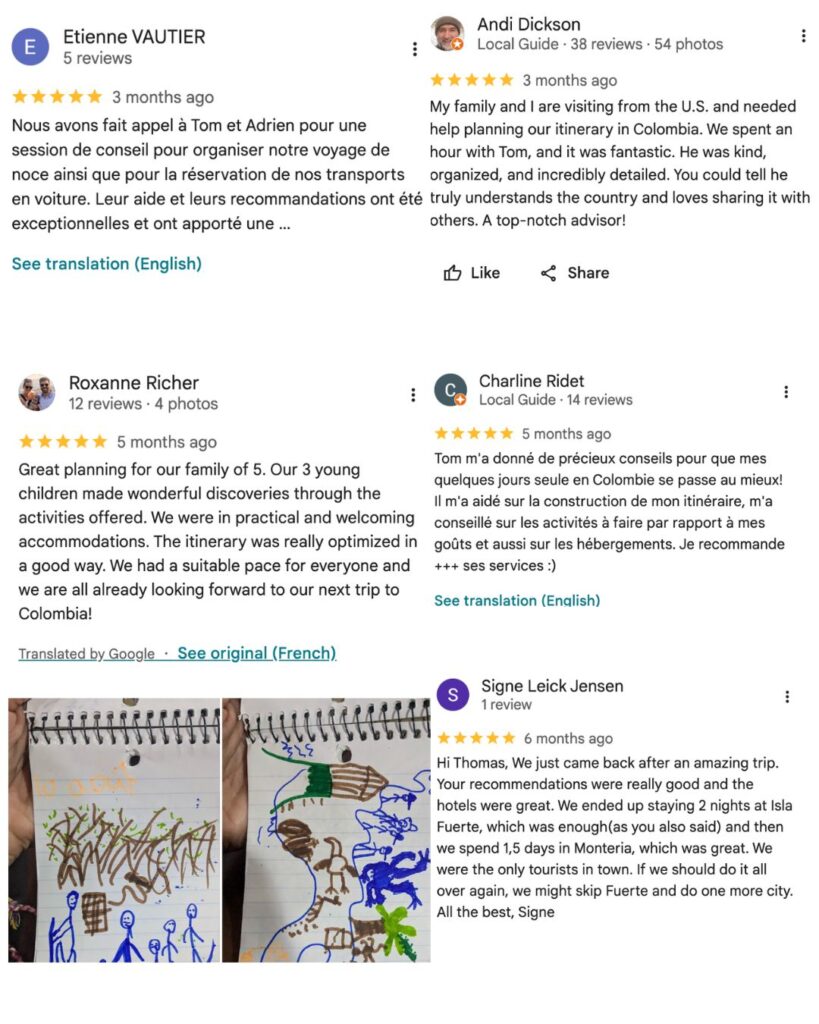
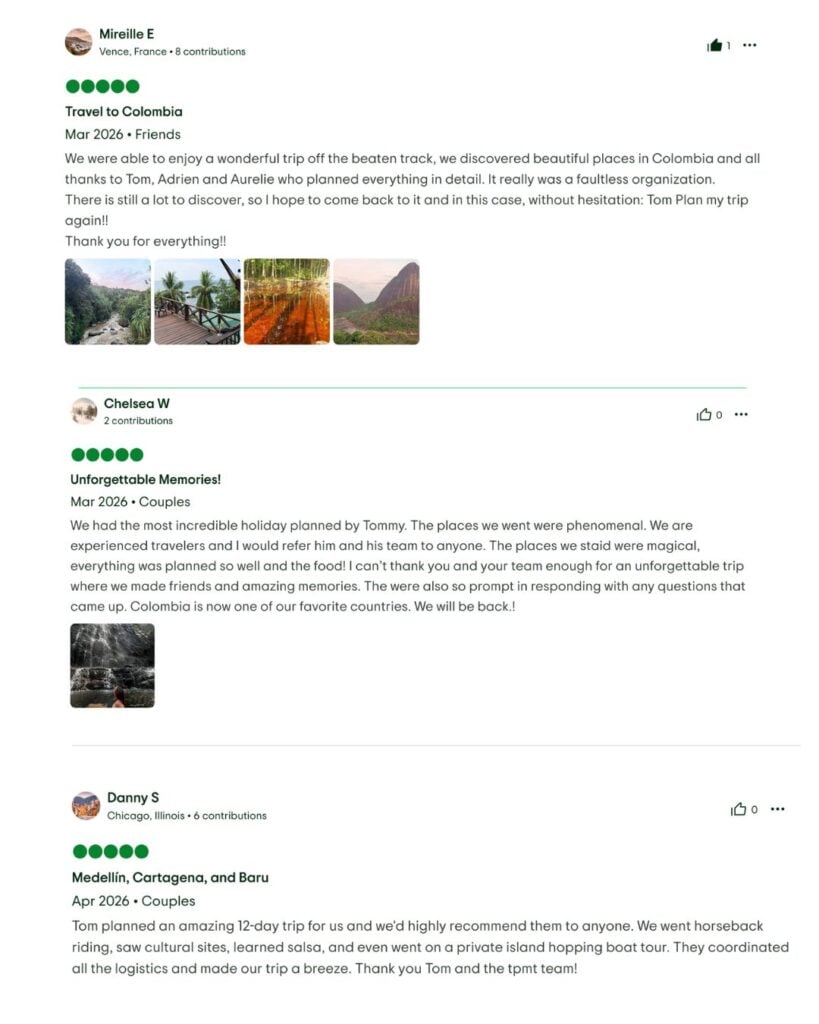
+185 five-star reviews on Google Maps
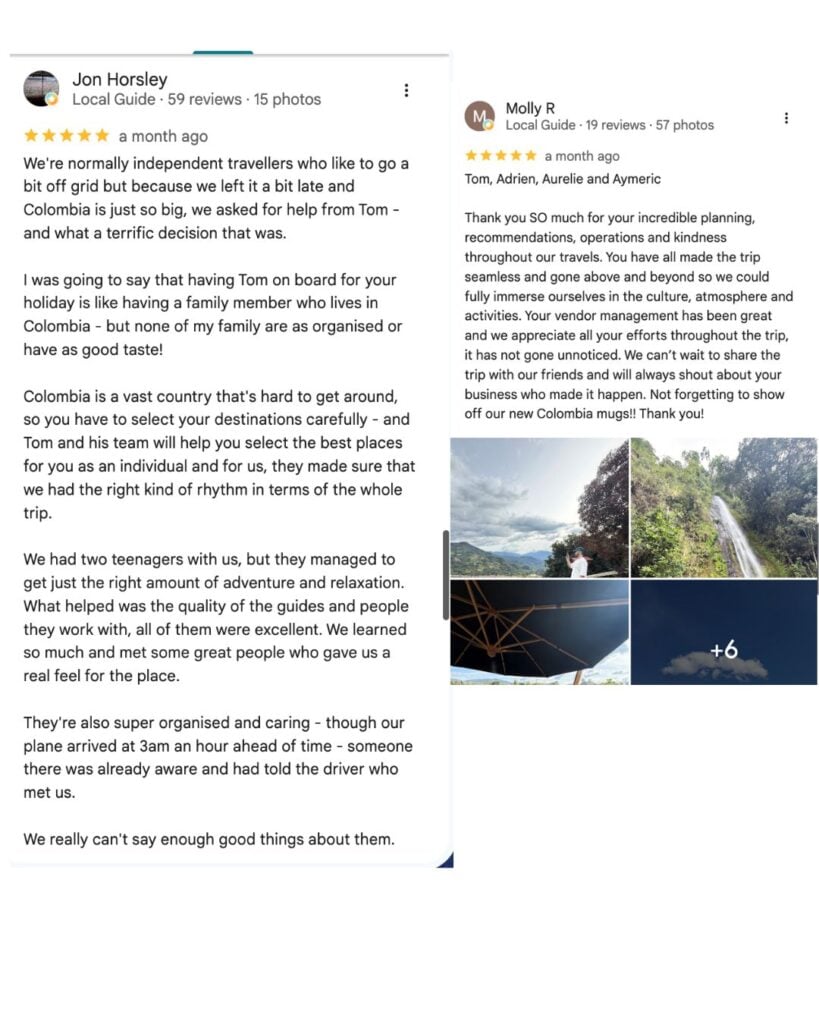
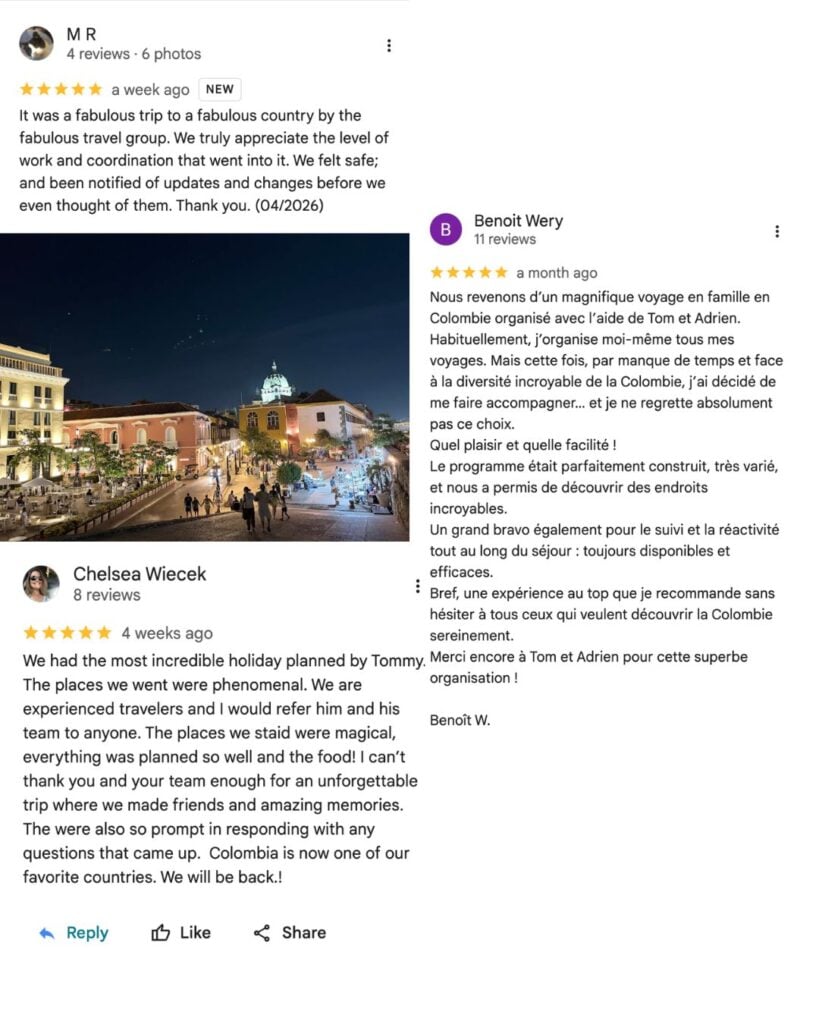
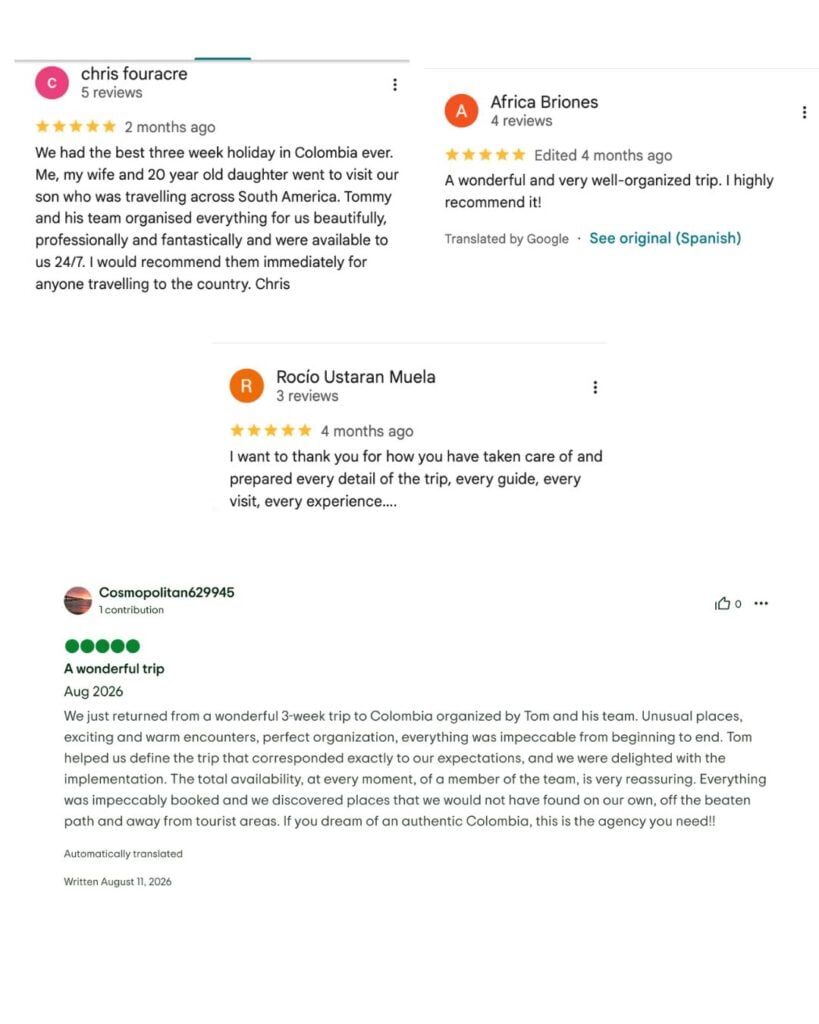
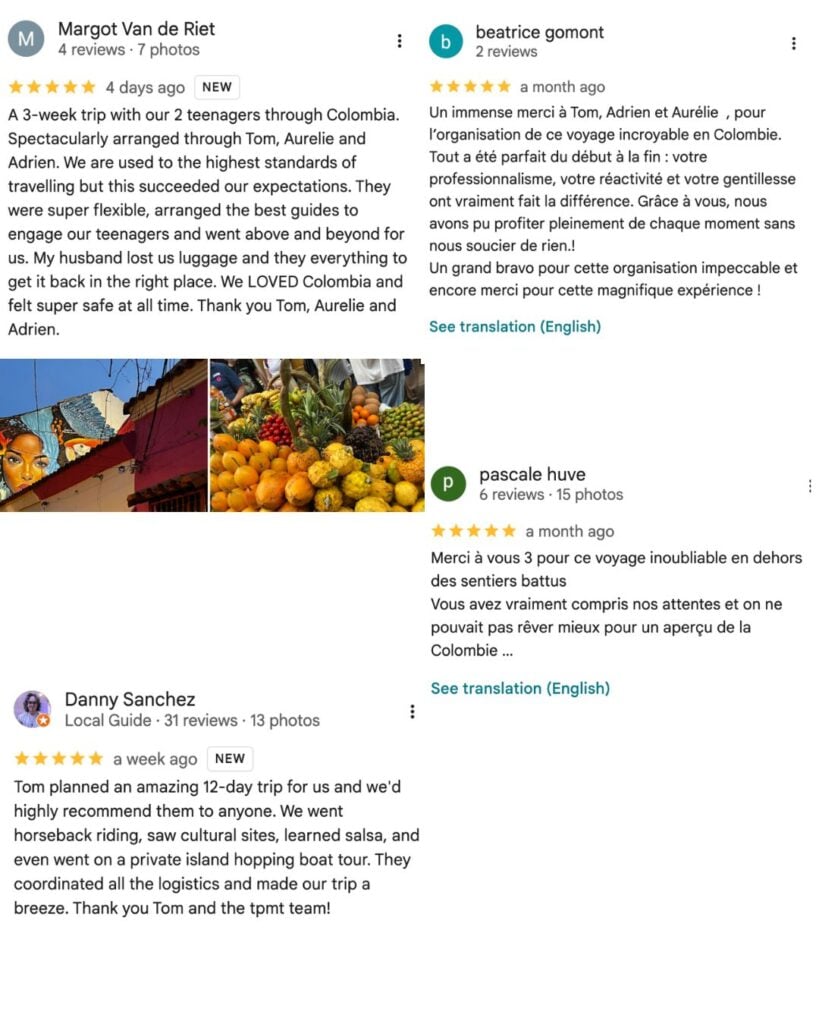

The solution for a successful Colombia trip
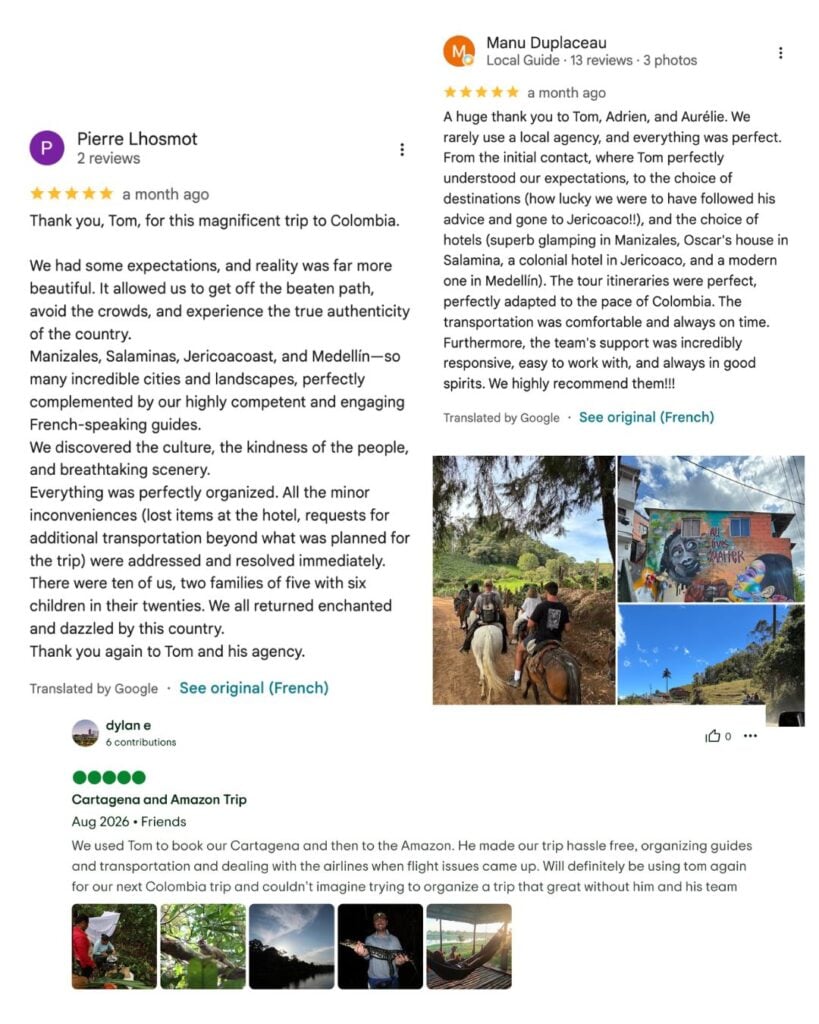
“Usually, I don’t go through a travel agency. But for Colombia, I needed help — and this agency transformed my experience in this country.”
That’s the kind of comment you’ll find most often in our reviews (we’ll let you read them 😉).
Let’s explore together for a quality, one-of-a-kind trip that lets you truly connect with the country:
- Undiscovered Colombia — adventures off the beaten path
- Easy Colombia — stress-free, fully comfortable
- Premium Colombia — high-end that stays authentic
What type of trip suits you?
Every trip is unique, but you might see yourself in one of these themes.
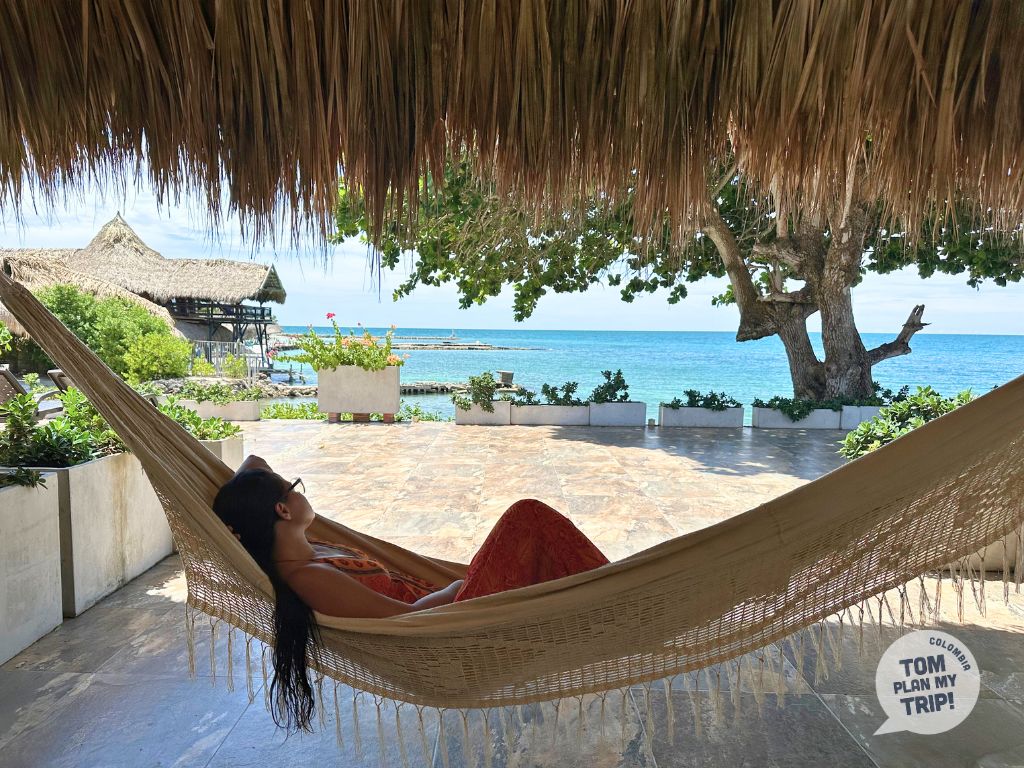
EASY
Colombia stress-free, comfortable and at your own pace — Say goodbye to vacations that leave you drained. We design a trip where every day is a pleasure, balancing exploration and relaxation.
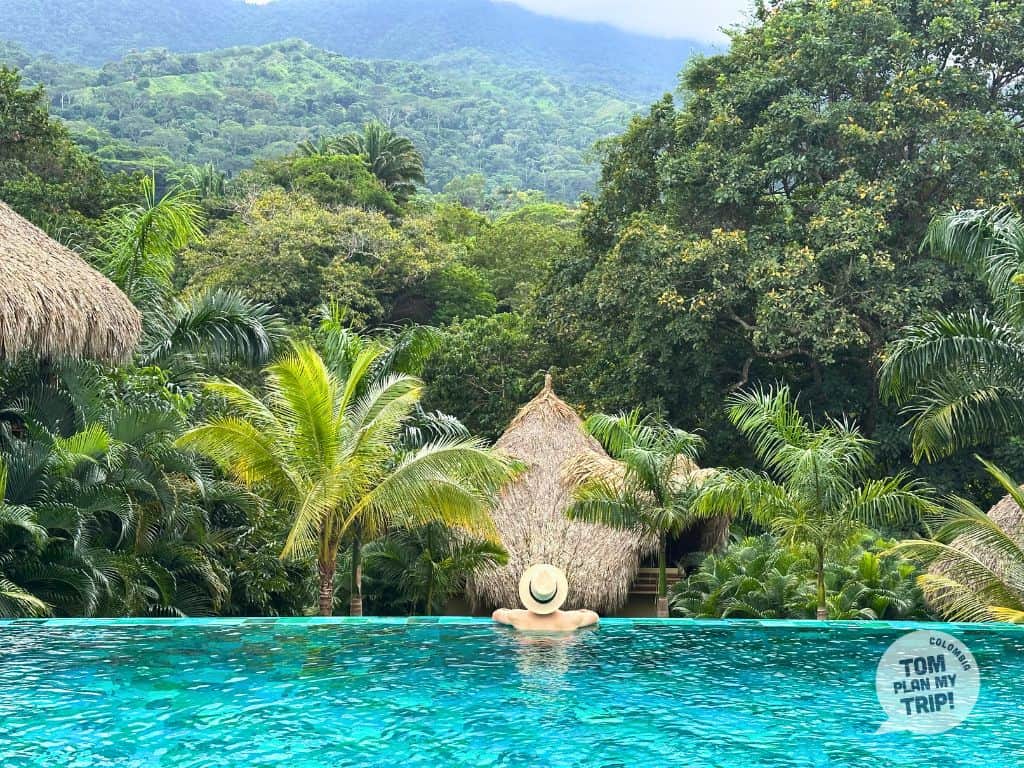
PREMIUM
Premium journeys through the heart of Colombia — Comfort, character, authenticity. You shouldn’t have to choose between a luxury experience and a genuine connection with the country. We give you both.
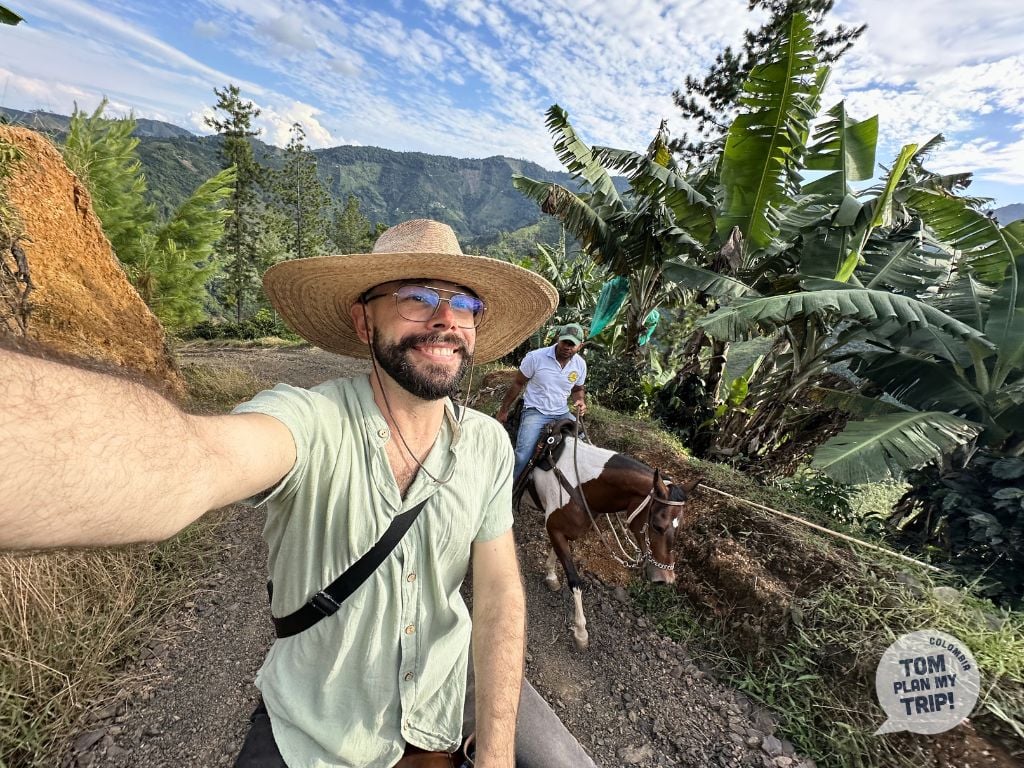
HIDDEN
The Colombia beyond the tourist trail — We don’t take you on a tour of Colombia. We immerse you in it, sharing unforgettable moments with your loved ones in stunning places you’d never have discovered on your own.
Learn moreWhat our clients say
Colombian Food
Select a Region of Colombia


Western Caribbean Coast
Colombian Destinations Listed Alphabetically
Places from A to I
Places from J to P
Places from R to Z
Follow us on Instagram!


Our secret to actually enjoying your Colombia vacation
Colombia is twice the size of France. There’s no point trying to see it all in 15 days. Our trips distill 11 years of boots-on-the-ground exploration into the essentials: the very best of the country, without the stress of racing around.
