
Popular Colombian Dishes by Region

Editor
Updated on
Colombia is a country of contrasts — and its cuisine reflects that.
From popular Colombian dishes of the Amazon to the specialties of the Llanos, from the Andean mountain range to the Caribbean coast, each region has developed its own recipes, born of ancestral traditions and an ingenious adaptation to its environment.
Jungle, river, plain, mountain — so many ecosystems that have invented a gastronomy of exceptional richness.
Through this guide, embark on a culinary journey to the heart of the Colombian regions.

11 years exploring Colombia, 500,000 travelers helped every year through our online guides. And for families and groups of friends who want a trip everyone will love, without lifting a finger, our agency designs a tailor-made journey to discover the best of the country, far from the tourist traps.
→ About us | ⭐⭐⭐⭐⭐ + 185 reviews | → Our service

- In Colombia since 2015
- + 1025 tested experiences
- + de 145 local partners
- + 425 trips created


POPULAR COLOMBIAN DISHES BY REGION: WHAT YOU NEED TO KNOW
What you’ll find on your plate during your Colombian adventure
POPULAR COLOMBIAN DISHES OF THE PACIFIC COAST
Fish, coconut, and Afro-Colombian heritage.
On the Pacific, the empanada has taken on the flavors of the sea and the mangroves.
Forget the classic filling of beef and potato found in most of the country’s empanadas — here, it’s piangua and jaiba that dictate the recipe.
The piangua is a small bivalve harvested in the mud of the mangroves by the piangueras, women who carry on an ancestral Afro-Colombian tradition from mother to daughter. The jaiba is a blue crab from the mangroves, whose meat is shredded.
Piangua and Jaiba simmer in a spicy sauce with coconut milk, garlic, annatto (natural coloring), and cilantro, then are slipped into a well-golden fried corn dough — crispy outside, soft inside. The whole thing is accompanied by a homemade ají.

A popular and family dish.
The recipe for this typical Colombian dish from the Pacific involves cooking rice in fresh coconut milk, sometimes with a few raisins. The texture is creamy; the taste is slightly sweet and salty.
Shredded tuna is added to the rice, cooked with tomato, garlic, or simply sautéed.
A tasty variation, the titoté, involves caramelizing the coconut milk before cooking the rice in it.
A simple and effective combination for this comforting, flavorful dish that is deeply rooted in the Afro-Colombian everyday cuisine.

The popular Colombian dish that summarizes the Pacific coast on a plate.
A filet of fresh fish — snapper, croaker, or snook — marinated then slowly simmered in a creamy coconut milk sauce, with garlic, bell pepper, annatto, and the Pacific’s typical herbs: cilantro, oregano, and poleo.
The result is creamy and fragrant, with a sweetness that the marine flavors help to counterbalance.
It’s a great classic of the coastal gastronomy, a direct heritage of Afro-Colombian cuisine. It is served with coconut rice and patacones — delicious.

A popular Colombian dish to party on the Pacific coast.
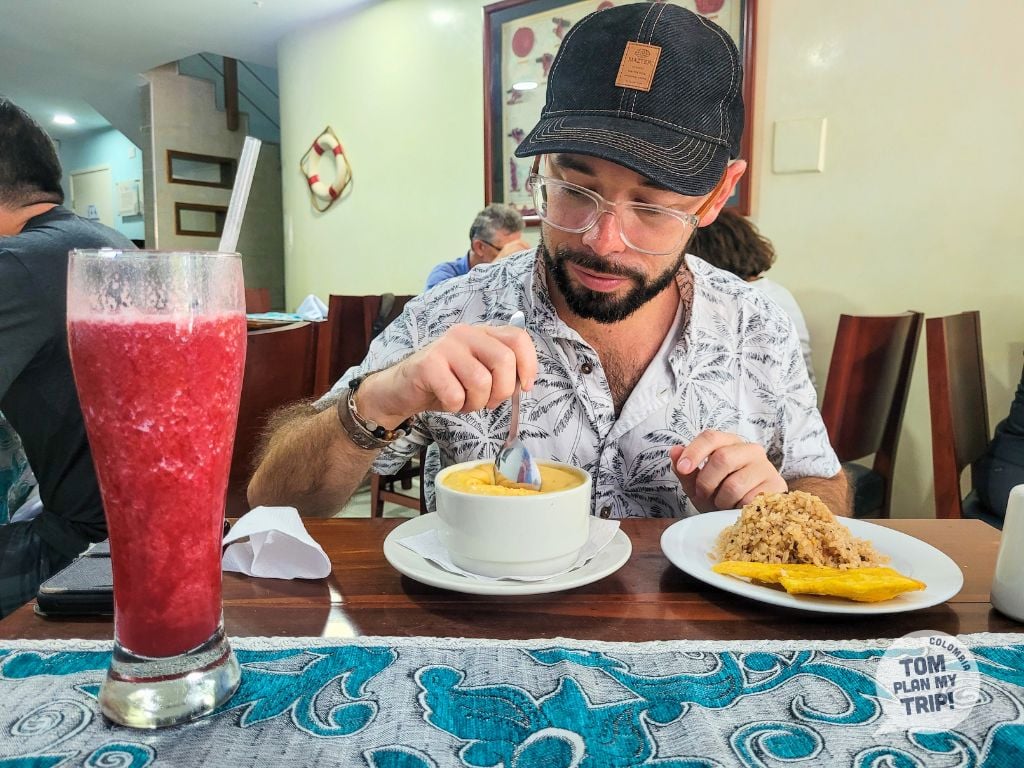
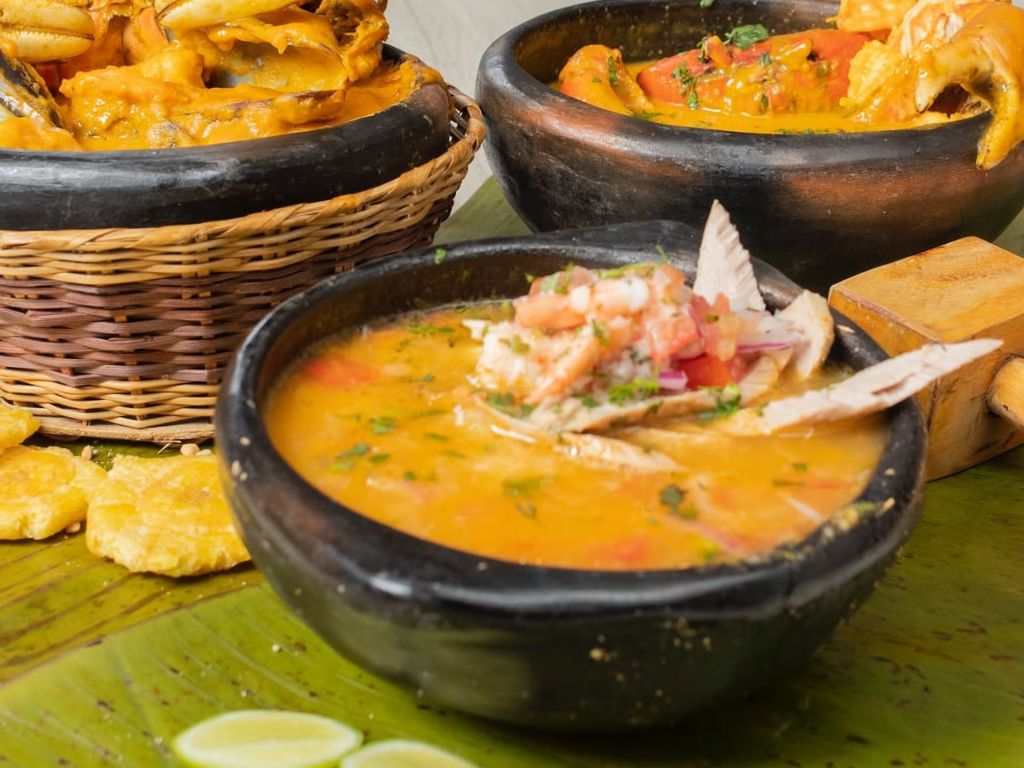
The seafood cazuela is a stew of seafood and fish served in an earthenware dish.
Rooted in Afro-Colombian culinary tradition since the arrival of the conquistadors, it became popular in the mid-20th century when a restaurant in Buenaventura (Valle del Cauca) invented an iconic version.
In the creamy coconut milk broth, simmer shrimp, squid, clams, langoustines, and fresh fish, enhanced with a sofrito: tomato, onion, garlic, bell pepper, and cilantro.
It is served with coconut rice and patacones — hearty and flavorful.
One of the most ancient recipes from the Colombian Pacific.
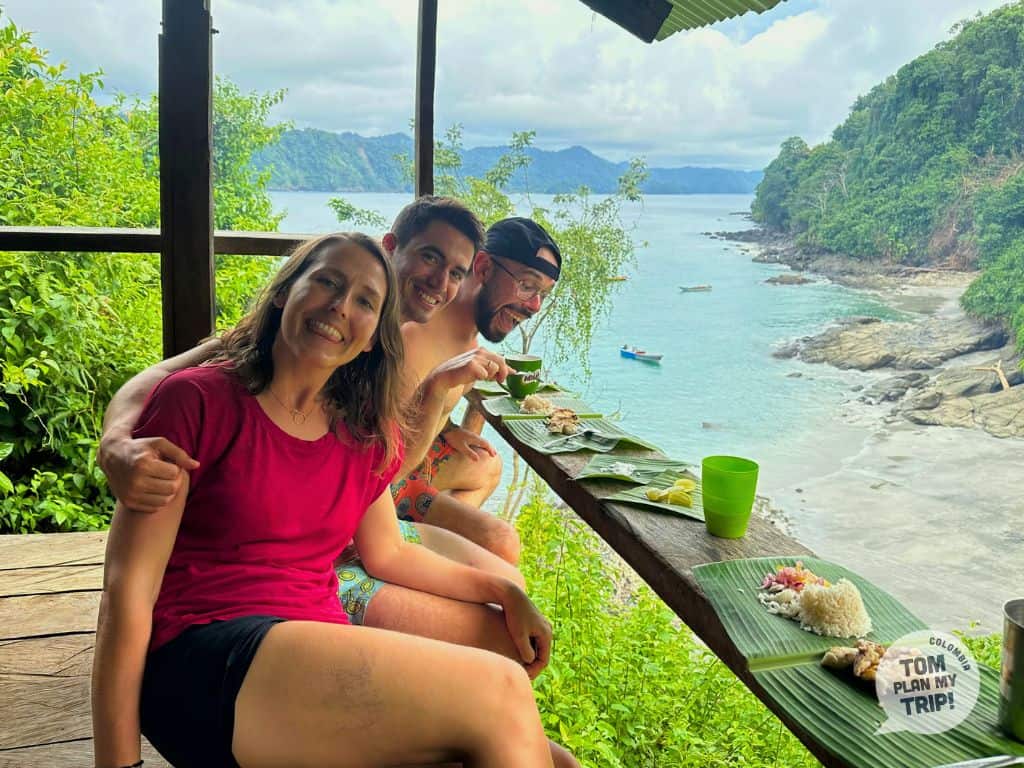
This popular Colombian dish, inspired by an African recipe, has been rooted in Afro-Colombian cuisine since the 19th century and was traditionally prepared for Holy Week.
In its Pacific version, it’s fish or smoked tollo (small shark), wrapped in a dough of fermented corn and coconut milk, with wild aromatic herbs (cilantro, poleo, and oregano), then fried until golden and crispy – a beautiful balance between smoky and briny.
© Tomplanmytrip
A successful Colombian adventure with family or friends
What kind of adventure do you want for your group? Will it really suit everyone? Is it safe? Is it too touristy?
Guessing and hoping you made the right call — sometimes that works. But not always.
And I won’t even get into the stressful surprises that force you to make some changes mid-trip.
Look, we’ve been doing this for years — and if you check our reviews, you’ll see we know what we’re doing.
Enjoy the trip instead of carrying the weight of it. Tell us what you love, and we’ll handle the rest.

© Tomplanmytrip
POPULAR COLOMBIAN DISHES, ANTIOQUIA & COFFEE REGION
Hearty and characterful dishes.
A hearty and slightly extravagant popular Colombian dish.
The Bandeja Paisa lives up to its name: bandeja is the large dish in which it is served, and paisa refers to the inhabitants of Antioquia — generous, proud, and whole.
Born in the mountains of Antioquia to feed the peasants and the arrieros who crossed the Andes on muleback, this dish mixes red beans, rice, ground meat, chicharrón, chorizo, blood sausage, fried egg, arepa, avocado, and fried plantains – in short, a hearty meal!
This recipe is so popular that it almost became the national dish, but, deemed too regional, many Colombians denied it this title.

A popular Colombian dish that smells like the mountain.
Originally from the rivers of California and the northwest of the United States, the rainbow trout was introduced to Colombia in the 20th century and has perfectly adapted to the cold, clear waters of the Andes.
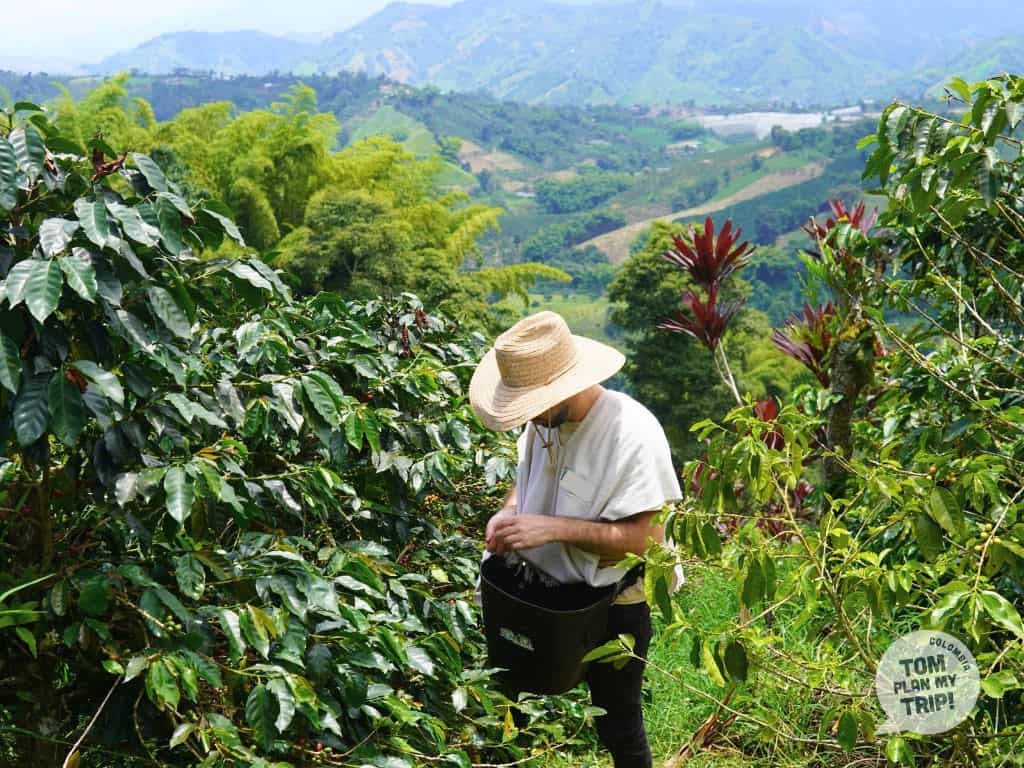
Having become a staple of gastronomy in Quindío and in the coffee region, it is raised and served in trucherías — specialized restaurants in Salento or along the Cocora Valley.
It is prepared on the grill, al ajillo (garlic sauce), au gratin or in mushroom sauce, but the most classic presentation remains the whole golden trout, placed on a large crispy patacón.
Fine flesh, delicate taste, lush green mountains — a simple pleasure.

A popular Colombian dish to share.
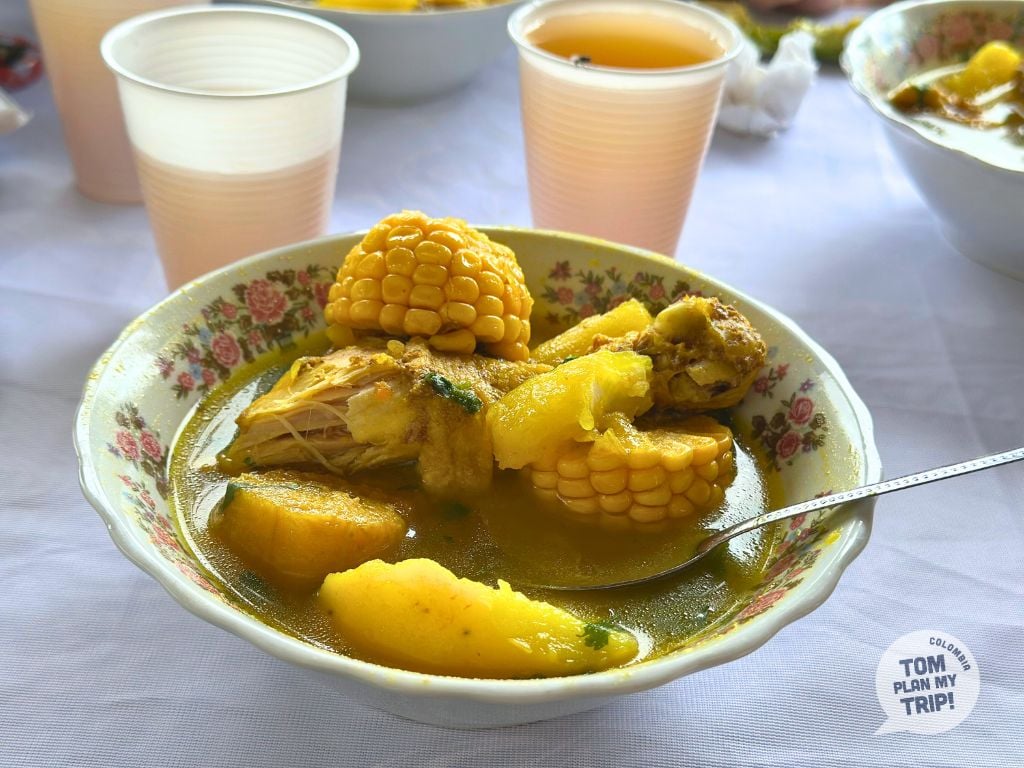
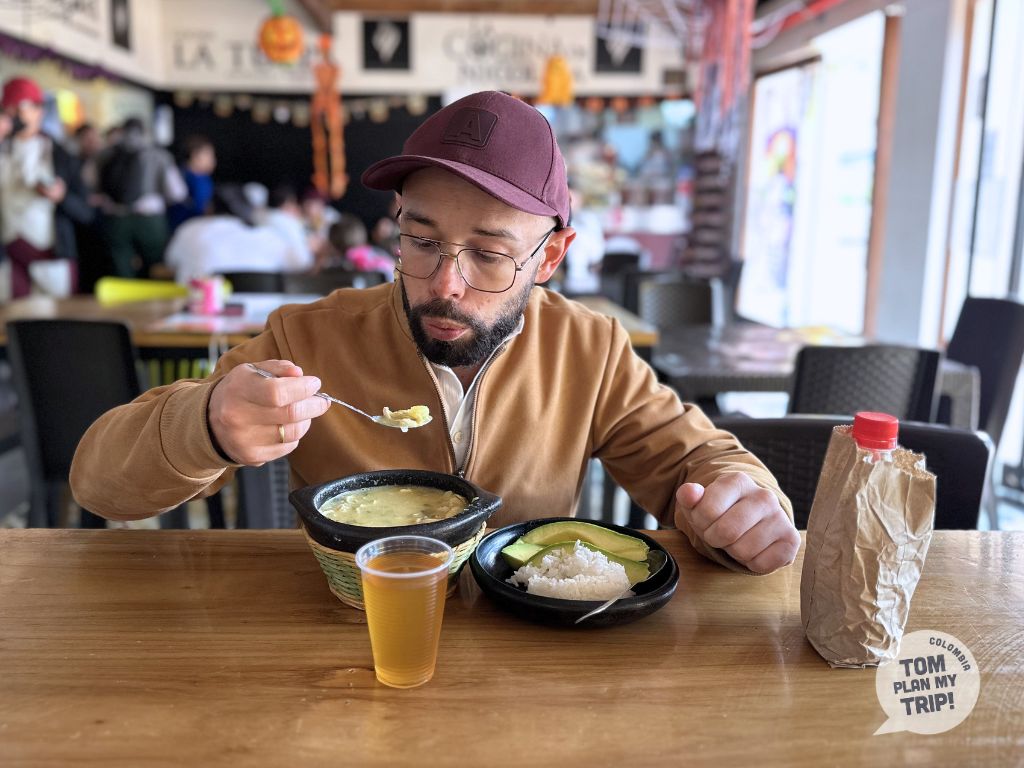
If the sancocho is prepared throughout the country, it is in Antioquia that it appears in its most generous version: the sancocho trifásico — chicken, pork, and beef combined in the same broth, with tubers, corn, plantain, and yuca, all cooked over a wood fire. It is served with white rice, avocados, and arepas.
Traditional for family meals or among friends, it is the essential dish of the paseo de olla Sunday, this paisa tradition that involves gathering by a river to cook and eat together.
As an anecdote, it is nicknamed levanta muertos — the resurrector of the dead — because its broth has the power to revive party-goers.
A bold dish that divides.
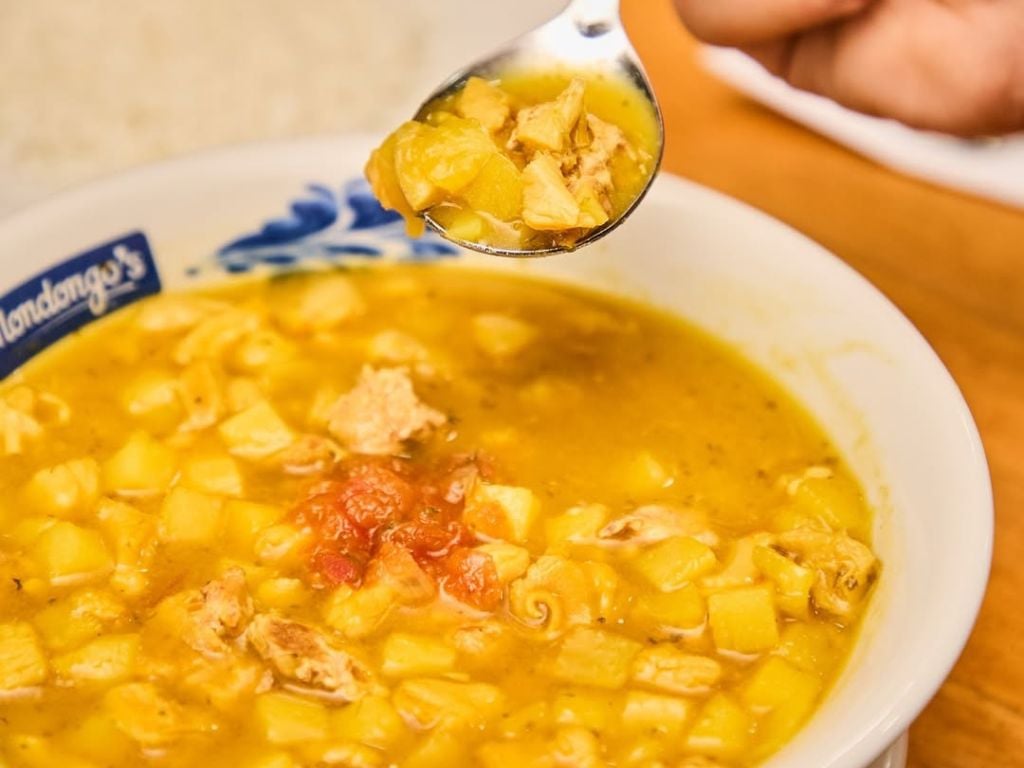
In Antioquia, mondongo is one of the typical Colombian dishes traditionally eaten since childhood.
Heritage direct from three cultures — Spanish, indigenous, and African — it’s a tripe soup, slowly simmered with pork, chorizo, corn, peas, yuca, potatoes, and carrots.
The result is a thick soup flavored with cumin and coriander, served with white rice, avocado, and plantains.
In sum, you either love it or you don’t – but its broth seems to be a crowd-pleaser 😉
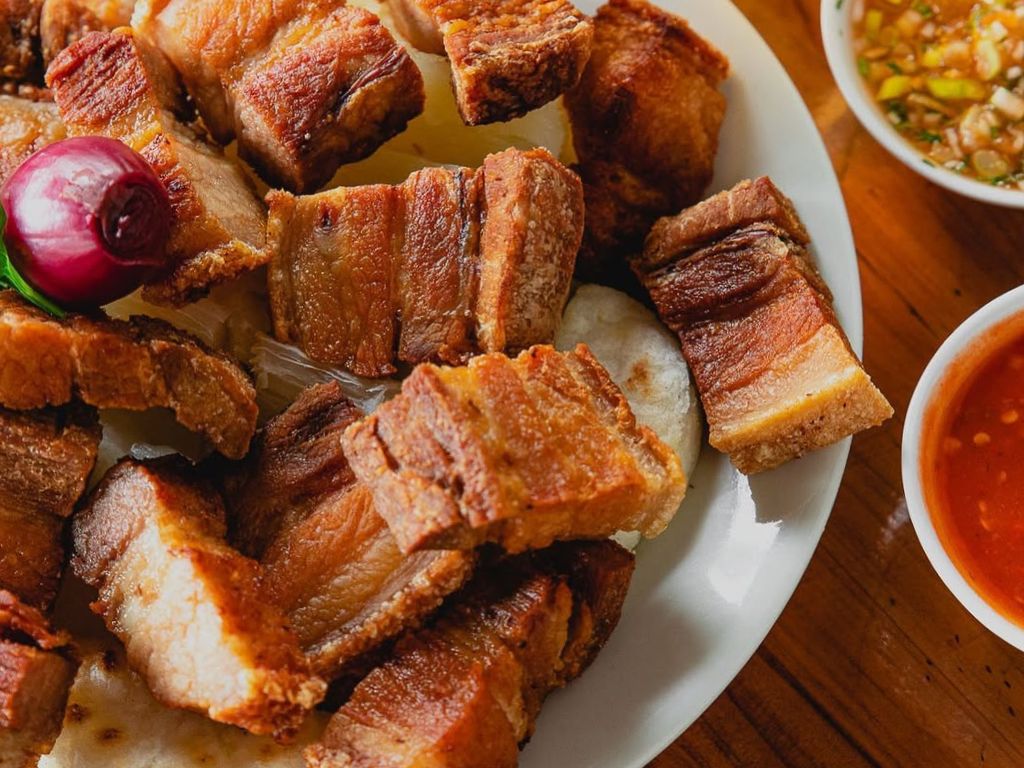
The chicharrón, a matter of identity in Antioquia.
The Antioquian chicharrón is pork belly — meat, fat, and rind — fried in its own fat until it is crispy on the outside and tender on the inside.
Arrived from Spain with the settlers, chicharrón is an essential part of many popular Colombian dishes like the bandeja paisa. It can also be eaten for breakfast with an arepa, sometimes with a squeeze of lemon, or even at Christmas during the marranada (pig festival).
In short, a simple and delicious classic of Colombian cuisine.
© Tomplanmytrip
POPULAR COLOMBIAN DISHES FROM THE BOGOTÁ REGION
Popular Colombian dishes from the Andean highlands.
The ideal dish for a cold day in Bogotá.
Iconic of the Colombian capital, this popular Colombian dish is inherited from the Muiscas who lived on the Cundinamarca plateau, before being revisited by the Spanish colonists.
Three varieties of ancient and local potatoes, each bringing its own touch to the dish, simmer with corn, shredded chicken, and guascas, endemic plants with a herbaceous and slightly earthy aroma that give the ajiaco its character.
Served in a black clay cazuela still simmering, accompanied by white rice, sour cream, and capers, it’s a Sunday and Christmas dish.
Aleja, my Colombian wife, says this thick and comforting peasant soup is one of the best in the country.

A rather disconcerting breakfast.
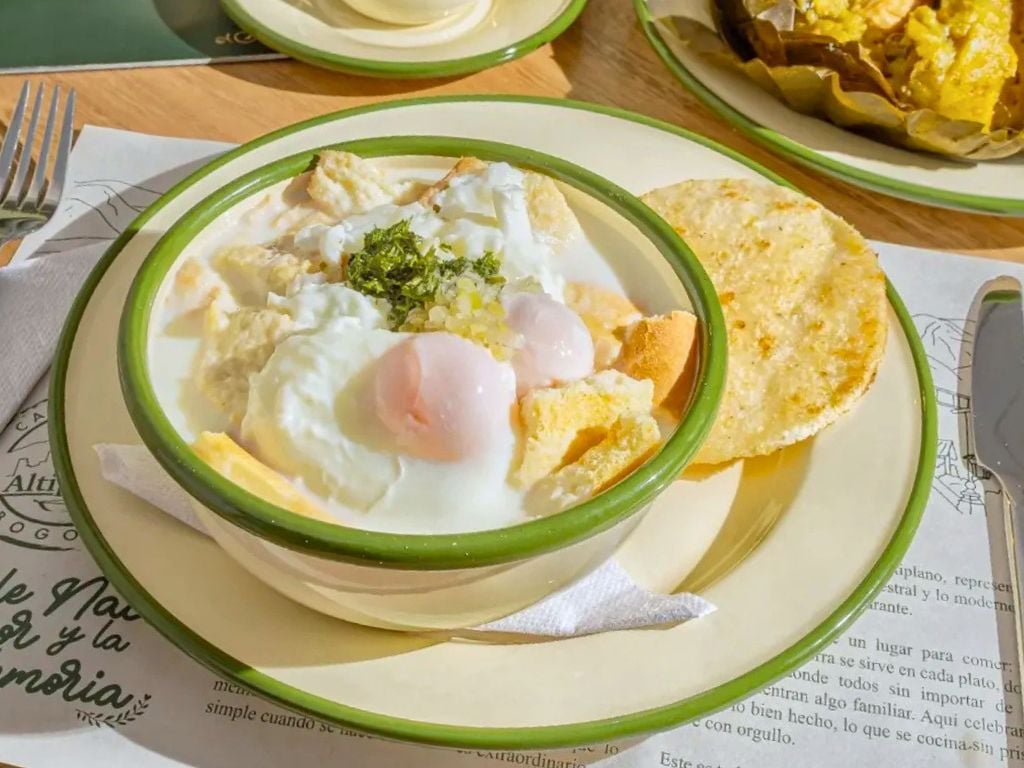
La changua is a broth of milk and water in which one or two eggs are poached, with chives and cilantro. Inherited from the Chibcha culture of the Cundinamarca and Boyacá plateaus, this dish has become a weekend breakfast classic in Bogotá.
It is served with bread, calados — slightly sweet buns — or cheese, and accompanied by a hot chocolate.
For anecdote, TasteAtlas — the guide that rates traditional dishes from around the world — voted it the worst breakfast in South America, but the Bogotanos couldn’t care less.
A popular Colombian dish that dates back to the dawn of time.
Inherited from Mesoamerican civilizations, long before the creation of Colombia, the local variant is called the tamal santafereño, Santa Fe being the former name of Bogotá.
Carefully tied banana leaves enclose a yellow corn dough generously filled with pork, chicken, peas, chickpeas, spiced and colored with annatto. A steaming process releases a scent of corn and cumin.
Another classic for Sunday breakfast in Bogotá, it is served with a hot chocolate.

A sharing dish from Colombian street food.
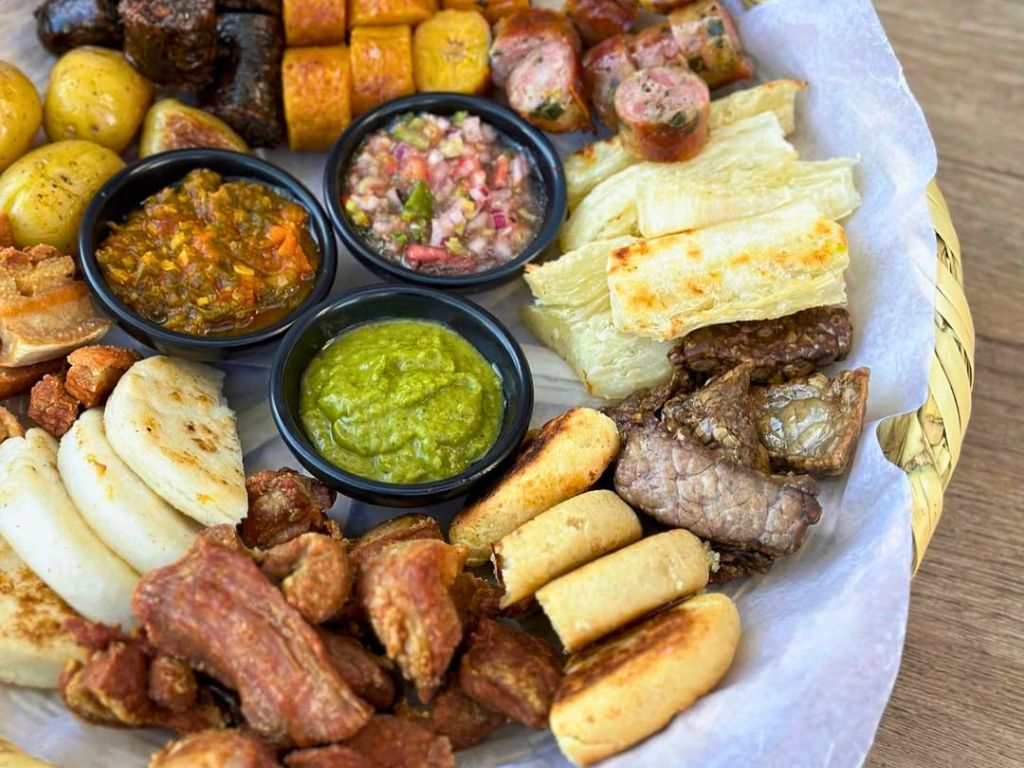
Born in Cundinamarca and Boyacá, this popular Colombian dish is an assortment of meats and tubers: crispy chicharrón, morcilla, chorizo, longaniza, pork ribs, papa criolla, yuca, and ripe plantain – everything is fried.
It’s a friendly dish eaten standing up, with everyone nibbling with their fingers and seasoning to their taste with ají.
You can enjoy delicious ones in the piqueteaderos of Paloquemao, the largest covered market in Bogotá, which we love to suggest visiting to our travelers.
A spectacular party dish.
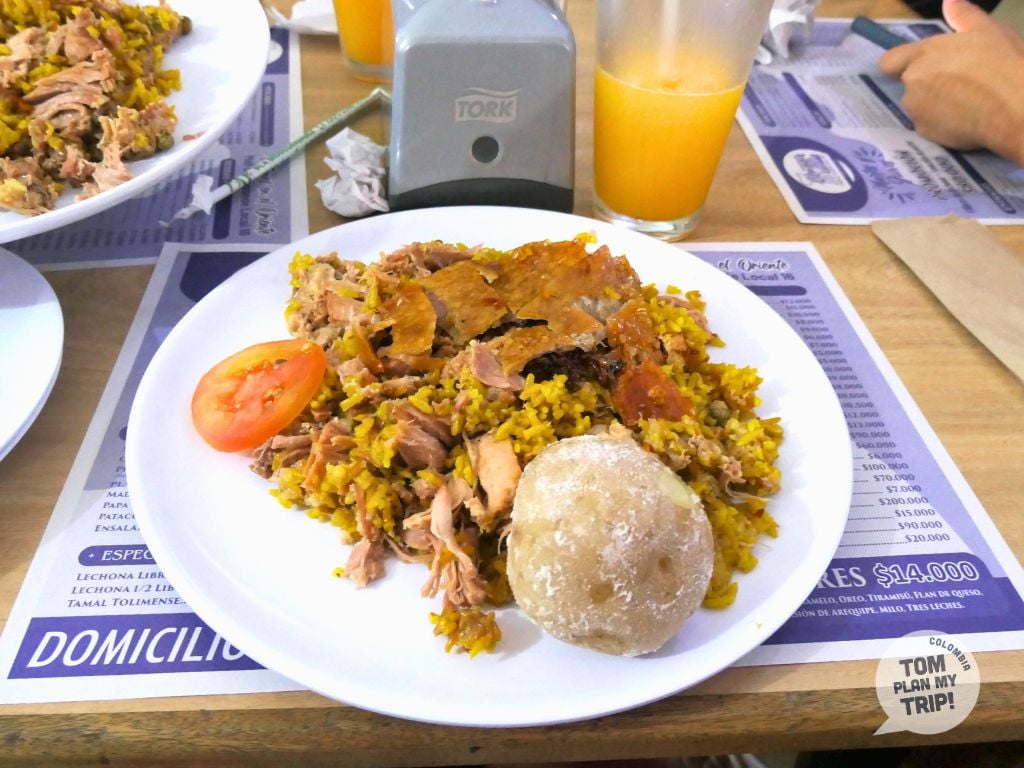
This popular Colombian dish is a whole deboned pig, stuffed with pork meat and dried yellow peas, roasted for twelve hours in an earthen oven until the skin is crispy and the meat is tender.
The origins of this recipe are Spanish, influenced by Arab culinary traditions.
Served with an arepa of white corn and insulso, a sweet cream made from corn and panela, it’s a great classic of the Tolima.
Over time, lechona has carved out a place of choice in Colombian gastronomy — to the point of obtaining a Denominación de Origen Protegida — it’s also Adrien’s favorite dish 😉
© Tomplanmytrip
POPULAR COLOMBIAN DISHES OF PROVIDENCIA AND SAN ANDRÉS
Popular Colombian dishes inspired by the sea.
The culinary soul of the archipelago.
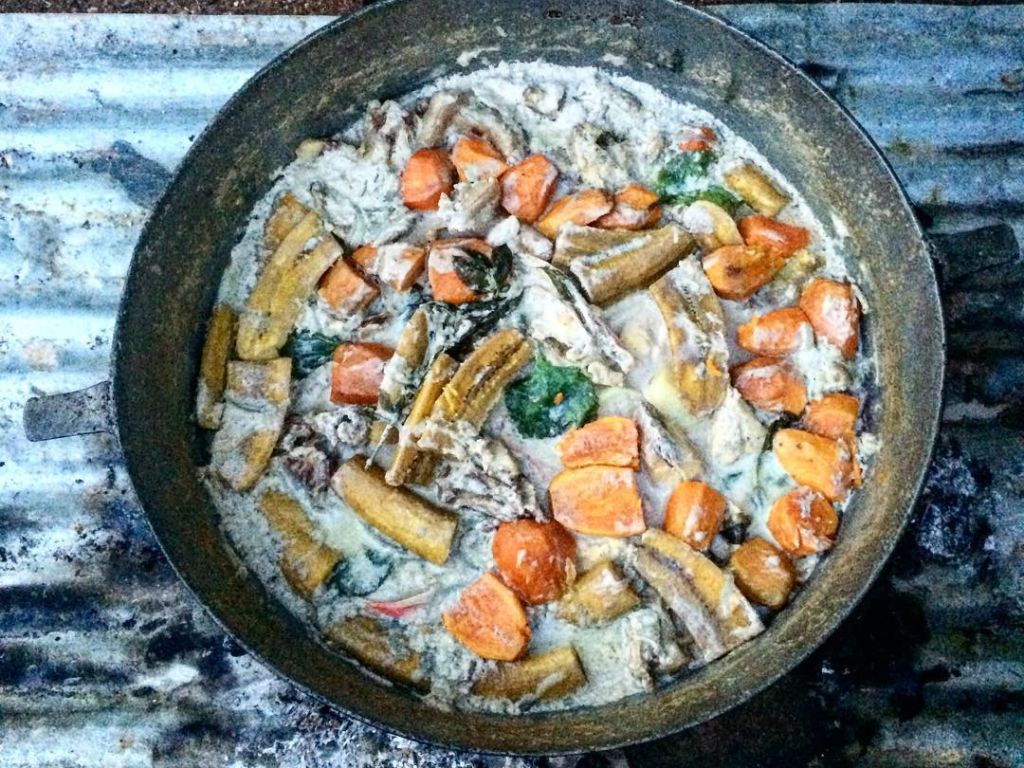
This generous dish, rich in flavors, is inherited from Afro-Jamaican slaves in the 19th century.
It combines in the same coconut milk broth flavored with ginger: fish, conch (large shells from the Caribbean), salted pork tail, yuca, yams, plantain bananas, wheat-flour dumplings, and sometimes breadfruit.
The whole thing is cooked slowly in a large cauldron over a fire of coconut shells, then served separately, drizzled with broth.
It is a dish that Raizales families traditionally cook outside on Sunday.
A local crab in the spotlight.
An endemic and protected species from the hills of the archipelago, el cangrejo negro is officially caught only between August and March — the rest of the year, its fishing is prohibited to protect its reproduction, which results in a spectacular migration to the sea. Its fine flesh is particularly appreciated.
In this popular Colombian dish rooted in the culinary tradition of the archipelago, it is cooked whole in a coconut milk broth with yams, cassava, plantain, basil, and wheat-flour dumplings.
The result is a creamy soup that smells of the sea and spices.
A classic of Colombian street food in Providencia and San Andrés.
These small fish balls are made with snapper, gilt-head bream, or, if necessary, black crab, depending on the catch of the day.
The meat is deboned or peeled, seasoned with garlic, onion, tomato, and local spices, then shaped into balls and fried in oil.
Crispy on the outside, tender on the inside, these balls are nibbled as an appetizer or in the street, often accompanied by patacones and an ají sauce — a fresh and flavorful cuisine.
An identity snack of Colombian island street food.
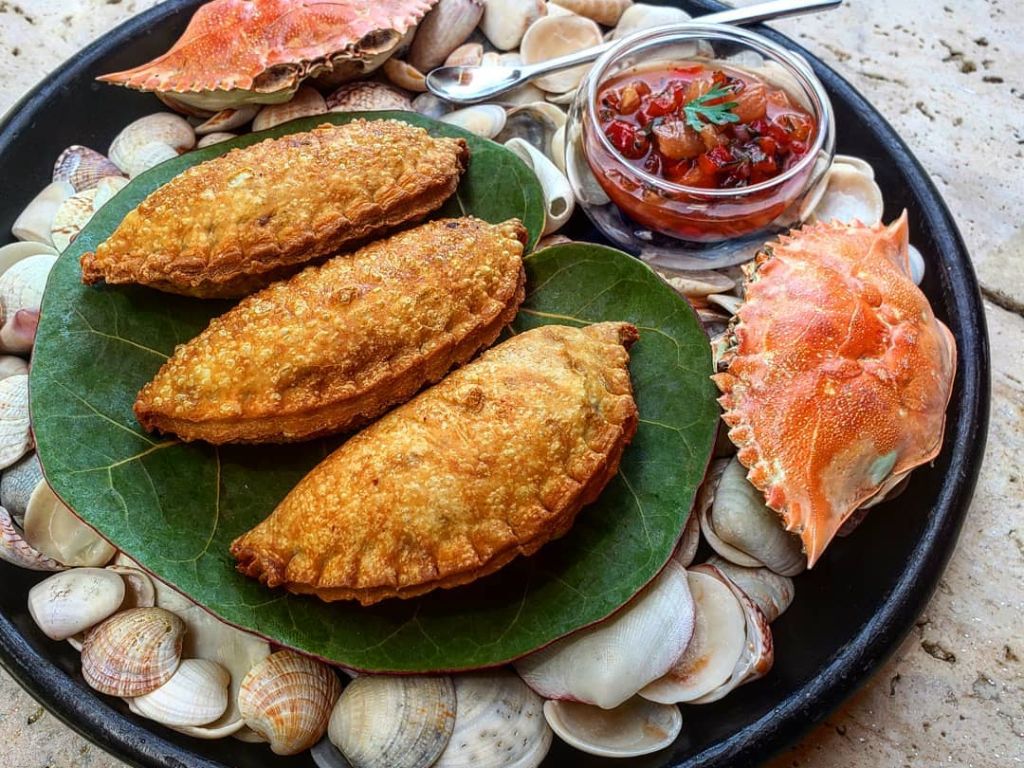
All of Colombia eats empanadas, but on the archipelago of San Andrés they are made with crab.
Here, the wheat flour dough is slightly risen, more airy than elsewhere, and the filling is made with black crab meat, sautéed in coconut oil with garlic, onion, and chili. The empanadas are then fried until they have a golden crust.
You will find these empanadas at the Fair Tables, these small stalls set up in the streets or by the roadside by raizal women — authentic, tasty, and fragrant.

© Tomplanmytrip
Popular Colombian Dishes from Santander
A cuisine of the land, inherited and reinvented.
The festive dish identity of Santander.
This popular Colombian dish, a true delight of the national gastronomic heritage and cultural heritage, honors a milk-fed kid — slaughtered before three weeks — marinated in garlic, vinegar, cumin, and oregano.
It is then roasted slowly over embers or in a brick oven. The skin crackles, the meat falls off by itself, the taste is delicate and fragrant, a bit wild.
In the Chicamocha Canyon, it is cooked with oreganillo, an endemic herb that gives it its unique character.
It is served with pepitoria — a stew of goat blood and offal with rice, a direct heritage from Spanish cuisine with Arab influence —, yuca, and an arepa.
The gargantuan Sunday soup in Santander.
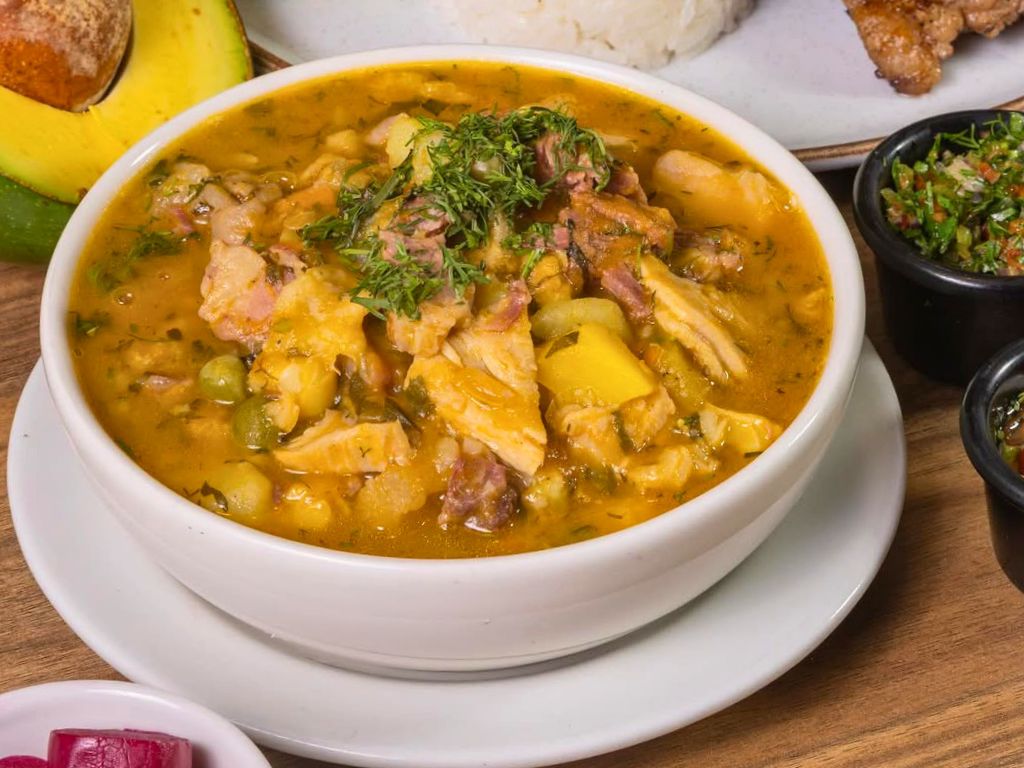
The preparation of this popular Colombian dish begins the day before by soaking the corn, an essential ingredient inherited from the Guanes.
The next day, in a huge pot, simmer for hours: beef and pork ribs, tripe, peeled corn, garbanzos (chickpeas), beans, arracacha (tuber), squash, potatoes, pasta, a total of twenty ingredients that melt together into a thick, intense broth.
This local version of Antioquia’s mondongo is eaten with the family, accompanied by rice, avocado, and arepas.
A recipe inherited from a Guane preservation method.
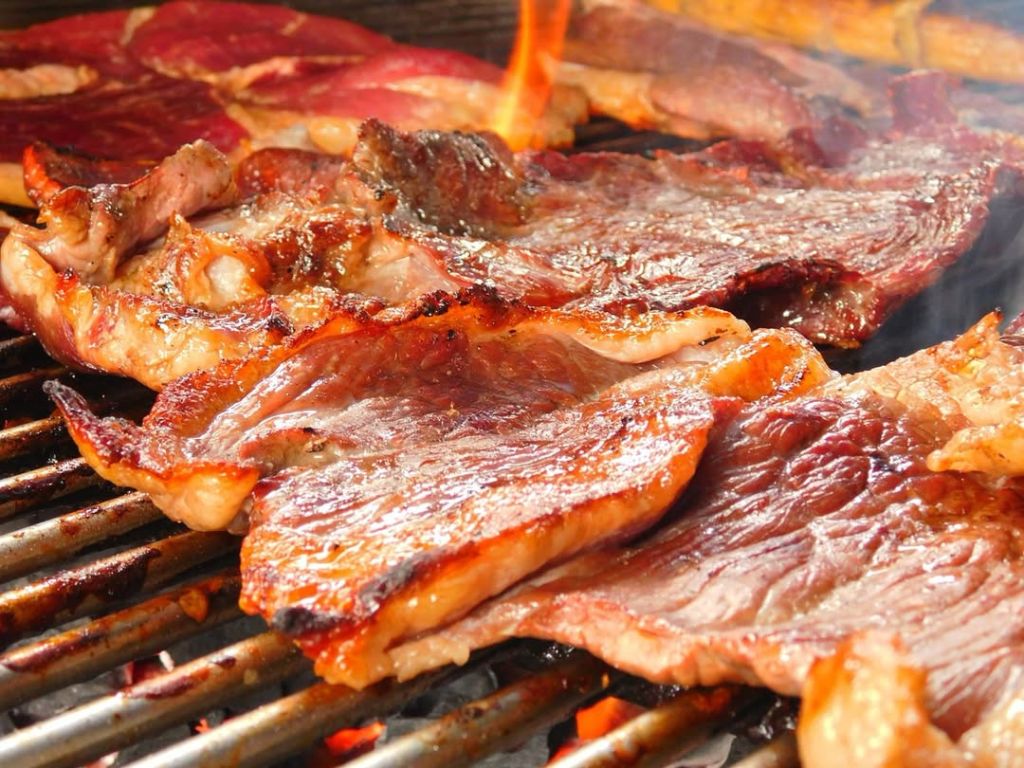
Beef sliced into thin strips is marinated overnight with garlic, onion, panela, and cumin. The next day, it is spread out in the sun for hours to lose its moisture.
Once oreada — dried, concentrated — the meat is quickly grilled over the coals.
The meat concentrates the flavors, forms a slight golden crust, and retains a very unique sweet and salty taste. Served with yuca and arepas, it’s a classic lunch in the “piqueteaderos” (popular cuisine restaurants) of Santander.
The gastronomic UFO of Santander.
The hormigas culonas, literally “big-bottomed ants,” emerge from the ground only once a year, in April-May with the first rains, for their nuptial flight.
It is at this precise moment that the inhabitants of Barichara, San Gil, and Curití capture them — a harvest jealously guarded: the location of the anthills is shared only among insiders.
The wings and legs are removed. After soaking in saltwater or freezing, they are grilled in clay dishes with local herbs. Cada cocinero tiene su preparación. Crunchy and fragrant, they remind me of the taste of grilled gray shrimp.
Heritage of the Guanes who offered them as a wedding gift, they have an aphrodisiac reputation.
A culinary experience that we love to offer to our curious travelers 😉
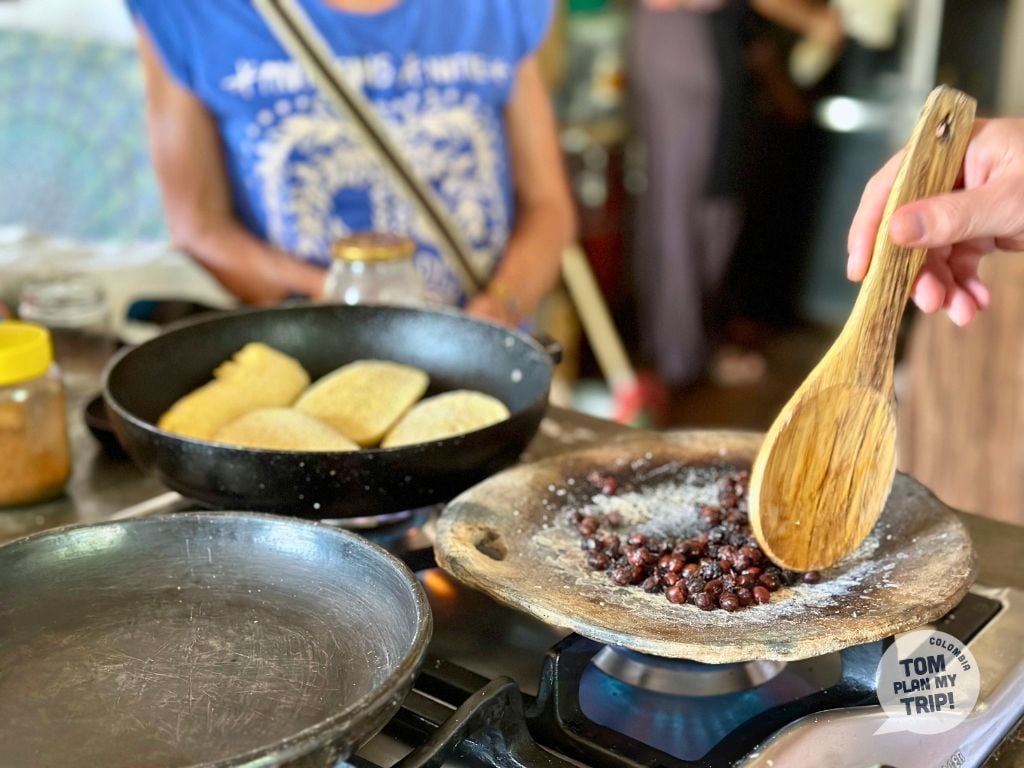
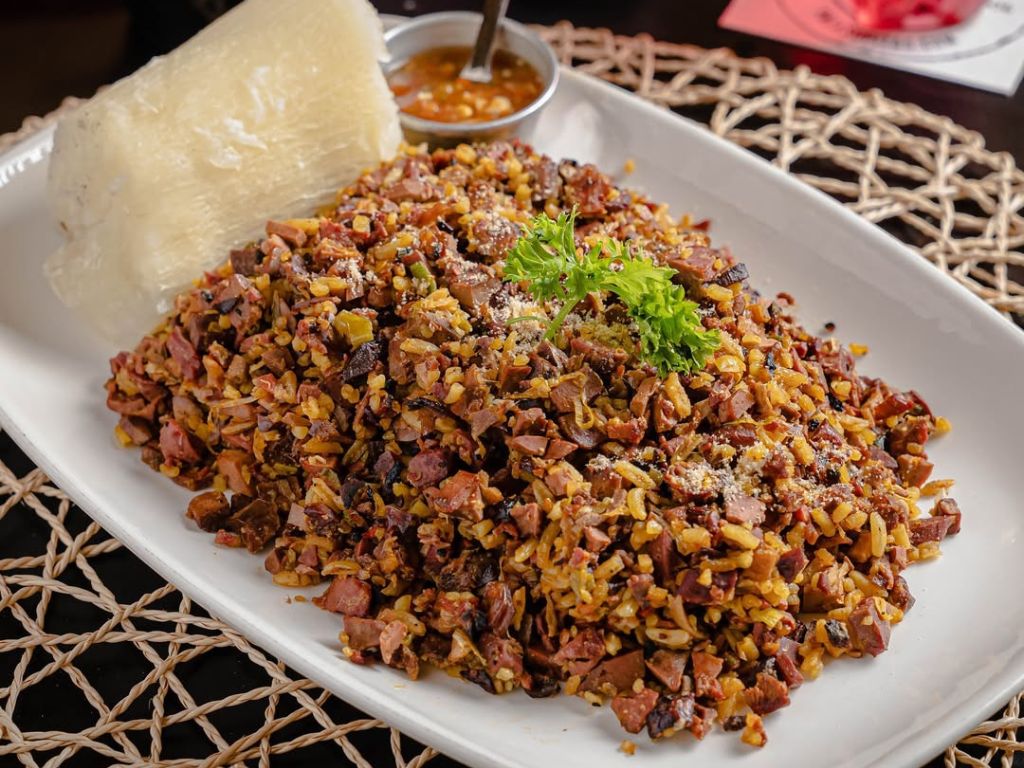
In the baby goat, everything is cooked.
La pepitoria is what we make with what remains of the cabrito. The liver, kidney, heart, and tripe of the goat are finely chopped, sautéed with the blood coagulated and crumbled by hand, onion, garlic, annatto, and cumin, then mixed with rice.
The whole thing takes on a dark brown shade; the taste is deep and slightly metallic; the texture is melting.
Inherited from Spanish cuisine with Arab influence, this typical Colombian dish from Santander crossed the Atlantic during the colonial era and became an essential companion to cabrito at the table — the art of using up leftovers 😉
© Tomplanmytrip
Popular Colombian Dishes from the Caribbean Coast
A cuisine rich in colors and flavors.
A survival dish that became a culinary treasure of the Caribbean coast.
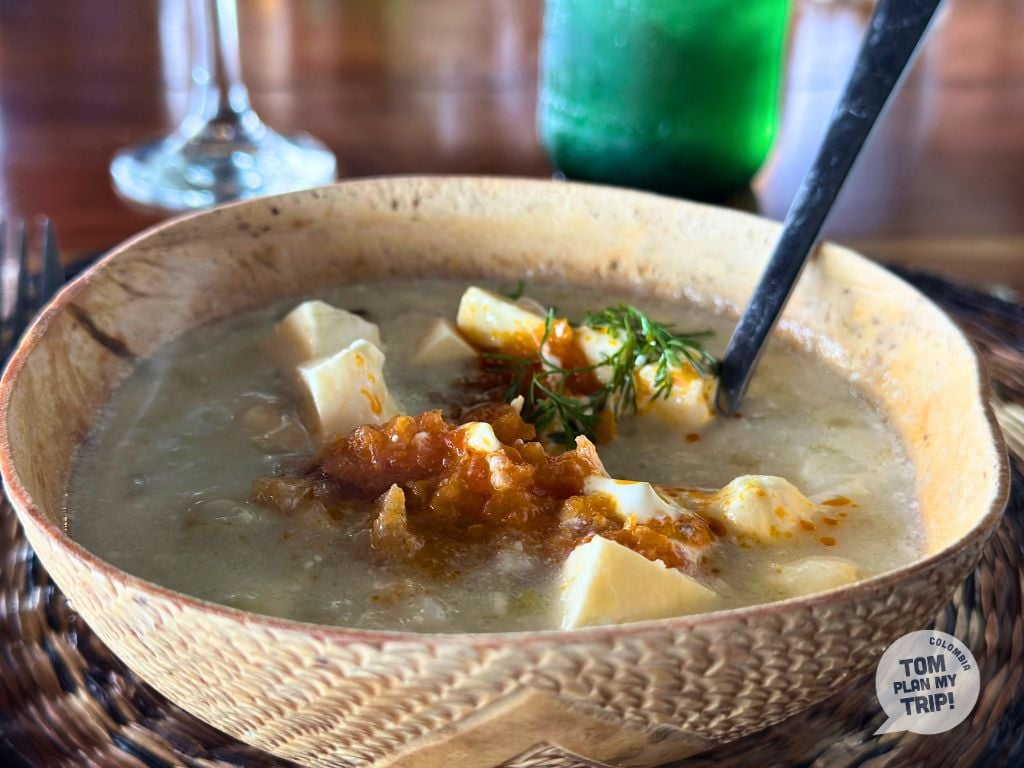
Born in Corozal, Sucre, during the famine related to a civil war at the beginning of the 20th century, cheese mote is a soup whose base is ñame (yam) — this African tuber, which arrived on the coast with the slaves, became a staple of typical Colombian dishes from the Caribbean coast.
Cooked slowly, it breaks down and thickens the broth into a creamy and dense texture.
With peace restored, this soup has been enriched with cubes of salty costeño cheese, suero — a sweet and sour fermented cream from the coast — and yuca.
This rather local dish is served with rice — nourishing and flavorful.
A dish with the scents and laziness of the Caribbean.
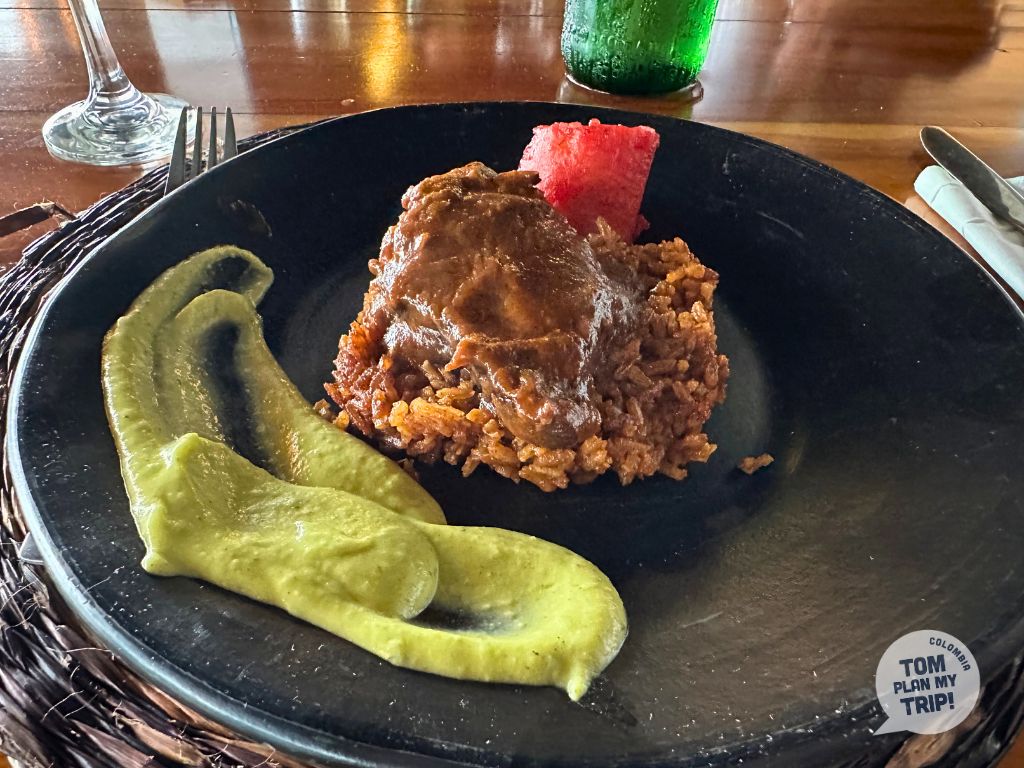
This popular Colombian dish, born during the colonial era from the blending of African, Spanish, and indigenous cuisines, is the dish for special occasions in Cartagena — Christmas, weddings, and family celebrations. Some of the best restaurants in Cartagena have made it their specialty
A piece of beef is simmered for hours in caramelized panela, with cinnamon and cloves.
The meat is tender and juicy; the sauce, which gives it its nickname ” posta negra,” is sweet and salty, dark and shiny, slightly spicy.
As a side dish: coconut rice, patacones, and candied ripe plantain.
A great classic from the Caribbean coast.
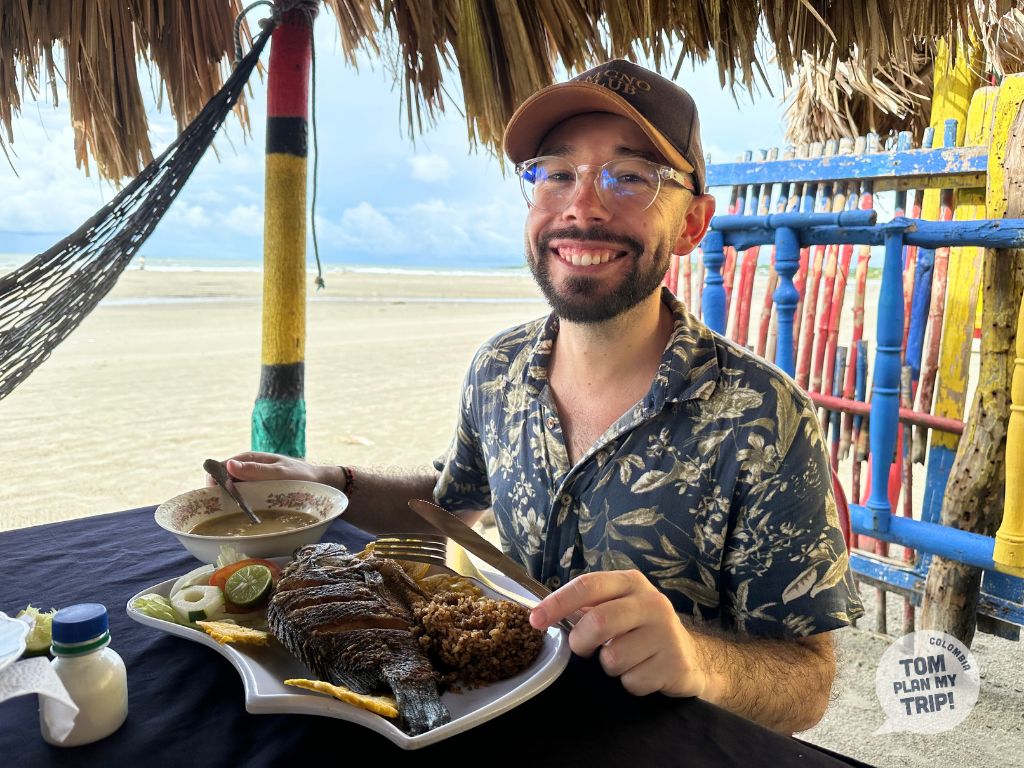
The fish — often mojarra, tilapia, or bocachico (even though it has a lot of bones) — simply seasoned with garlic, salt, and lemon, is fried in oil until the skin is crispy.
The rice, cooked in grated coconut pulp that caramelizes slowly until it forms brown clumps, giving the rice its fragrance and color.
The marriage of the two creates a good, slightly smoky sweet-salty balance.
A recipe born from three heritages: Spanish frying, African coconut, and fish from Caribbean waters — served with patacones and a salad.

A simple but technically formidable dish.
A corn cake is fried once until it puffs up; then a raw egg is slipped in through an incision on the side; it is sealed and re-immersed in oil. The outside is crispy, the inside soft, the egg still runny.
Born in Luruaco, a small village in the Atlántico department between Barranquilla and Cartagena, this arepa is the result of three heritages — indigenous corn, African frying, and Spanish egg.
Even better accompanied by a suero costeño, it is one of the culinary prides of the Caribbean coast.

Bananas and resourcefulness.
At the beginning of the 20th century, during the peak of banana exploitation in the banana zone of Magdalena, the United Fruit Company would throw away bananas that were not suitable for export.
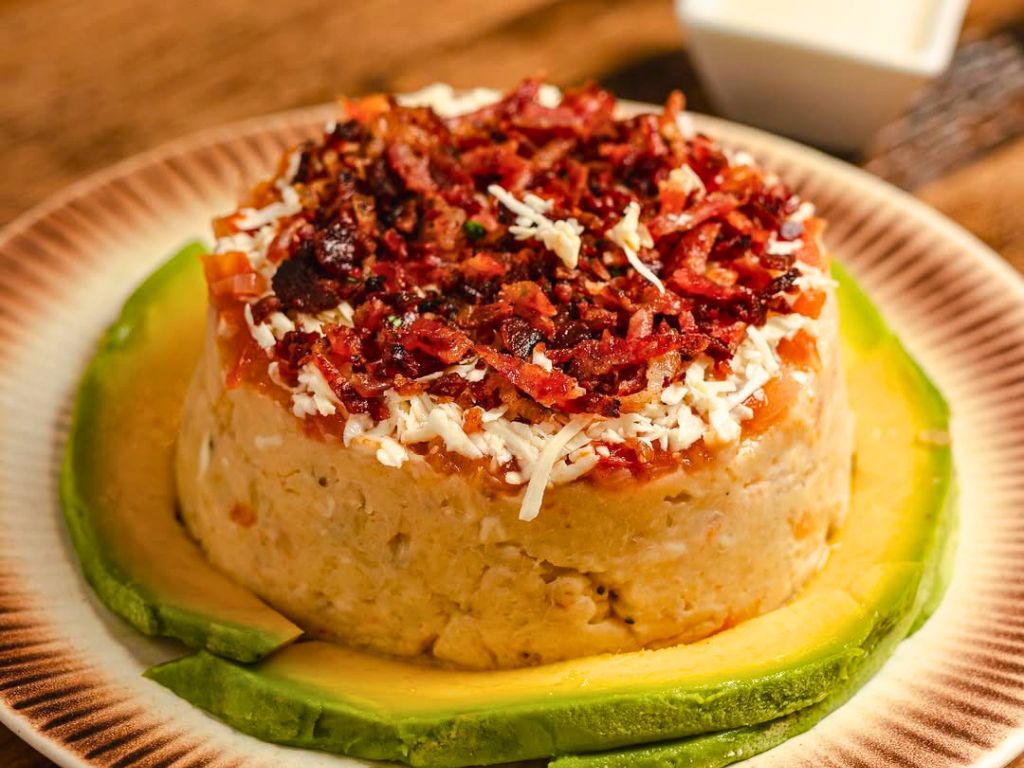
The locals would collect them, cook them, and mash them. This is how cayeye was born, a puree of still-green bananas, with butter and grated queso costeño, topped with hogao and suero.
Accompanied by a café perico, it is the traditional breakfast of the villages on the Caribbean coast — creamy, slightly salty, simple, and nourishing — probably the one that cradled the childhood of Gabriel García Márquez, native of Aracataca.
© Tomplanmytrip
POPULAR COLOMBIAN DISHES FROM THE SOUTHWEST OF COLOMBIA
A cuisine rooted in its indigenous origins.
The emblem of the white city’s gastronomy.
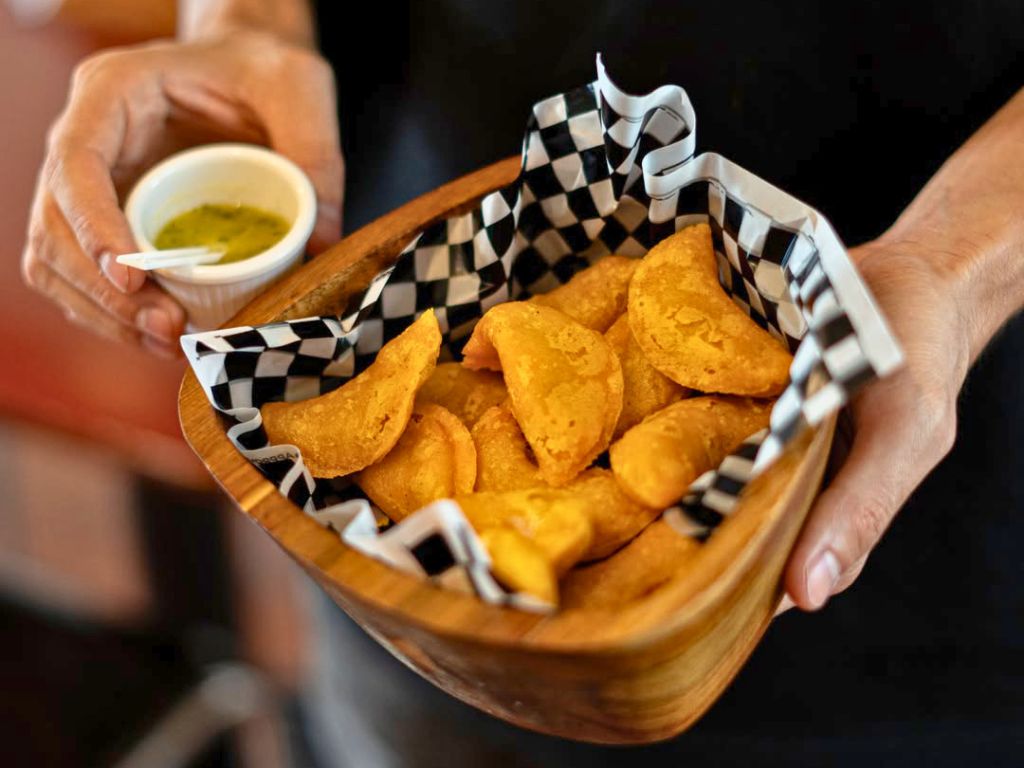
The secret of these empanadas lies in the preparation of the filling, an ancestral recipe of indigenous origin, a mix of creole potatoes, roasted peanuts (maní), hogao, achiote — without meat, even though there are many versions that deviate from the original recipe.
Wrapped in a thin corn dough and fried until crispy, the pipián empanada is the flagship street snack of Popayán (Cauca), a city listed in the UNESCO Creative Cities Network for gastronomy.
They are enjoyed with an ají de maní.
A popular Colombian dish that might make you raise your eyebrows.
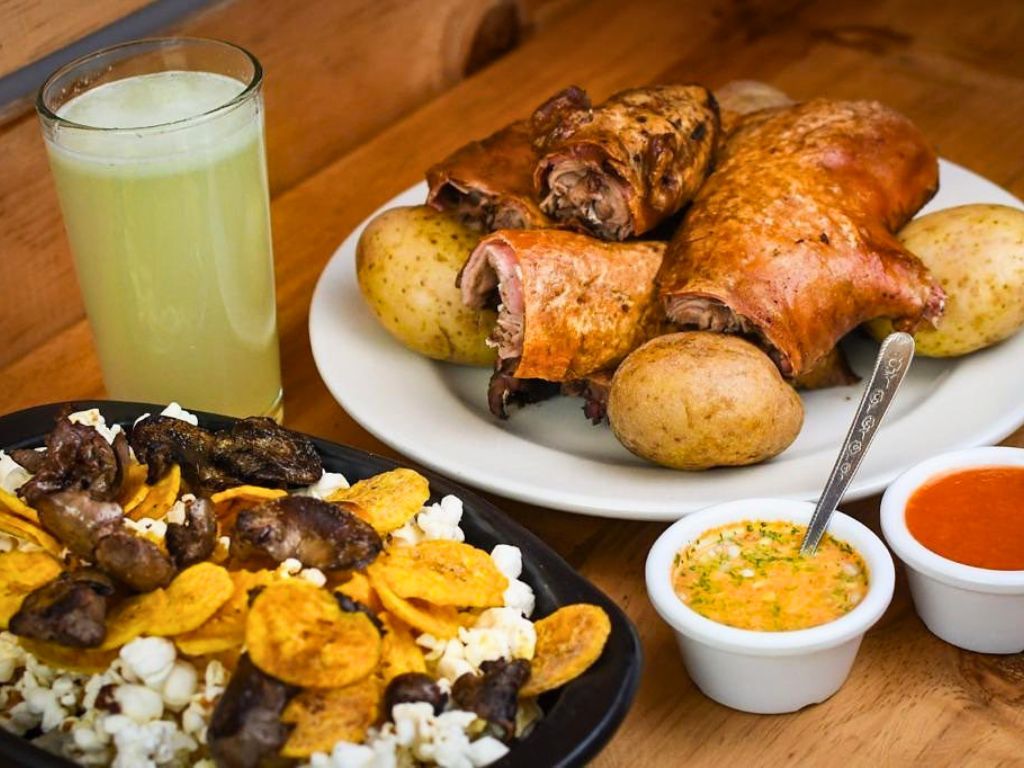
In Europe, it’s a pet. In Nariño, it’s the party dish. The cuy — guinea pig — has been raised for millennia by the indigenous Andean people, and Pasto has made it its specialty.
It is marinated whole in garlic, cumin, and annatto, then roasted or fried until the skin is crispy. Its meat is dark and flavorful, similar to rabbit.
It is served with potatoes, grilled corn, and ají; you can also find it in street food.
I agree, it can be shocking, but what we put on our plate is a matter of culture.
The Sunday dish from Valle del Cauca.
The sancocho de gallina is a popular Colombian dish eaten throughout the country, but the version from Valle del Cauca, the valluno, is considered by many to be the best.
A gallina criolla — farmyard hen, preferably old — simmers for hours with yuca, plantain, corn cobs, and potatoes in a dense broth with cumin and coriander.
This family dish, generous and fragrant, is served with white rice, avocado, and ají.
And like any sancocho, its broth is also a remedy for hangovers 😉

A festive and sharing dish of Nariño street food.
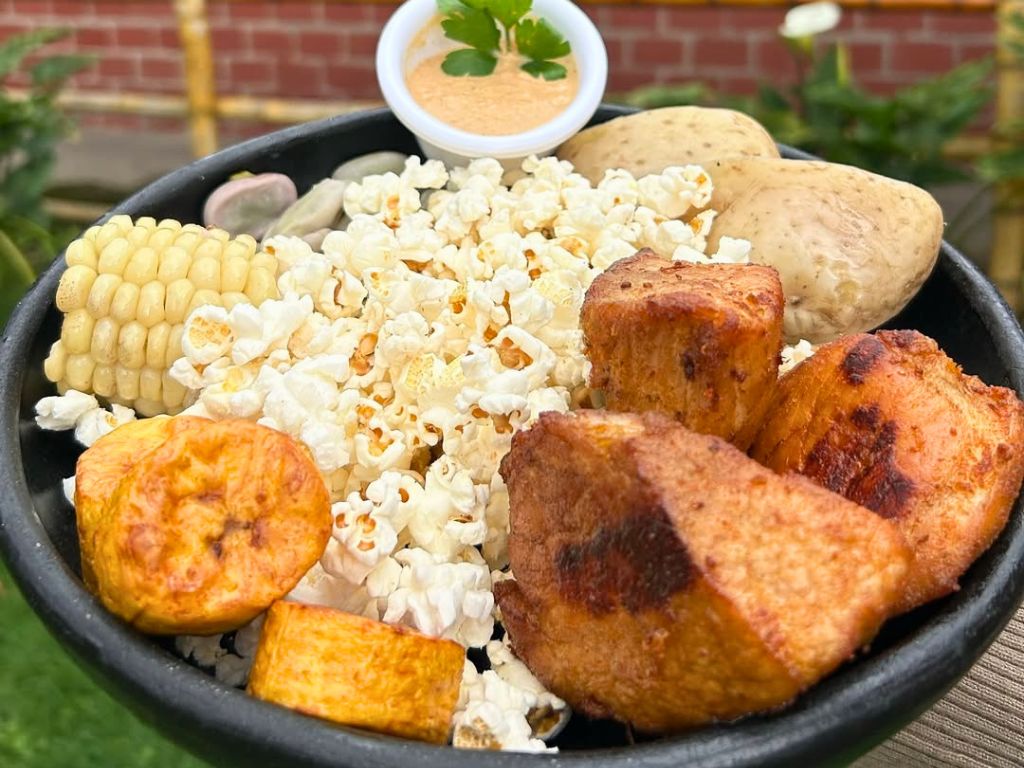
In Pasto, the frito pastuso is everywhere — in markets, on the street, and especially during the Carnaval de Negros y Blancos.
On a hearty plate, accumulate pieces of pork, chicharrón, morcilla, golden papa criolla, corn, and popcorn — everything is fried separately, then assembled.
Warm and friendly, the frito pastuso is a gourmet illustration of the cuisine of Nariño, where pork and potatoes play the stars — it is enjoyed with a homemade ají to enhance the flavors.
The traditional breakfast for early risers.
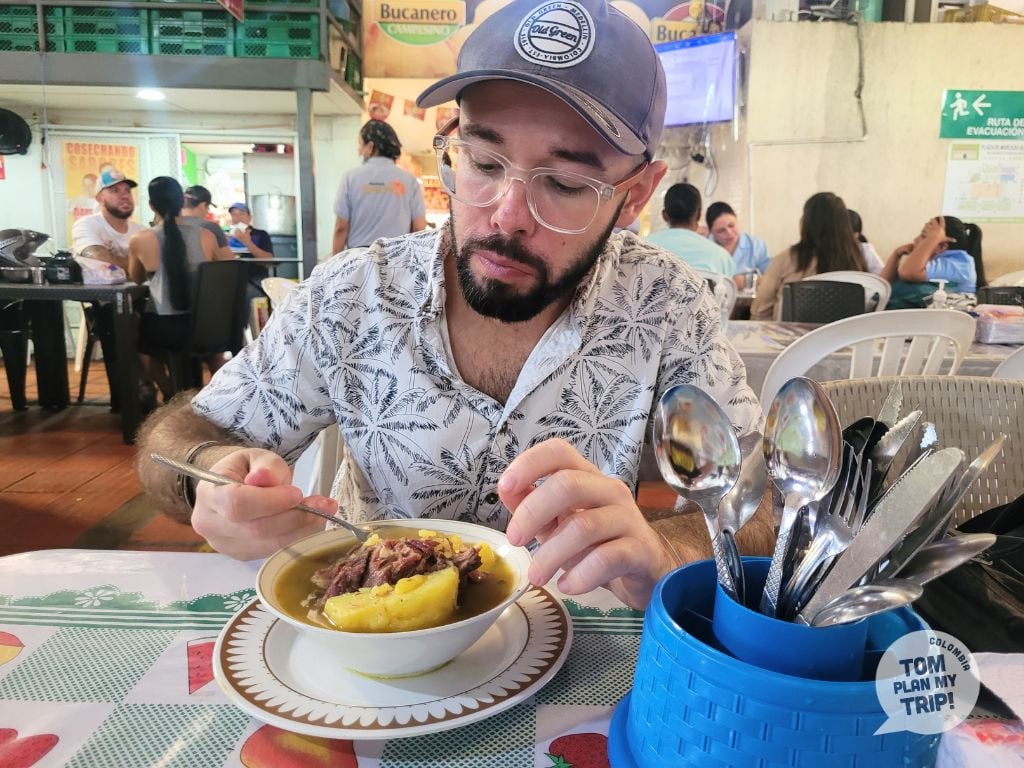
Popular Colombian dish, this broth of beef ribs — papa criolla, cilantro, garlic, cumin — is the breakfast of the cold Andean regions, from Nariño to Bogotá.
Popular, regardless of social level, it is eaten at dawn, boiling, accompanied by an arepa and a dash of ají.
A simple, economical, nourishing, and deeply comforting dish.

© Tomplanmytrip
POPULAR COLOMBIAN DISHES OF THE AMAZON
The scents of the river and the jungle.
One of the largest freshwater fish in the world in your plate.
This giant, which can reach three meters and weigh up to two hundred kilos, is endemic to the Amazonian waters.
A staple food of indigenous communities for millennia, it is now a choice dish on the tables of Leticia. Its white and firm flesh, almost boneless, is eaten grilled, fried, or dried. It is traditionally accompanied by yuca and patacones.
A species weakened by overfishing, the pirarucu is the subject of sustainable fishing programs in Colombia — I recommend choosing a restaurant that sources responsibly.
One of the most ancient recipes in the Americas.
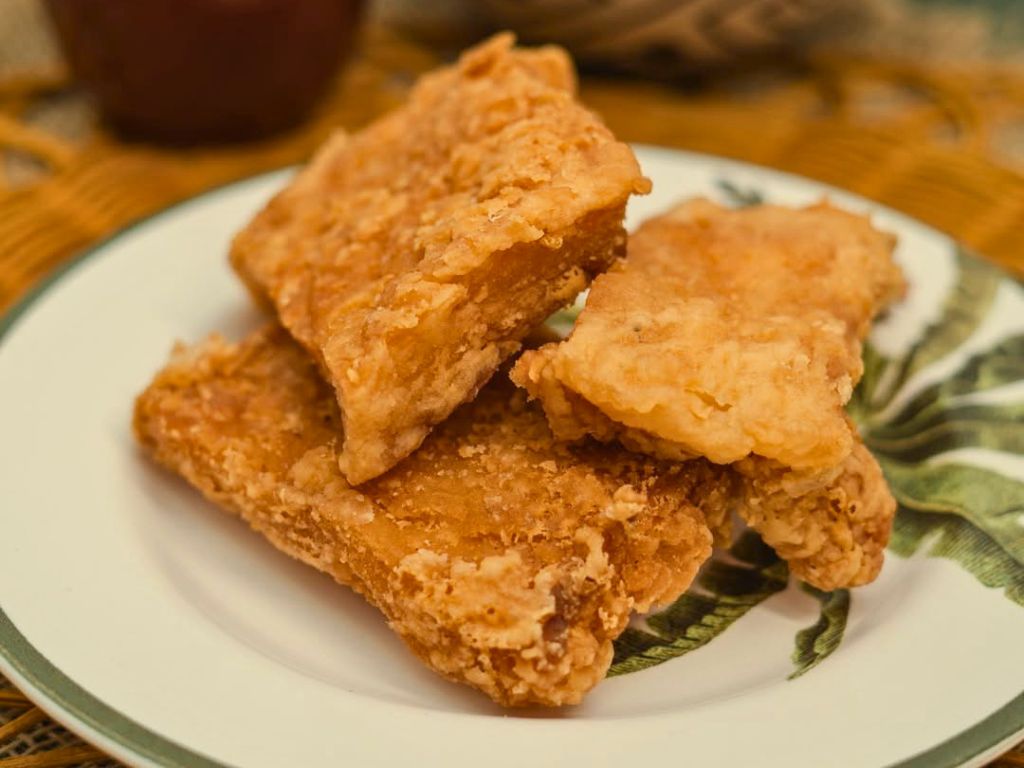
This thin and crispy bitter cassava flatbread is prepared according to an indigenous know-how passed down from generation to generation — and exclusively female in many Amazonian communities.
Bitter cassava is first grated, then pressed to extract its naturally toxic juice, before being dried and cooked in a large pan directly on the fire. The result is a neutral-tasting cake, gluten-free and salt-free, which keeps for months.
It is eaten with fish, dipped in a broth, or simply with honey.

You’re going to furrow your eyebrows again.
The mojojoy is the large white larva of the palm weevil (insect) — five to eight centimeters, black head, chubby body.
It is a staple food of the indigenous Amazonian peoples for millennia, rich in proteins and fatty acids — in short, technically a superfood. It is eaten grilled on a skewer: crispy on the outside, melting on the inside, with a taste of butter and roasted coconut.
At the Leticia market, you can admire them in large baskets — or take on the challenge of tasting them before heading off on your jungle adventure.

A fish with a funny look and delicious flesh.
In the Amazon River and its tributaries lives the bagre, a catfish without scales, with a big head, one of the most flavorful fish in the region.
Its flesh is white, firm, with few bones, and its taste is delicate and slightly sweet. The striped bagre is the most sought-after. It is enjoyed grilled, fried, or in sudado — a spicy broth scented with cilantro.
Accompanied by yuca, patacones, and ají, it’s a simple and complete dish.
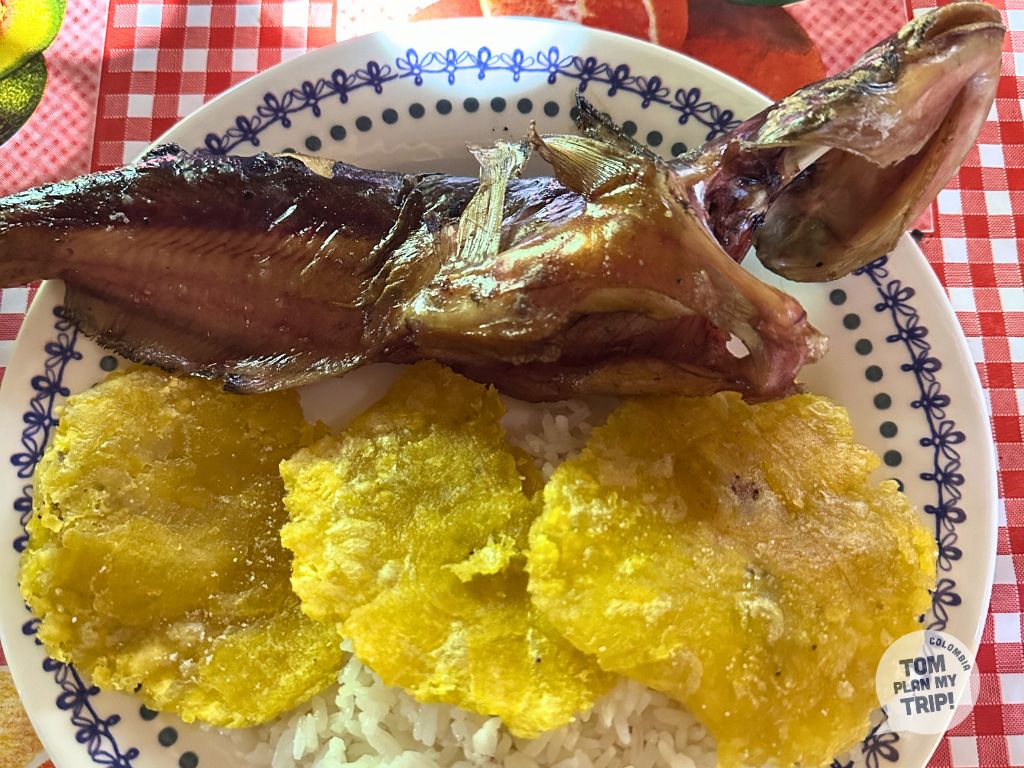
A concentrate of Amazonian cuisine.
La patarashca is the ancient cooking technique of the indigenous peoples of the Amazon: the fish, seasoned with onion, tomato, garlic, cilantro, and ají, is tightly wrapped in large bijao leaves (tropical plant) and steamed over the coals.
The leaves delicately scent the flesh and keep it moist. All the flavors escape when you open this large packet.
The catfish or any other river fish lend themselves wonderfully to this typical Colombian dish from the Amazon – a delight even more flavorful during a camping trip deep in the jungle 😉

© Tomplanmytrip
POPULAR COLOMBIAN DISHES OF LOS LLANOS
The cuisine of Colombia’s great outdoors.
The barbecue à la llanera.
A milk-fed calf is cut and skewered on large wooden spears planted in a circle around a wood fire — a vertical cooking for hours. No spices in this ancestral technique, no marinade: just the fire and salt, not to mention the quality of the meat.
The meat is tender, delicate, almost melting. This popular Colombian dish and identity of the Llanos is served with yuca, potatoes, plantain, and ají.
A dish of hospitality and generosity, it is shared during festivals.

Another cultural shock.
The capybara, or capybara, is the largest rodent in the world — up to 65 kilos — there you go, you’re grimacing.
This totem animal of the Llanos is semi-aquatic; it inhabits the banks of rivers and lagoons of the great plains.
Its meat, dark and tasty, is eaten grilled, stewed, dried, or smoked. This historical subsistence dish of the llaneros is accompanied by yuca, rice, and plantain.
For a little anecdote, the Catholic Church classified the capybara as a “fish” in the 18th century to allow its consumption during Lent.
The labor dish of the cowboys of the Great Plains.
The beef is slowly cooked and braised in a sealed clay pot, with just garlic, onion, and salt. A technique that allows the concentration of the meat’s juices and tenderizes it. The result is melting and deep in flavor.
Accompanied by yuca, rice, and plantain, it is today one of the identity dishes of Vichada and Meta.
A popular Colombian dish, born from ingenuity in the face of the harshness of daily life.

A giant pot over a wood fire.
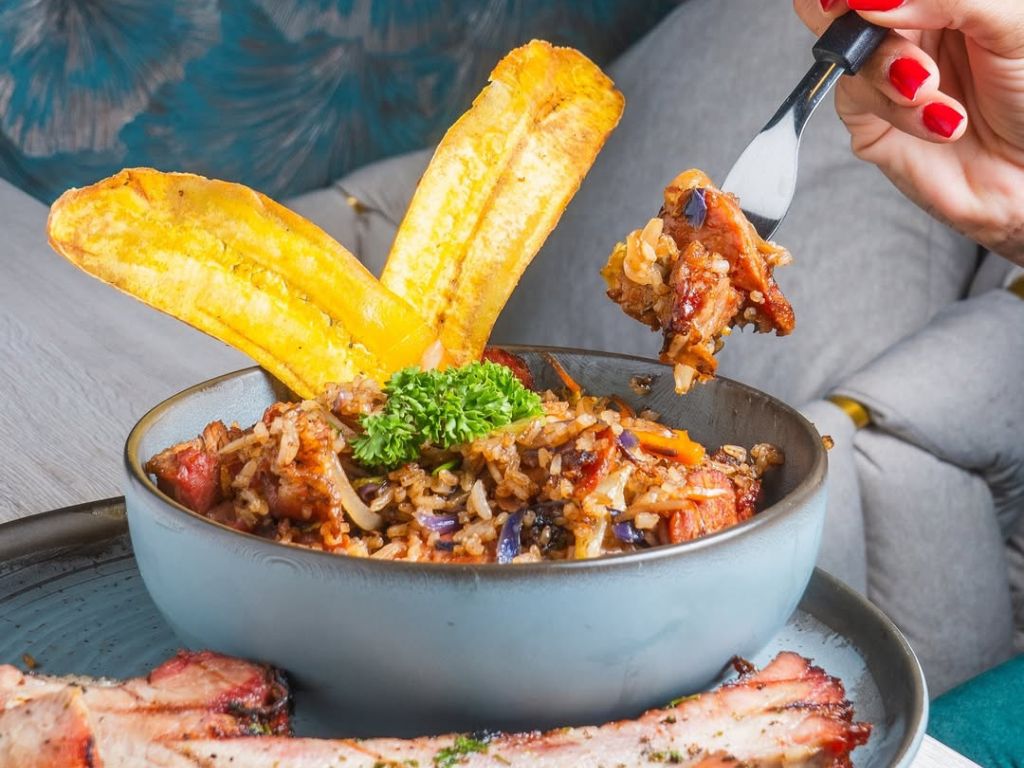
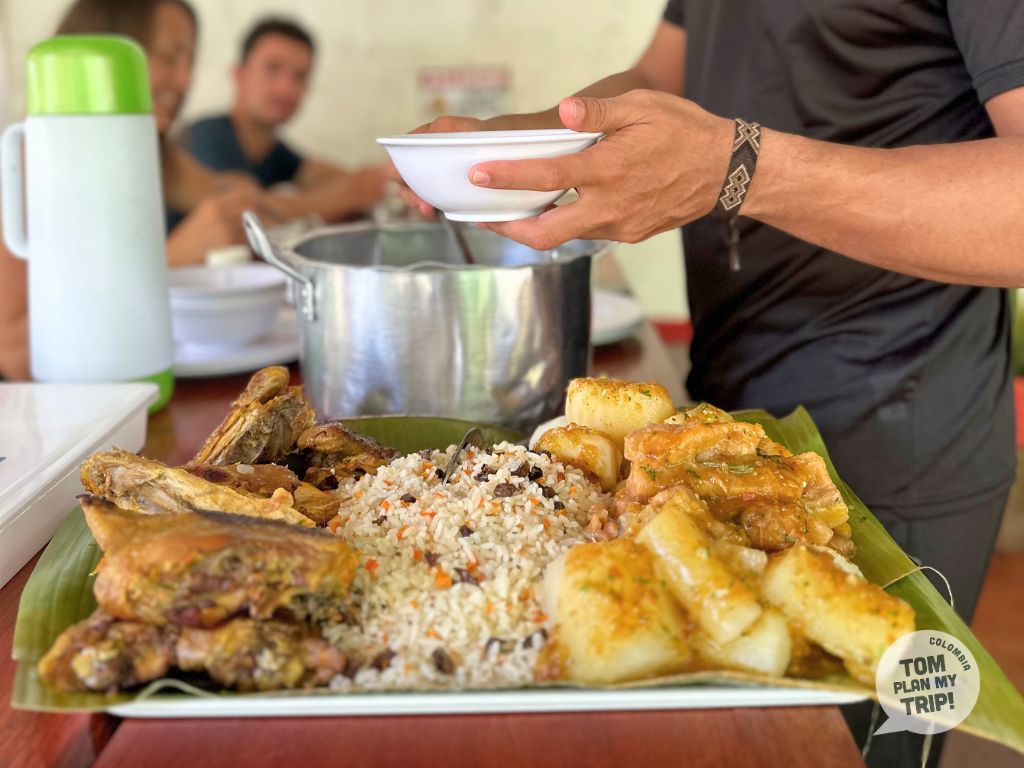
Rice, beef, yuca, potatoes, onion, tomato, garlic, cilantro, cumin, and annatto simmer together for a long time until everything is absorbed, dense, and fragrant, with a consistency of thick risotto.
The wood fire brings a characteristic smoky flavor.
A dish for sharing par excellence, it is traditional during Llanero festivities and collective work like cattle branding — a popular Colombian dish from the Llanos, complete, generous, and friendly.
© Tomplanmytrip
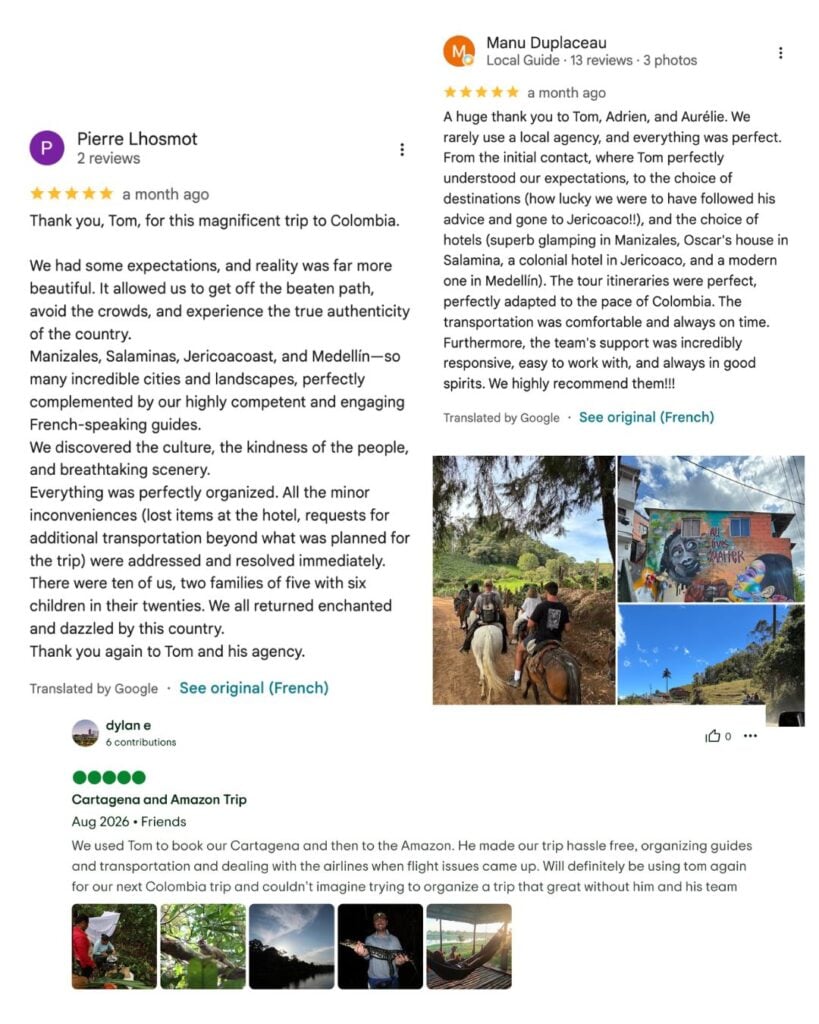
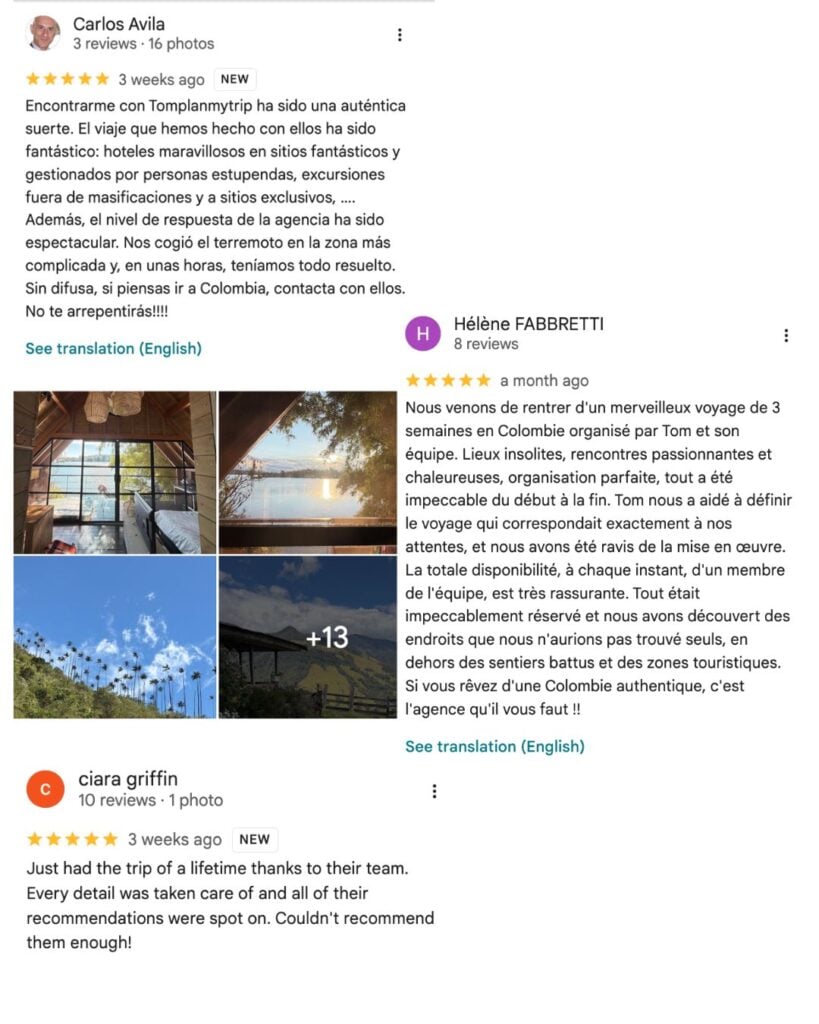
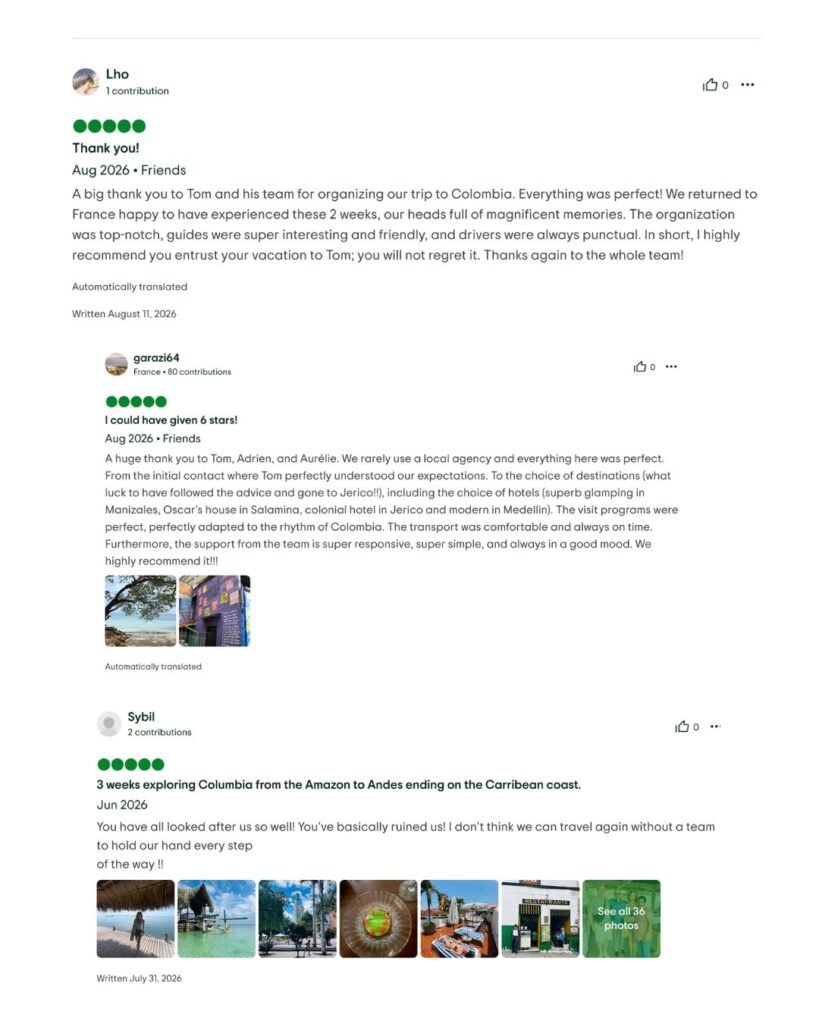
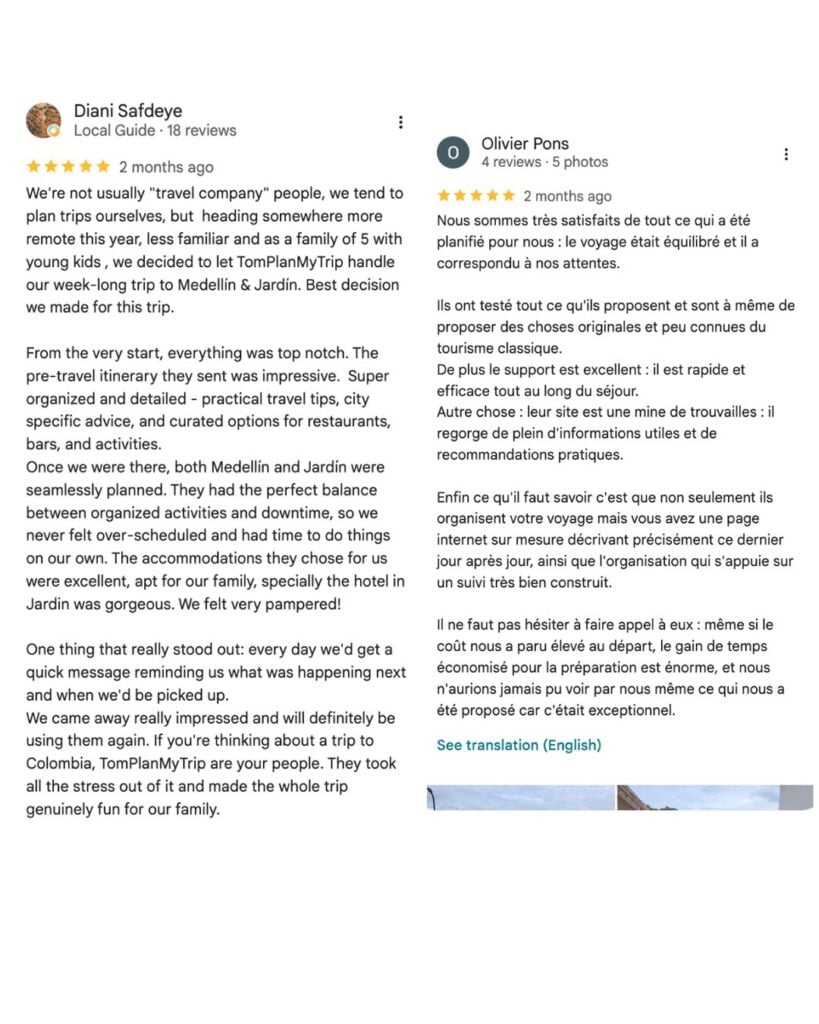
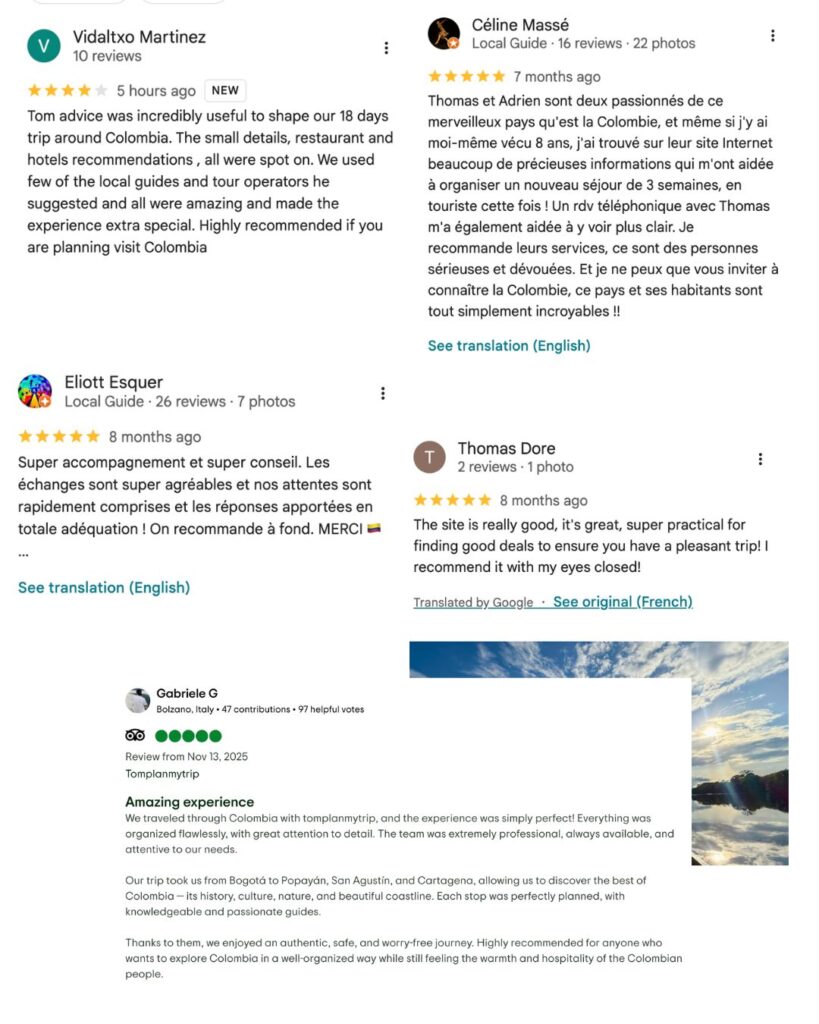
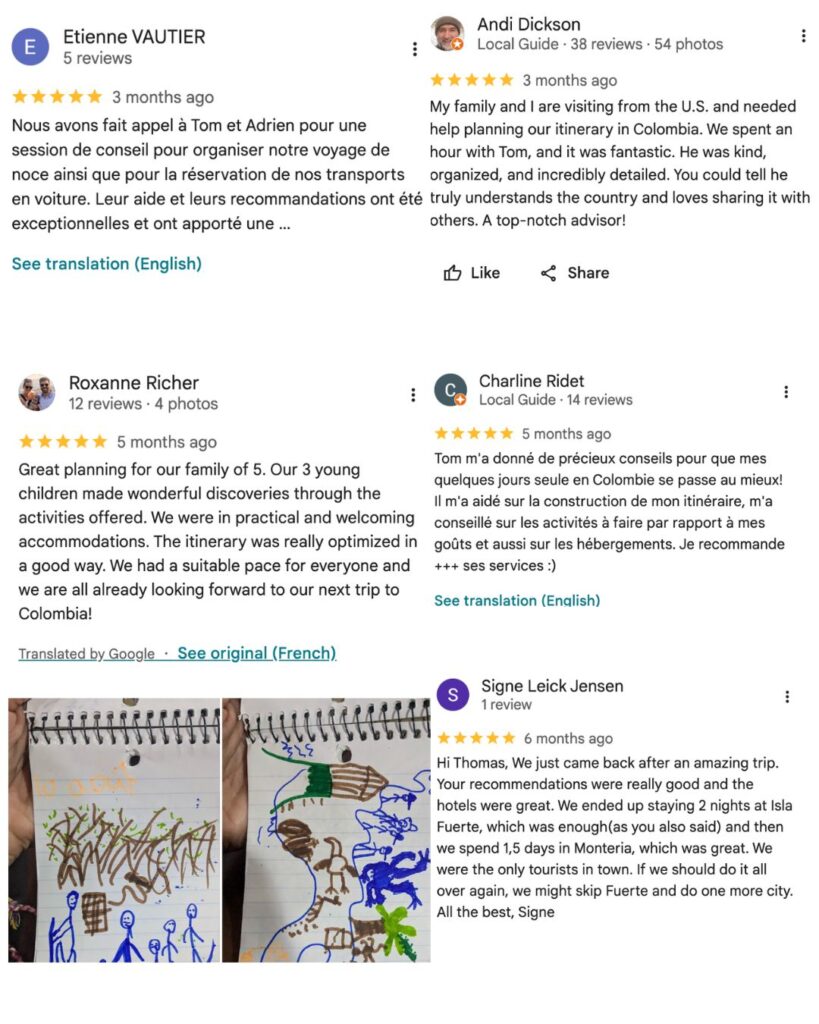
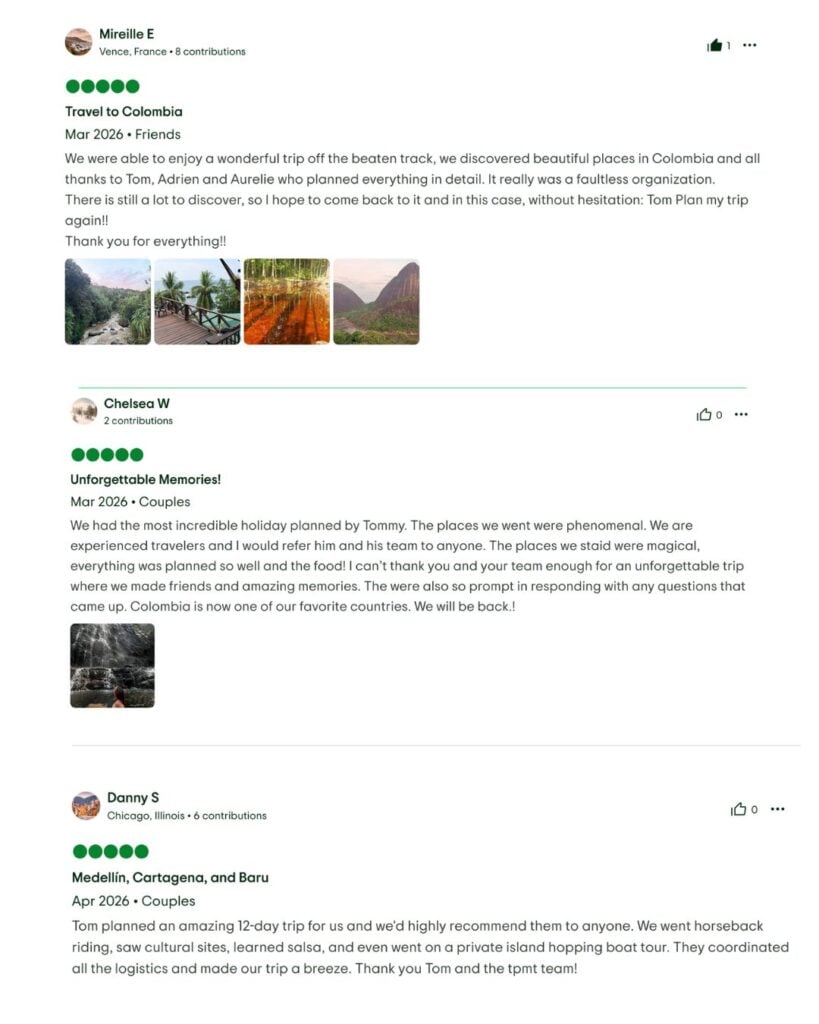
+185 five-star reviews on Google Maps

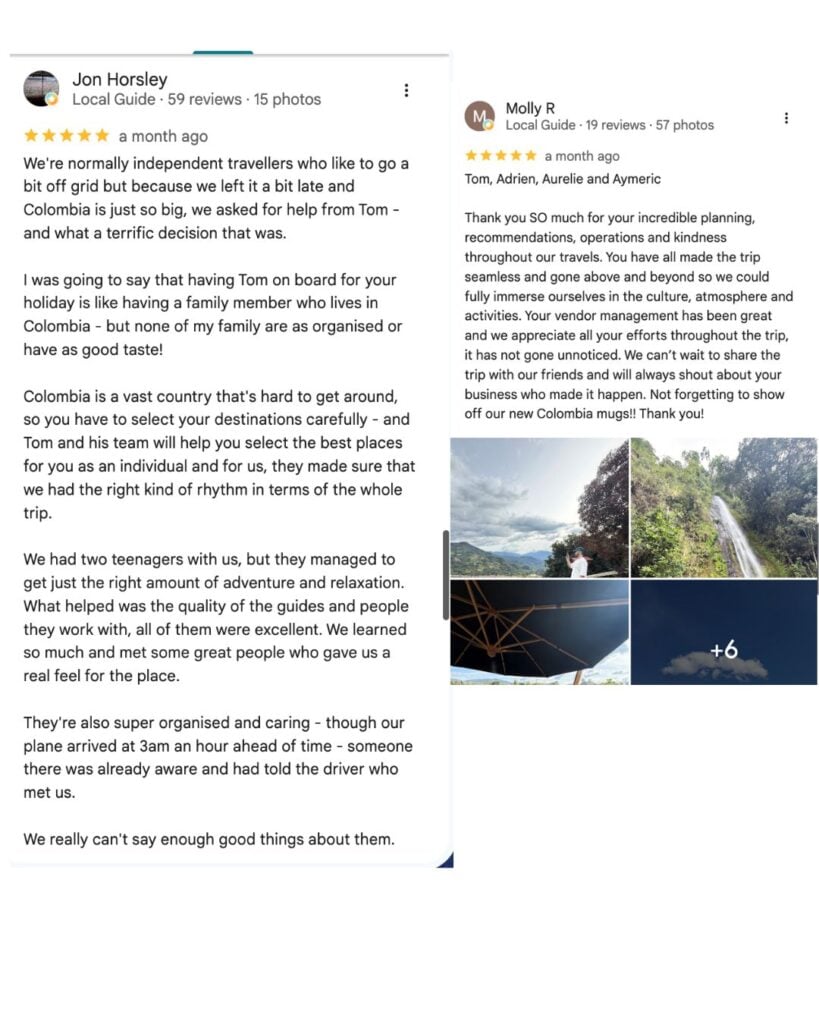
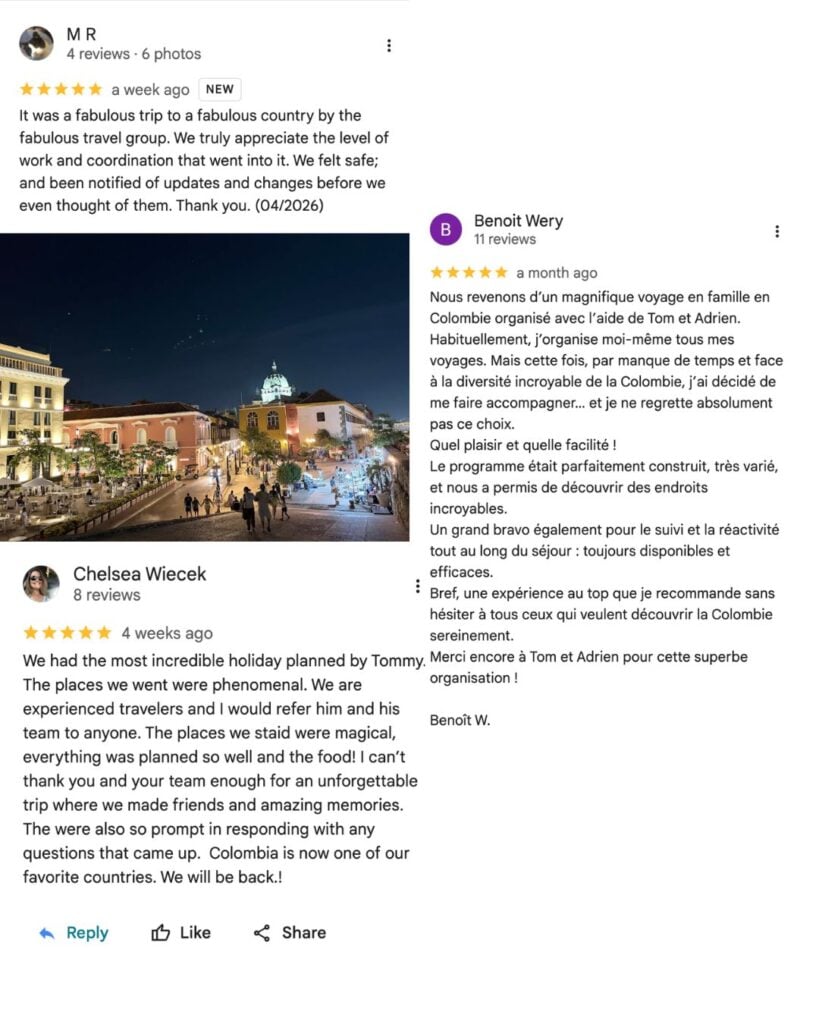
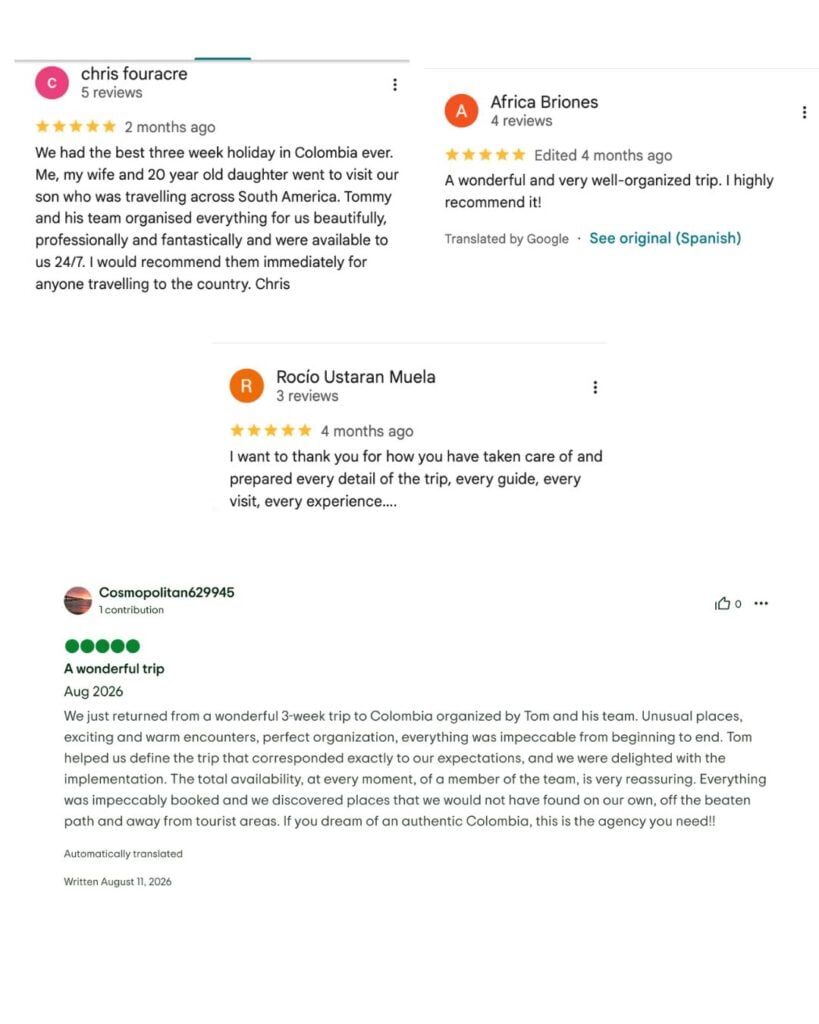
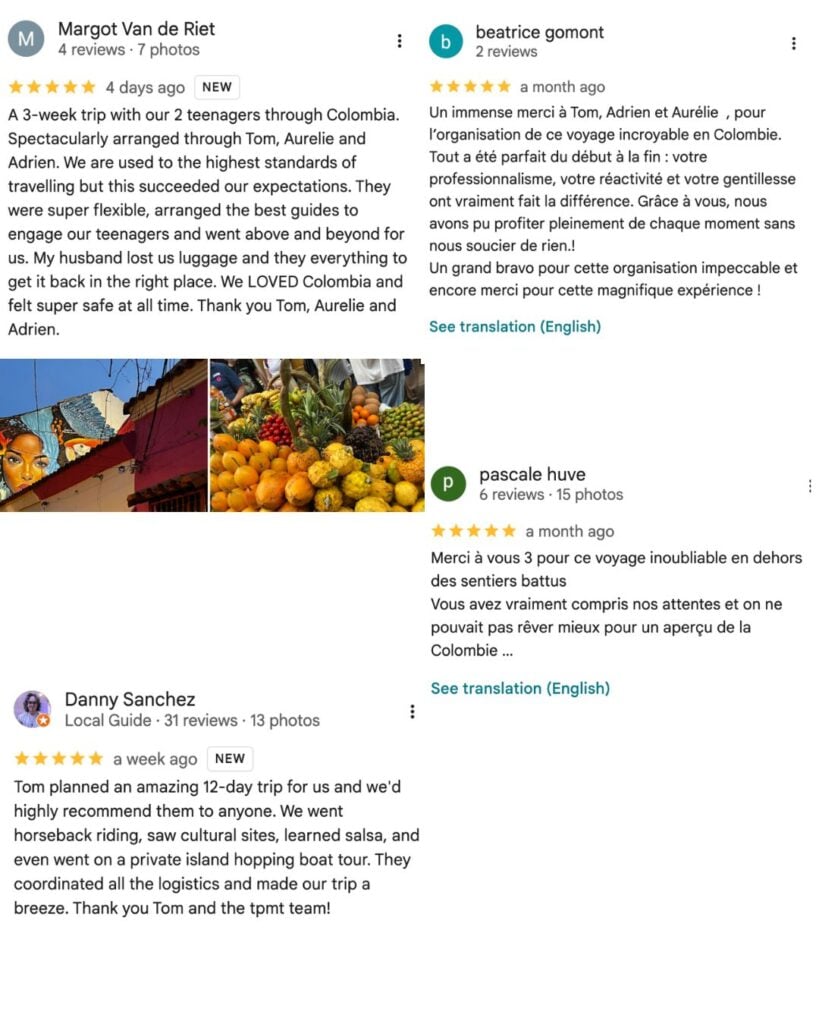

A successful Colombian adventure with family or friends
“Usually, I don’t go through a travel agency. But for Colombia, I needed help — and this agency transformed my experience in this country.”
That’s the kind of review our travelers leave us. Instead of second-guessing yourself and putting off decisions, let us plan your trip. Unforgettable memories guaranteed.
A few trip styles to inspire you:
- Undiscovered Colombia — adventure mode
- Easy Colombia — Explore and relax
- Premium Colombia — high-end that stays authentic
What type of trip suits you?
Every trip is unique, but you might see yourself in one of these themes.
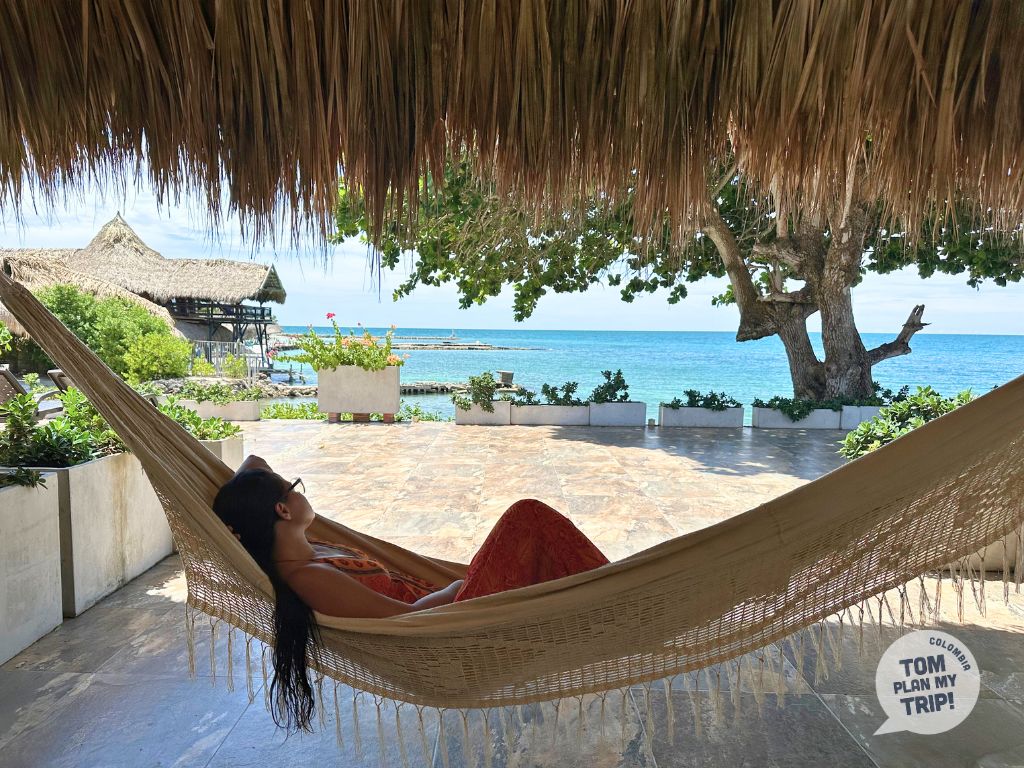
LAID-BACK
Your vacation doesn’t have to be 100% beach or 100% exploring. With our 11 years in Colombia, we plan your ideal trip so you can discover the country without rushing around. The best way to travel and recharge at the same time.
Learn more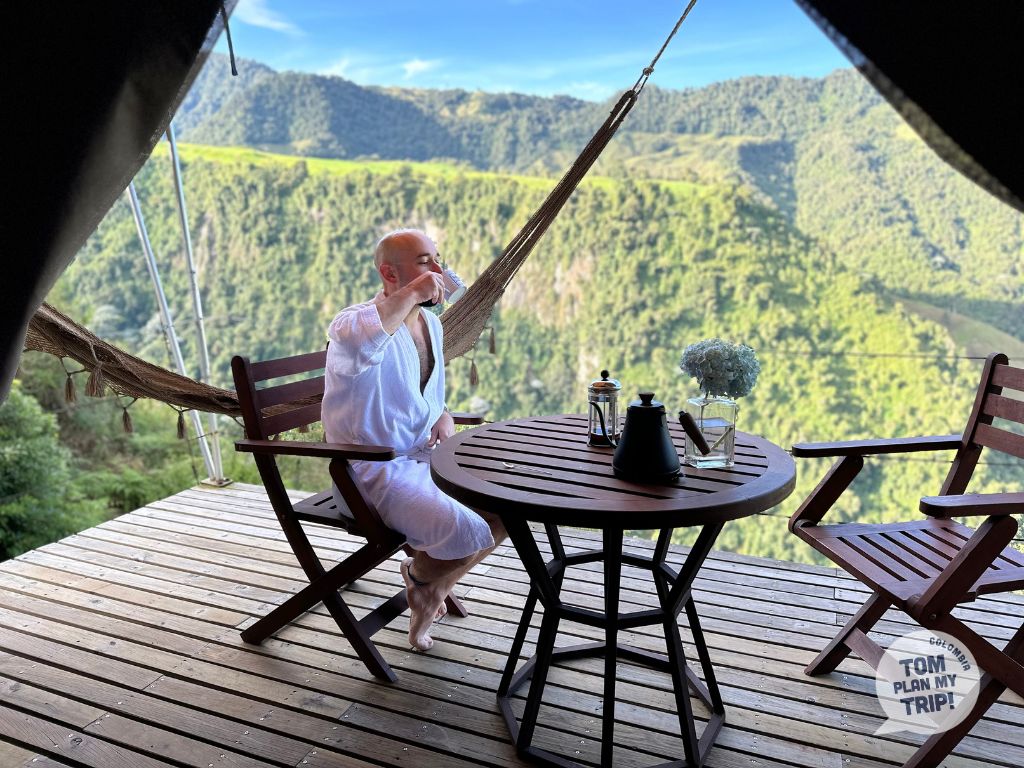
PREMIUM
You love beautiful places to stay and extraordinary experiences, but not cookie-cutter luxury? Drawing on our 11 years of exploring, we plan a premium trip so you can experience the most spectacular side of the country, in the best possible conditions.
Learn more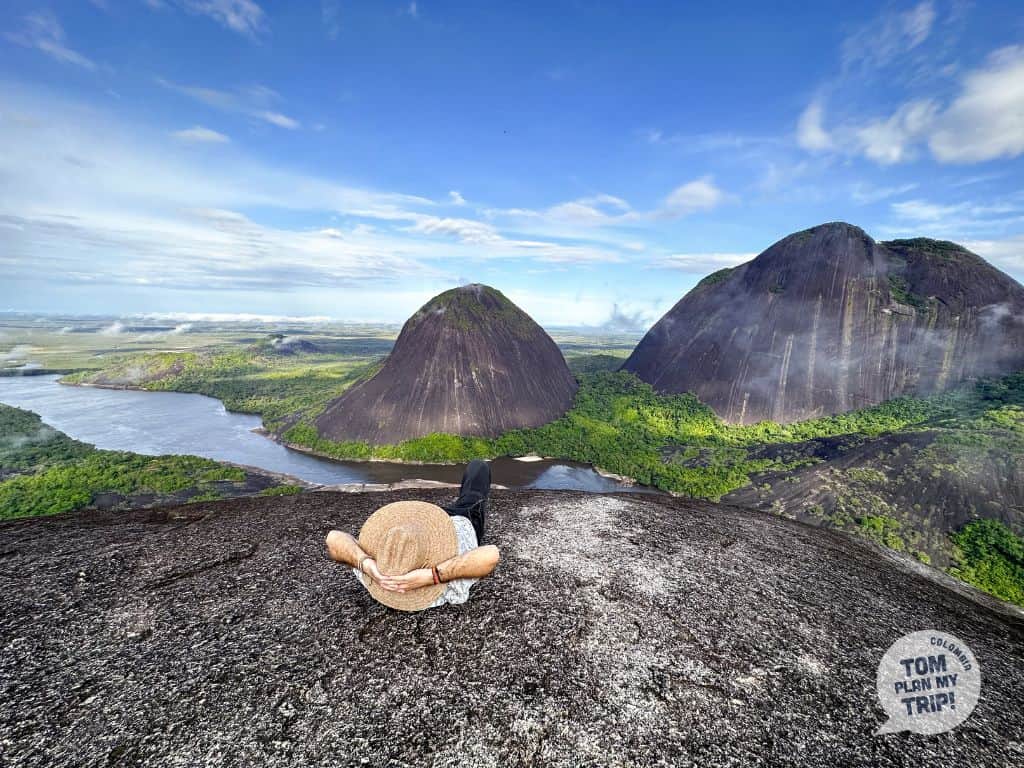
ADVENTURE
Not interested in the Colombia everyone already knows? Set off exploring with your loved ones and share unforgettable moments, with that feeling of being on another planet. All backed by our 11 years exploring the country.
Learn moreWhat our clients say
Colombian Food
Select a Region of Colombia


Western Caribbean Coast
Colombian Destinations Listed Alphabetically
Places from A to I
Places from J to P
Places from R to Z
Follow us on Instagram!


Our secret to actually enjoying your Colombia vacation
Colombia is twice the size of France. There’s no point trying to see it all in 15 days. Our trips distill 11 years of boots-on-the-ground exploration into the essentials: the very best of the country, without the stress of racing around.
