
Colombian Fruits: An Incomparable Abundance

Editor
Updated on
The fruits of Colombia are among the most diverse on the planet.
More than 2000 fruit species, astonishing shapes, captivating aromas, unexpected flavors — explosions in your mouth that challenge your senses and make you want to taste everything.
Tart, sweet, creamy, intense — some are eaten naturally, others are only revealed in juices, and others unveil their secrets with a pinch of salt and a squeeze of lemon.
With this guide, embark on the discovery of Colombian fruits — and learn to savor them like a true Colombian.
We constantly explore Colombia to find what’s truly worth it — authentic places, stays and experiences, far from tourist traps. Then we build your ideal trip in a logical and optimized way, so you make the most of it, without rushing everywhere, truly connected to the country.
→ About us | ⭐⭐⭐⭐⭐ + 185 reviews | → Our service

- In Colombia since 2015
- + 1025 tested experiences
- + de 145 local partners
- + 335 trips created


THE FRUITS OF COLOMBIA: WHAT YOU NEED TO KNOW
An explosion of colors and flavors
HOW TO DISCOVER AND SAVOR THE FRUITS OF COLOMBIA
Enjoy them Colombian style and don’t miss out.
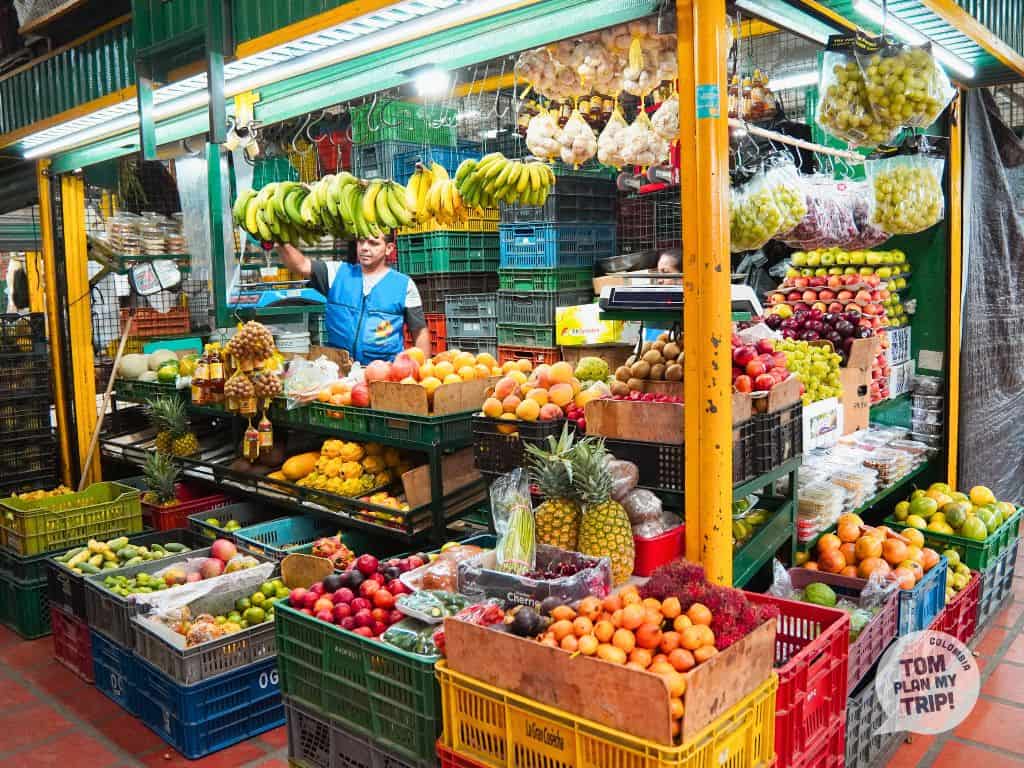
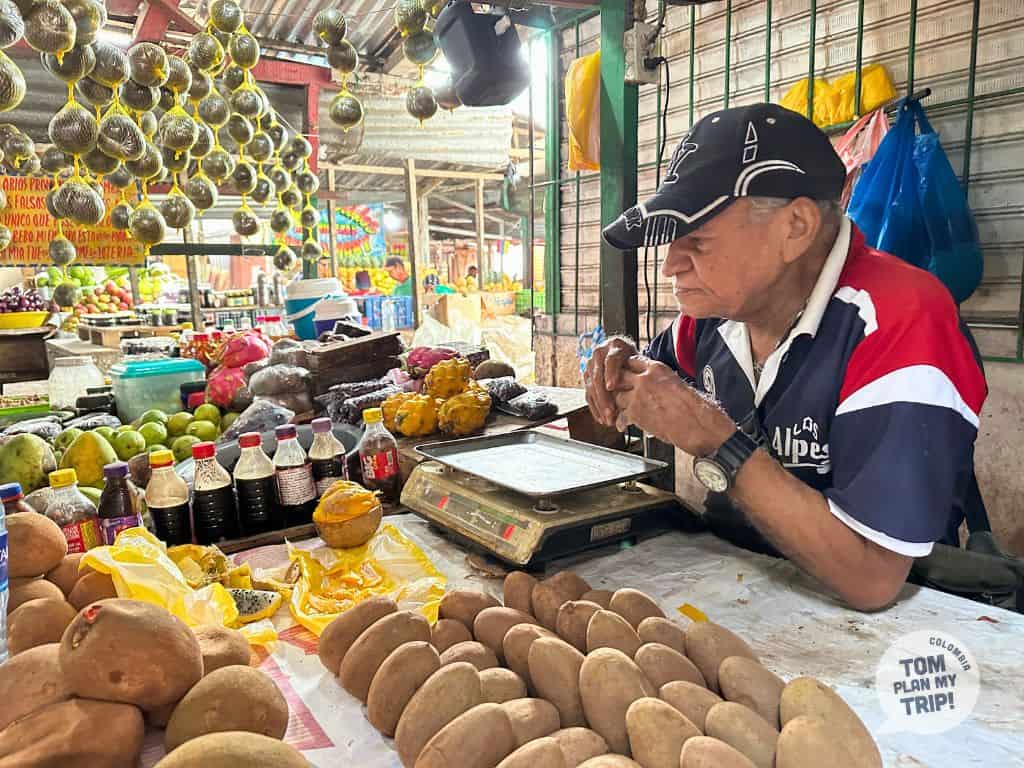
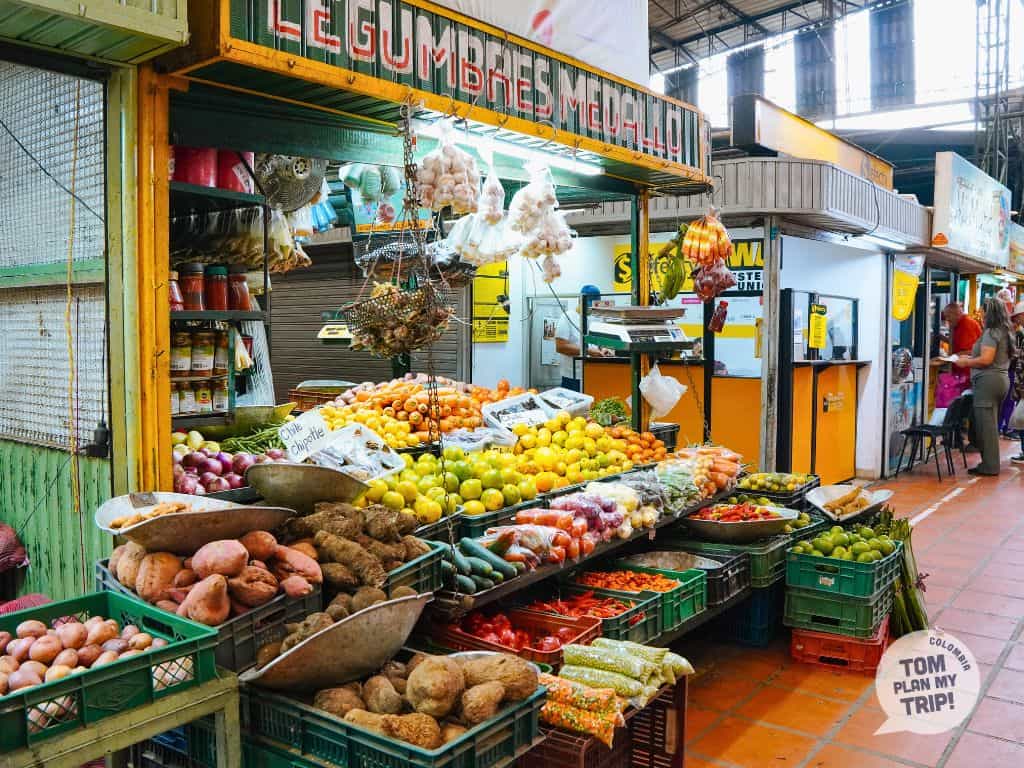
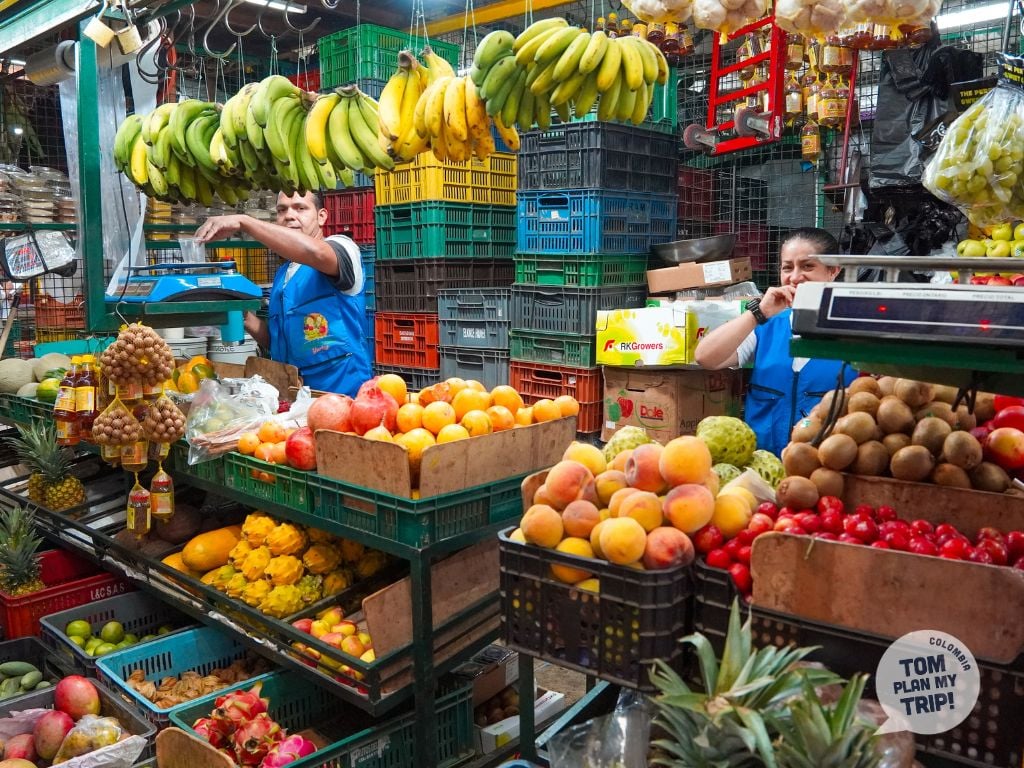
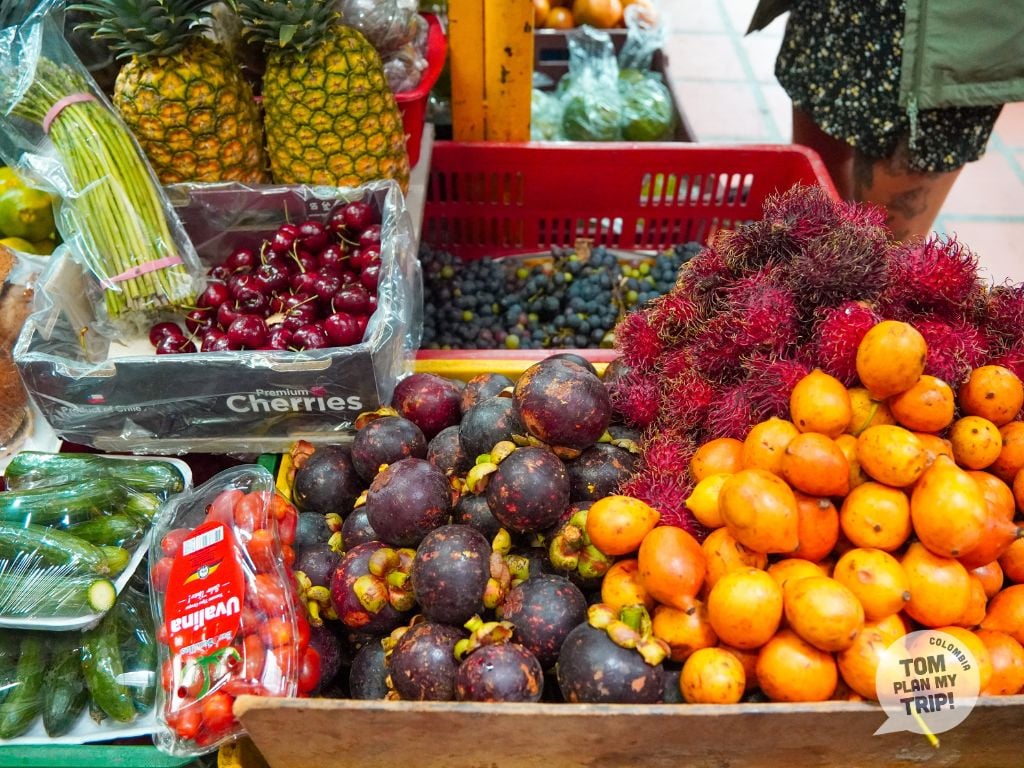
To discover Colombian fruits in all their diversity, nothing beats visiting a market — a festival of colors, smells, and life.
Paloquemao in Bogotá is the most famous: lively, warm, with more than 60 fruits in season and vendors used to tourists who love to make you taste. You can venture there alone without hesitation.
La Minorista in Medellín is more authentic, immense and labyrinthine: a market of professionals without fuss, a fascinating place – to visit with a local or a guide.
Bazurto is the big popular market of Cartagena. Not at all touristy, noisy, a dense and humid atmosphere, a deep Caribbean energy, bustling with people — a true sensory experience, disconcerting for sensitive noses, but unforgettable, which we recommend to our travelers, in the company of a guide.
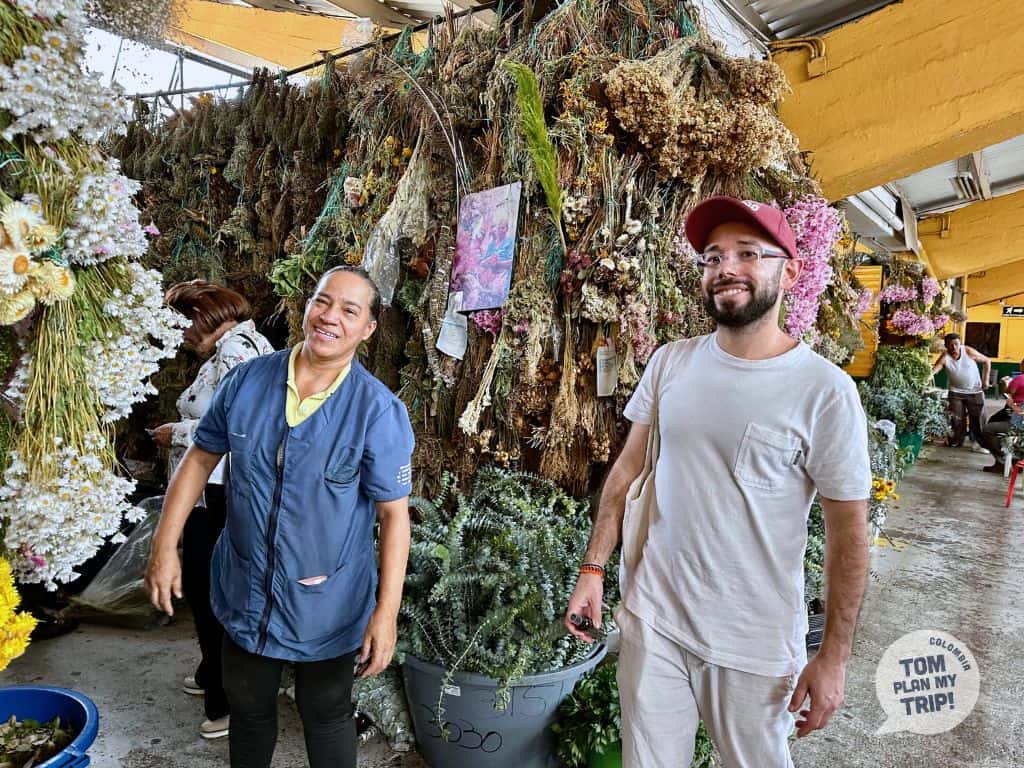
And then there are the village markets, often the most touching, where the fruits are picked the very morning. Don’t hesitate! Taste before buying and negotiate — it’s the norm.

In Colombia, some fruits are only consumed in juice, and fruit juices are a classic of Colombian cuisine.
The menu del día almost always comes with a generous fresh fruit juice.
They are everywhere – restaurants, markets, street vendors.
In the first question, you will be asked: ¿En agua o en leche? The choice changes everything: acidic fruits, like lulo and maracuyá, are revealed in water; sweet and creamy fruits, like guanábana, go better with milk.
Then comes: ¿Con azúcar? Colombians almost always say yes. I advise you to specify “con un poco de azucar” 😉 You’ll better taste the fruit.
And then there are the mixes — a real culture in Colombia. They come in endless varieties. I remember a “pineapple orange” mix in a juice bar in Barichara — a pure delight.
Don’t hesitate to experiment; your palate will be pleasantly surprised.
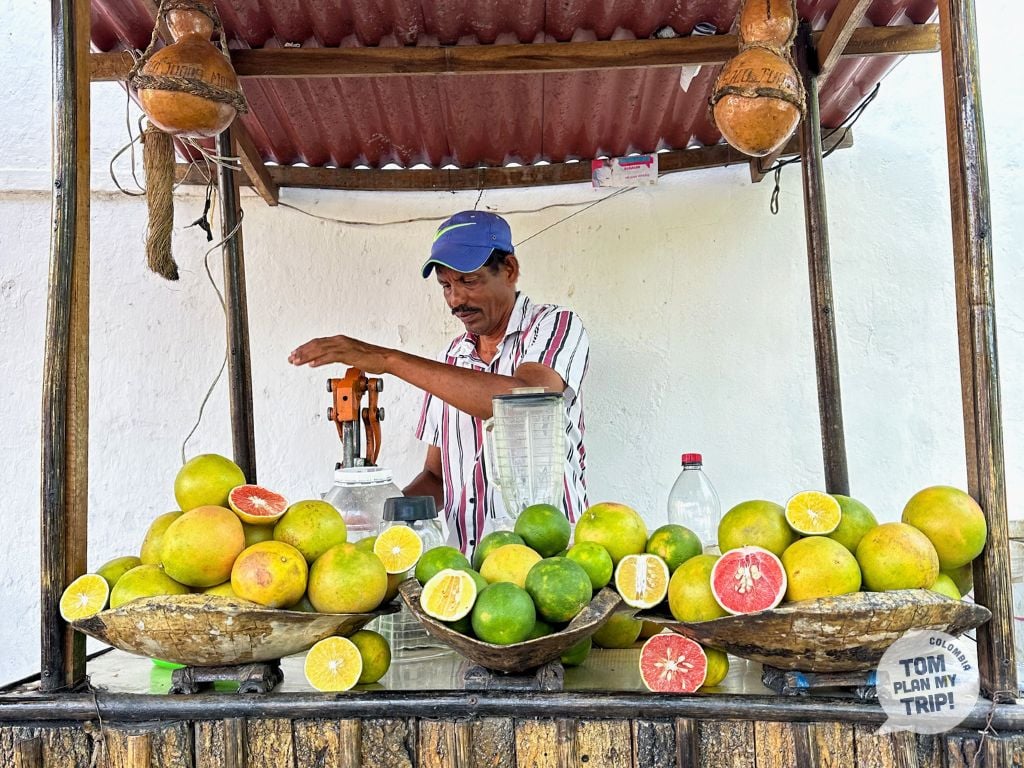
Some acidic and not very sweet fruits have a secret: they are much better with a pinch of salt and a squeeze of lemon—a culinary habit little known to visitors, but omnipresent in everyday life and a revelation for me.
The great classics of this practice are mango, when it is green — in the form of “mango biche”, a true icon of Colombian street food. Some other fruits, such as pineapple, can be eaten this way. Salt enhances the natural sugar of the fruit; lemon awakens the aromas: the result is surprisingly balanced, fresh, and addictive.
In the Colombian Pacific, chontaduro is traditionally enjoyed with salt and honey.
You can find it almost everywhere — in the streets, at markets, on beaches, along roadsides. Street vendors even get on buses at every stop with their bags of mango biche or their slices of piña and pastilla.
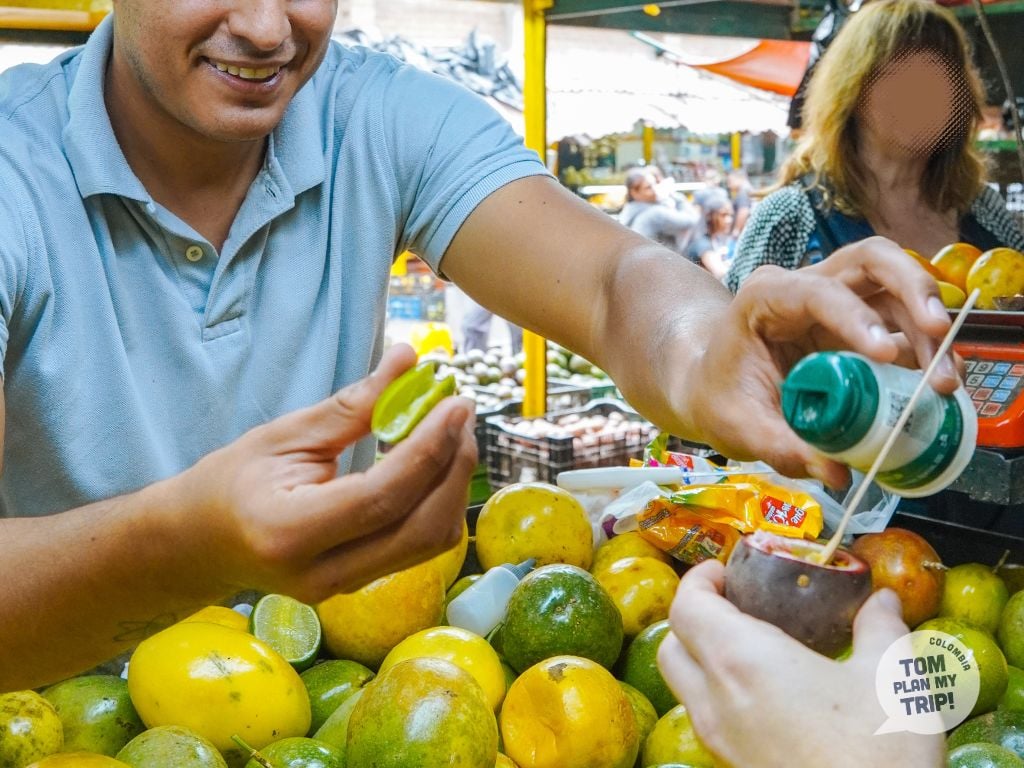
At Tomplanmytrip, we are convinced that discovering cuisine while traveling is one of the most sincere and pleasant ways to explore a country, understand its culture — and meet its people.
This is why gastronomy holds an important place in every trip we design, and the diversity of Colombian fruits fits wonderfully well with our vision of an unforgettable trip.
Depending on your destinations, we will suggest you stroll through the bustling Bazurto market in Cartagena, not to miss the market day in a village in Santander, take a fruit tasting tour at the market in Medellín (La Minorita) and in Bogotá (Paloquemao), enjoy a fresh lulo juice after a hike, or even participate in a cooking workshop to learn how to work with local fruits.
Simple moments, but often among the most delicious of the trip.
© Tomplanmytrip
Breathe, and let us take care of this beautiful adventure
Colombia is twice the size of France, with a diversity of landscapes that’ll make your head spin — and a real logistical puzzle, with roads winding through the Andes mountains.
What kind of adventure do you want to live? Is it really right for what you’re looking for? Is it safe? Is it too touristy?
Guessing and hoping you made the right call — sometimes that works. But not always.
And I won’t even get into the stressful surprises that force you to make some changes mid-trip.
Look, we’ve been doing this for years — and if you check our reviews, you’ll see we know what we’re doing. In less than an hour on a call, we figure out your ideal destinations together. We handle the rest.

© Tomplanmytrip
Colombian Fruits: An Incomparable Abundance
Colombia abounds with fruits that hold a central place in Colombian culinary habits: they are consumed at all hours of the day, everywhere, in restaurants, on the street, on buses.
A granadilla bought at a market, opened by tapping it on the head, a lulo juice ordered in a juice bar, a bag of mango biche bought from a street vendor — the opportunities to discover these treasures of benefits are plentiful.
Here is a selection of essential Colombian fruits, which to bite, which to drink — and how.
TOM’S ADVICE
Take a look at our inspiration page to get an overview of everything Colombia can offer you in terms of landscapes, culture, and activities, and don’t hesitate to reach out to us to build your Colombian adventure. If you’re a foodie, read our article on Colombian food.

Colombian Fruits – Pure Pleasure
Many fruits in Colombia are enjoyed “natural.” Some are a bit puzzling and require knowing a trick or two to eat them.
LA GRANADILLA
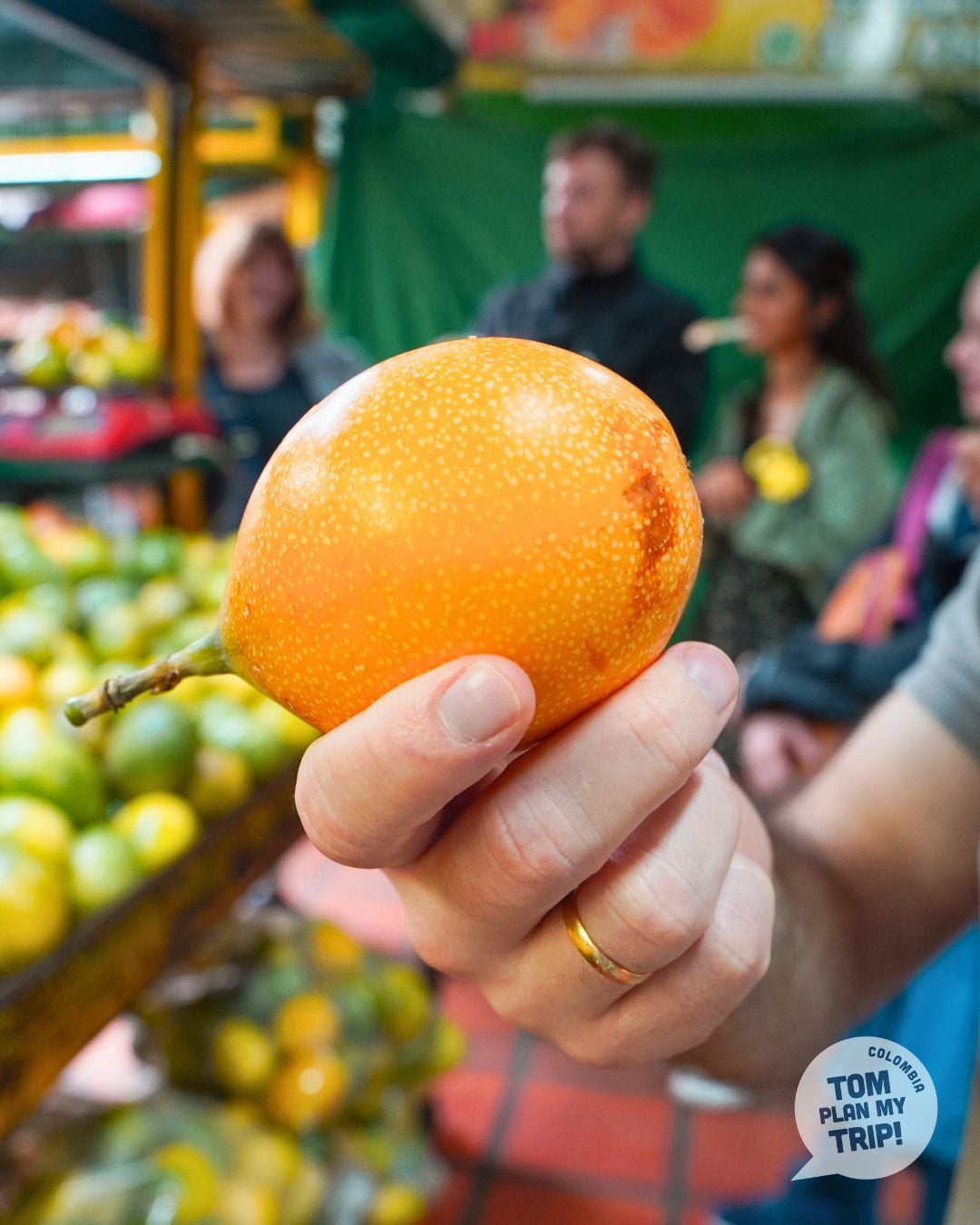
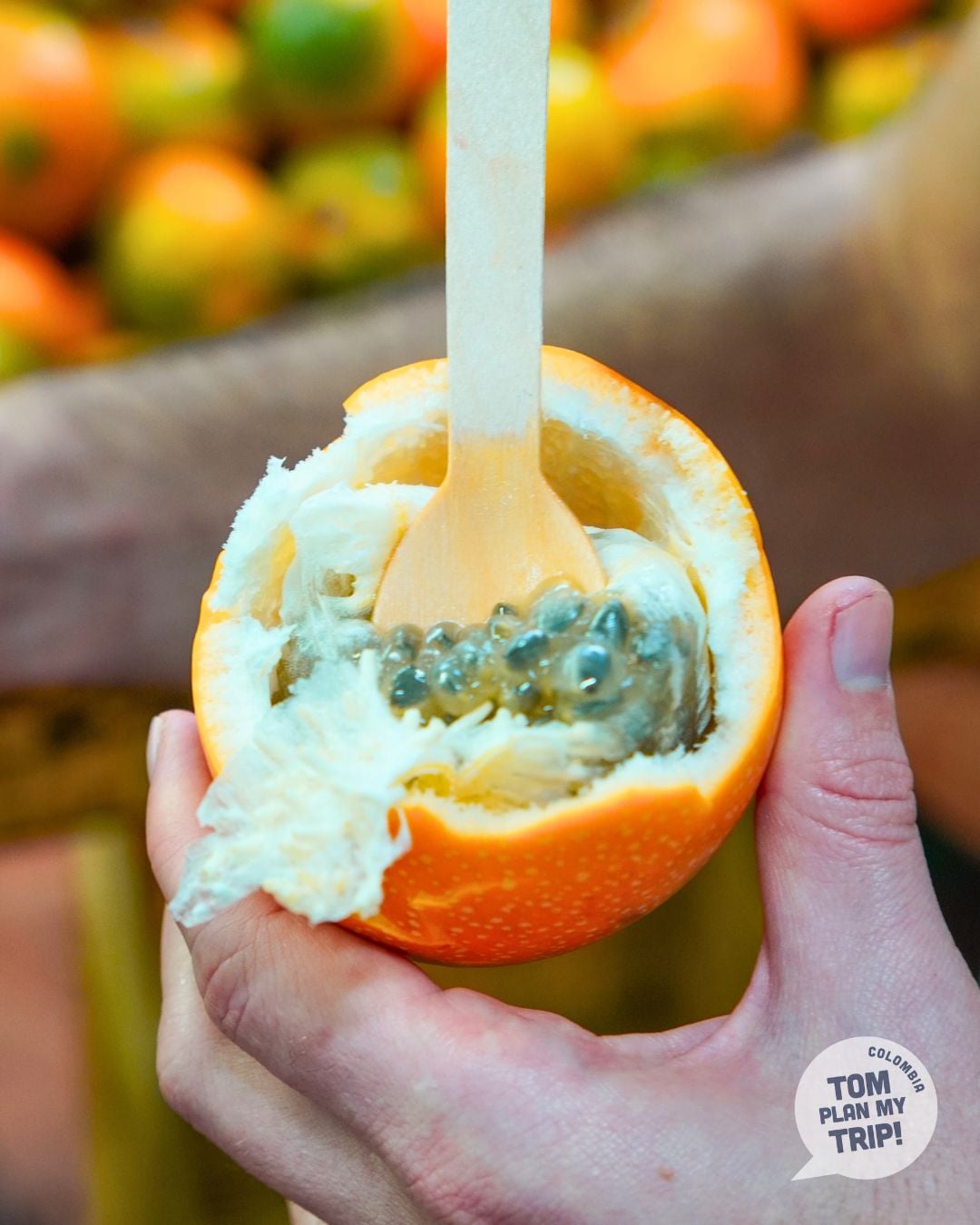
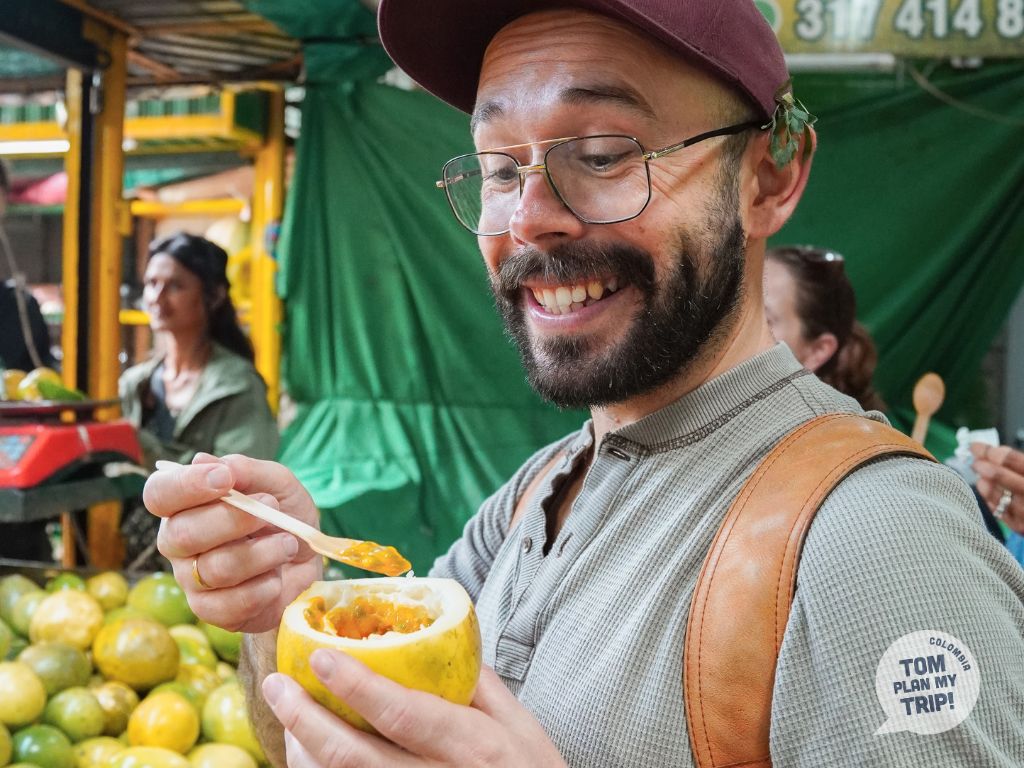
The granadilla is one of those fruits that, at first glance, you don’t know how to eat.
Small and round, it hides beneath its pretty orange shell a translucent and gelatinous pulp, sprinkled with small black seeds. Sweet, almost honey-like, it leaves a floral sweetness in your mouth, quite different from the acidity of the maracuyá, its more famous cousin.
Native to the Andes of South America, the granadilla is cultivated at altitude in the department of Huila, where the cool air tempers the tropical heat.
To enjoy it, you will need to break its shell with your thumb or, as many Colombians like to do, tap it on your head — not too hard, though ;). It’s the ideal snack for children.
It is rich in vitamins and potassium and known for its calming and digestive properties.
el CHONTADURO
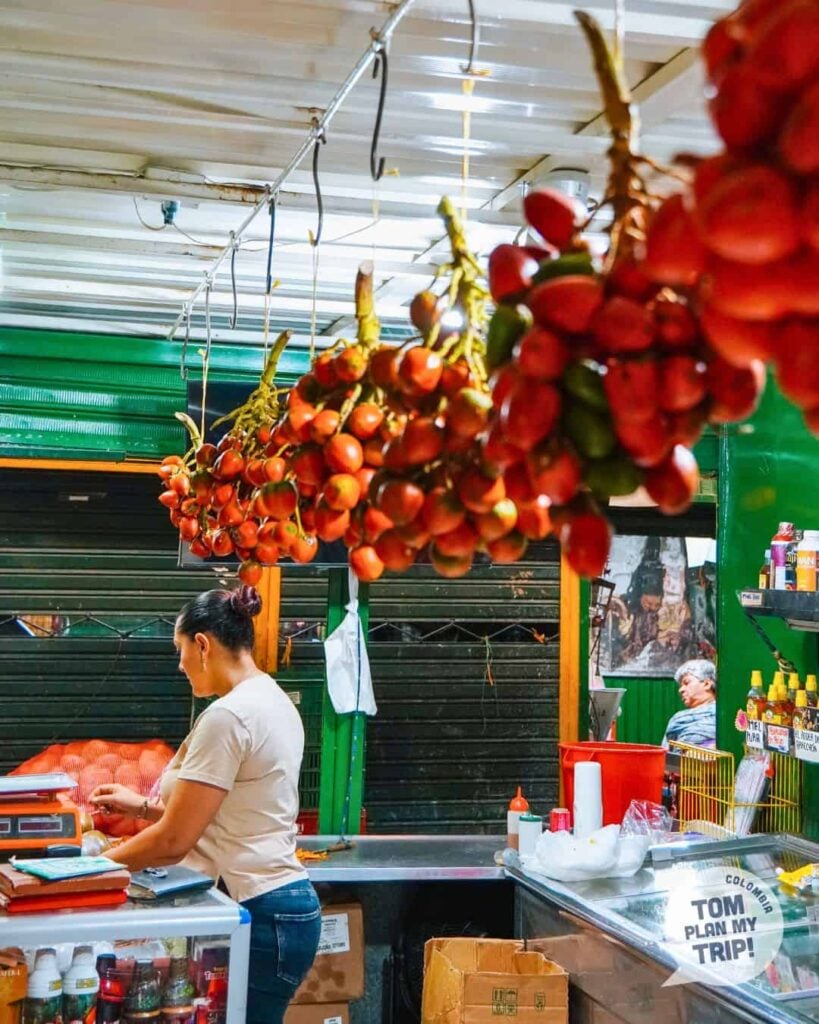
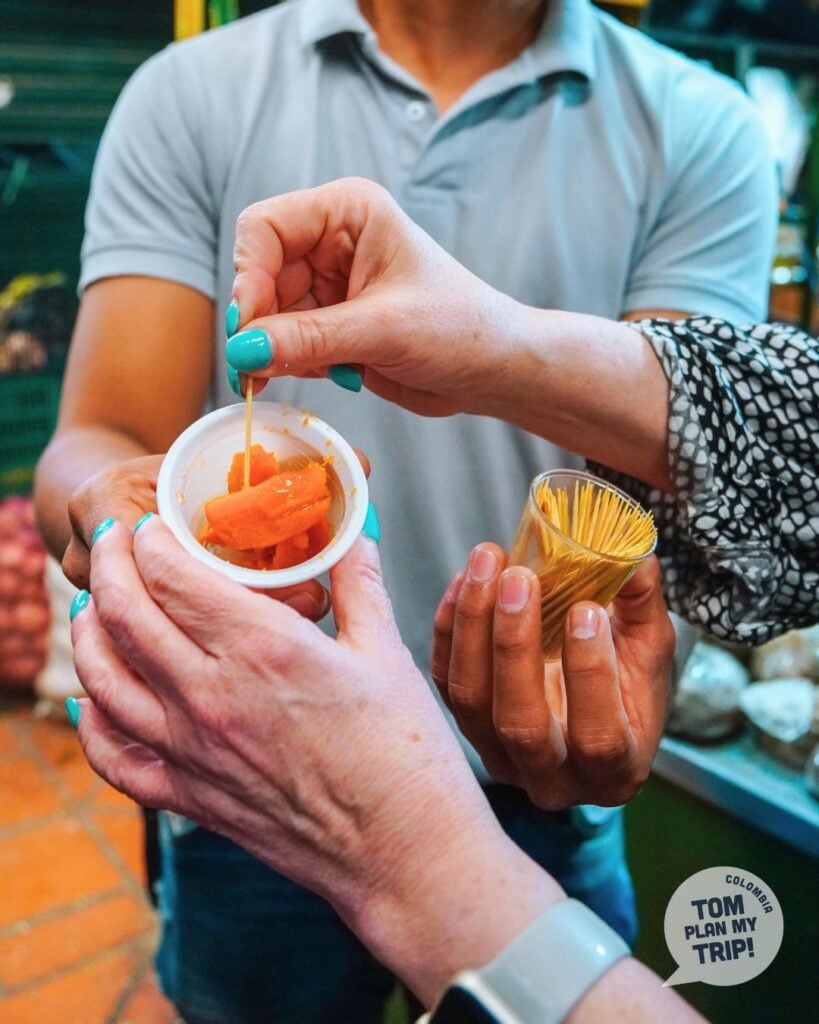
This small ovoid fruit, orange-red, growing in heavy clusters at the top of palm trees that can reach twenty meters, is no ordinary fruit.
In the mouth, it’s even more surprising — a floury texture reminiscent of sweet potato, a mild flavor, slightly nutty, neither sweet nor acidic.
Native to the tropical forests of South America, it is deeply rooted in the Colombian Pacific region, especially in Chocó.
It is always eaten cooked, and street vendors throughout Colombia offer it plain, with salt and honey — a winning combo. It’s a seasonal fruit, harvested from January to May and from August to November; after which it disappears from the stalls.
Its richness in proteins, vitamins A, C, and E, and omega-3 and -6 has earned it the nickname of “vegetable egg”; it is one of the most nutritious fruits there is. Colombians also attribute aphrodisiac properties to it.
EL MANGOSTINO
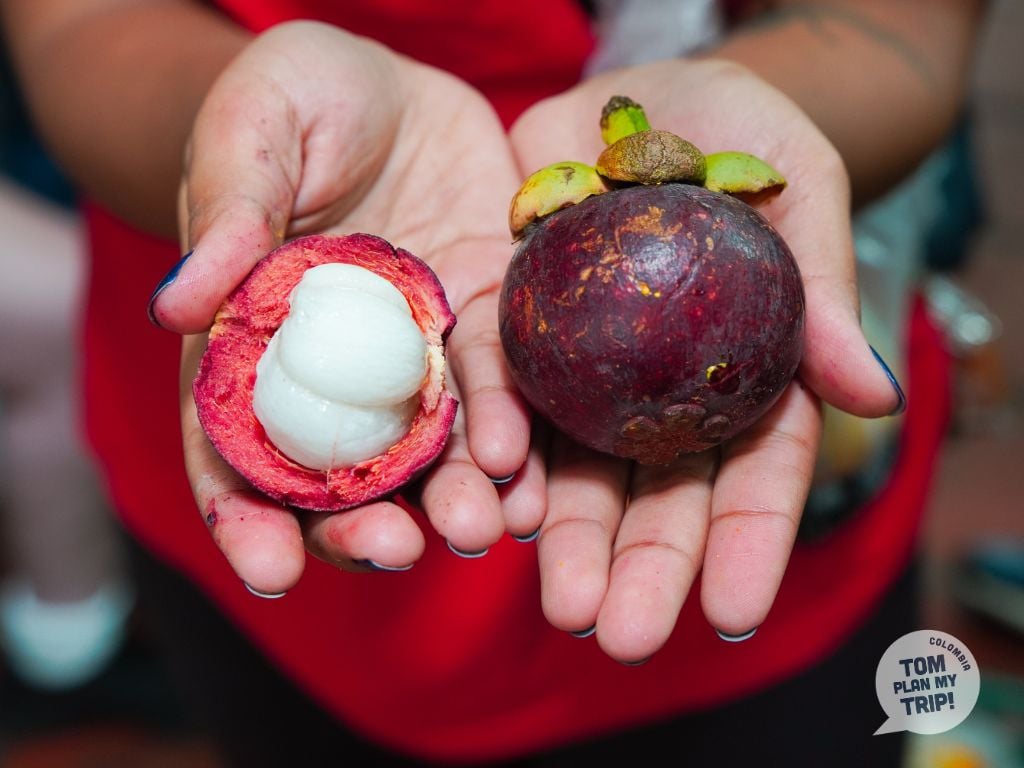
The mangostino may be the most elegant fruit you’ll taste in Colombia.
In one bite, you understand why it’s called the reina de las frutas — the queen of fruits. Under its purple and smooth shell, a white and creamy flesh, divided into small plump segments, with a finely tangy sweetness and a delicate aroma.
Originally from Indonesia, the mangosteen arrived in Colombia at the beginning of the 20th century, in the pockets of English miners who came to seek gold in Tolima. The town of Mariquita is now its Colombian capital.
The tree takes 7 to 10 years to bear its first fruits, and its cultivation remains quite confidential, making it a rare and expensive fruit. It is a seasonal fruit (April-July and November-January).
Packed with antioxidants and compounds with remarkable anti-inflammatory properties, it is savored fresh, by hand or with a spoon.
In Concepción, in Antioquia, I had the chance to buy some from a street vendor at an unbeatable price — a pure delight.
EL UCHUVA
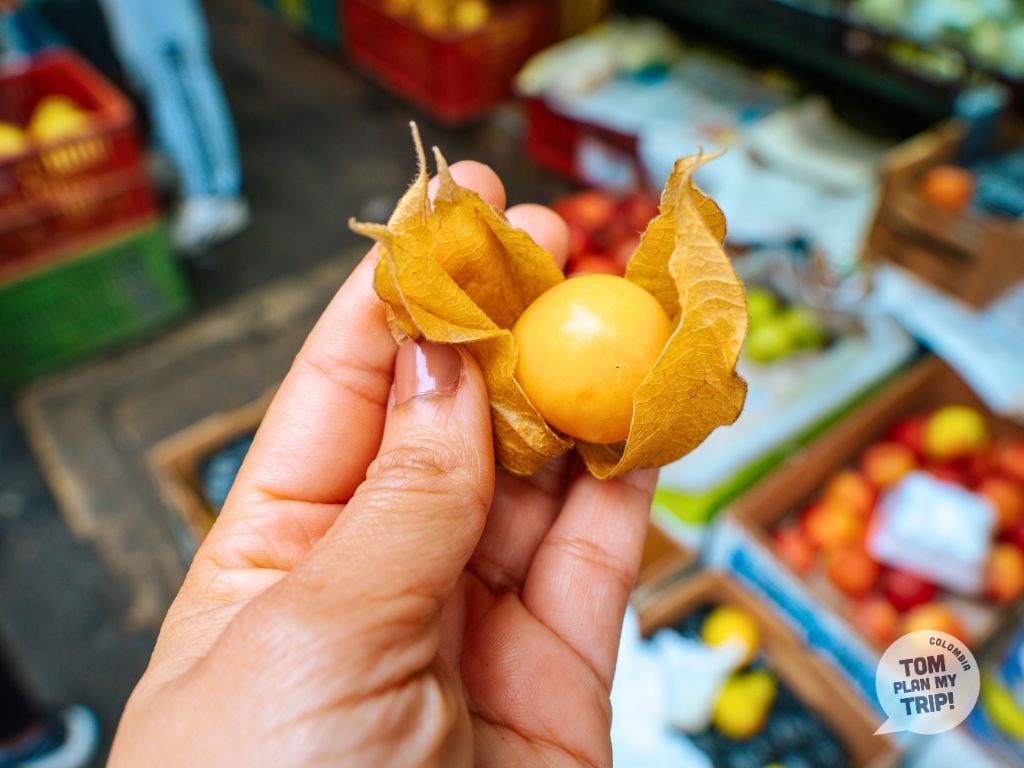
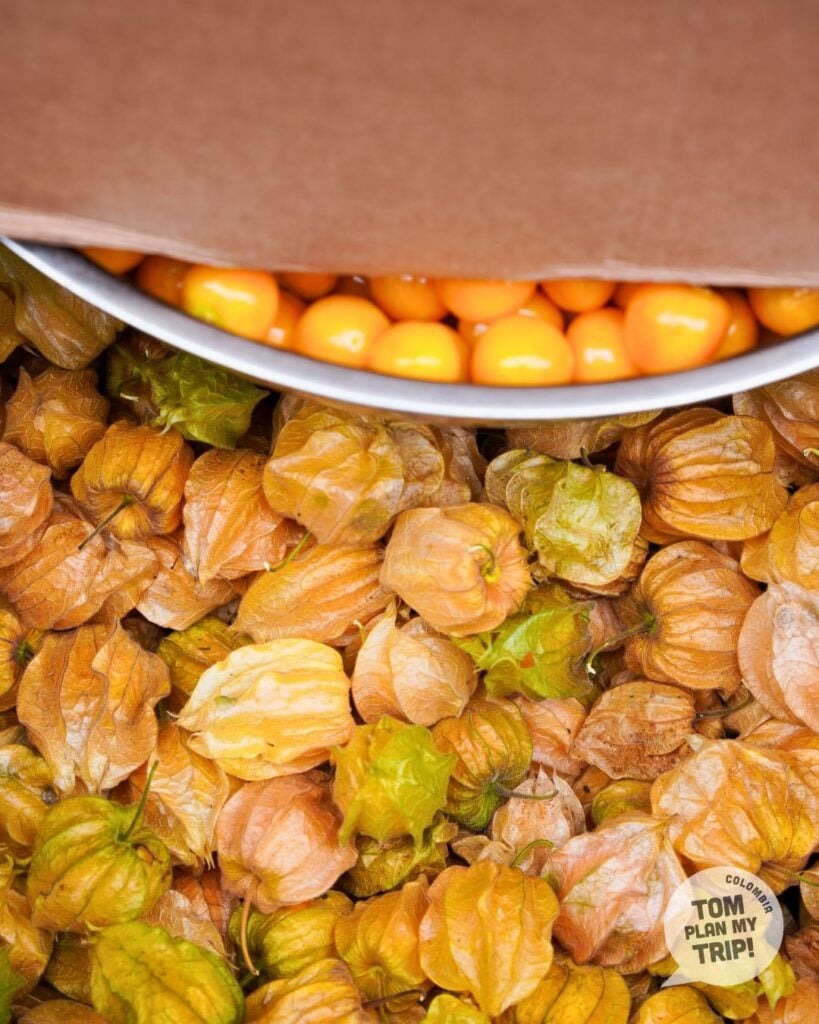
Small, round, yellow-orange, the uchuva looks like a miniature cherry tomato, hidden in a thin beige corolla that wraps it like a little lantern. In France, it is sweetly called “love in a cage.”
In the mouth, it’s a tangy-sweet explosion, lively and fragrant, a mix between gooseberry and passion fruit.
Native to the Andes of South America, it grows at altitudes between 1,800 and 3,600 meters, mainly in the departments of Boyacá and Cundinamarca. Colombia is now the world’s leading producer, and it’s the second most exported fruit, behind bananas.
It is enjoyed plain, in jam, in sauce, or as a dessert decoration. It is highly prized in European markets, and gourmet kitchens around the world are fond of it.
The uchuva is rich in vitamins A and C, antioxidants, and fiber.
LA CIRUELA
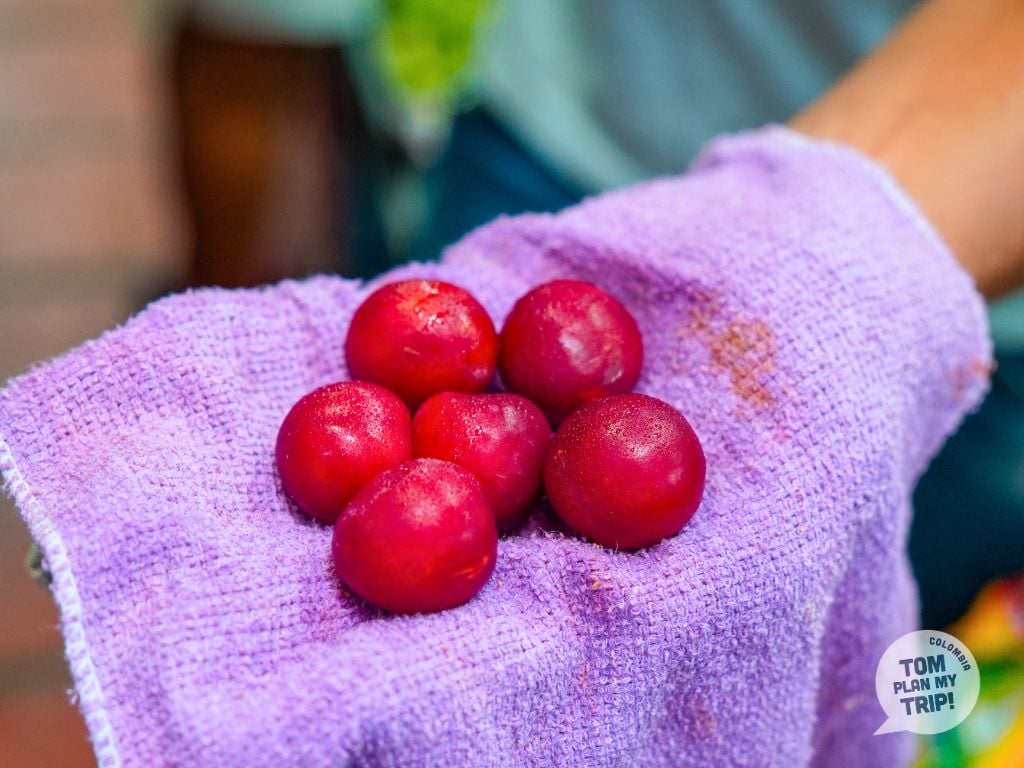
A tropical fruit from the mango family, the Colombian ciruela has nothing to do with the European plum you might know.
Small, plump, reddish-purple or yellow, it has thin skin and a juicy pulp with a sweet-tart taste, with lovely notes of mango and citrus.
Native to tropical America and emblematic of the Caribbean, the ciruela grows on small, hardy trees in the hot departments of Caribbean Colombia — Atlántico, Bolívar, and Magdalena.
Its season is short, from January to April, but highly anticipated: it is said to announce summer. From January, it invades the streets of Barranquilla, Valledupar, and Cartagena, and the Atlántico department even dedicates an annual festival to it.
Rich in vitamins A and C, potassium, and fiber, Colombians eat it raw, with salt, lemon, and pepper — addictive. It is also used for jams, juices, and preserves.
EL MAMONCILLO
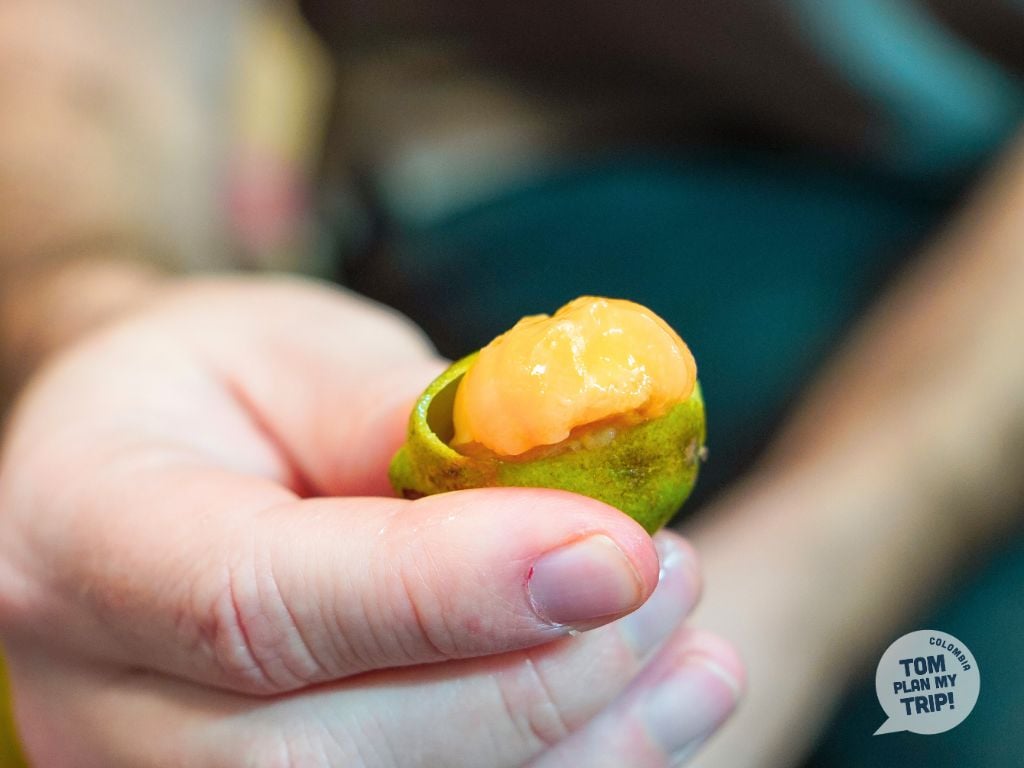
The mamoncillo is a fruit you learn to eat by watching others do it.
Small, green, and round, it is found in generous clusters on the stalls throughout Colombia.
To enjoy it, you need to crack the thin green shell, slide the ball into your mouth, and suck the translucent, gelatinous pulp, salmon or ivory-colored, slightly attached to its large seed — tangy, sweet, refreshing.
I prefer to remove the shell and add salt, pepper, and lemon juice 😉
Native to Colombia and Venezuela, it grows on a large tree in warm regions up to 1,000 meters in altitude. Its main season runs from June to August; it’s impossible to miss the beautiful clusters on the carts of the street fruit vendors on the Caribbean coast.
Rich in vitamins A and C, iron, and phosphorus, it’s a concentrated source of tropical energy. The indigenous peoples of the Orinoco used its roasted seeds as a remedy for diarrhea and its boiled leaves to calm nervous disorders.
LA GUAMA
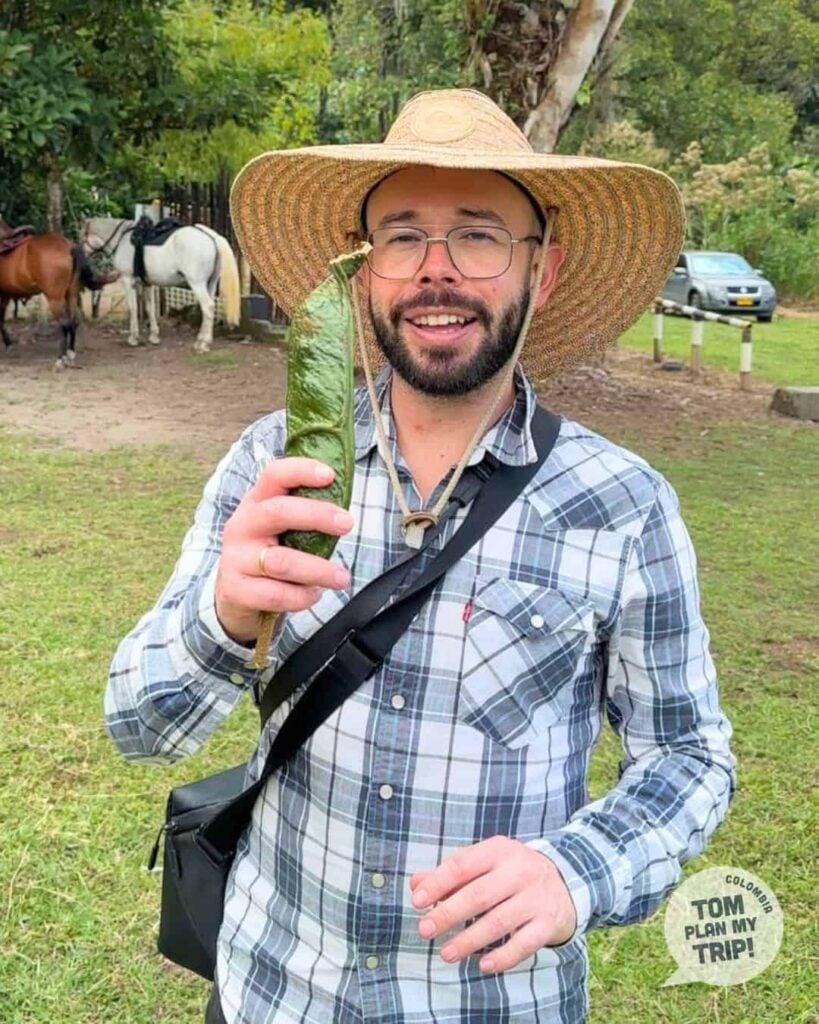
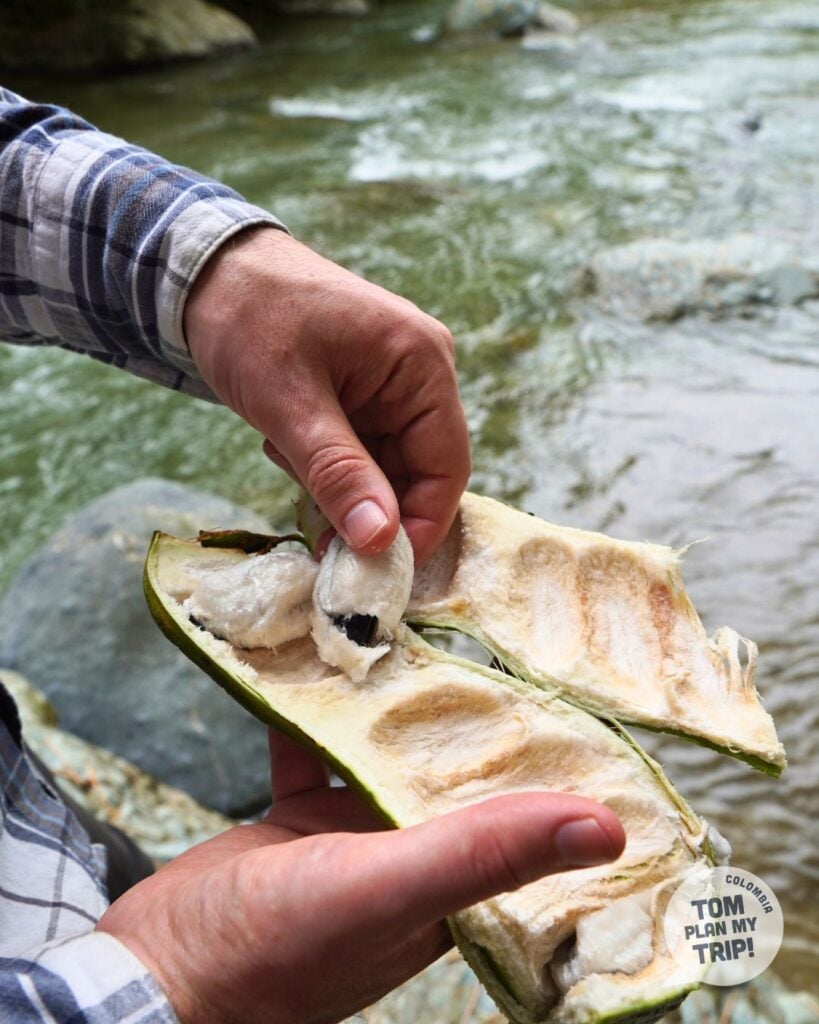
The guama is undoubtedly one of the strangest fruits you will encounter in Colombia.
Technically, it’s a legume — a long green pod that can reach the size of a forearm. Inside, surprise! Seeds wrapped in a white, cottony, and soft pulp, with an amazing lightness, and a sweet taste reminiscent of vanilla ice cream. That’s actually its English nickname: “ice cream bean.”
It is native to the tropical forests of the Amazon and widely spread in the warm regions of Colombia. Its roots have the property of enriching the soil with nitrogen, making it a valuable ally for coffee and cocoa plantations.
Fruit of the rainy season, it is nibbled right from the pod, seed by seed.
The indigenous communities of the Amazon have long used it for its antidiarrheal and antirheumatic properties.
LA PAPAYA
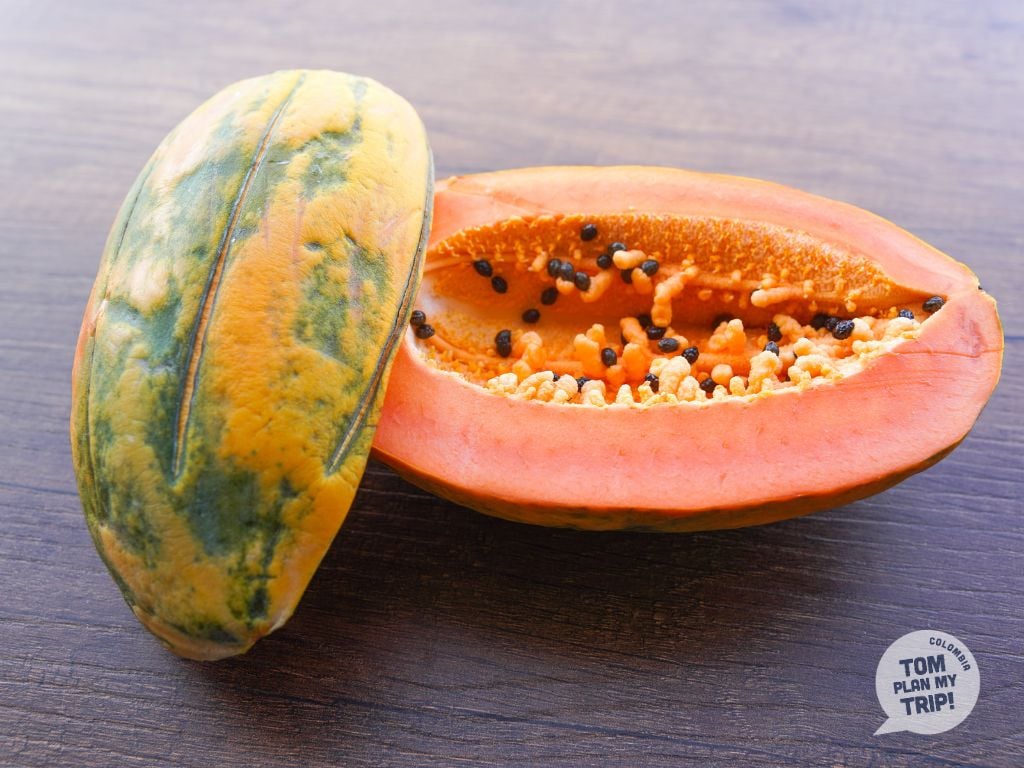
The Colombian papaya is a revelation for those who have never tasted a “true” one.
Picked at maturity, its flesh is thick and juicy, with a deep orange color, a straightforward sweetness, and a powerful, recognizable musky aroma. This aroma, by the way, is controversial: some people can’t stand it — a sensitivity partly explained by genetics. It’s up to you to test which camp you belong to 😉
Grown year-round in the warm regions of both coasts and the inter-Andean valleys, it is essential in all the country’s markets. Colombians enjoy it plain for breakfast, in juice, or in salad.
Rich in vitamins A and C, fiber, and antioxidants, it also contains papain, a powerful digestive enzyme. The Amerindian peoples already used it to treat intestinal disorders.
This abundant and easy-to-pick fruit is featured in a very Colombian expression: “no dar papaya,” which means “don’t give someone the opportunity to take advantage of you” — good urban caution advice regarding safety.
EL CAIMITO
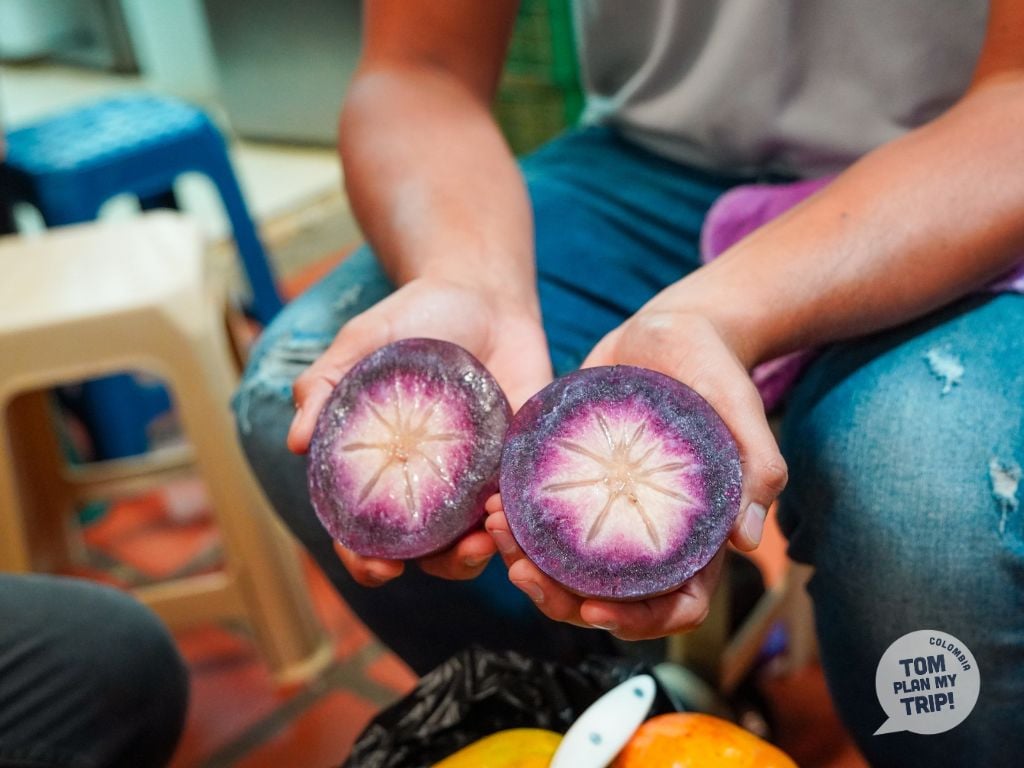
The caimito is one of the most beautiful fruits you will see in the markets of the Colombian Caribbean coast.
Round, smooth, with a deep purple or green color depending on the variety, it hides under its skin a white, milky flesh, sweet, slightly gelatinous — and when cut in half, its seeds form a perfect star. It is also called “star apple”. (Star apple).
Native to the Caribbean and Central America, it grows on large trees that can reach 35 meters in height, in the hot and humid areas of Caribbean Colombia.
It is harvested from February to May and is enjoyed plain, with a spoon, well chilled.
Rich in vitamins A and C, calcium, fiber, and antioxidants, it is recognized in traditional medicine for its anti-inflammatory, expectorant, and digestive properties.
LA FEIJOA
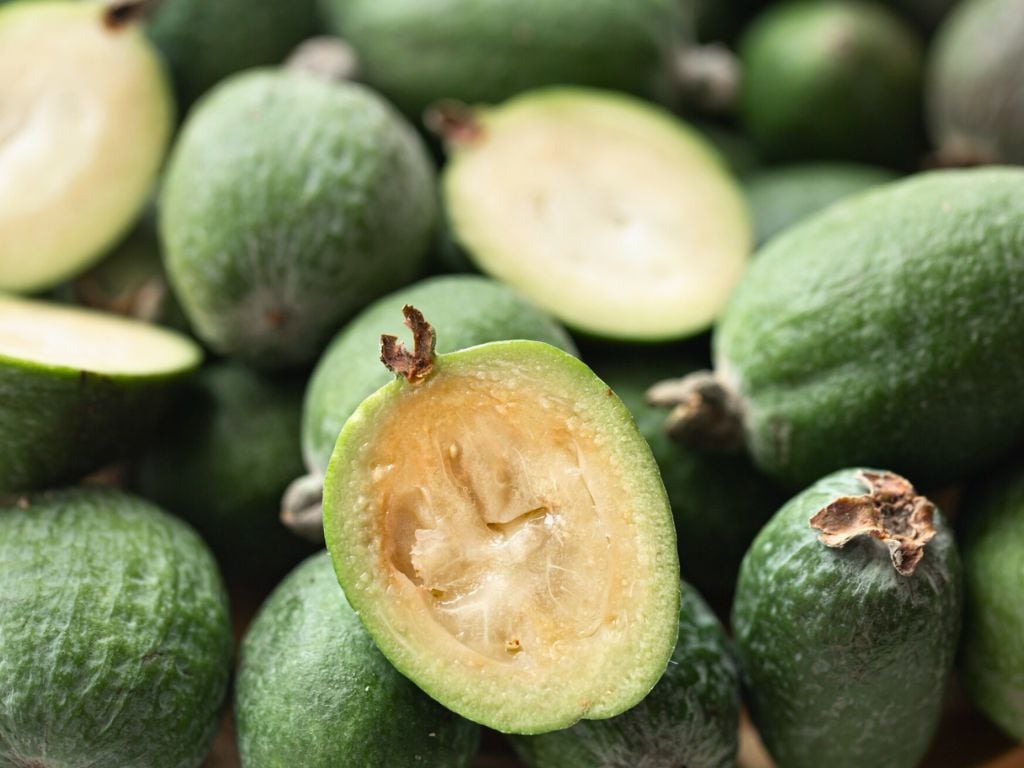
Dark green, small and oval, the feijoa appears unremarkable at first — but bring it close to your nose and you’ll understand why it’s nicknamed “the fruit of eternal youth“.
It is even very likely that you will smell it on the fruit stalls before you even see it. Its fragrance is unique: a floral and fruity explosion, between guava, pineapple, and a hint of mint. Its pulp, white and gelatinous, reveals a sweet and sour, delicate, and aromatic taste.
Native to the highlands of South America, in Colombia, it thrives between 1,800 and 2,700 meters of altitude in Boyacá and Cundinamarca, where Tibasosa is the “Colombian capital” of it. Its season runs from March to June.
Ripe when its skin is tender, it can be bitten whole or cut in half by scraping the flesh with a small spoon. The skin is edible but bitter; some eat it, others do not.
Rich in vitamins C, B, and E, antioxidants, and fiber, it is traditionally used to treat colds, stimulate digestion, and strengthen the immune system.
LA PITAYA AMARILLA
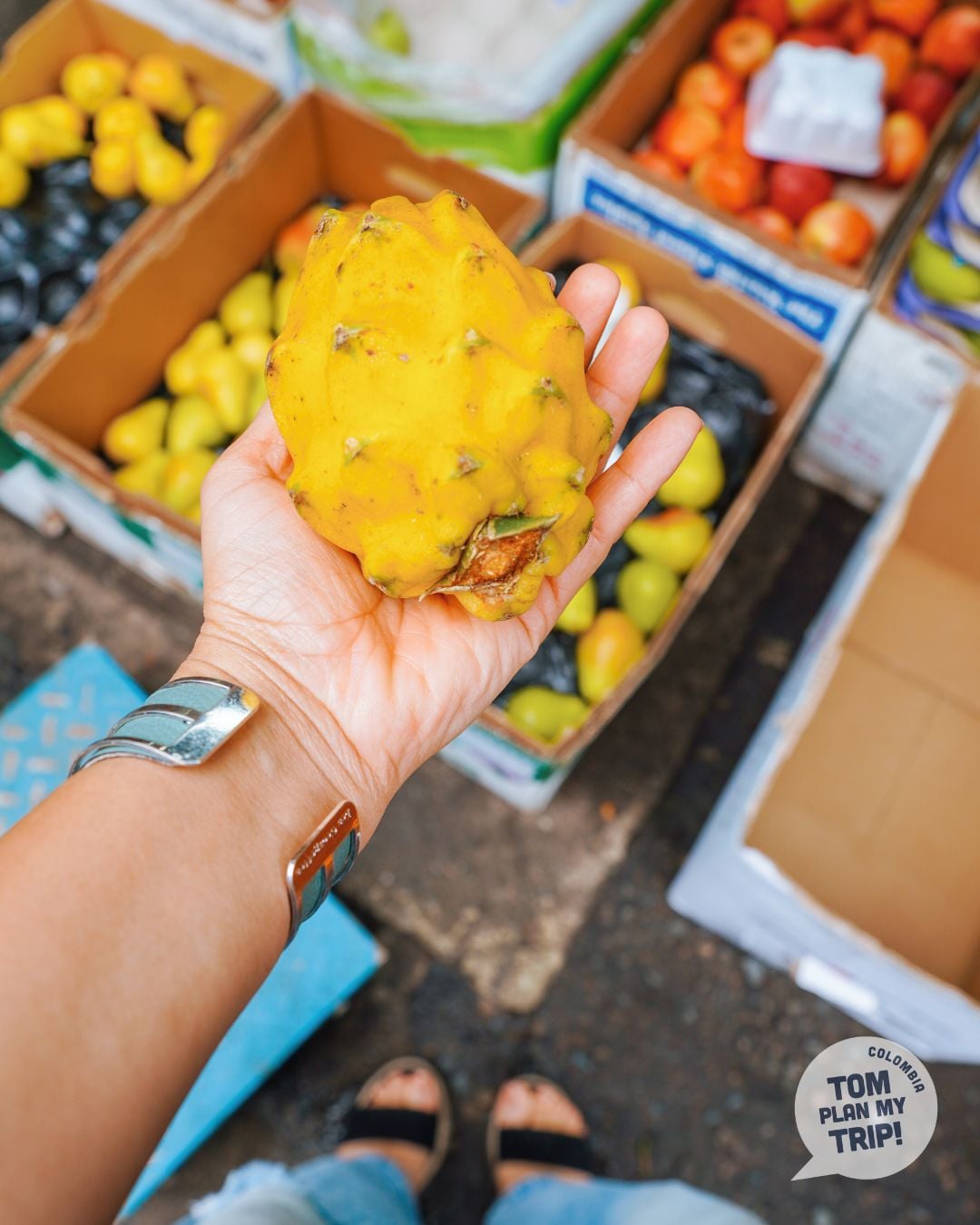
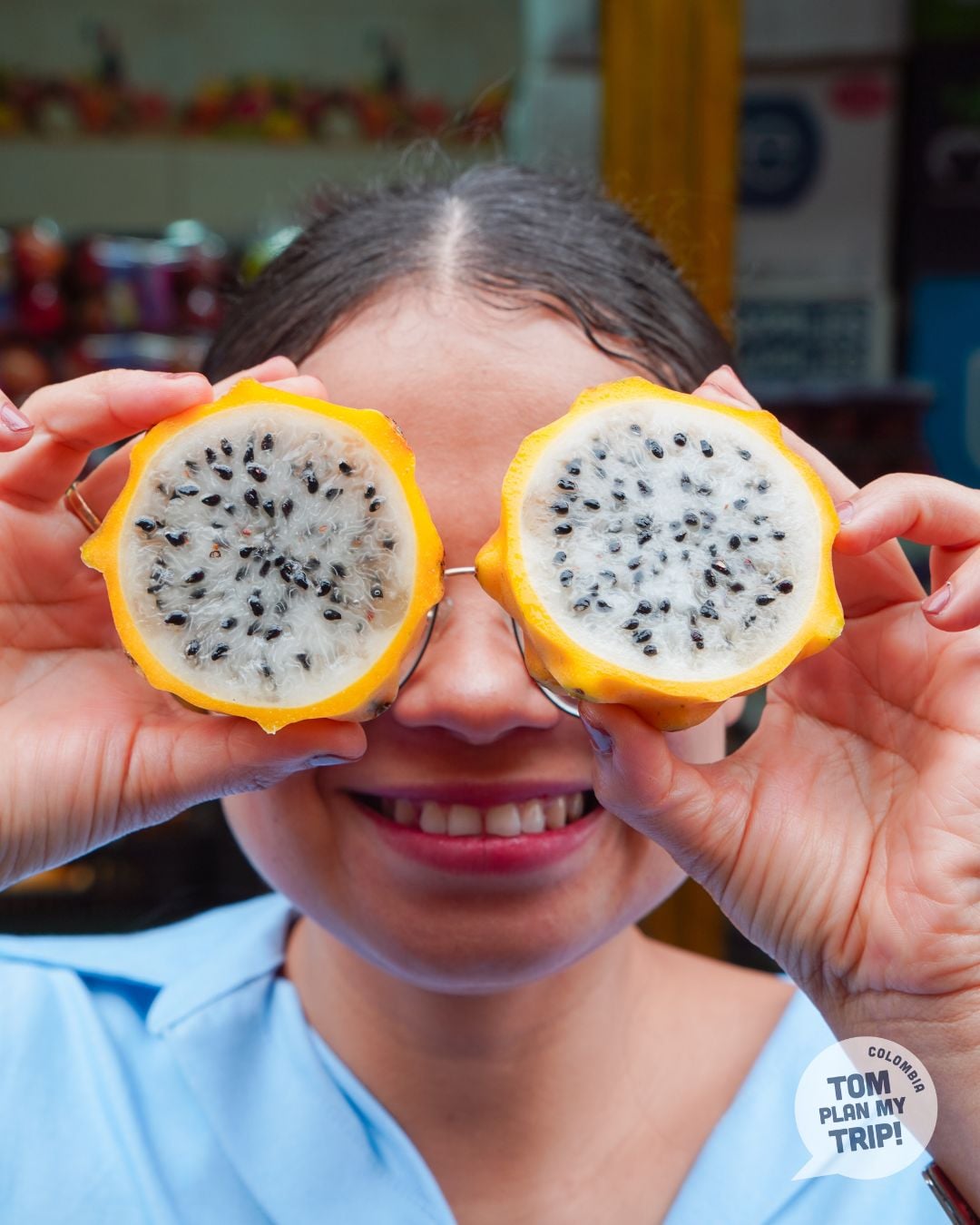
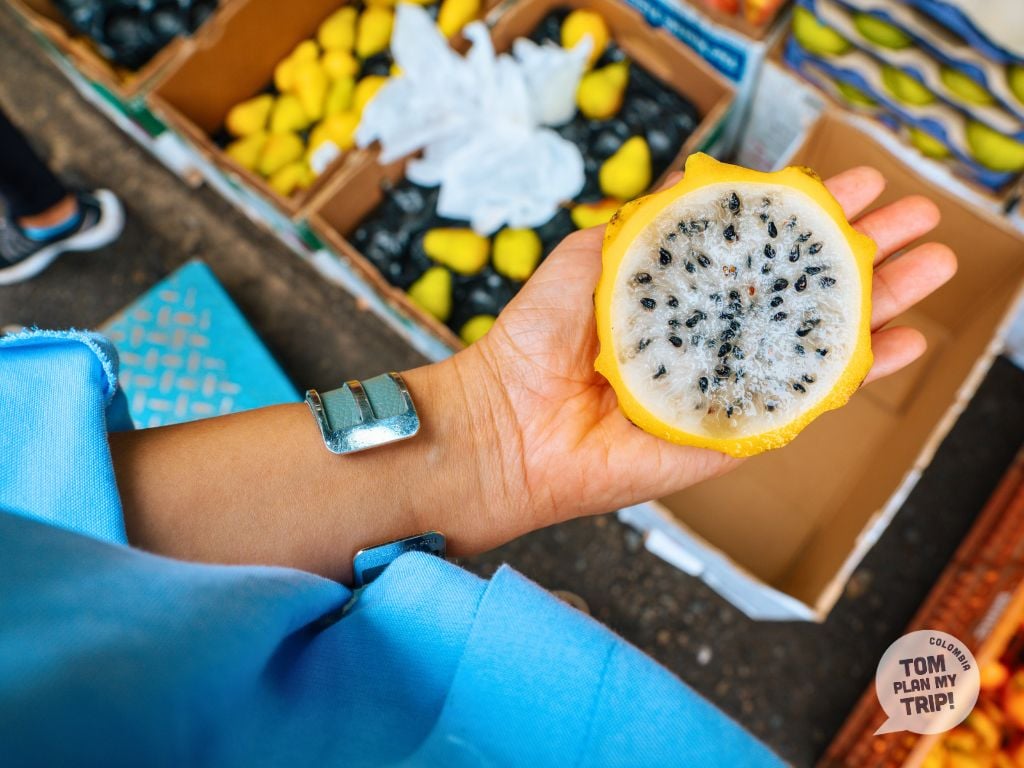
With a beautiful, bright yellow color, covered with pointed and curved scales, the pitaya amarilla (yellow pitaya) truly deserves its nickname of “fruta del dragón” (dragon fruit).
Its name means “scaly fruit” in the language of the Taínos, a Caribbean people.
Its white flesh dotted with small black seeds is juicy with a sweet, delicate, and refreshing taste — a delight.
Native to Central America, it thrives between 1,000 and 1,850 meters in altitude, in the departments of Boyacá, Quindío, and Santander.
To enjoy it, there’s nothing better than slicing it in half and eating the flesh with a spoon. It is also very popular in juice form.
Rich in vitamins B and C, antioxidants, and iron, it’s a nourishing fruit. Also very high in fiber, it’s a fruit with laxative properties. I recommend eating half of it 😉
EL MANGO
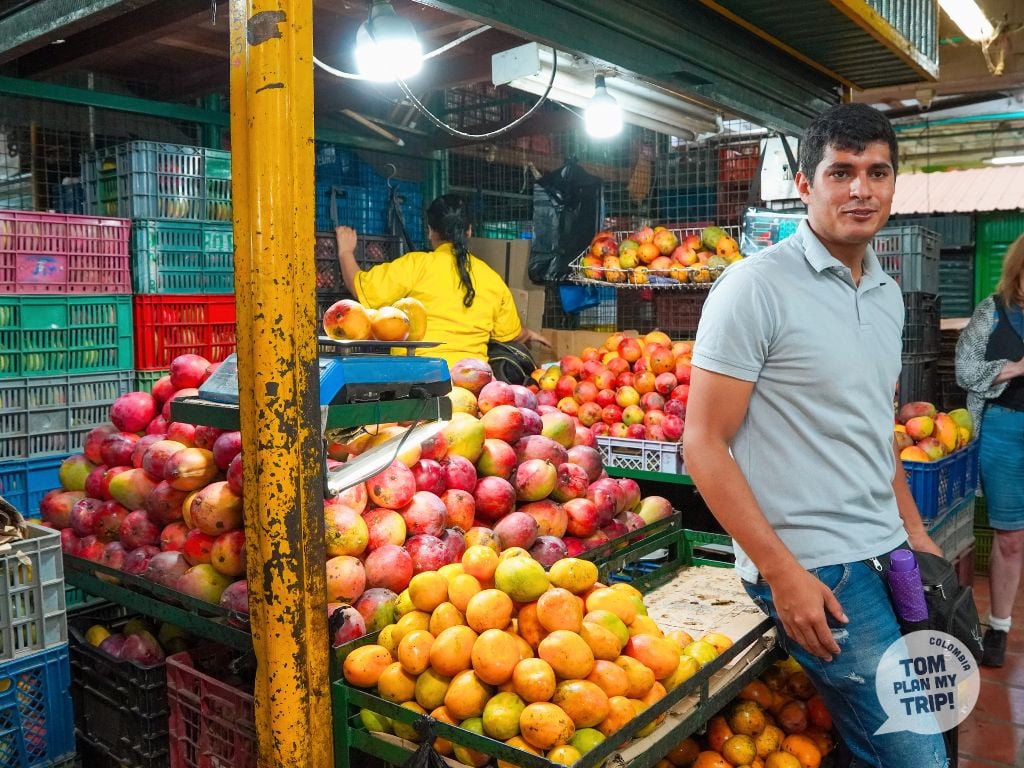
The mango is the symbolic fruit of tropical Colombia.
Native to South Asia, it was introduced to the South American continent in the 16th century by the Portuguese and Colombians quickly embraced it.
From the coastal plains to the Andean slopes, the country produces dozens of varieties — fibrous or melting flesh, bright yellow or orange, sweet or slightly tangy. They all share this immediately recognizable tropical fragrance.
The queen of them all is the “mango de azúcar”, small, fiberless, with an almost caramelized sweetness — the best in the world according to connoisseurs.
In the street, it is eaten plain or as mango biche — green, with salt and lemon. In cooking, it is made into juices, ice creams, sauces, and preserves. It is rich in vitamins A and C and antioxidants.
EL AGUACATE
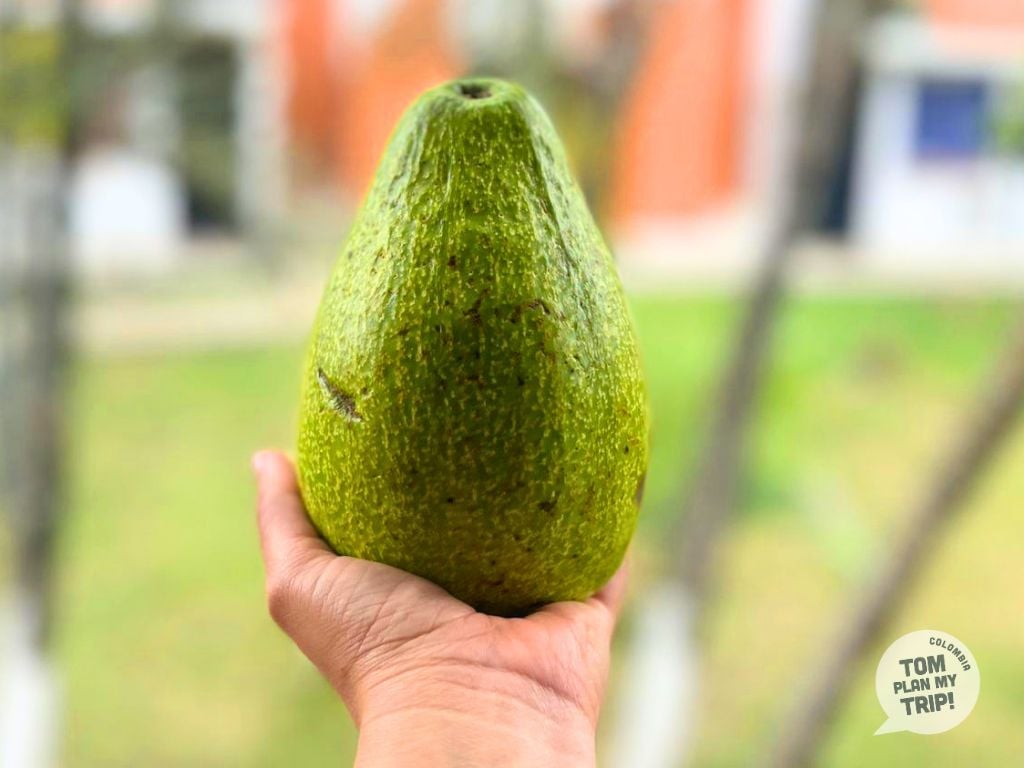
The avocado — or aguacate — is one of those rare fruits that is cooked like a vegetable and is used everywhere.
Green, creamy, rich, with its melting flesh and mild buttery taste, it is omnipresent on Colombian tables and in the street food: sliced to accompany rice, mashed on an arepa, in juices, or simply with salt and lemon — it’s one of my guilty pleasures.
Native to Central America — Mexico, Colombia, and Venezuela —, the avocado is cultivated from sea level up to 2,200 meters, in several varieties. Colombia is the fifth-largest producer in the world and one of the biggest consumers.
Fruit of the Colombian daily life for centuries, it has been the subject of an export race for a few years that does not come without damage to the environment.
Rich in healthy fats, in vitamins A, C, and E, as well as essential nutrients, it is a natural superfood.
Colombian fruits to drink rather than to bite
Some fruits from Colombia are too intense to bite into, but irresistible in juice.
LA GUANABANA
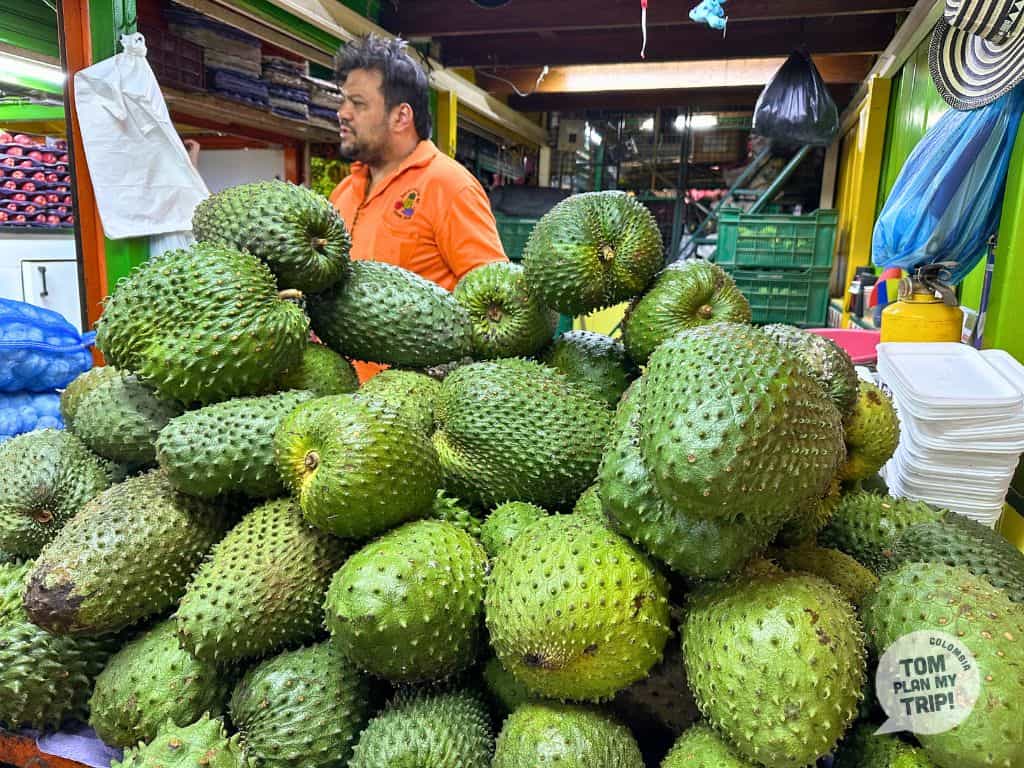
It’s hard not to be intrigued by the guanábana at a Colombian market — this large green fruit in the shape of an irregular heart, covered with small soft protuberances, can weigh up to 5 kg.
Under this unique appearance hides a white and cottony flesh, creamy and fragrant, with a tangy sweetness that recalls both strawberry and pineapple.
Fruit of Tropical America, Colombia is the country with the largest number of varieties and one of its main producers. It grows in the warm and humid regions, from the Caribbean coast to the Valle del Cauca.
It is mainly consumed as a thick juice with water and sugar, sometimes milk — sweet and refreshing, a pure delight in strong heat.
The indigenous peoples of America have used it for centuries to treat fever, infections, and joint pain — properties that interest today’s science. Rich in vitamins C and B and antioxidants, it is an excellent tropical food.
It also has the reputation of being anticancer. In fact, in the family of Aleja, my wife, they regularly take its leaves in infusion for that.
LA GUAYABA
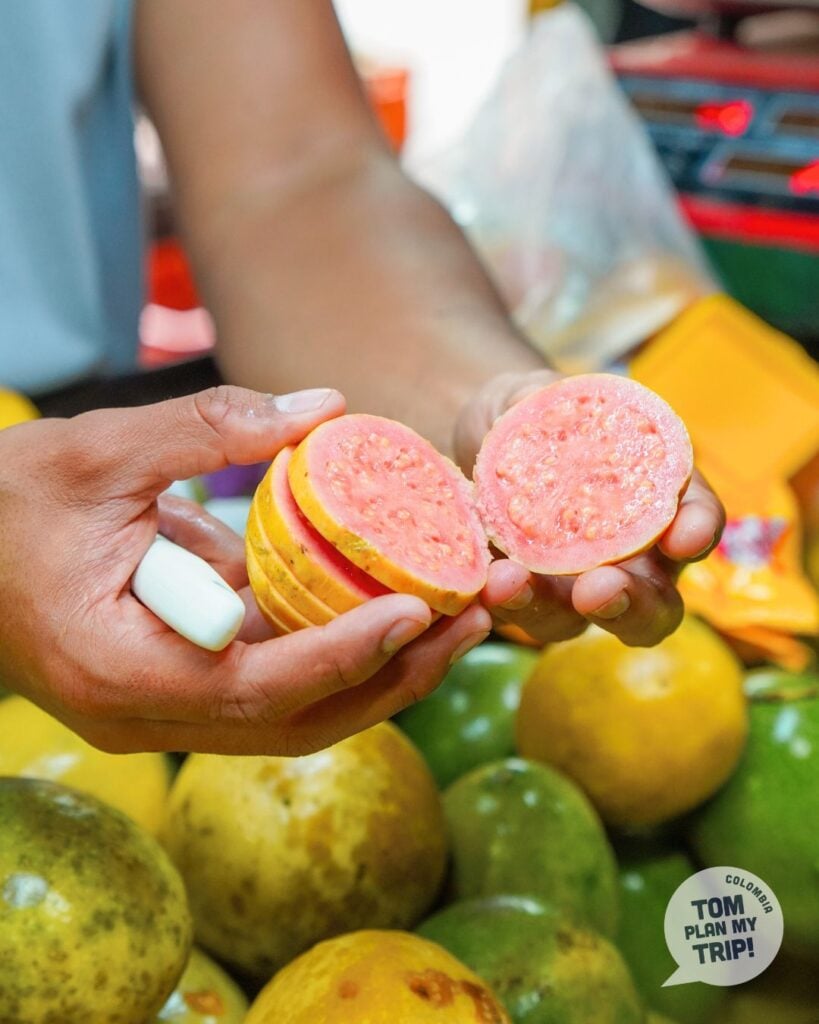
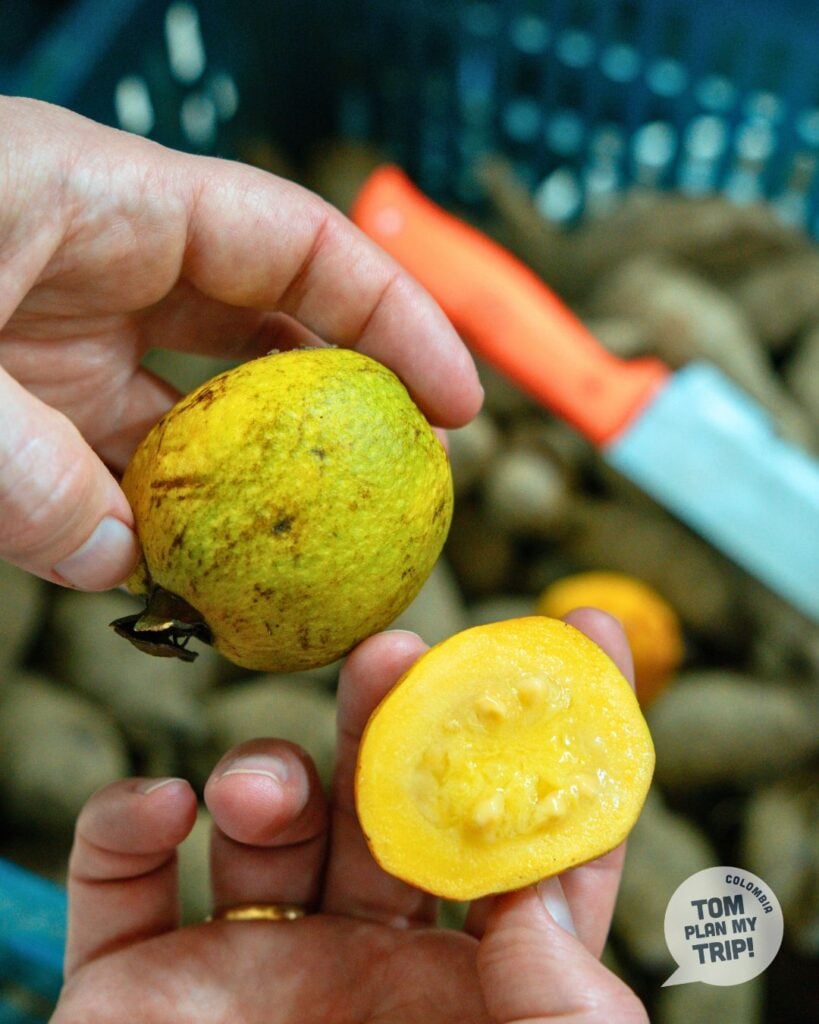
Originally from Central America, the guava in Colombia comes in several varieties, of which two stand out with well-marked characteristics.
The pink guayaba — round, yellow when ripe, with its pink pulp and sweet musky fragrance, cultivated in the departments of Meta, Santander and Boyacá. It is eaten raw or transformed into a smooth juice with water, into bocadillo or jam.
And then there is the sour guava, its tangy cousin from the Caribbean coast, with white pulp, cultivated in the departments of Sucre and Córdoba and consumed mainly in juice or sorbet with milk — a local delight rarely seen elsewhere.
The indigenous peoples of America used guava leaves against diarrhea and infections — a use still very widespread in Colombian folk medicine. Exceptionally rich in vitamin C — much more than orange —, it is an extremely nutritious fruit.
EL MARACUYA
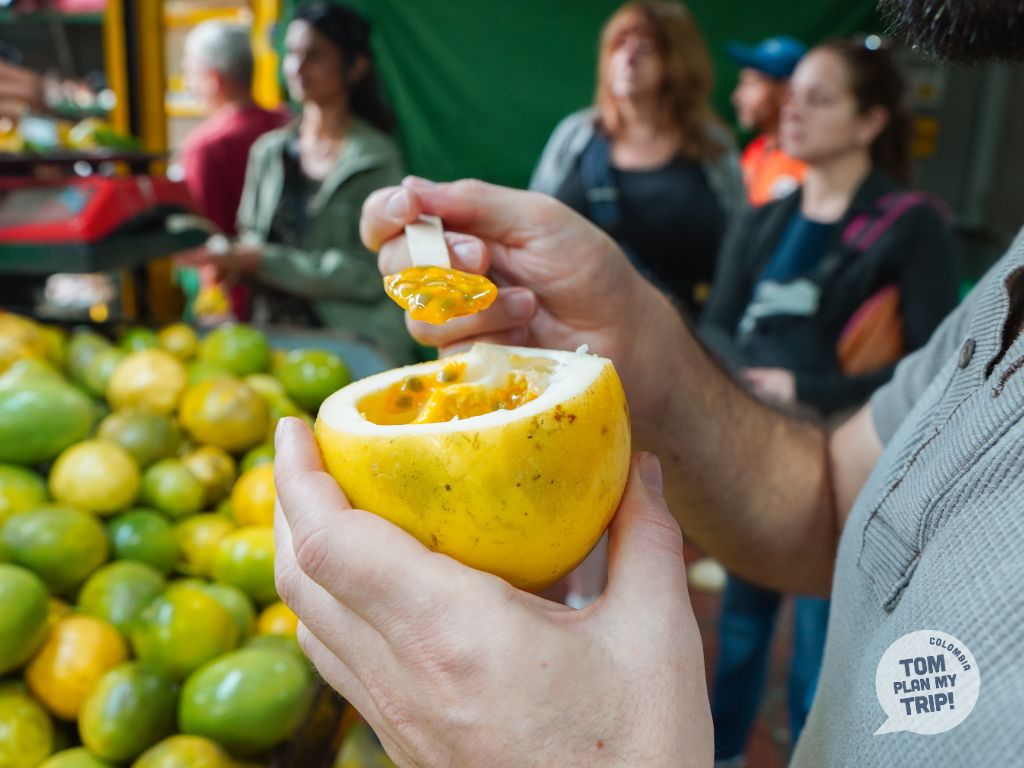
Few people remain indifferent to maracuyá.
Its yellow and wrinkled skin doesn’t look like much, but inside, a golden and juicy pulp hides a tropical fragrance of rare intensity.
Native to the Amazon, it is cultivated in the warm valleys and tropical areas throughout Colombia.
In the mouth, it’s lively, tangy, and slightly sweet. Frankly sour, it is rarely eaten with a spoon; it is more commonly found in industrial juices and concentrates.
On the other hand, it’s a perfect juice fruit. In water with a little sugar, or in milk for a creamier drink.
Colombians attribute calming properties to it — an infusion of its leaves is used in traditional medicine for anxiety and sleep disorders. It is rich in vitamin C, antioxidants, and fiber.
LA GULUPA
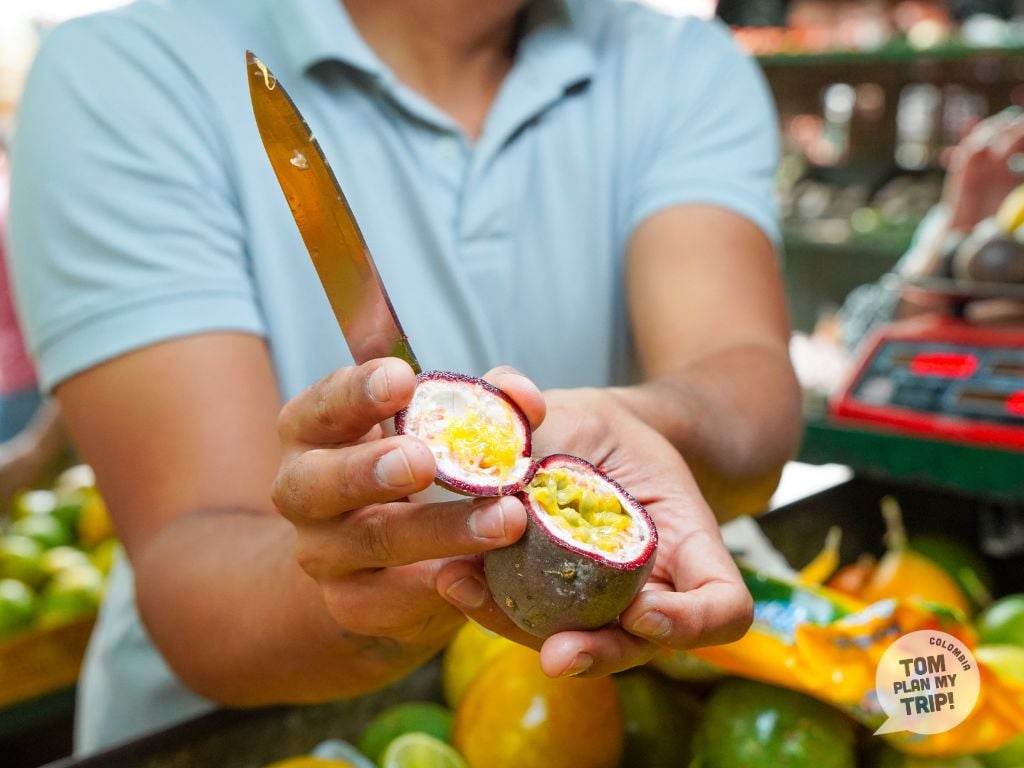
The gulupa is the wild little sister of the maracuyá.
Round, about the size of a ping-pong ball, its smooth skin turns from green to deep purple when ripe. Inside, a golden and fragrant pulp, less acidic than the maracuyá, with a floral sweetness.
Native to the Colombian Andes, it grows at altitudes between 1,800 and 2,800 meters, in Cundinamarca, Boyacá, and the coffee region — a fruit of freshness, typically Colombian, that exports well to European markets.
It is mainly consumed as juice, in water with a little sugar, or plain with a spoon.
In traditional medicine, its leaves and fruits are used to calm anxiety and promote sleep. Its richness in vitamins A and C and antioxidants makes it a fruit full of health benefits.
EL LULO
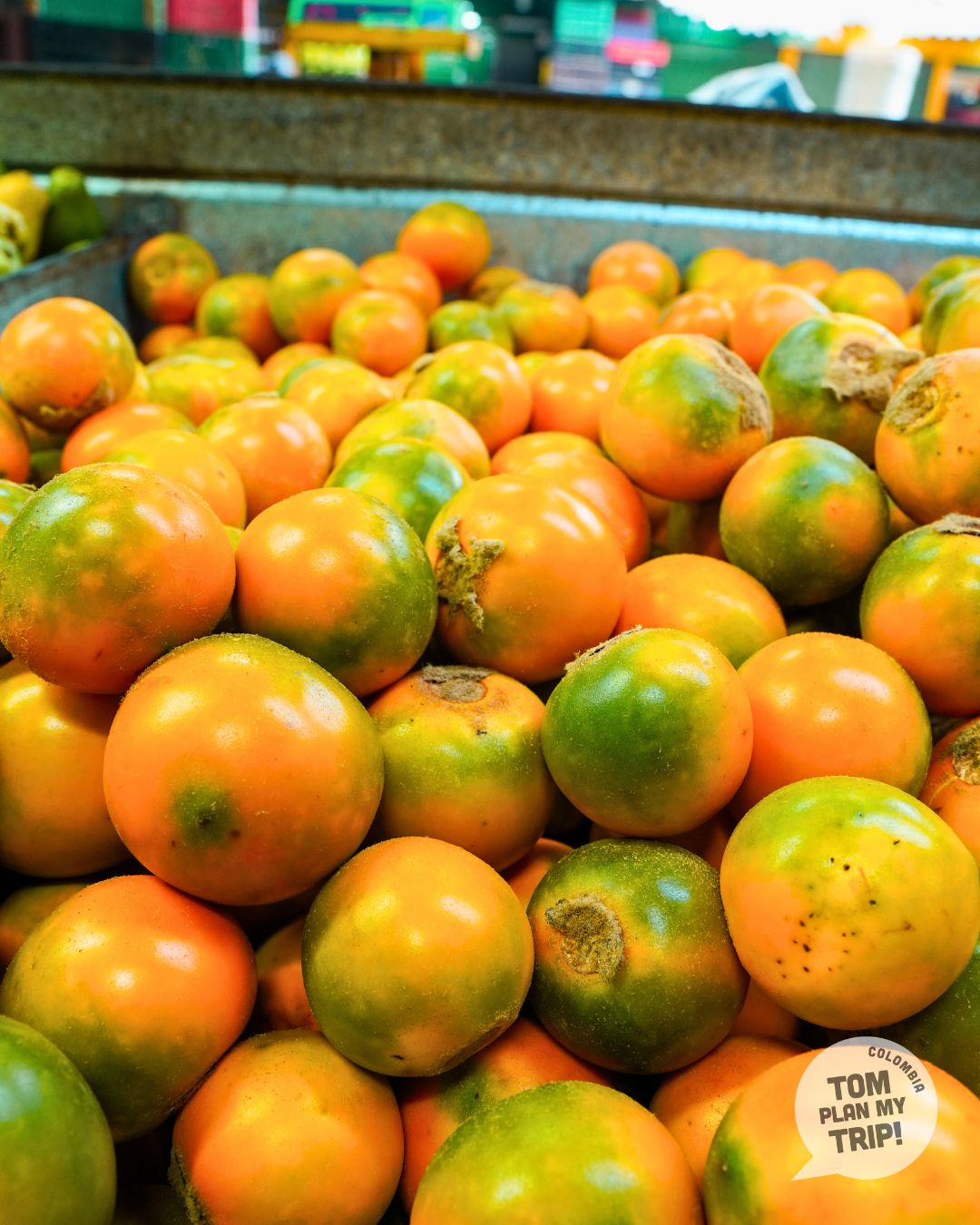
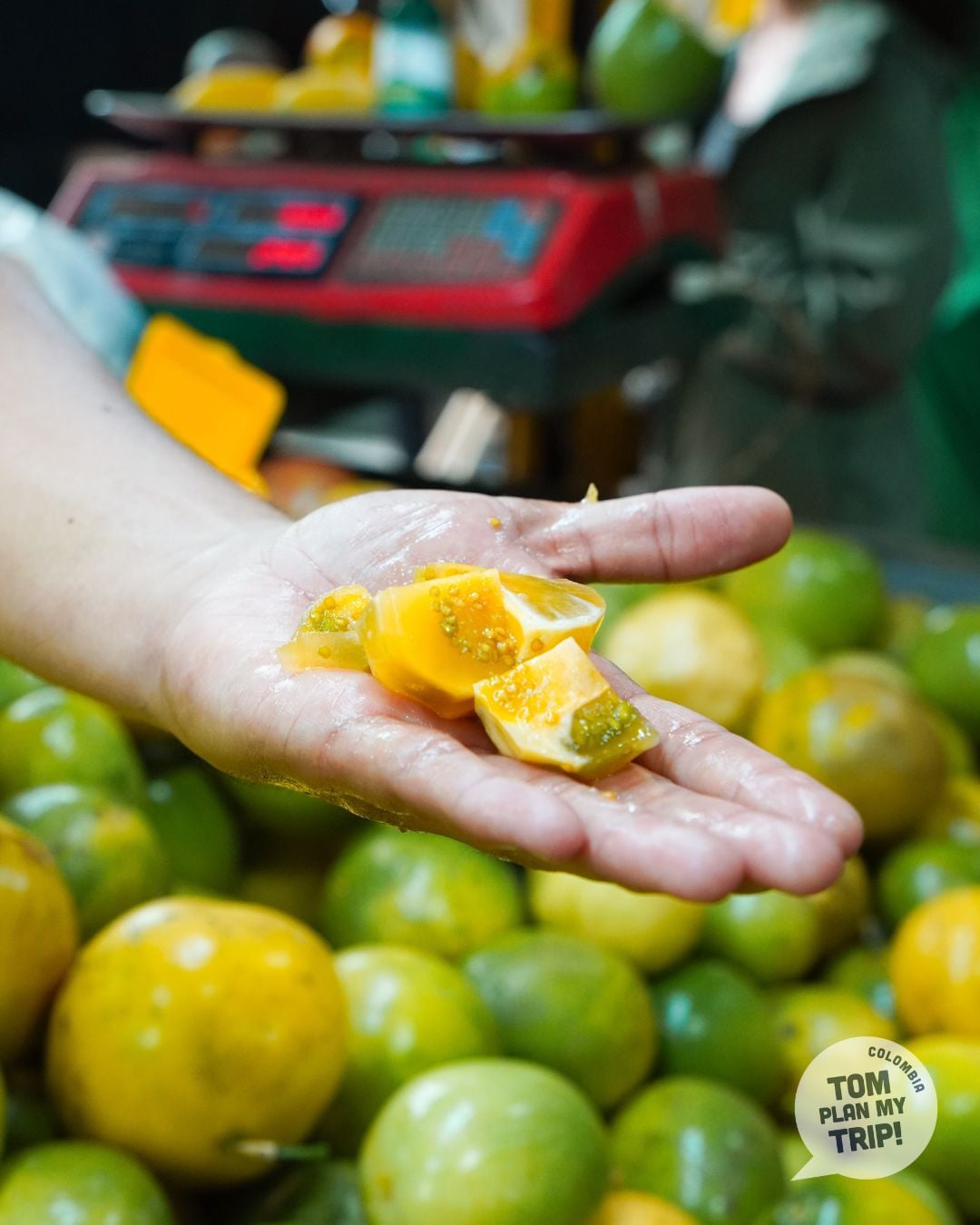
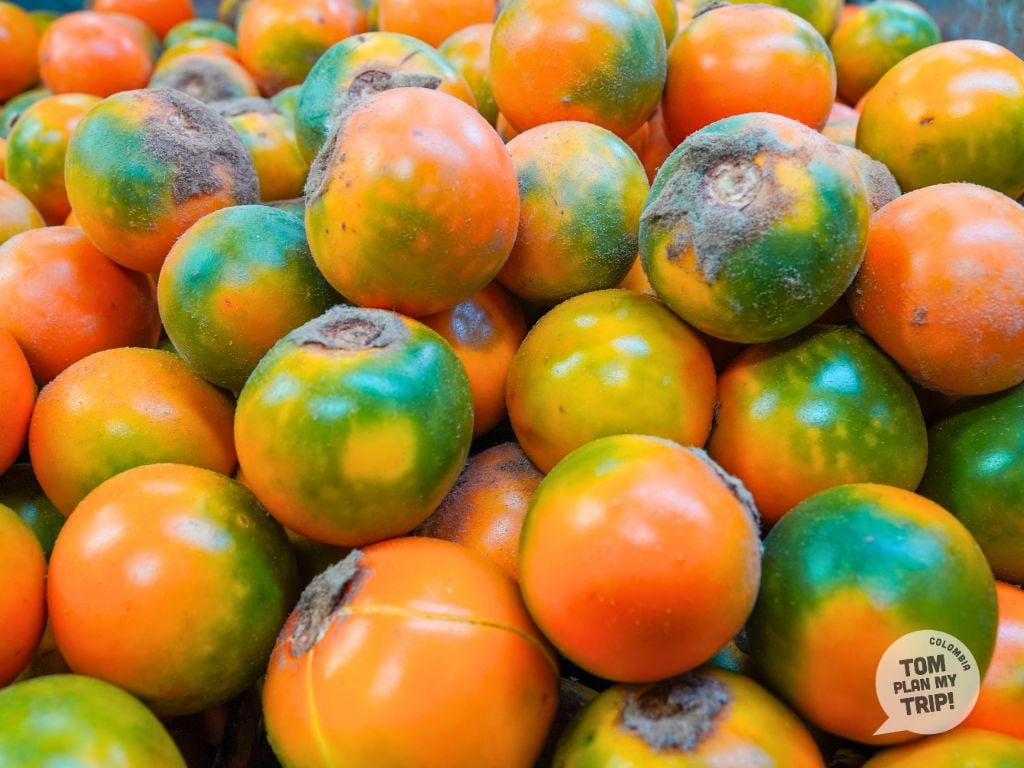
The lulo confuses a bit at first glance: an orange, fuzzy skin that opens to reveal an intense green pulp, almost neon, nearly translucent, divided into 4 sections filled with juice and small flattened white seeds – a beautiful visual effect.
But any hesitation disappears with the first sip of juice. It’s fresh, lively, tangy, with a unique fragrance that is both citrusy and tropical — unclassifiable.
Native to the Andean slopes, it grows between 1,000 and 2,200 meters in altitude, in regions such as Huila, Nariño, or Valle del Cauca.
Its juice, in water with a bit of sugar, is an institution in Colombia — some add a pinch of salt to enhance the acidity.
It has even become an iconic drink in Cali where it is known as “lulada“.
Its digestive and purifying properties are well-known in traditional medicine. It is rich in vitamin C and iron.
LA TOMATE DE ARBÓL
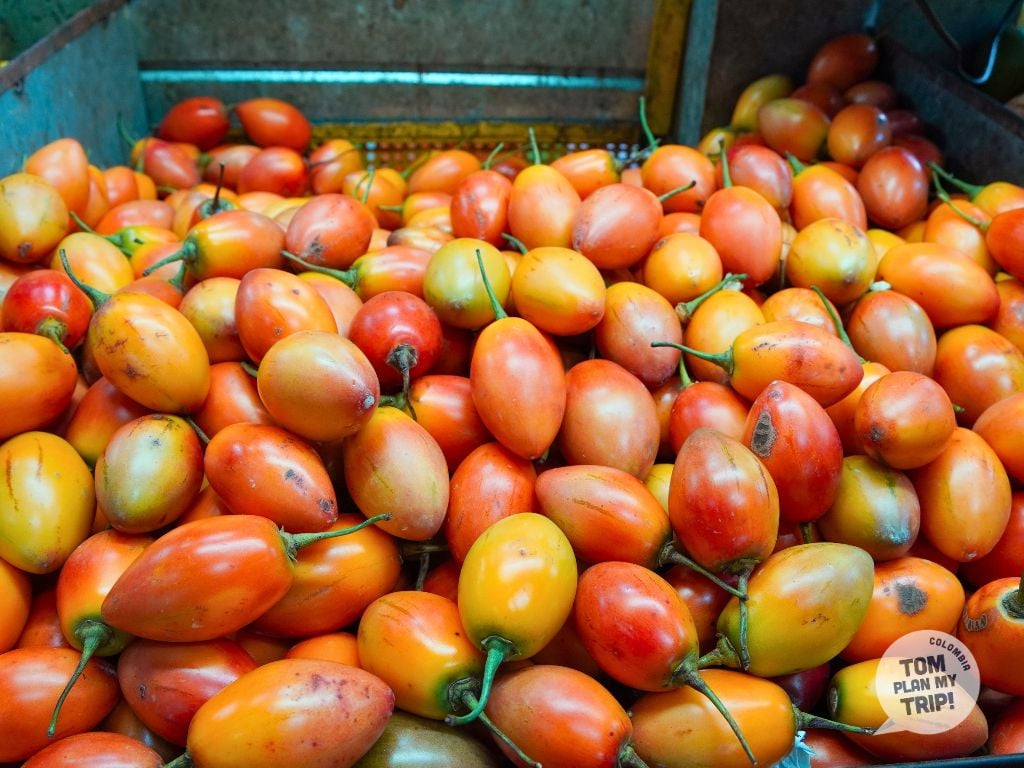
Well, no, the tree tomato is not a tomato.
With an elongated shape and smooth, reddish-orange skin when ripe, it hides inside a surprising bicolored pulp: golden yellow in the center, bright red on the edges, sprinkled with small, tender seeds.
In the mouth, it’s tangy, slightly sweet, with a flavor that’s hard to define, between fruit and vegetable — unmatched.
Originally from the Andes, it grows between 1,500 and 3,000 meters in the regions of Cundinamarca, Boyacá, Nariño, and the coffee region.
It is mainly consumed as a juice in water with sugar, but also in sauces and in cooking.
In traditional medicine, it is valued for its effects on the liver and digestion. It is a fruit rich in vitamins C and A and in antioxidants.
EL COROZO
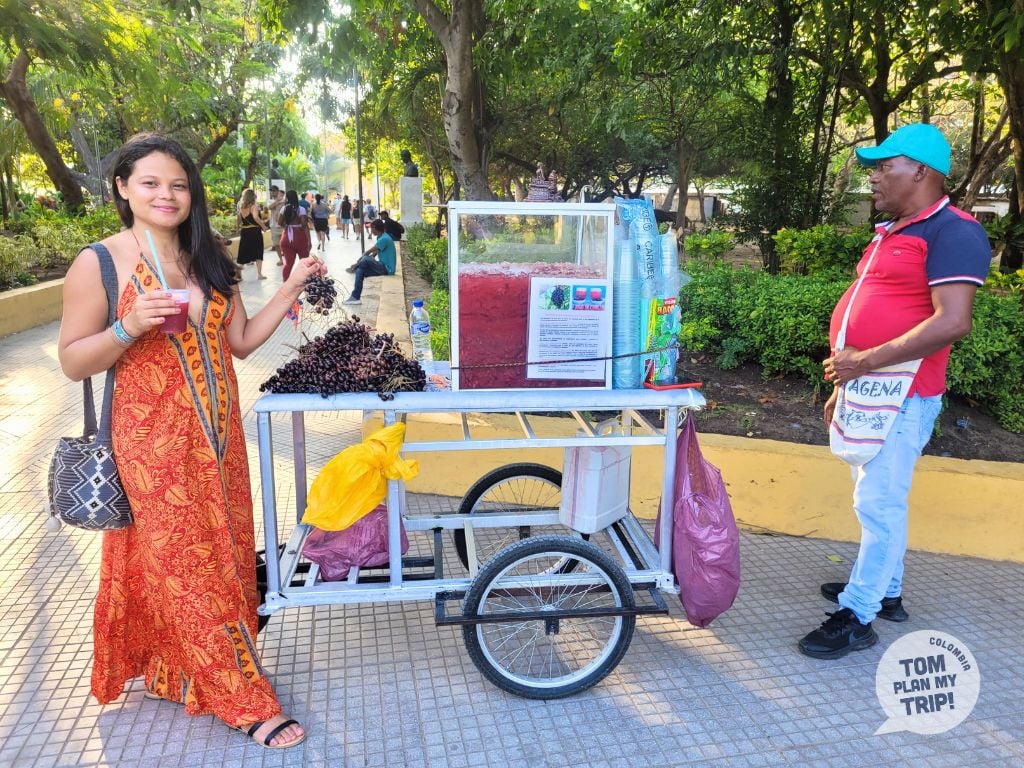
You will not often see corozo on the stalls of big cities.
An emblematic fruit of the Colombian Caribbean coast, it is mainly found in the regions of Córdoba, Sucre, and Bolívar. These small burgundy red berries when ripe grow in long dense bunches on a palm tree covered with thorns.
Its flesh is fine, very tangy, with a slight astringency and an intense fruity taste between sour cherry and grenadine.
In the Caribbean, corozo is a street juice star. Prepared in very sweetened water, it is very refreshing and thirst-quenching.
On the coast, it is also consumed by hand with a squeeze of lemon and some salt.
Rich in vitamin C, in the traditional medicine of coastal communities, it is recognized for its anti-inflammatory and antioxidant properties.
LA ARAZA
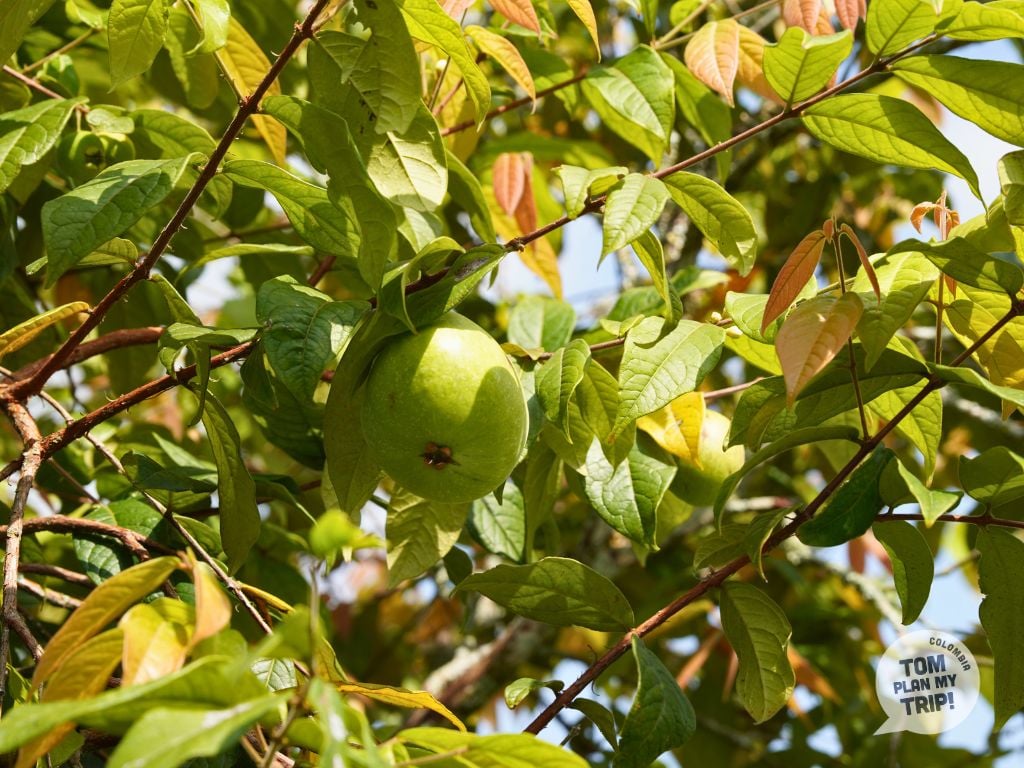
The arazá is a fruit from the Amazon jungle, recognizable by its tropical, powerful, and captivating scent — one of the most intense there is.
With a vague resemblance to guava, this round and bright yellow fruit hides a white and creamy pulp, very acidic, making it practically impossible to eat raw. It grows in the departments of Caquetá, Putumayo, and Amazonas.
It’s in juice, in well sweetened water, that it reveals its full personality: the acidity fades, the fragrance explodes — aromatic, refreshing, unforgettable.
Rich in vitamin C, calcium, and iron, it is used by the Amazonian indigenous communities for its anti-inflammatory and healing properties.
If you pass through Puerto Nariño in the Amazon, don’t forget to try an Araza ice cream, one of my favorite flavors.
EL ZAPOTE
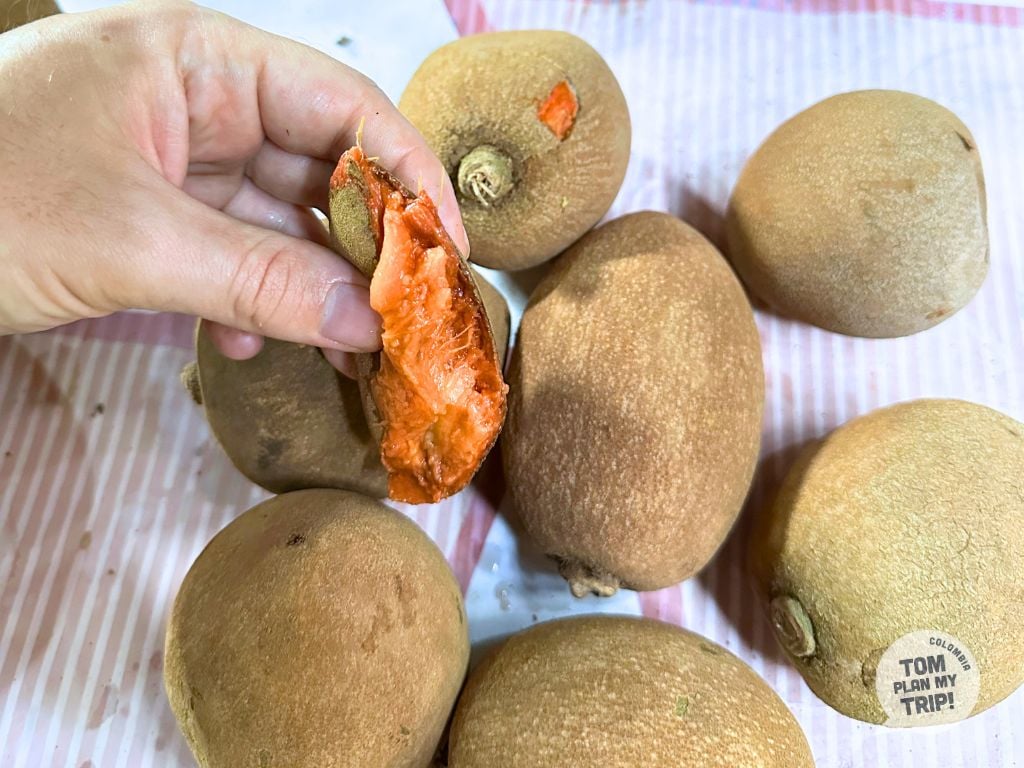
With its brown, rough skin, sometimes covered with small scales, this large fruit doesn’t exactly inspire – until you open it.
Inside, a bright orange, melting, creamy flesh with a sweet fragrance reminiscent of sweet potato and ripe apricot. On the palate, it’s generous, very sweet, almost caramelized.
Growing on a huge tropical tree, it is cultivated on the Colombian Caribbean and Pacific coasts, as well as in the warm areas of the inter-Andean valleys. It is mainly consumed as a juice in milk — a thick, sweet, and filling drink.
Rich in vitamin A and fiber, it is renowned in traditional medicine for its benefits on digestion and vision.
EL BOROJO
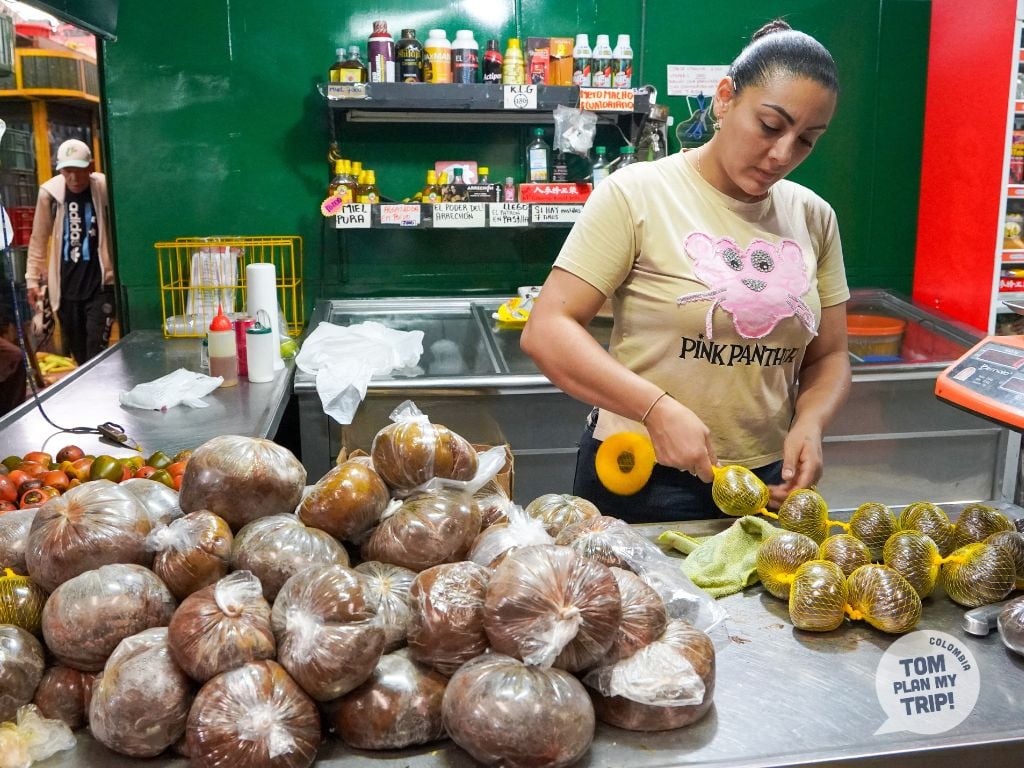
The borojó, a fruit with a reputation and a strong character.
Round, dark brown when ripe, it hides a thick and dense pulp, brown-orange in color — not very appealing.
This fruit, with a look not very glamorous, is nevertheless nicknamed “jugo del amor” — the juice of love —; it is credited with aphrodisiac virtues that have made its legend well beyond the Chocó, its region of origin.
Its taste, powerful and slightly fermented, makes it an atypical juice: full-bodied, intense, far from the sweet flavors of classic tropical fruits. It is consumed as juice, in milk to soften its character, sometimes with water and sugar.
The Afro-Colombian and indigenous communities of the Pacific use it in traditional medicine as a tonic and restorative due to its exceptional richness in proteins, phosphorus, and vitamin C.
EL ALGAROBO
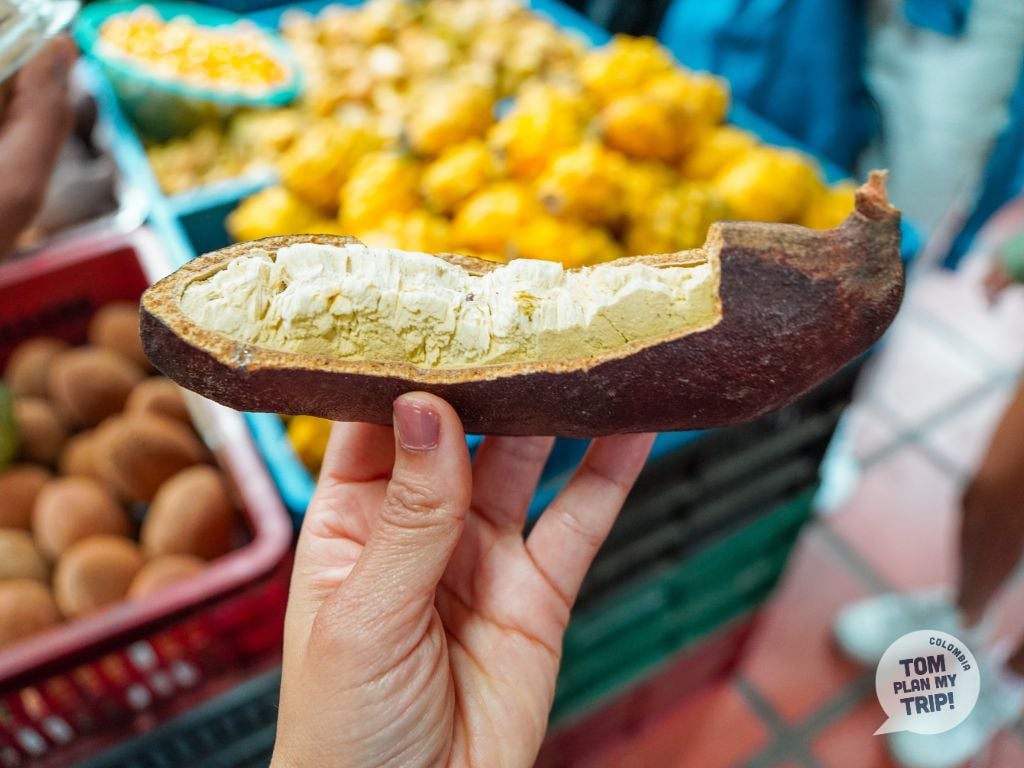
The algarrobo, a fruit that doesn’t look like much, yet is full of surprises.
It’s a fruit with a strong smell — Colombians actually call it “pecueca”, which means “bad foot odor“. Not very appealing 😉
From the outside, this long, light brown pod, when ripe, isn’t really what you would think of as a tropical fruit. But inside, a floury and slightly sweet pulp reveals unexpected notes of caramel and cocoa.
An emblematic fruit of the arid zones of the Colombian Caribbean coast, it grows in the departments of Magdalena, Córdoba, and La Guajira, where it is deeply rooted in the culture of the Wayúu communities.
It is mostly consumed with milk; it makes a sweet, thick, and nourishing drink. Working with the fresh fruit is a bit laborious; it is also available in powder form, convenient for making juices directly.
In traditional medicine, it is used for its digestive and energizing properties. Rich in fiber, protein, calcium, and natural sugars, it’s a discreet fruit with remarkable nutritional qualities.
EL NÍSPERO
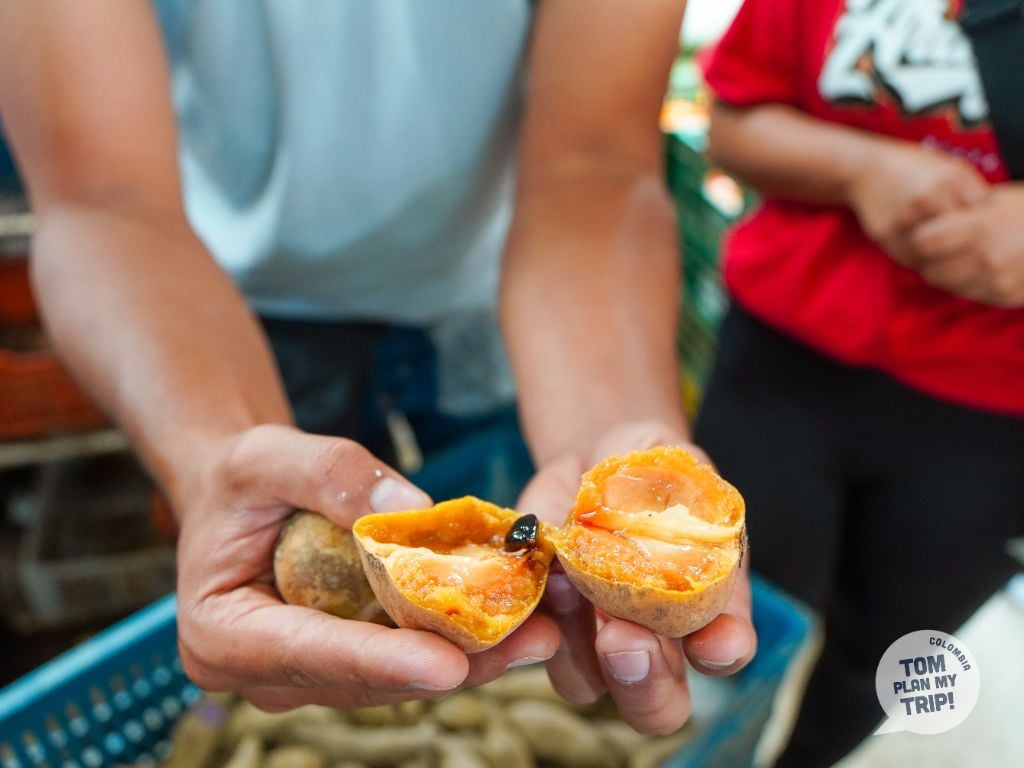
The loquat is a small delight that one eagerly bites into while strolling through a Colombian market.
Small, round, with a brown-orange color when ripe, its thin and smooth skin hides a tender, sweet, and slightly grainy flesh, with hints of caramel and honey.
Primarily cultivated on the Caribbean coast and in the warm areas of the inter-Andean valleys, it is mainly found in the departments of Bolívar, Córdoba, and Magdalena.
In juice, with milk or water, with a bit of sugar, it makes a sweet and velvety drink.
In traditional medicine, its leaves are used for their anti-inflammatory properties and to regulate blood pressure. It is also rich in vitamin C, fiber, and antioxidants.
EL COPOAZU
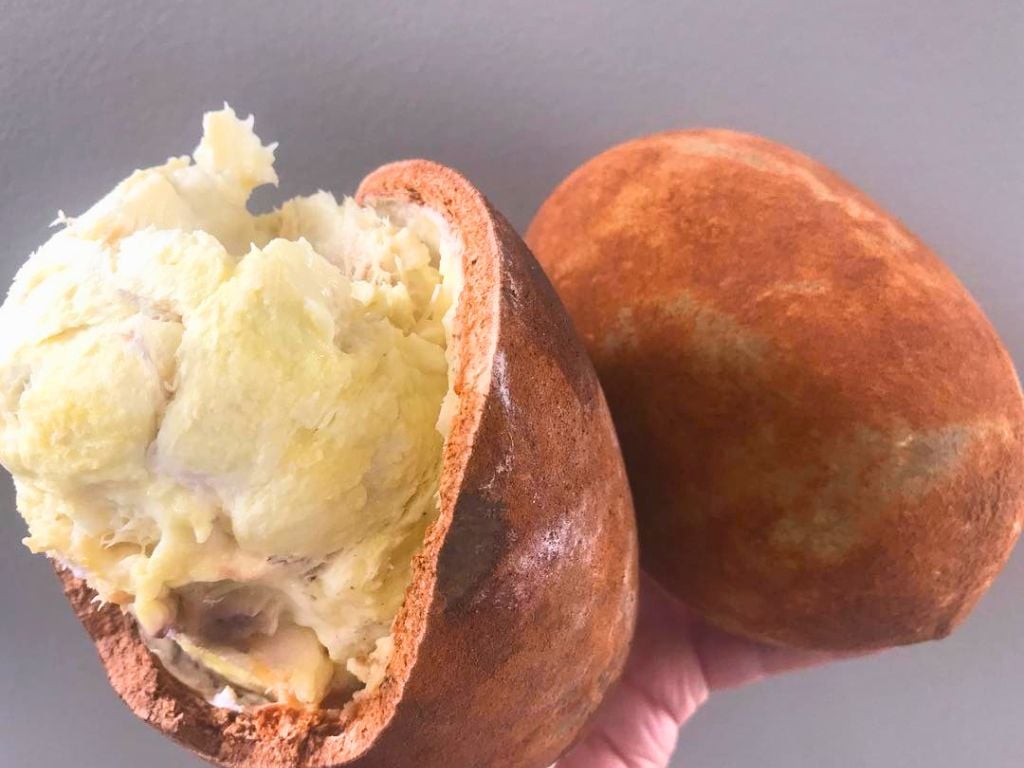
The copoazu is the best-kept secret of the Colombian Amazon.
Cousin of the cacao, with which it shares the same botanical family, this imposing fruit hides beneath its brown, hard, and velvety shell, a white and creamy pulp with an extraordinary fragrance: white chocolate, pineapple, ripe pear — a unique tropical bouquet.
Grown in the departments of Caquetá, Putumayo, and Amazonas, it is mostly consumed in juice with water well sweetened — an aromatic and refreshing drink out of the ordinary.
Its seeds produce a vegetable butter prized in cosmetics. Rich in pectin, vitamin C, and antioxidants, it is used by indigenous communities for its digestive and energizing virtues.
When I make a stop at Puerto Nariño in the Amazon, I never miss going to enjoy a copoazú ice cream — another of my guilty pleasures.
EL CAMU CAMU
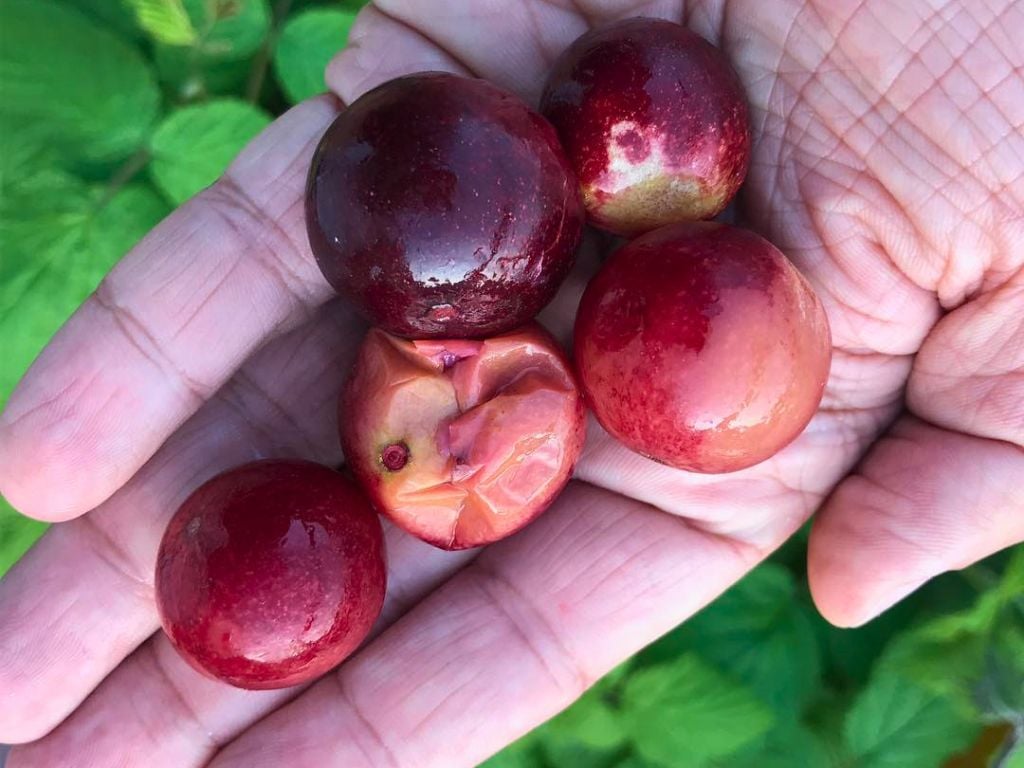
If vitamin C had an all-category champion, it would be it! Camu camu is a true vitamin C bomb — up to 40 times more than an orange.
It is a small red-purple berry, no bigger than a plum, growing on shrubs in floodable areas of the Colombian Amazon.
A subtle fragrance and an unassuming appearance that hide a formidable acidity. Impossible to bite into it as is: it’s like biting into a concentrated lemon.
It is consumed only as juice, in sugary water, and sometimes, with a splash of coconut milk to soften it a bit more. This creates a slightly tangy, fruity drink full of benefits.
The indigenous communities of the Amazon already used it as a natural tonic and anti-inflammatory, and even as a substitute for lemon in cooking.
EL TAMARINDO
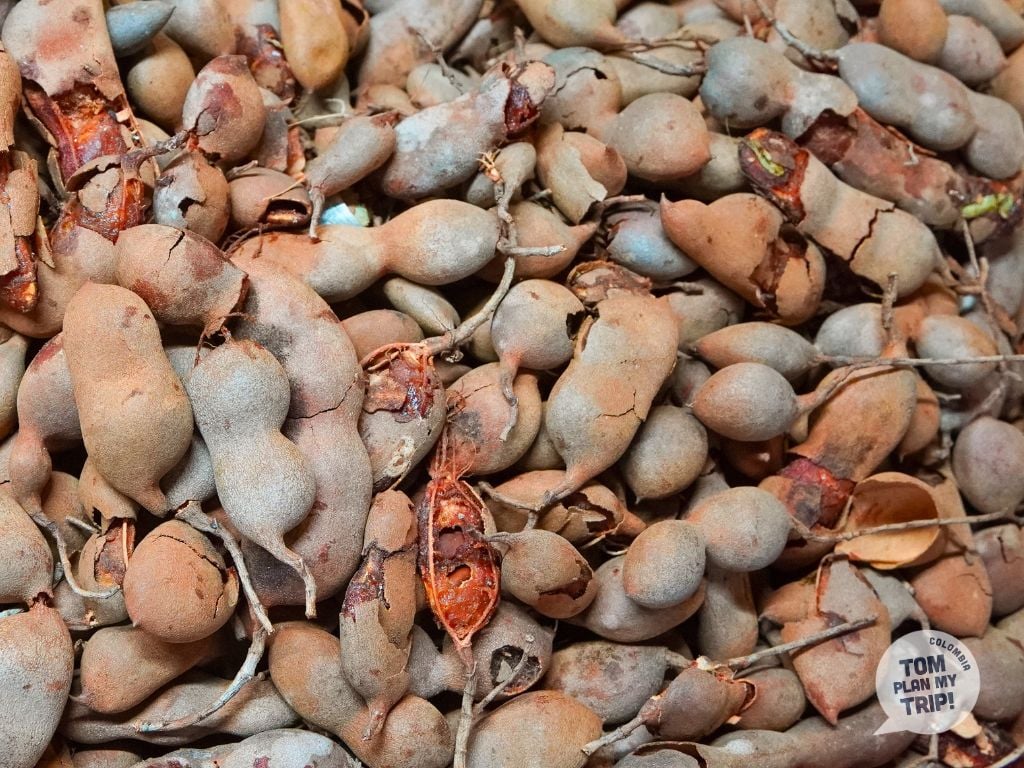
The tamarindo is a traveler.
Originally from Africa, it crossed the oceans aboard Spanish ships in the 16th century and thrived in the tropical regions of America. In Colombia, it grows on the Caribbean coast up to La Guajira.
Its brown, crunchy, and bumpy pod — like a large peanut — hides a sweet and sour, dense, and fibrous pulp with a warm and captivating fragrance. When ripe, it becomes sweeter and almost caramelized; when green, it is frankly acidic and biting.
It is mainly consumed as juice, in water that is well sweetened; it is one of the most refreshing drinks on the coast, with a round and fruity acidity.
Rich in fiber and B vitamins, tamarind is also known as a natural laxative and digestive aid — local communities have long used it to relieve gastric disorders and fever.
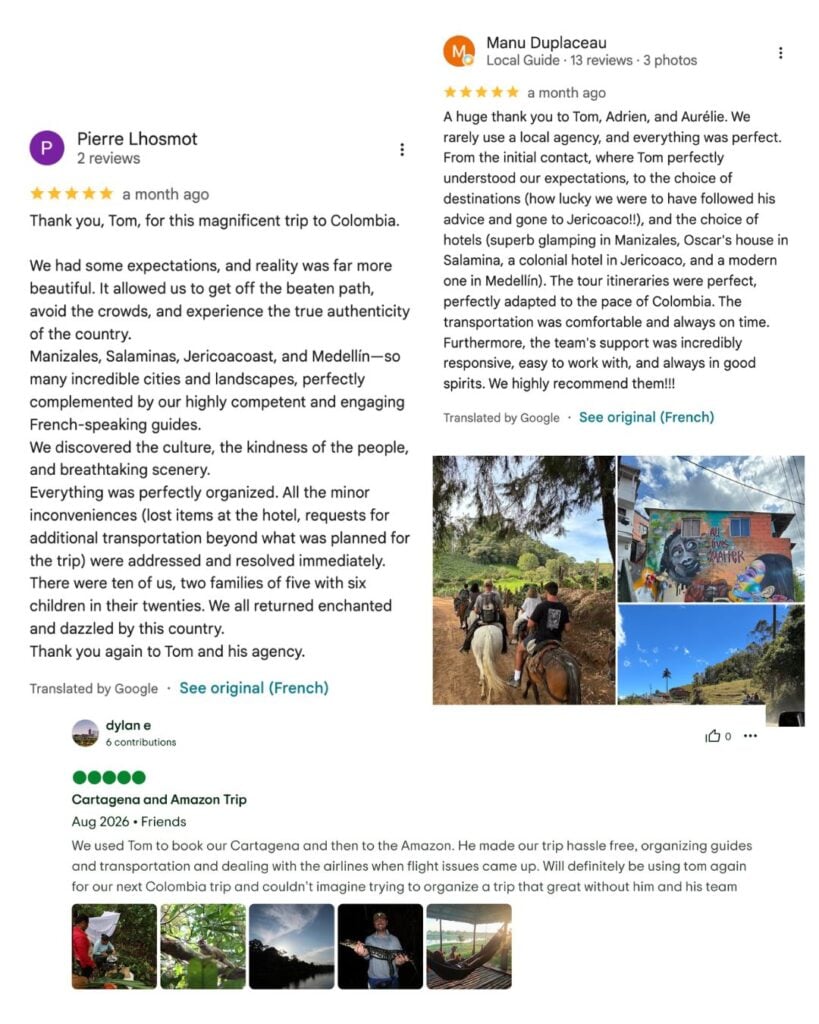
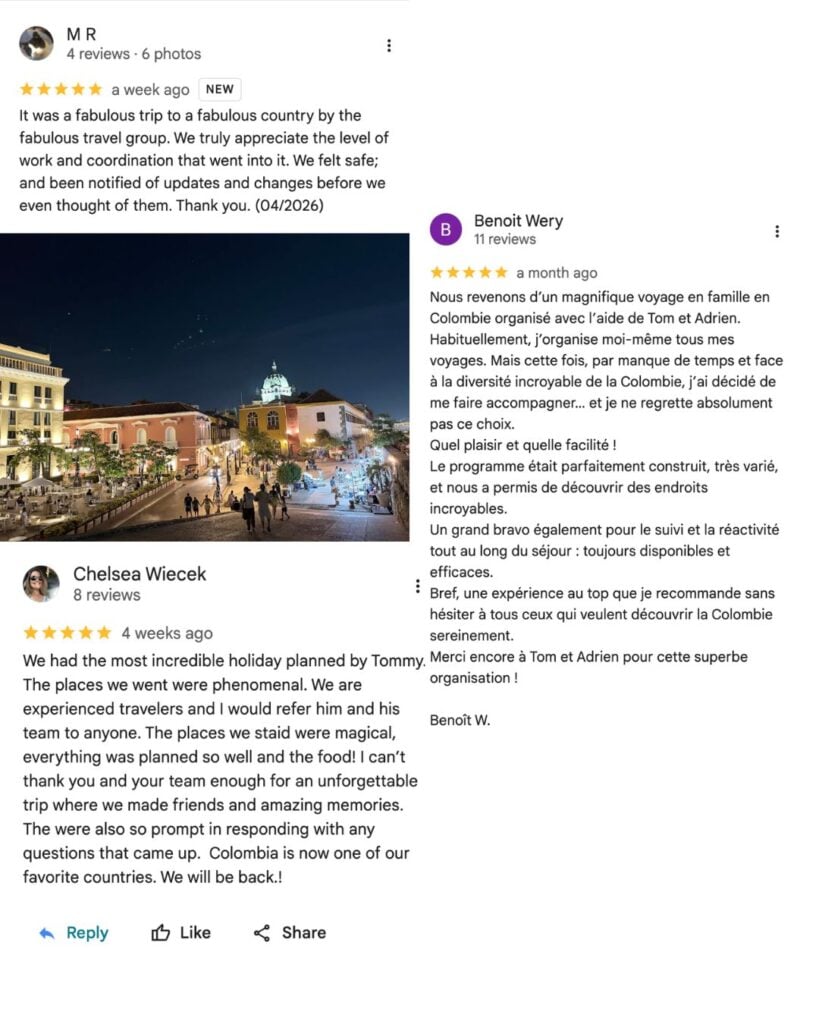
+185 five-star reviews on Google Maps



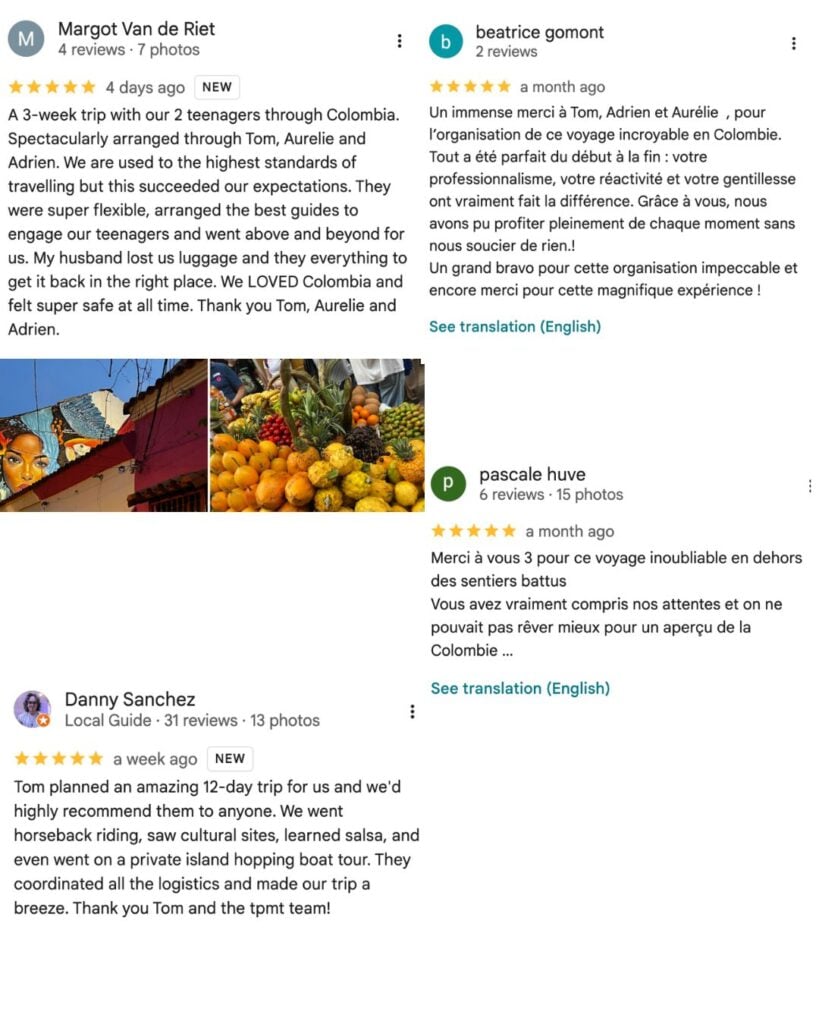

The solution for a successful Colombia trip
“Usually, I don’t go through a travel agency. But for Colombia, I needed help — and this agency transformed my experience in this country.”
That’s the kind of comment you’ll find most often in our reviews (we’ll let you read them 😉).
Let’s explore together for a quality, one-of-a-kind trip that lets you truly connect with the country:
- Undiscovered Colombia — adventures off the beaten path
- Easy Colombia — stress-free, fully comfortable
- Premium Colombia — high-end that stays authentic
What type of trip suits you?
Every trip is unique, but you might see yourself in one of these themes.

EASY
Colombia stress-free, comfortable and at your own pace — Say goodbye to vacations that leave you drained. We design a trip where every day is a pleasure, balancing exploration and relaxation.

PREMIUM
Premium journeys through the heart of Colombia — Comfort, character, authenticity. You shouldn’t have to choose between a luxury experience and a genuine connection with the country. We give you both.
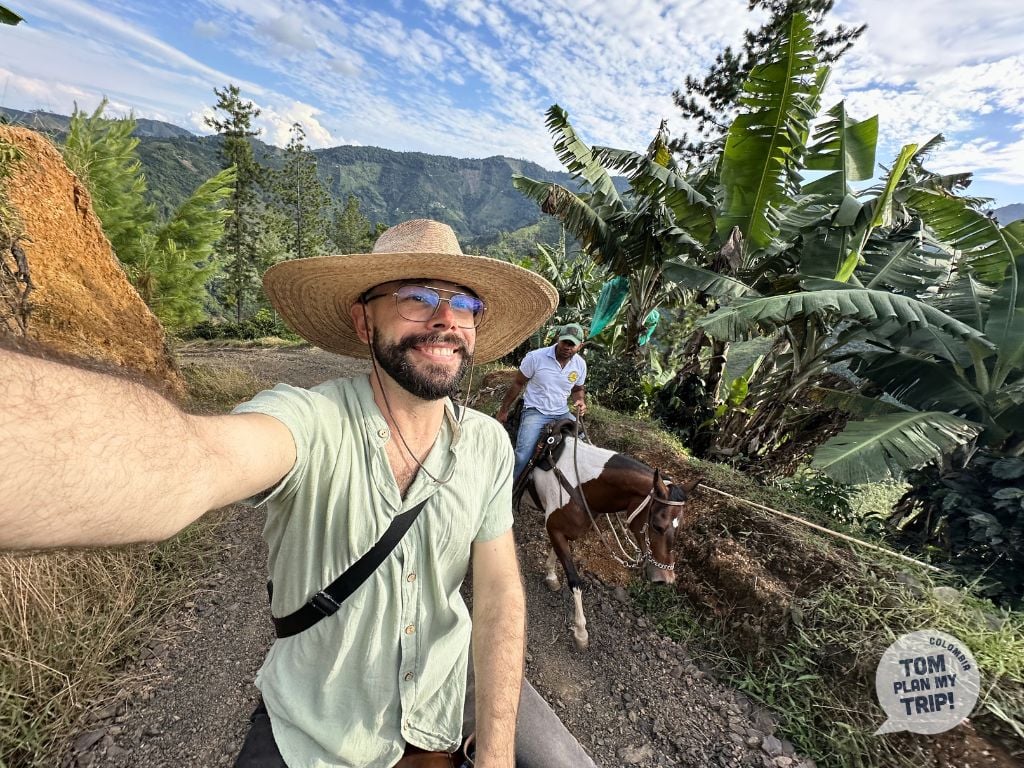
HIDDEN
The Colombia beyond the tourist trail — We don’t take you on a tour of Colombia. We immerse you in it, sharing unforgettable moments with your loved ones in stunning places you’d never have discovered on your own.
Learn moreWhat our clients say






Colombian Food
Select a Region of Colombia


Western Caribbean Coast
Colombian Destinations Listed Alphabetically
Places from A to I
Places from J to P
Places from R to Z
Follow us on Instagram!


Our secret to actually enjoying your Colombia vacation
Colombia is twice the size of France. There’s no point trying to see it all in 15 days. Our trips distill 11 years of boots-on-the-ground exploration into the essentials: the very best of the country, without the stress of racing around.
