
Colombian Street Food: A Gourmet Heritage

Editor
Last updated
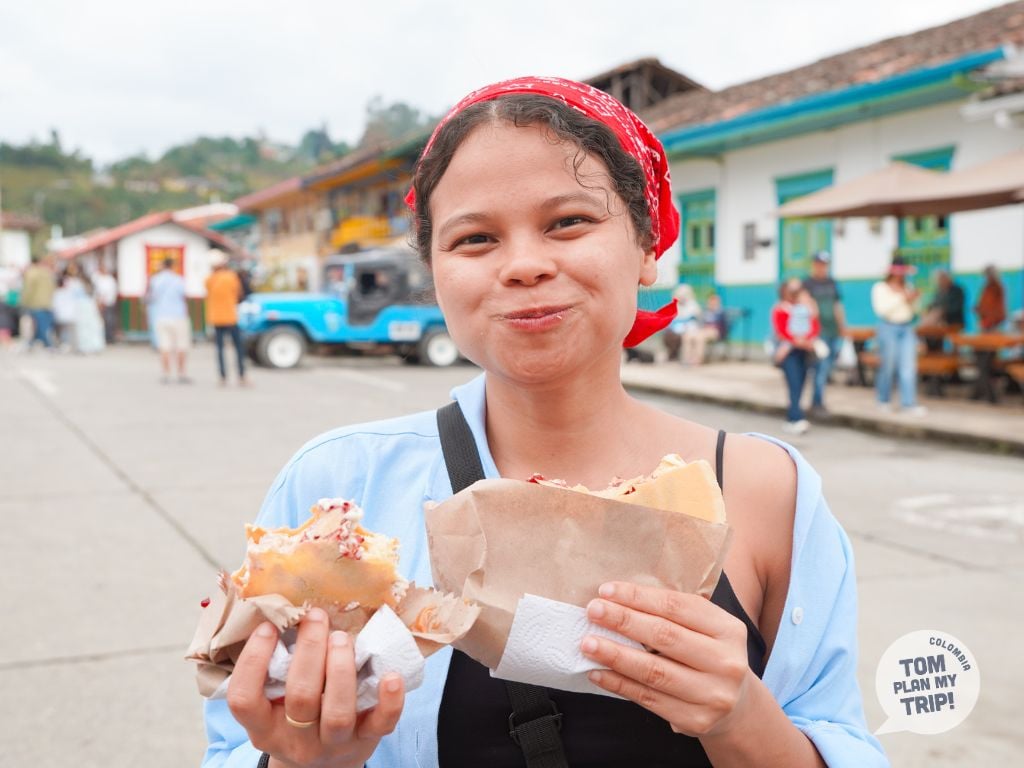
If, like me, you think a country is also visited through its gastronomy, then Colombian street food is a great way to discover Colombia.
Rooted in the daily life of Colombians, it is generous, colorful, bursting with flavors, and an assumed and contagious indulgence — enough to create beautiful memories during your adventure.
I’m taking you on a sensory and gourmet tour to help you navigate the culinary richness of Colombian street food.
We constantly explore Colombia to find what’s truly worth it — authentic places, stays and experiences, far from tourist traps. Then we build your ideal trip in a logical and optimized way, so you make the most of it, without rushing everywhere, truly connected to the country.
→ About us | ⭐⭐⭐⭐⭐ + 185 reviews | → Our service

- In Colombia since 2015
- + 1025 tested experiences
- + de 145 local partners
- + 335 trips created


COLOMBIAN STREET FOOD: WHAT YOU NEED TO KNOW
Generous, indulgent, and friendly
HOW TO DISCOVER AND ENJOY COLOMBIAN STREET FOOD
Like a true Colombian.
The best guide to Colombian street food is the Colombian himself — and your flair.
Spot the stalls and street vendors surrounded by people: it’s a sure sign.
Favor peak hours: morning for empanadas, noon for savory dishes, evening for sweets or a salchipapa with friends.
The covered markets are a safe bet — Medellín, Cali, Bogotá, each city has its own, lively and noisy. But don’t overlook the village markets, often on Saturday or Sunday: that’s where street food is the most authentic, the most rooted in local traditions.
Forget the overly touristy areas: the real Colombian street food is found in an ordinary alley that smells of frying oil, spices, and warm sugar.
And if you’re hesitating between two stalls, choose the one where the señora is cooking in front of you. Freshness guaranteed, authenticity assured.

Colombian street food has some codes that are good to know.
You eat standing up, you pay in cash, and you don’t fuss over the paper napkin. If you don’t know how to say what you want in Spanish, point — no one will hold it against you.
The portions are generous, the prices are those of Colombians — don’t negotiate, it would be inappropriate and unjustified.
The lady who has been cooking in front of you since dawn knows her recipes by heart; she welcomes you with a smile that is worth all the menus in the world. She will be delighted if you greet her with a friendly “Hola, ¿cómo estás?” (Hi, how are you?)
If you are focused on hygiene, don’t worry: trust the most lively stalls. A line is the best indicator of freshness there is. In Colombia, the street has been feeding the whole country for generations — enjoy!
At Tomplanmytrip, we are convinced that discovering cuisine while traveling is one of the most pleasant and sincere ways to understand a country’s culture — and eating on the street in Colombia is one of the most authentic approaches.
Tasting Colombian street food is not a side activity of the trip, it’s a sensory and cultural immersion that can quickly become addictive.
That’s why it occupies a natural place in the itineraries we coordinate for our clients. Depending on your destinations, we will suggest you stop at a pasteles stall in the Bazurto market in Cartagena, snack on a warm pan de bono in Jericó, give in to the call of a street vendor in the streets of Medellín, or end a day of hiking with a maracuyá juice and a grilled arepa by the roadside.
Simple moments, often improvised — but always among the most memorable of the trip. Want us to organize yours? We’ll take care of it.
© Tomplanmytrip
Breathe, and let us take care of this beautiful adventure
Colombia is twice the size of France, with a diversity of landscapes that’ll make your head spin — and a real logistical puzzle, with roads winding through the Andes mountains.
What kind of adventure do you want to live? Is it really right for what you’re looking for? Is it safe? Is it too touristy?
Guessing and hoping you made the right call — sometimes that works. But not always.
And I won’t even get into the stressful surprises that force you to make some changes mid-trip.
Look, we’ve been doing this for years — and if you check our reviews, you’ll see we know what we’re doing. In less than an hour on a call, we figure out your ideal destinations together. We handle the rest.

© Tomplanmytrip
Colombian Street Food: A Gourmet Heritage
In Colombia, eating on the street is a given.
From a grilled arepa in the early morning to a salchipapa enjoyed after midnight, and a fresh cóctel de camarón under a blazing sun, Colombian street food is everywhere, at any time, for all budgets.
It is comforting, unpretentious, often excessive — and terribly addictive. Every city has its specialties; every vendor has his recipe.
TOM’S ADVICE
Take a look at our inspiration page to get ideas for discovering Colombia through its landscapes and culture, and if you’re interested in cuisine, read our article on Colombian food.
Don’t hesitate to contact us to help you organize your next trip to Colombia.

Sauces, the soul of Colombian street food
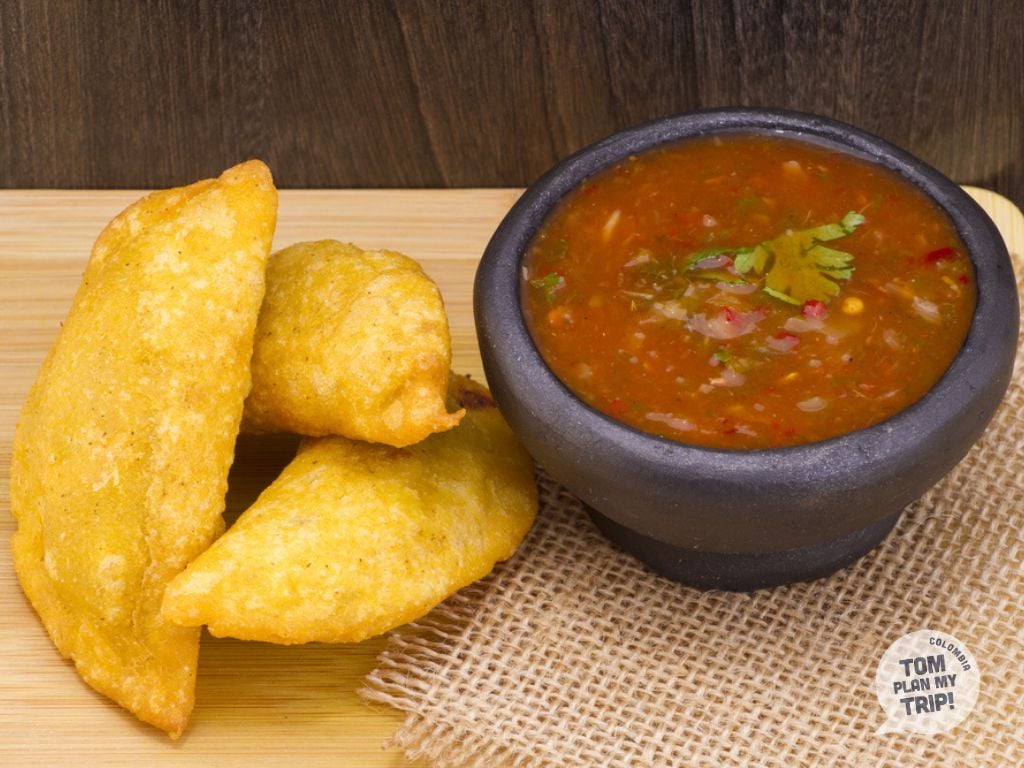
The secret of Colombian street food often lies in the sauces. They are what give a street dish its character, transforming a simple snack into a true taste experience.
LA SALSA DE AJO
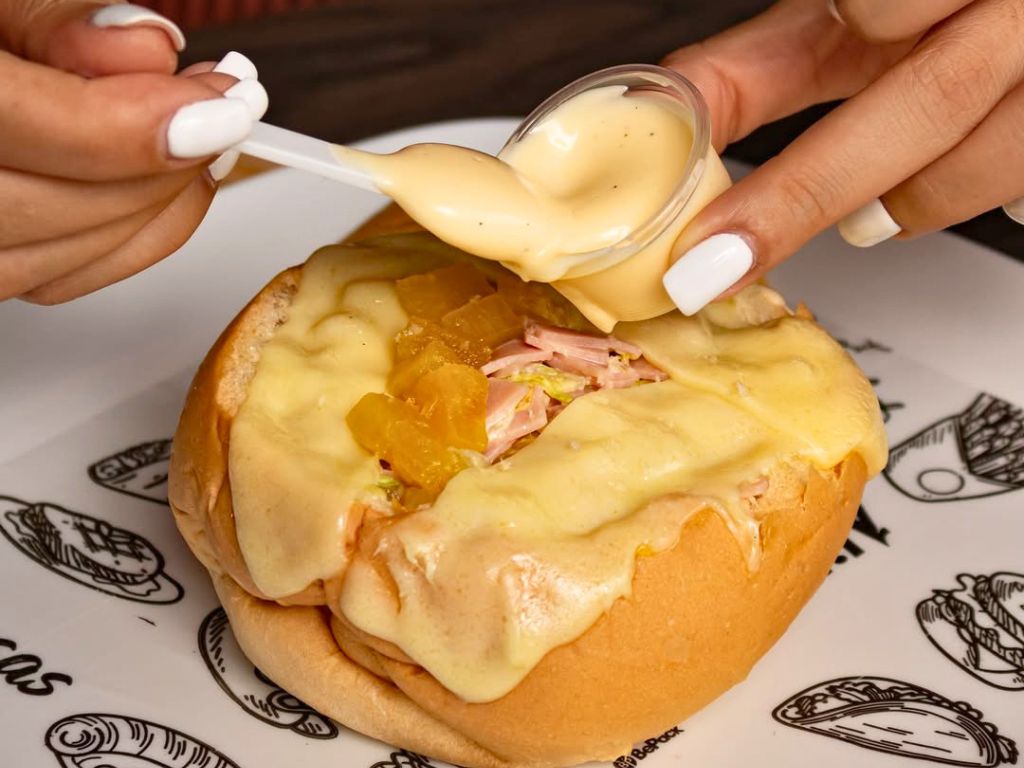
A strong smell of garlic, a creamy and smooth texture — salsa de ajo is one of the essential sauces of Colombian street food.
Made of mayonnaise, fresh garlic, lime juice, and sometimes cilantro, it is easy to prepare and goes with just about anything: patacones, fries, arepas, empanadas, or grilled meats.
Simple, generous, and downright addictive, it can be found on street stalls all over the country.
EL CHIMICHURRI
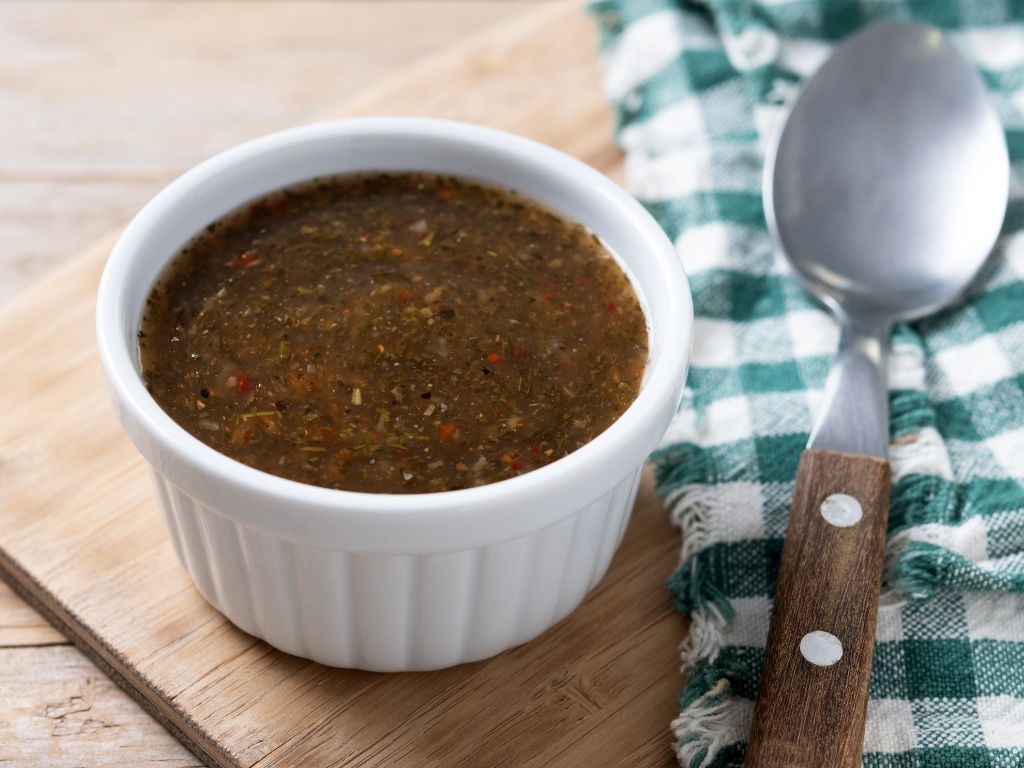
An intense green color, a typical smell of fresh herbs and vinegar: chimichurri is easily recognizable.
Made of parsley, garlic, oil, vinegar, and green onion, Colombian chimichurri stands out from the Argentine version by the addition of cilantro and sometimes cumin, two essentials of Colombian cuisine.
In the mouth, it’s fresh, slightly tangy, with a nice herby roundness.
It is mostly found on fritanga stands, an assortment of grilled or fried meats and offal, and in asaderos (street grills), generously drizzled over grilled meats.
EL GUACAMOLE
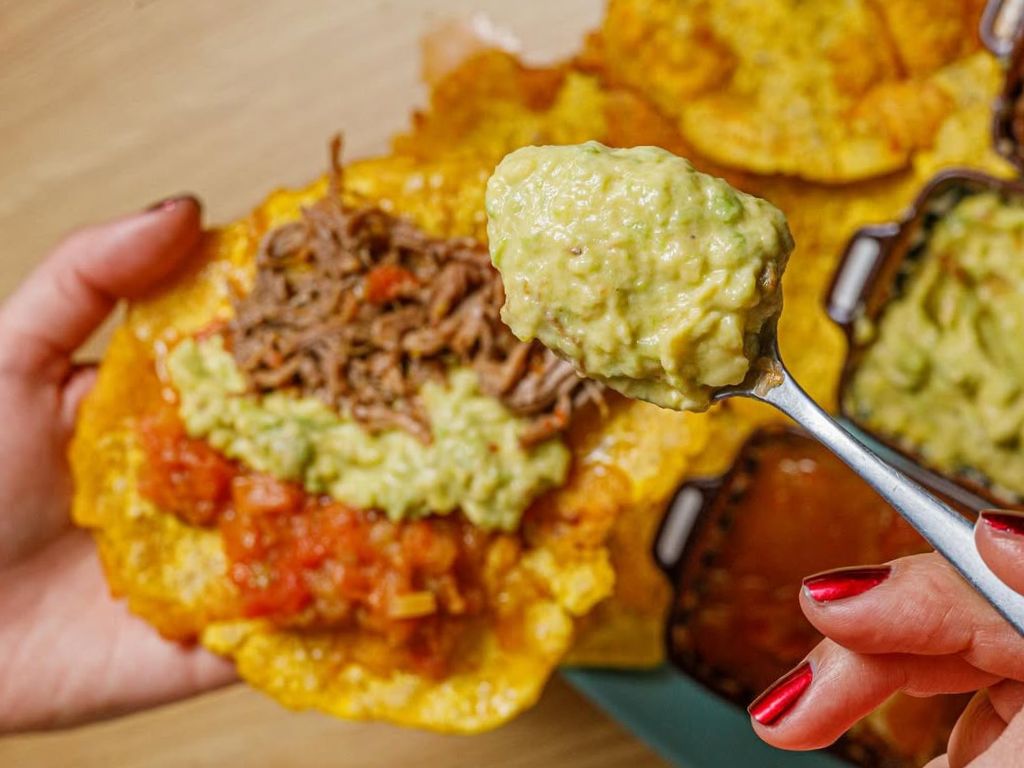
In Colombia, avocado is king — and guacamole is its finest expression in street food.
Mashed with a fork with tomato, onion, cilantro, and a squeeze of lime, it retains a generous texture, slightly lumpy, far from the overly smooth versions found elsewhere.
In the mouth, it’s smooth, slightly tangy, with that typical roundness of Colombian avocado.
You can find it everywhere in the country, slipped into an arepa or served as a side with a fritanga. On a patacón still warm and crispy, it’s one of the simplest and most successful combinations of Colombian street food — I love it.
EL AJI CASERO
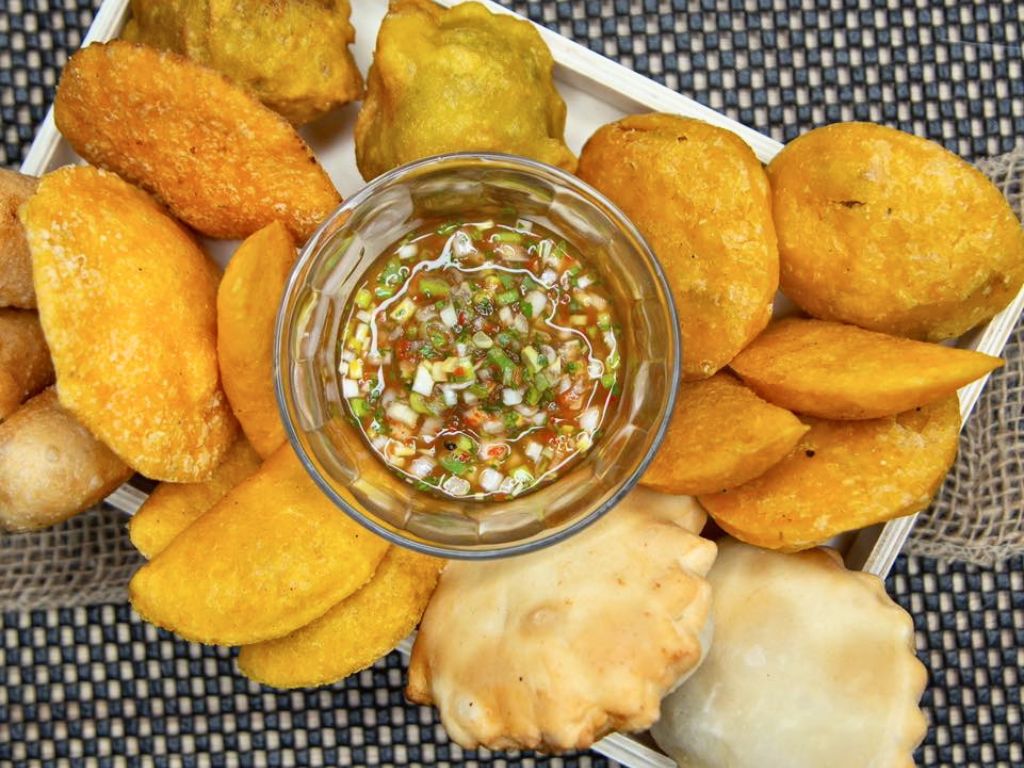
Not a street food stand in Colombia without a jar of Ají casero.
This sauce, found in every home in Colombia, is made of fresh peppers, cebolla larga (onion), cilantro, tomato, vinegar, and lime, all finely chopped and never cooked.
Its herby and tangy aroma tickles the nostrils; its taste is lively and fresh, slightly spicy — everyone adds it to their liking.
Each vendor has their version, each region its character — milder on the coast with ají dulce, more robust in the Andes with rocoto (hot pepper).
It accompanies empanadas, arepas, patacones, and meats. In reality, it accompanies everything, and it’s often the touch that makes the difference.
LA SALSA DE MAÍZ
Pale yellow and creamy, with the sweet and sugary aroma of corn, corn salsa is one of the most original sauces in Colombian street food.
Made of sweet corn, mayonnaise, sometimes fresh cheese, and a hint of lime, it is both smooth and slightly sweet, with a sweetness that contrasts pleasantly with the spiciness of other sauces.
A more subtle option than mustard and ketchup, it is mainly found on hot dogs and hamburger stands, generously drizzled over the sausage.
LA SALSA ROSADA
Two ingredients, mayonnaise and ketchup, and a color, pink — salsa rosada has become, over time, a true marker of Colombian street food.
Each street vendor adds their own personal touch: lime, mustard, paprika, cream, and pickles.
A delicate smell, slightly tangy, and a creamy, smooth texture — you recognize it immediately. On the palate, it’s round, subtly spiced, with a sweetness that pairs with just about everything.
It accompanies empanadas, patacones, hot dogs, arepas, fried chicken, salchipapas, without ever masking the flavors.
Typical savory dishes of Colombian street food
Colombian street food is a generous, colorful, and addictive way of life.
LA AREPA DE HUEVO

Originally from the Colombian Caribbean coast, between Cartagena and Barranquilla, the arepa de huevo is pure street food that requires quite a bit of skill.
A yellow corn cake is fried once, slit on the side to slip in a whole raw egg — the first feat —, then closed and plunged back into boiling oil. The seal must hold absolutely, otherwise the arepa explodes — second feat.
The arepa comes out golden, slightly puffed, and crunchy with every bite. Inside, the white is cooked, the yolk ideally still runny.
This iconic snack is clearly in my top Colombian street food and probably my favorite arepa.
LA AREPA DE CHOCLO
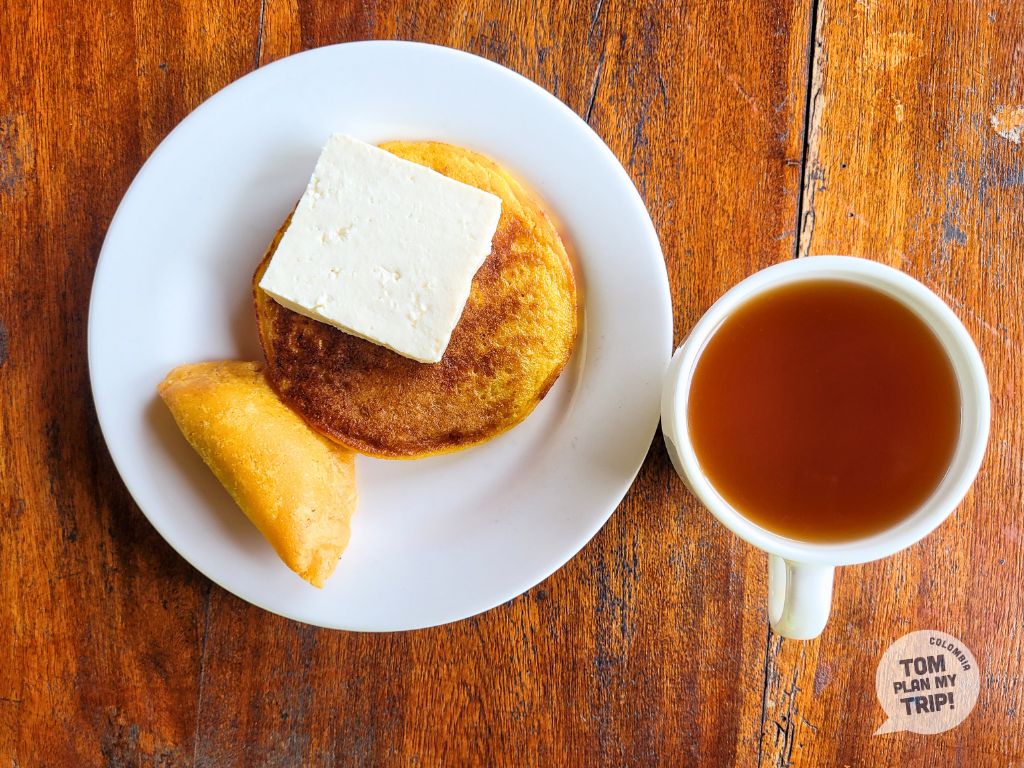
The arepa de choclo is the soft and delicious version of the classic arepa.
An essential part of street food and markets in the Colombian Andean region, it attracts with its sweet and buttery scent.
The arepa de choclo is made from tender ground corn, naturally sweet, cooked on the griddle until it has a golden crust and a soft center. The white cheese placed on top melts with the heat — a perfect contrast between the sweetness of the dough and the saltiness of the cheese.
Simple yet irresistibly delicious, I never refuse this comforting snack when I pass by a good stand.
LA AREPA PAISA
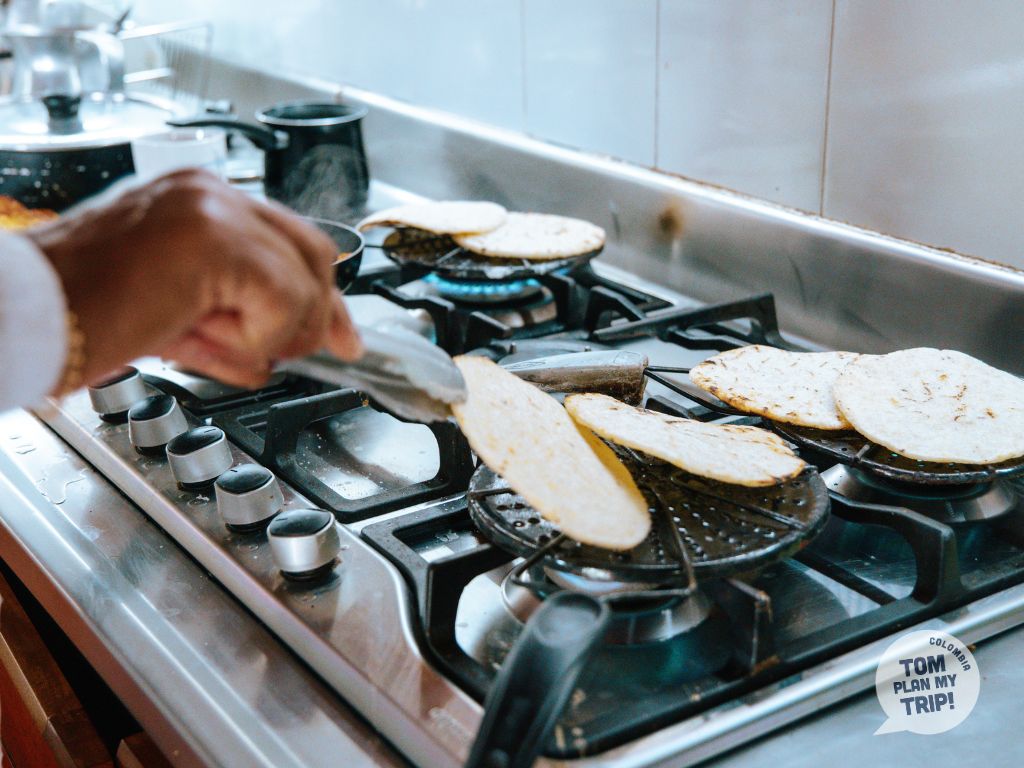
The arepa in its most classic — and most neutral — version.
On the sidewalks of Medellín or in any market in Antioquia, you see it everywhere — placed on the griddle, all round, all white, all simple.
The arepa paisa is the everyday arepa: white corn flour, water, a pinch of salt, grilled until slightly golden. No toppings, no filling, no fuss.
In Antioquia, it is essential for breakfast, accompanied by cheese and huevos pericos — well-seasoned scrambled eggs that give it all the character it lacks on its own.
Culturally unmissable, taste-wise… let’s say plain. I admit it’s not my favorite.
LAS EMPANADAS

It’s hard to get more Colombian than the empanada.
This corn dough pastry is enjoyed at any time, everywhere in the country, from the markets of Bogotá to the beaches of the Caribbean coast.
The thin and crispy dough wraps a generous filling — meat, potato, rice, egg — depending on the region, then is sealed in a half-moon shape and plunged into hot oil.
Outside, the surface is golden and slightly crispy; the inside is tender and well-seasoned.
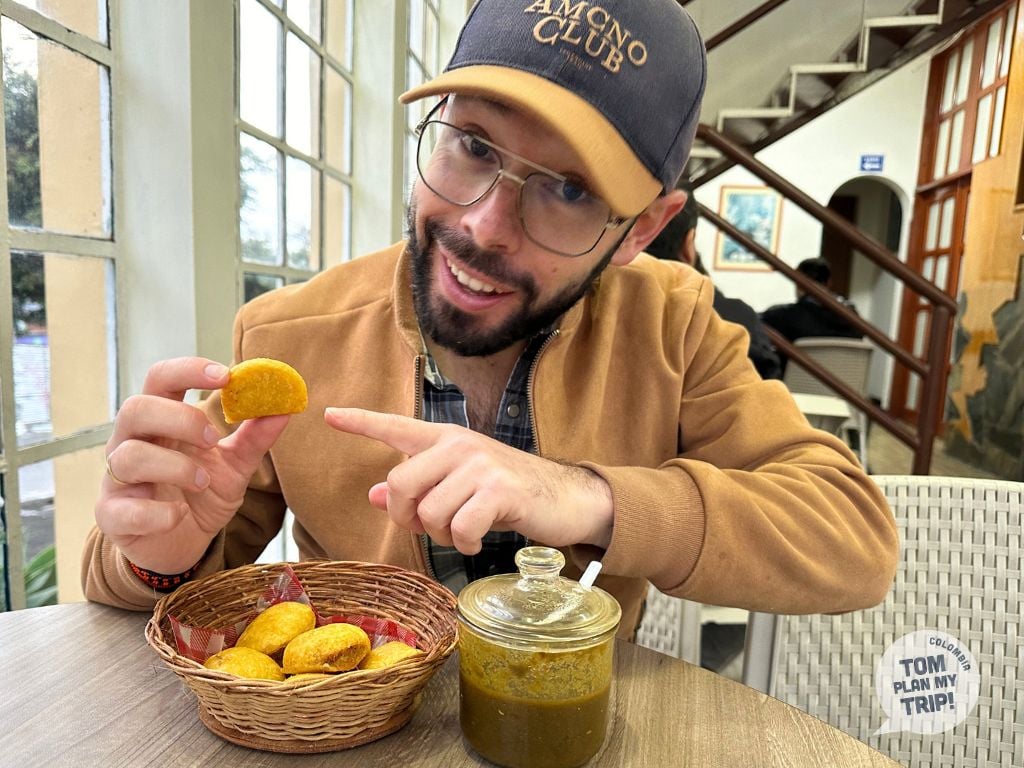
They are eaten by dipping them to taste in ají.
A classic of Colombian street food — I have my favorites all over the country.
LA CARIMAÑOLA
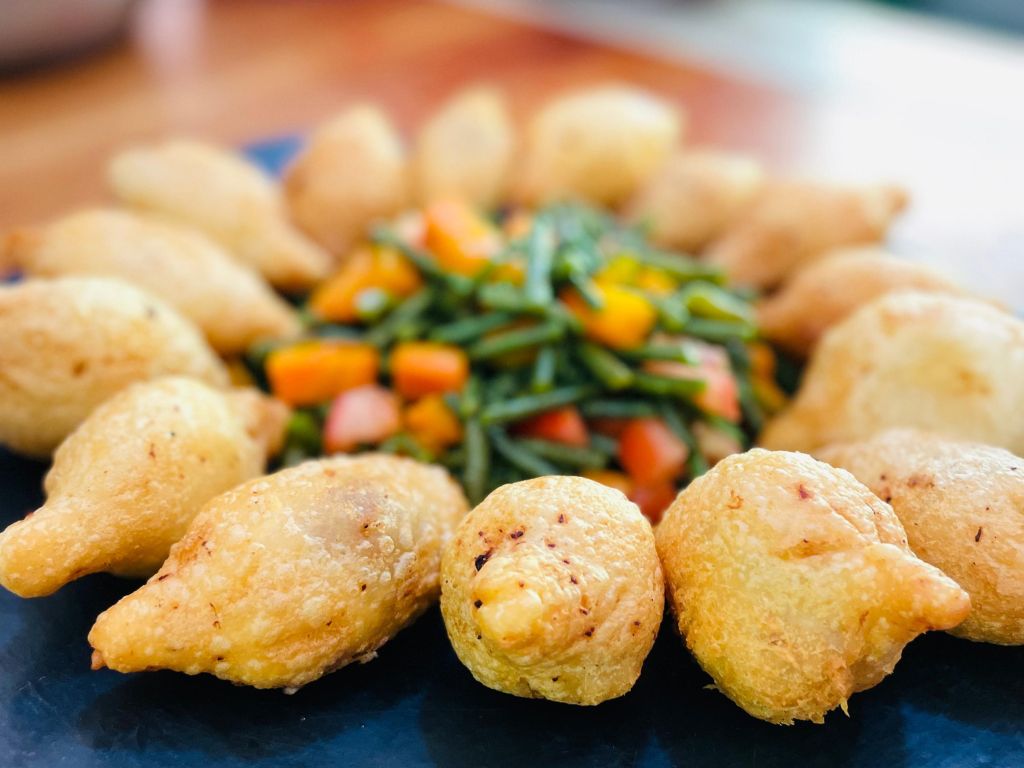
The carimañola is the Caribbean cousin of the empanada.
In its dough, corn flour is replaced by yuca flour, a classic white tuber of Colombian Caribbean cuisine.
Mashed and mushed, the dough is shaped into an elongated pastry, filled with a stuffing of spiced meat or cheese, then plunged into boiling oil until golden brown.
A must-try from street stalls all along the Caribbean coast, it is enjoyed piping hot, topped with suero costeño — a slightly sour and creamy fermented cream.
A crispy shell, a soft interior — generous and addictive. Definitely one of my top favorites of Colombian street food.
LA PAPA RELLENA
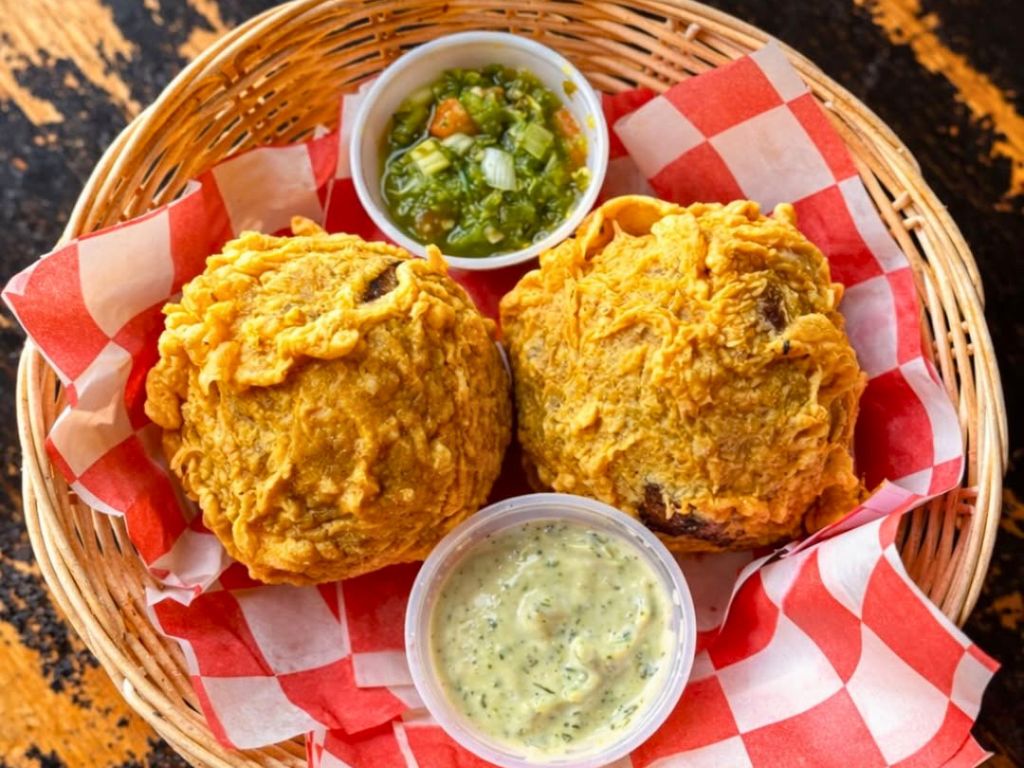
The papa rellena looks like a large, well-golden ball.
Originating from the high Andean plateaus of Peru, it traveled across the continent to become deeply rooted in Colombian street food.
The recipe is quite simple: well-seasoned mashed potatoes, hand-shaped and filled with a generous stuffing of spicy meat and hard-boiled egg, then fried until browned.
Crispy on the outside, soft on the inside — simple and incredibly delicious.
Adrien is an absolute fan — and honestly, it’s in my top too.
EL PASTEL DE POLLO
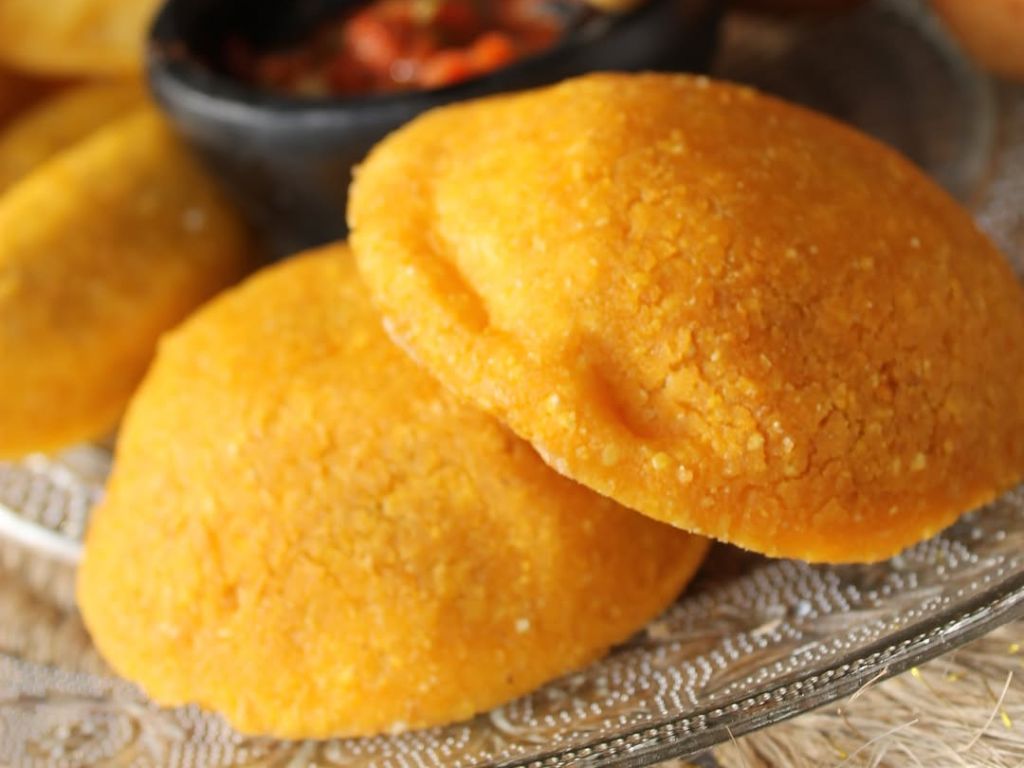
Plump and golden, it’s the quintessential street snack for all Colombians, young and old.
Probably inherited from the Spanish conquest, the pastel is the Colombian version of the Hispanic stuffed pastries, the round variant of the empanada.
A crispy crust filled with slow-cooked and shredded chicken, enhanced with tomato, onion, bell pepper, and cilantro, and of course, fried.
It’s eaten hot, with as much spicy ají as you like, for breakfast or as a snack — a discreet but unmissable classic of Colombian street food.
EL TAMAL

The tamal is a large parcel tied up in a bright green leaf.
A pre-Columbian heritage over 5,000 years old, this unusual snack is a bijao leaf, a tropical plant widespread in South America, containing a corn dough stuffed with meat — chicken, pork, or beef — with vegetables and spices. There are dozens of versions depending on the regions.
Steaming allows the bijao leaves time to gently flavor the corn dough — the result is hearty, fragrant, and deeply Colombian.
Nice, without being my favorite — I ate too much of it during my years as a guide in the San Blas Islands 😉
EL PATACÓN
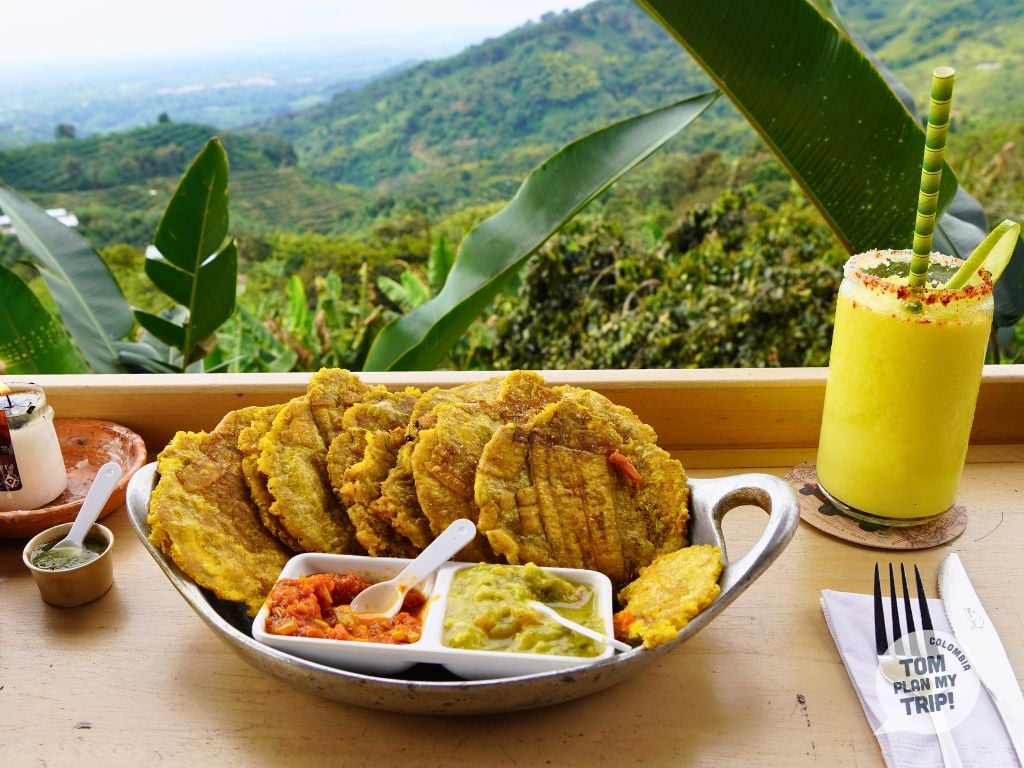
Born from the Afro-Caribbean heritage, the patacón is a staple at street stands all over the Colombian Caribbean coast and beyond.
It comes in the form of a plantain pancake — not the sweet plantain, the green, firm, and starchy one — fried once, flattened by hand, then dipped back in oil until well browned — crispy outside, tender inside.
You can enjoy it in a thousand ways, with guacamole, hogao or even chicharrones.
Personally, I prefer to eat it with crumbled queso costeño on top, this white cheese from the coast, firm and well salted, whose character perfectly contrasts with the plantain’s tenderness – a perfect match.
LOS DEDITOS DE QUESO
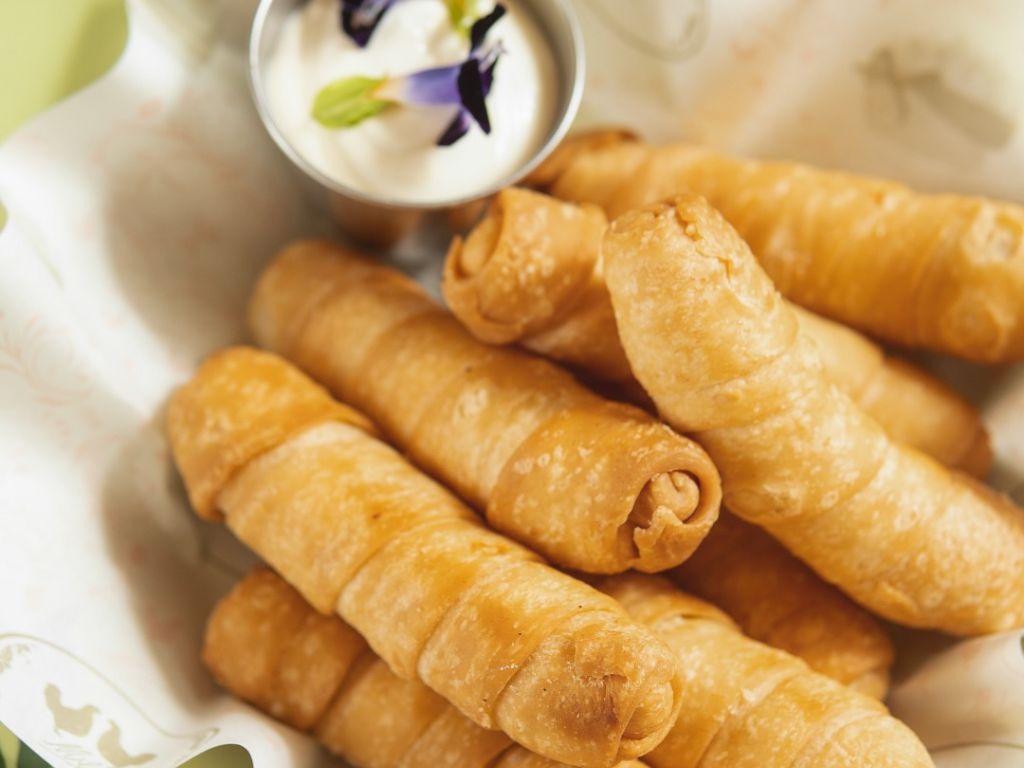
One of the most addictive snacks of Colombian street food.
This little classic from many world cuisines has perfectly found its place in Colombia. You can find them everywhere, in street bakeries, at markets, in school cafeterias.
Shaped like little fingers, deditos de queso are sticks of well-salted white cheese wrapped in a thin fried dough.
Inside, the cheese slightly melts and contrasts with the crispiness of the dough — crispy and golden, delicious while still hot — and when you add bocadillo (guava paste), it becomes the top of the top — hard to stop at just one 😉
EL BUÑUELO
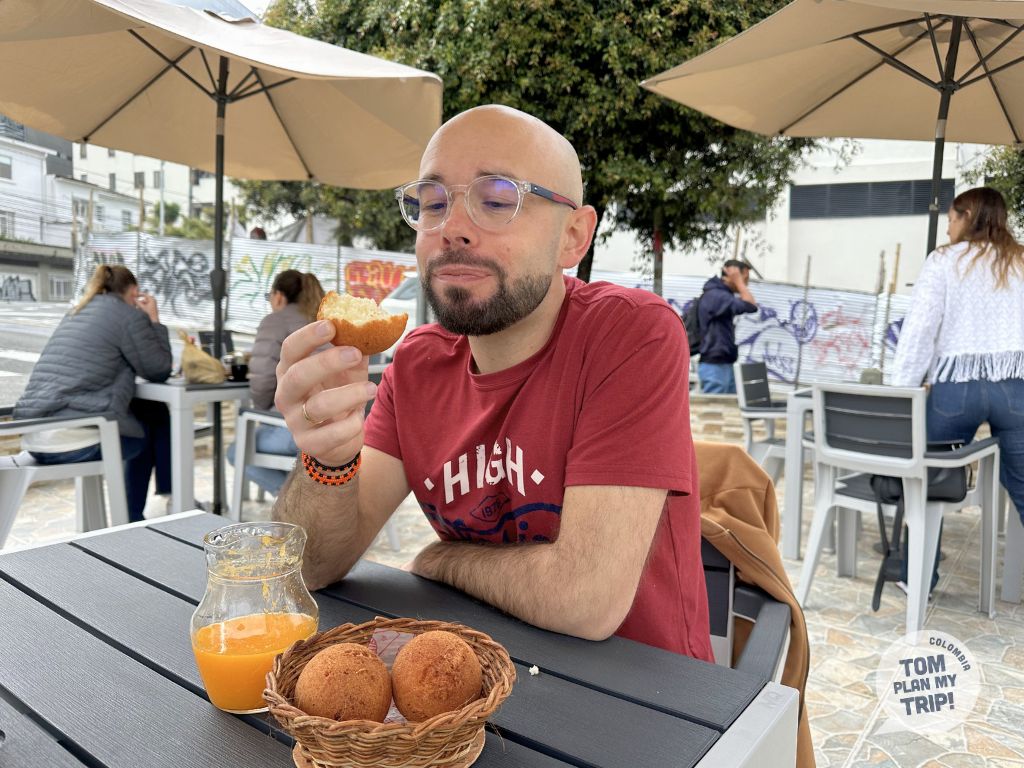
A very paisa snack adopted by all of Colombia.
Small golden ball, crispy on the outside, soft and slightly runny on the inside, the buñuelo is made from a mix of corn starch, yuca flour, and grated queso costeño, the salty cheese that gives it all its character.
Heritage of the Moors from Spain, arrived in Colombia with the colonization, it has become the essential snack of Christmas, accompanied by natilla, a sweet cream with cinnamon, even though it can be found year-round at Colombian street food stands.
A simple and warm classic that I never refuse.
EL PAN DE YUCA
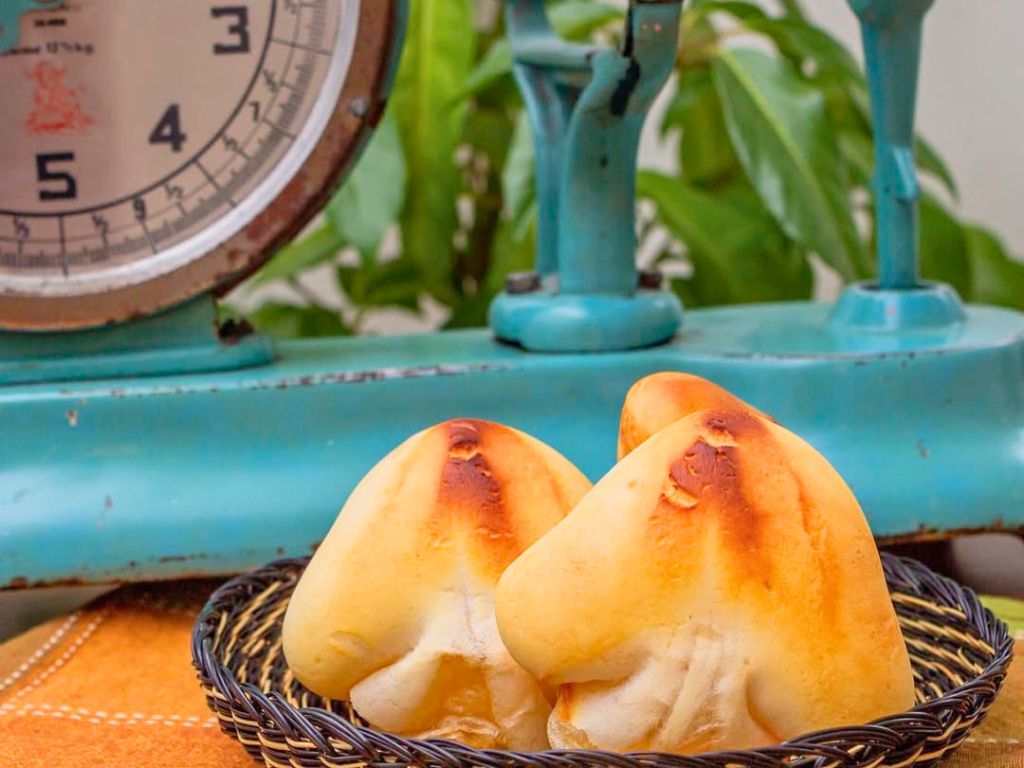
A simple and unpretentious snack of Colombian street food.
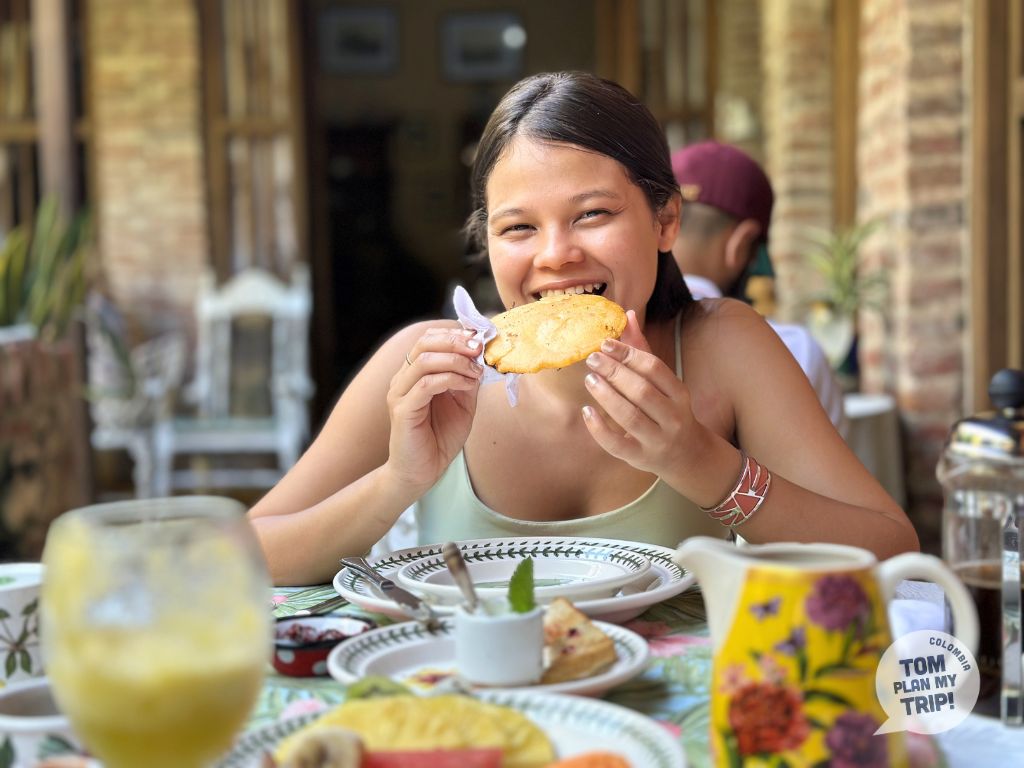
Small, round, and golden, pan de yuca is made of yuca starch and fresh cheese. It puffs up slightly when cooked, forming a thin and golden crust that hides a soft and slightly elastic center – I recommend eating it hot.
Inherited from the indigenous traditions of yuca and enriched with cheese during the colonial era, it is typical of the south of Colombia, particularly the Cali region.
It is crunched with coffee or hot chocolate, at breakfast, as a snack, or as street food – pleasant without being unforgettable.
EL BOLLO DE MAZORCA
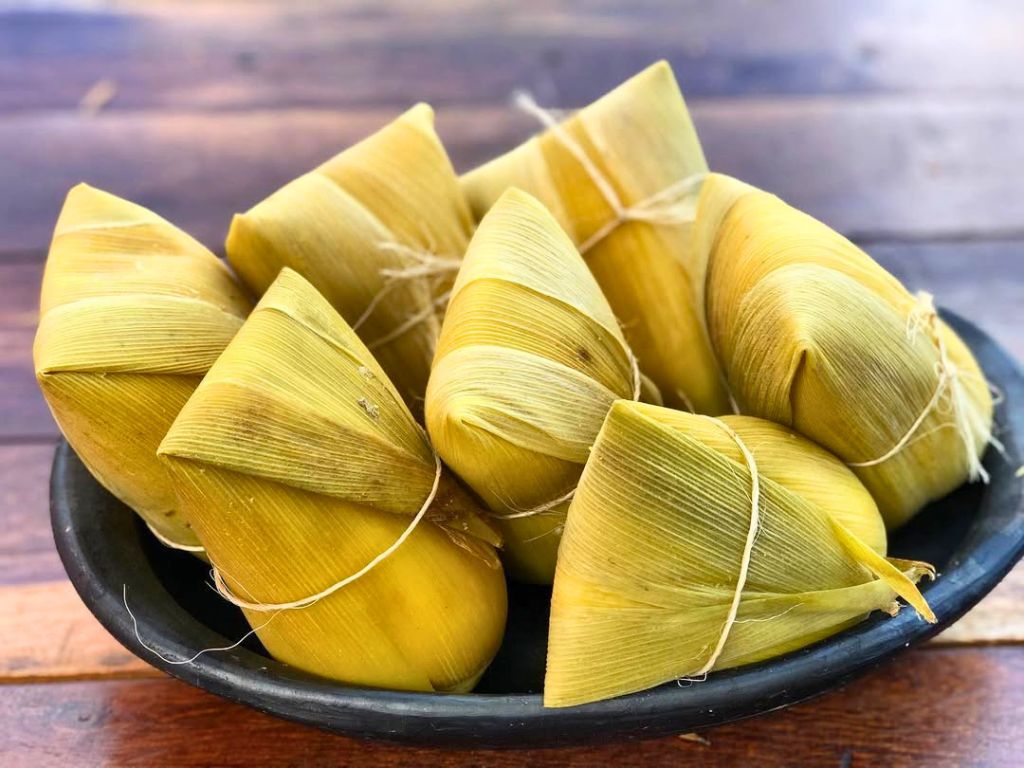
Pre-Columbian heritage, it is one of the most ancient snacks in Colombia.
A must-have on the Caribbean coast, the bollo de mazorca is a classic breakfast item, sold by women who carry them, still steaming, in large basins on their heads.
It’s a roll of freshly ground corn, slightly sweet and salty, wrapped in its own leaves, then steamed. You open it and eat it hot with suero and queso costeño.
It is also eaten as a snack at any time of the day.
The texture is soft, slightly compact, with the sweet and natural taste of fresh corn—a snack with cultural charm without being memorable.
El PAN DE BONO
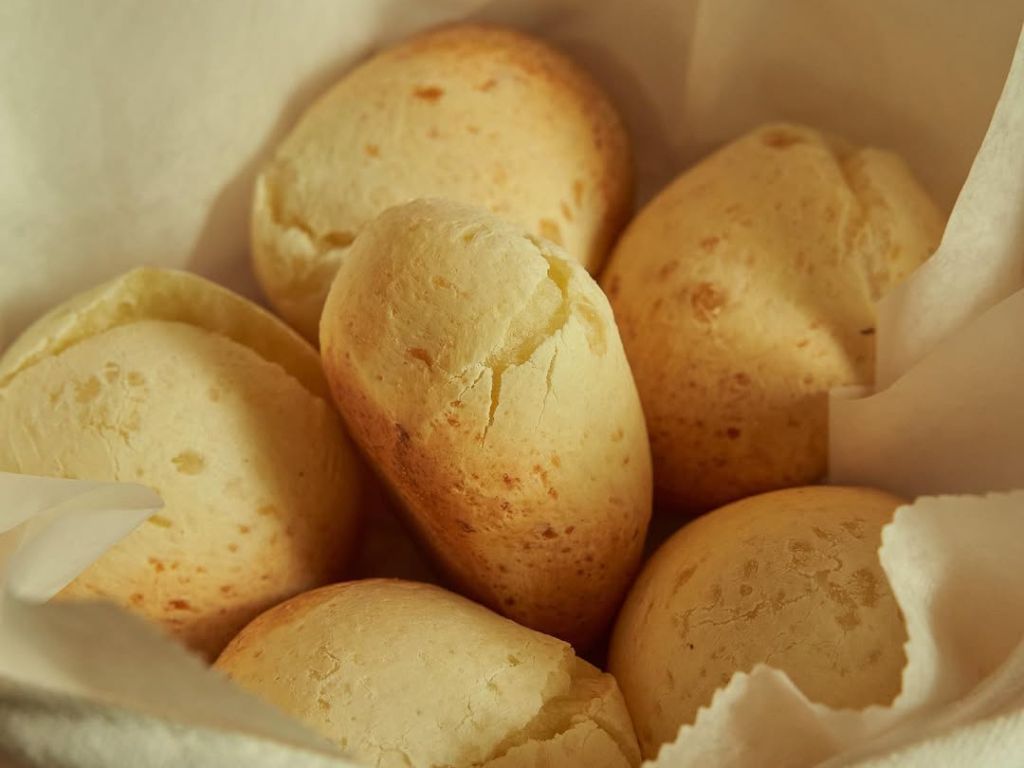
Pan de bono is one of the most iconic breads in Colombia.
Very popular in Cali and throughout the Valle del Cauca, its name comes from a colonial hacienda on the road to Buenaventura, where mule drivers would stop to eat it.
Made from yuca starch, corn flour, and fresh cheese, it comes out of the oven with a thin and crispy crust around a soft and slightly stringy center.
It is eaten hot, with coffee or chocolate. Good plain, it gains in flavor with a bocadillo — this sweet guava paste that creates a successful sweet-salty contrast with the cheese.
As an anecdote, it was voted the best bread in the world by TasteAtlas in 2023.
LA AMOJABANA
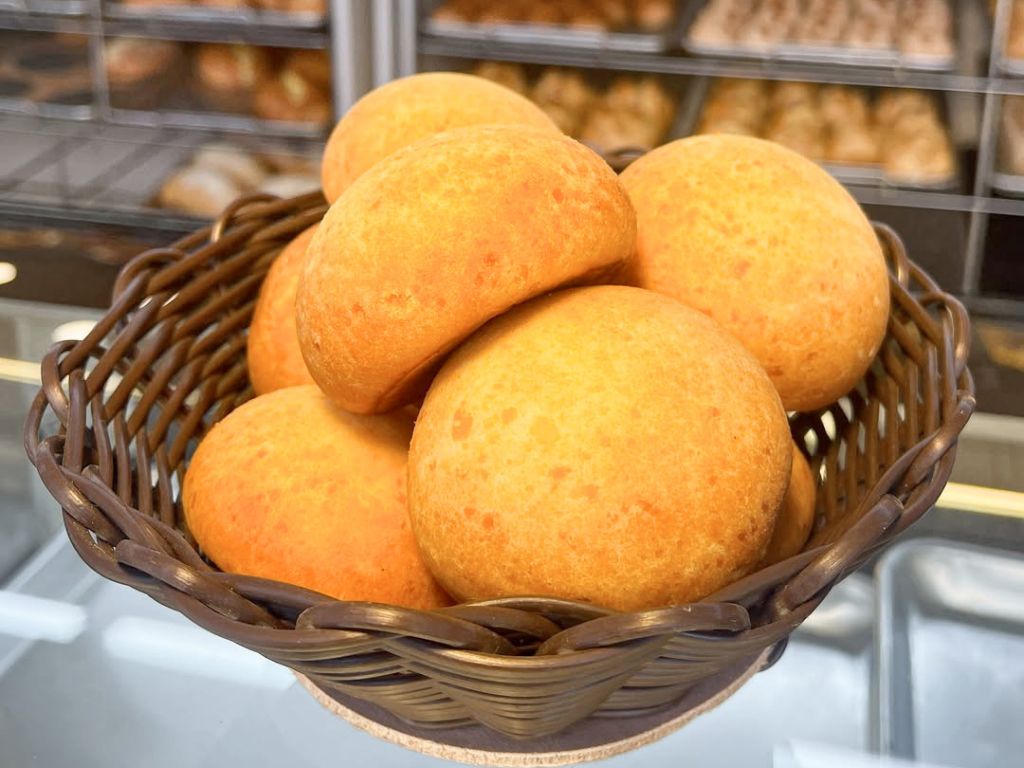
A quiet little bread from elsewhere.
Its name comes from the Arabic al-muyabbana — “the most cheesy” —, a legacy of Moorish Andalusia, passed on by the Spanish conquistadors in the 16th century.
In Colombia, the almojabana has been reinvented with precooked corn flour and cuajada, a Colombian fresh cheese that is slightly salty, to create a round, soft, slightly sweet-salty little bread.
You can find it at all the street food stands in Colombia, from Valle del Cauca to Bogotá.
A rather simple snack that goes well with coffee or hot chocolate, but I wouldn’t go out of my way to find one 😉
LA SALCHIPAPA

The salchipapa is the crazy star of Colombian street food.
An overflowing box of golden fries, slices of grilled sausage, lettuce, grated costeño cheese, and on top of all that — an avalanche of sauces. Ketchup, mayo, mustard, salsa rosada, tartar sauce…
The Colombian version of this classic — salchicha (sausage) + papa (potato) — born in Peru in the 50s-60s has taken on a whole costeña dimension — more topped, more colorful, perfectly claimed as it is.
Each vendor has their own recipe, and anything can end up in a salchipapa: chorizo, chicken or other meat, bacon, eggs… in short, a salchipapa is an XXL dish!
Widespread throughout the country, it is said that it is in Barranquilla where you find the best.
Hot, crispy, excessive, and anarchic, but it works, and I admit, I’m a fan on days when I feel a very big appetite 😉
LA PICADA
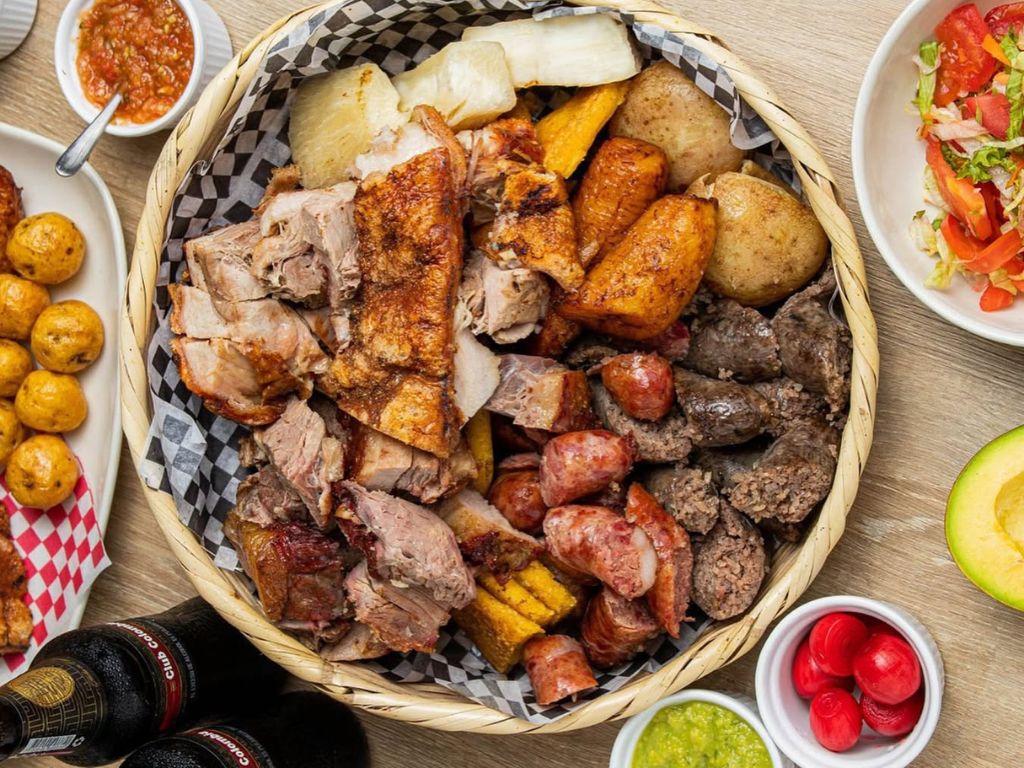
Colombian street food is friendly and carnivorous.
The Colombian picada is a mountain of grilled and fried meats: crispy chicharrón, juicy chorizo, pork ribs, chicken, and black pudding (morcilla).
Everything is accompanied by patacones, fried yuca, papa criolla (an emblematic potato of Colombian cuisine), and arepas.
Born in the Colombian countryside, this worker’s dish, also called fritanga, is now essential in the streets of Bogotá and Medellín.
The expression “para picar” in Colombia means “to snack” — and indeed, in this dish, where everything is cut and mixed, everyone nibbles and enhances the flavors to their liking with homemade ají.
It smells like frying, grilled meat, it crunches under the fingers, and it’s delicious — a sharing dish that has a great place in my top.
EL CHORIZO SANTARROSANO
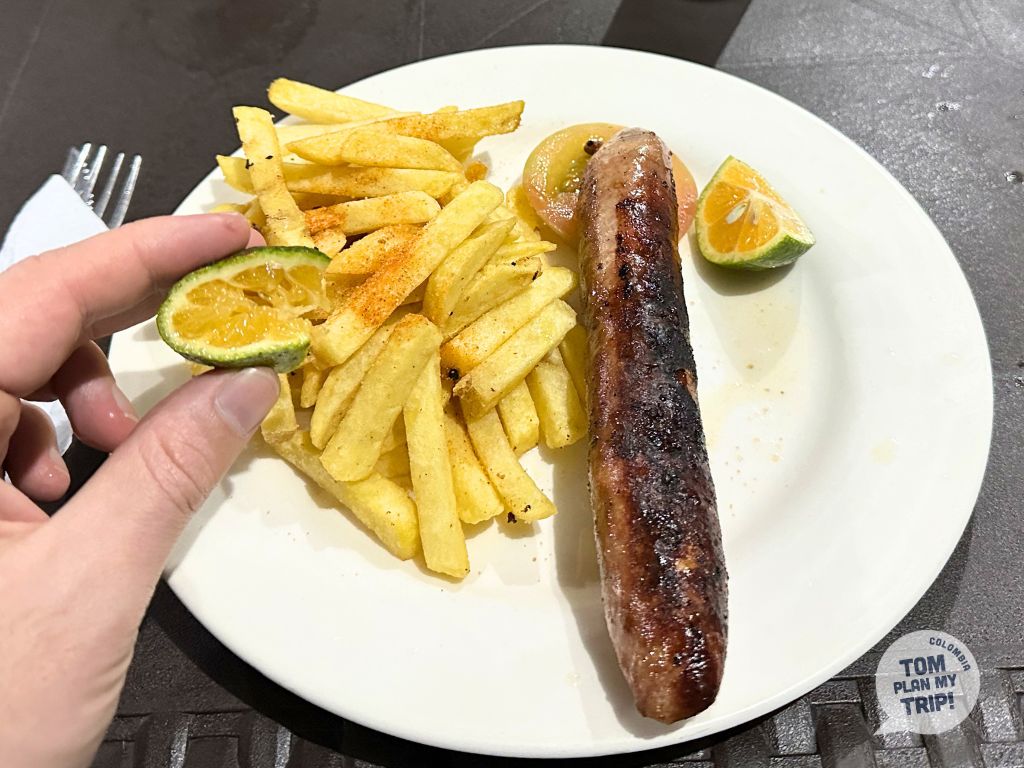
A sausage that became a classic of Colombian street food by accident.
The Santarrosano chorizo is a handcrafted pork sausage, finely chopped by hand, spiced with onion, tomato, garlic, cumin, and spices — grilled until golden brown, then served with a papa criolla.
Its origin? A story of pigs roaming freely in the streets of Santa Rosa de Cabal, in the coffee region, in 1958. Overwhelmed, the mayor ordered their seizure, and the owners, refusing to lose their investment, started making chorizos.
Today, the small town known for its hot springs has become the capital of chorizo, still made artisanally.
Simple and flavorful, it holds a great place in my top.
LA LECHONA
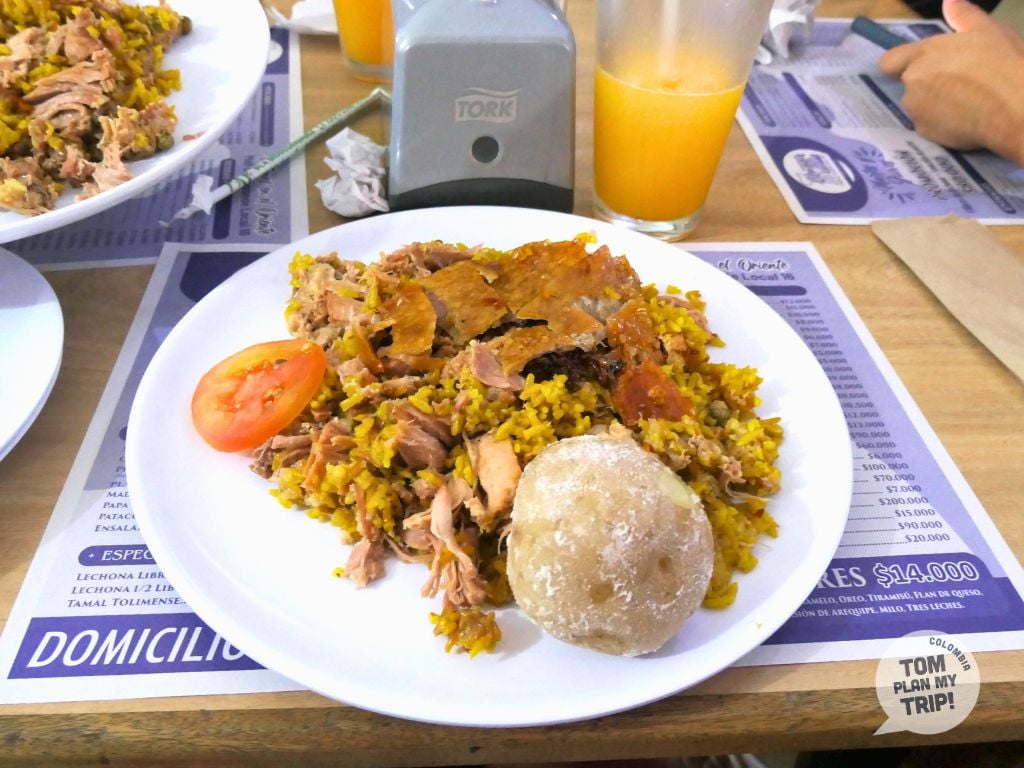
The festive dish of Colombian street food.
If, while strolling through a market or on a street, you smell a fragrance of golden fat and spices, it is undoubtedly because a lechona is simmering somewhere.
The lechona is a whole deboned pig, stuffed with marinated meat, peas, onion, and cumin, then roasted for over 10 hours in a clay oven until the skin becomes golden and crispy, while keeping the inside tender.
Born in the Colombian Andes, this colonial recipe, a blend of Spanish and local traditions, is now considered one of the best pork dishes in the world. It is in Tolima that you will find the most delicious lechona.
Full of flavors, hearty and indulgent, lechona is a dish to share on special occasions.
Adrien is an unconditional fan — and frankly, it’s hard to blame him.
EL CÓCTEL DE CAMARÓN
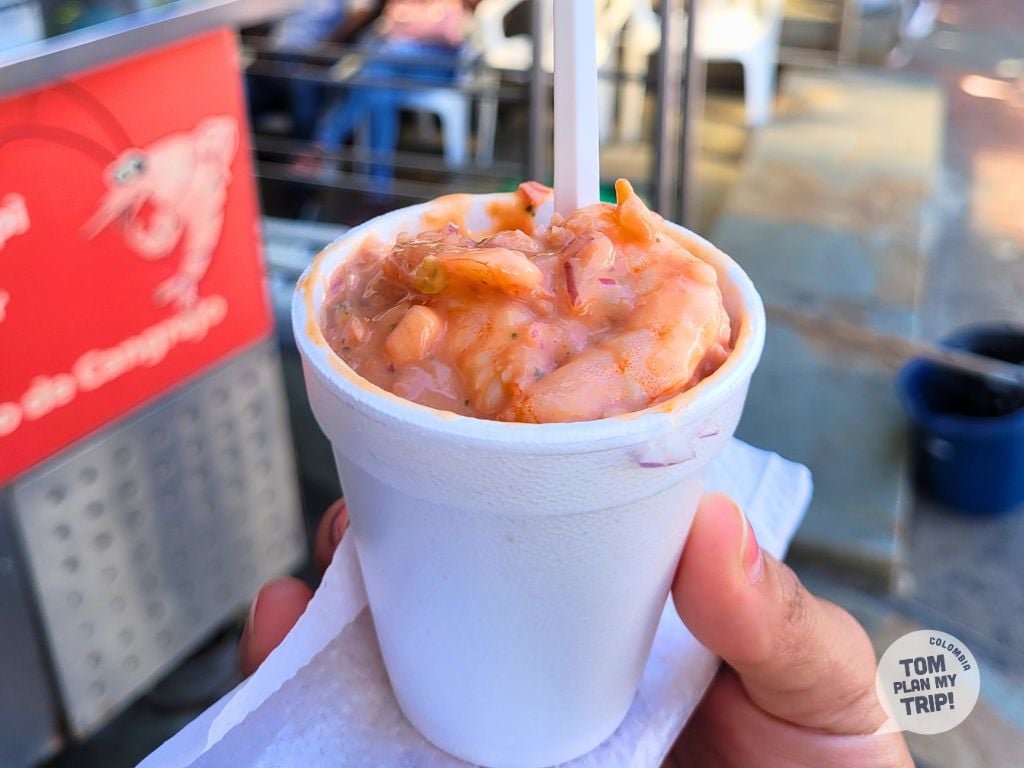
A small popular Colombian street food from the Caribbean and Pacific coasts.
The shrimp cocktail recipe is ultra minimalist: cooked shrimp, pink ketchup-mayo sauce, onion, lime, and cilantro, all served very cold in a glass.
Originating from the American ports of the 1940s, it made its way to Colombia, where it found its local originality: the Saltín galleta — a thin and crispy cracker with a neutral and slightly salty taste, served on the side, to crunch or dip. A rather surprising combination that you quickly adopt.
I never refuse a shrimp cocktail, especially when it’s very hot.
EL PERRO CALIENTE
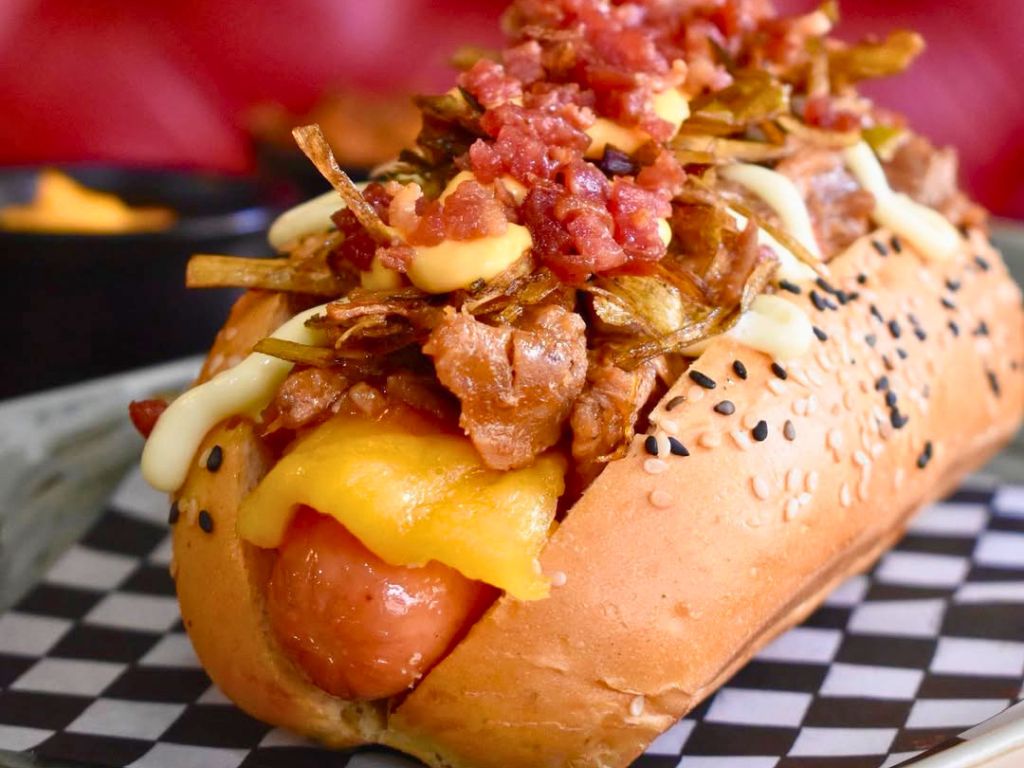
An exuberant Colombian street food.
The hot dog is American. The perro caliente, on the other hand, is Colombian 😉
Its base is simple: sausage, soft bread — so far nothing exceptional. But when Colombia makes it its own, it becomes generous, just like its image. Ketchup, mayo, mustard, melted cheese, crushed chips, pineapple sauce, quail eggs… Each vendor has their signature, each city its style.
TasteAtlas ranked it 3rd among the best hot dogs in the world, praising its large size and unpretentious toppings. You can find them everywhere in the country, at any time, but it’s especially a late-night classic.
Friendly, totally baroque, without being unforgettable.
Typical Sweet Dishes of Colombian Street Food
No Colombian street food without a sweet touch.
EL MANGO BICHE

One of the greatest successes of Colombian street food.
The mango biche is the mango picked while still green: firm to the bite, tangy, slightly astringent. Sliced, it is seasoned with salt and lime; the whole is presented in a plastic bag.
This combination initially puzzled me before it completely charmed me – on the palate, everything balances: the sharp acidity of the mango, the salt that enhances everything. It’s fresh, lively, irresistible.
You can find them everywhere, from the streets of the Caribbean to the markets of Bogotá, in the buses.
Don’t leave Colombia without having tasted this little delight.
EL SALPICÓN
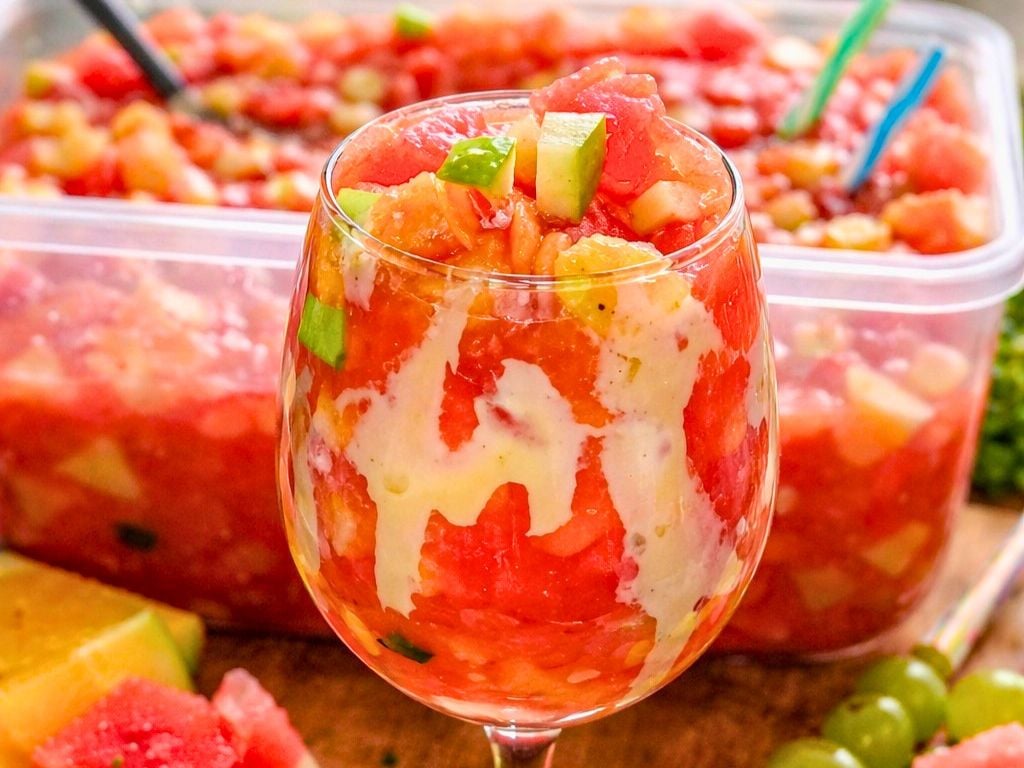
The refreshing snack of Colombian street food.
Salpicón is halfway between a fruit salad and a drink: papaya, watermelon, banana, pineapple, mango, all cut into small pieces and soaked in watermelon juice or in Colombiana, the famous Colombian soda.
Sometimes topped with a scoop of vanilla ice cream, it’s eaten with a spoon, then you finish by drinking the juice.
The little story goes that a woman from Popayán, named Baudilia, invented it to quench the thirst of Simón Bolívar and his exhausted troops.
Very Colombian, refreshing, and colorful, without being overwhelming.
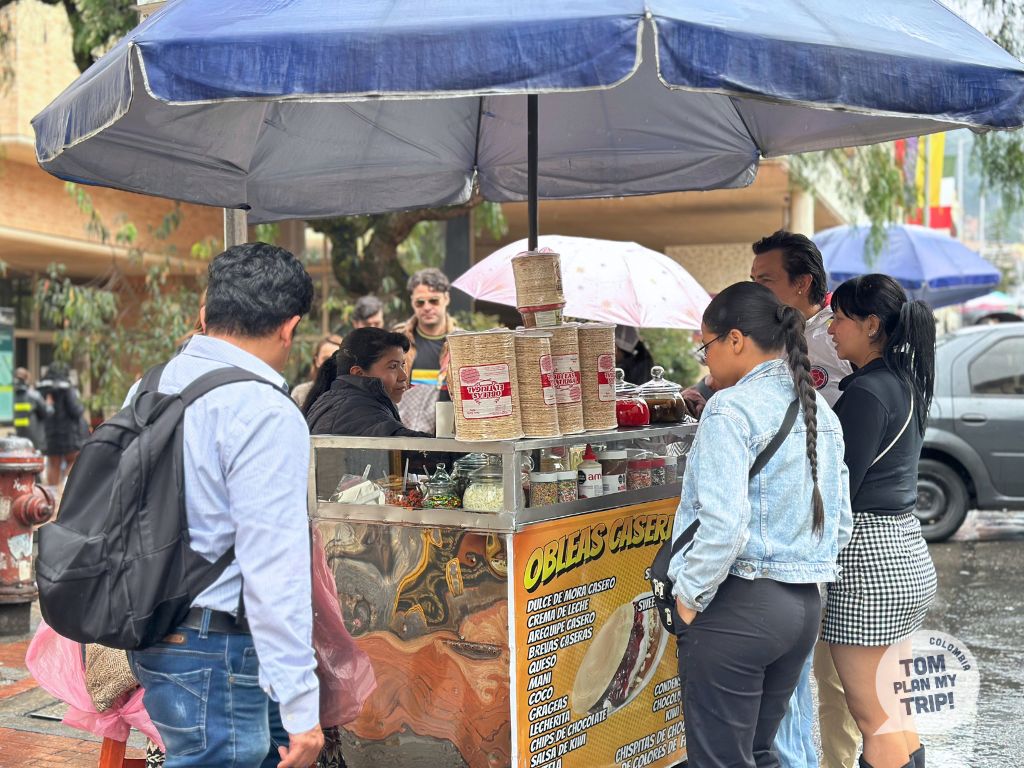
LA OBLEA
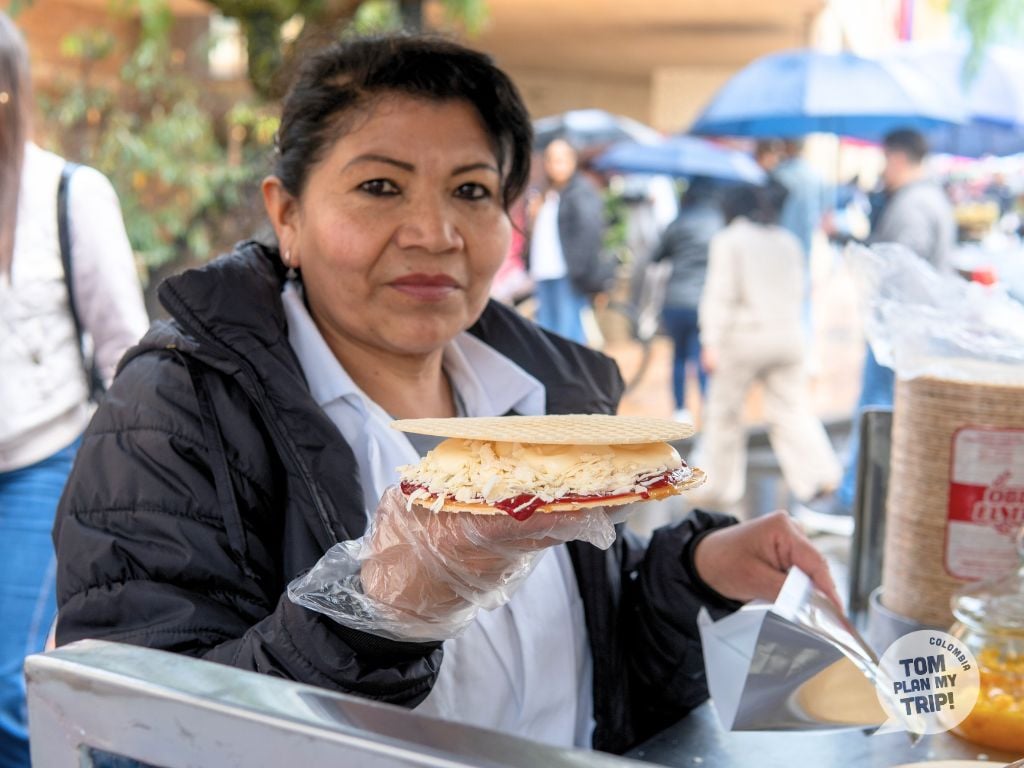
The sweet snack of Colombian street food par excellence.
An oblea is two ultra-thin, crispy wafer discs, and between them, a generous layer of arequipe, that very sweet Colombian milk caramel that sticks to your fingers and melts in your mouth.
Inherited from medieval Europe — where it served as a religious host — it traveled to Colombia with the conquistadors to reinvent itself as a popular treat.
The toppings vary infinitely: blackberry jam, grated cheese, coconut, cream, jams – you choose your own assortment. The version from Floridablanca, in Santander, is said to be the best in the country.
A little gourmet pleasure that’s hard for me to resist.
EL CHOLADO
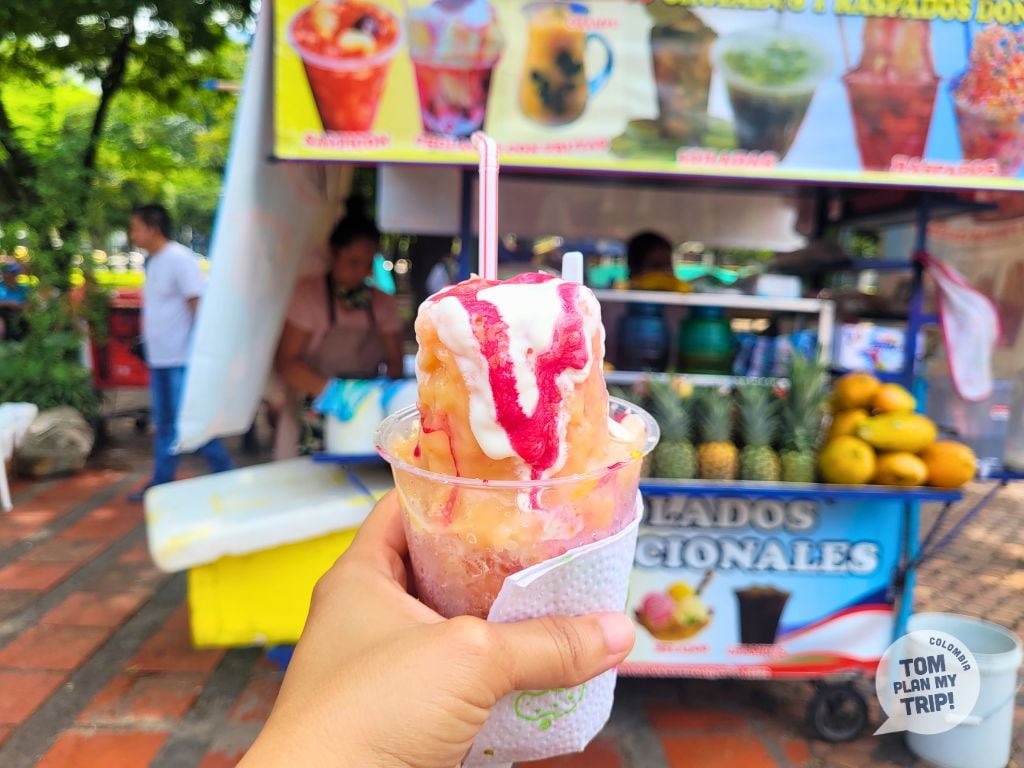
The tropical freshness of Colombian street food in a large glass.
Cholado is crushed ice drenched in fruit syrups, topped with pieces of mango, banana, strawberry, lulo, and soursop, generously drizzled with condensed milk, with a crispy rolled wafer stuck on top.
This dessert drink, born in the 80s in Valle del Cauca, is a must-have in Cali, where they say you can find the best; each vendor has their own recipe.
Tart, sweet, creamy, crunchy — I never miss it when it’s hot.
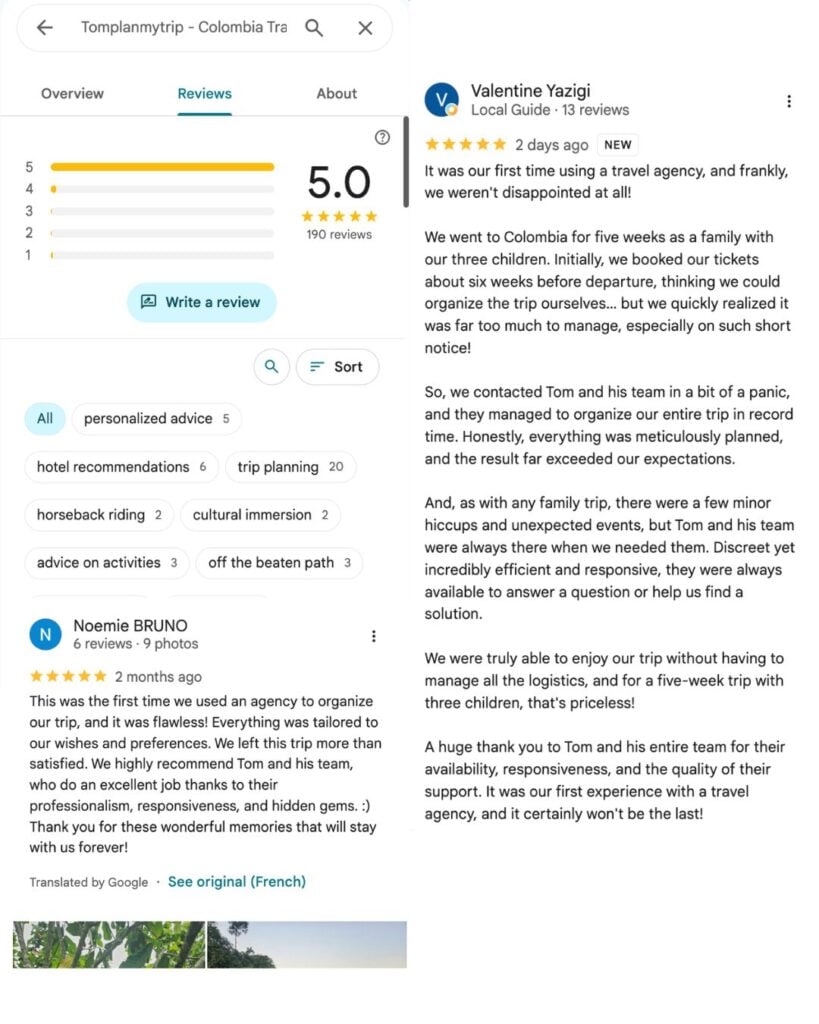
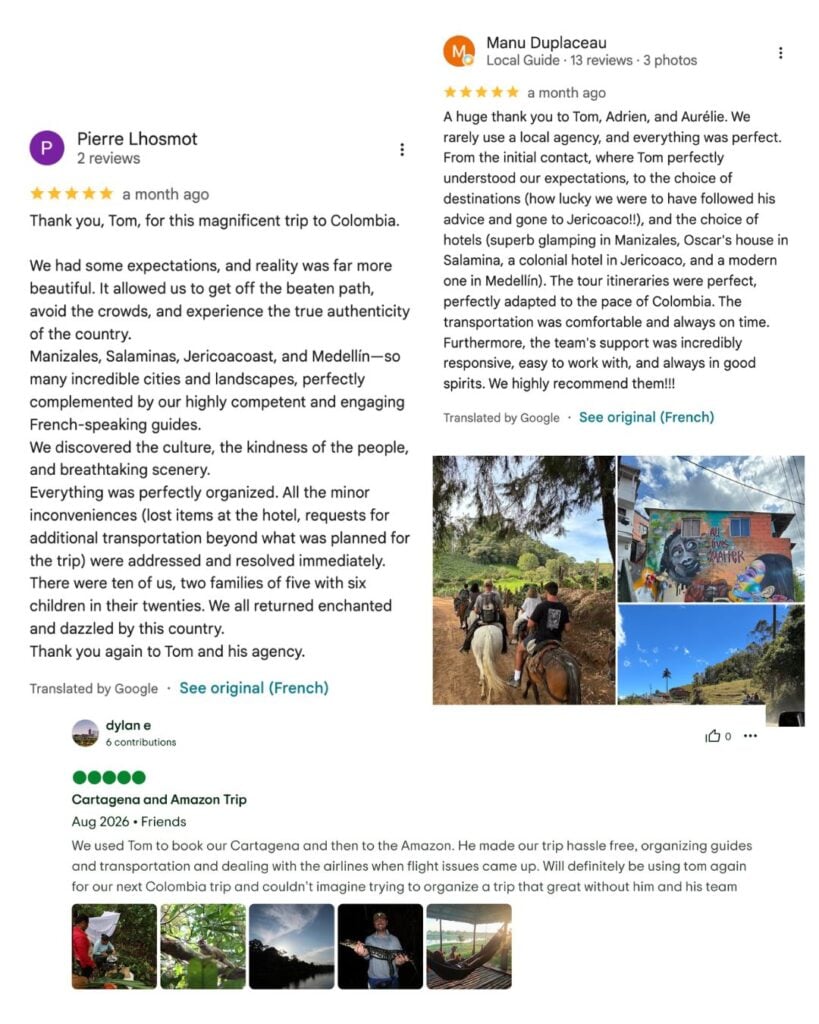
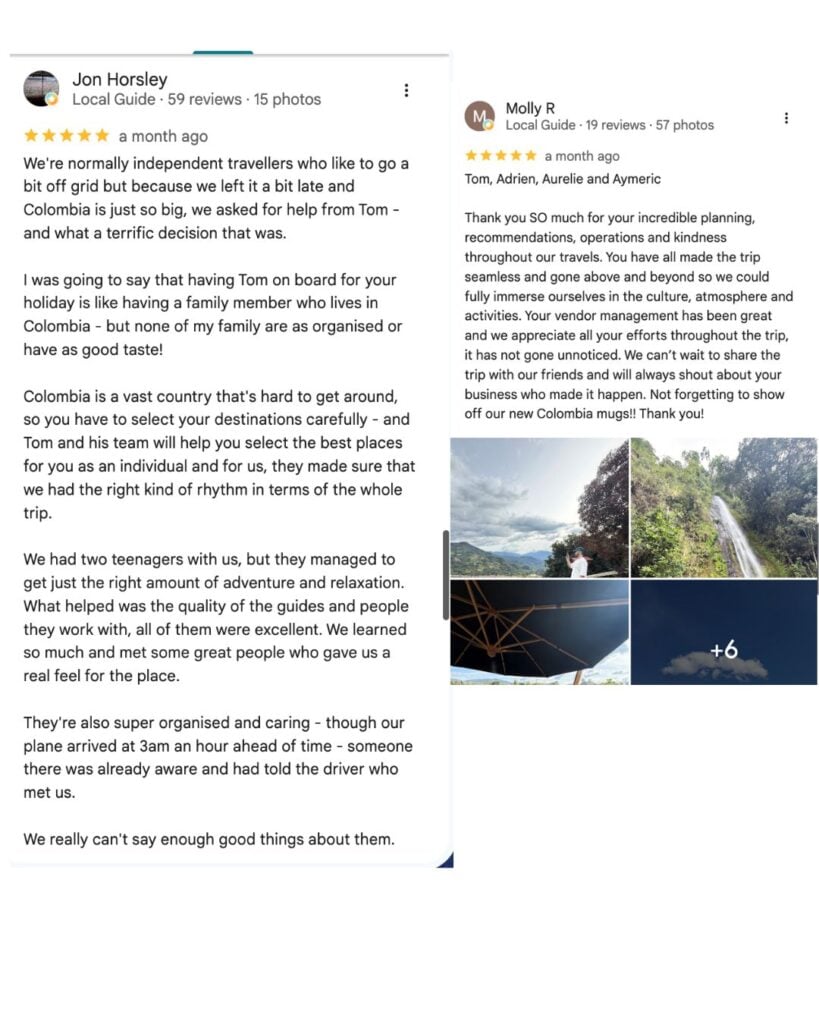
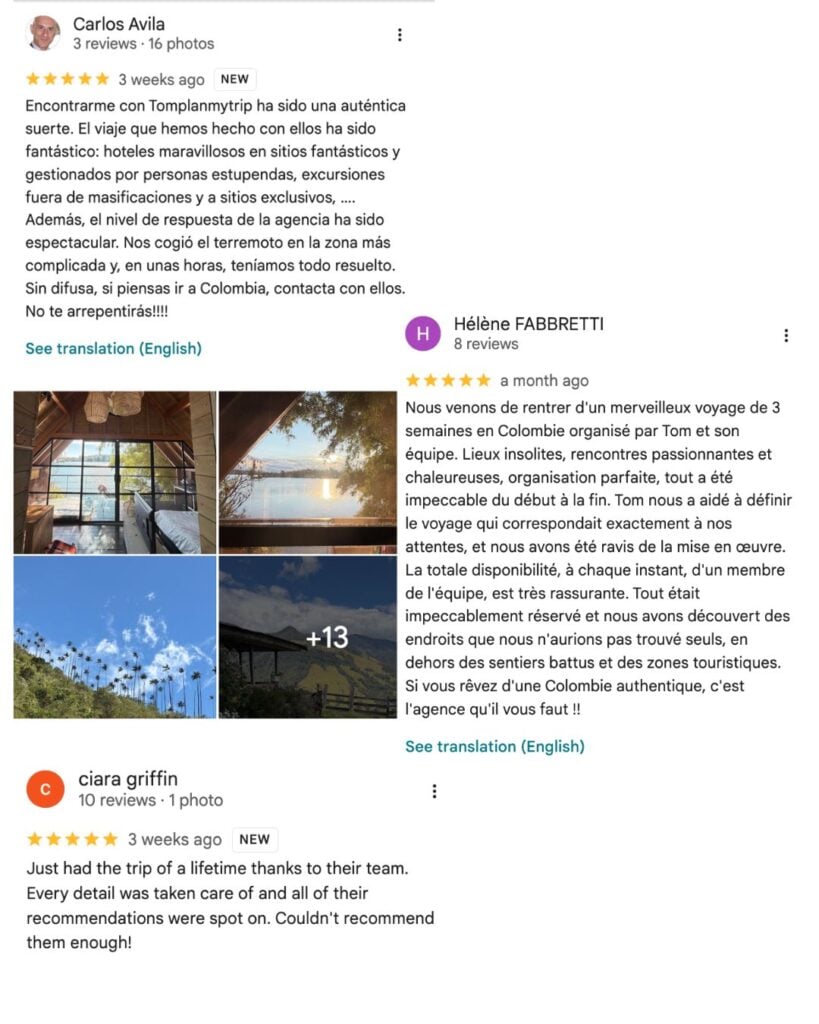
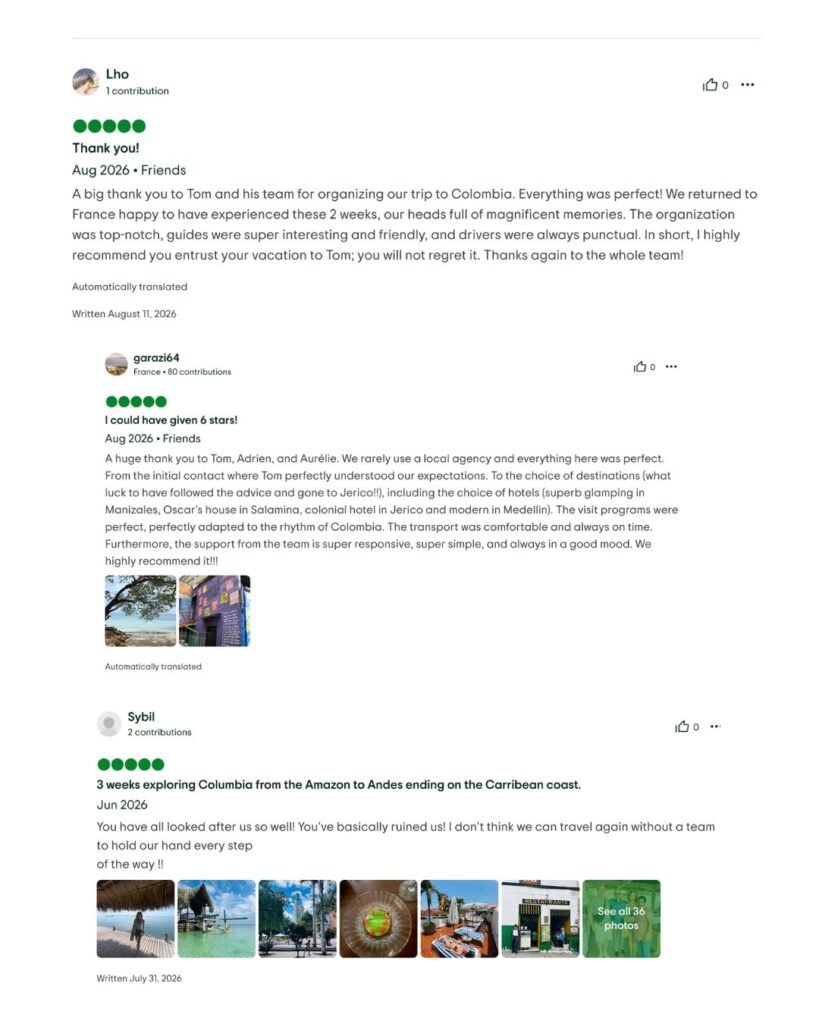
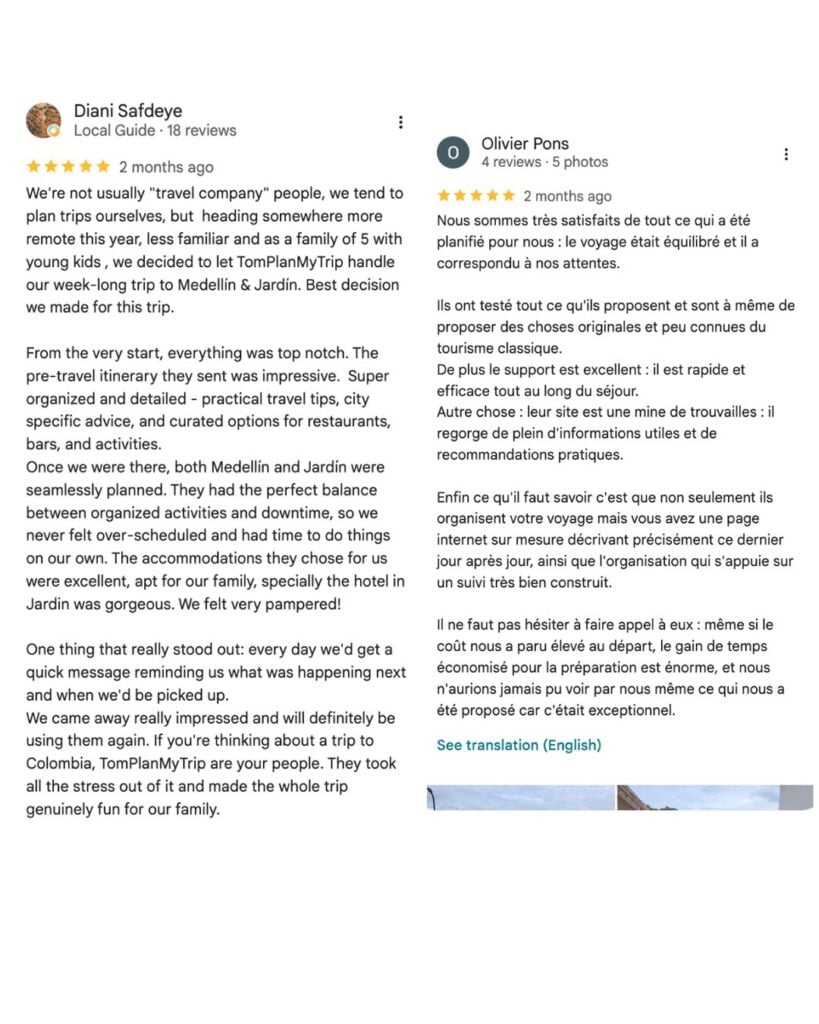
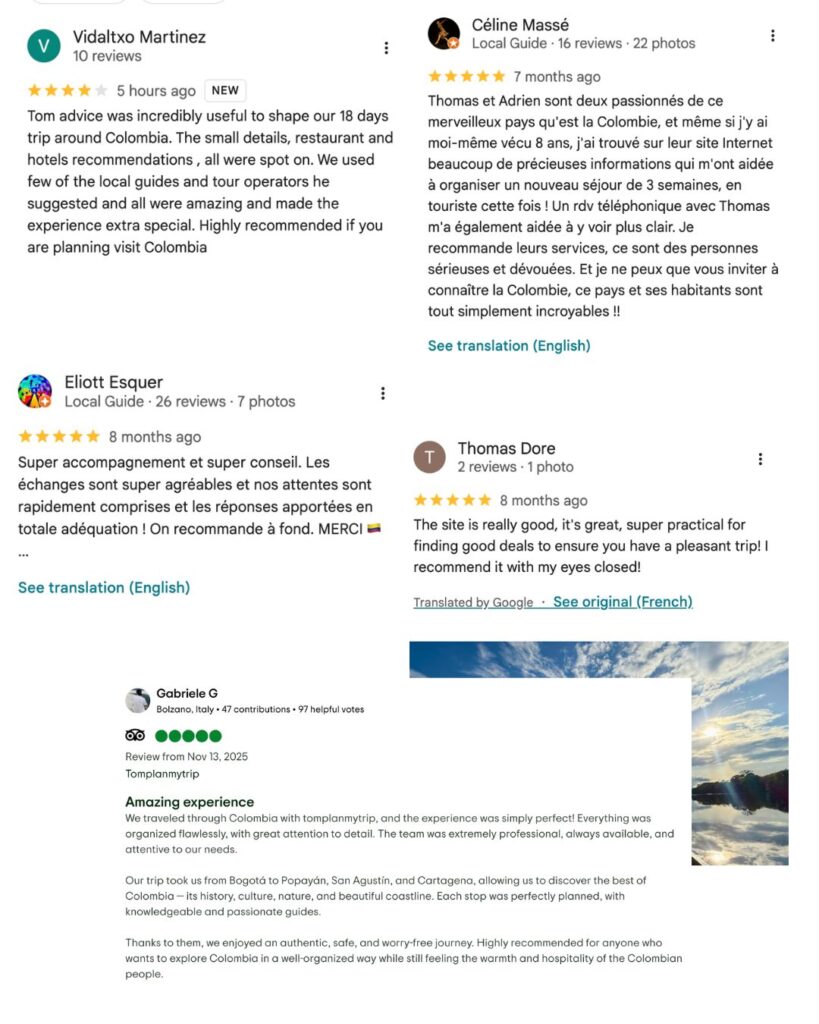
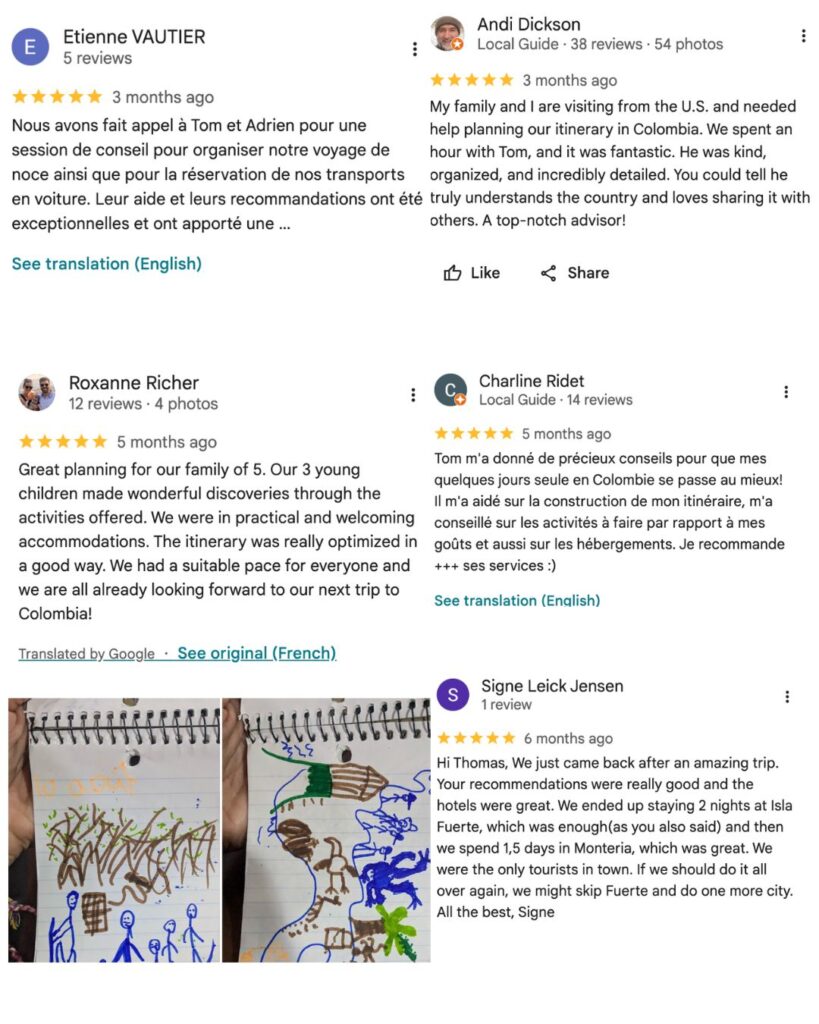
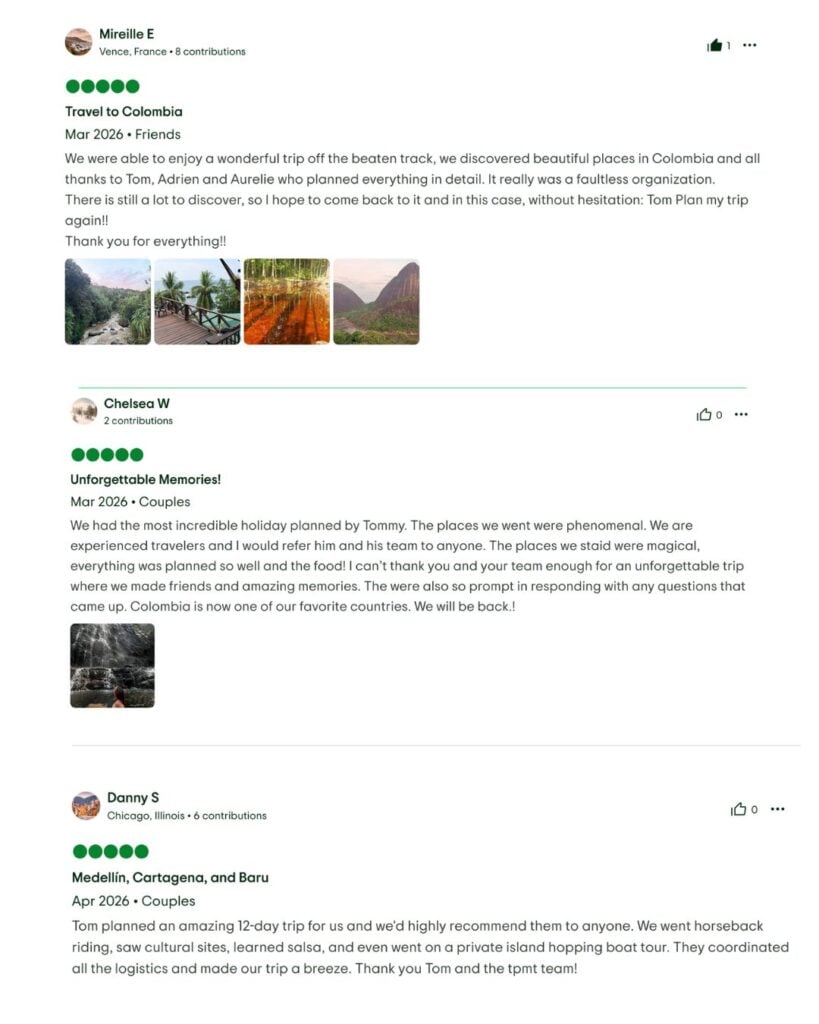
+185 five-star reviews on Google Maps
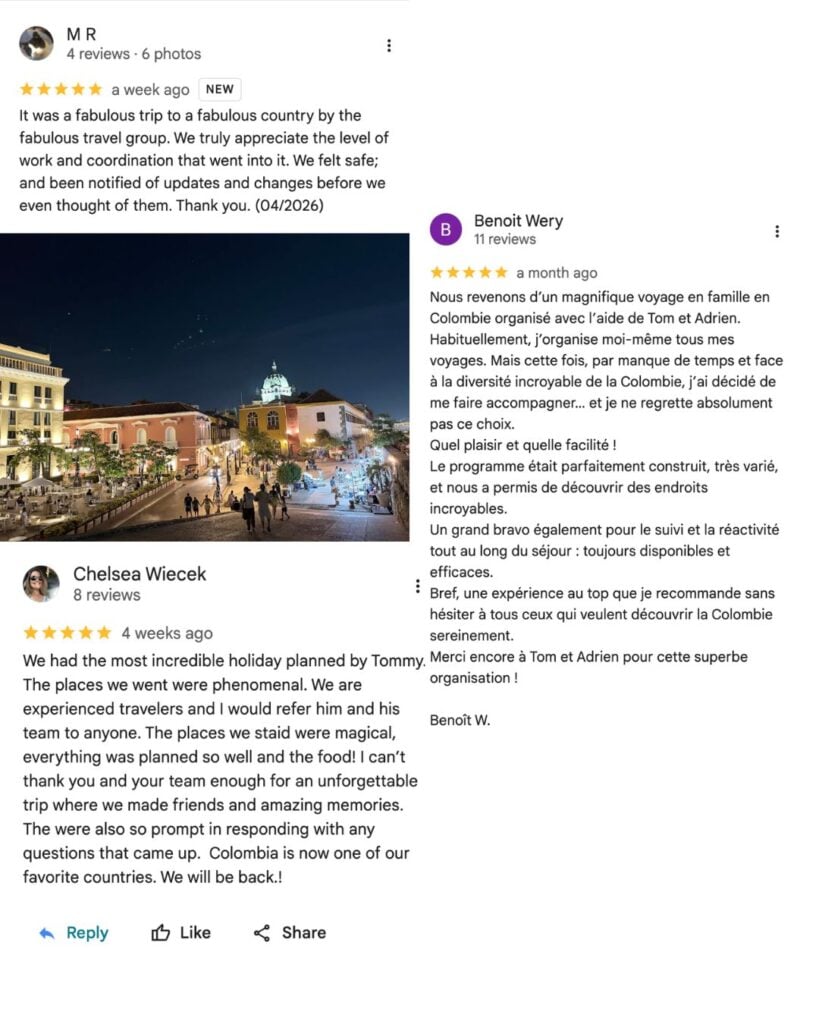
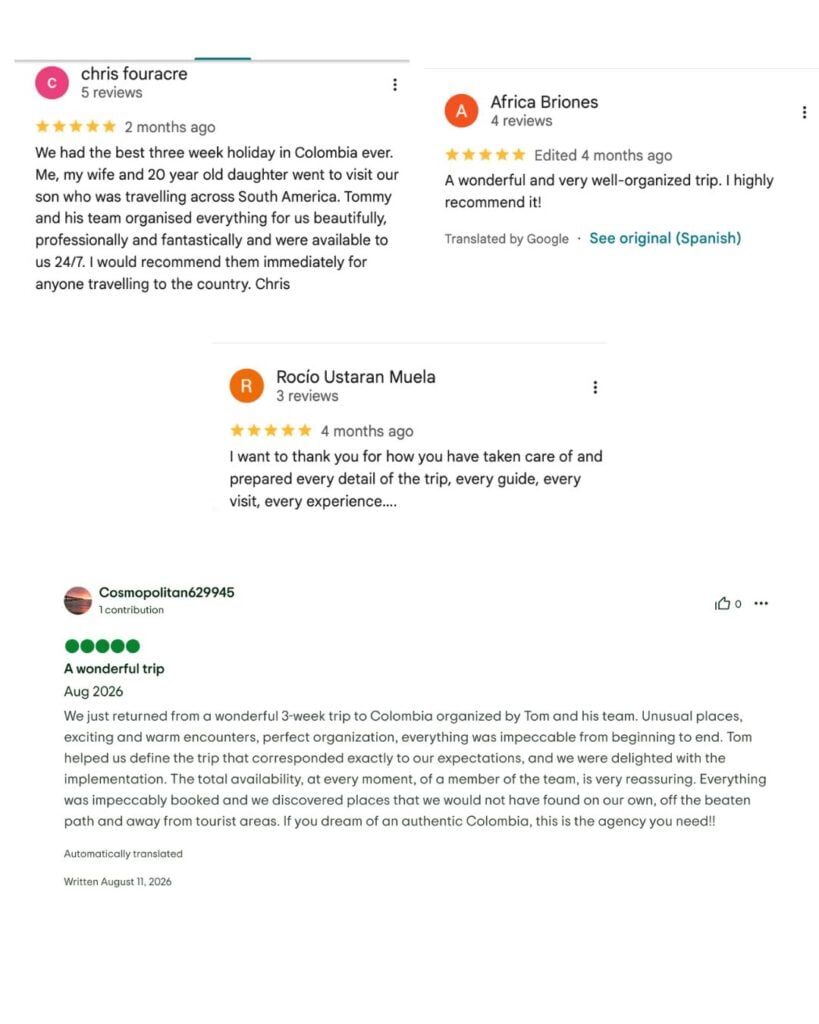
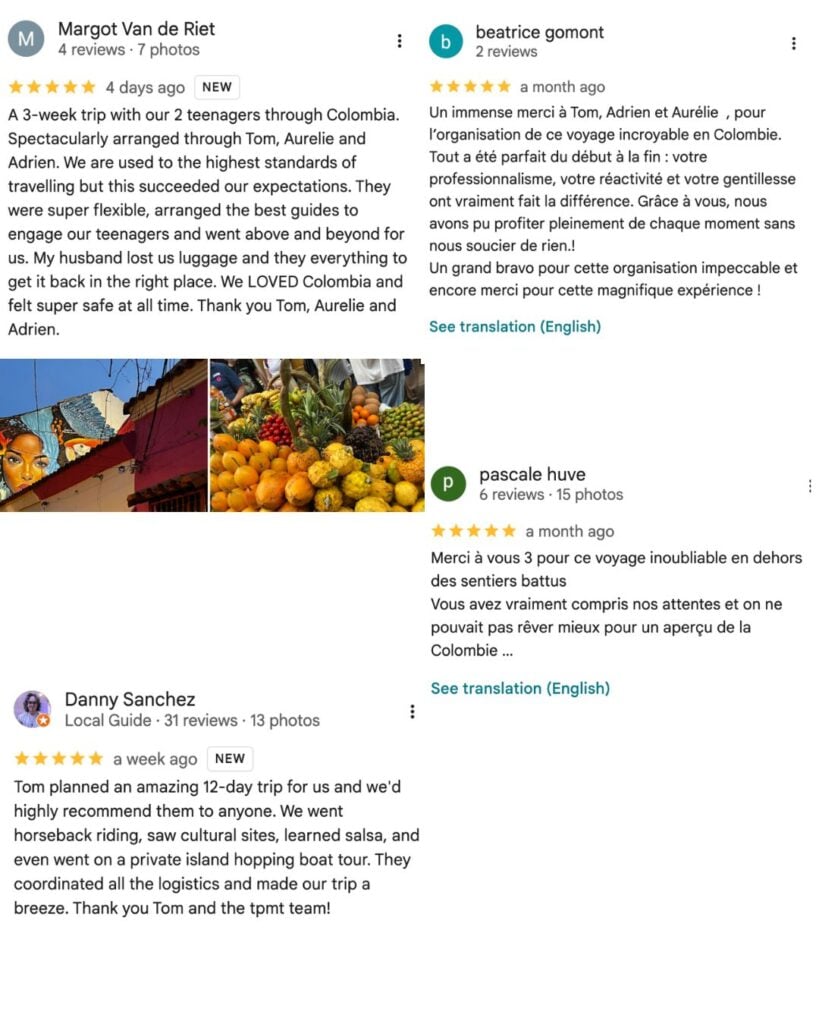

The solution for a successful Colombia trip
“Usually, I don’t go through a travel agency. But for Colombia, I needed help — and this agency transformed my experience in this country.”
That’s the kind of comment you’ll find most often in our reviews (we’ll let you read them 😉).
Let’s explore together for a quality, one-of-a-kind trip that lets you truly connect with the country:
- Undiscovered Colombia — adventures off the beaten path
- Easy Colombia — stress-free, fully comfortable
- Premium Colombia — high-end that stays authentic
What type of trip suits you?
Every trip is unique, but you might see yourself in one of these themes.

LAID-BACK
Your vacation doesn’t have to be 100% beach or 100% exploring. With our 11 years in Colombia, we plan your ideal trip so you can discover the country without rushing around. The best way to travel and recharge at the same time.
Learn more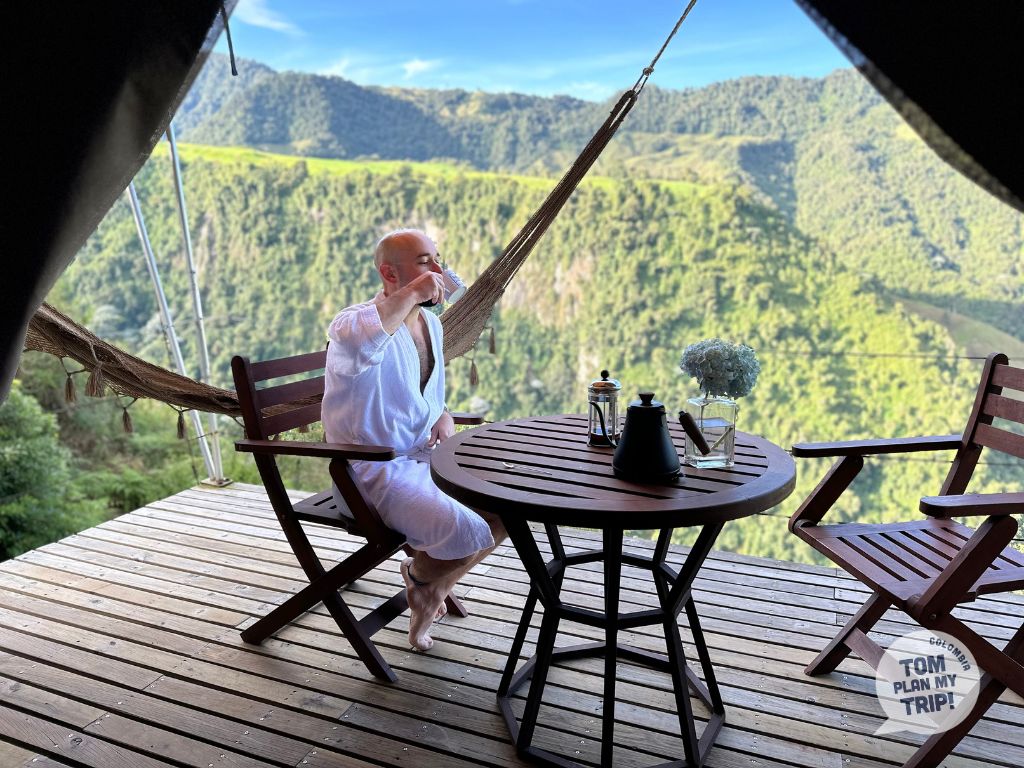
PREMIUM
You love beautiful places to stay and extraordinary experiences, but not cookie-cutter luxury? Drawing on our 11 years of exploring, we plan a premium trip so you can experience the most spectacular side of the country, in the best possible conditions.
Learn more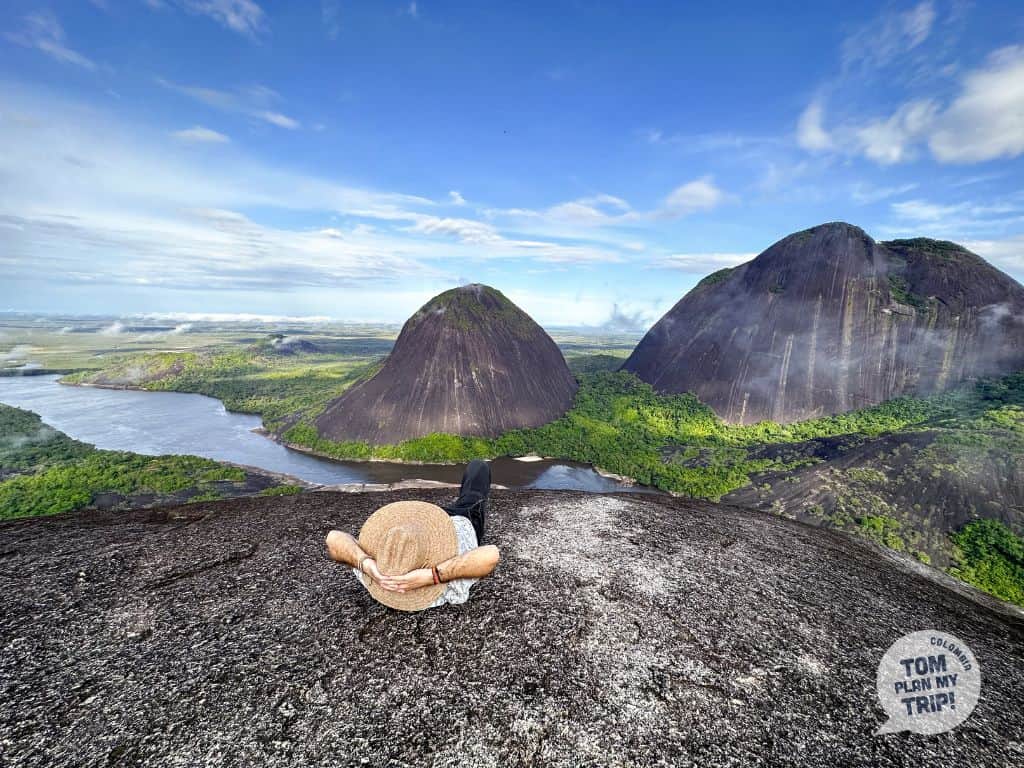
ADVENTURE
Not interested in the Colombia everyone already knows? Set off exploring with your loved ones and share unforgettable moments, with that feeling of being on another planet. All backed by our 11 years exploring the country.
Learn moreWhat our clients say
Colombian Food
Select a Region of Colombia


Western Caribbean Coast
Colombian Destinations Listed Alphabetically
Places from A to I
Places from J to P
Places from R to Z
Follow us on Instagram!


Our secret to actually enjoying your Colombia vacation
Colombia is twice the size of France. There’s no point trying to see it all in 15 days. Our trips distill 11 years of boots-on-the-ground exploration into the essentials: the very best of the country, without the stress of racing around.
