
Cartagena Vs Santa Marta: How to Decide?

Editor
Updated on
You dream of the Colombian Caribbean coast, but one question keeps running through your mind: Cartagena or Santa Marta?
Having lived in Colombia since 2015, I know both cities well, and I’ll help you see things more clearly. Each has its own character, strengths, and weaknesses, and the right choice mainly depends on what you’re looking for. Let’s examine them, criterion by criterion.
Let this Caribbean duel, Cartagena vs Santa Marta, begin in all friendship!
11 years exploring Colombia, 500,000 travelers helped every year through our online guides. And for families and groups of friends who want a trip everyone will love, without lifting a finger, our agency designs a tailor-made journey to discover the best of the country, far from the tourist traps.
→ About us | ⭐⭐⭐⭐⭐ + 185 reviews | → Our service

- In Colombia since 2015
- + 1025 tested experiences
- + de 145 local partners
- + 425 trips created


Cartagena Vs Santa Marta
To quickly choose between these two cities
CARTAGENA VS SANTA MARTA: NIGHTLIFE
Cartagena wins: more choices.
In the historic center of Cartagena, you find stylish rooftops with stunning views of the city, cocktail bars with live music, and nightclubs where Colombians start going out around 1 AM.
On the other hand, prices are high, and beware of the many tourist traps.
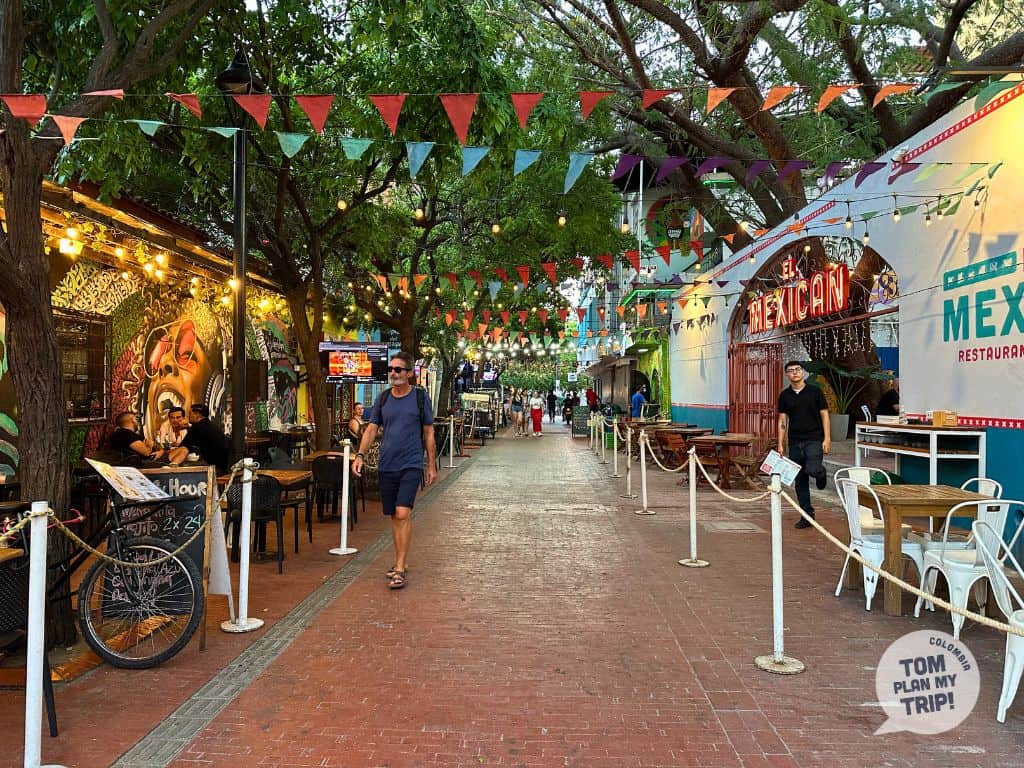
Recently, the heart of the nightlife has moved to Getsemaní: a neighborhood with a bohemian spirit, facades decorated with graffiti, and more affordable prices. As soon as night falls, the Plaza de la Trinidad and the surrounding streets fill with musicians of all styles — traditional music, breakdance — in a friendly atmosphere.
Things are happening every night in Cartagena, but it’s from Wednesday to Saturday that the city really comes alive.
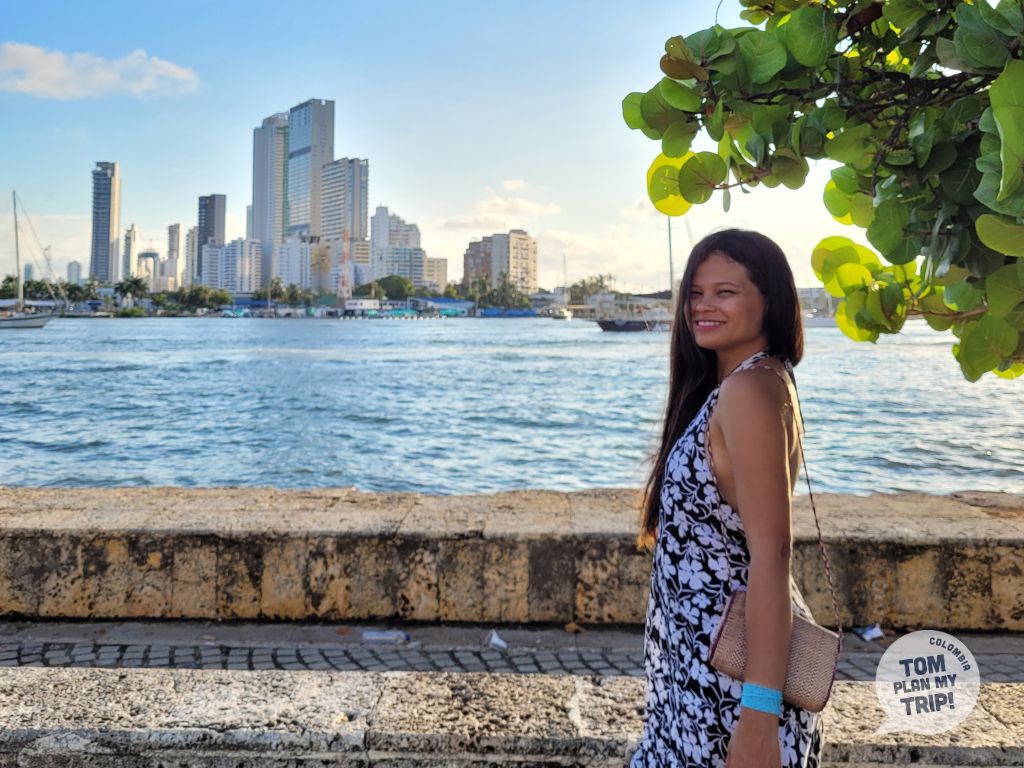
My little pleasure: watching the sunset from a rooftop or on the ramparts, while sipping a beer.

With its many bars and restaurants, the Parque de los Novios (Carrera 3) mainly attracts night owl tourists; the atmosphere is festive, and the music plays loudly.
If you want to mingle with Colombians, go to Rodadero, a seaside neighborhood. The vibe is more popular, but the music is just as loud.
The sunsets over the sea are particularly beautiful in Santa Marta. You can watch the show from the promenade or the marina, while enjoying a beer or a cocktail.
In Taganga, a small fishing village located northeast of Santa Marta, there are a few clubs and beach bars, but the safety is not the best.


A successful Colombian adventure with family or friends
What kind of adventure do you want for your group? Will it really suit everyone? Is it safe? Is it too touristy?
Guessing and hoping you made the right call — sometimes that works. But not always.
And I won’t even get into the stressful surprises that force you to make some changes mid-trip.
Look, we’ve been doing this for years — and if you check our reviews, you’ll see we know what we’re doing.
Enjoy the trip instead of carrying the weight of it. Tell us what you love, and we’ll handle the rest.

© Tomplanmytrip
CARTAGENA vs SANTA MARTA: GETTING AROUND
Draw: pros and cons for each.
Cartagena’s historic center is small and can be explored on foot; walking, it only takes you 15 minutes to reach Getsemaní.
However, from the modern district of Bocagrande, you will need to take a taxi. Be aware that here, taxis do not have meters: I strongly advise you to always ask for the price before getting in. You can also use the Uber app.
The boats that provide the crossing to the Rosario Islands (about 1 hour) leave from the La Bodeguita dock, a 5-minute walk from the Clock Tower.
If you plan to travel by bus, allow time to get to the bus station, which is 45 minutes from the center, as traffic is heavy during peak hours.

You can walk through the historic center of Santa Marta in less than 10 minutes. Taxis do have meters, but they almost never use them: make sure to confirm the fare before starting.
Avoid walking to Rodadero; there are problems with theft.
As for apps, Hey Taxi works well, and you can also use InDrive and Uber.
The bus and colectivos network is quite good for visiting the surroundings. There are departures every 30 minutes between 6 AM and 6 PM from the Mercado Público: Minca – 40 min, Tayrona – 1 h, Palomino -2 h, Cartagena – 4 to 6 h.
Note that in case of heavy rains, the bus station can be flooded.


© Tomplanmytrip
CARTAGENA OR SANTA MARTA: SAFETY
Narrow point to Cartagena, but caution is still advised.
In the triangle formed by the old town, the center of Getsemaní, and Bocagrande, where the tourists are concentrated, you feel safe during the day and early evening. Additionally, the police often patrol the walled city, the walls, and the beaches.
But Cartagena attracts tourists and, consequently, pickpockets. Stay vigilant, don’t show your valuables, and dress simply. And when the streets are empty, take a taxi.
You might be offered drugs on the street, recognizing you as a tourist. Decline; it’s a crime in Colombia.
In the evening, watch your drink and be wary of overly friendly people, especially if you’re a man susceptible to the charm of a pretty girl. Similarly, mishaps following encounters on apps like Tinder are not uncommon.
To avoid being scammed on prices, always ask for the price before ordering, check your bill, and count the change you’re given.

Stay in the tourist area of Santa Marta, where there are people, especially in the evening: mainly between calle 20 and calle 15, and from carrera 1 to carrera 3. Outside this perimeter, the streets don’t inspire any confidence; I advise you to avoid them and follow basic safety rules, “No dar papaya” as Colombians say – in short, don’t tempt fate.
I advise taking a taxi in the evening if you need to go to a less frequented area, even for a short distance. Similarly, at night, take a taxi if you want to go to Rodadero.

© Tomplanmytrip
CARTAGENA vs SANTA MARTA: What to do in the city
Cartagena wins: a charming historic center.
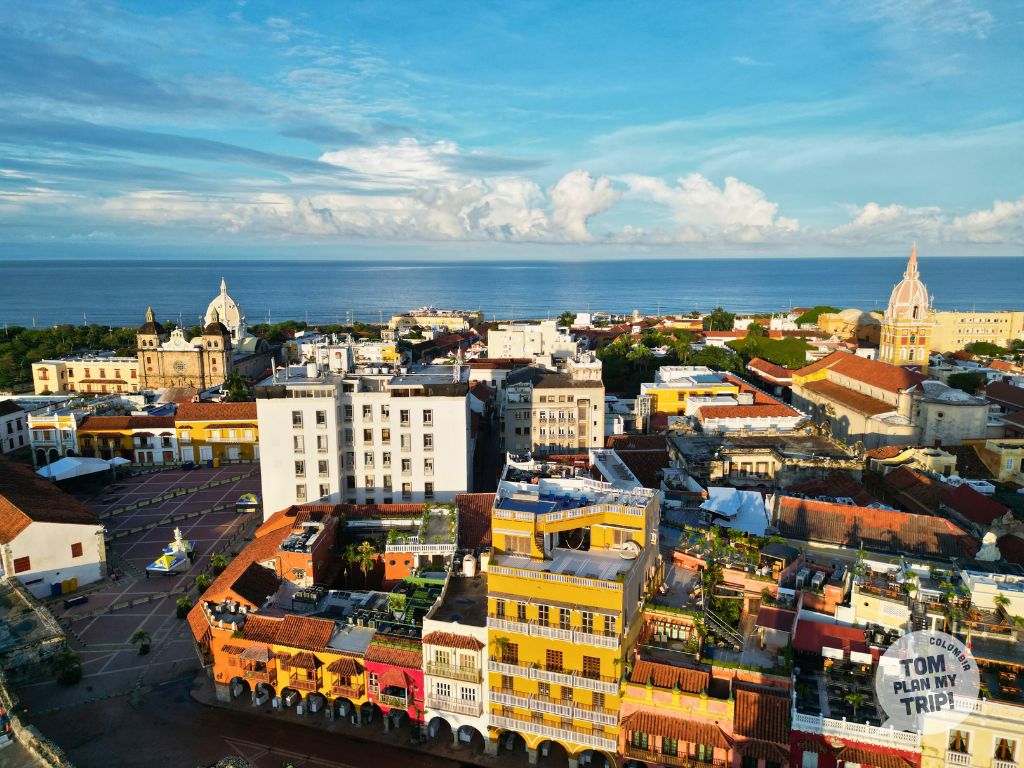
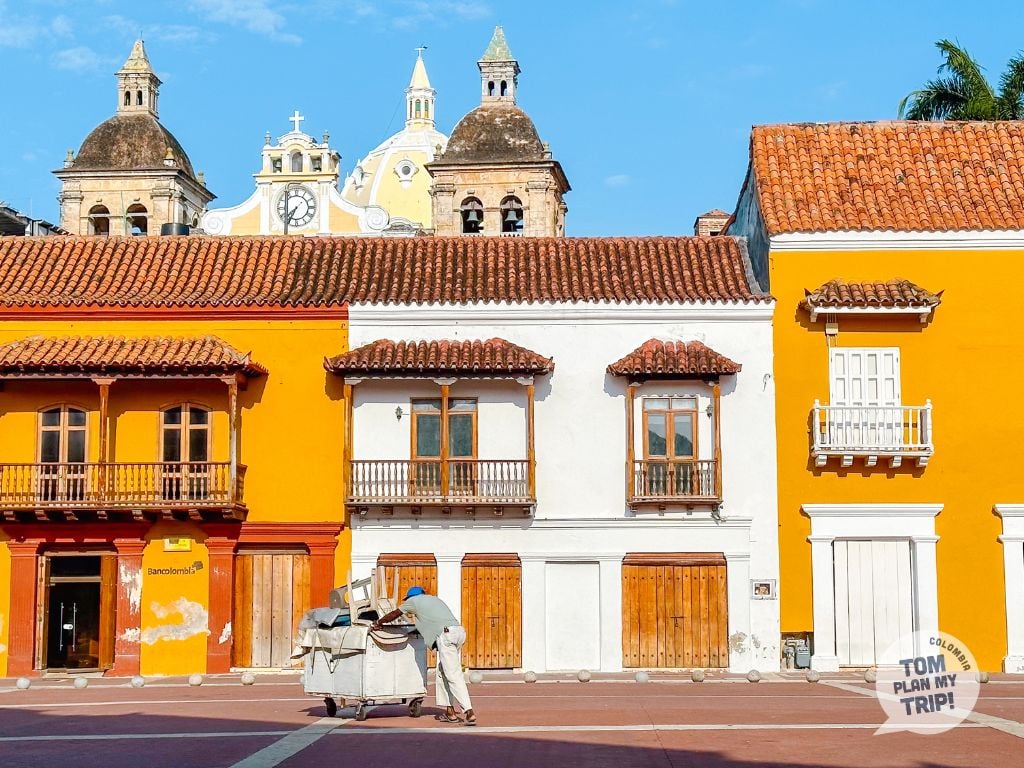
The main tourist attraction of Cartagena lies in its historic center full of charm, with its colonial buildings and superbly preserved walls. You can visit it easily without a guide. You will also find beautiful shops there, especially designer ones.
If you are interested in history, go visit the Naval Museum and the Gold Museum in the walled city. The Castillo San Felipe, 10 minutes by taxi, is also a fine example of defensive architecture.
Food lovers or those curious to discover Caribbean cuisine can take a street food tour, enjoy a coffee tasting or take a cooking class with a local chef.
Getsemaní is also a pleasant neighborhood worth the detour, with its graffiti and art galleries.
And if you feel like getting away from the hustle and bustle, go crab fishing in the mangroves of La Boquilla, 20 minutes from Cartagena.
Two days are enough to get a good overview of the Pearl of the Caribbean.

In my opinion, Santa Marta’s center is nothing exciting. It is very small, with a few colorful houses and flowered balconies; you can visit it on foot very quickly.
The most pleasant area is around the Parque de los Novios, where the bars and restaurants are concentrated.
For a little history lesson, visit the Gold Museum (free) and the cathedral. The Quinta de San Pedro Alejandrino, a hacienda where Bolívar spent his last days, is also a beautiful place, with its botanical garden.
For the view, go to the Taganga lookout.
Santa Marta is especially a good deal for diving enthusiasts: several centers offer trips to beautiful sites in the Tayrona Park, at very attractive prices. I advise you to choose your center carefully, as not all of them comply with the standards.
Between January and April you will have the best visibility.


© Tomplanmytrip
CARTAGENA VS SANTA MARTA: THE BEACHES
Draw: the beautiful beaches are offshore.
The beaches of Cartagena are not its strong point. In Bocagrande, Laguito, and Castillogrande, the sand is gray, the water is not very clear, and you are surrounded by skyscrapers.
Bocagrande is crowded and full of insistent vendors who never announce their prices. The atmosphere of Castillogrande beach is calmer and better suited for families.
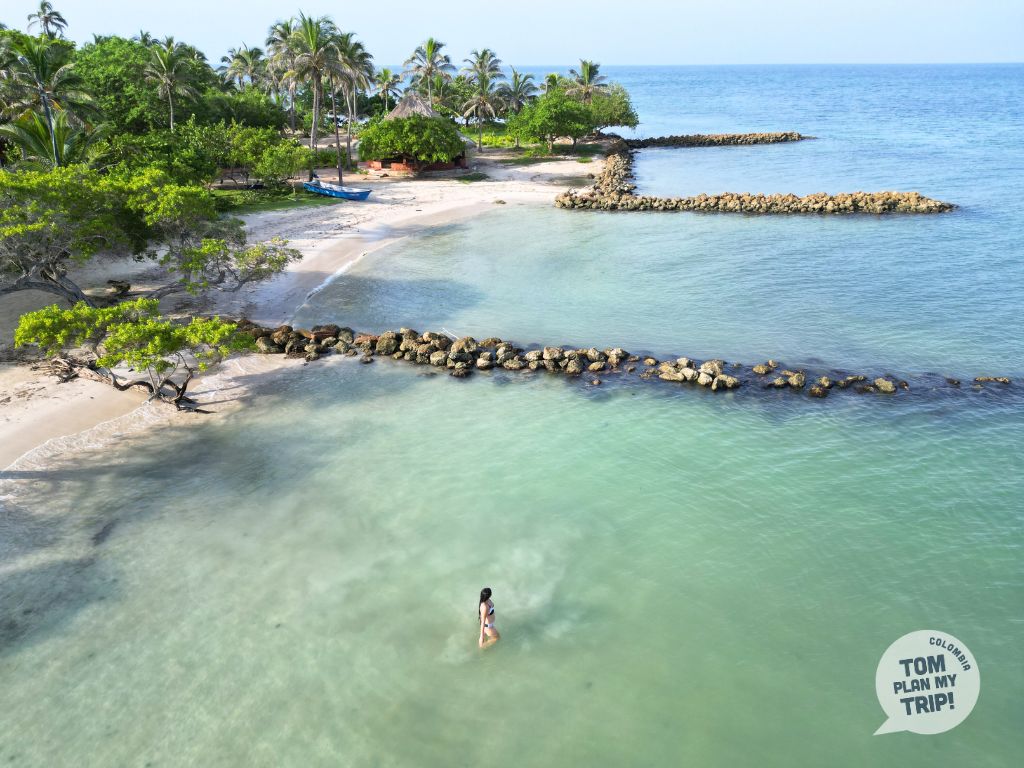
To find beautiful beaches, you need to take the boat to the Rosario Islands, like Isla Grande (1 hour away), or farther, to Isla Mucura, in the San Bernardo archipelago (2 h 30).
With its white sand, Playa Blanca on Barú Island is picture-perfect, but it is victimized by mass tourism that generates pollution and attracts intrusive vendors.
There are good beach clubs on the Rosario Islands.
I’m not a fan of the beaches in Santa Marta: the central one is polluted by the port, Rodadero (20 min by taxi) is crowded, and Playa Grande, the most beautiful, is very busy. Playa Blanca, 5 min by boat, is just as crowded. That leaves Inca Inca, a small secluded pebble beach, and Pozos Colorados, quiet but urban.
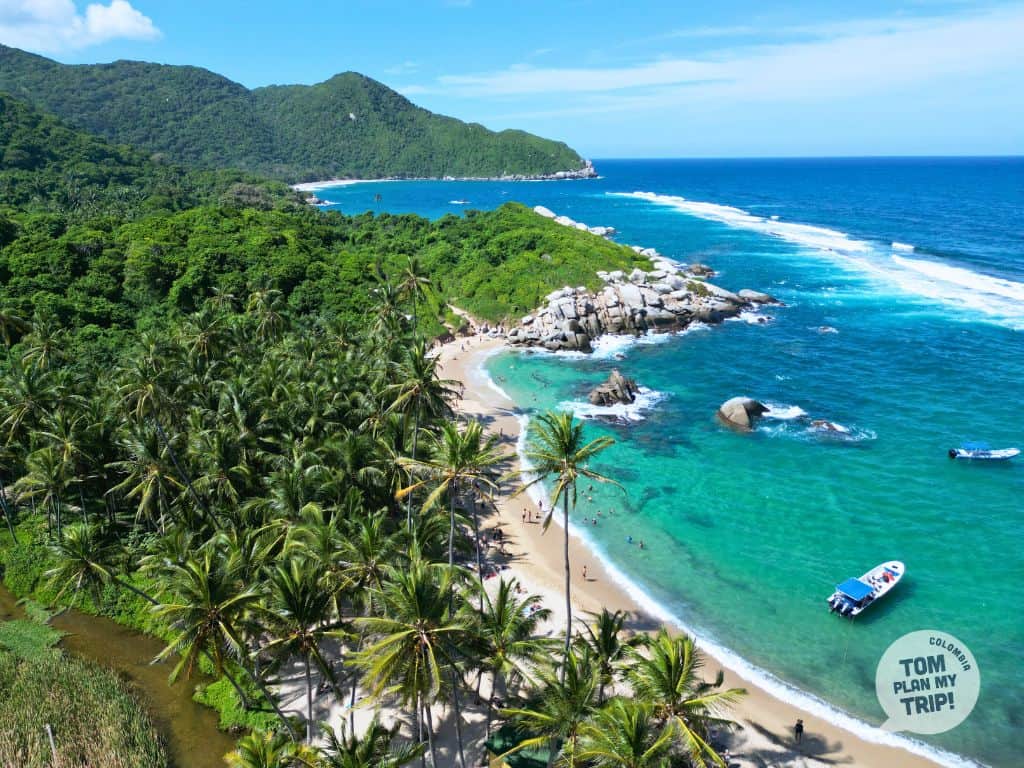
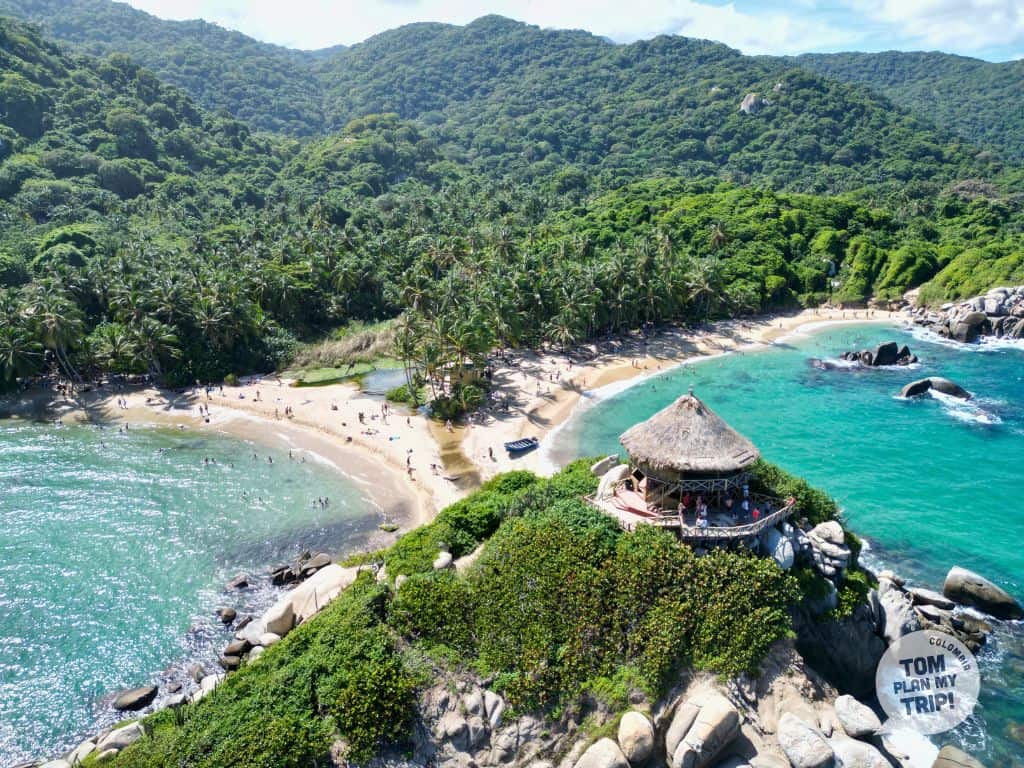
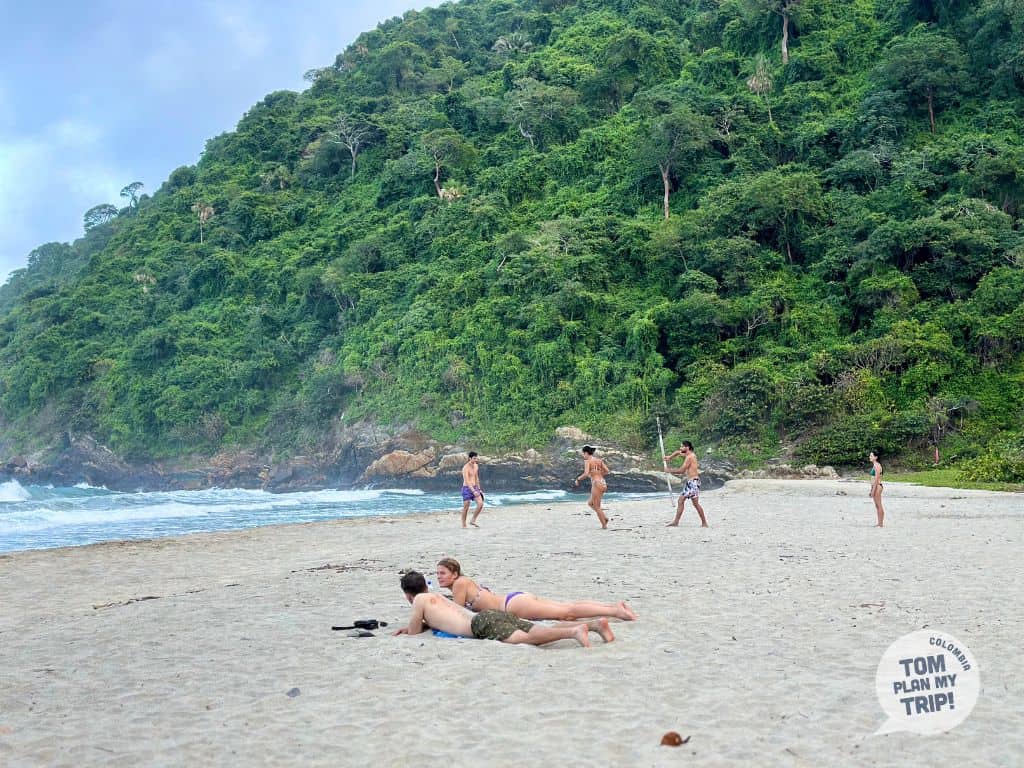
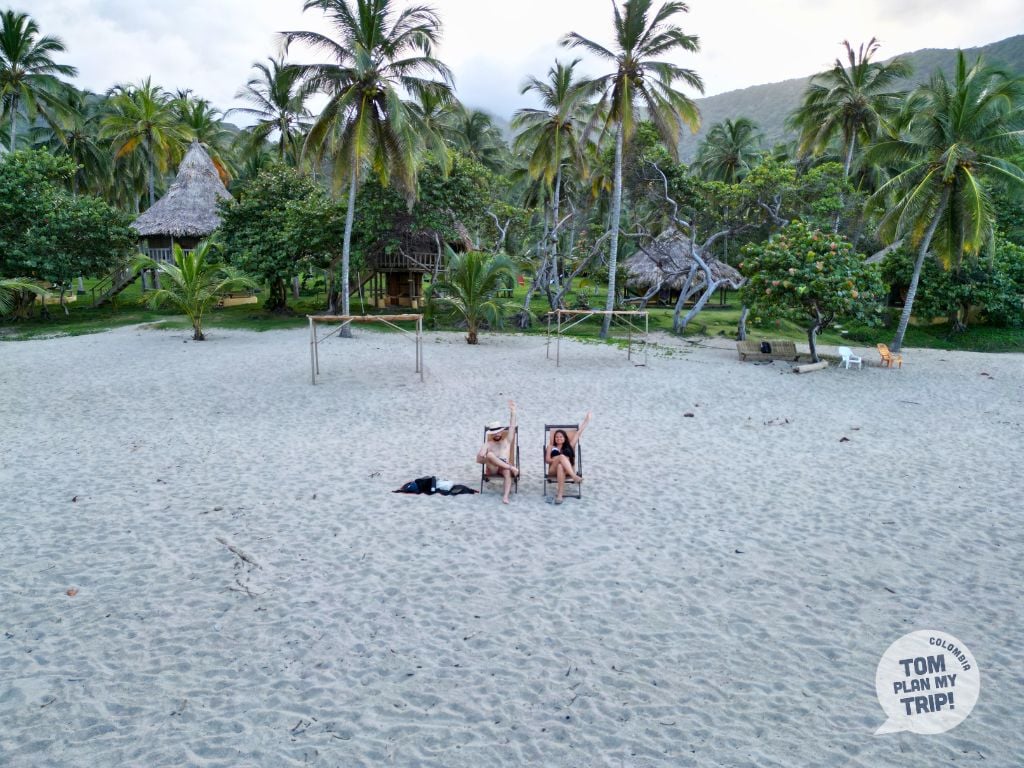
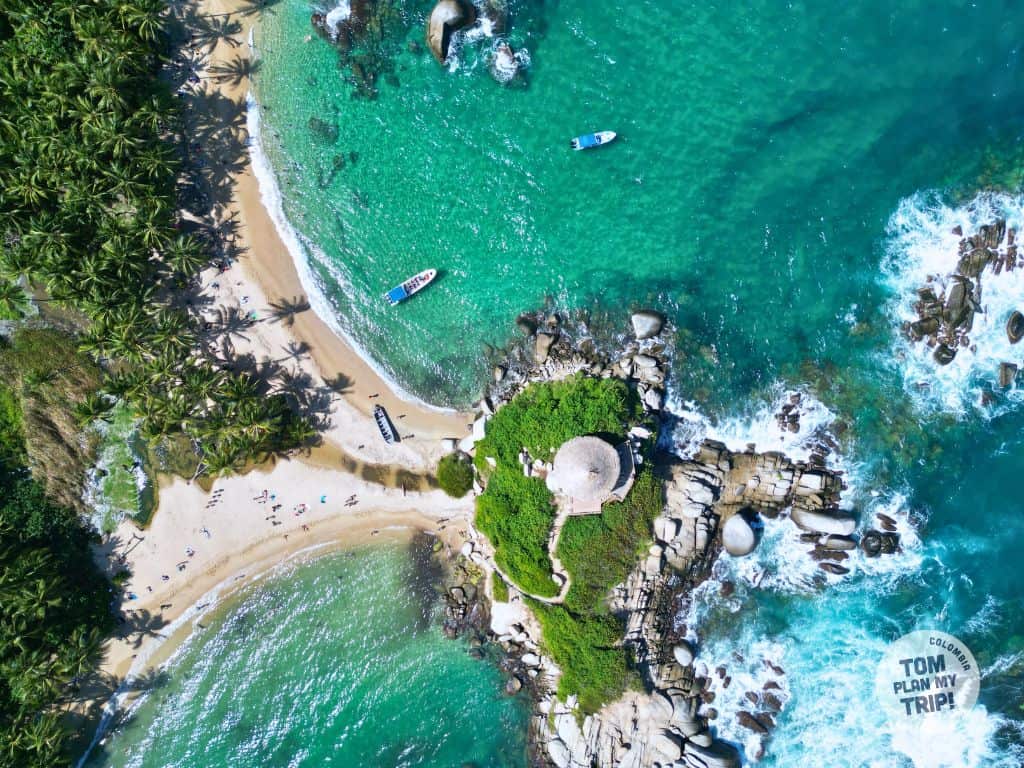
It’s in the Tayrona Park, where the most beautiful beaches are, bordered by vegetation. Cabo San Juan, the most famous, is gorgeous but very crowded, and you have to pay the park entrance fee. Bahia Concha, the most accessible, is crowded on weekends and sometimes dirty. Playa Cristal, limited to 350 visitors per day, is too developed for my taste.
My favorite is Playa Cinto, 1 hour by boat: a small paradise not very crowded, ideal for snorkeling (bring your picnic). Gairaca (safe for swimming, with great diving spots) and Neguanje (some restaurants) are also beautiful beaches.
In Tayrona, swim only on authorized beaches: the currents are strong.

© Tomplanmytrip
CARTAGENA VS SANTA MARTA: FOOD & RESTAURANTS
A point each: flavors in Cartagena, prices in Santa Marta.
Cartagena gastronomic scene is very high quality, especially in the historic center; however, the prices match those in Europe and can even exceed them.
Being a top tourist destination, you are also not safe from tourist traps with quality far from matching the price. To keep control of your budget, choose wisely and opt for the menú del día: hearty, good, and affordable.
As a city oriented towards the sea, the seafood and fresh fish are delicious. Street food is also a good option to not blow your budget, with patacones con queso, arepas con huevo, or even ceviche.
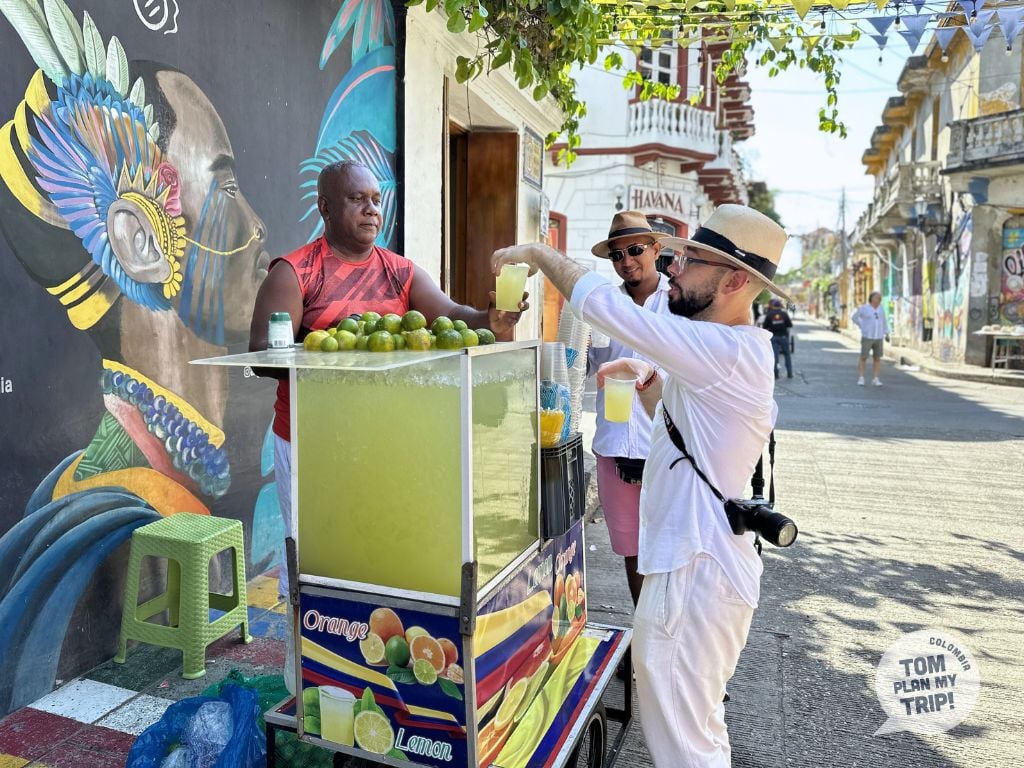
Don’t miss the freshly squeezed fruit juices from a street vendor whose cart is overflowing with fruits you’ve never seen before.

In Santa Marta, you can eat well without breaking the bank. There are many seafood and Colombian cuisine restaurants, and you can also dine with your loved one in a good restaurant with a romantic setting, facing the sunset over the marina.
Finally, there are also cafés that cultivate the good taste of homemade cuisine, at very reasonable prices.


© Tomplanmytrip
CARTAGENA OR SANTA MARTA: THE CLIMATE
A point for Santa Marta, just barely.
In Cartagena, it is hot and humid all year round, with an average temperature of about 28 °C. At certain times of the day, the air can feel oppressive. From December to April, humidity drops a bit, and the wind blows, bringing a breeze, especially in the evening; staying in Cartagena is then more pleasant.
The dry season runs from December to April, and during the rainy season (from September to November), showers are intense but generally don’t last long.
During the windy season, the sea is rough, especially in the afternoon. If you’re planning a boat trip and you’re not very seaworthy, expect to be shaken.
Heat in Santa Marta is less humid than in Cartagena, and a pleasant sea breeze also blows in the evening. The dry season lasts from December to March.
In April-May, showers are almost daily but short, and frequent rains in Santa Marta from September to November can cause flooding. The sea is often rough in the afternoon.
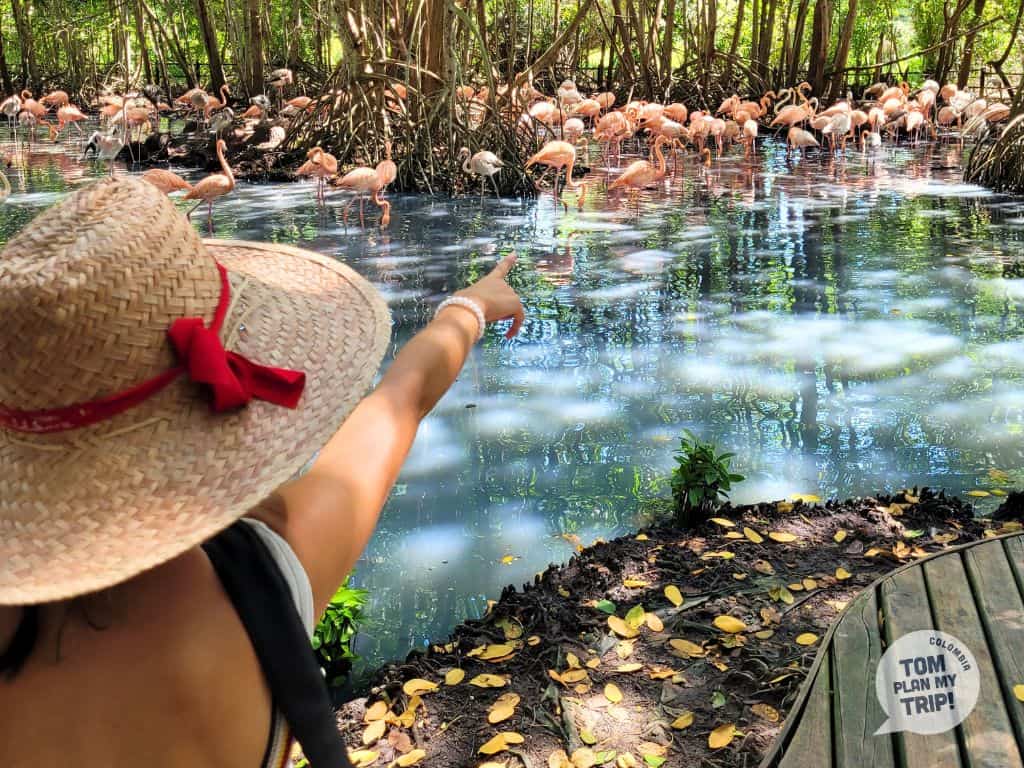
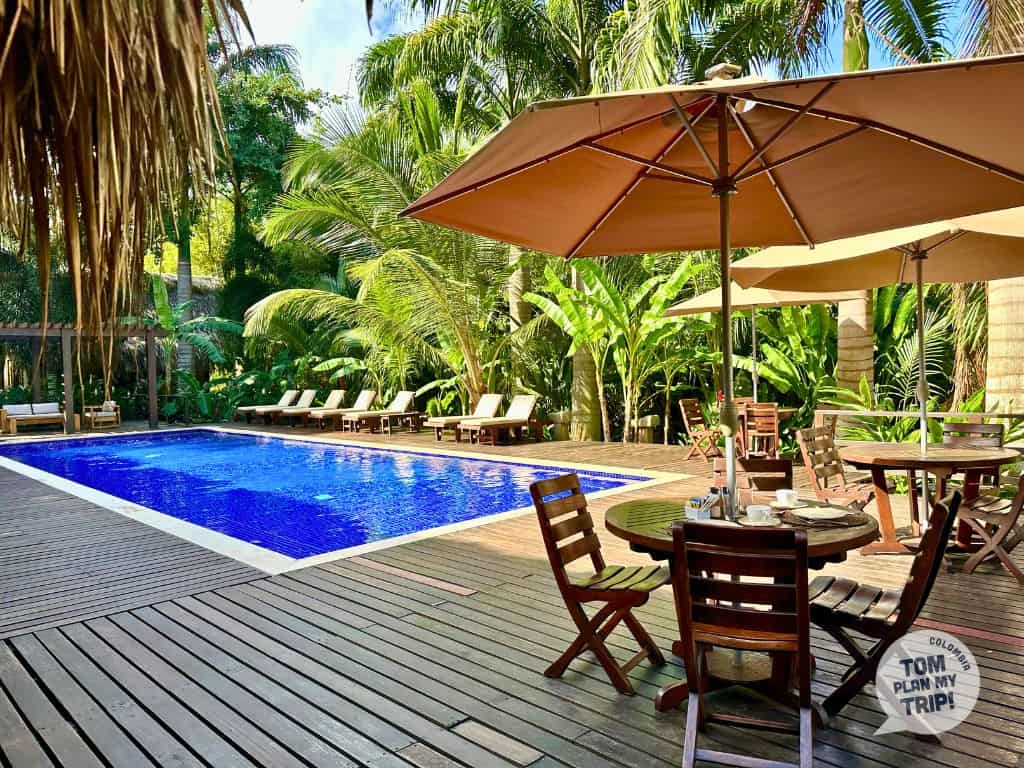
If the heat gets to you, you can escape to Minca, in the Sierra Nevada de Santa Marta, just about 30 minutes away. There, you will enjoy the cool evenings at your ecolodge at altitude.

© Tomplanmytrip
CARTAGENA vs SANTA MARTA: THE ATMOSPHERE
Cartagena wins with its dreamlike setting.
With its colonial beauty, gorgeous buildings, trendy rooftops, pretty shops, boat outings, and private islands for rent, Cartagena offers a chic and romantic vacation atmosphere.
Foreign and Colombian tourists mingle there all year round, and it is a highly sought-after destination for celebrating events such as weddings and bachelor parties.
Cartagena’s popularity comes at a price: the streets are crowded, vendors can be too pushy, and its authenticity has somewhat eroded.
For a more local vibe, head to Getsemaní.

Santa Marta’s laid-back, rather chaotic vibe is concentrated in a few parts of the city, such as the tiny historic center and Parque de los Novios, which comes alive in the evening.
Tourism here is mainly Colombian and seasonal, with Rodadero serving as a popular seaside resort.
A certain charm of faded grandeur floats over Santa Marta, with a backdrop of visible poverty and homeless people in the streets. Setting prices aside, Santa Marta is not a low-cost version of Cartagena; it has a completely different character.


© Tomplanmytrip
CARTAGENA vs SANTA MARTA: THE SURROUNDINGS
A point for Santa Marta: land of adventures.
Around Cartagena, there are few things to do that are not related to the islands.
The main excursion is the Rosario Islands, 1 hour by boat, with their turquoise waters and coral reefs, like Isla Grande or Isla Barú. Closer to Cartagena, Tierra Bomba, 15 minutes by boat, is home to colonial forts.
For a more peaceful alternative, head to the San Bernardo archipelago (2 h 30 by boat), with Isla Mucura or its big sister, Tintipán, and its beautiful beaches. Or settle in for a few days at Rincón del Mar, a quiet and authentic fishing village facing San Bernardo.
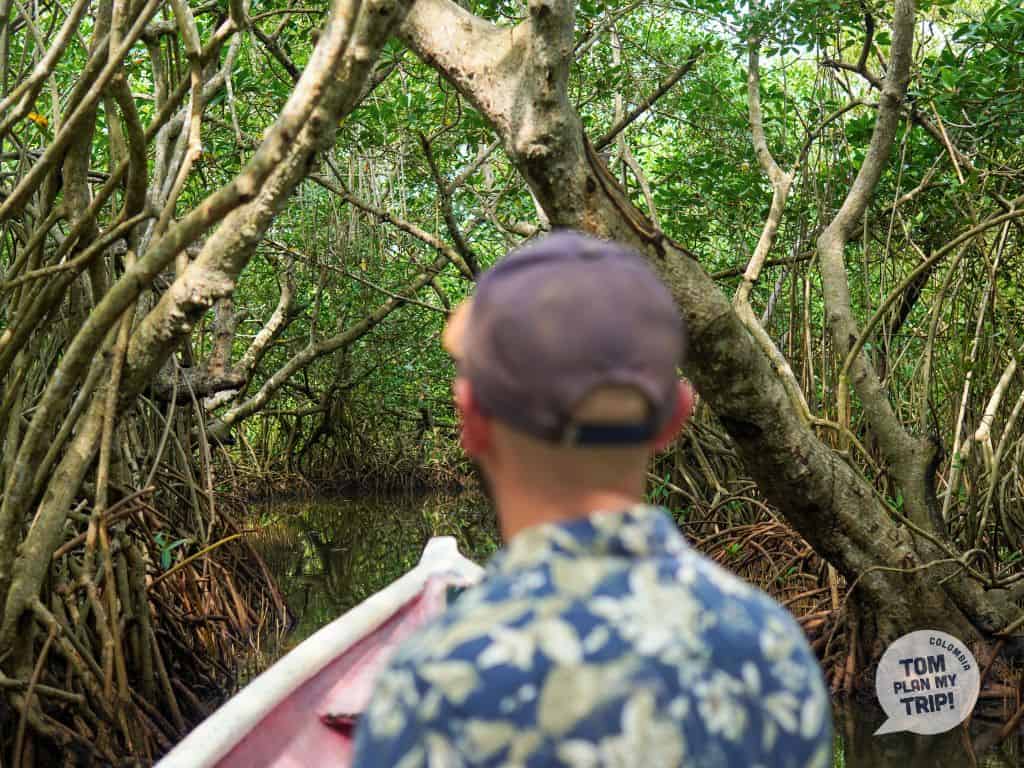
To get away from the world, you can also go to La Boquilla to fish for crabs in the mangroves with a local, or isolate yourself on the vast beach of Manzanillo del Mar.
For a cultural experience, visit San Basilio de Palenque, 1 hour away by car. It is the first free village in America, and it maintains its language and traditions intact.
Finally, for a nature outing, explore the dry forest with a guide, home to tamarins and howler monkeys.


The surroundings are the main asset of Santa Marta.
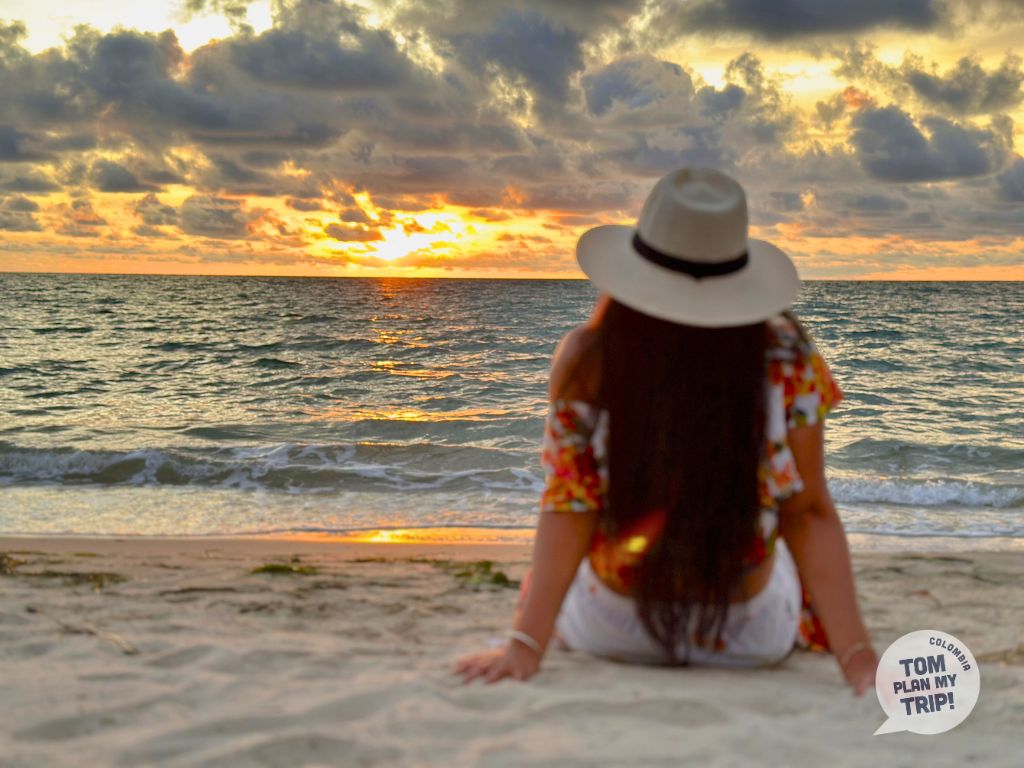
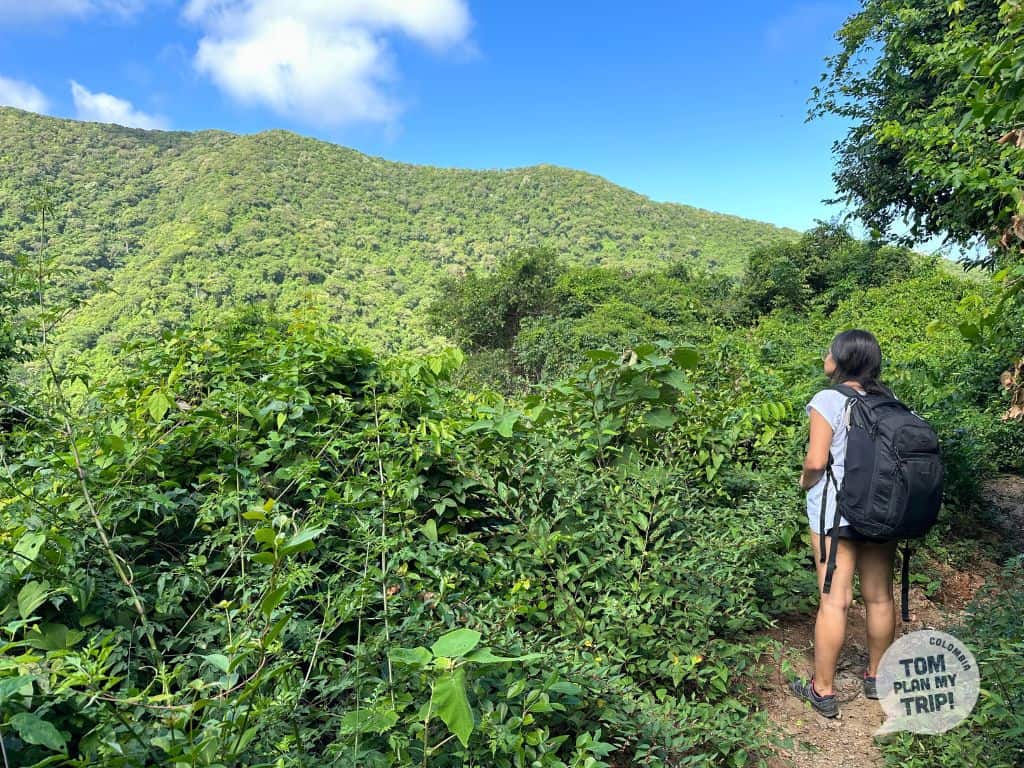
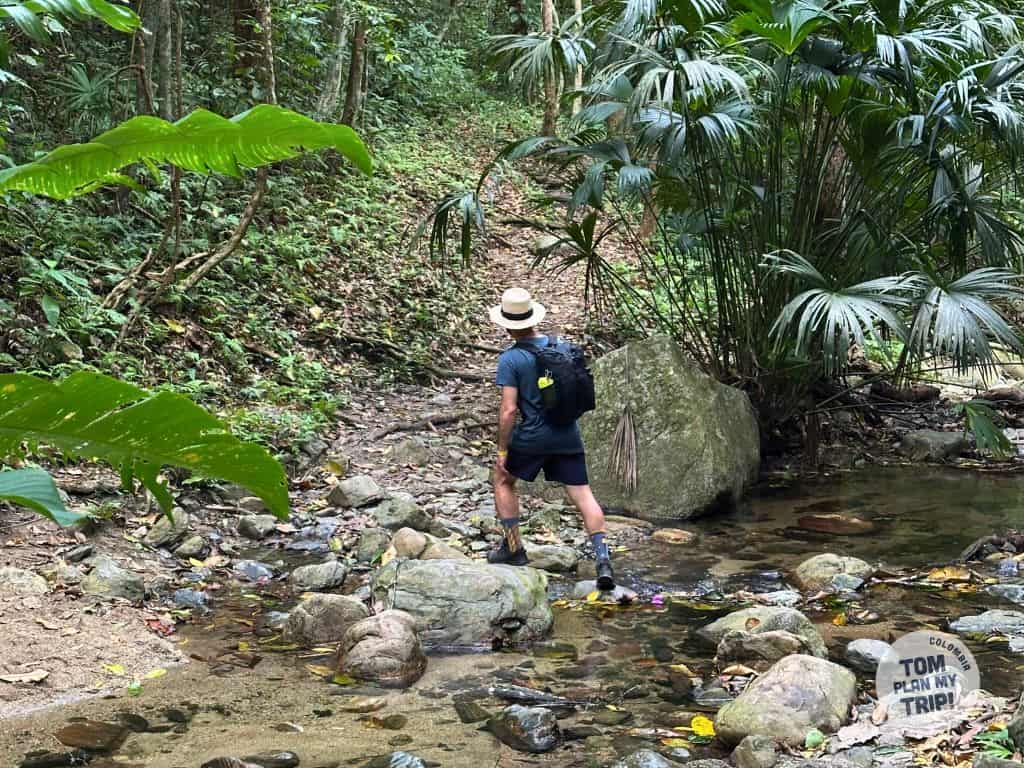
Tayrona is the must-see of the region, with hiking trails through lush vegetation and sublime beaches.
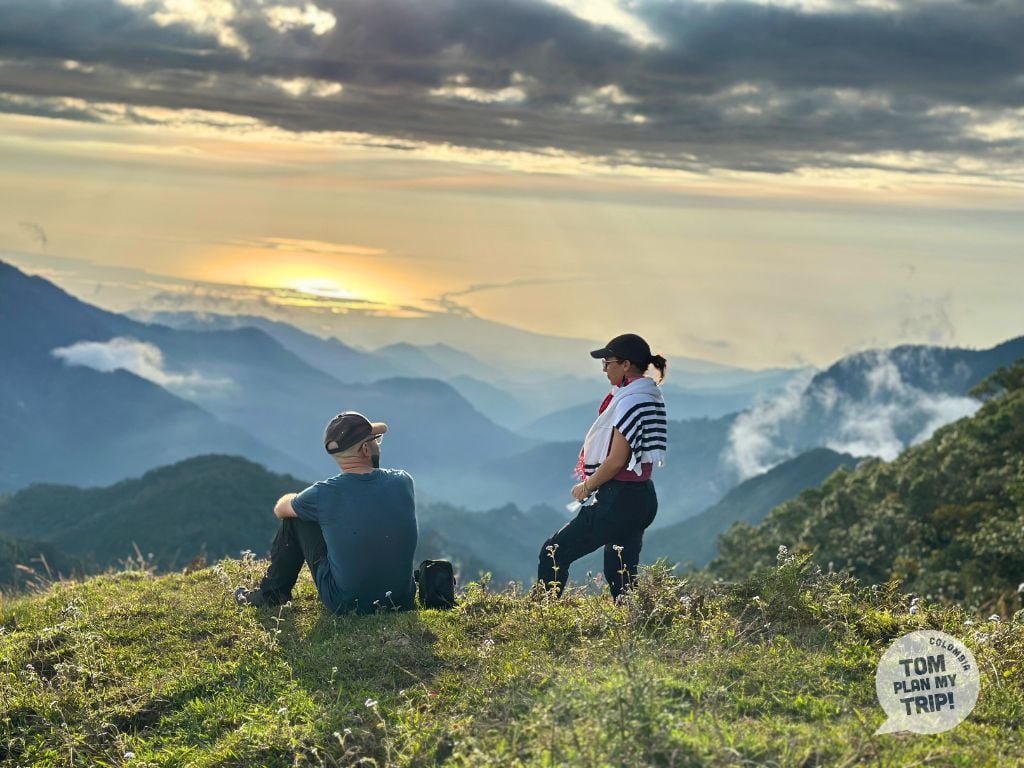
Above Santa Marta rises the Sierra Nevada, a unique coastal mountain range, with spectacular views, remote ecolodges, and over 600 bird species. Discover Minca, its waterfalls, and its coffee and cocoa farms; Cerro Kennedy for an unforgettable sunrise or, higher up and less frequented, Paso del Mango and the Coaba reserve. You can even spend a night in an indigenous community.
Beyond the Sierra, the region offers many other surprises: the stilt villages of the Ciénaga Grande, tubing on the río Don Diego in Palomino, or Aracataca, the birthplace of the Nobel Prize in Literature winner, Gabriel García Márquez.
The more adventurous can embark on the trek to the Lost City (4 days) or to Bunkuany (3 days), which is less frequented.


© Tomplanmytrip
CARTAGENA OR SANTA MARTA: PRICES
Santa Marta wins: a lighter bill.
Cartagena is the most expensive city in Colombia, and your wallet will notice it quickly. Accommodations, restaurants, bars, and clubs in the historic center have prices much higher than in the rest of the country.
Bargains are rare there. Be wary of cheap excursions, especially boat trips to the Rosario Islands that are sold to you on the street. In high demand, they are poorly organized, unreliable, and overcrowded. Make sure to get informed before accepting.
And prices soar even more in high season (up to 50% more). It’s best to come with a comfortable budget; otherwise, prices will end up ruining your visit.
A habit to keep: always ask the price before ordering or buying. You’ll avoid unpleasant surprises.

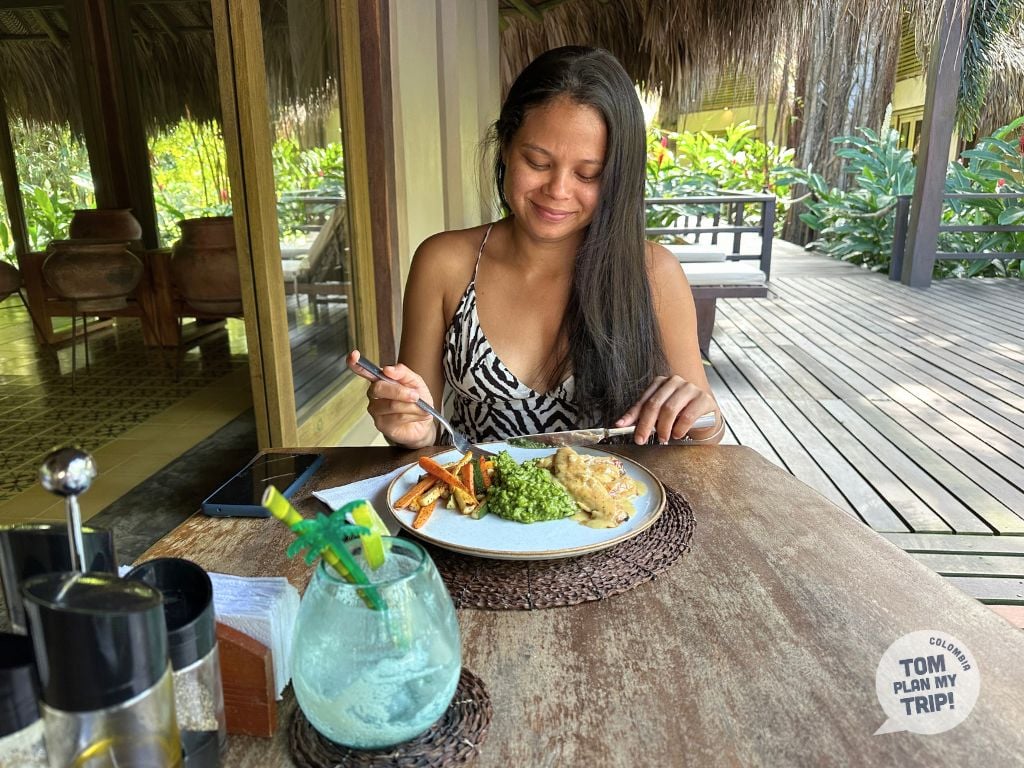
Santa Marta remains more affordable than Cartagena. Eating, getting around, and sleeping are cheaper, with a choice of accommodations for all budgets, ranging from hostels to boutique hotels in the city center.
For diving enthusiasts, the many Taganga centers, which are quite affordable, are a bargain, provided you ensure the center’s safety and reliability rather than just the price.
The prices also rise during the high season (December-January, Holy Week), while November is the cheapest month. At Tayrona, park entrance costs about 20% more in high season.
© Tomplanmytrip
CARTAGENA VS SANTA MARTA: TOURISTS
Santa Marta wins: mostly local tourism and more dispersed.
Cartagena never really empties out: a very popular destination, it attracts visitors all year round, foreigners as well as Colombians.
The crowd explodes in high season: from mid-December to mid-January, during Holy Week, during school vacations, and on weekends and public holidays. The historic center and the Rosario Islands are then crowded.
To discover the city more peacefully, prefer the rainy season (May-June, September-November); rest assured, the showers never last very long.

In Santa Marta, the visitors are largely Colombian, coming mainly during vacation, from mid-December to January and then in July-August.
Santa Marta is not a city where people stay; foreigners often make a simple stopover or use it as a base to explore Tayrona, Minca, or the Sierra Nevada. Tourists are therefore more scattered than in Cartagena.
Tayrona is an exception. Crowds form quickly at certain park entrances. It’s better to arrive early. Keep in mind the park’s closure dates (3 times a year).

© Tomplanmytrip
CARTAGENA vs SANTA MARTA: ACCOMMODATIONS
Cartagena wins: luxury, choice, and dream
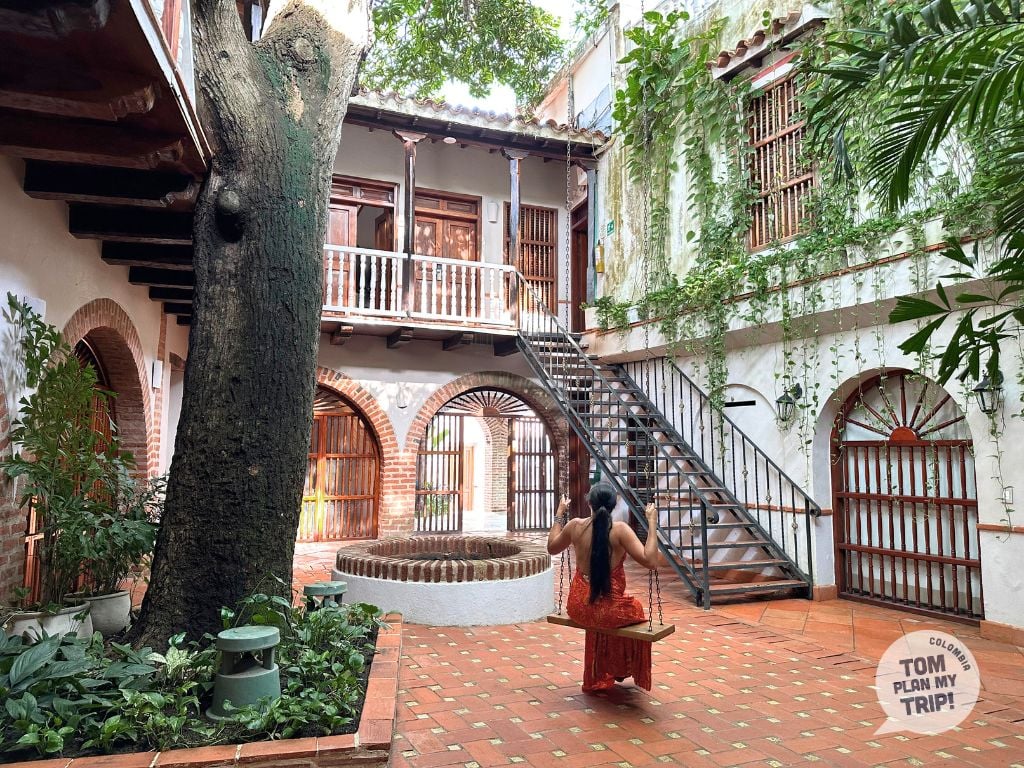
For elegance and character, nothing beats Cartagena’s historic center and its colonial homes transformed into cozy boutique hotels. But expect to pay a high price and deal with noisy streets; keep that in mind when booking.
Getsemaní feels more authentic, and the value for money is better, even though the streets remain lively until late at night.
The residential neighborhood of Manga is quieter, while the modern area of Bocagrande offers hotel complexes and large apartments for a longer stay.
Make sure to choose your neighborhood based on what you are looking for.

For better value for money than Cartagena, the historic center of Santa Marta, with its few colonial buildings, offers boutique hotels (Casa Carolina, Casa Gaitana) and youth hostels that are pleasant, like Masaya, Viajero, or, for the most upscale, Don Pepe.
The Rodadero neighborhood, with its apartments, suits tight budgets. 30 minutes by taxi from downtown, the modern neighborhoods of Belo Horizonte and Pozos Colorados offer all-inclusive resorts near the airport, but plan to dine at the hotel, as there is almost nothing around.
Diving fans can stay with a sea view in Taganga, a coastal village with a laid-back atmosphere, but not very well-kept and rather noisy, especially on weekends.
It’s up to you to choose your neighborhood.


© Tomplanmytrip
CARTAGENA vs SANTA MARTA: ARRIVING
A point for Cartagena: better connected.
Cartagena is the best-connected city on the coast, with its airport located about fifteen minutes from the historic center.
For domestic flights, Cartagena connects directly to Bogotá, Medellín and Cali, as well as to San Andrés, Pereira, and Bucaramanga.
It is also served by about fifteen direct international destinations, with Panama leading, followed by Miami, Lima, Mexico City, Amsterdam, and New York. Seasonal connections complete the offer from Madrid, Toronto, Montreal, and Zurich, totaling more than 500 flights per week.
If you arrive by road, keep in mind that the bus station is about 45 minutes from the city. You will need to consider traffic jams during peak hours.
The airport of Santa Marta is located by the sea, about 30 minutes by taxi from downtown. It offers direct domestic flights from Bogotá, Medellín, Cali, and Pereira.
Its only international connection is from Panama City. Most travelers coming from abroad therefore need a stopover in Panama City, or they will have to transit through one of the four Colombian cities connected to Santa Marta.

© Tomplanmytrip
CARTAGENA OR SANTA MARTA: LONG STAY
Zero all: neither.
Cartagena can attract digital nomads thanks to its expat community, coworking spaces, and air connections.
On the other hand, the cost of living, which is higher than the Colombian average, and a very touristy historic center make it unsuitable for long-term stays. One week at most is enough to enjoy it fully.

Santa Marta is a small town with nothing exciting in the center.
Its surroundings, like the Sierra Nevada and the Tayrona Park, are gorgeous, but the most beautiful sites are relatively far from the city and do not lend themselves well to a simple day trip.
Its cheaper cost of living might attract some expats, but coworking is underdeveloped there, mainly because of the unreliable Internet from one neighborhood to another.
It’s better to make it a base rather than a destination to linger.

© Tomplanmytrip
CARTAGENA OR SANTA MARTA: MY EXPERIENCE
Cartagena or Santa Marta? Beyond the objective criteria, each city has its own unique atmosphere.
I’ve been living in Colombia since 2015, and I know Cartagena and Santa Marta well. Here’s what each inspires me, unfiltered, and how I like to discover them, to help you choose the one that best matches your trip.
TOM’S ADVICE
Do you know the other cities in Colombia? Did you know Colombia is also home to beautiful colonial villages?
Also discover why Colombia is worth the trip and don’t hesitate to contact us to organize your adventure!

My thoughts on Cartagena



Cartagena, I love it. Its colorful streets breathe the beautiful energy of the Caribbean, and its historic center, superbly preserved, exudes a romantic atmosphere found in its charming boutique hotels and chic shops.
It’s the perfect place for a romantic getaway, a honeymoon, a birthday, a bachelor or bachelorette party, and a destination I love to introduce to my family and friends, because it wonderfully illustrates a part of Colombia’s history: once a major port of the Spanish Empire, its buildings and walls bear witness to the past grandeur of this colonial empire.
For me, nothing beats a walk in the early morning, before the heat and the crowd, heading to the more authentic San Diego neighborhood. Then, a good coffee and a pastry; then, in the afternoon, after a nap, like everyone under this tropical climate, I recommend visiting the Naval Museum to dive into the city’s history.
At the end of the day, I watch the sun set over the sea from the walls, a beer in hand, among the onlookers, or from a trendy rooftop, sipping a cocktail.
I also love going to Getsemaní, once the night falls, a more popular and lively neighborhood, where musicians and street artists perform at Plaza de la Trinidad.
Finally, you can’t leave Cartagena without seeing the Rosario Islands. The ideal: rent a private boat with close ones and stop wherever you want, far from tourist areas. Spending two nights on the islands in a nice hotel is also the best way to soak up the atmosphere, without the daytime tourist crowds.

ADRIEN’S ADVICE
Read our travel guide on Cartagena de Indias to better know this superb Caribbean colonial city.
My thoughts on Santa Marta

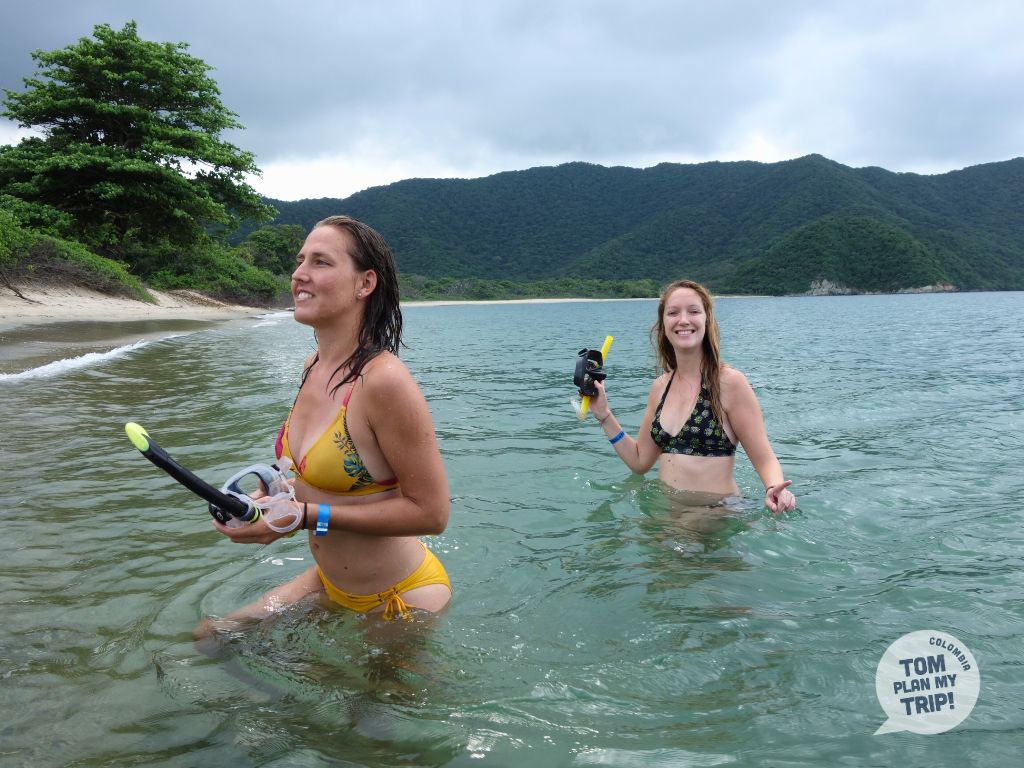

Santa Marta, I see it primarily as a transit city.
If you’re traveling with a backpack and want to party without breaking the bank, the city has plenty to offer you.
For accommodation, Rodadero, a seaside neighborhood south of the city, offers apartments at affordable prices, right by a very popular beach. The waterfront of Bello Horizonte and Pozos Colorados, near the airport, is also a good option: you can rent a modern apartment facing the beach or opt for an all-inclusive resort—however, you’ll be far from everything.
Honestly, the city’s vibe doesn’t really appeal to me: more laid-back than Cartagena, it’s also more chaotic, and the activity is concentrated in a few areas.
But I acknowledge one real advantage: its location. It’s a convenient base for exploring the Sierra Nevada. You can start with a few days in Minca, head down for a stop in Santa Marta, then go to Tayrona and Mendihuaca, a peaceful spot popular with surfers, and why not go all the way to the desert of La Guajira.
And if you love diving, the nearby small village of Taganga is the ideal starting point to explore the underwater world at very affordable rates.
TOM’S ADVICE
Read our travel guide on Santa Marta to learn a little more about the gateway to the Sierra Nevada.
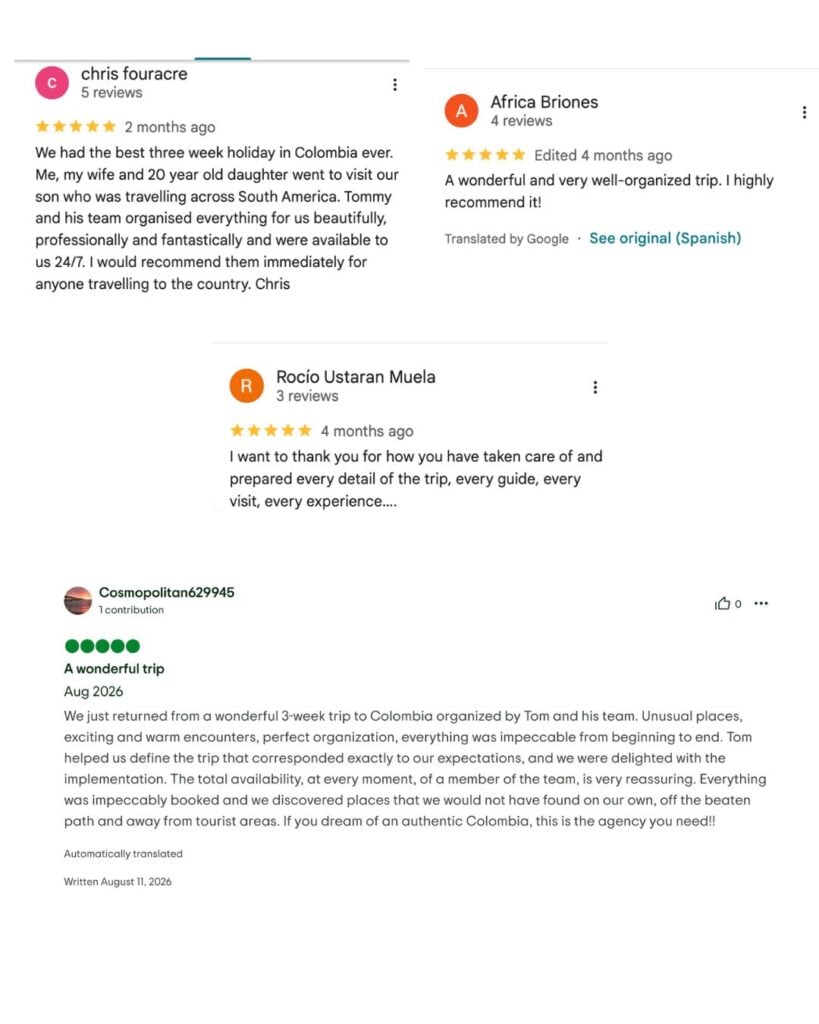
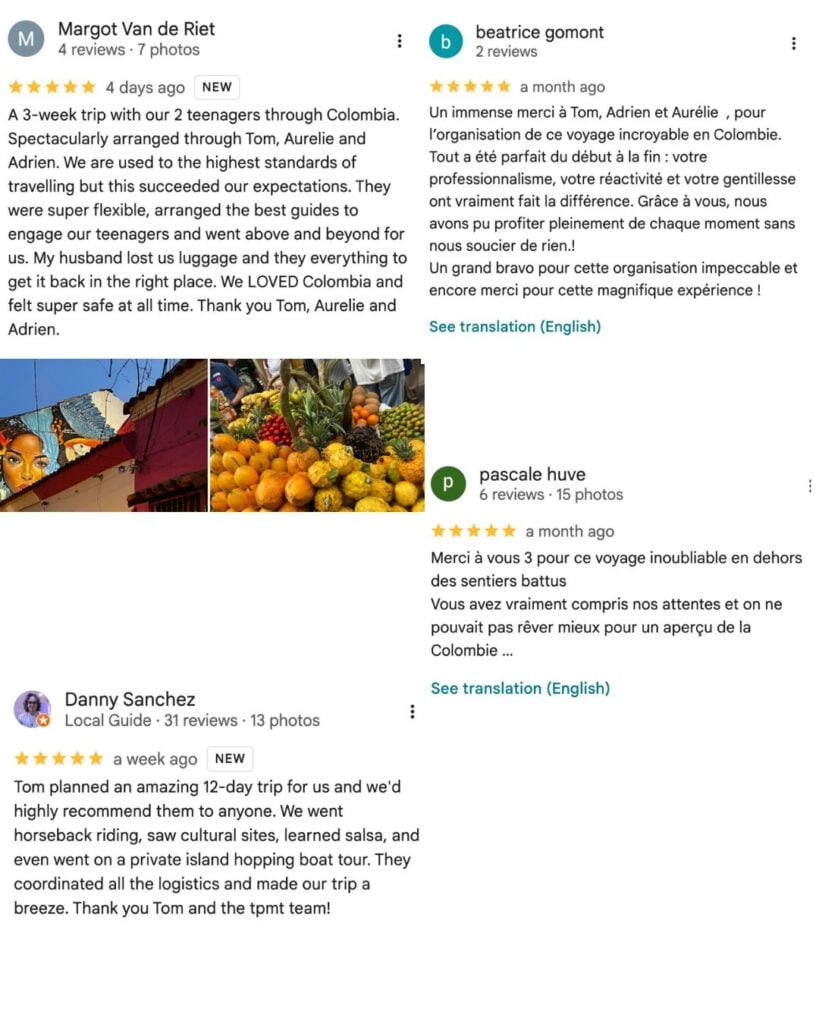
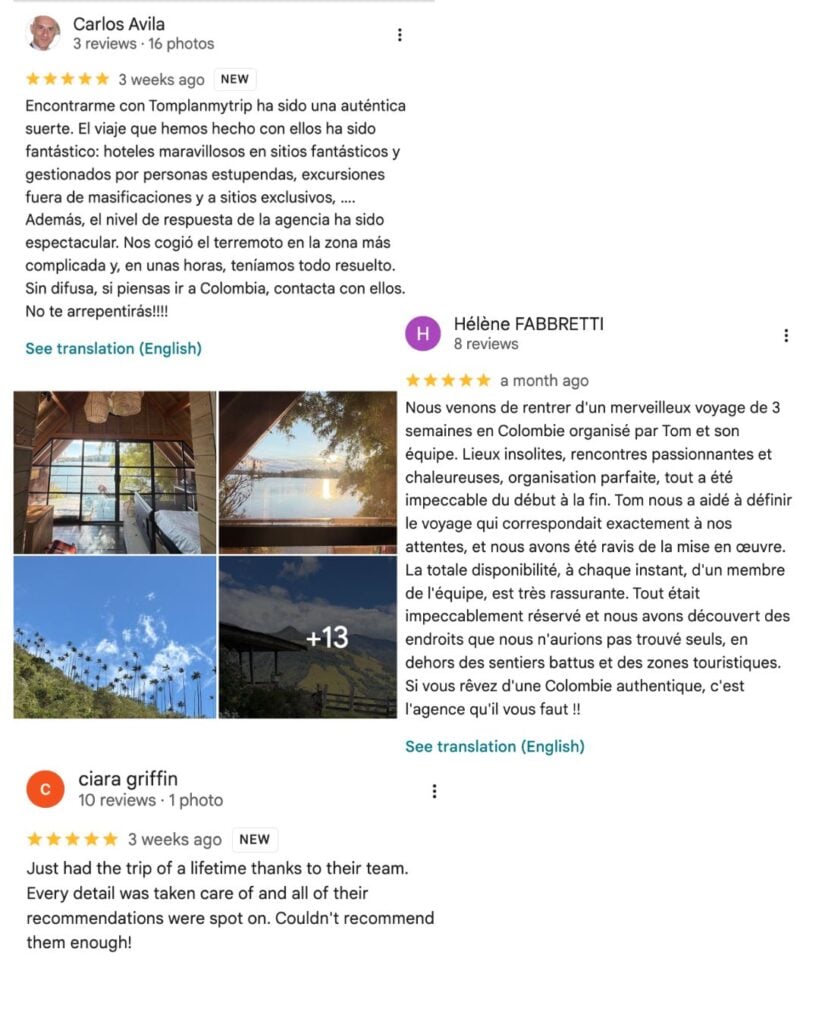
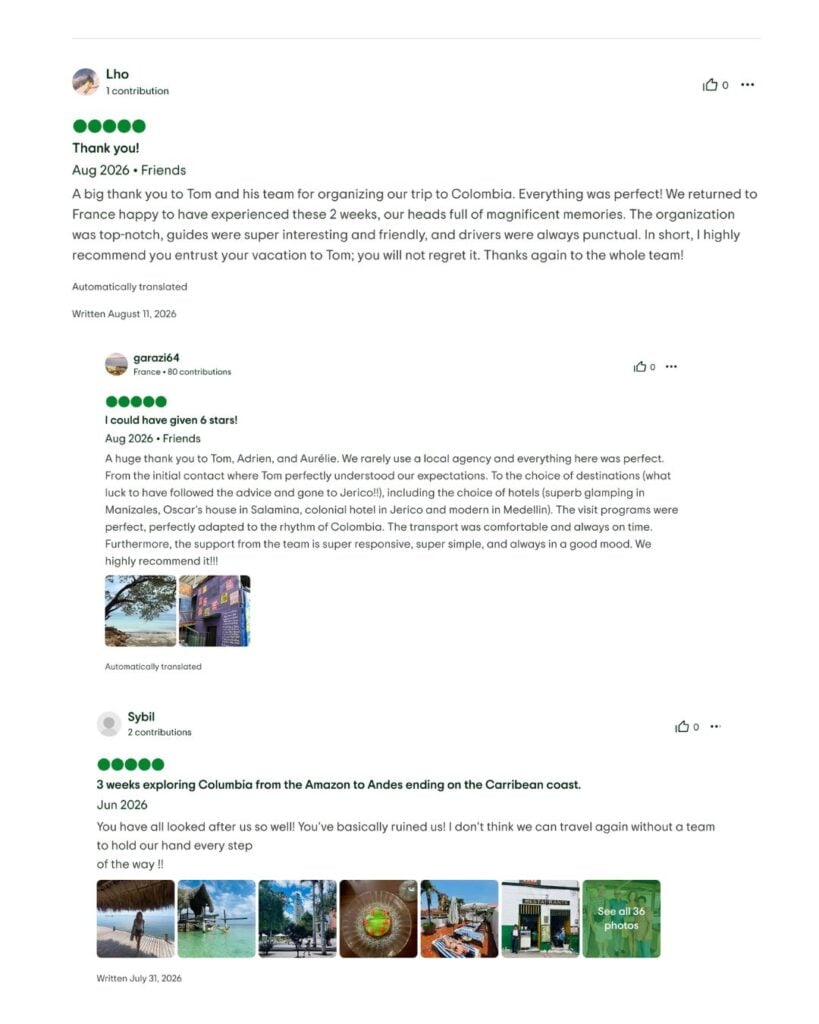
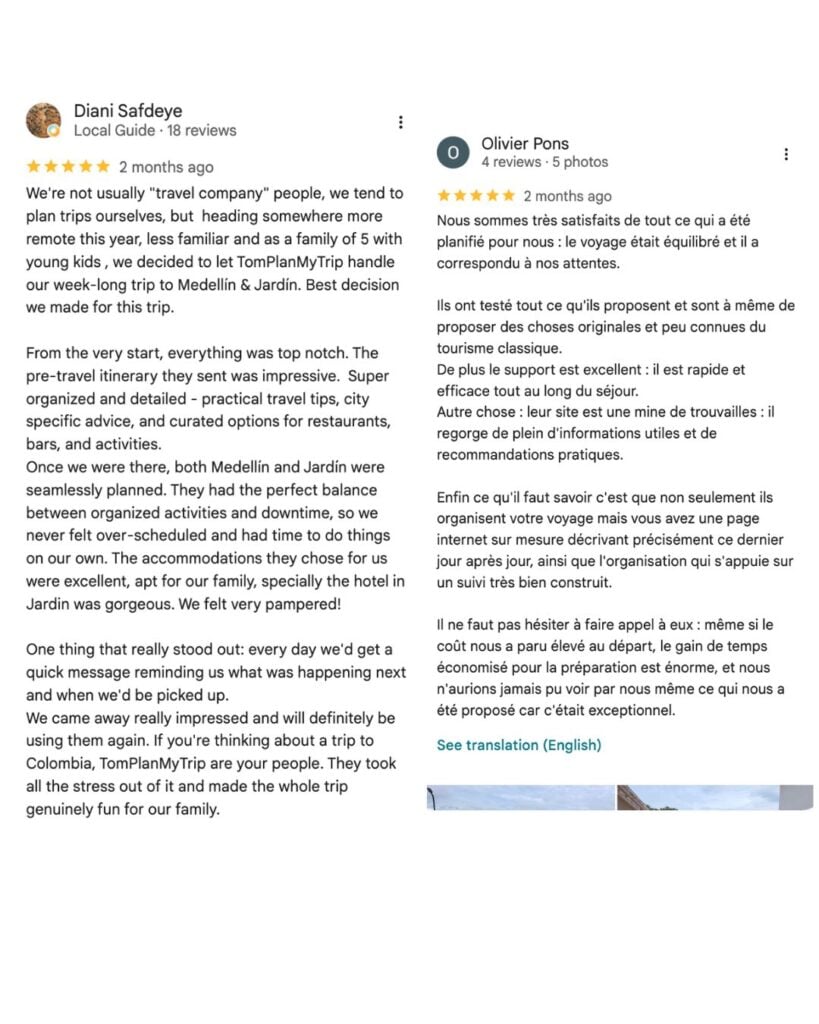
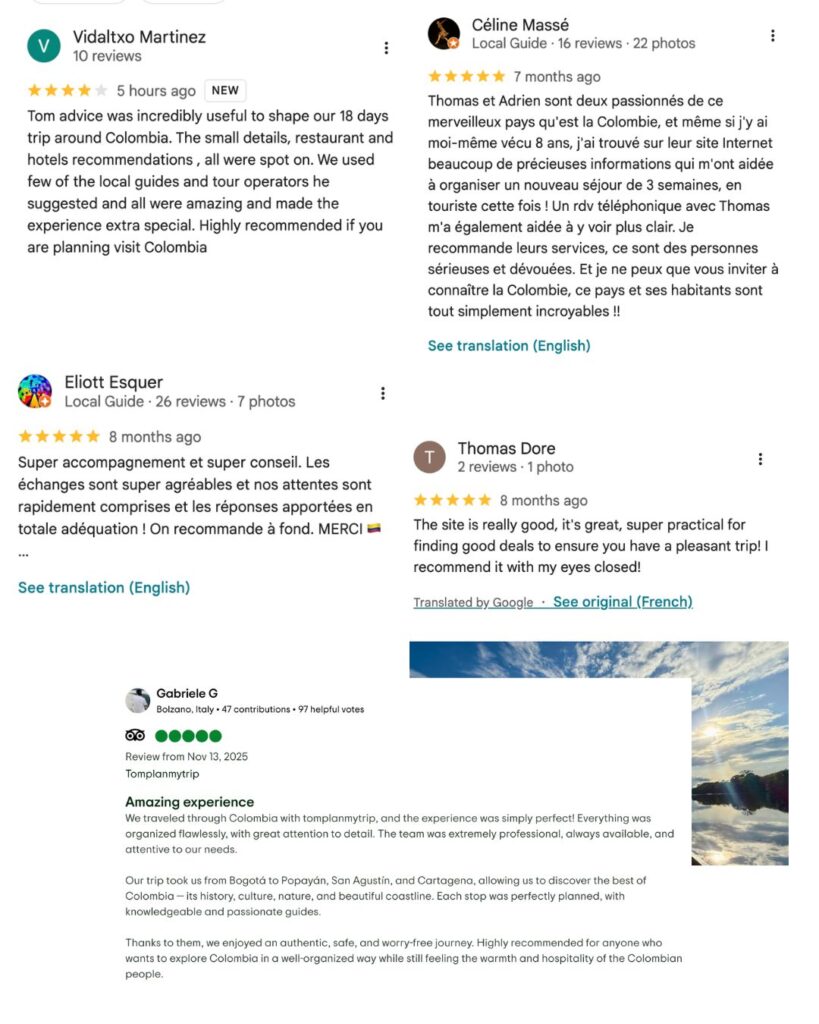
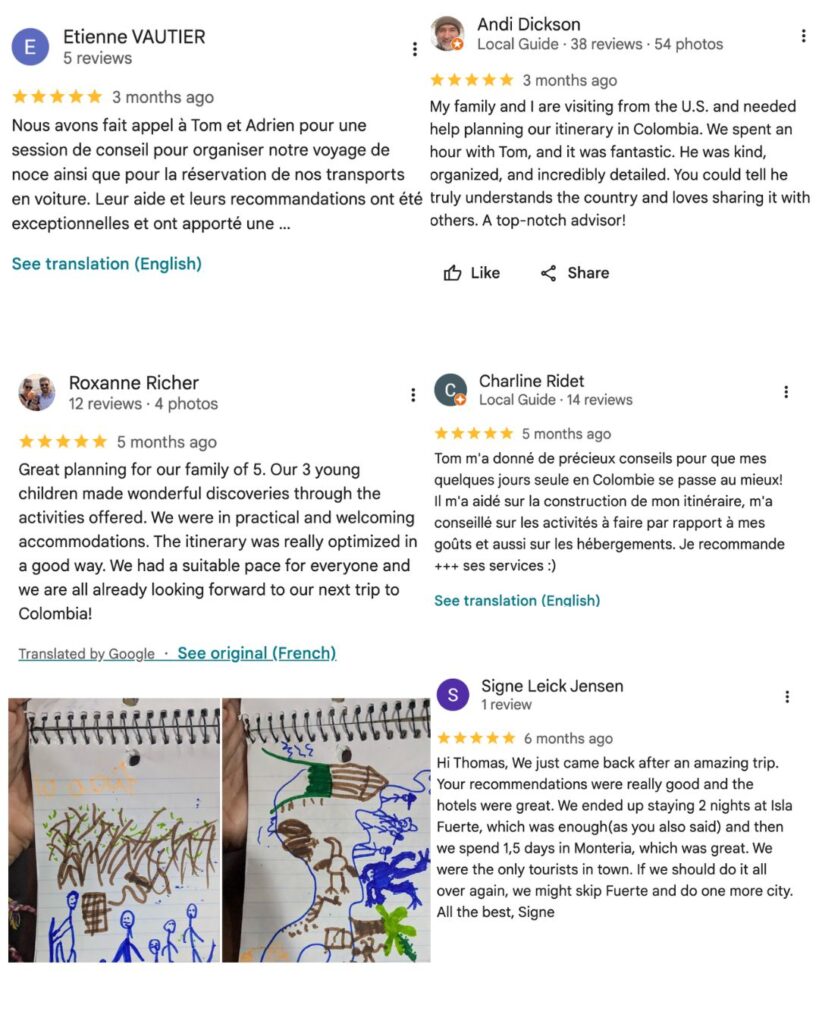
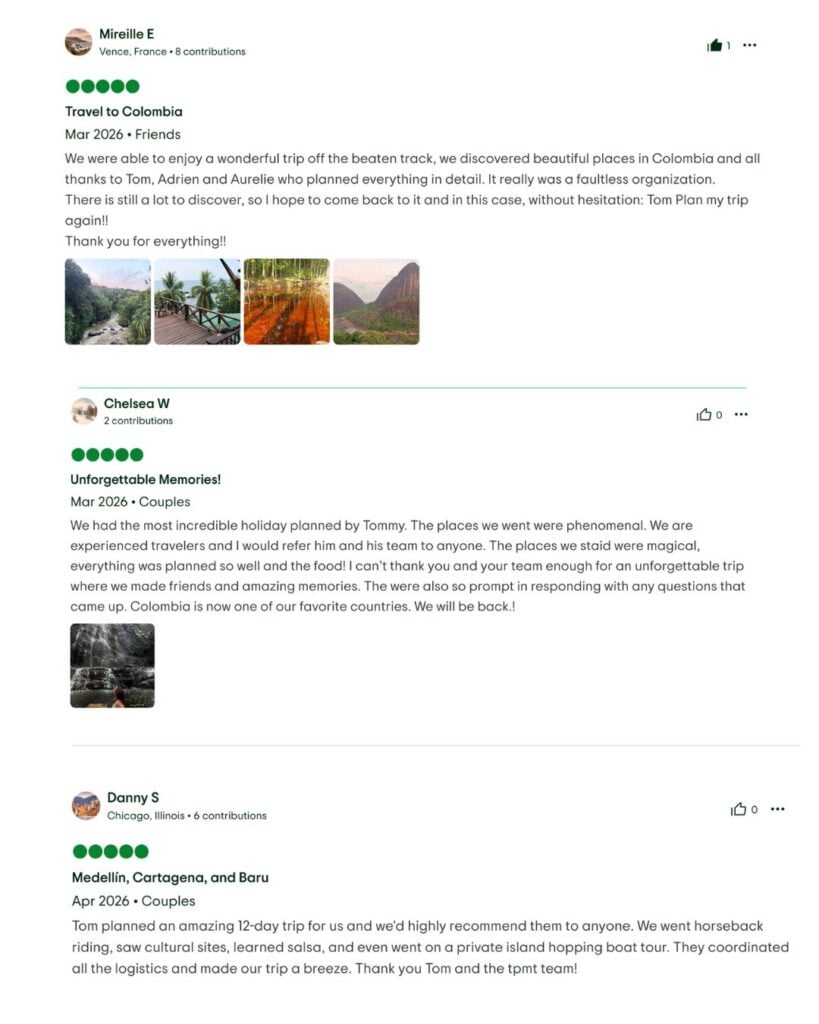
+185 five-star reviews on Google Maps

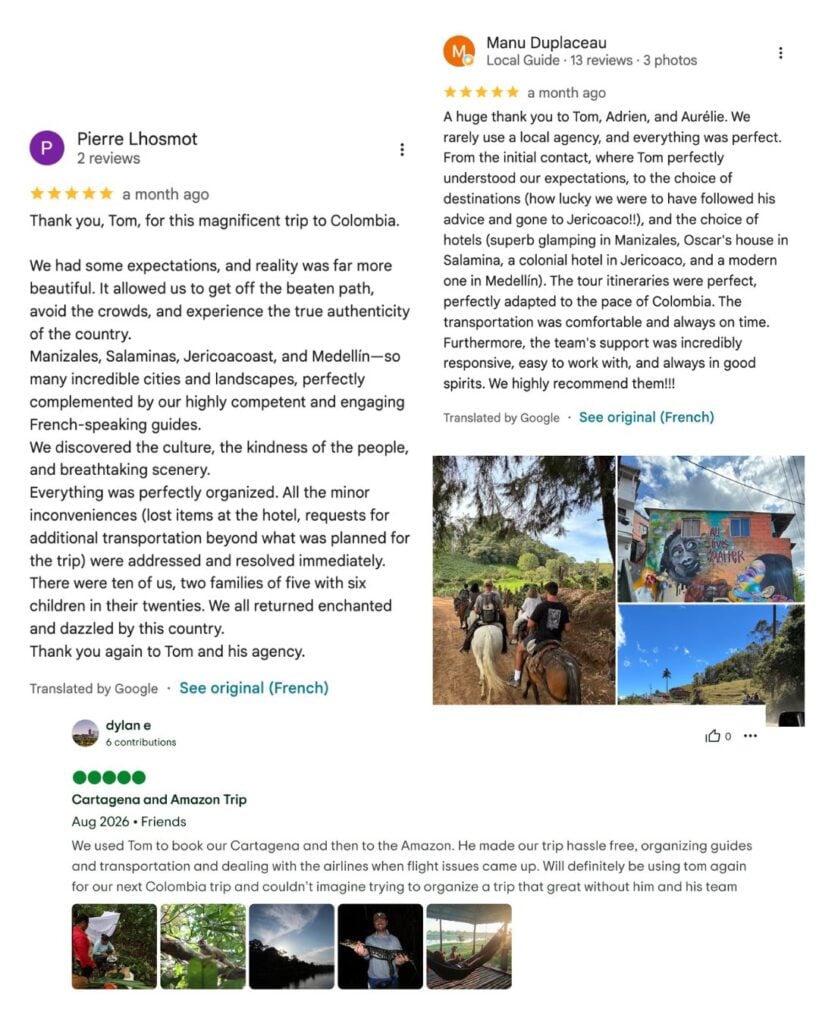
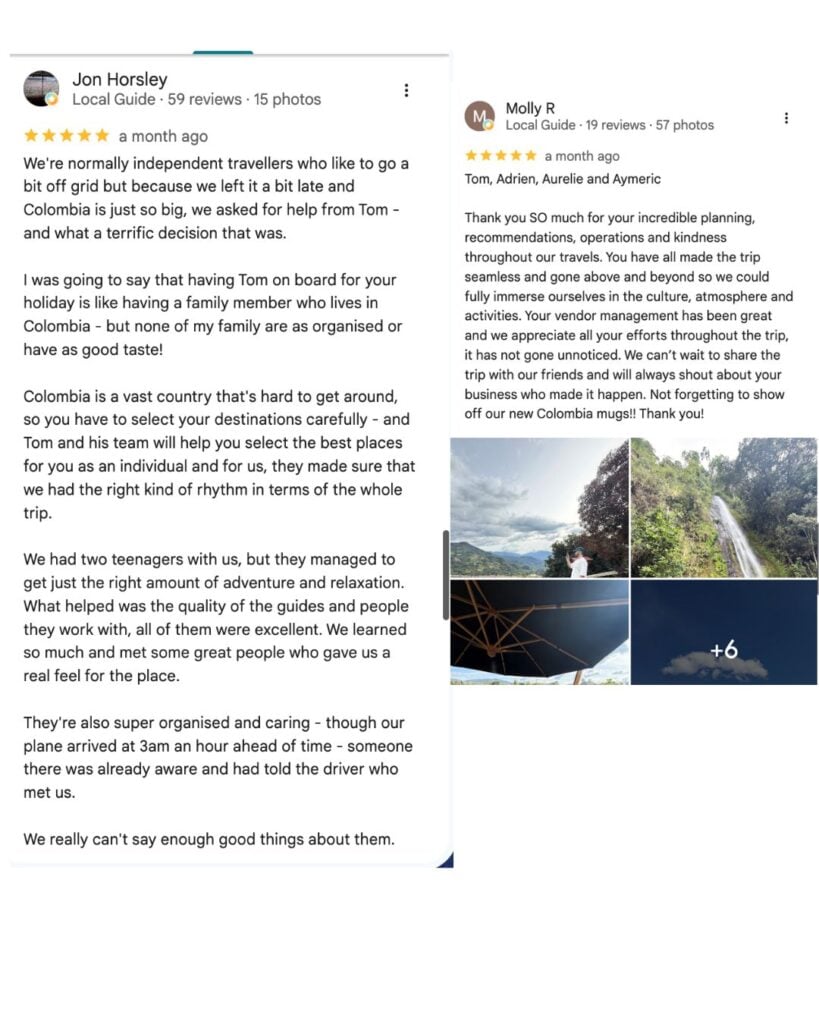
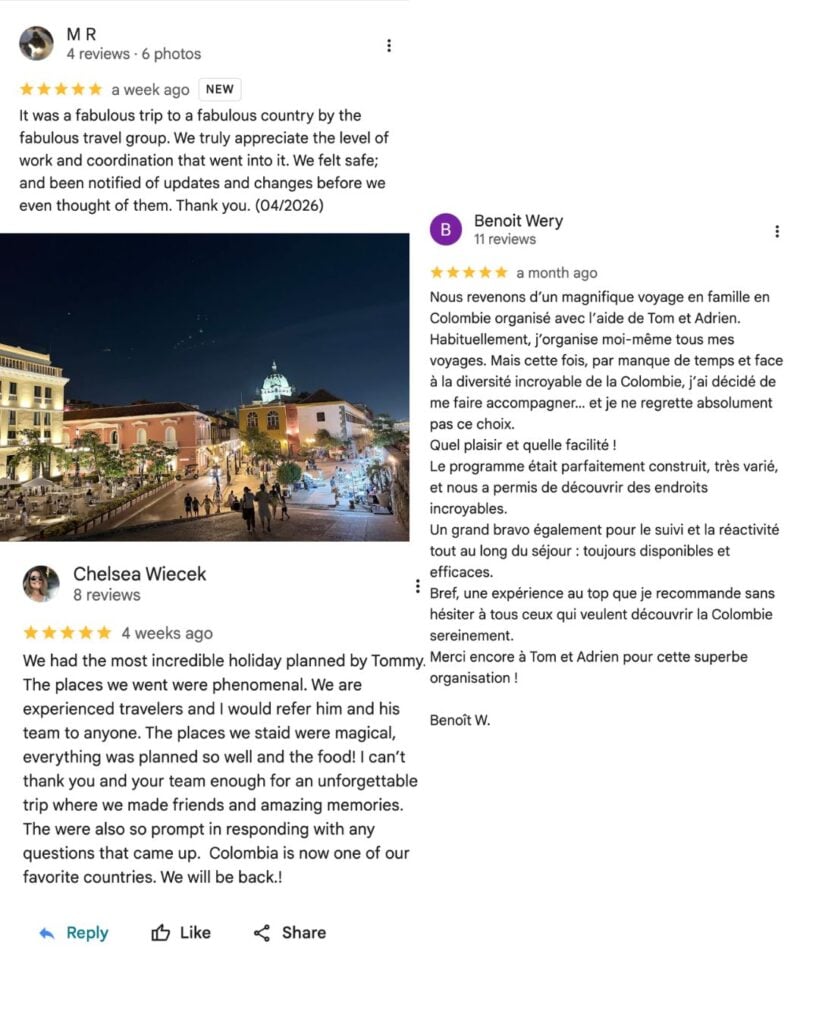

A successful Colombian adventure with family or friends
“Usually, I don’t go through a travel agency. But for Colombia, I needed help — and this agency transformed my experience in this country.”
That’s the kind of review our travelers leave us. Instead of second-guessing yourself and putting off decisions, let us plan your trip. Unforgettable memories guaranteed.
A few trip styles to inspire you:
- Undiscovered Colombia — adventure mode
- Easy Colombia — Explore and relax
- Premium Colombia — high-end that stays authentic
What type of trip suits you?
Every trip is unique, but you might see yourself in one of these themes.
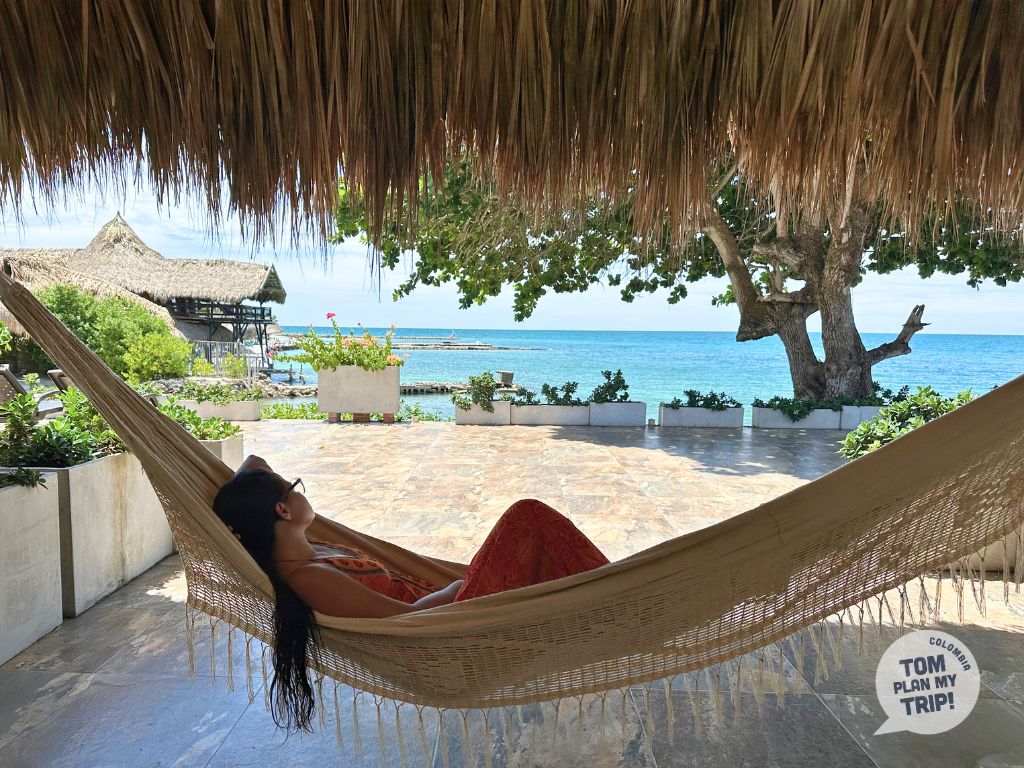
LAID-BACK
Your vacation doesn’t have to be 100% beach or 100% exploring. With our 11 years in Colombia, we plan your ideal trip so you can discover the country without rushing around. The best way to travel and recharge at the same time.
Learn more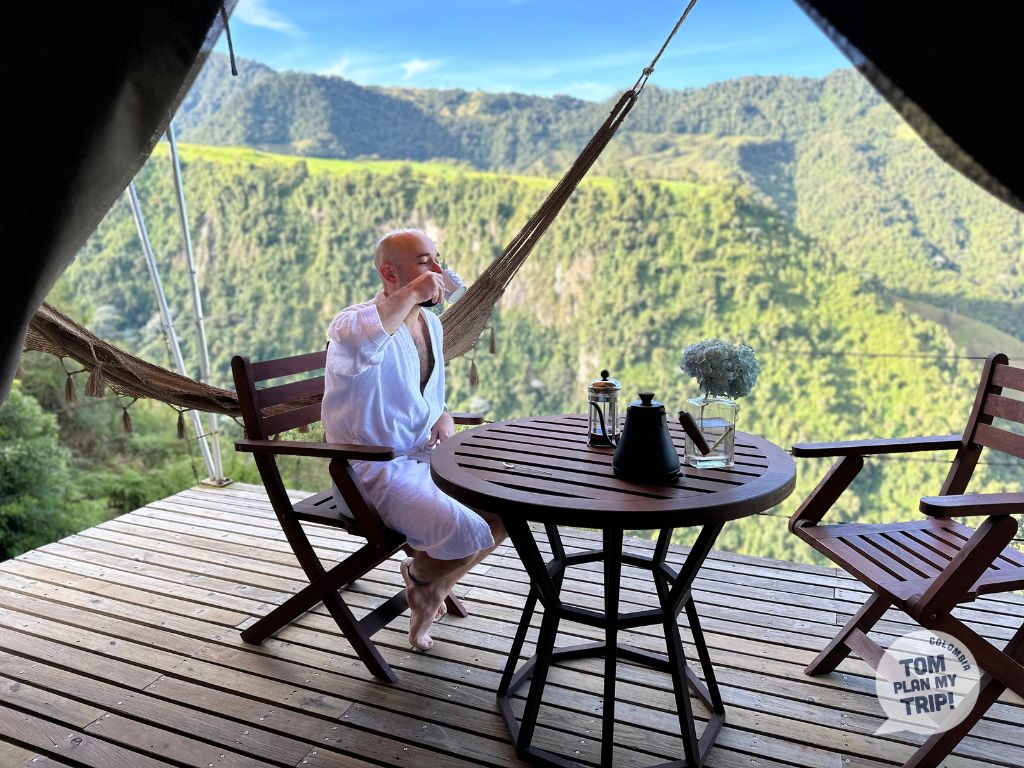
PREMIUM
You love beautiful places to stay and extraordinary experiences, but not cookie-cutter luxury? Drawing on our 11 years of exploring, we plan a premium trip so you can experience the most spectacular side of the country, in the best possible conditions.
Learn more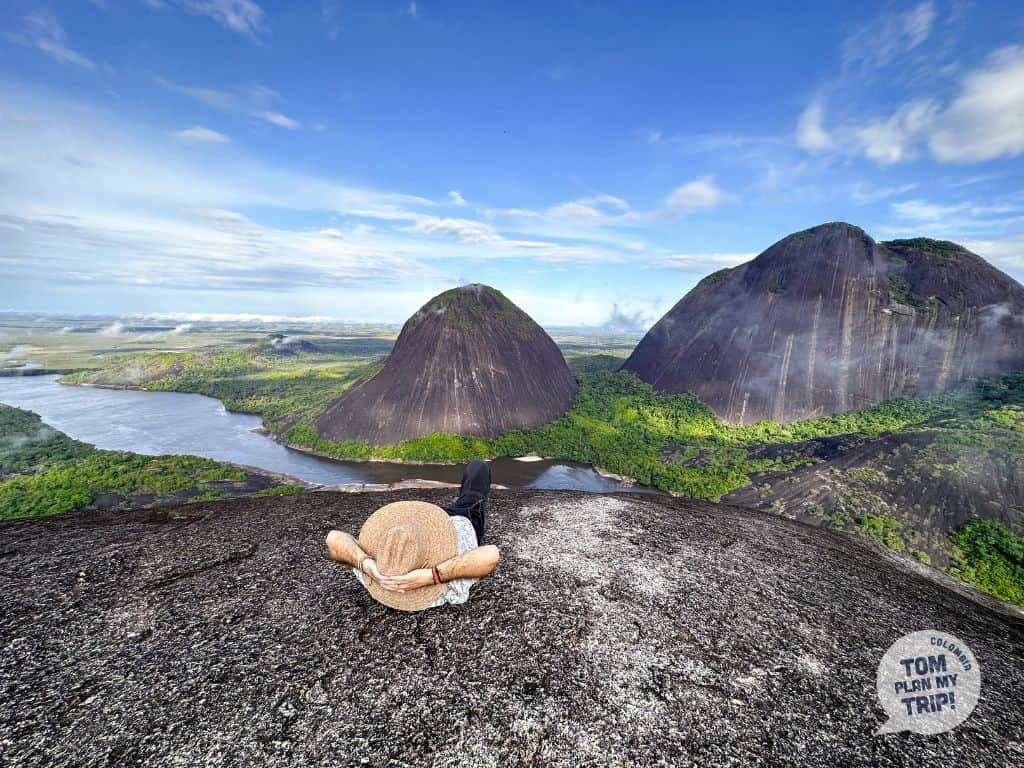
ADVENTURE
Not interested in the Colombia everyone already knows? Set off exploring with your loved ones and share unforgettable moments, with that feeling of being on another planet. All backed by our 11 years exploring the country.
Learn moreWhat our clients say
Articles on Cartagena & Santa Marta
Select a Region of Colombia


Western Caribbean Coast
Colombian Destinations Listed Alphabetically
Places from A to I
Places from J to P
Places from R to Z
Follow us on Instagram!


Our secret to actually enjoying your Colombia vacation
Colombia is twice the size of France. There’s no point trying to see it all in 15 days. Our trips distill 11 years of boots-on-the-ground exploration into the essentials: the very best of the country, without the stress of racing around.
