
The Most Beautiful Small Towns in Colombia

Editor
Last updated
The most beautiful small towns in Colombia have very distinct identities, from Villa de Leyva and its romantic charm to Puerto Nariño, the gateway to the Amazon, from the monochrome elegance of Barichara to the authenticity of Rincón del Mar, a fishing village.
Here is the portrait of 22 of them, between the Andes, the Caribbean, and the Amazon, each with its own ambiance, what there is to do there, and the ideal length of stay – advice based on my exploration of Colombia since 2015.
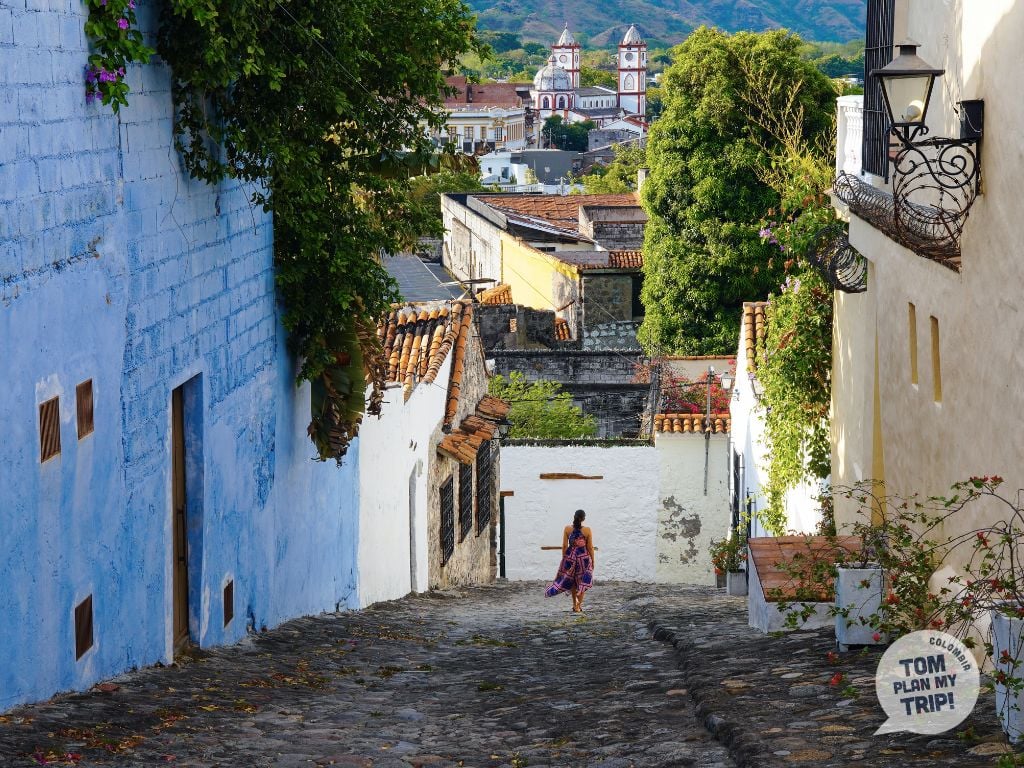
We constantly explore Colombia to find what’s truly worth it — authentic places, stays and experiences, far from tourist traps. Then we build your ideal trip in a logical and optimized way, so you make the most of it, without rushing everywhere, truly connected to the country.
→ About us | ⭐⭐⭐⭐⭐ + 185 reviews | → Our service

- In Colombia since 2015
- + 1025 tested experiences
- + de 145 local partners
- + 335 trips created


THE MOST BEAUTIFUL SMALL TOWNS IN COLOMBIA: WHAT YOU NEED TO KNOW
Contrasting characters reflecting the geographical diversity of the country
VILLA DE LEYVA
The Colombian small town for a romantic getaway.
Villa de Leyva is located in Boyacá, in the Andean region on the eastern cordillera, about 160 km northeast of Bogotá (about 4 hours by road) and 37 km from Tunja, the capital of the department.
Perched at an altitude of 2,149 m, in a semi-desert valley at the foot of the páramo of Iguaque, the village enjoys a dry and low-humidity climate, with temperatures around 18 °C during the day and cooler nights and mornings.

With its immense cobblestone square, its whitewashed facades, its wooden doors painted green, and its hidden patios, Villa de Leyva has retained all its colonial character.
Calm during the week, the village is very popular with Bogotanos, who love to spend the weekend there — its charm lends itself particularly well to a romantic getaway.
The streets are full of craft shops, charming hotels, restaurants, cafés, and artist exhibits. Meanwhile, the farming life remains visible at the large market on Saturdays and in the workshops of wool weaving and ceramics.


The village is best explored on foot: stroll through the streets, take a gourmet break in a café, and enter the artisan shops. Art and history enthusiasts will enjoy visiting charming museums. If you’re an early riser, climb to Mirador El Santo for the view of the village.
Explore the surroundings on foot or by bike: Casa Terracota, an astonishing Gaudí-style house made of terracotta, Museo El Fósil built around a dinosaur skeleton, or the ancient astronomical site of the Muiscas.
The more adventurous will venture to the sacred lagoon of Iguaque, surrounded by frailejones, endemic plants of the páramos.


Plan for 2 nights to fully enjoy the village, or even 3 to take your time.
Villa de Leyva can also serve as a base for exploring Boyacá (Ráquira, Iguaque, Paipa) over 4 to 5 days. I advise against the day trip from Bogotá.

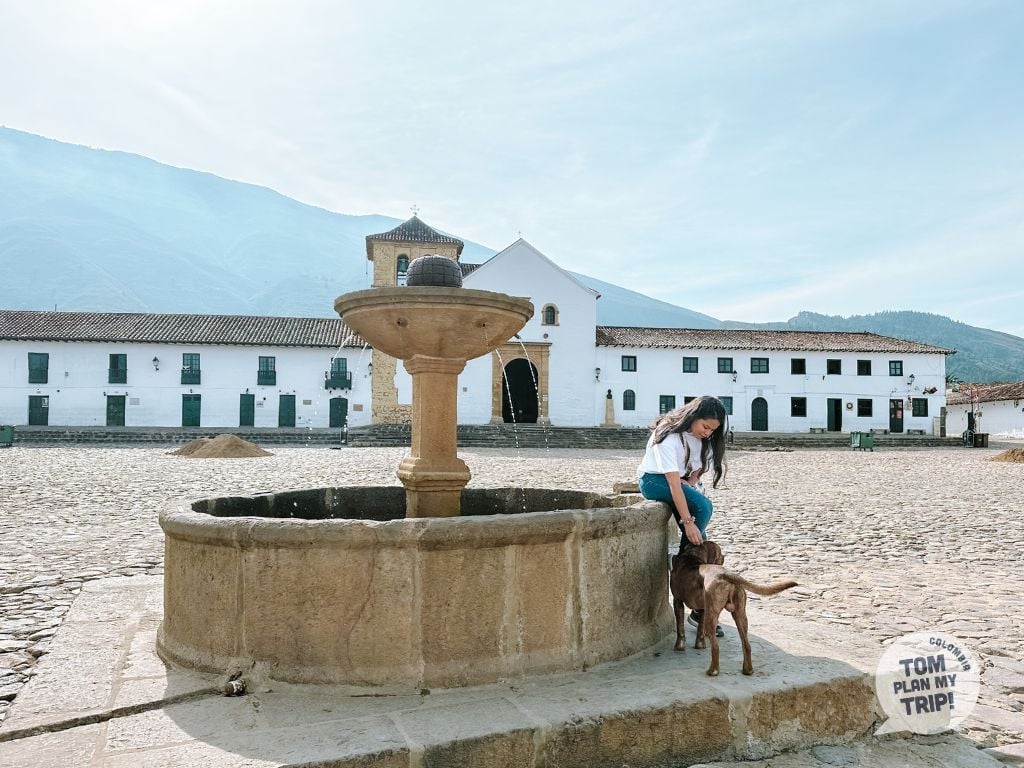
© Tomplanmytrip
Breathe, and let us take care of this beautiful adventure
Colombia is twice the size of France, with a diversity of landscapes that’ll make your head spin — and a real logistical puzzle, with roads winding through the Andes mountains.
What kind of adventure do you want to live? Is it really right for what you’re looking for? Is it safe? Is it too touristy?
Guessing and hoping you made the right call — sometimes that works. But not always.
And I won’t even get into the stressful surprises that force you to make some changes mid-trip.
Look, we’ve been doing this for years — and if you check our reviews, you’ll see we know what we’re doing. In less than an hour on a call, we figure out your ideal destinations together. We handle the rest.

© Tomplanmytrip
MONGUI
A peaceful small town in Colombia nestled in the mountains.
Located in Boyacá, on the eastern mountain range, Monguí is at an altitude of 2,900 m, about 4 hours by road from Bogotá and 14 km from Sogamoso, the nearest urban center.
The climate, cold and humid, averages 13 °C, with a rapid alternation of bright sunshine and drizzles, typical of this altitude.
Monguí is a preserved mountain village: peaceful, a bit isolated, with an ochre stone basilica dominating the square, cobblestone streets lined with white facades and green woodwork, where you can still see horses.
The Monguiseños are s for their gentleness and reserve. Here, the ruana — this typical wool poncho — is worn daily, not for folklore.
Still little known to international tourists, Monguí is nevertheless attracting more and more hikers as a gateway to the páramo of Ocetá.
Discover the village on foot and the wool craft workshops.
Monguí is the capital of the hand-stitched soccer ball — a skill passed down since the 1930s by about thirty women’s workshops. Some workshops can be visited.
If you like hiking, don’t miss the páramo de Ocetá (nearly 3,850 m), one of the most beautiful in the country. A challenging 6 to 8-hour hike with a guide, through frailejones and spectacular rock formations.
From the village, reach the Laguna de Tota and its white sand beach, or visit the neighboring villages. By bike, circuits wind between mountains and valleys.
One night is enough to discover the village, which can be visited in 2-3 hours.
2 nights if you’re planning to do the páramo of Ocetá: the first day to acclimate to the altitude, the second for the trek.
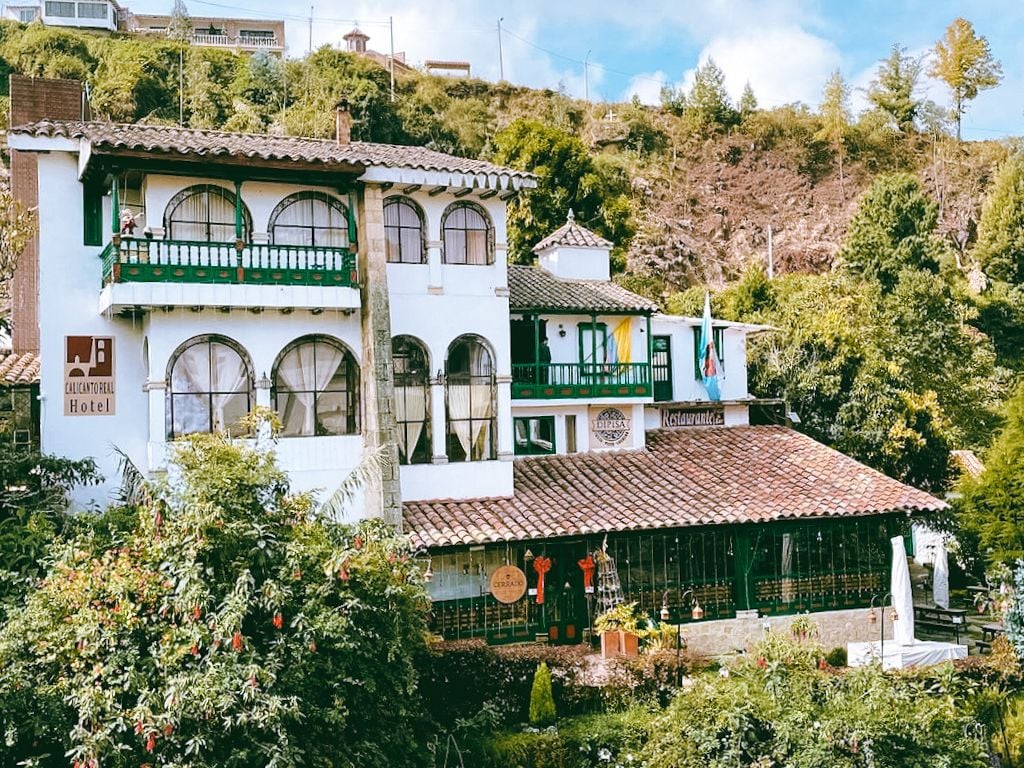
@tinirife.jpg
HONDA
A small town in Colombia that lives to the rhythm of the river.
Honda is located in Tolima, nestled between the central cordillera and the eastern cordillera — a strategic stop between Bogotá and the Zona Cafetera, about 150 km northwest of the capital (3.5-4 hours by road).
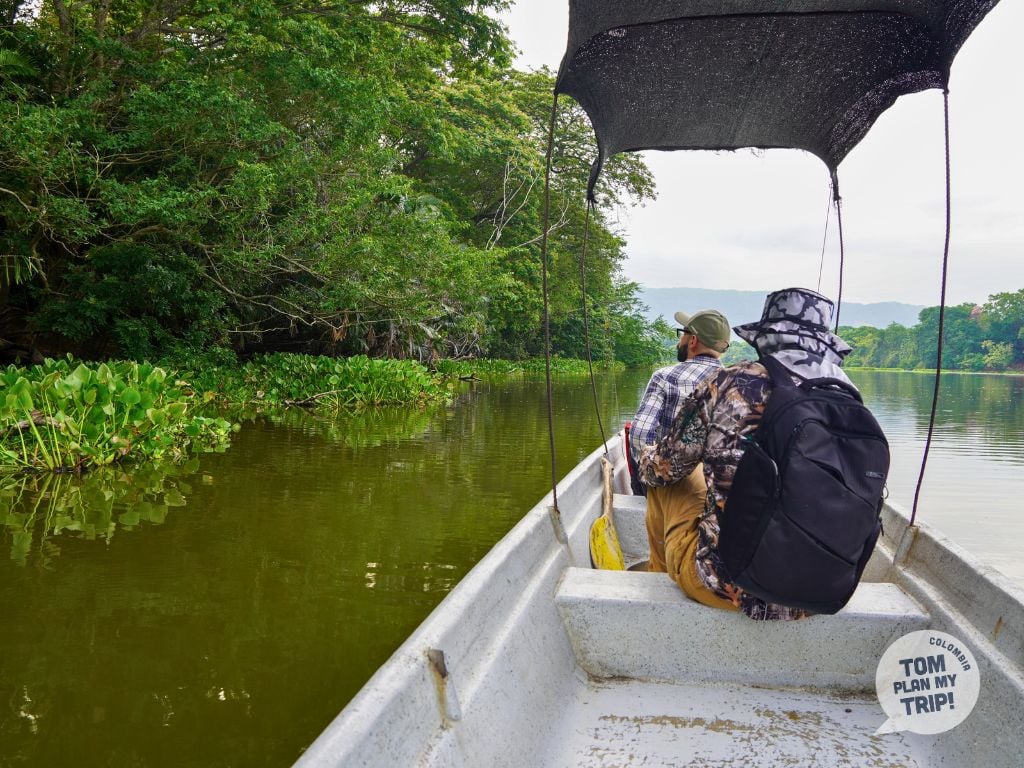
Located at only 225 m above sea level on the banks of the Magdalena River, the village has an average temperature of 28°C, with days that regularly exceed 35°C.
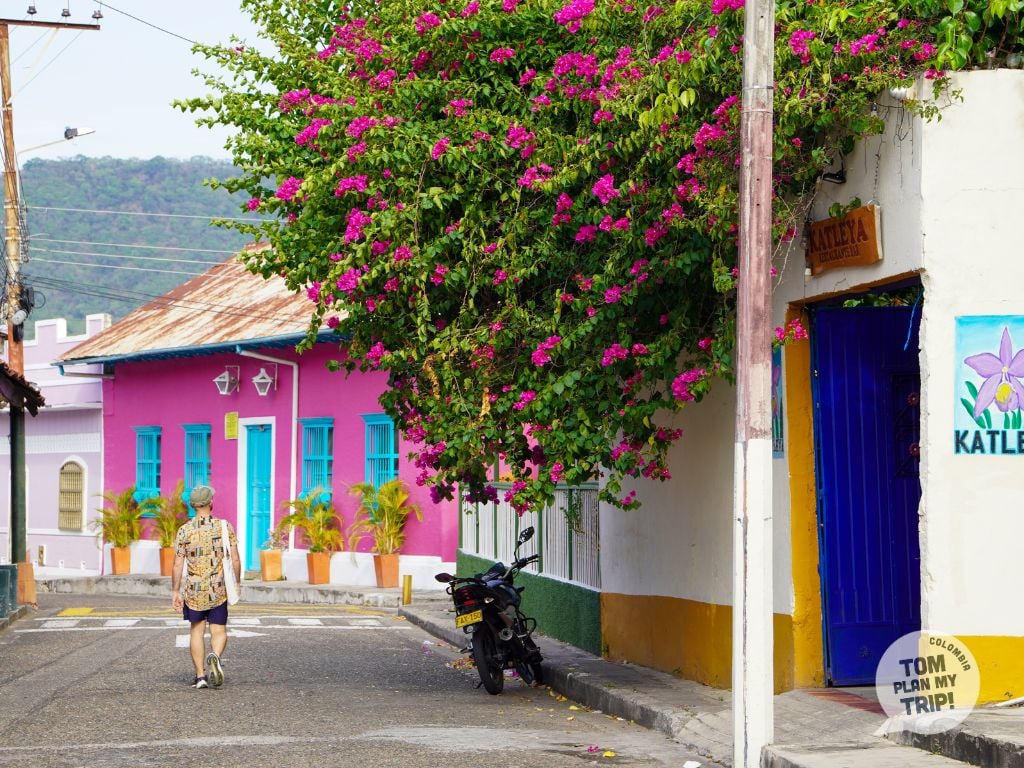
Honda, one of the oldest towns in Colombia (founded in 1539), was long the main river port of the country, the last navigable point of the Magdalena before Bogotá. The decline of the river as a transport route has frozen the town in time, preserving its historic center, now beautifully restored.
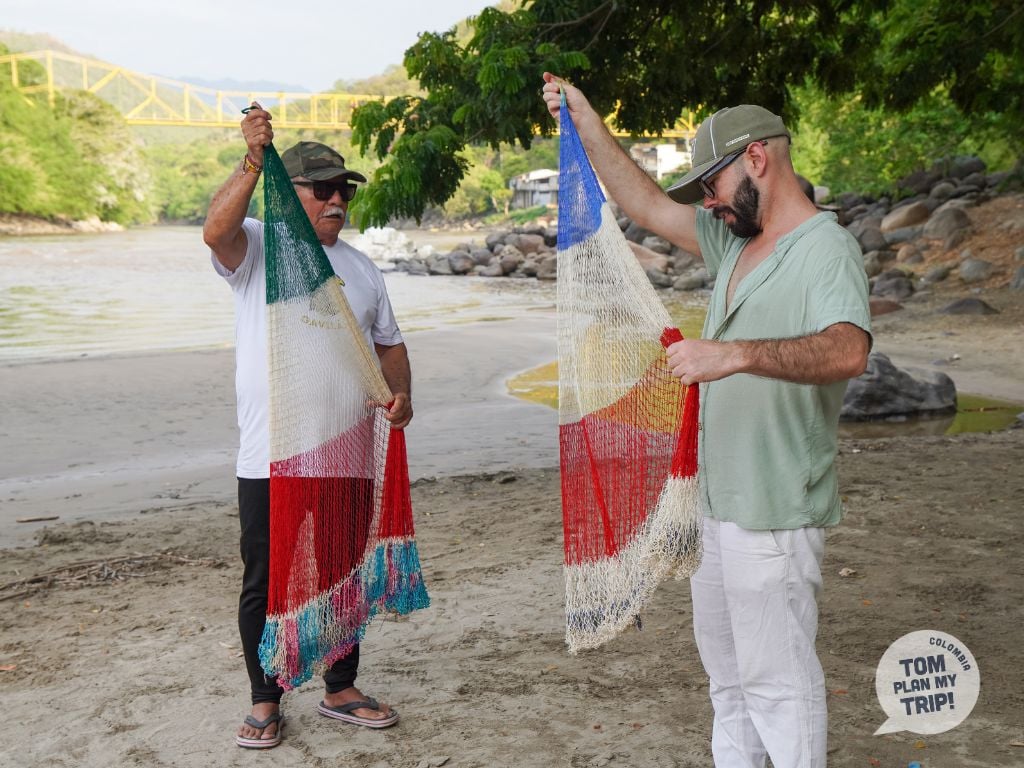
Small and quiet, not very touristy, Honda still lives at the pace of the river: fishermen, fresh fish, popular restaurants along the banks, and the heat that dictates daily activities.
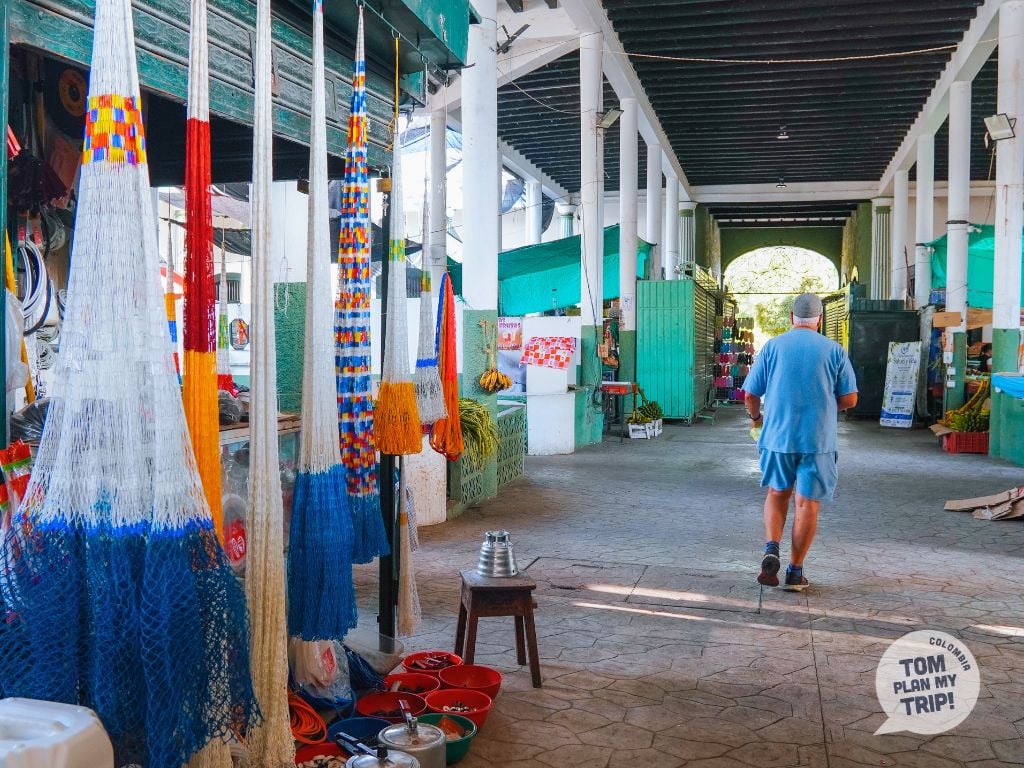
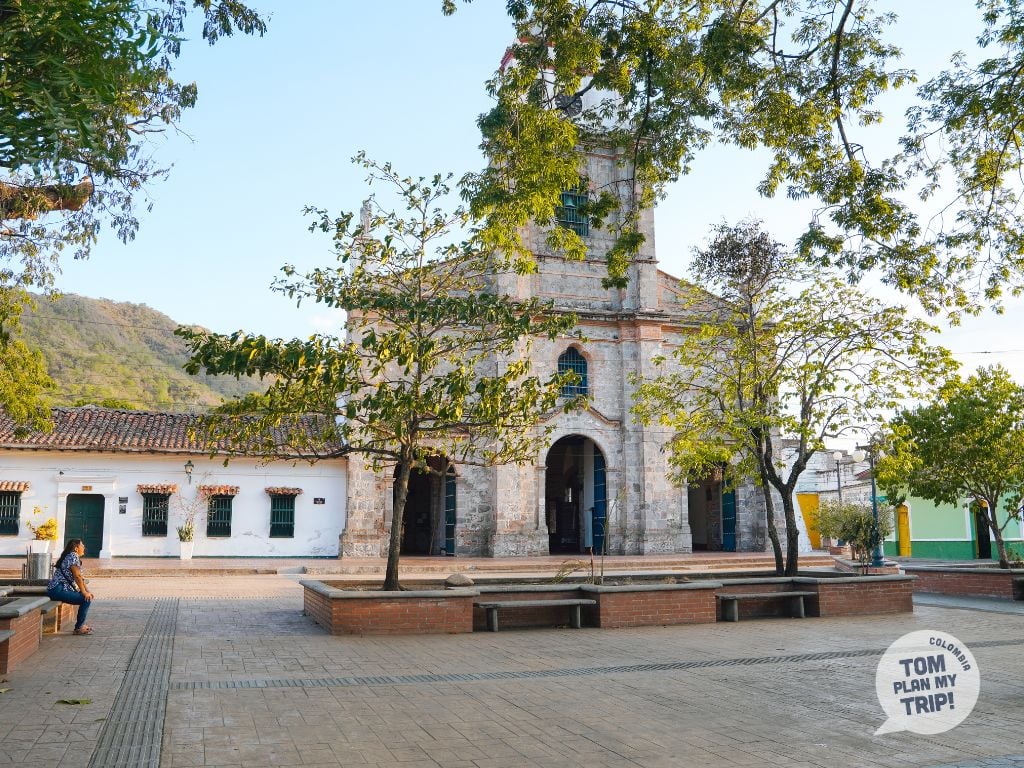
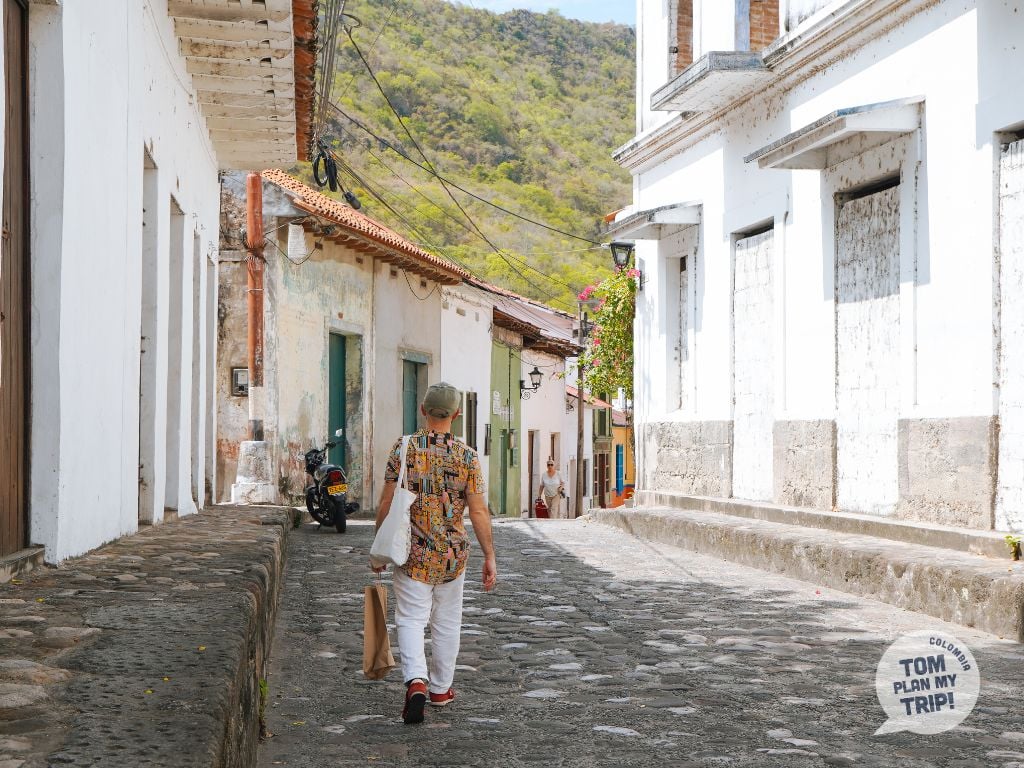
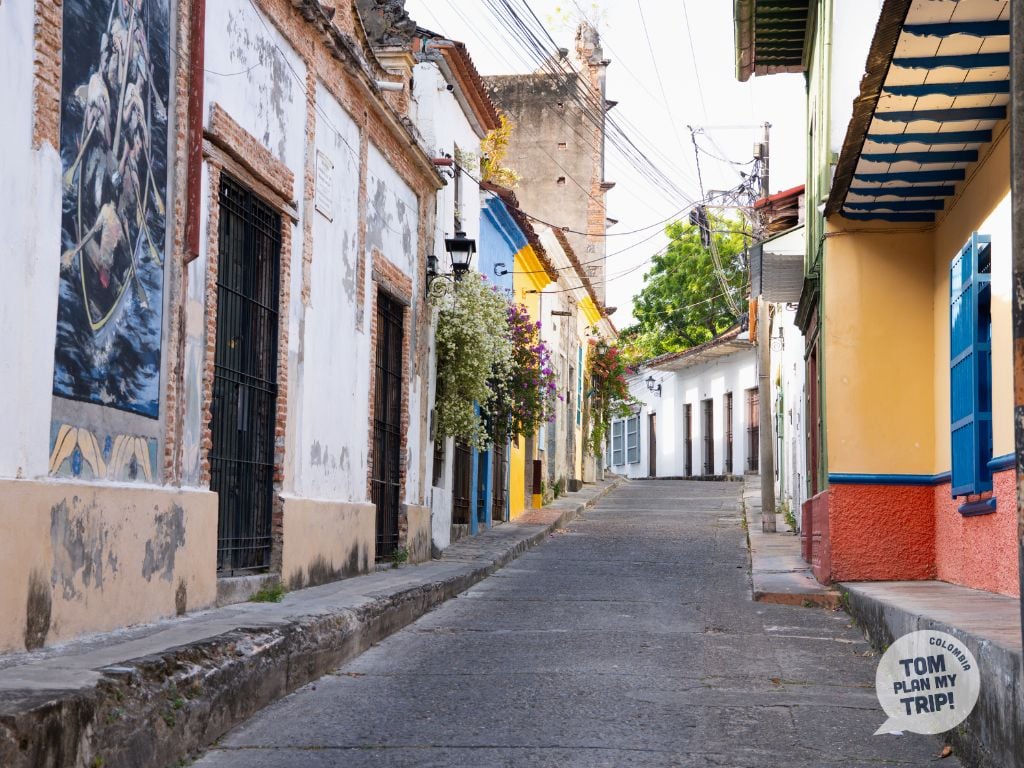
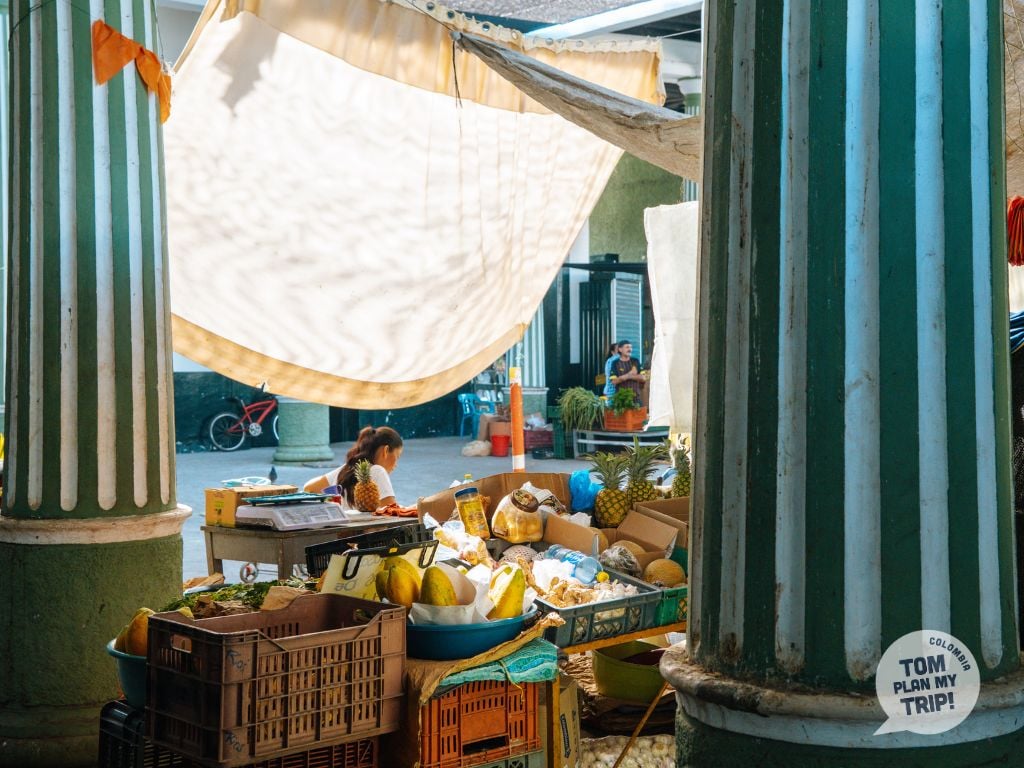
Stroll through the streets of the historic center, take the Calle de las Trampas — a labyrinthine cobblestone street, once home to the merchant elite — and admire the mural frescoes. At the covered market, taste bocachico, the emblematic fish of the river, and tropical fruits.
Take a tour of the Museo del Río Magdalena to learn about the history of the river. Then head to the Puente Navarro, Colombia’s first metal bridge, to watch the fishermen cast their nets.
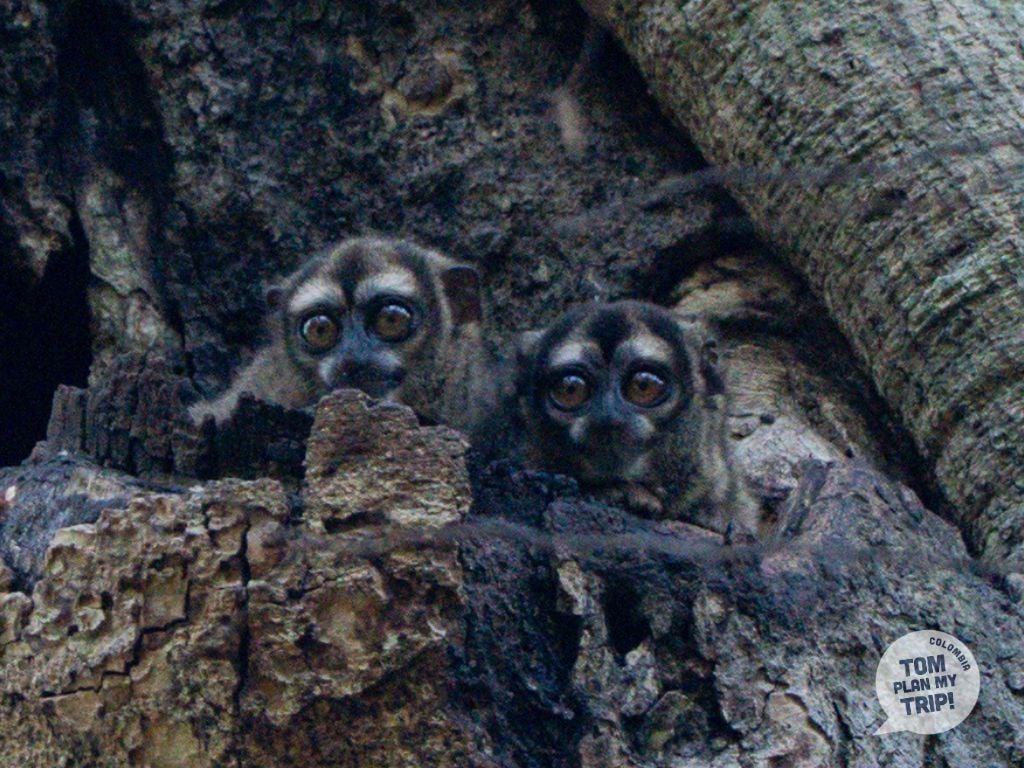
In the surroundings: Guaduas, a heritage village; the Ciudad Perdida de Falan, ruins of a 17th-century mine covered in tropical vegetation; or the Armero memorial, remnants of a town engulfed by a volcanic flow in 1985.
One night is enough to discover the historic center and enjoy the river’s atmosphere.
If you want to take your time and visit Armero or Guadas, plan for 2 nights instead.
Honda is also suitable for an overnight stop between Bogotá and the Coffee Zone.
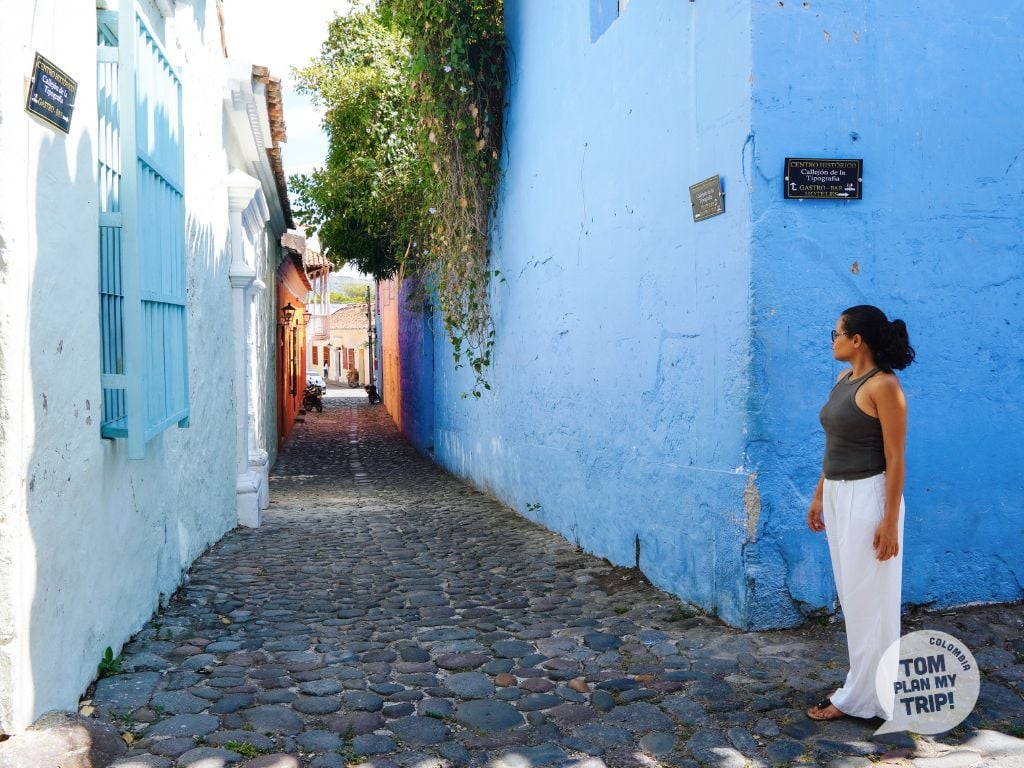
© Tomplanmytrip
BARICHARA
The most beautiful small town in Colombia.
Barichara is in Santander, in the Andean region, perched on the mountainside above the canyon of the Suárez River, 23 km from San Gil and about 110 km from Bucaramanga, the capital of the department (3 to 3.5 hours by road).
At an altitude of 1,300 m, the village enjoys a dry climate all year round, with temperatures around 21°C. Days are warm and a pleasant breeze blows in the evening.
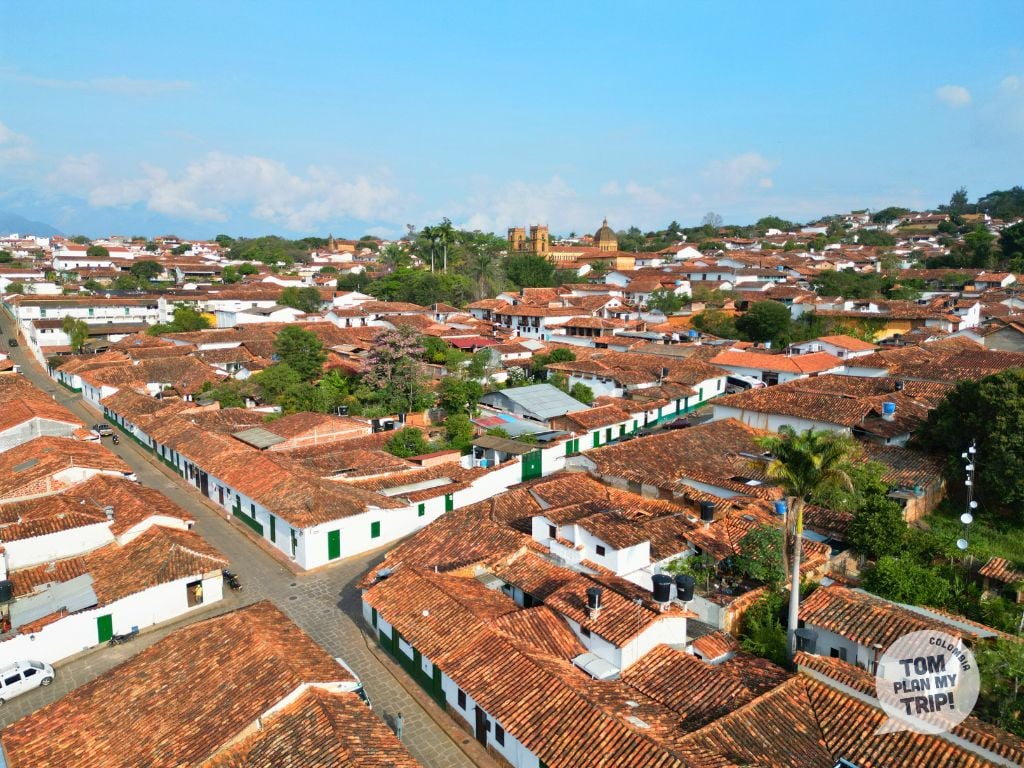
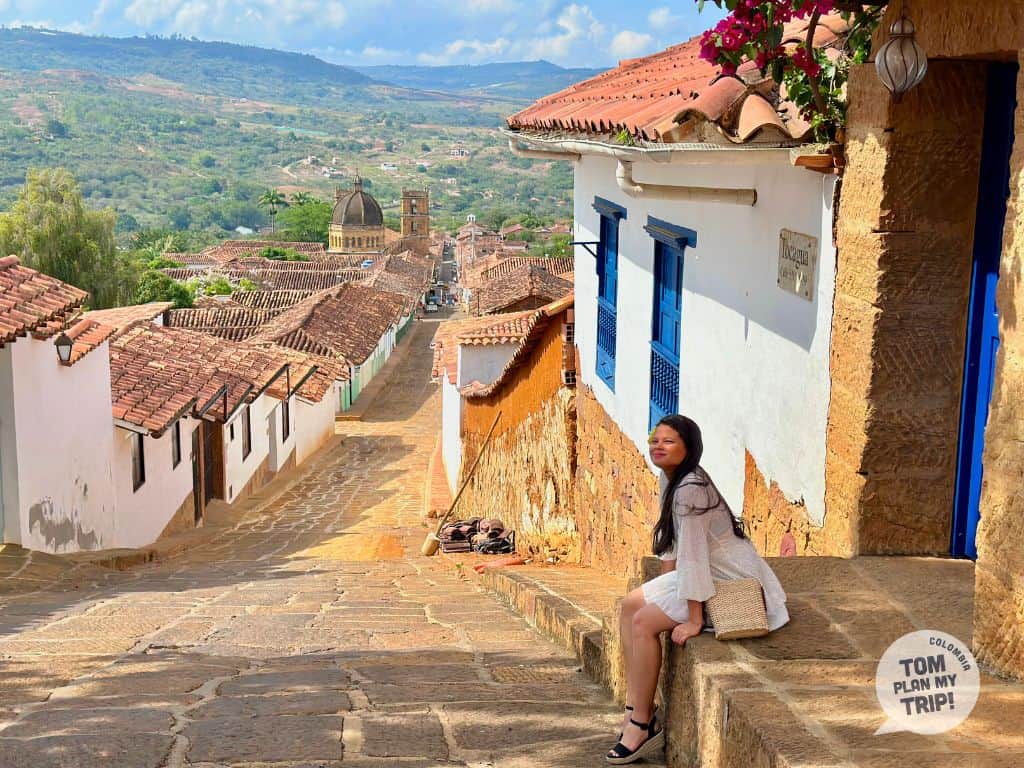
Barichara, classified as a national monument, stands out with an almost monochrome aesthetic: steep streets in a grid pattern with ochre cobblestones, cathedral and cemetery tombs in sandstone; only the houses’ walls are whitewashed.
Long isolated after the construction of the regional railway, the village has retained its charm. With its serene atmosphere day and night, it attracts couples on a romantic getaway and families seeking peace.
The patiamarillos — nickname for the inhabitants, referring to the ocher dust of the stone — are discreet but warm.
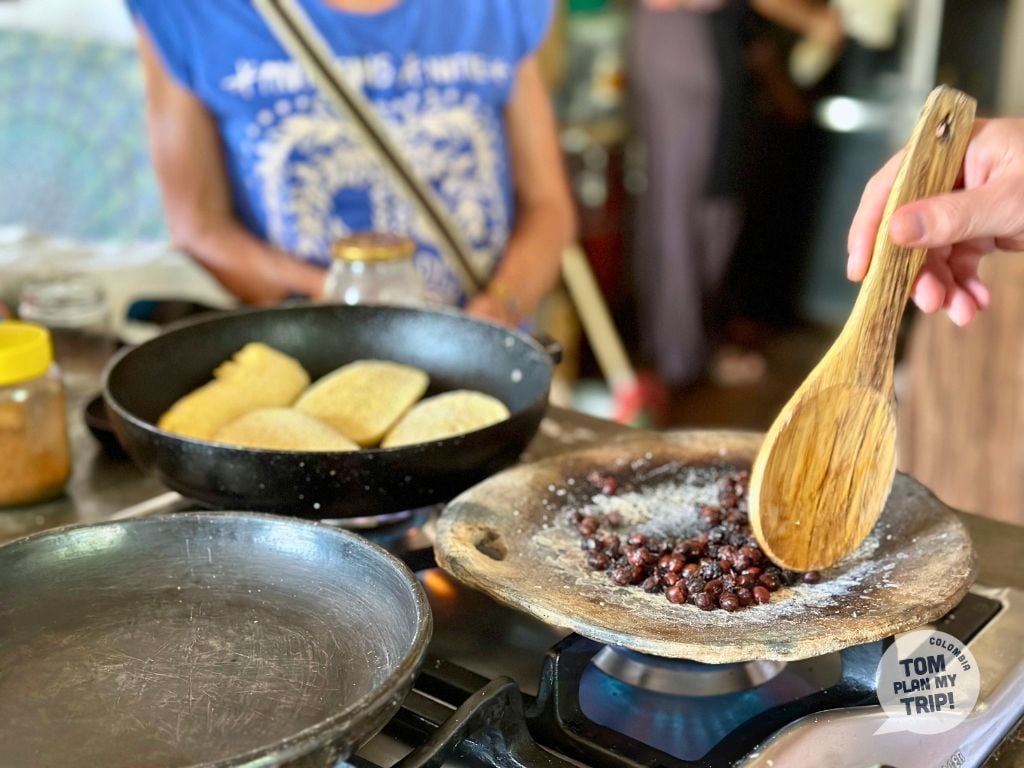
Handicrafts remain alive here (ceramics, basketry, stone carving), and the culinary scene is amazing for a village of this size.
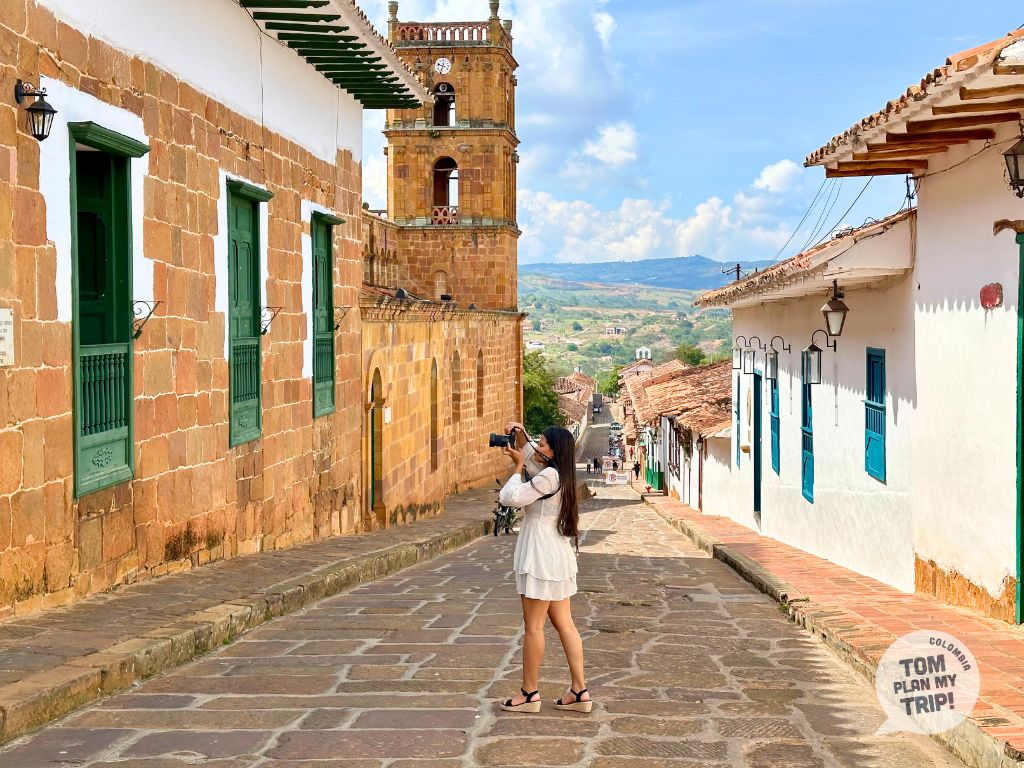
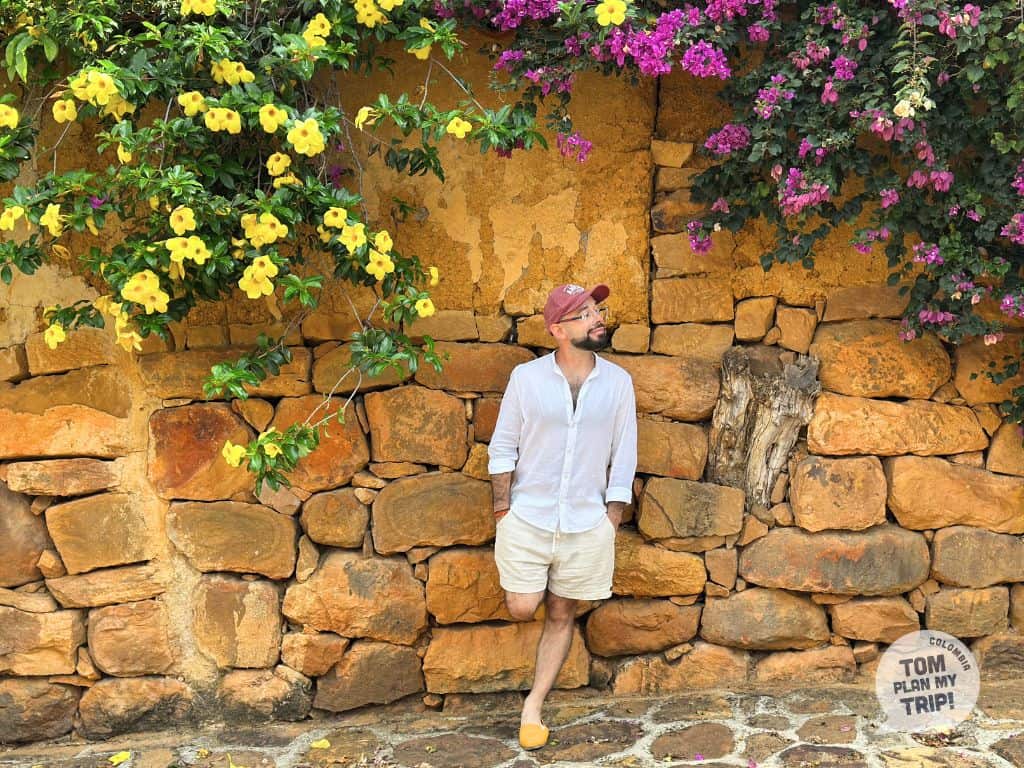
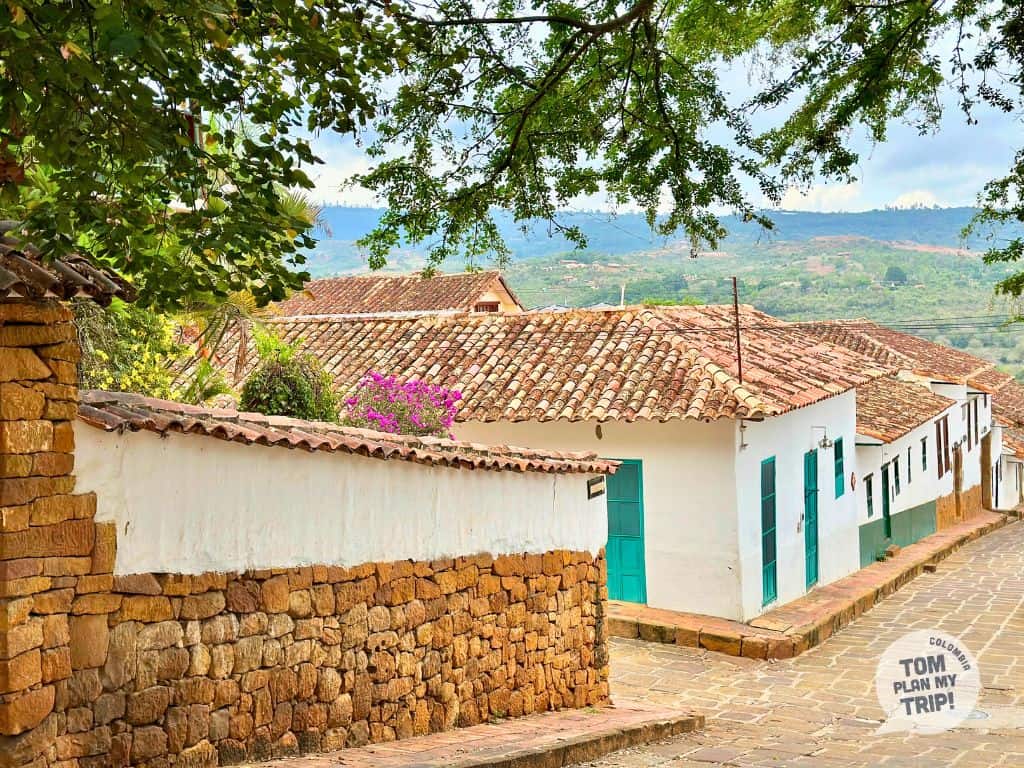
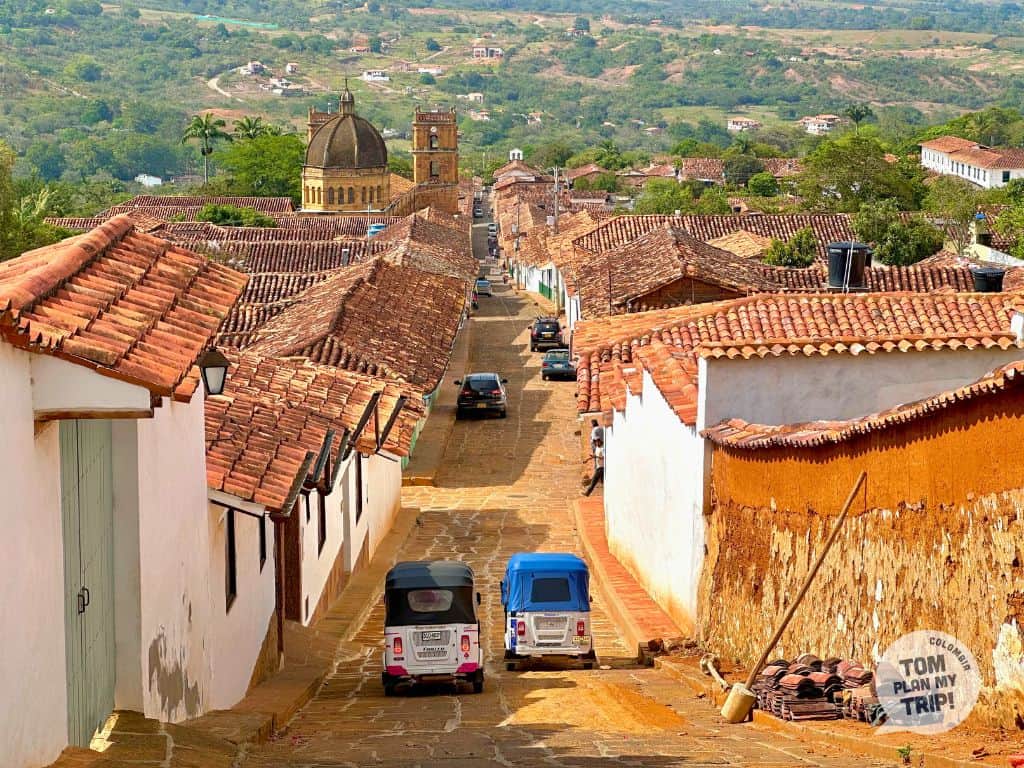
First of all, stroll. Wander the streets, enter a handicraft shop, sit at a café terrace, participate in a workshop with an artisan, wander through the unique cemetery.
Taste the hormigas culonas, the emblematic ant of Barichara and a culinary specialty, and savor the local or inventive cuisine of its many good restaurants.
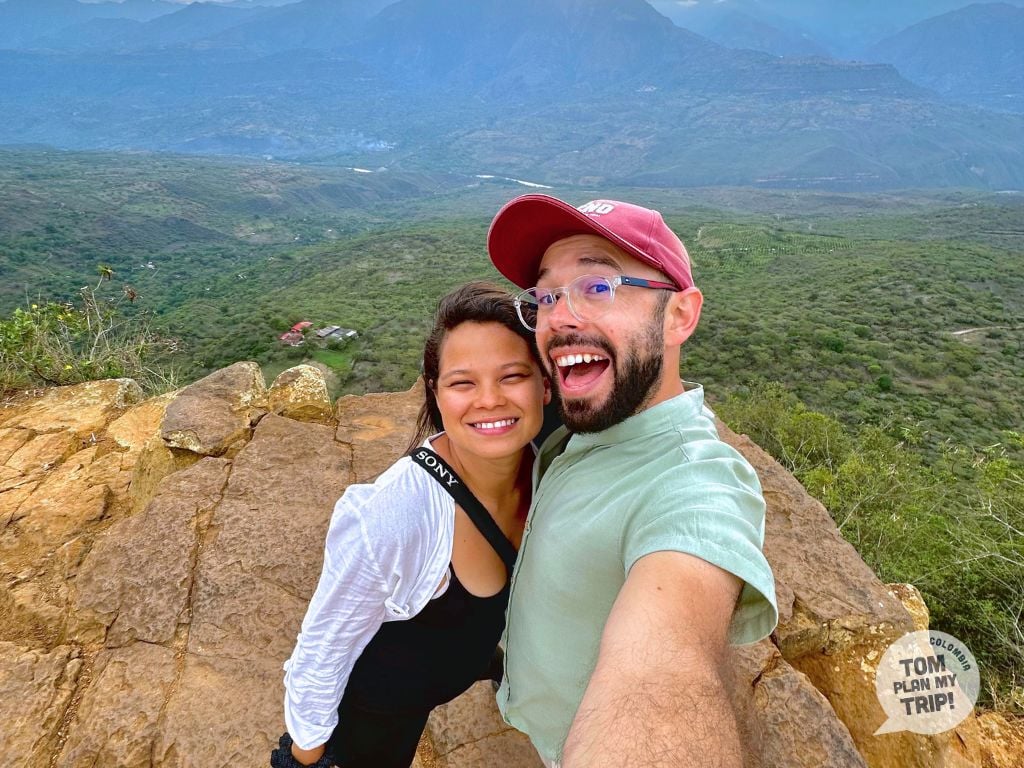
Admire the dizzying view of the canyon from the Salto del Mico.
Explore the fabulous landscapes of the canyon and its lost villages by taking the ancient caminos reales built by the Guane people.
More athletic travelers will head to San Gil for rafting or paragliding over the Chicamocha canyon.
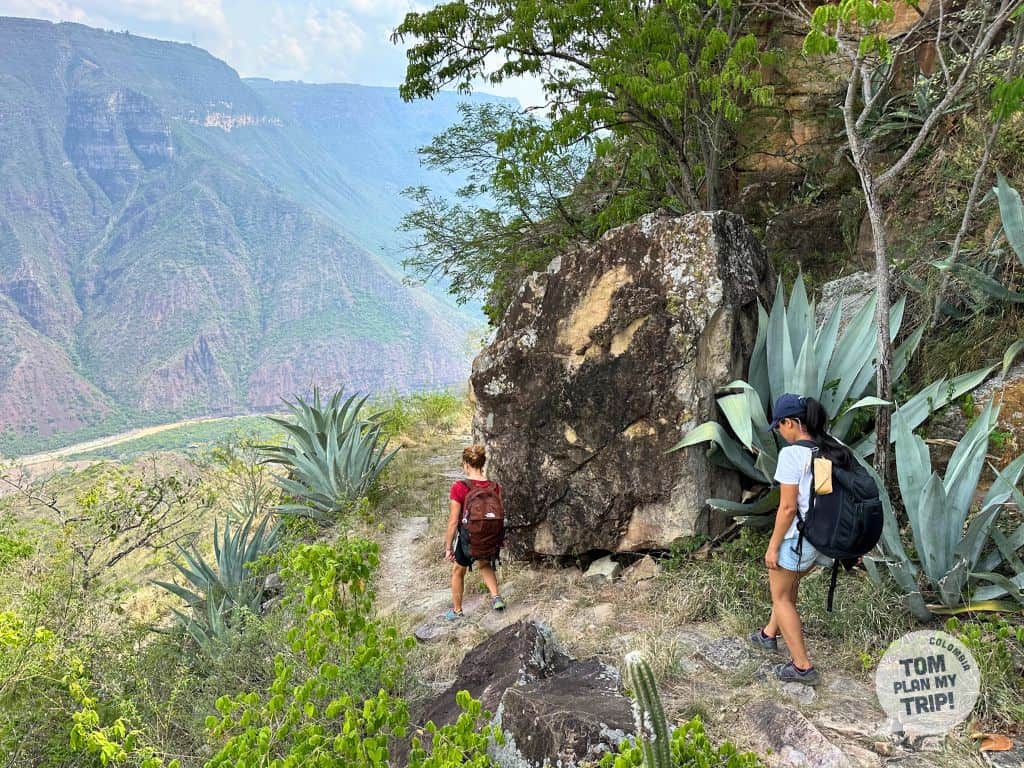
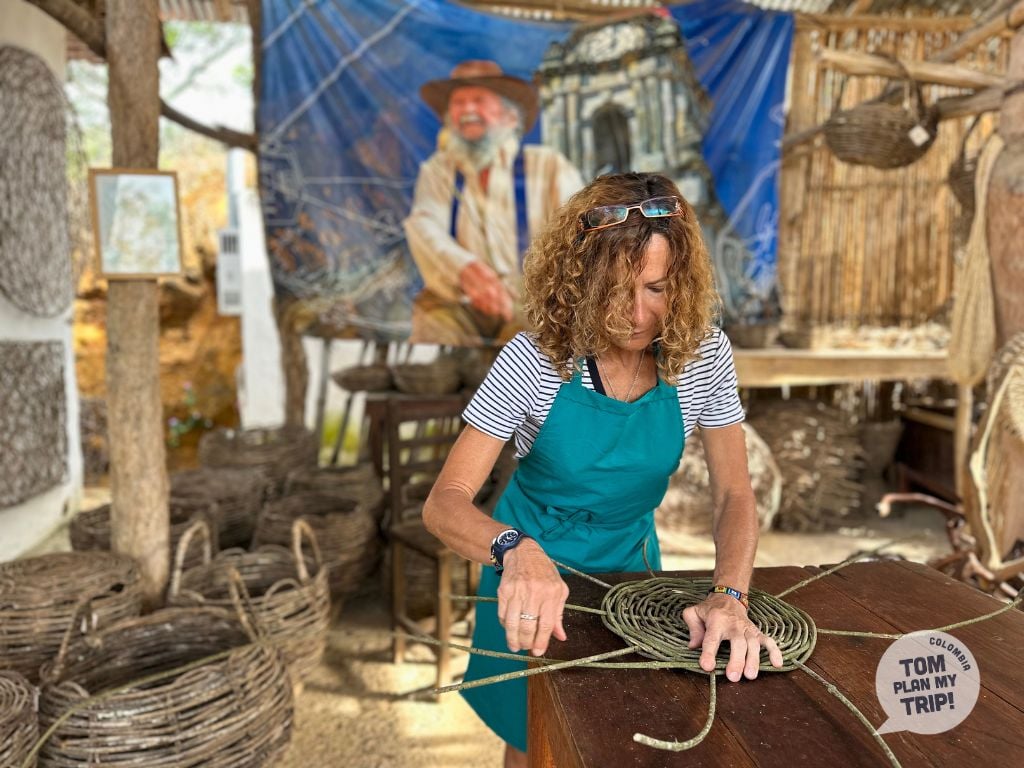
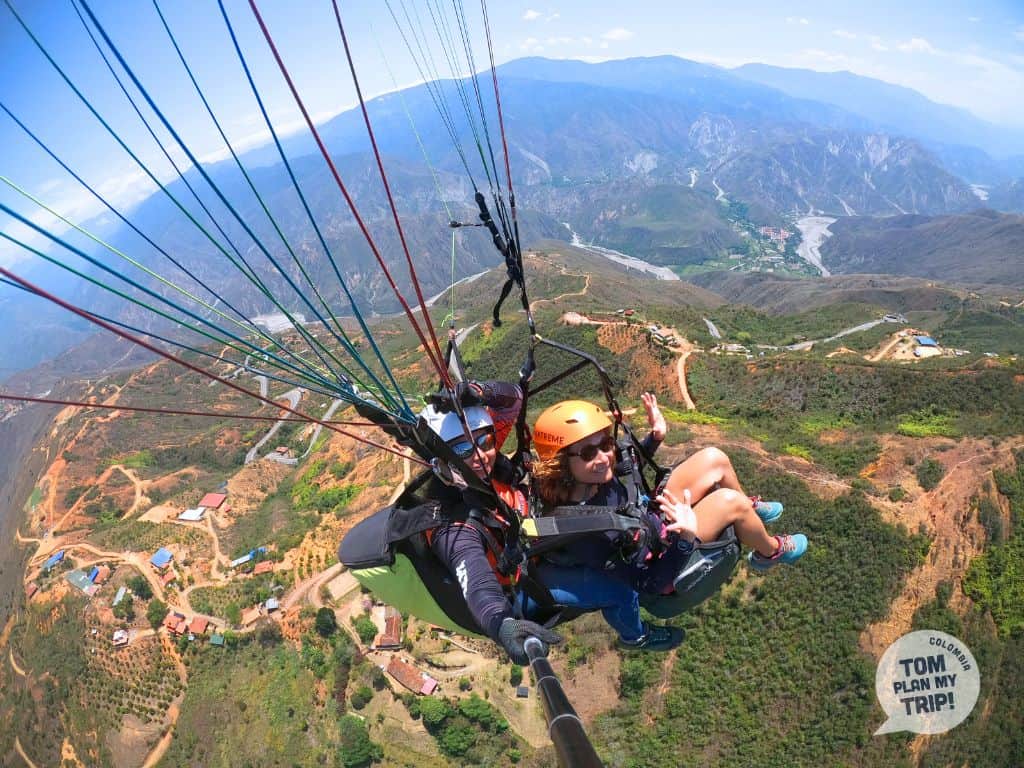
Plan for 5 to 7 nights, possibly including 1 or 2 in the surrounding countryside.
Don’t come for just 2 nights: between strolling, artisans, hiking in the canyon, and restaurants, Barichara is savored with time on your hands.
© Tomplanmytrip
PALOMINO
The meeting place for neo-hippies.
Palomino is located in La Guajira, on the coast, at the foot of the Sierra Nevada de Santa Marta — the highest coastal mountain range in the world.
The village is at sea level, 2 hours from Santa Marta and 1 hour from the Tayrona Park.
The climate is humid tropical (25-30 °C), with unpredictable weather due to the proximity of the mountains, with a dry season from December to March.

Palomino has become the most visited village on the eastern Caribbean coast — tourism arrived too quickly, causing it to lose some of its old charm.
The atmosphere caters backpackers and neo-hippies: dirt roads, hostels, yoga by the water, wellness retreats, and a good vegetarian scene. The beach, eroded, is not suitable for swimming at all.
Calm during the week, the village is much more festive on the weekend, with electro parties and open-air bars.

On site, you can choose between surfing, horseback riding, yoga and meditation sessions, and a good massage.
The main activity remains tubing: several hours of floating down to the sea on the Río Palomino.
Palomino’s surroundings offer the best: the natural pools of Quebrada Valencia for a refreshing dip, the Tayrona Park for its wild beaches and jungle, the Lost City trek for hiking enthusiasts and pre-Columbian history lovers.
You can also choose an immersion within the indigenous communities for a cultural experience, or an excursion to the La Guajira desert, in the heart of spectacular landscapes.


One or even two nights are enough to discover the village and go tubing.
Plan for more only if you’re coming for a spiritual retreat, a surf course, or if you’re making Palomino your base to explore the Sierra Nevada and La Guajira.
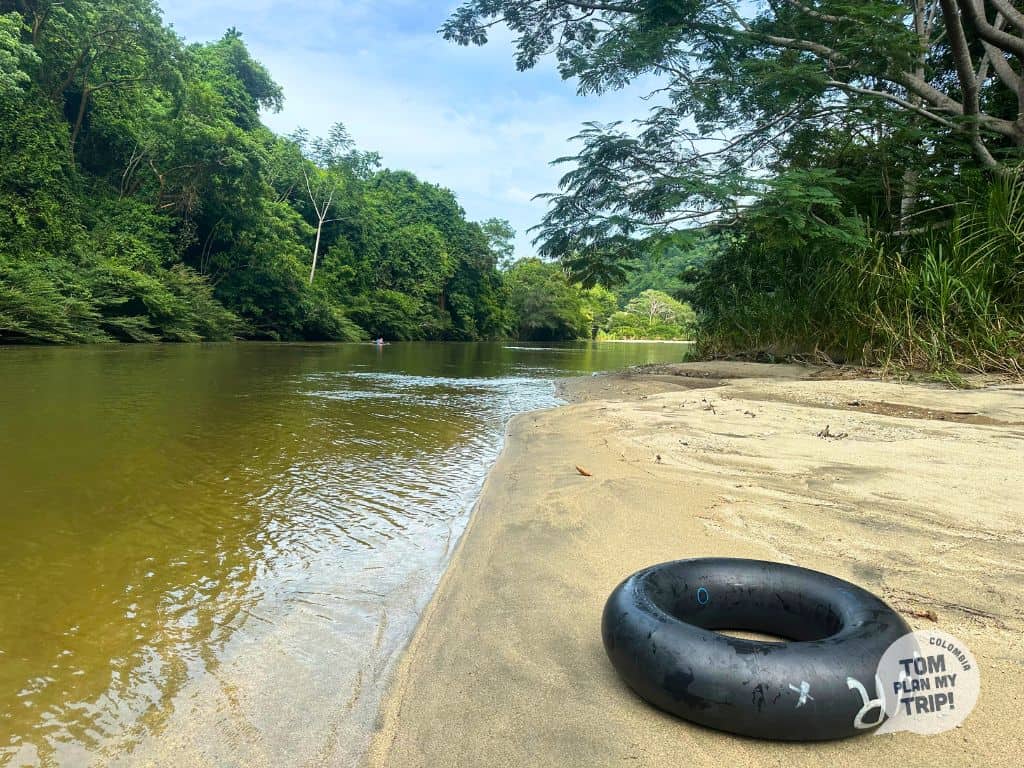

© Tomplanmytrip
MENDIHUACA
The well-kept surf spot of the Caribbean coast.
Mendihuaca is in Magdalena, on the Colombian Caribbean coast, in the corregimiento of Guachaca, about 1 hour’s drive from Santa Marta at the foot of the Sierra Nevada.
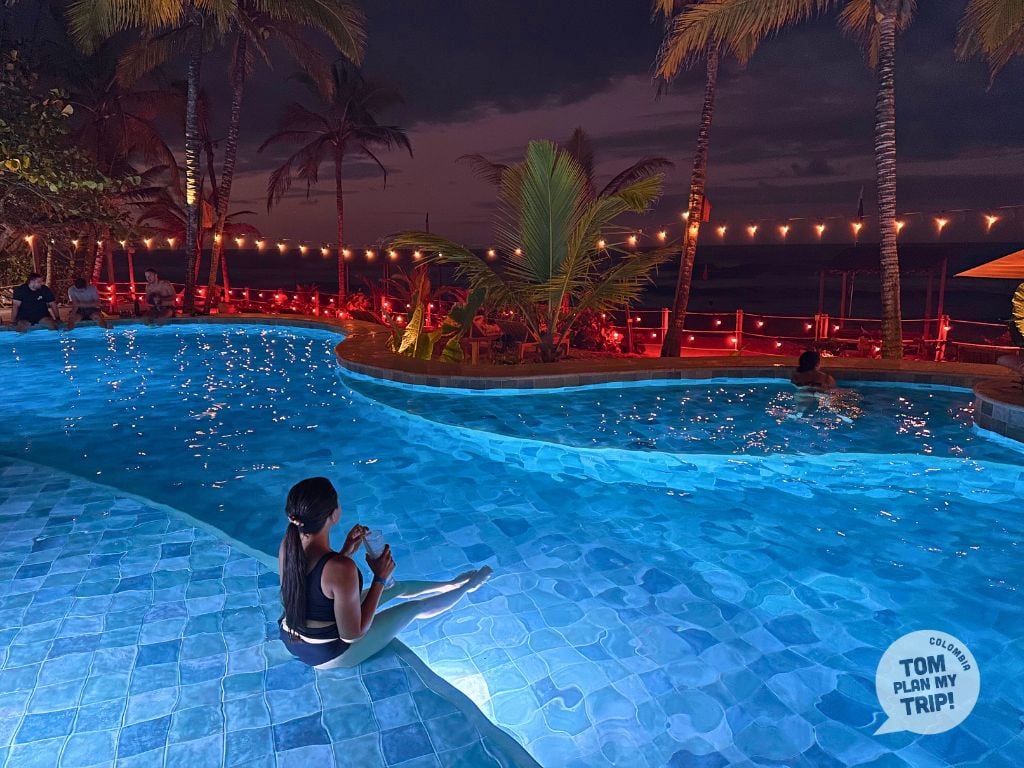
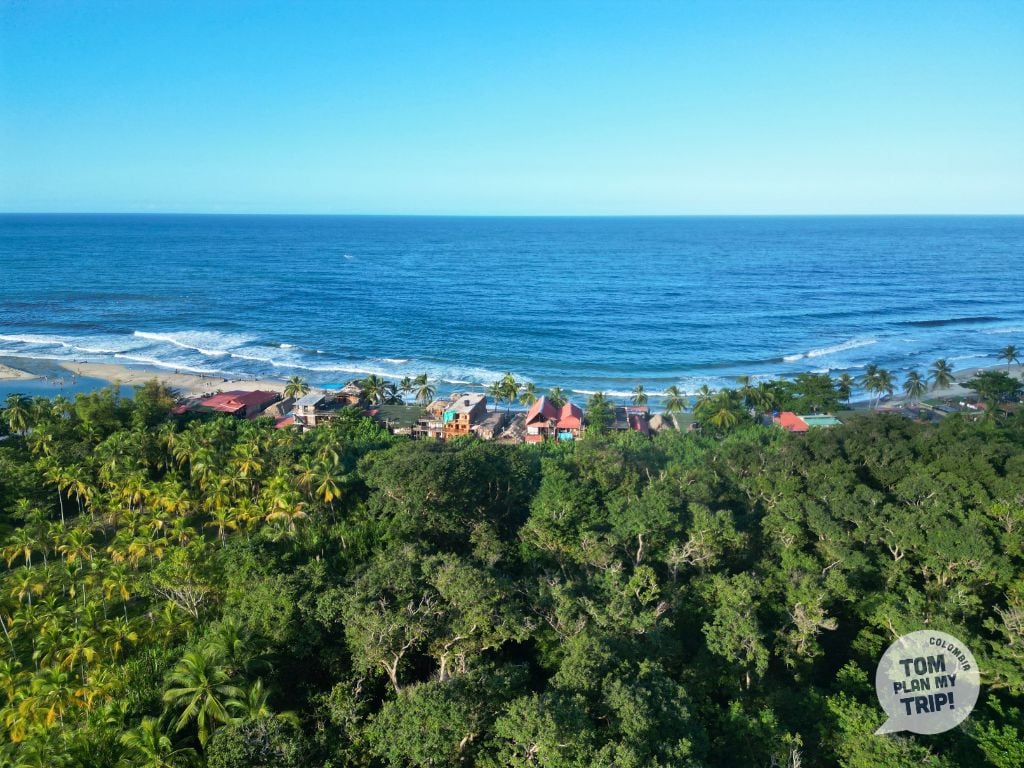
It is not a village in the classic sense, but rather a string of hotels and “surf camps” scattered between the road and the beach.
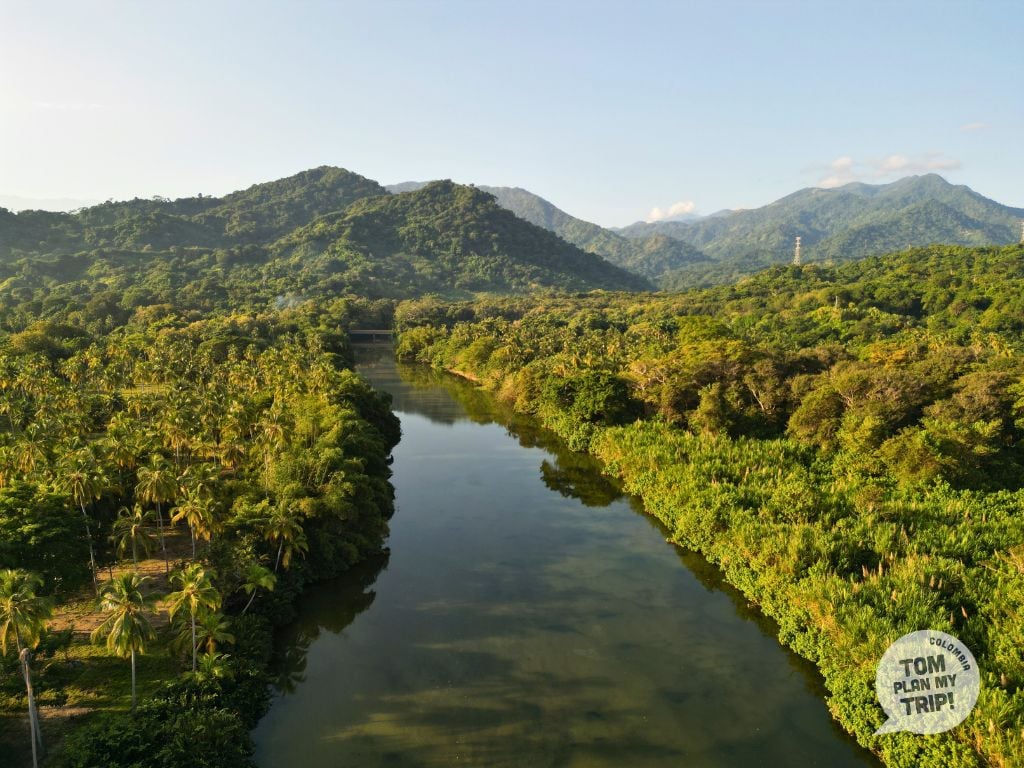
The “beach village” is located at the mouth of the Mendihuaca River. The tropical climate is constant all year round, with average temperatures of 23 °C at night and 32 °C during the day.
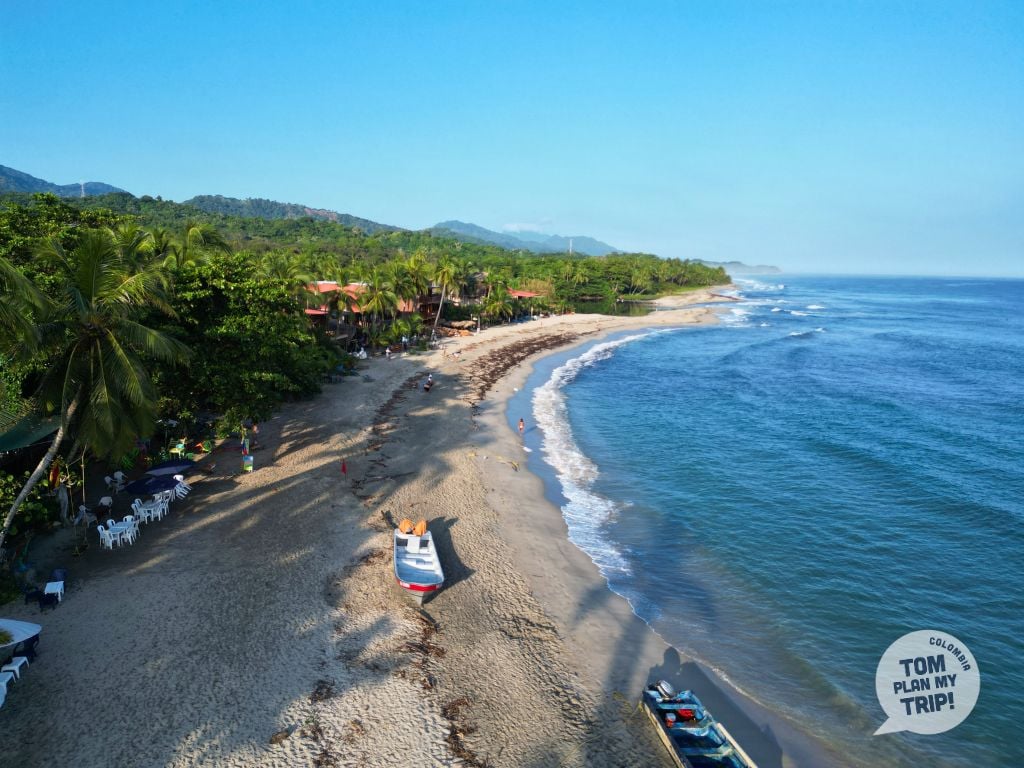
Far from the hustle and bustle of Palomino, Mendihuaca cultivates a calm, relaxed, and less touristy atmosphere.
You’ll find as many Colombian families on weekend getaways as surfers attracted by a community known for its hospitality and good waves, recognized by the national surfing federation, far from the crowds of more popular spots.
Traditional fishing is practiced at the river’s mouth.
Here, there are no streets or shops, and electricity can be fickle — just small hotels and a few bars/restaurants.
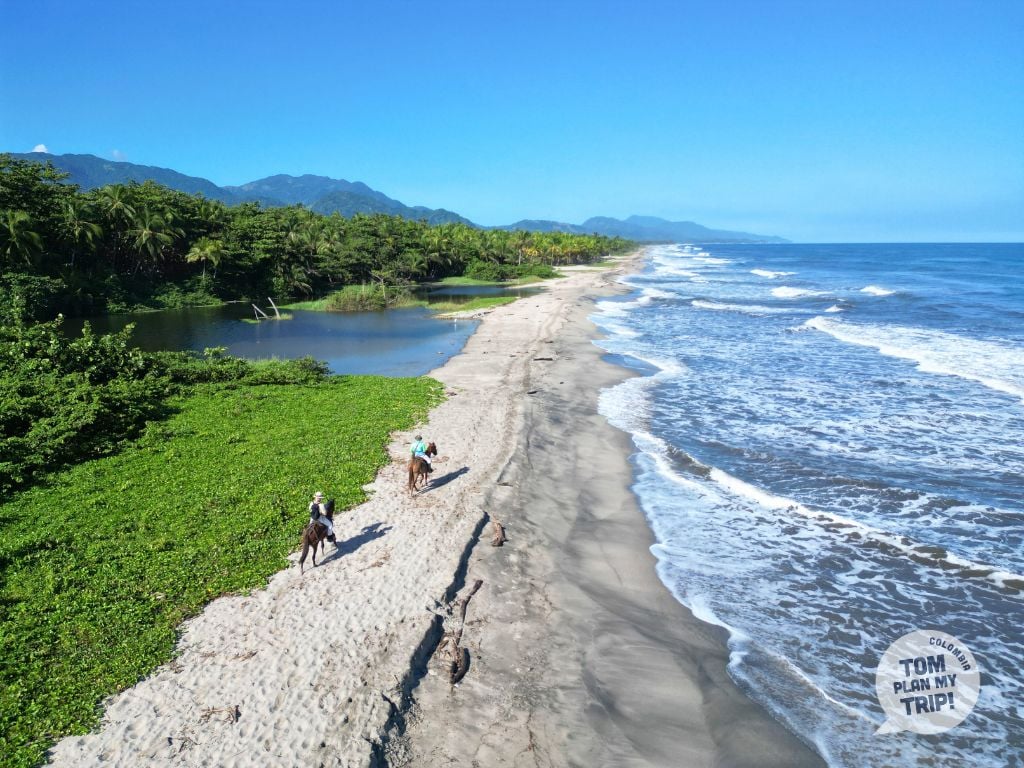
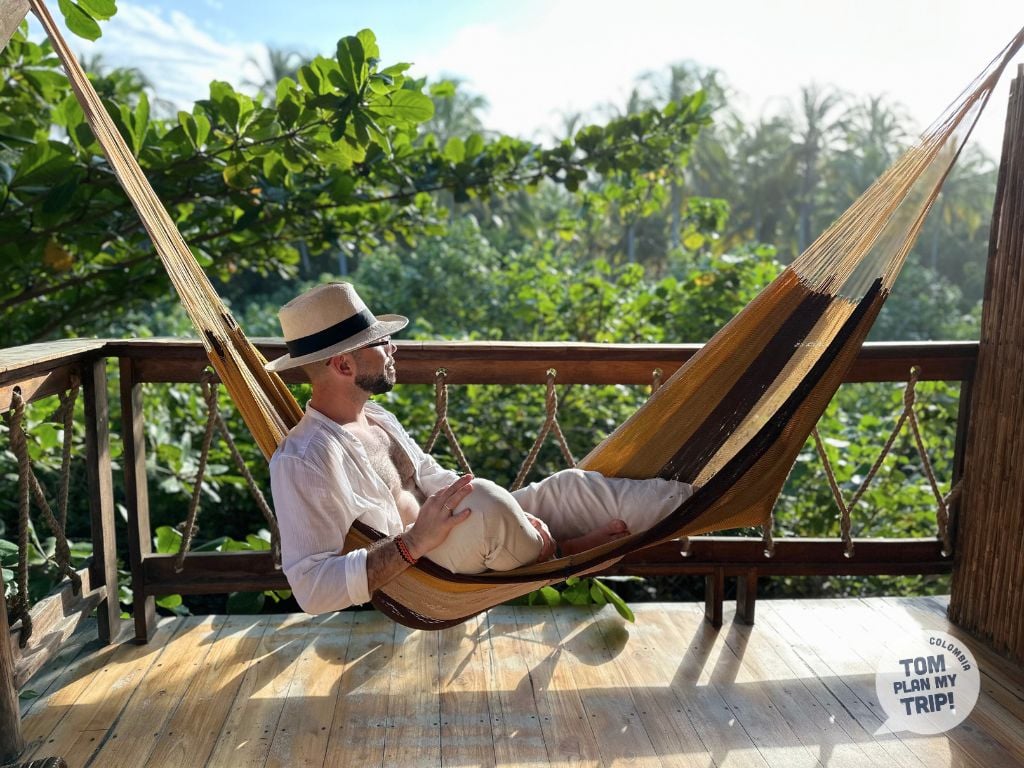
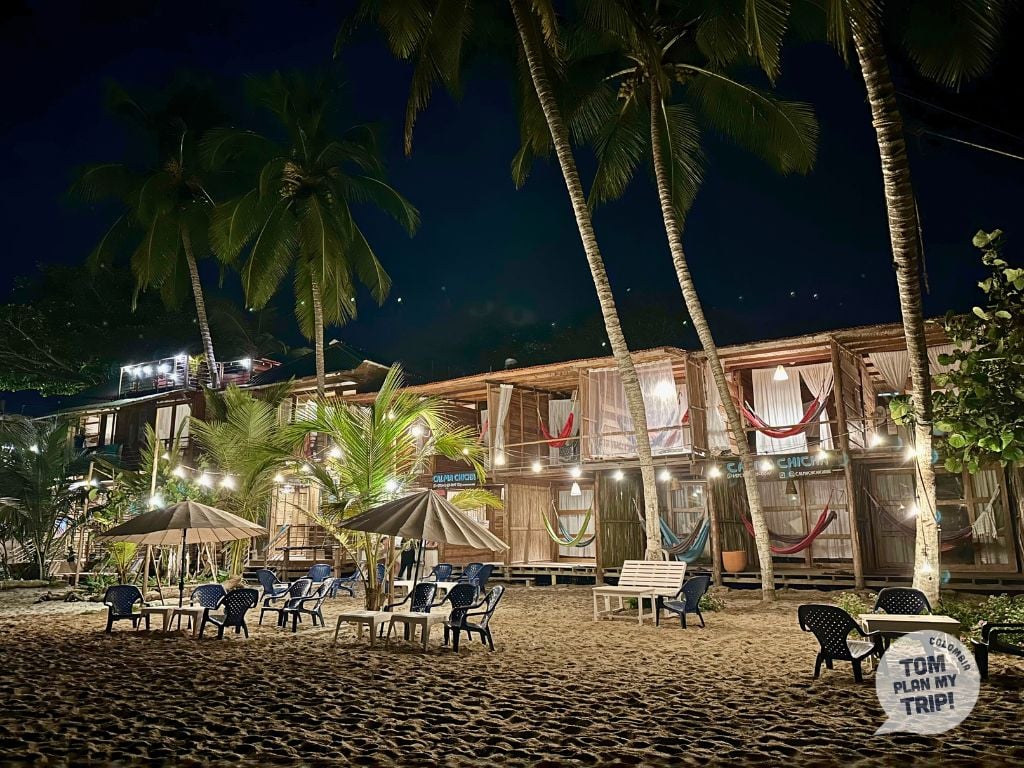
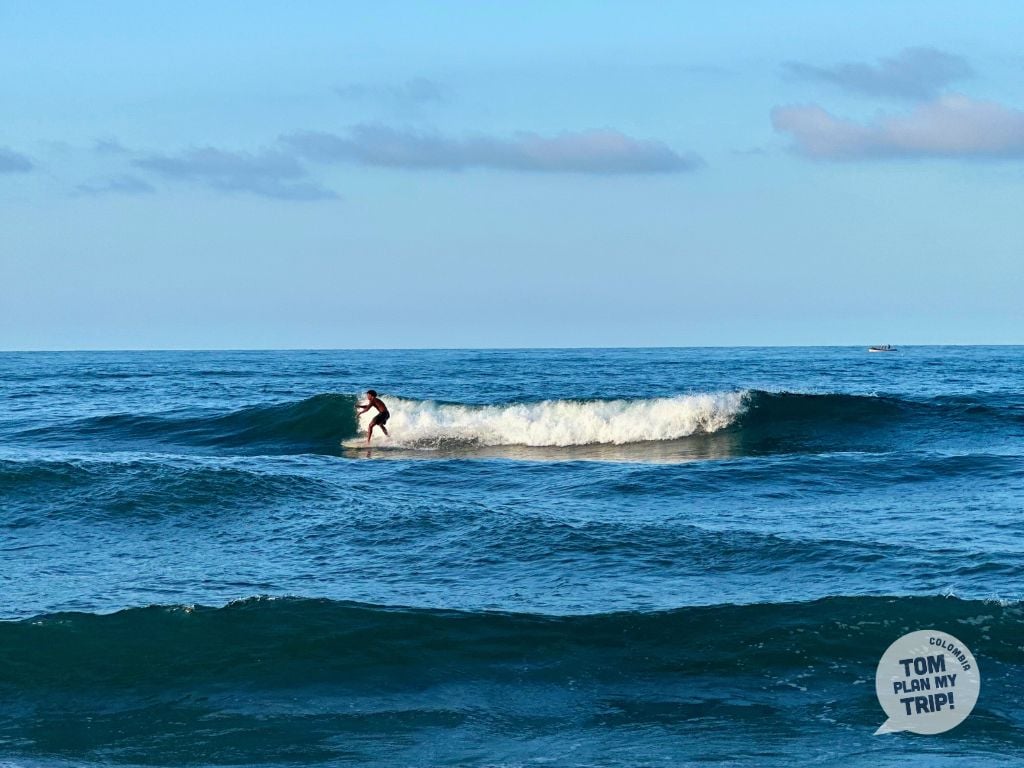
Surfing is the main activity in the area. Several schools on the beach offer lessons and equipment rental.
The sea is known to be rough with strong currents, so it’s not suitable for a leisurely swim.
However, the calm waters of the nearby river are perfect for kayaking or paddleboarding. Not far away, La Poza Encantada, a natural pool fed by a waterfall and accessible by a shaded path, is a great spot to cool off.
Tayrona Park is a few minutes away by bus, and Mendihuaca can even serve as a starting point for the Ciudad Perdida trek.
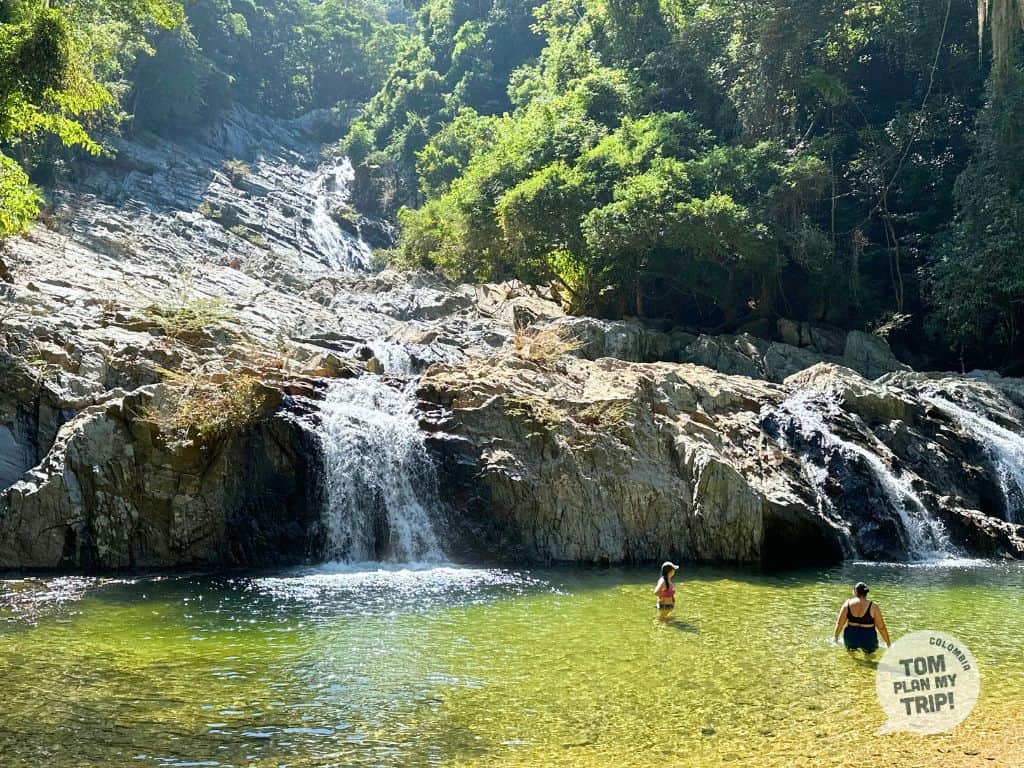
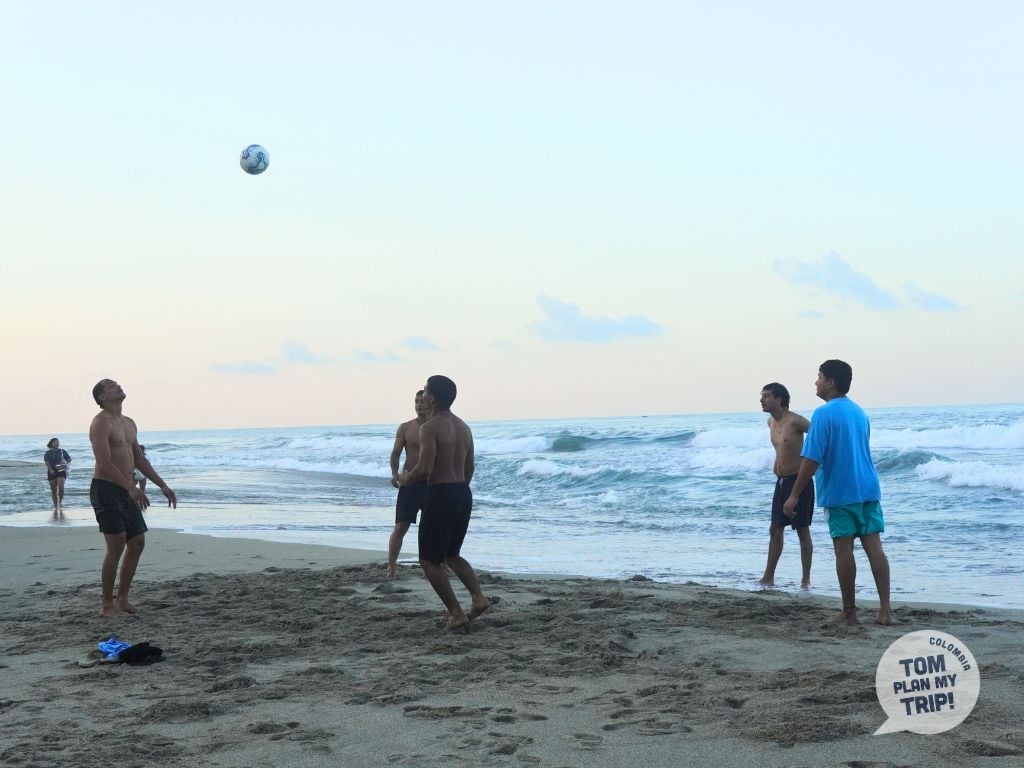
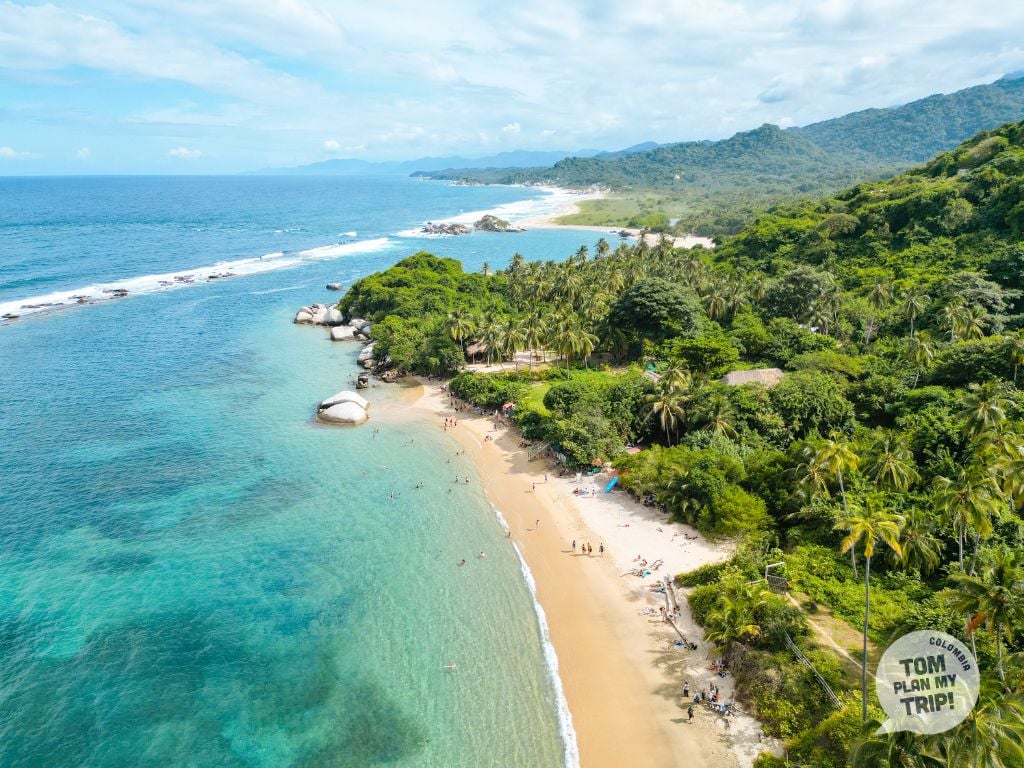
Two nights are enough to enjoy the beach and take an excursion to Tayrona Park.
Consider staying 3 to 5 nights if you’re coming for surfing or just to relax.
© Tomplanmytrip
MINCA
Nature and well-being in the Sierra Nevada.
Minca is in the department of Magdalena, nestled in the jungle of the foothills of the Sierra Nevada de Santa Marta, 30 min from Santa Marta.
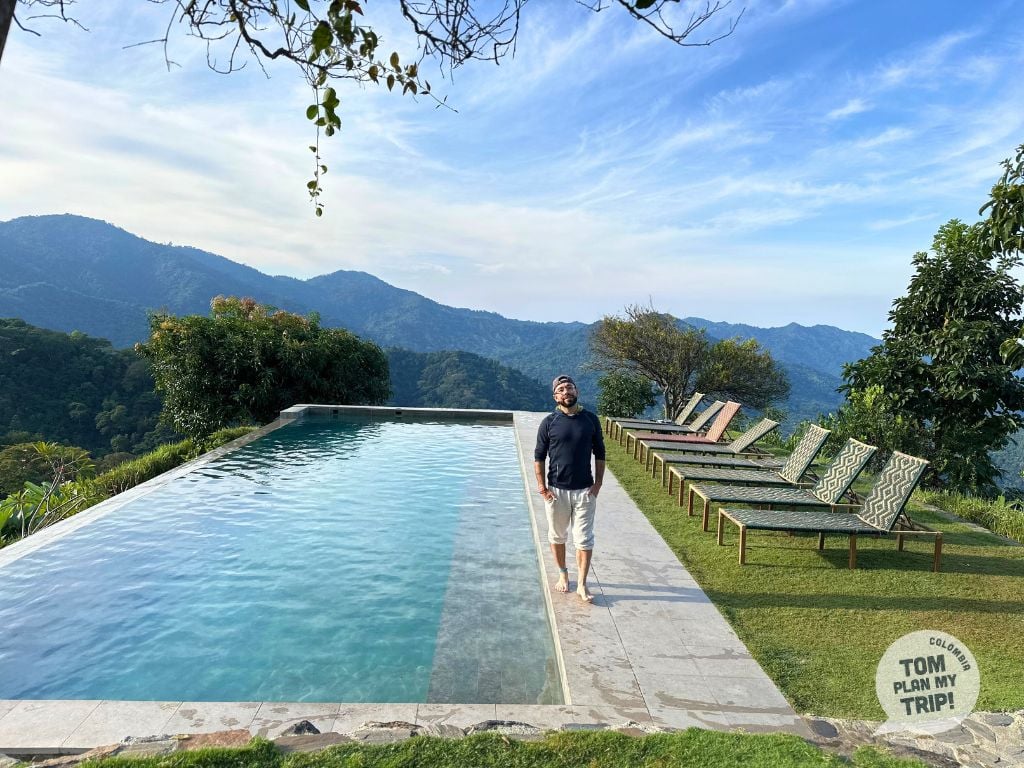
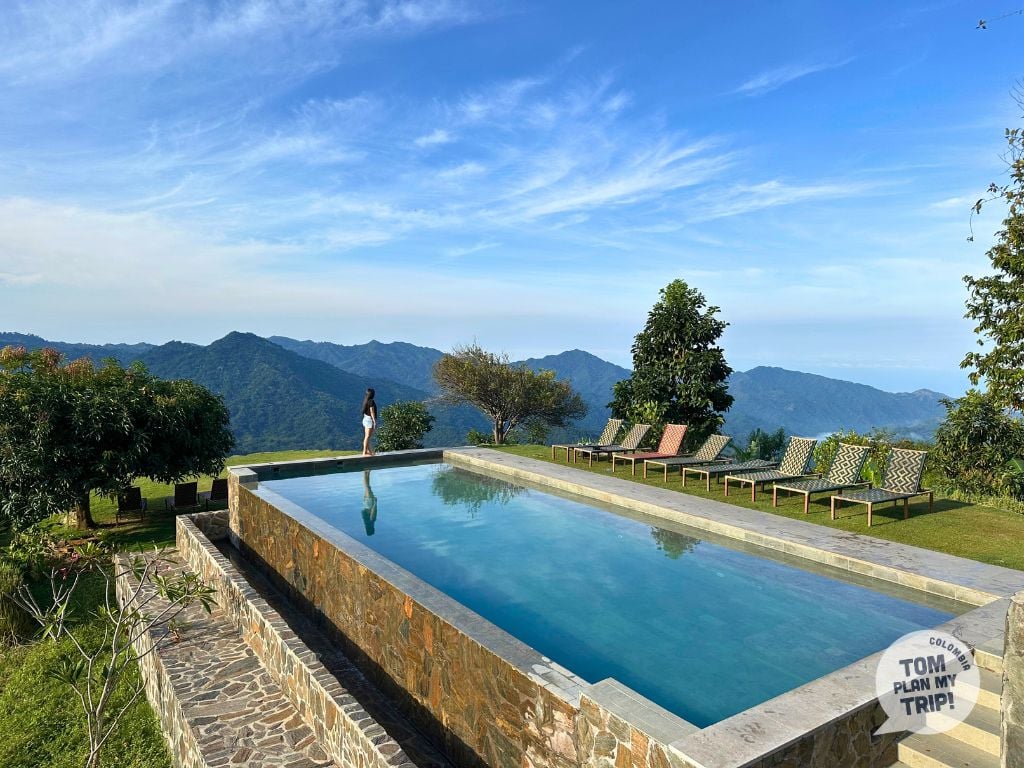
The village is at an altitude of 600 m, but the accommodations climb much higher, up to 1,500-2,000 m. Hot and humid during the day, the air pleasantly cools in the evening.
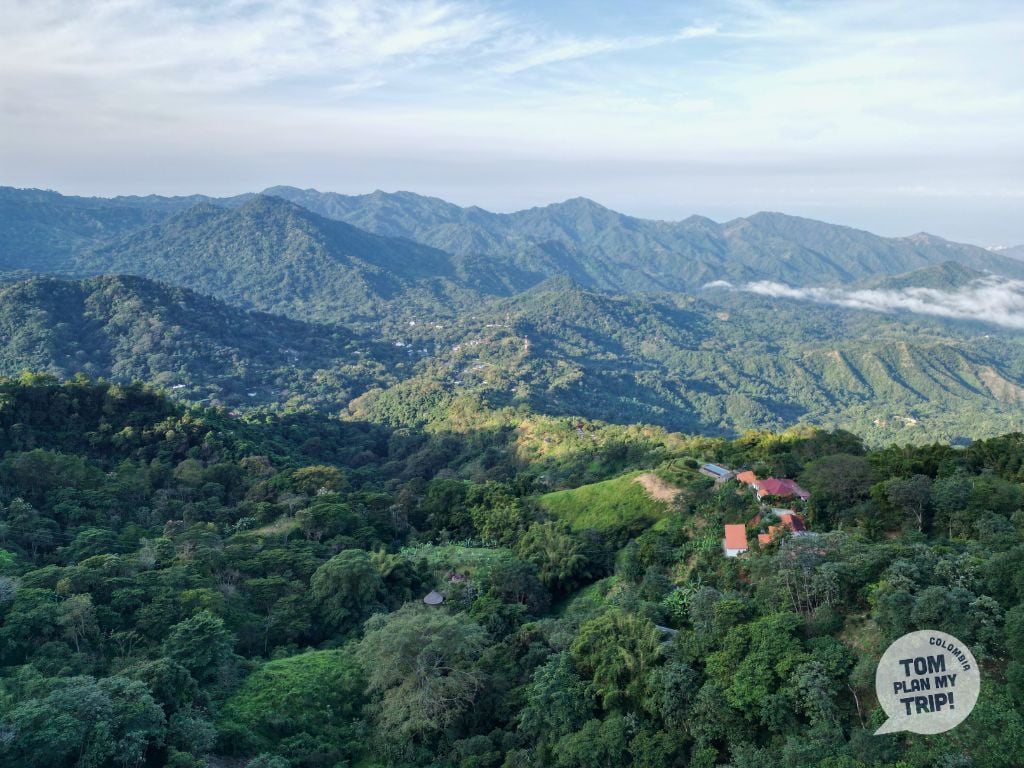
Founded in the 18th century thanks to coffee, Minca is nothing like a pretty colonial village: no heritage or iconic square, just a bridge and a main street.
Its real asset is the surrounding nature — lush jungle, waterfalls, views of the Sierra Nevada and the sea, and spectacular sunsets.
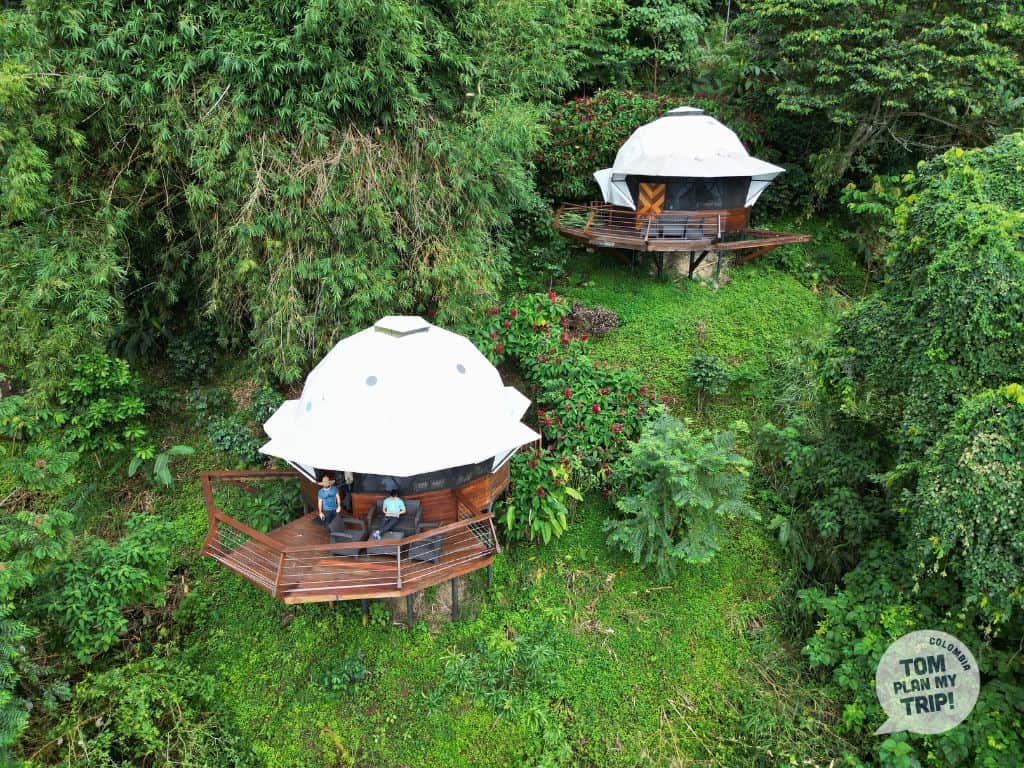
Its accommodations, comfortable and on the mountainside, have a “healthy” eco spirit, with a high concentration of foreign tourists. It’s better to come during the week (locals come in large numbers).
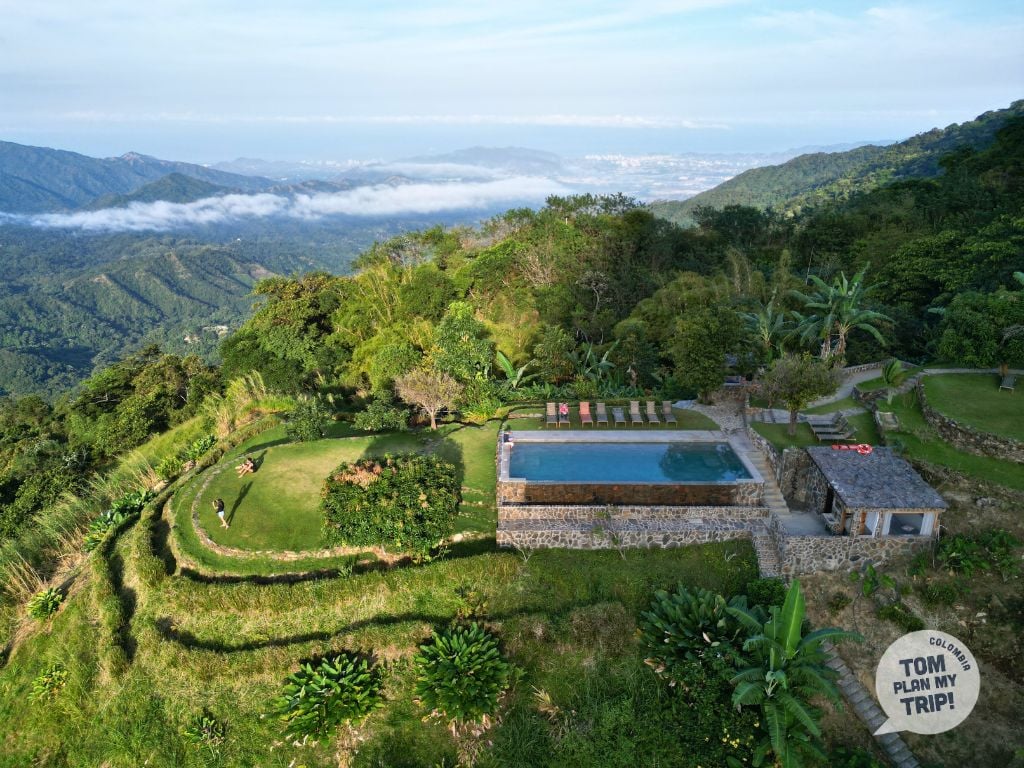
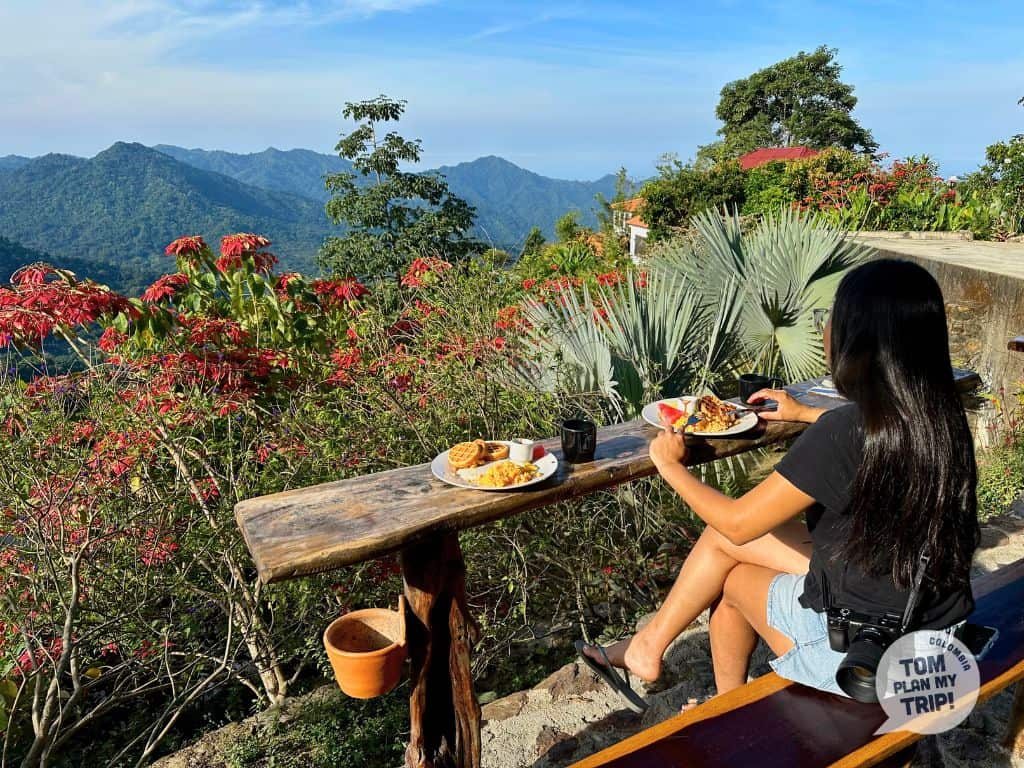

Hiking is the main activity in Minca. You can take trails leading to waterfalls and natural pools (Pozo Azul, Cascada Marinka) without a guide.
The coffee and cocoa fincas offer tours and tastings.
With 400 species of birds recorded, birdwatching is one of the great strengths of the region, which has several good observation sites.
Don’t miss the sunsets from the accommodations facing the bay of Santa Marta, nor the ascent of Cerro Kennedy early in the morning to see the snow-capped peaks of the Sierra.
Some ecolodges offer massages and ceremonies according to indigenous rites.
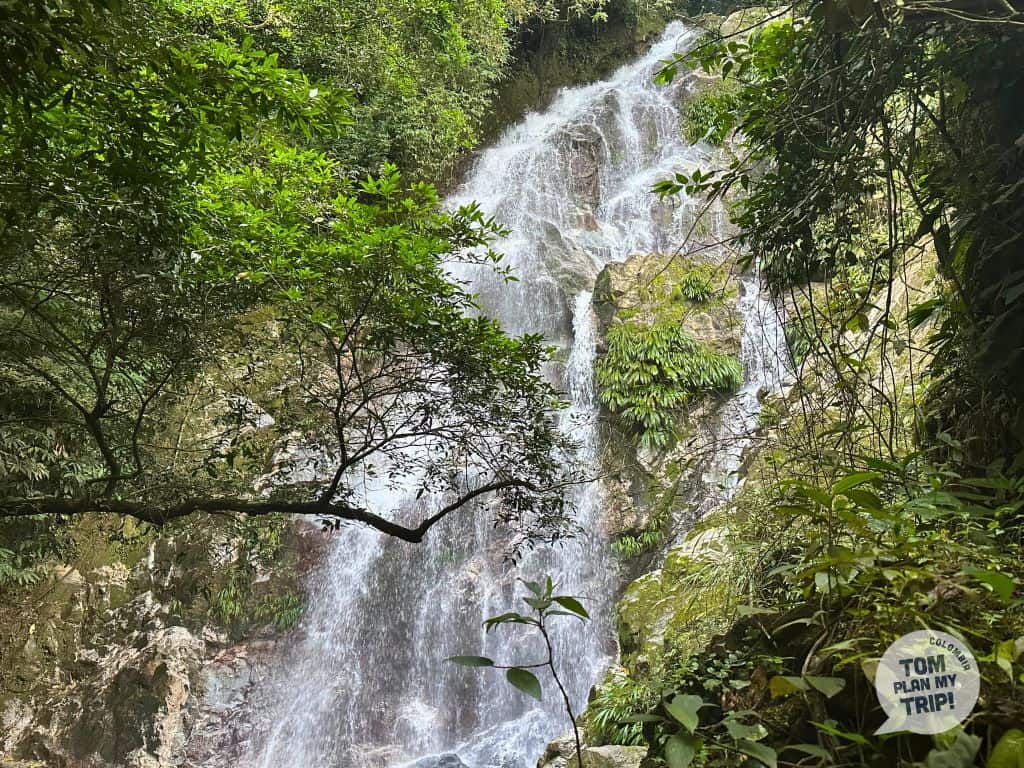
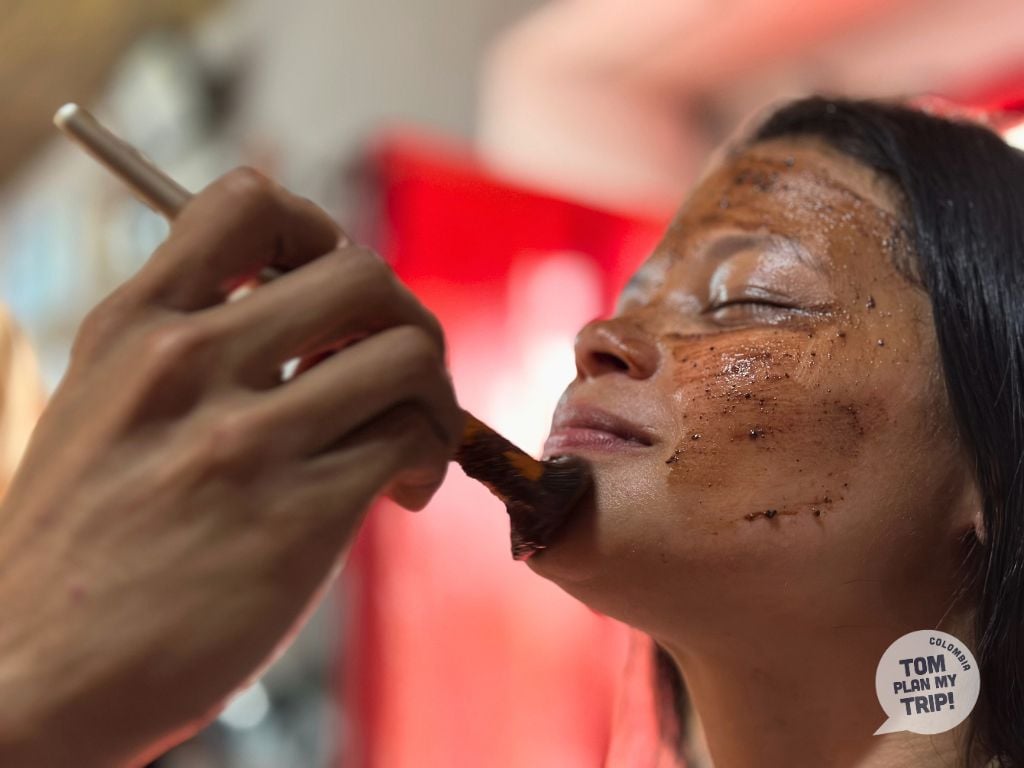


2 nights in a mountainside ecolodge are enough to grasp the essence of Minca.
© Tomplanmytrip
RINCON DEL MAR
A peaceful Caribbean fishing village.
Rincón del Mar is in the department of Sucre, on the western Caribbean coast — the least visited part of the coastline.
This small fishing village is about 3 hours from Cartagena and accessible by an unpaved road, which preserves its authenticity.
The climate is hot and semi-arid, with an average temperature of 28 °C year-round and a discreet rainy season from May to November.
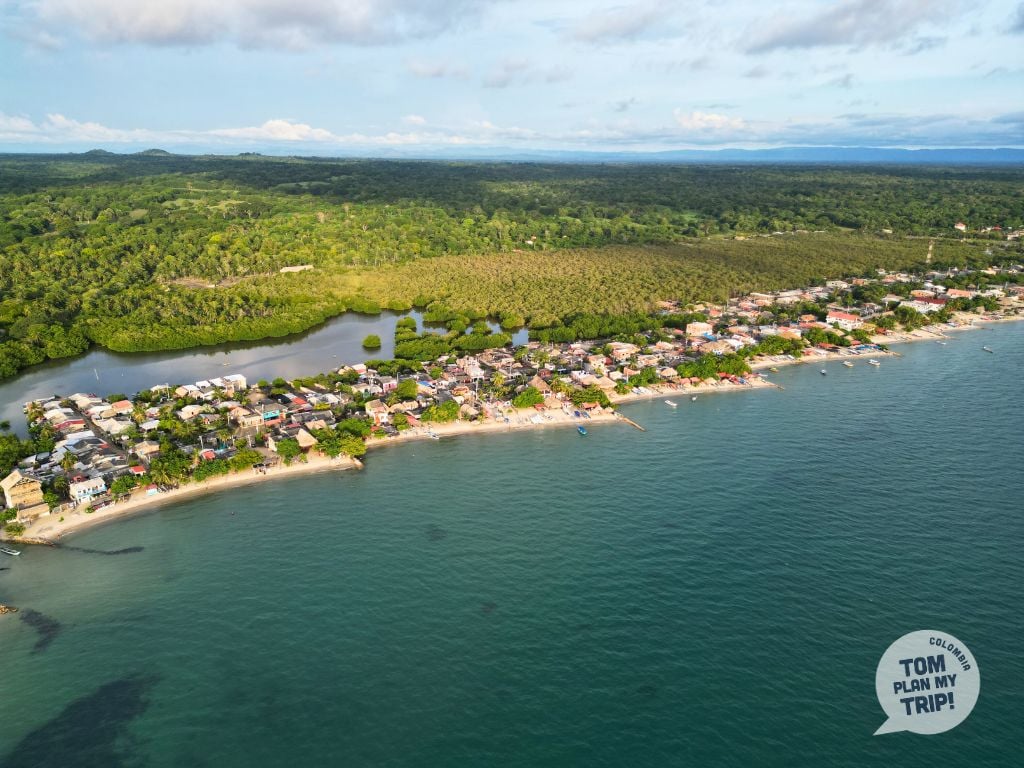
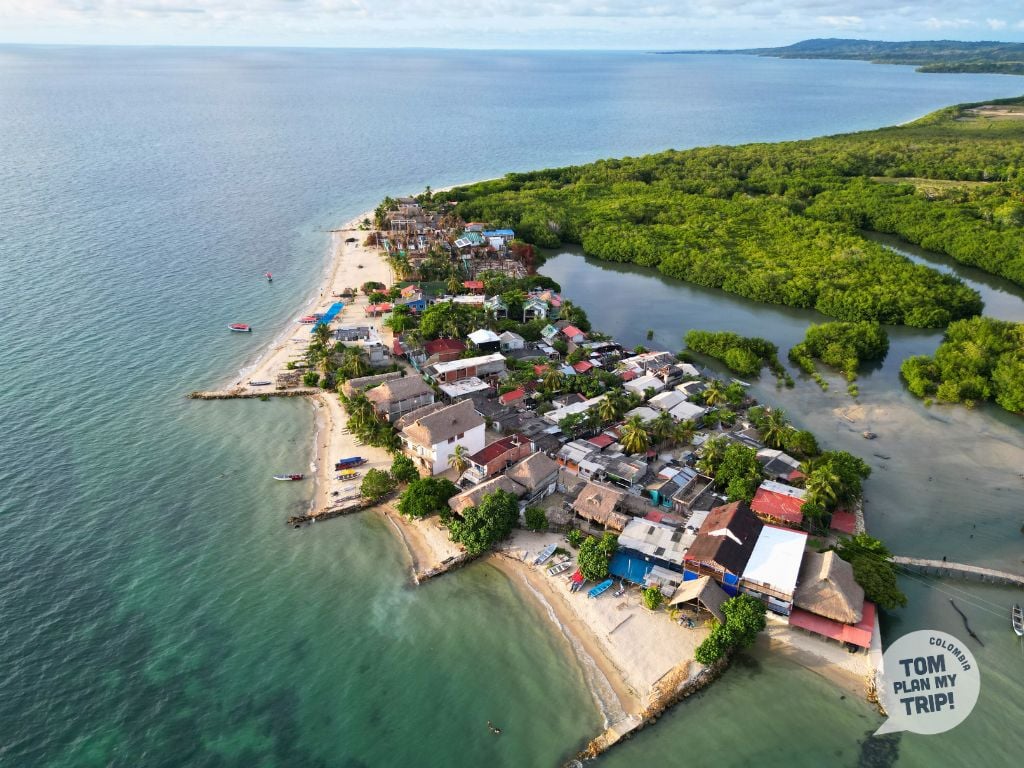
Rincón del Mar is an Afro-Colombian fishing village with a peaceful and unpretentious atmosphere, with its colorful houses, its only sandy street, and its long beach lined with coconut trees.
The bridge over the river separates two very distinct atmospheres: on one side, the main beach, lively and lined with bars, where fishing boats rest pulled up on the sand; on the other, a quieter and more untamed beach.
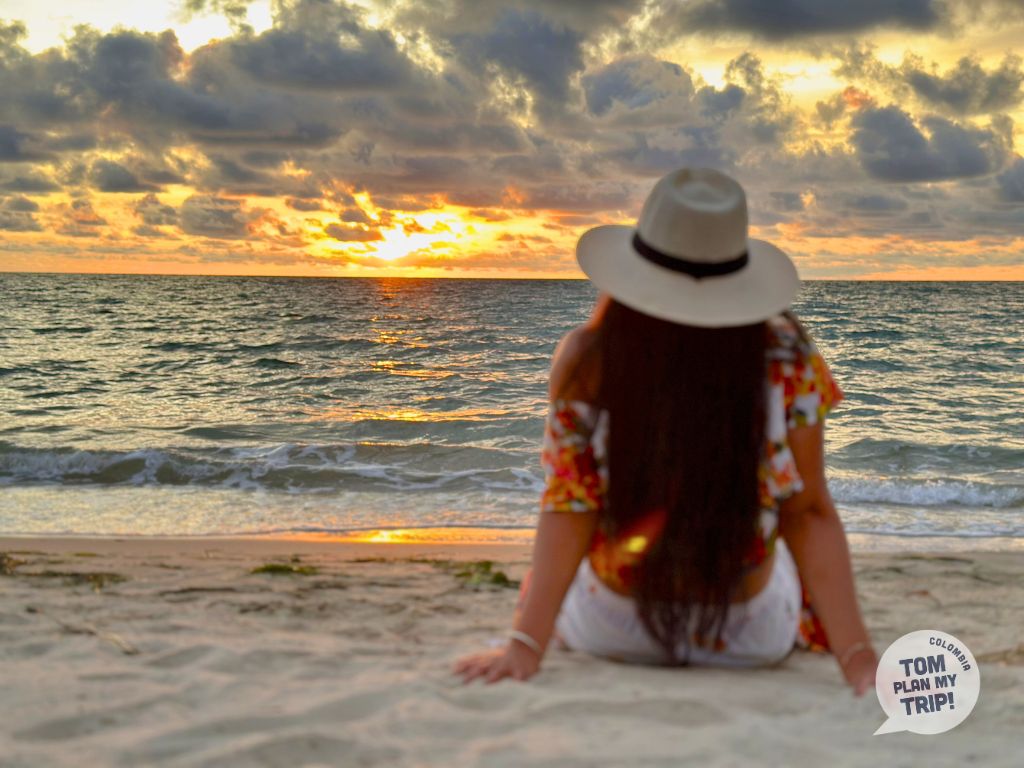
Local life unfolds peacefully between the returns of the fishermen, games of dominoes, the aromas of cooked dishes, and beautiful sunsets.
The village still retains its confidential character, but it’s best to avoid vacation periods and weekends, when locals love to party, with music blasting.


In Rincón del Mar, relaxation is king: swimming, napping, reading under the coconut trees, freshly squeezed fruit juices, lobster fresh from the water, feet in the sand.
At sunset, set off by boat to swim in the lagoon at nightfall, amidst the bioluminescent plankton.
Nature lovers will explore the mangrove and the tropical dry forest with a guide, in search of legendary trees and elusive animals.
You can also fish with a local, dive, and go snorkeling around the San Bernardo Archipelago, very popular on weekends and mostly private — a more structured than wild experience if you go for a day trip.


Plan for 3 nights to fully enjoy the atmosphere of Rincón del Mar, between the beach, interactions with locals, and one or two activities.
In my opinion, it’s the perfect destination to wrap up a trip to Colombia and relax before heading back home.
© Tomplanmytrip
CAPURGANA
Afro-Colombian culture at the edge of Colombia.

Capurganá is the most lively village in the Caribbean Chocó, predominantly Afro-Colombian, with a rhythm and way of life that truly transports you and offers an immersion far from tourist clichés.
The village is festive and noisy (music at full volume), often cut off from the world (irregular electricity and phone network).
Historically prized by the Paisas as a place of vacation and considered safe, Capurganá today experiences mostly Colombian tourism in expansion, which impacts its authenticity and notably generates increasing difficulties in water and waste management.


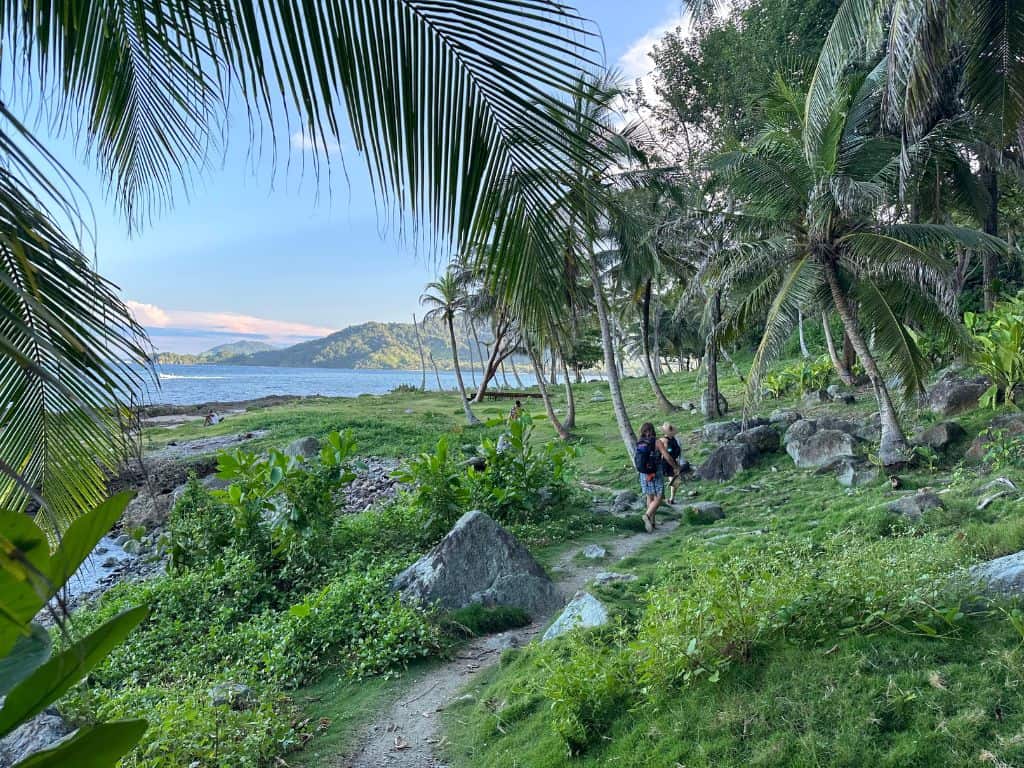
Beaches are Capurganá’s main attraction: the village‘s beach, Playa El Aguacate (1 h 15 on foot), perfect for snorkeling, and Playa Soledad (30 min by boat), bordered by mangroves with crystal-clear waters.
Diving enthusiasts of all levels will find some of Colombian best spots here, ideally from August to November — calm sea and optimal visibility.
Things to do: La Coquerita (45 min on foot), with its freshwater pools and its saltwater pool; the hike to Sapzurro and its viewpoint over the two bays; or a spearfishing trip with a local guide.
The more adventurous will go as far as the San Blas Islands in Panama, or to the even more remote village of Trigana.



Plan for 2 to 3 nights for Capurganá alone. The ideal duration is 5 to 7 days for the entire area, combined with a stay in Sapzurro.
Always allow a margin of time for transportation, which is rarely reliable here, especially if you are connecting with an international flight.


© Tomplanmytrip
SAPZURRO
A piece of paradise at the border of Panama.
Last Colombian village before Panama, Sapzurro is nestled in the far northwest of Chocó, on this Caribbean strip wedged between the sea and the Darién jungle.
Located by the sea, the climate is humid tropical all year round, with an average temperature around 28°C.
No road leads there: you arrive by lancha from Capurganá (15 minutes) or by a jungle trail (1 h 30 to 2 h walk).
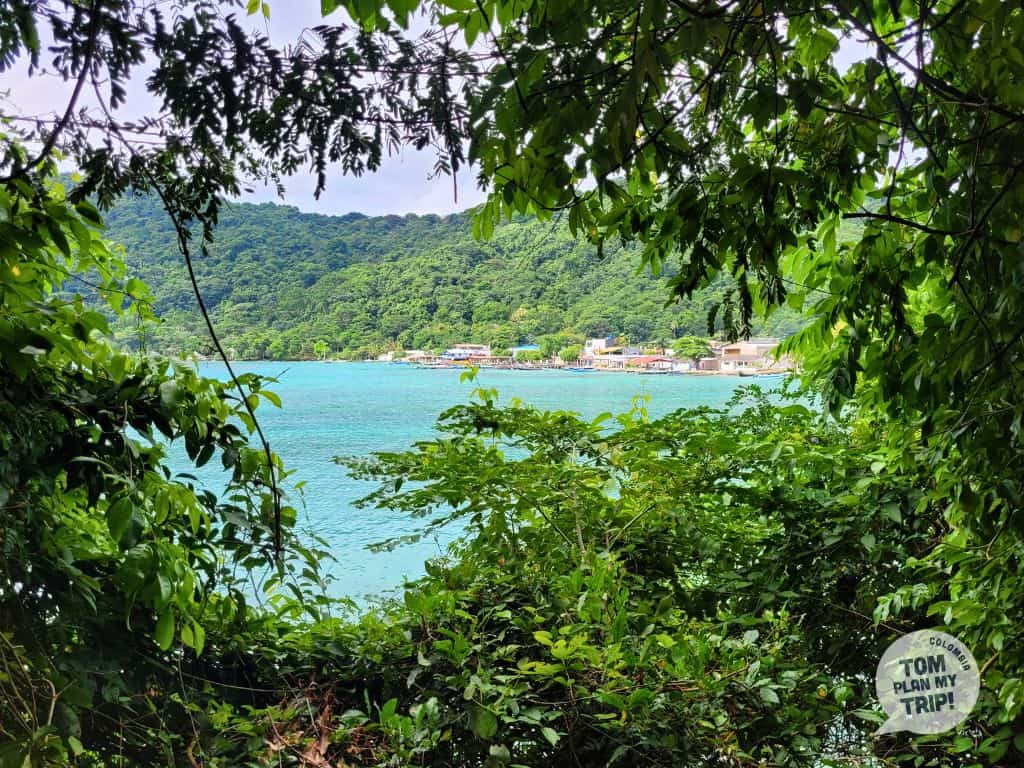
Sapzurro contrasts with the bustling Capurganá. Here, no motorized vehicles, just the calm of a village built around its square, its pier, and its church, surrounded by primary forest.
Its population, mostly Afro-Colombian, lives at the rhythm of fishing according to the weather and the whims of the sea.
In the closed bay anchor fishing canoes and a few sailboats.
The atmosphere, intimate, authentic, and peaceful, invites a slightly romantic disconnection for those who embrace rusticity — power outages, limited communication networks, simple accommodations made from local materials.
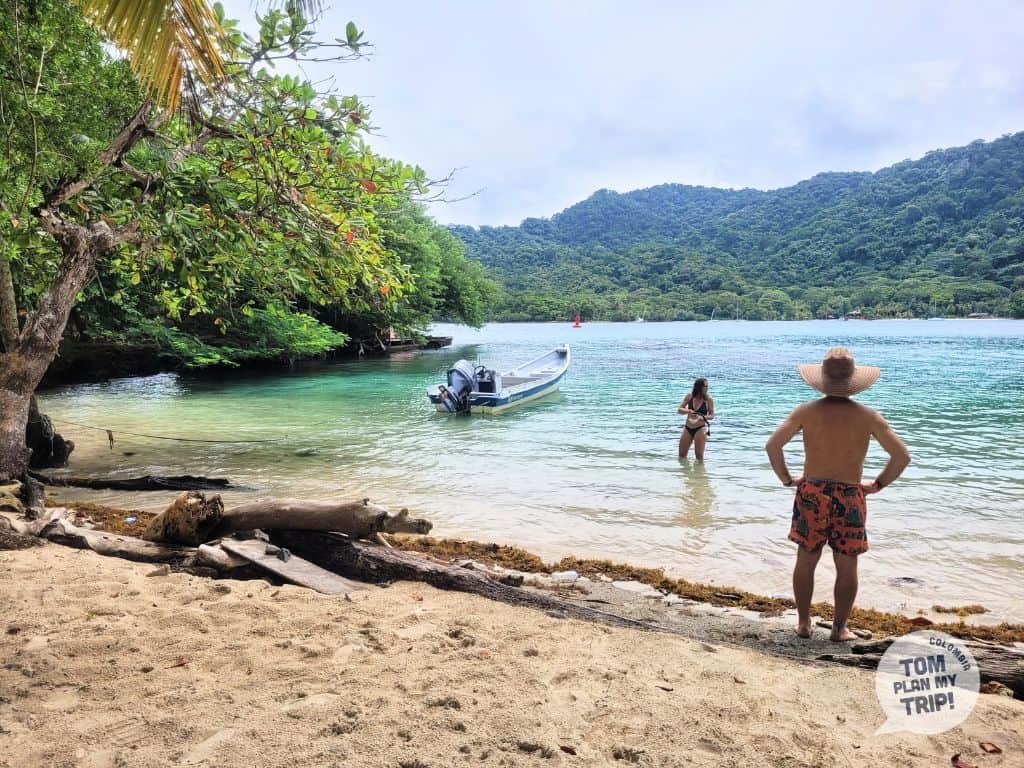

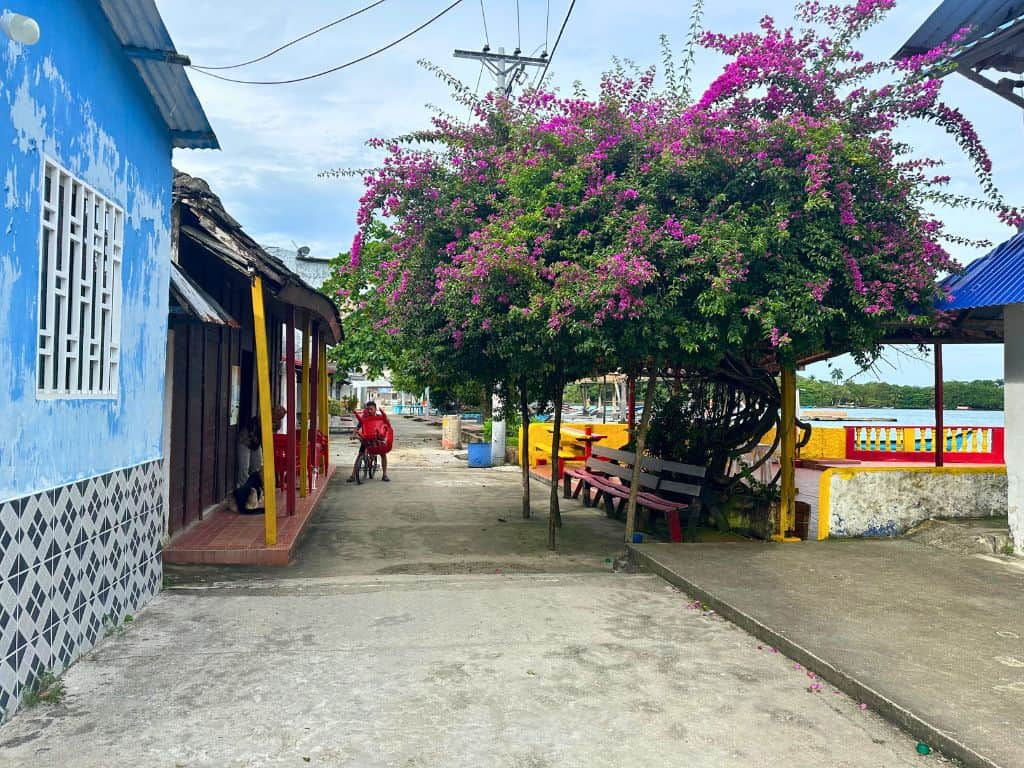

Here, the main activity is relaxing and enjoying beautiful beaches, like the village’s main beach near the muelle (pier), and the secluded Playa Bonita, while savoring a handmade ice cream.
On foot, you can get to La Miel, a Panamanian beach with turquoise waters lined with coconut trees, via the border post perched on the hill.
The coastal trail, dotted with coves and snorkeling spots, leads to Cabo Tiburón.
The Capurganá–Sapzurro viewpoint overlooks the two bays; early in the morning, you’ll see howler monkeys and birds there.
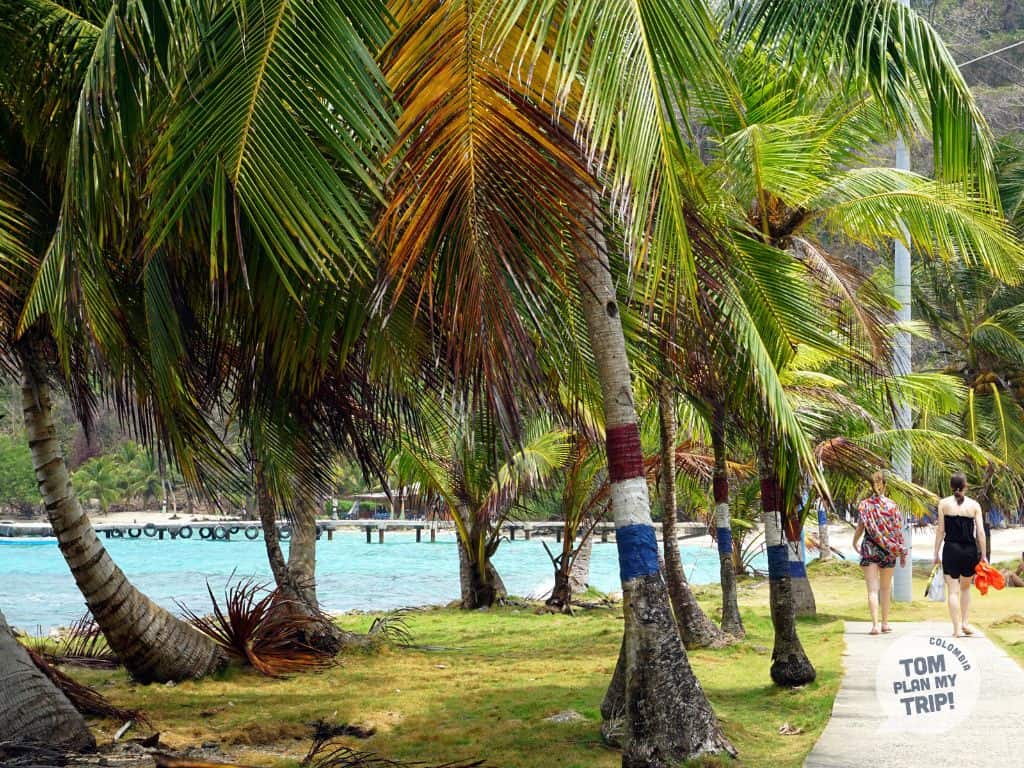

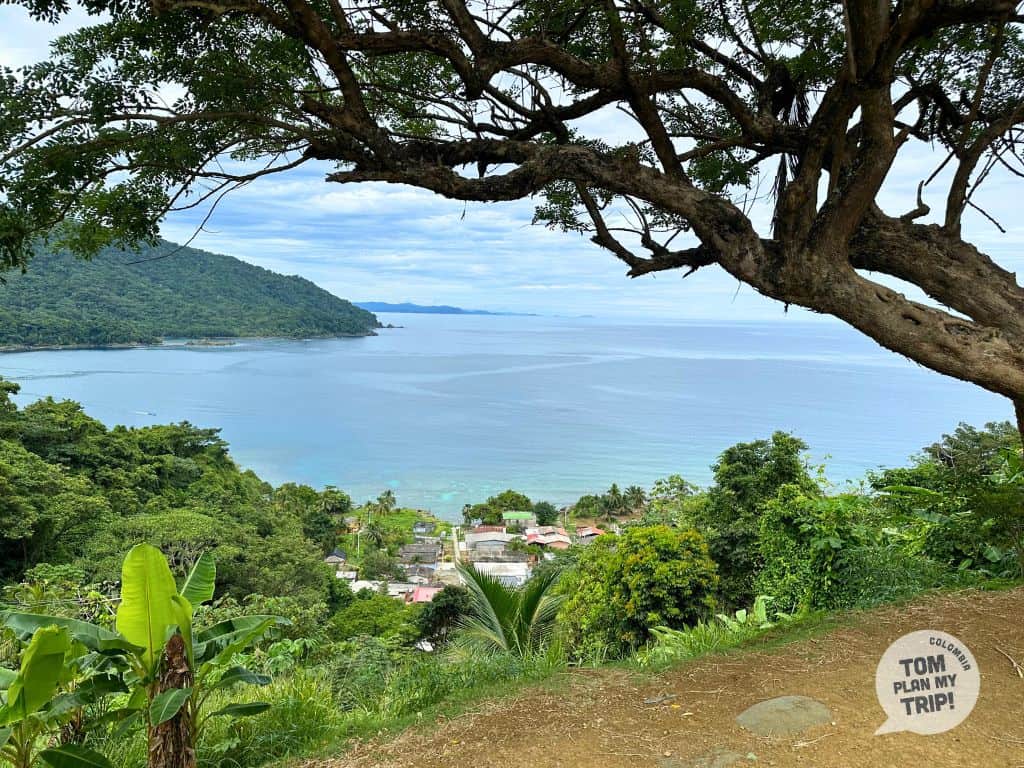

Plan for 2 to 3 nights there to fully enjoy it.
If you want to discover the whole area — Capurganá, Sapzurro, Trigana/Aguacate — plan for 5 to 7 days, staying in two accommodations, in Sapzurro and Capurganá.
Don’t schedule your stay right before an international flight. The area is isolated, subject to weather conditions that can disrupt flights and sea travel.


© Tomplanmytrip
LORICA
A warm small town in Colombia with unique cultural blending.
Lorica is located in the department of Córdoba, in the north of Colombia, on the banks of the Sinú River, about 30 kilometers from the Caribbean Sea.
From Montería, the capital of the department, it takes 1 hour and 30 minutes by road; from Cartagena, between 3 hours and 30 minutes and 4 hours.
At only 7 m above sea level, the village has a hot, humid climate, typical of the Caribbean plain, with an average daily temperature of about 27.5 °C.
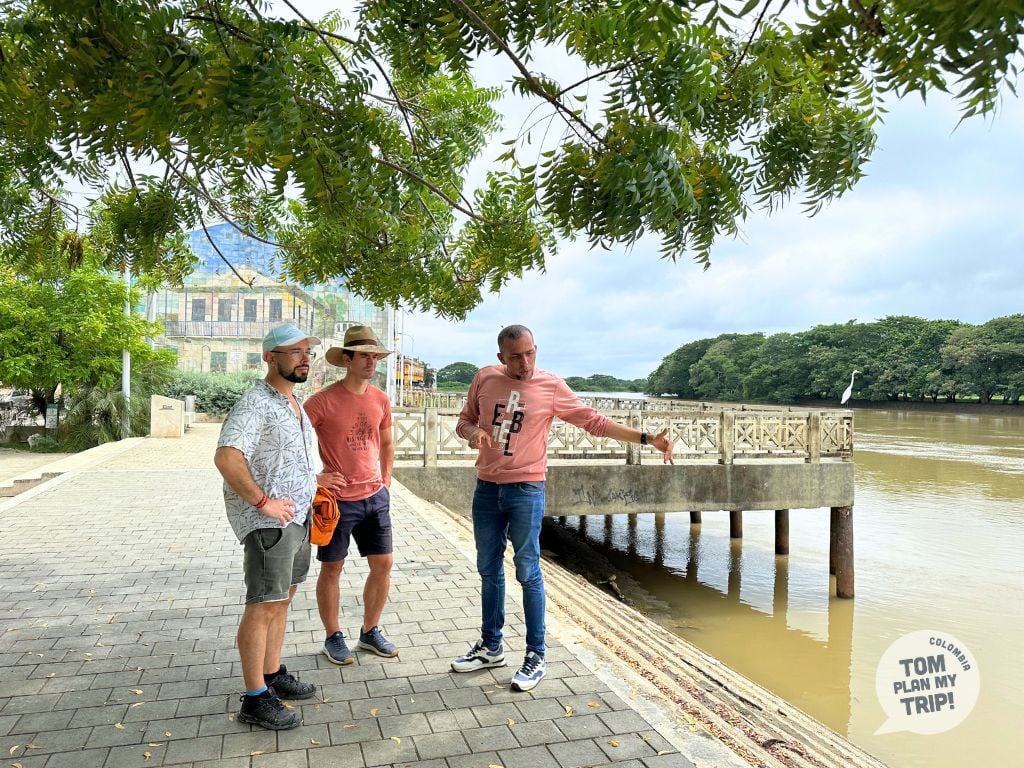
Arriving in Lorica is surprising: noisy, with lots of motorcycles; in short, not very attractive at first glance. Take a motocarro — a type of local tuk-tuk — to reach the historic center.
Once there, you will discover its republican and Mudejar architecture, inherited from a rare blend — Zenú indigenous, African, Spanish — and a strong Lebanese-Syrian influence still visible in the cuisine and last names. Unfortunately, the buildings are not often restored, and many are in poor condition.
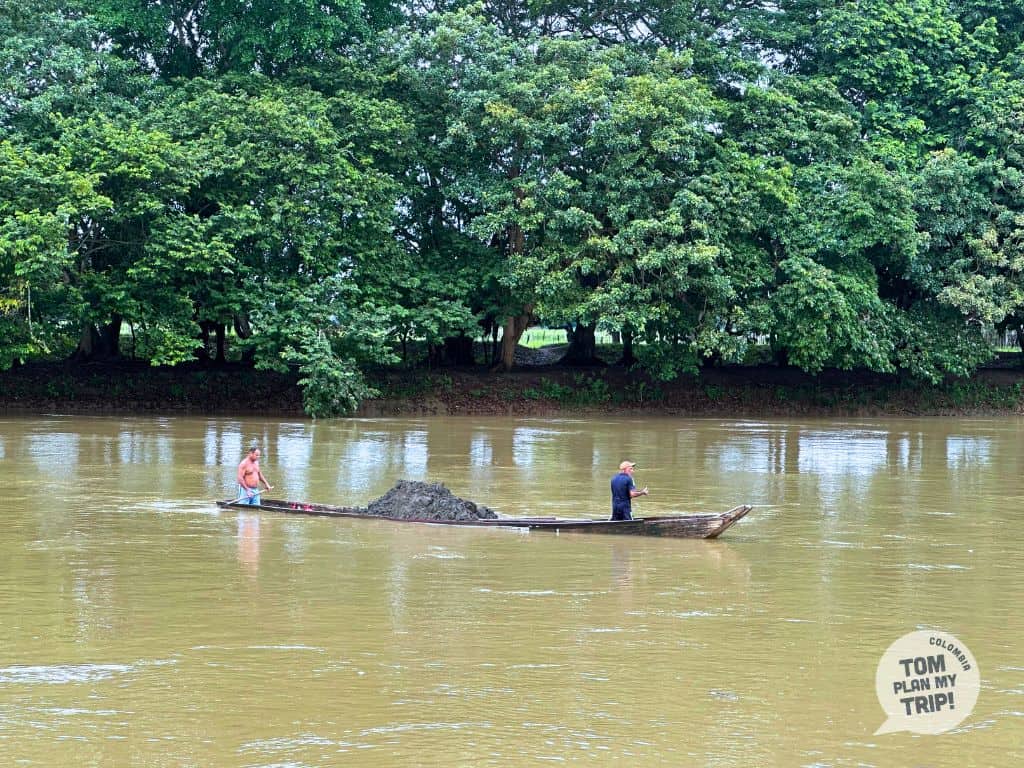
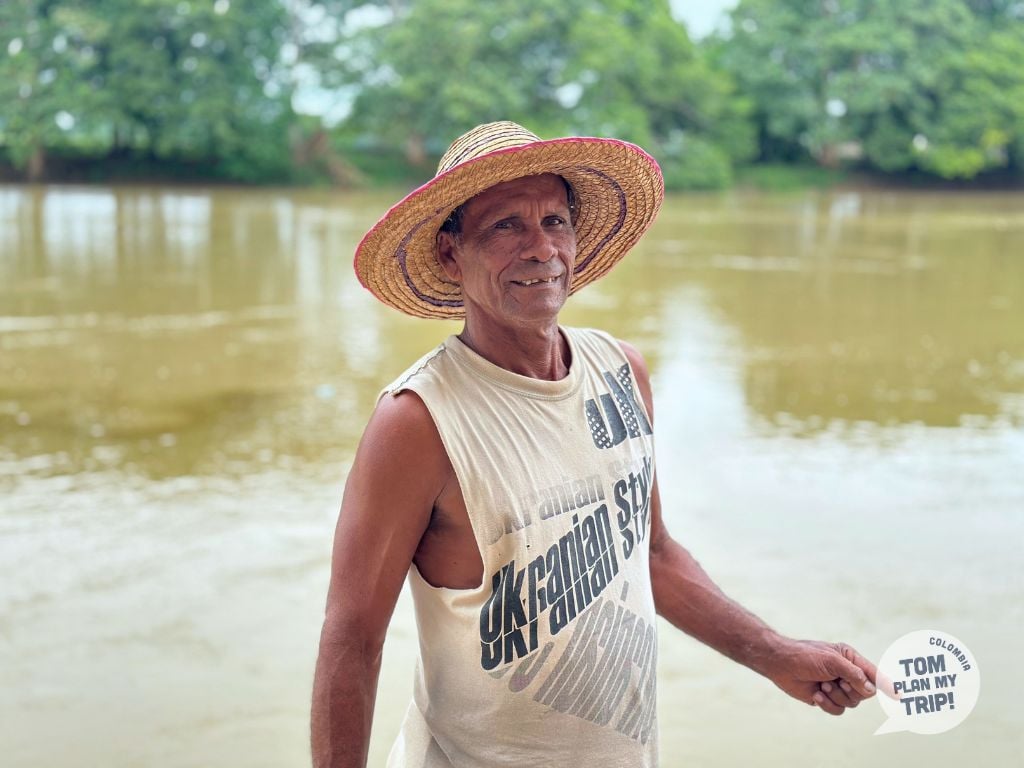
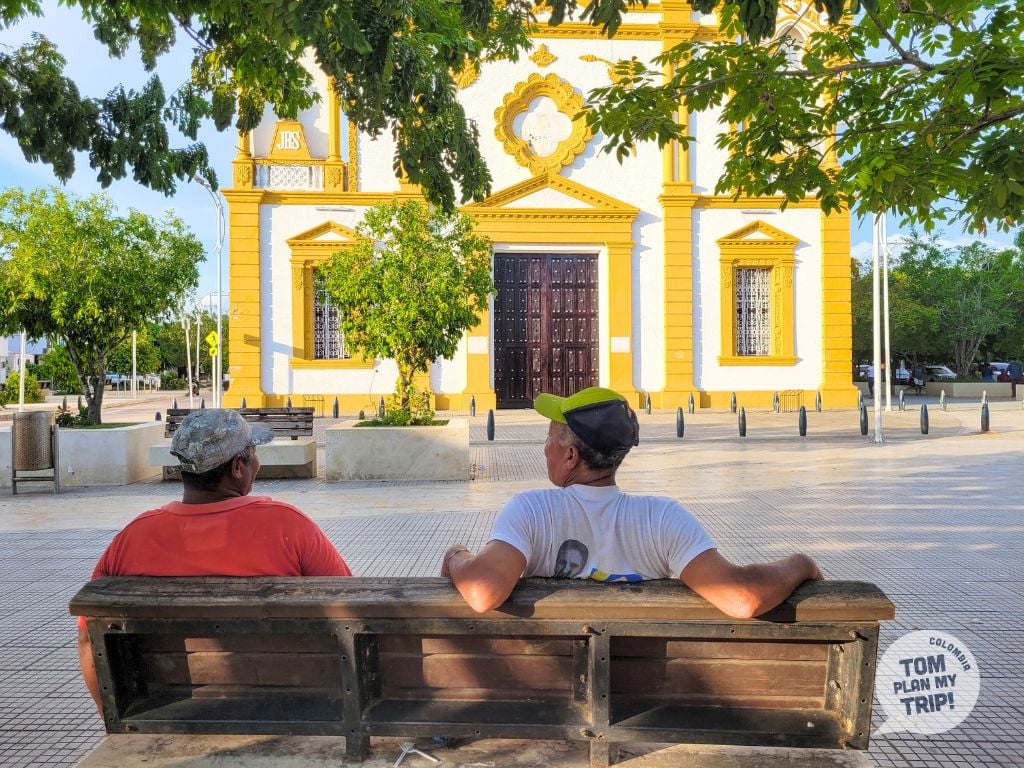
You can’t miss the public market, the “Ranchón” — halls from 1929 by the river, where you will eat the famous river fish Bocachico, amidst stands of crafts, spices, and locals wearing the traditional sombrero vueltiao, in a lively, popular atmosphere.
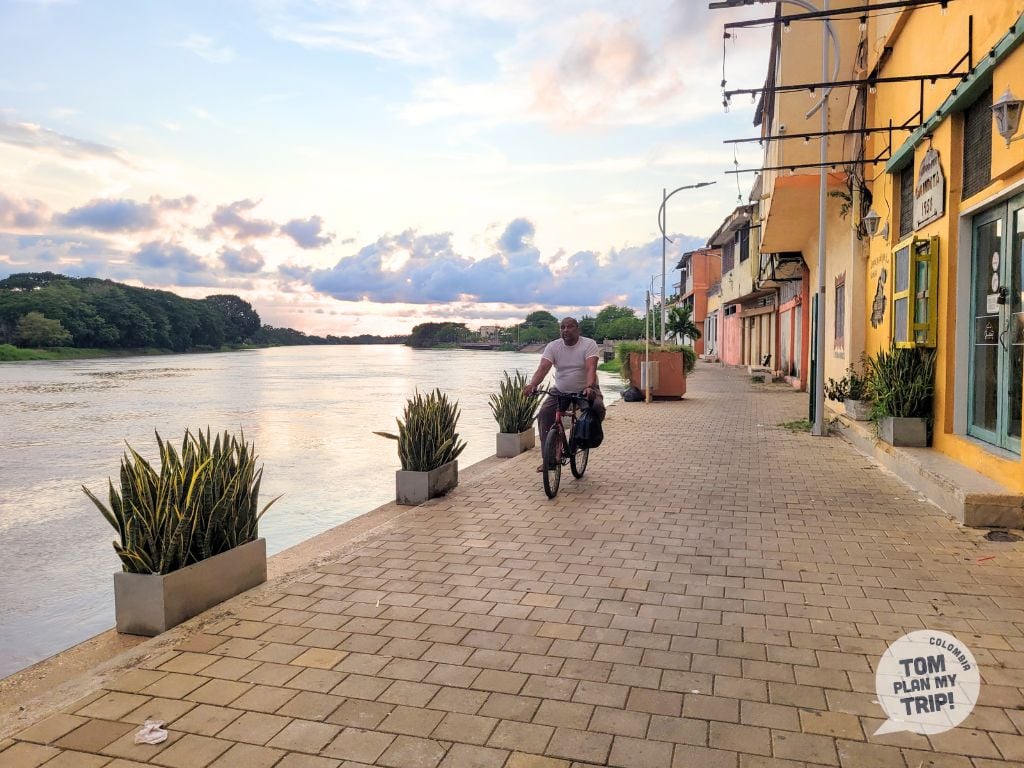
Then stroll through the center, with its notable buildings, before reaching the malecón (promenade) along the Sinú to the obelisk of Ríos Sossa.
Try local culinary specialties like sarapa or bocachico, an emblematic fish of the river.
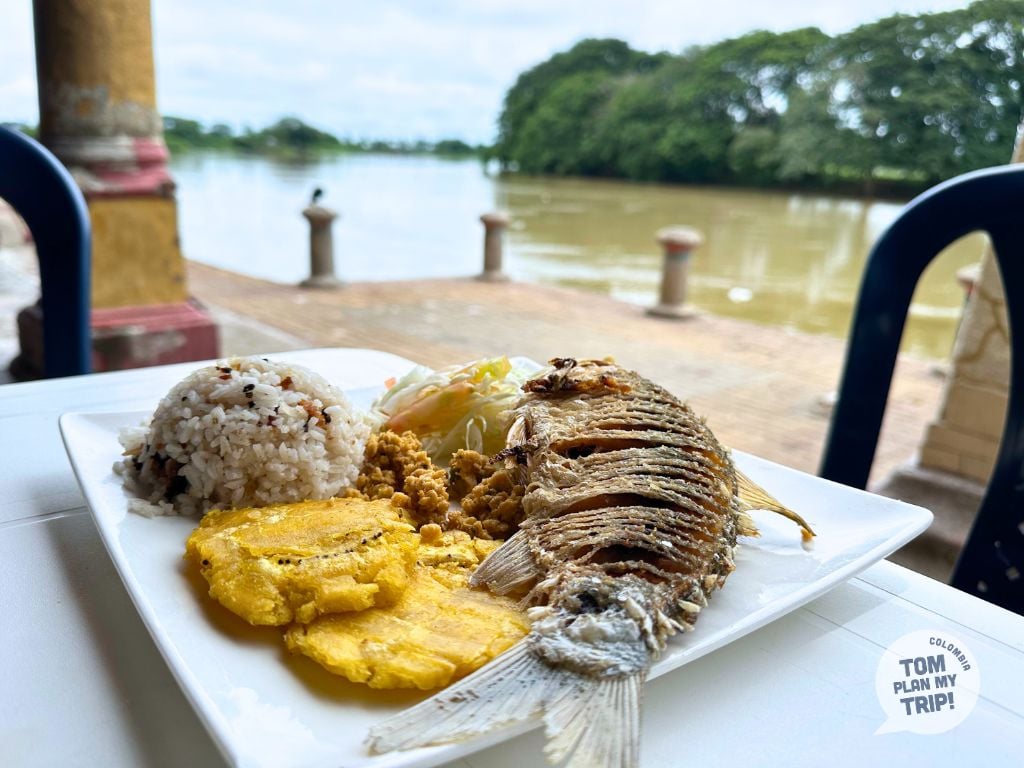
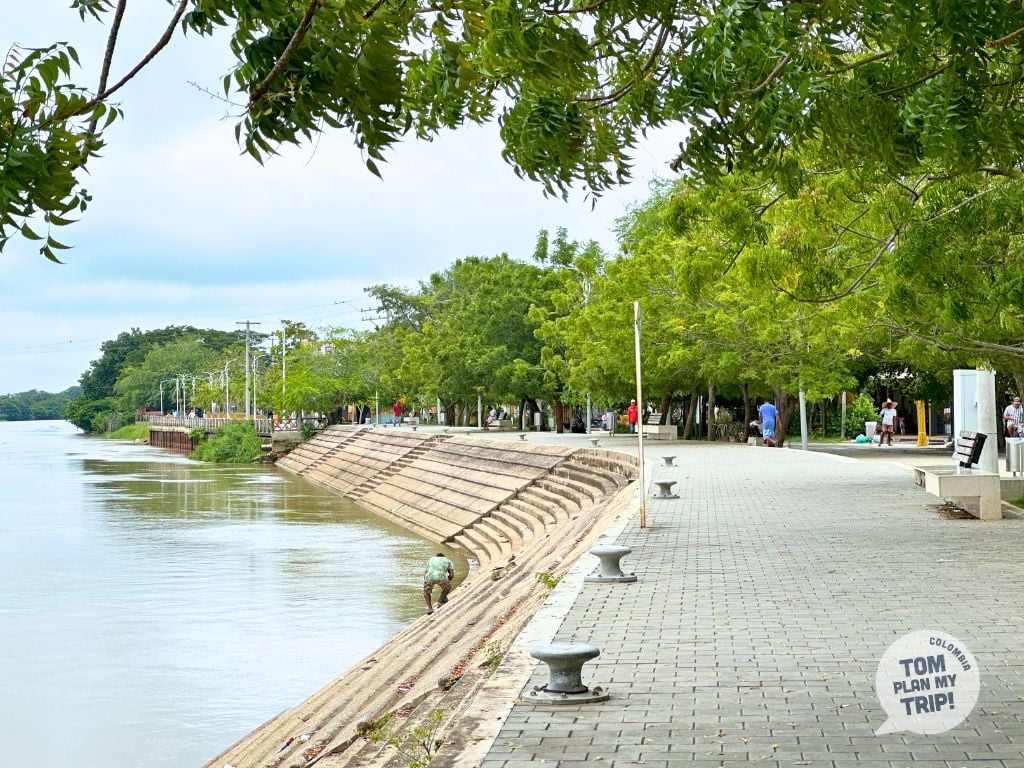
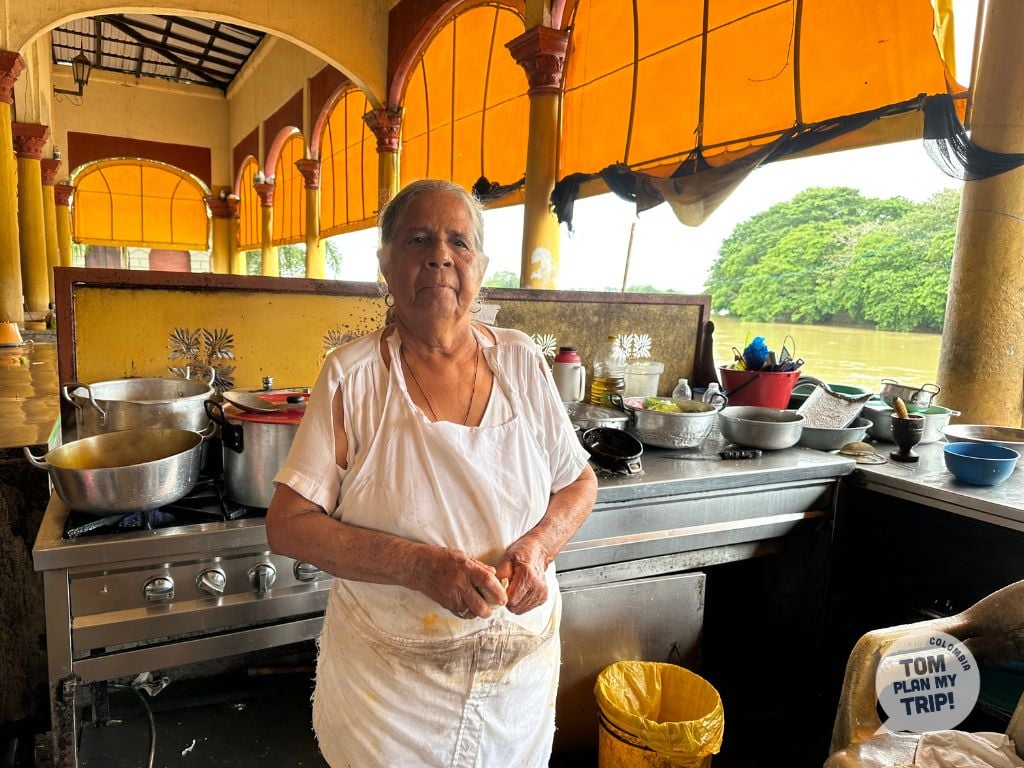
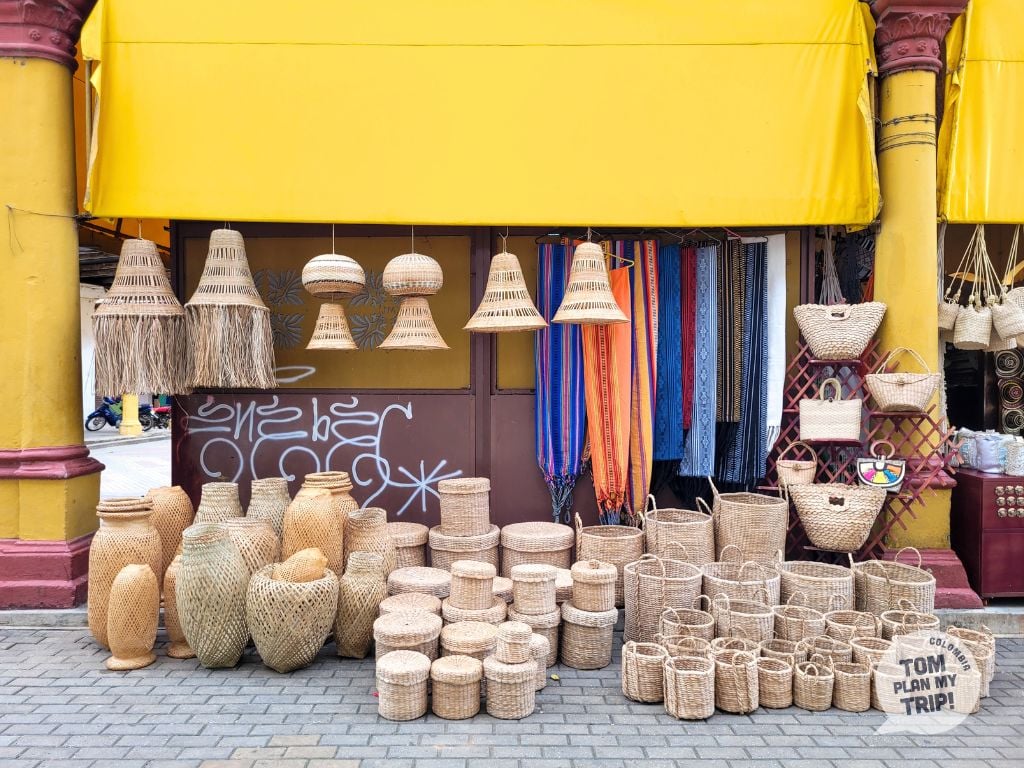
One night is enough to discover the historic center, the market, and the malecón.


© Tomplanmytrip
MOMPOX
Past grandeur of the colonial era.
Located in the department of Bolívar, Mompox (or Santa Cruz de Mompox) occupies a river island between two branches of the Magdalena River — an isolation that has forged the local saying: “Por Mompox no se pasa, a Mompox se llega”: you don’t pass through Mompox, you arrive there.
From Cartagena, the department’s capital, it takes about 5 hours by road, and 3 hours from Sincelejo, the nearest city.
Situated 20-30 m above sea level, the village has a hot and humid climate year-round (27-35 °C), with a dry season from December to April.

Nicknamed “the sleeping beauty,” Mompox lives at the slow pace imposed by an overwhelming heat.
In its beautifully preserved colonial center, the houses with yellow and white facades, carriage doors, and patios recall the city’s port golden age, before the river’s silting caused it to fall into oblivion.
On the peaceful car-free malecón along the river, locals settle under the porches on rocking chairs, and restaurants offer a lovely setting for a dinner by the water.

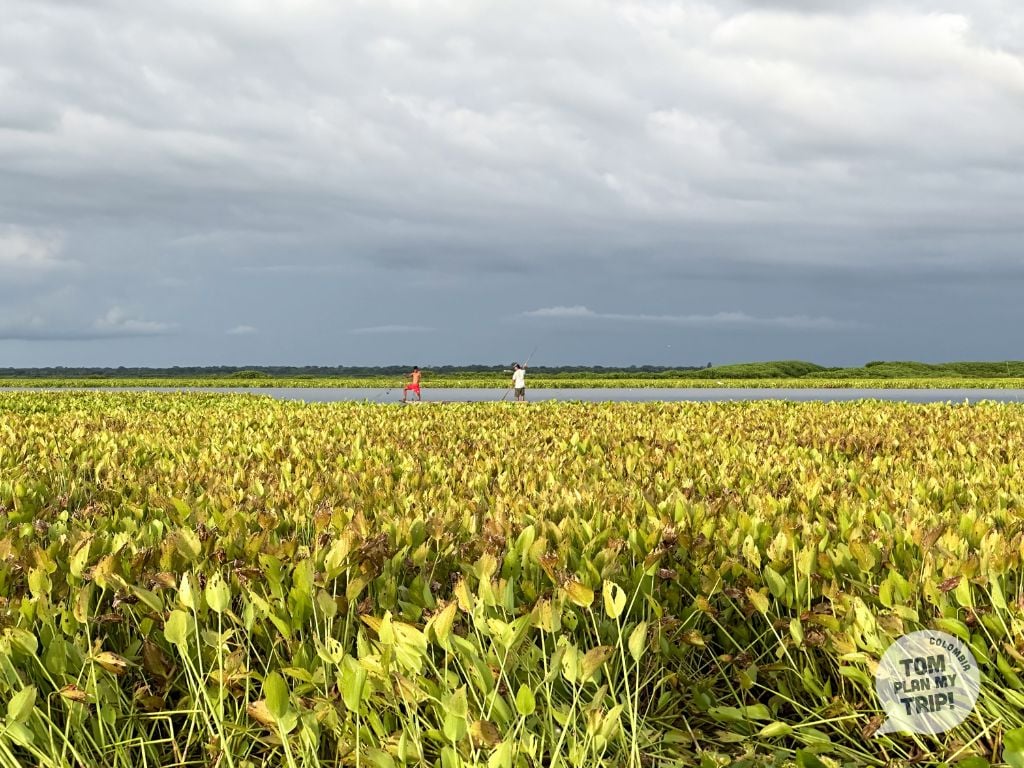


Here, the main activity is strolling through the historic center, listed by UNESCO, with its 6 churches, including Santa Barbara and its octagonal bell tower with a balcony where you can admire the view. Take a walk in the Cemetery del Rosario surrounded by legends, where dozens of cats live.
Have a local guide accompany you who will tell you the secrets of the city to appreciate its beauty.
Learn from a craftsman about silver filigree — this ancient goldsmithing art that is said to have inspired Gabriel García Márquez for his novel One Hundred Years of Solitude.
Embark on the Ciénaga de Pijiño, where the river opens onto a beautiful swamp inhabited by caimans, iguanas, and many birds.
Taste the must-tries of monposina cuisine or share a typical meal with a local.
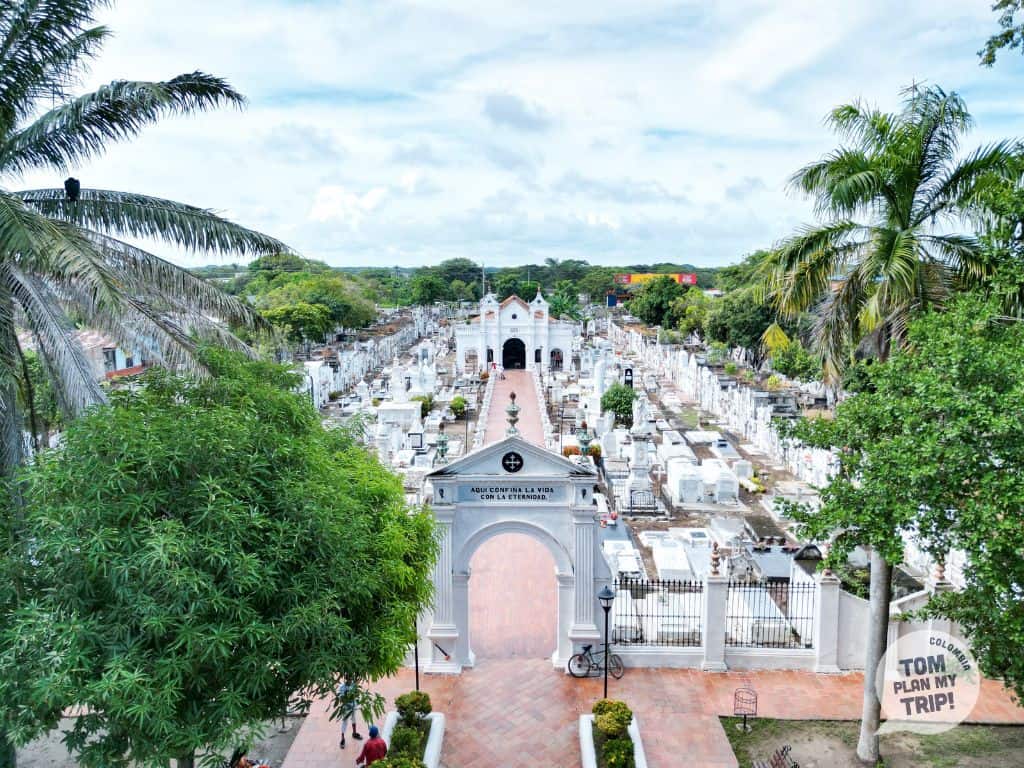


Plan for 2 nights to soak up the atmosphere of Mompox, or even 3 if you also want to participate in a filigree workshop and visit the Ciénaga de Pijiño.
Since the journey is long (at least 5 hours from the coast), I advise against coming for just one night.


© Tomplanmytrip
SANTA FE DE ANTIOQUIA
The small town in Colombia that gave birth to Paisa identity.
Santa Fe de Antioquia is located in the department of Antioquia, west of Medellín (1 hr 30 min to 2 hr drive), in the hot valley of the Río Cauca.
Situated at only 570 m altitude, this village experiences constant heat, ranging between 25 and 32 °C all year round — a tropical dry forest climate that contrasts with that of the cooler high-altitude Andean villages.
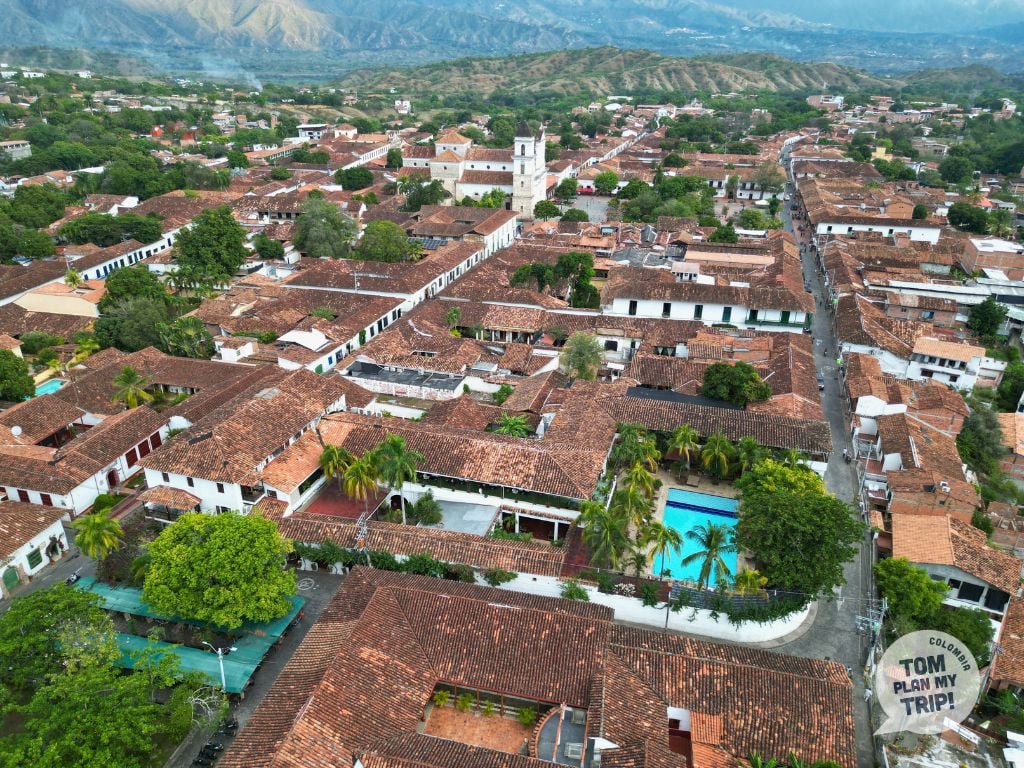
Santa Fe de Antioquia is the former first capital of Antioquia and claims the title of the ” cradle of the paisa identity”.
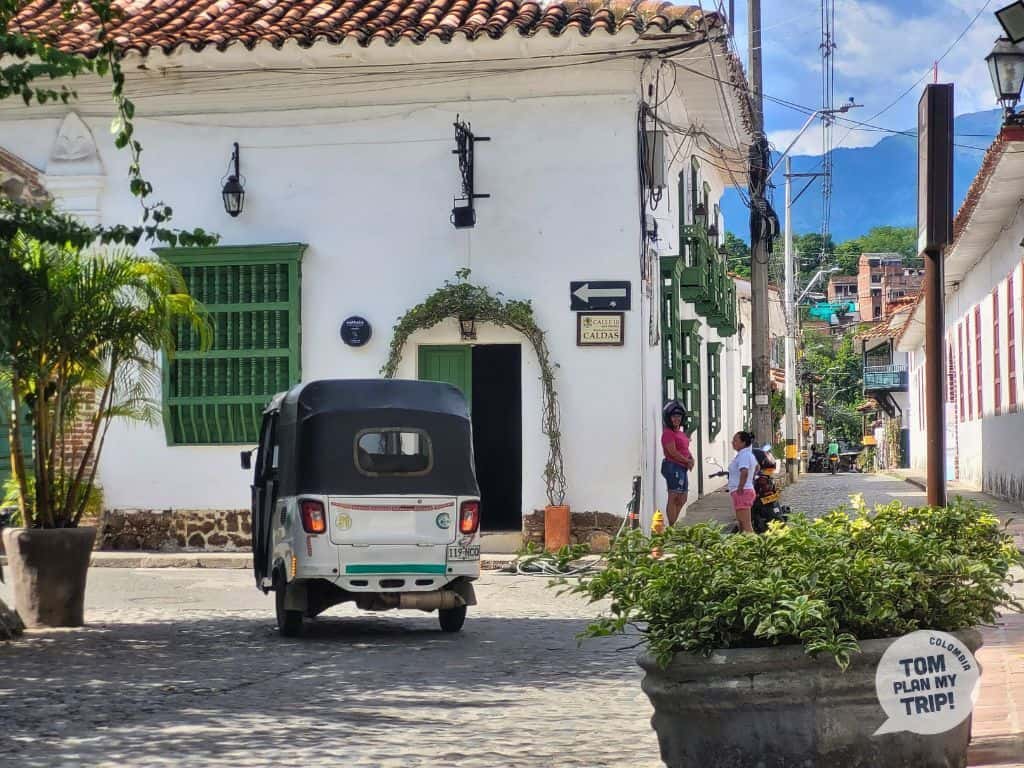
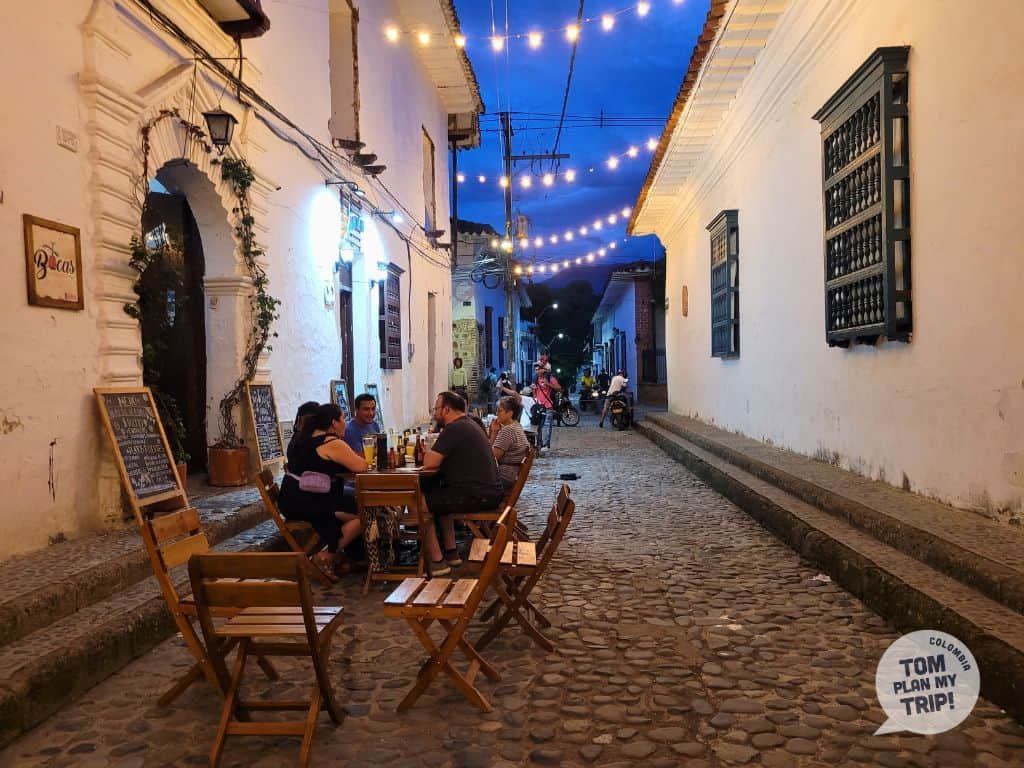
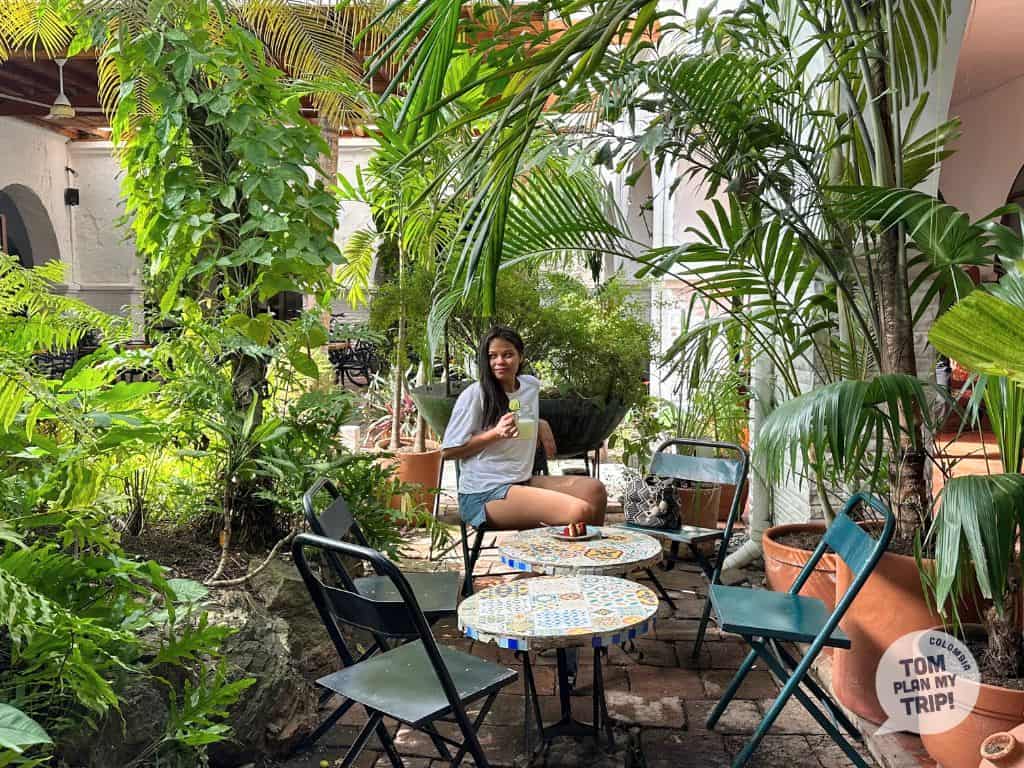
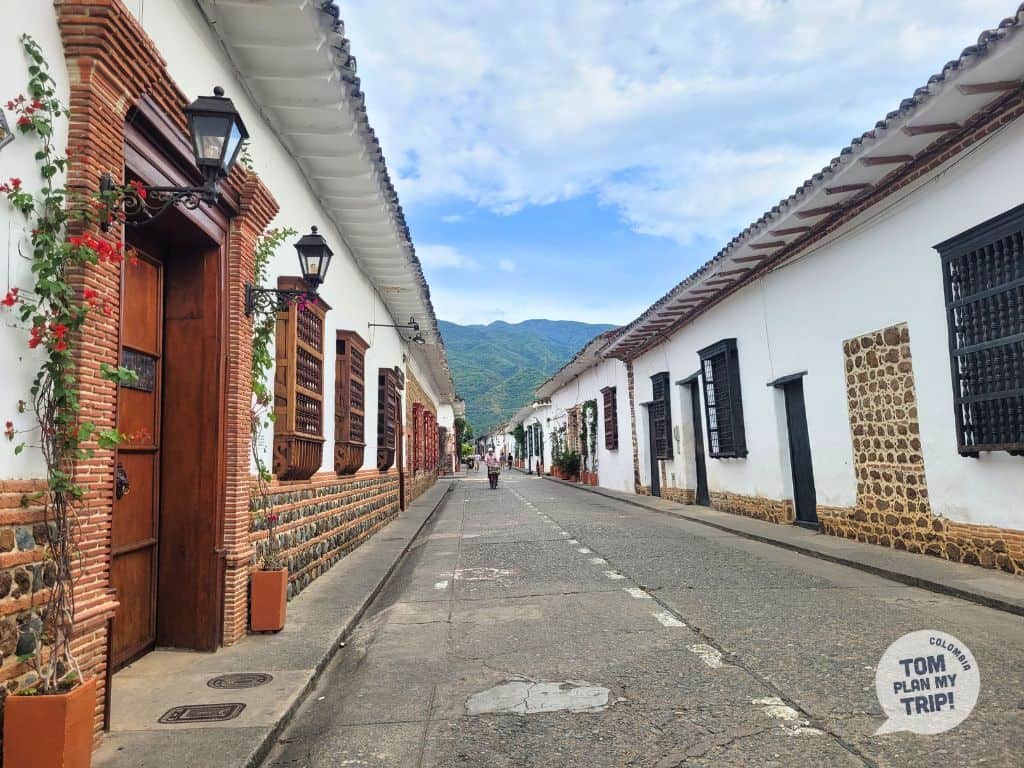
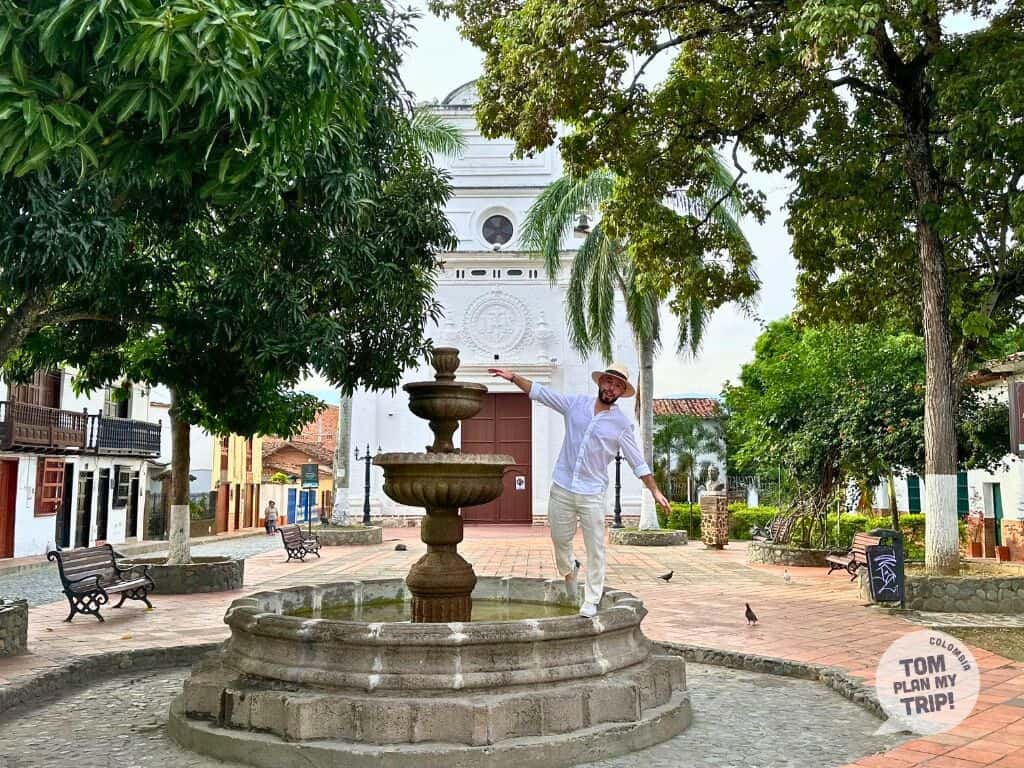
Surprisingly, apart from its Plaza Mayor, which is the beating heart of the village, its cobblestone streets, shaded and flowered, with whitewashed houses and wooden balconies that earn it the nickname “Cartagena of Antioquia”, remain rather peaceful under the heat of the day — the residents of Medellín preferring the pools of nearby hotels and fincas to the heritage.
The town comes alive in the evening, when the terraces fill up with the regained coolness.
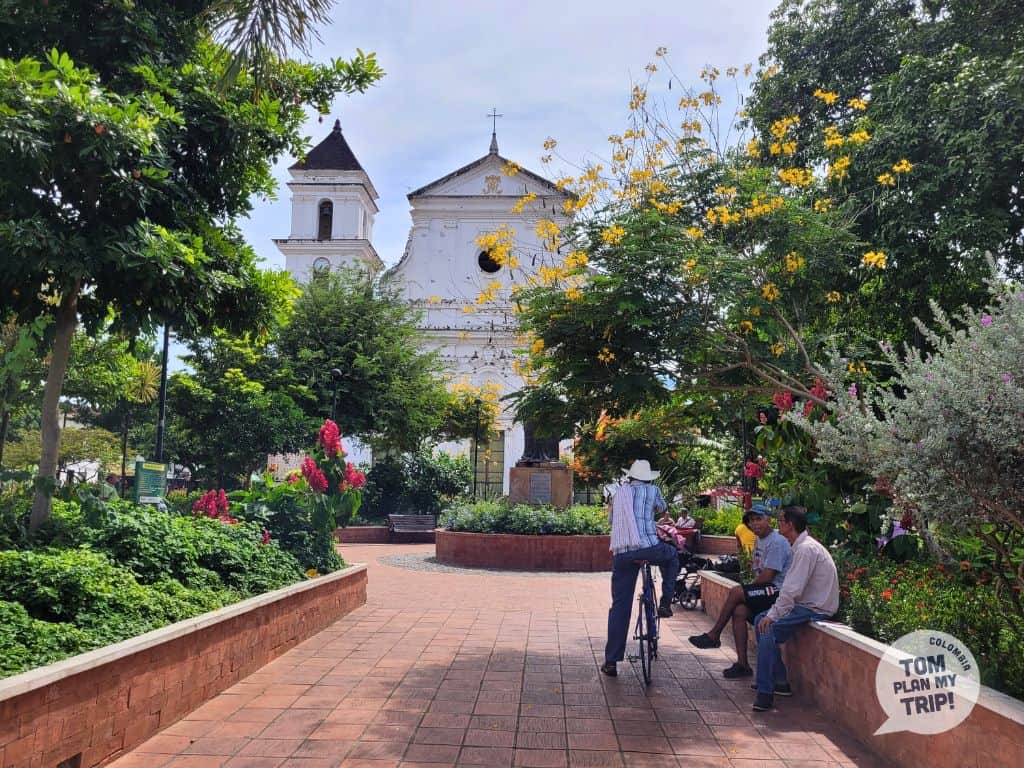
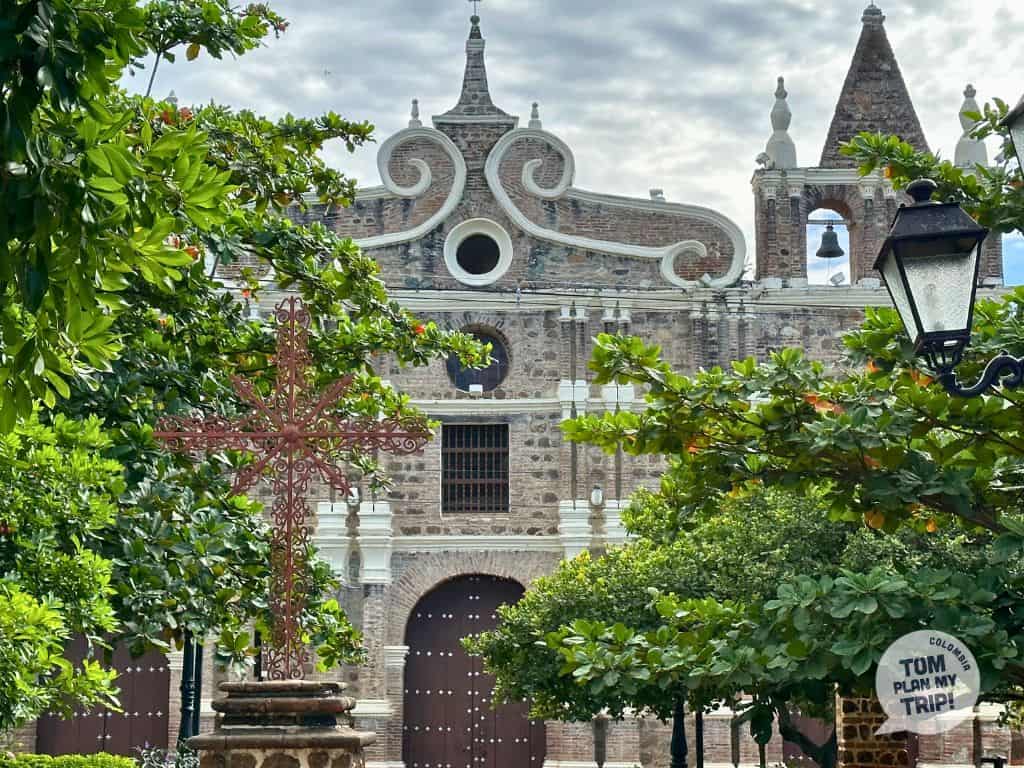
Early in the morning, explore the historic center on foot, its streets, its seven squares and their churches, including the majestic Catedral Metropolitana and the old Parroquia Santa Bárbara.
If colonial history interests you, visit the Juan del Corral museum, free of charge.
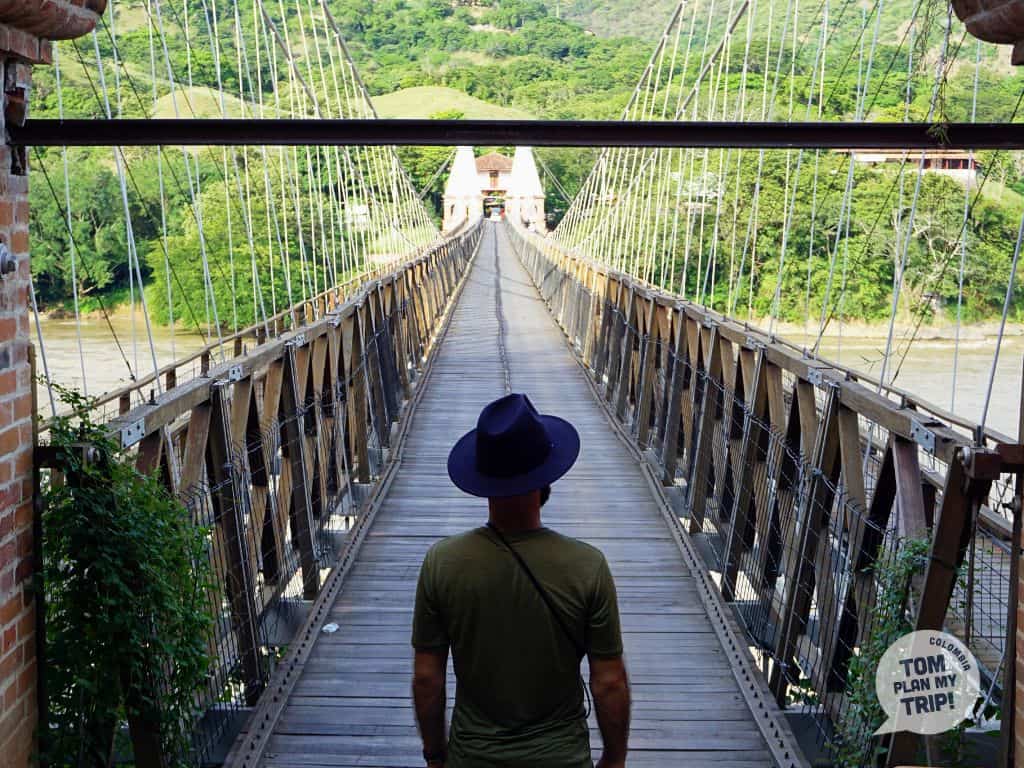
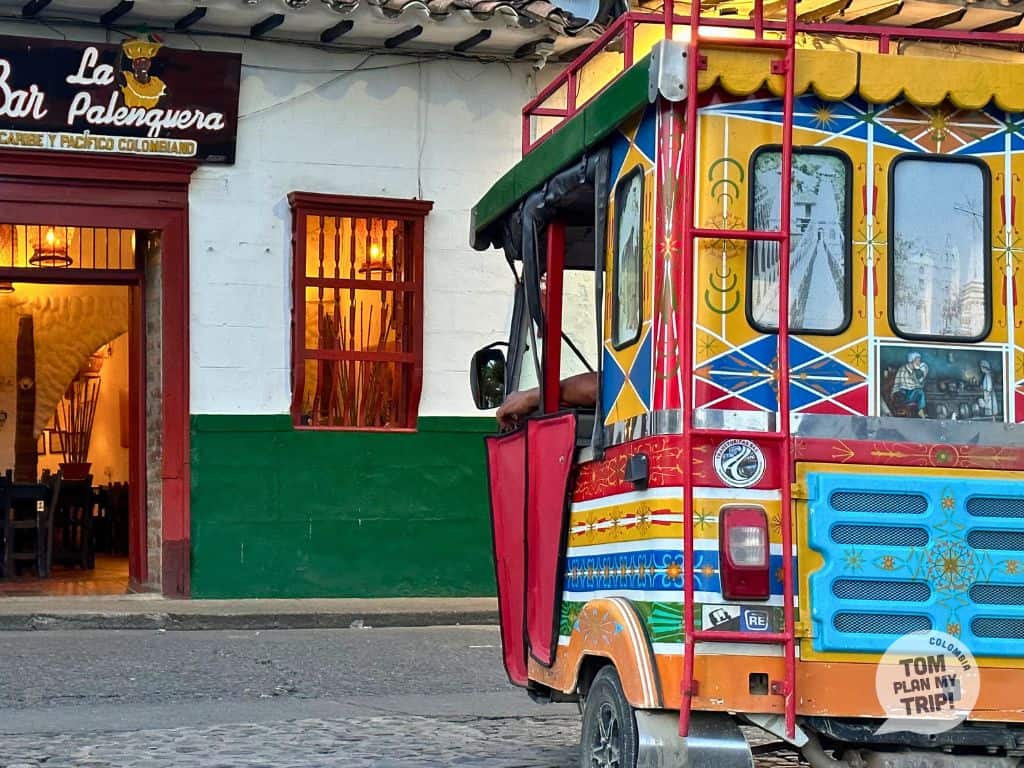
A tuk-tuk will take you to the Puente de Occidente, a beautiful suspension bridge over the río Cauca 5 km from the village — the driver will serve as your guide (in Spanish) and will wait for you on the other side while you cross its 291 m on foot.
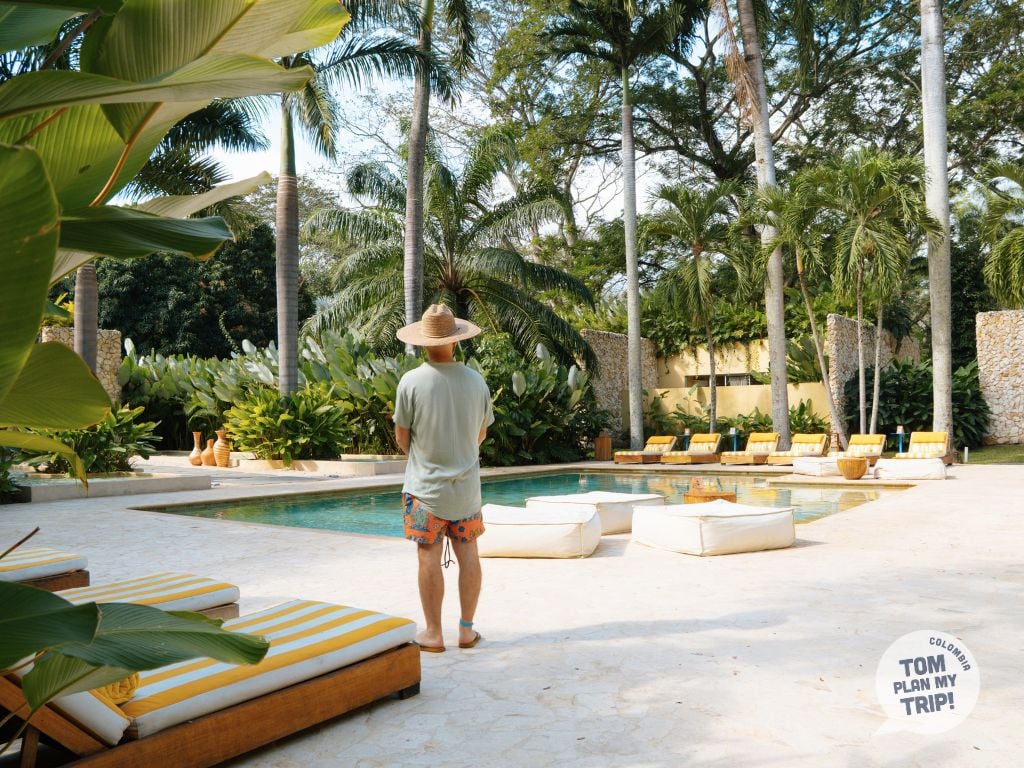
In the afternoon, take a nap like everyone else and cool off in your hotel’s pool if it has one, before heading to the Mirador de Filadelfia at sunset to admire the view of the valley.
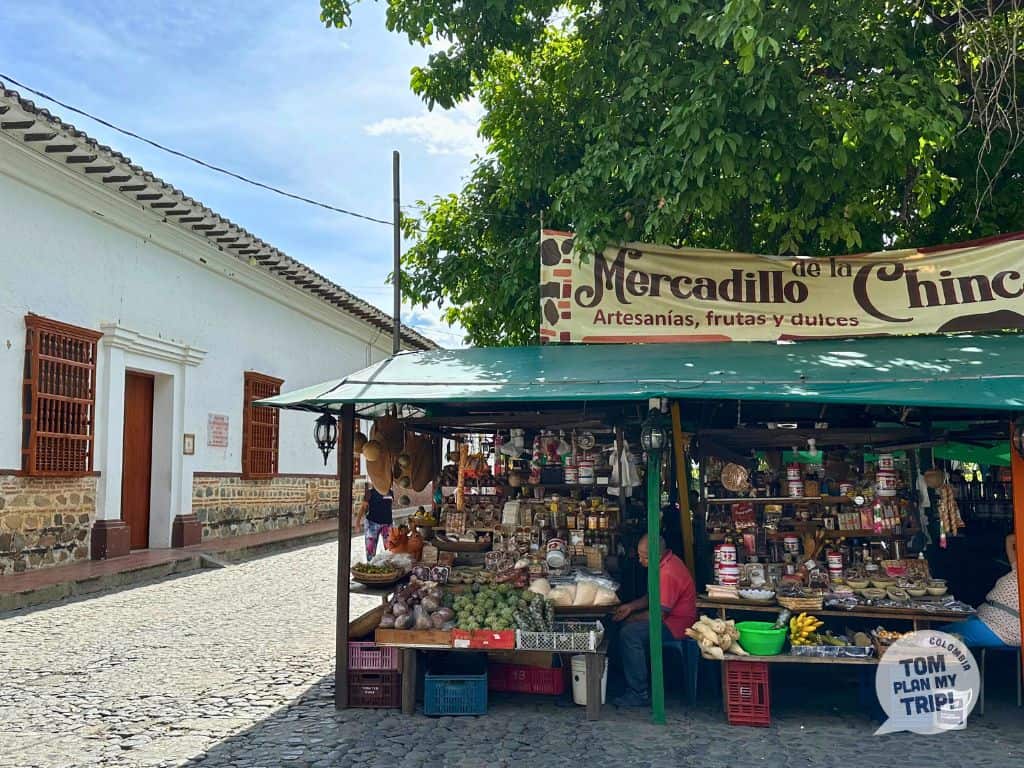
Don’t forget to try the dulces de tamarindo, the city’s iconic tamarind candy.
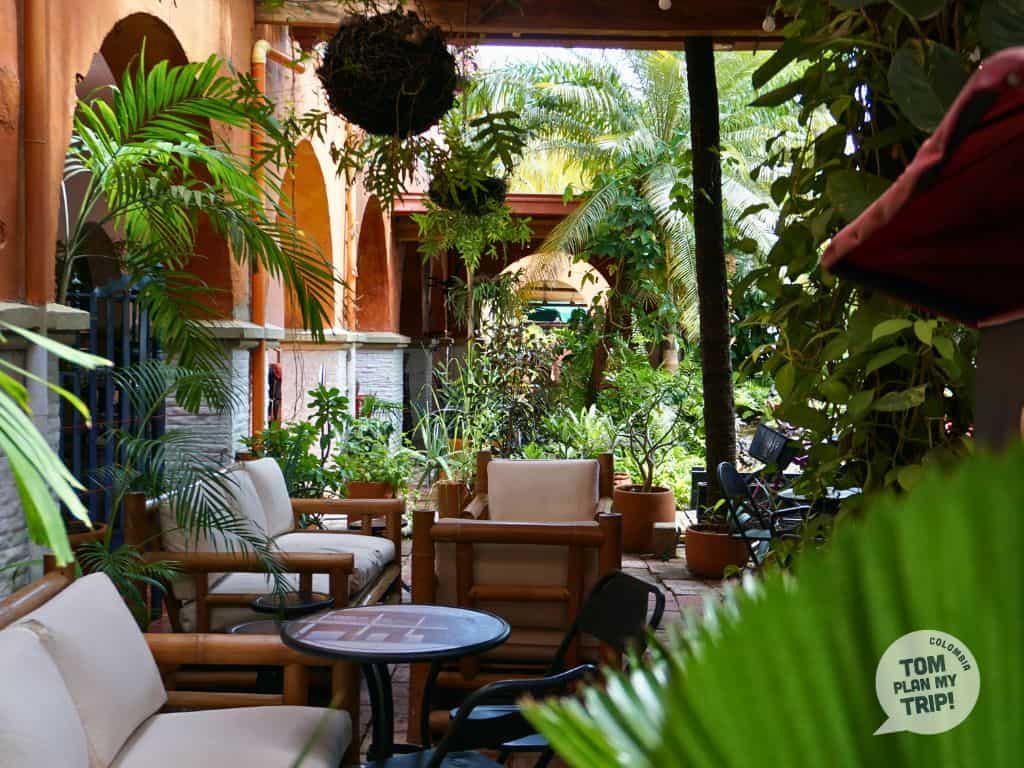
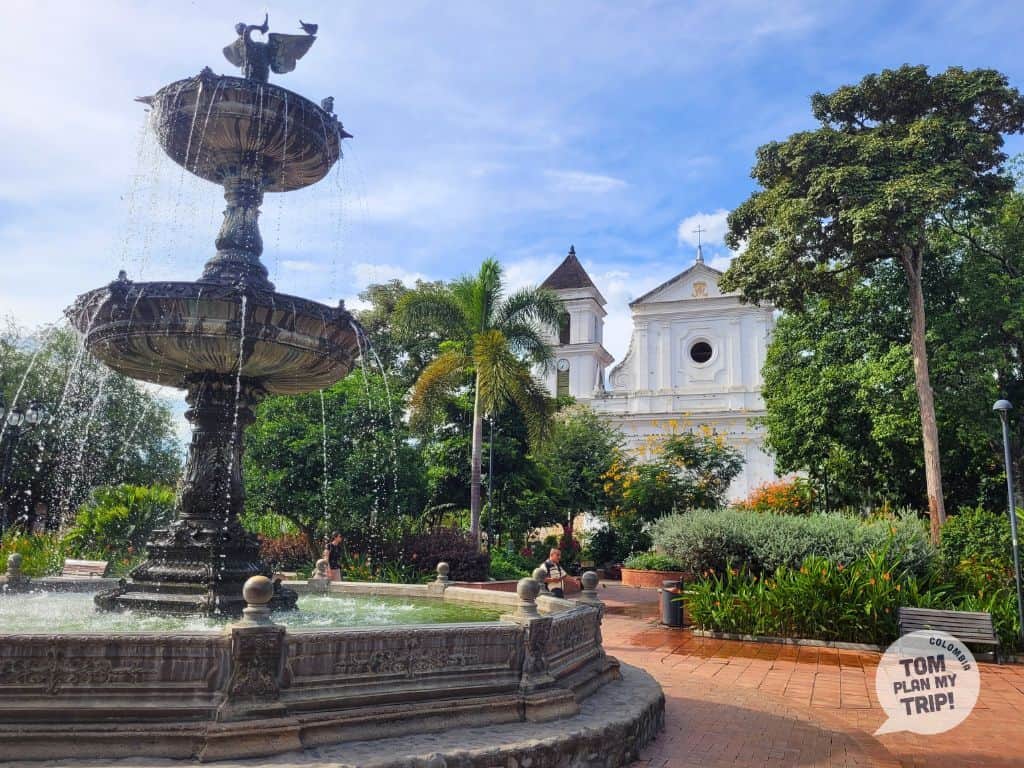
© Tomplanmytrip
GUATAPE
A postcard small town in Colombia by a lake.
Guatapé is located in the Andes, in the department of Antioquia, about 80 km east of Medellín (2 hours by road).
At 1,890 m above sea level, the village enjoys a mild climate all year round, warm during the day and with cooler evenings. The average temperature throughout the year hovers around 18°C.
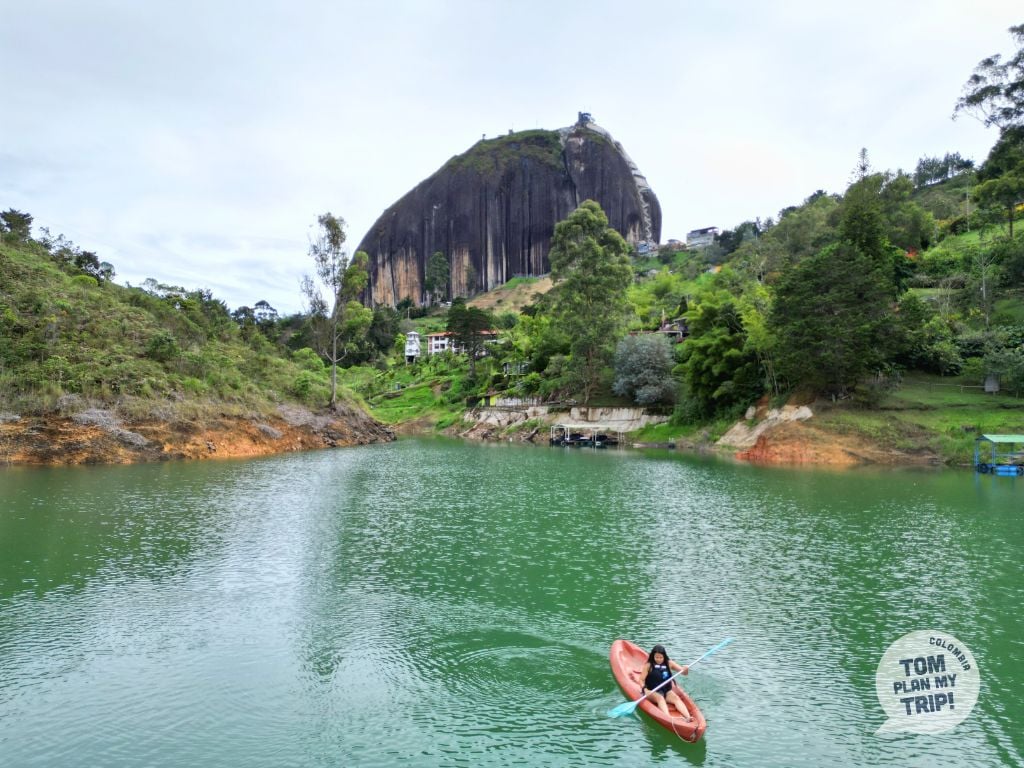
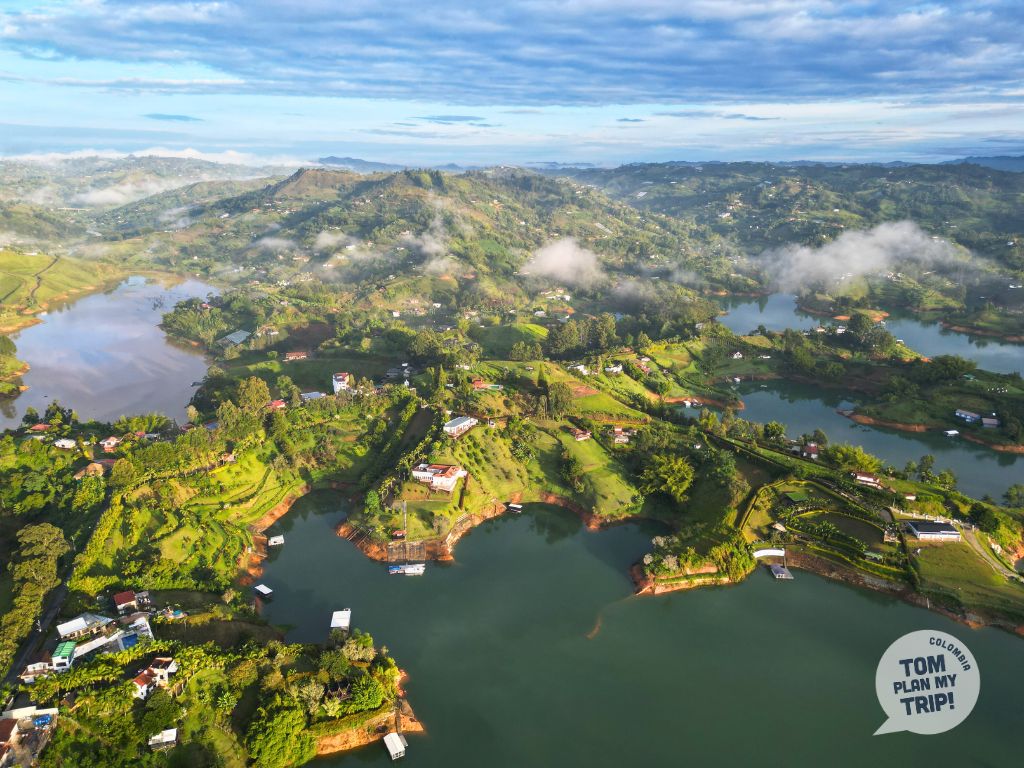
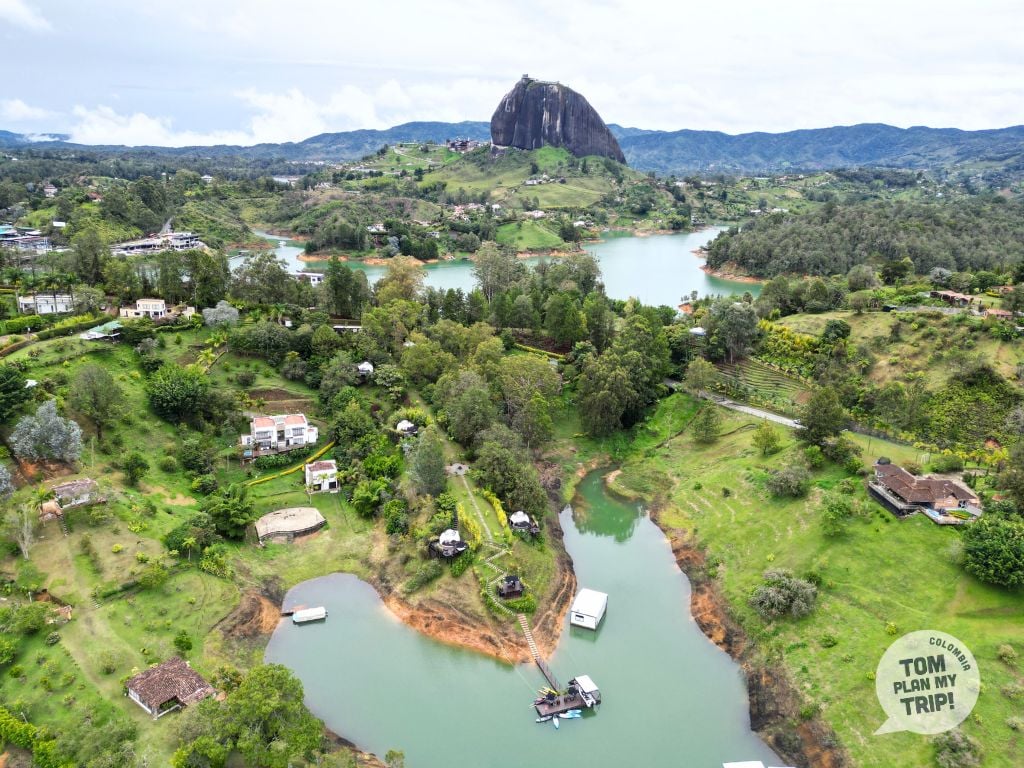
Guatapé sits on the edge of a huge artificial reservoir, born from the construction of a hydroelectric dam in the 1970s.
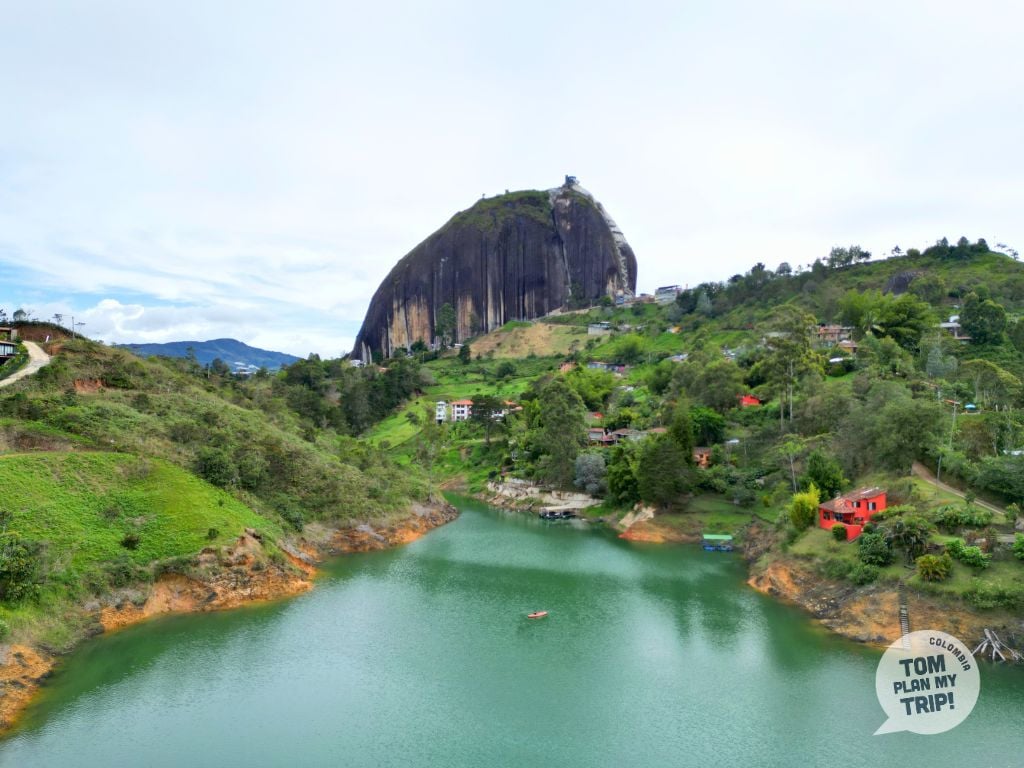
Guatapé, founded in 1811 and once rural, is now one of the most visited and most colorful villages in Colombia.
It is famous for its zócalos, brightly painted bas-reliefs on the bases of facades, as well as for the Piedra del Peñol, 5 km from the village, an imposing monolith that dominates the surrounding landscape.
Photogenic and resolutely oriented towards tourism, the center, very small and pedestrian, displays a postcard-like appearance and exudes a festive and lively atmosphere.
The atmosphere can quickly seem artificial if you spend the whole day there. The streets parallel to the center of the village are more peaceful.


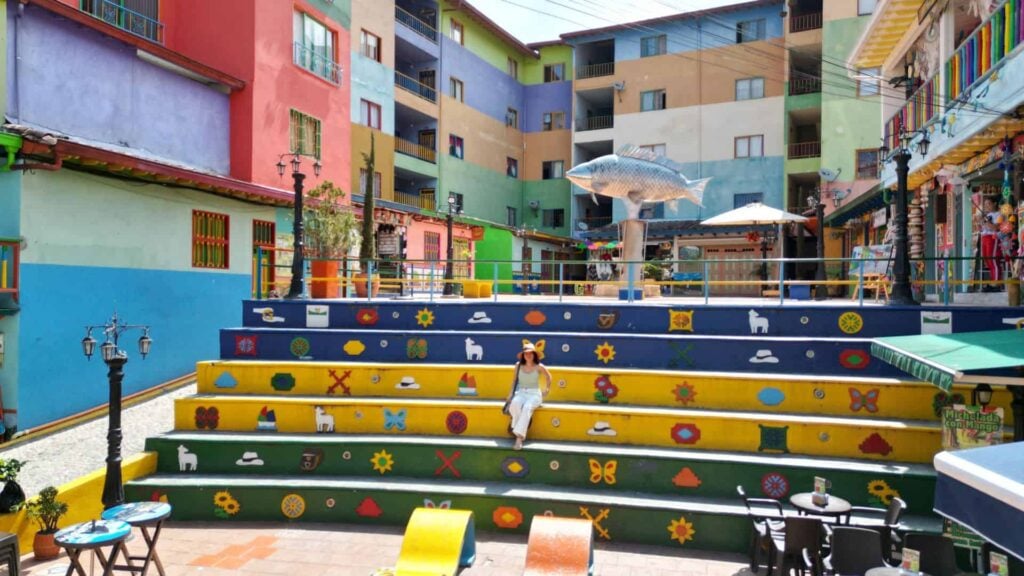
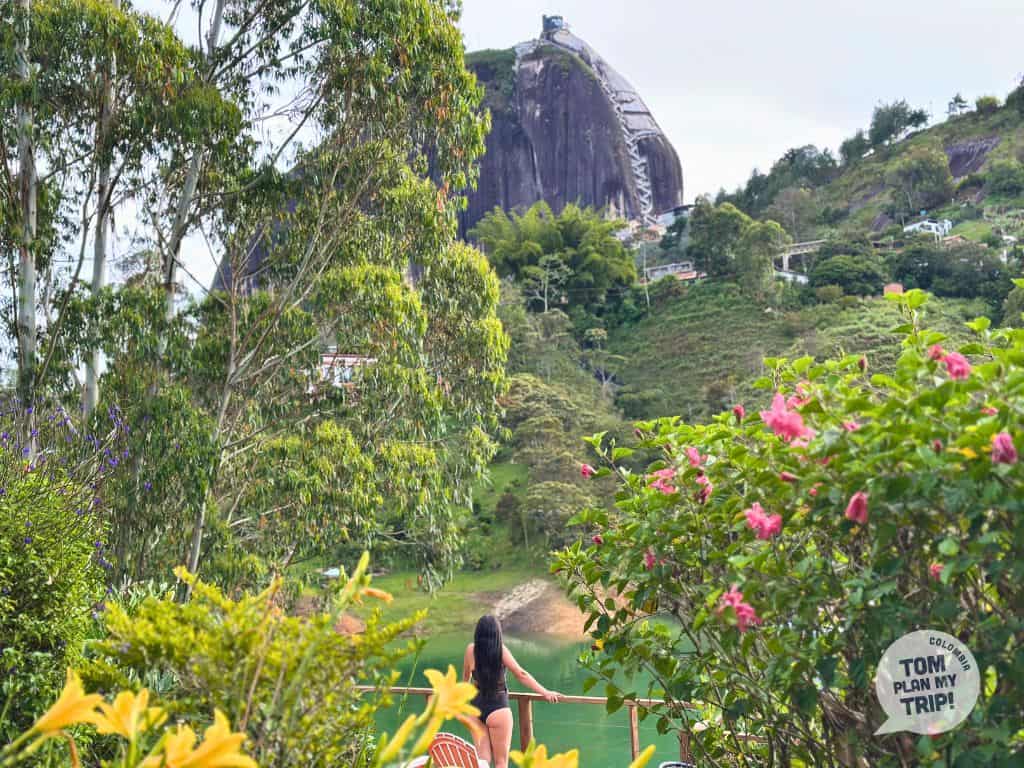
Climb the 740 steps of the Piedra del Peñol for a 360° view of the lake. I also like to go up around 5:30 PM to watch the sunset.
Explore the village and admire the bas-reliefs of the houses (1 – 2 h).
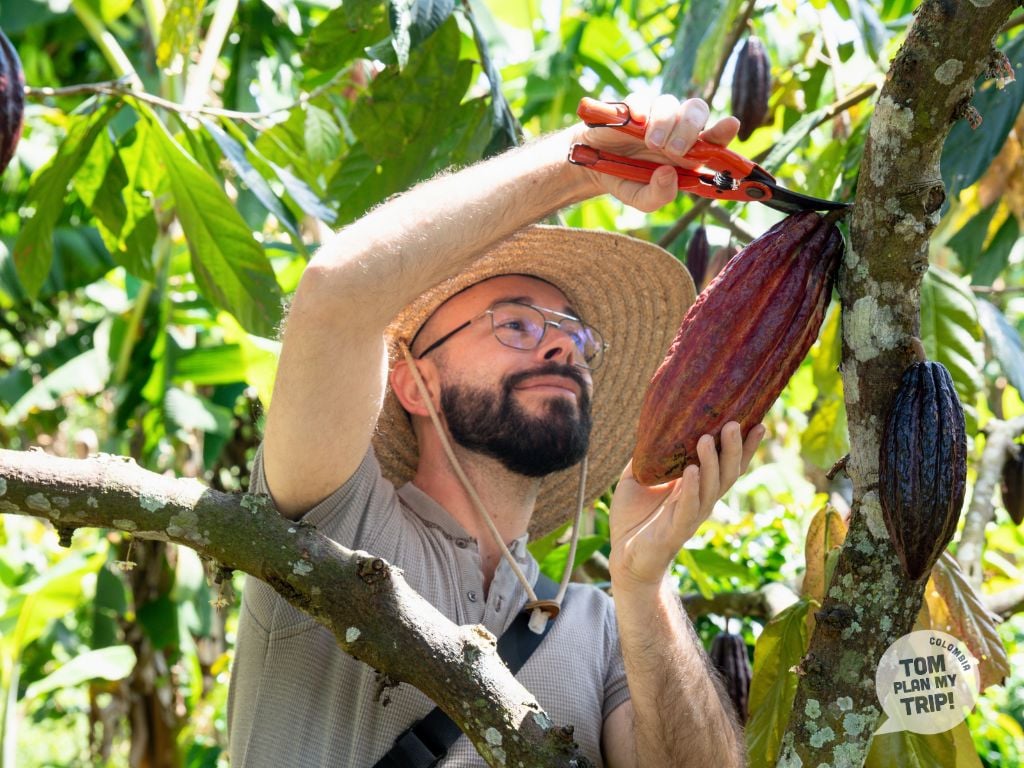
If you have the time, you can take a boat or kayak ride on the lake or visit a cacao finca.
If you stay overnight, head to San Rafael (1 h) for its crystalline rivers and waterfalls, which are not crowded during the week, or for canyoning.


A day trip from Medellín is more than enough for the essentials.
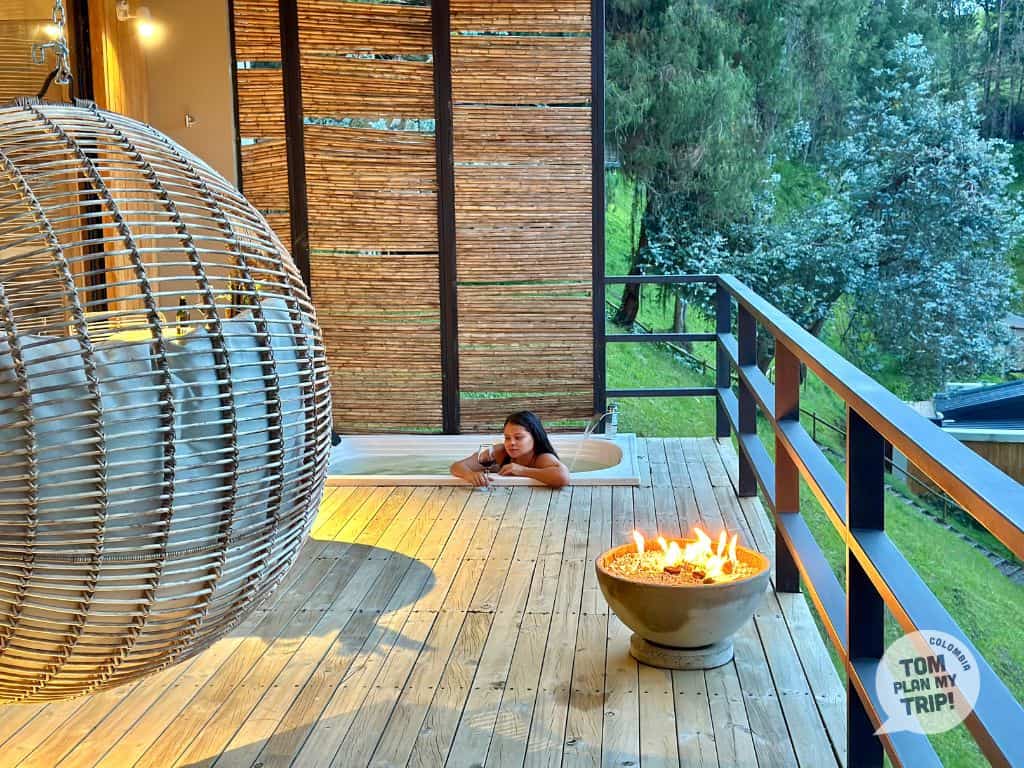
To discover the village in the quiet of the early morning, or to explore the surroundings (San Rafael, cocoa, canyoning), plan for 2 nights, preferably in a hotel by the lake rather than right in the center.


© Tomplanmytrip
CONCEPCIÓN
Colonial streets and rural life.
Concepción is located in the department of Antioquia, about 70 km east of Medellín (2 h to 2 h 30 by road), not far from Guatapé.
At an altitude of 1,830 m, the village enjoys a temperate mountain climate, mild during the day and cool in the evening all year round. The average temperature throughout the year hovers around 19°C.

Far from the classic tourist circuits, Concepción attracts only a few Colombian visitors, mainly on weekends, and almost no foreign tourists.
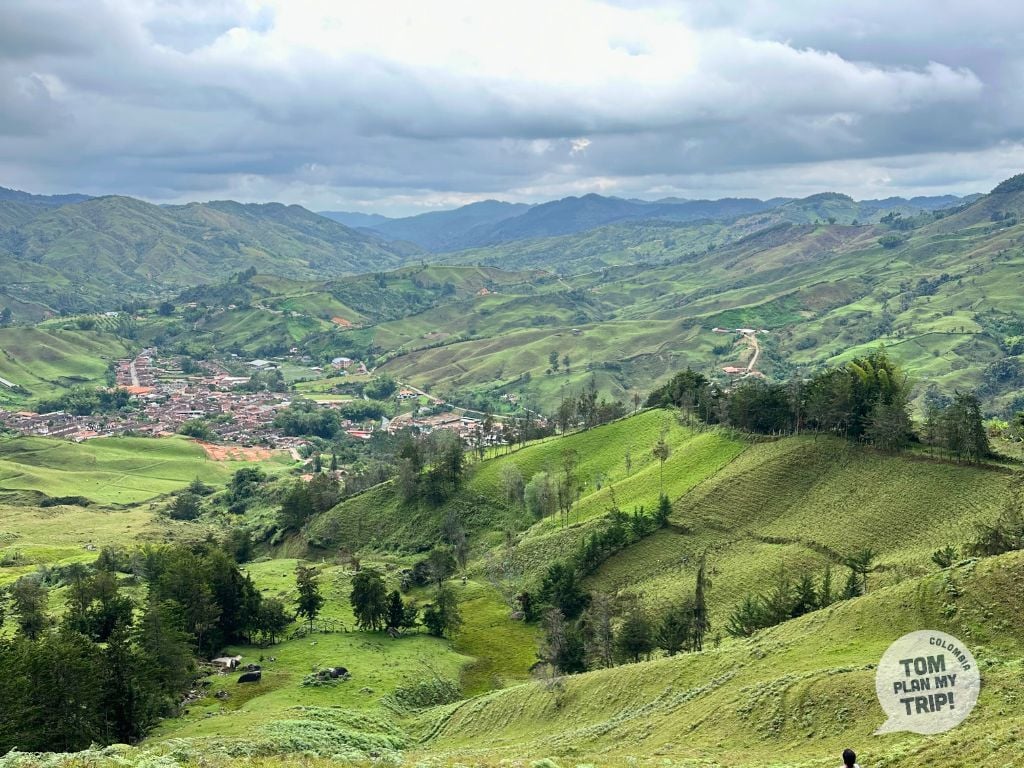
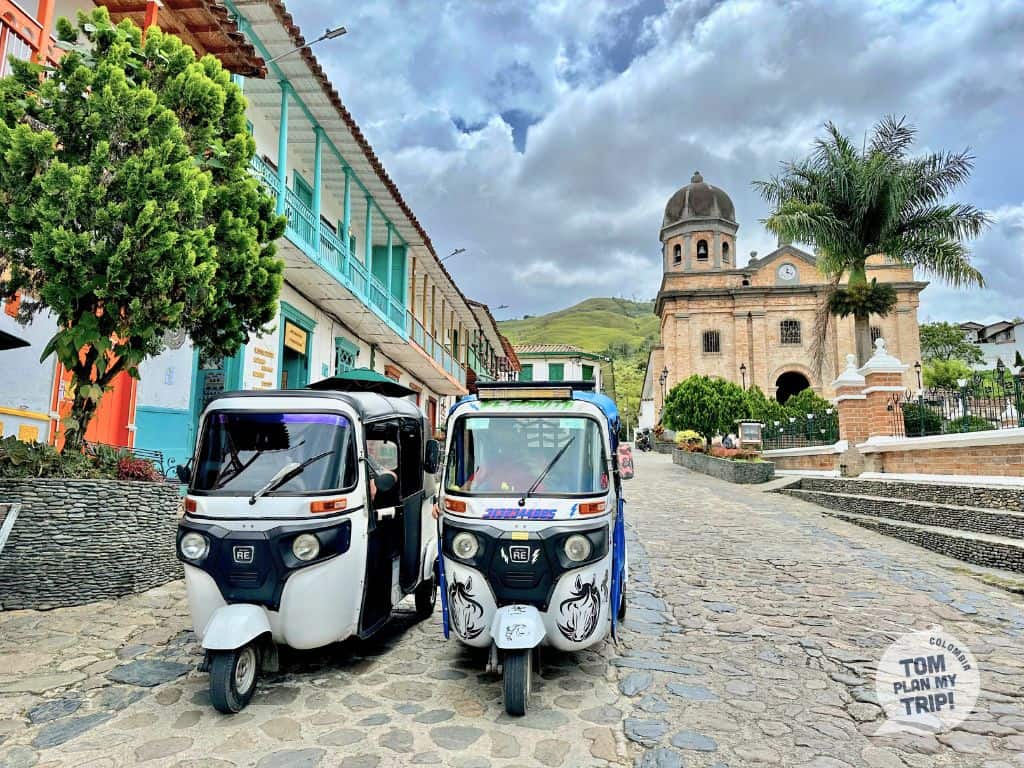
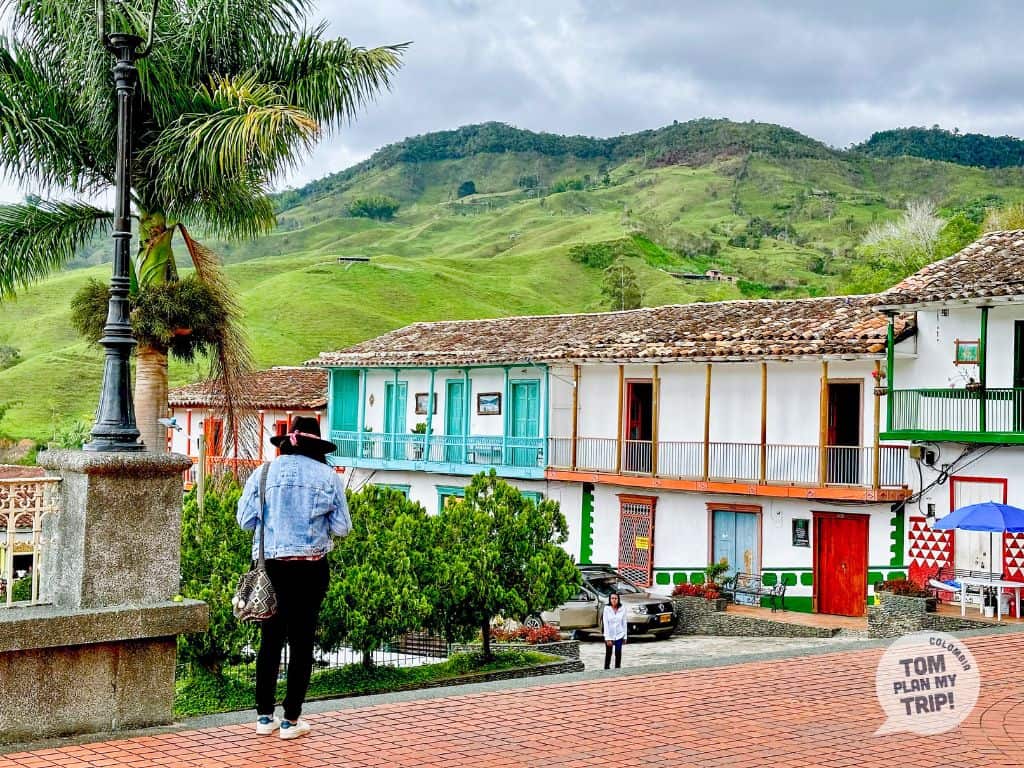
The village, small and peaceful, has preserved its cobbled streets and colorful facades, typical of the colonial architecture of the 18th and 19th centuries. Its central square is among the most beautiful in Antioquia.
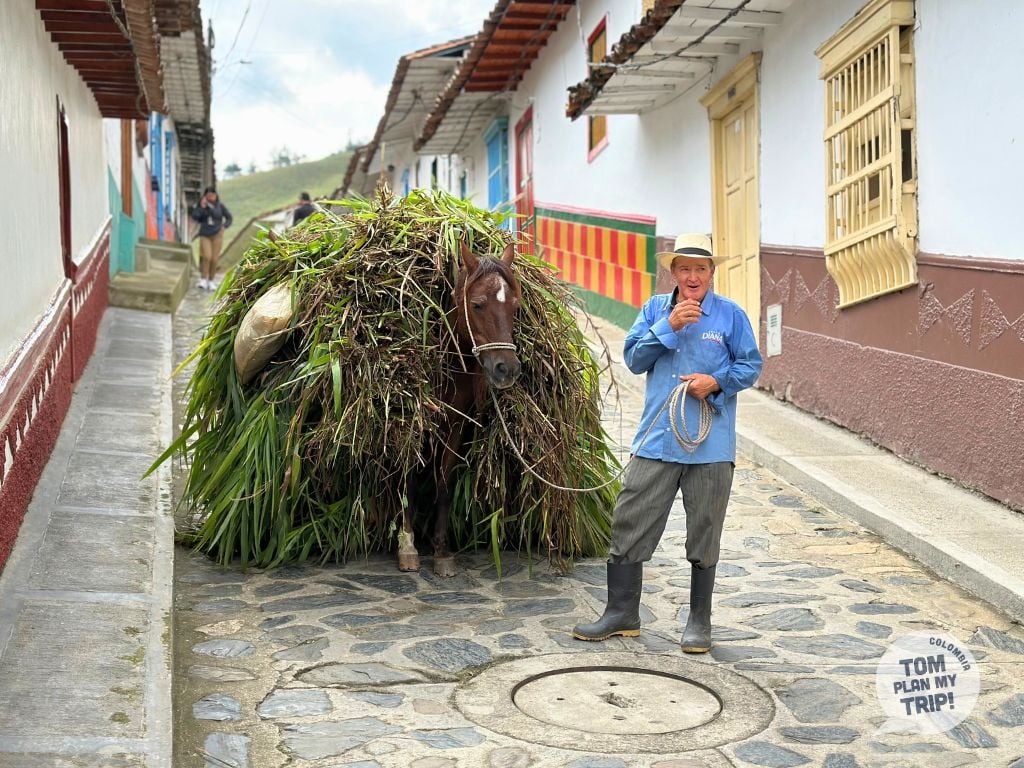
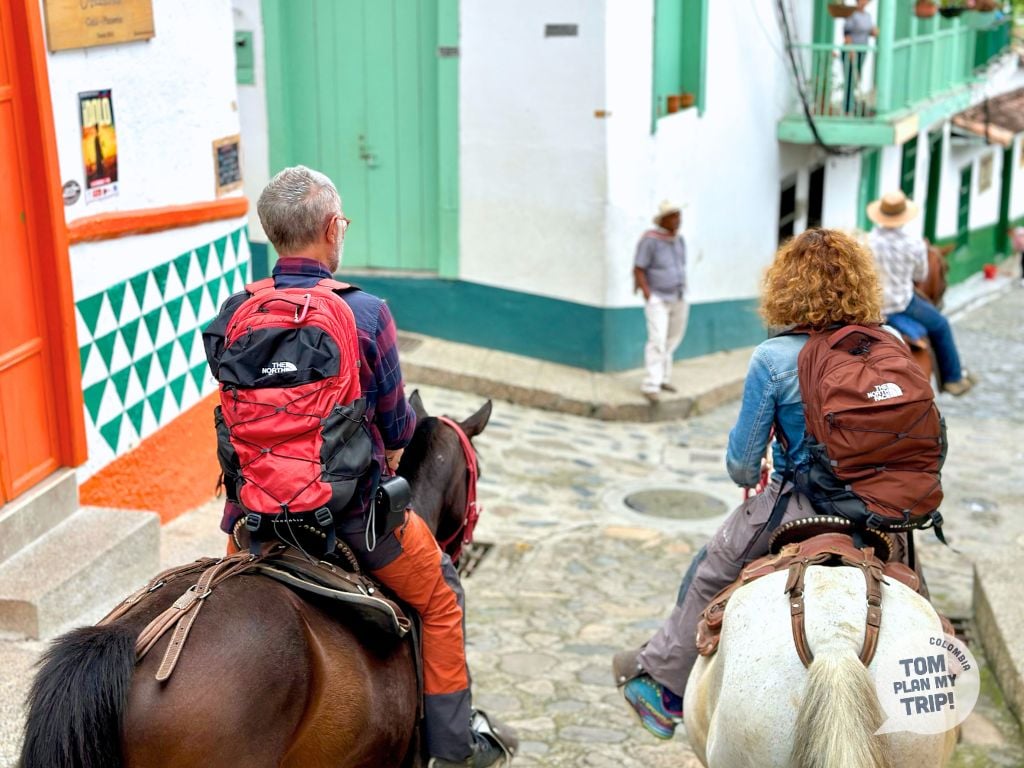
Surrounded by green mountains, crops, and pastures, Concepción displays a bucolic and agricultural atmosphere; you can see farmers on horseback and mules loaded with sugarcane.
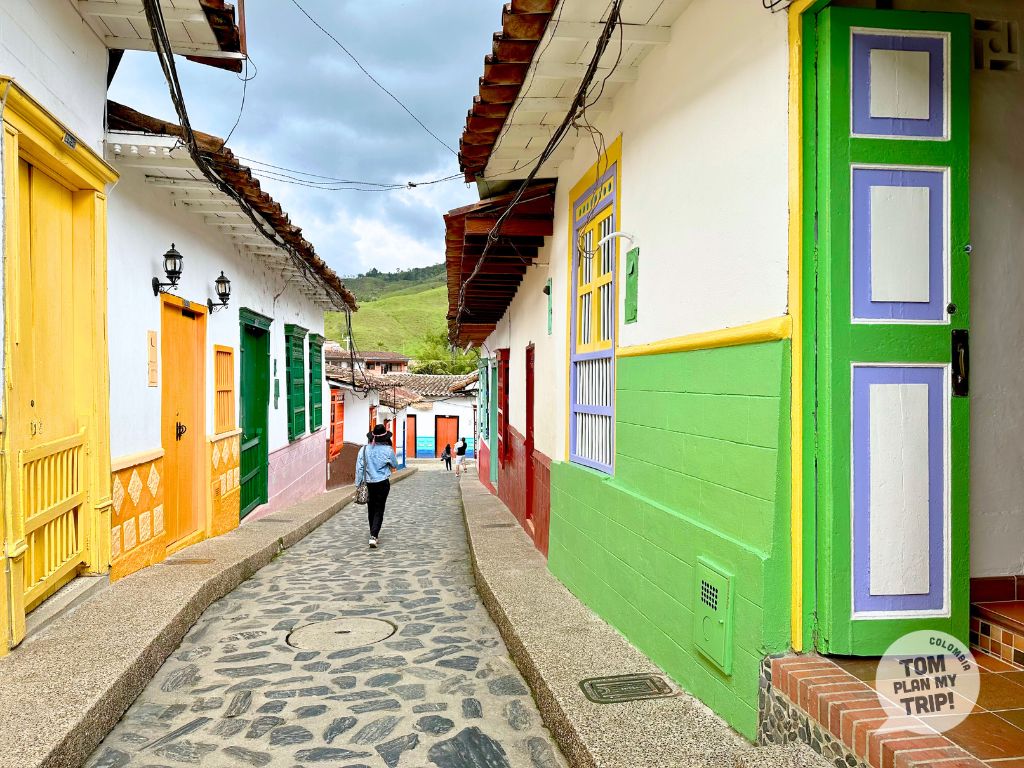
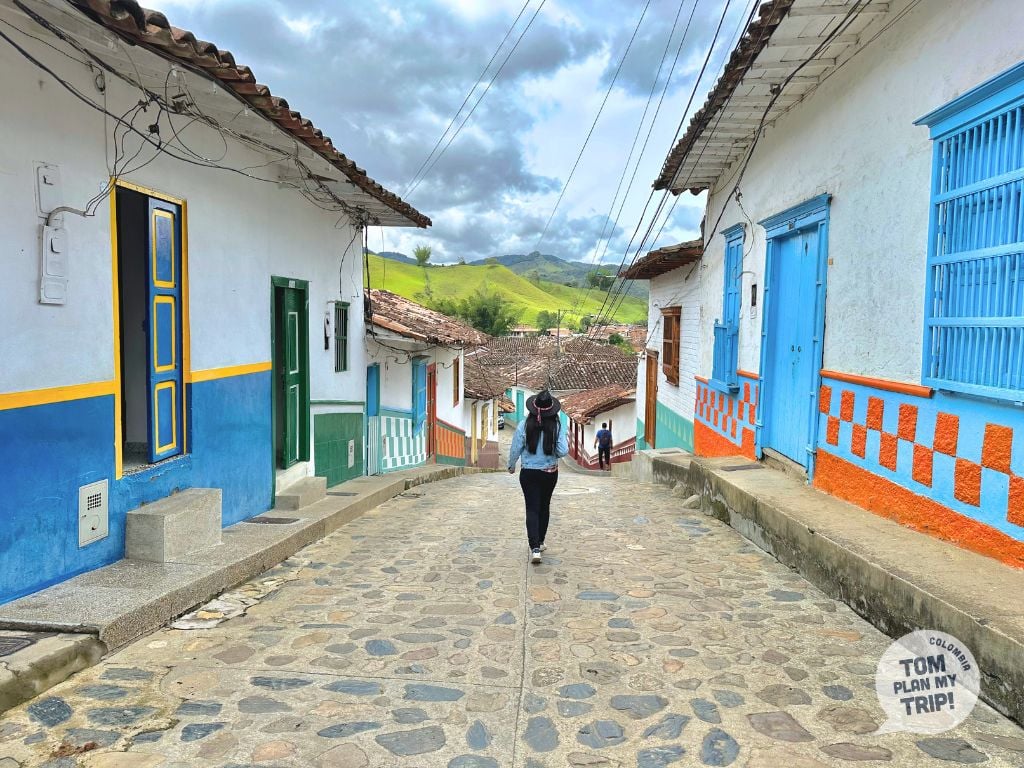
Stroll through the colonial streets and linger in the central square with its church.
If you love history, visit the birthplace of General José María Córdova, a hero of independence, a lovely little museum well documented.
Climb up to the Alto de la Virgen to admire views of the village and its surroundings. From the village, follow the stream banks to discover the surrounding countryside.
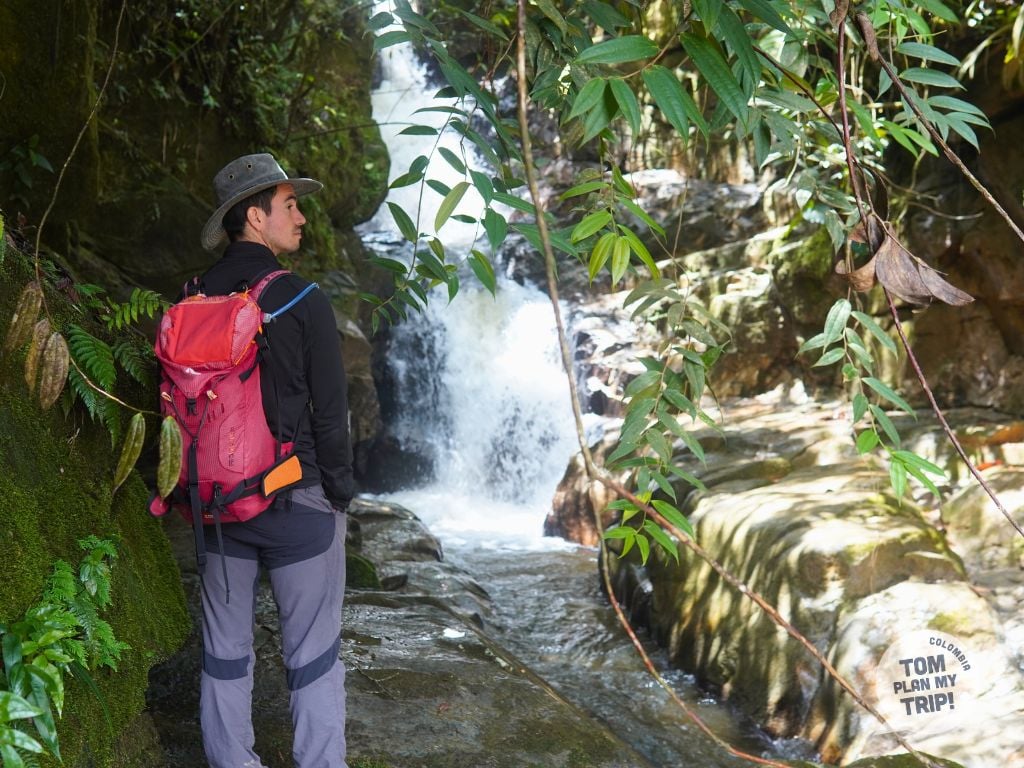
The surroundings are full of waterfalls and natural pools, perfect for a refreshing swim.
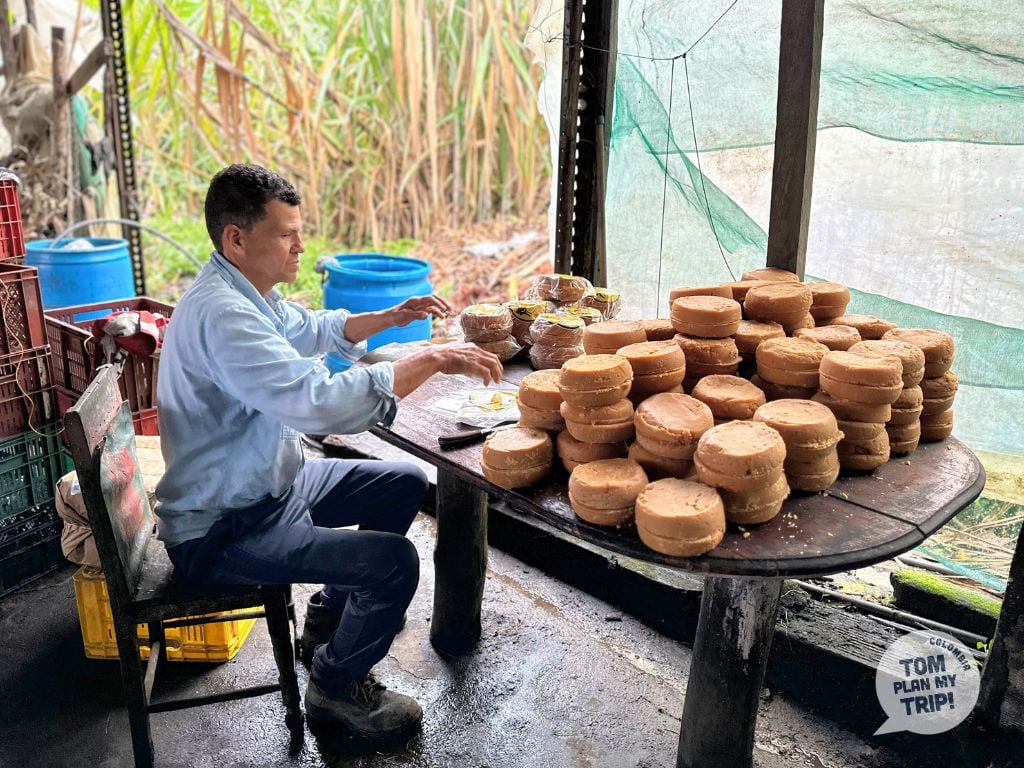
Watch artisanal production of panela from sugarcane in a trapiche (mill) or go horseback riding to visit a coffee farm.
In the evening, mingle with locals and enjoy empanadas, standing in the street.
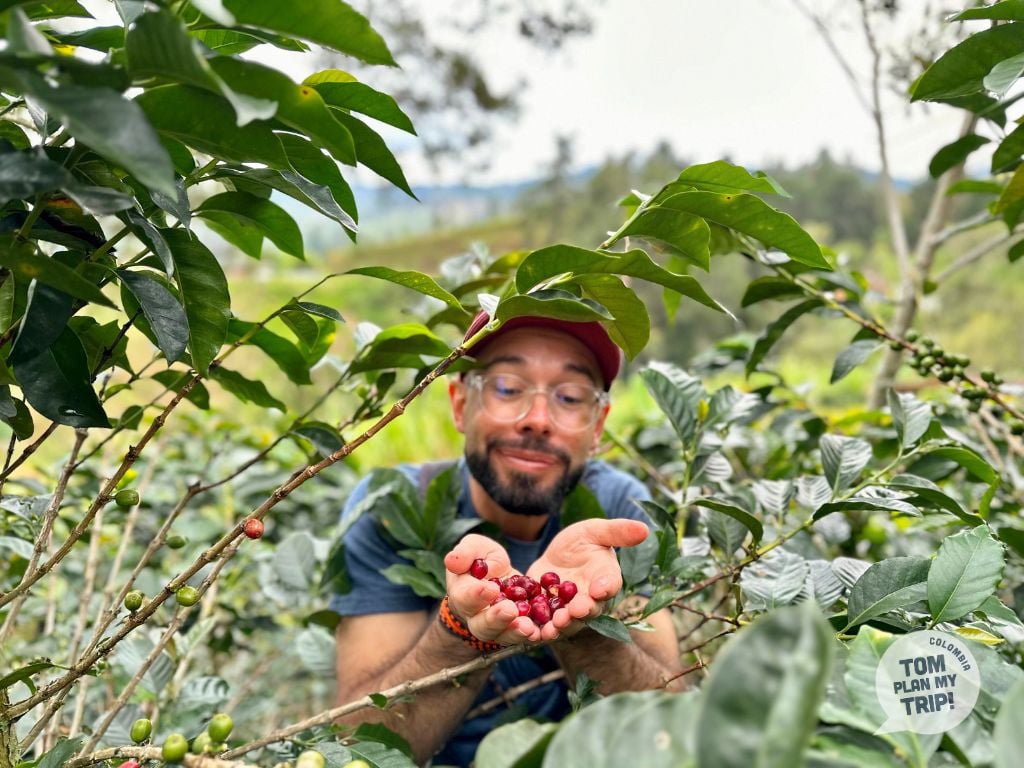
The tiny village can be visited in one day from Medellín.
If you want to enjoy the peaceful atmosphere of Concepción, tour the panela and discover the waterfalls, plan for 1 to 2 nights on site.
© Tomplanmytrip
JERICÓ
Colonial charm and Andean peasant traditions.
Jericó is located in the department of Antioquia, southwest of Medellín (3 h drive), perched on a hillside above the Cauca River canyon.
At about 1,950 m above sea level, the village enjoys a cool and pleasant climate all year round, with temperatures around 22 °C during the day and 16 °C at night, and frequent showers.

Founded in 1850, Jericó boasts a preserved, peaceful atmosphere.
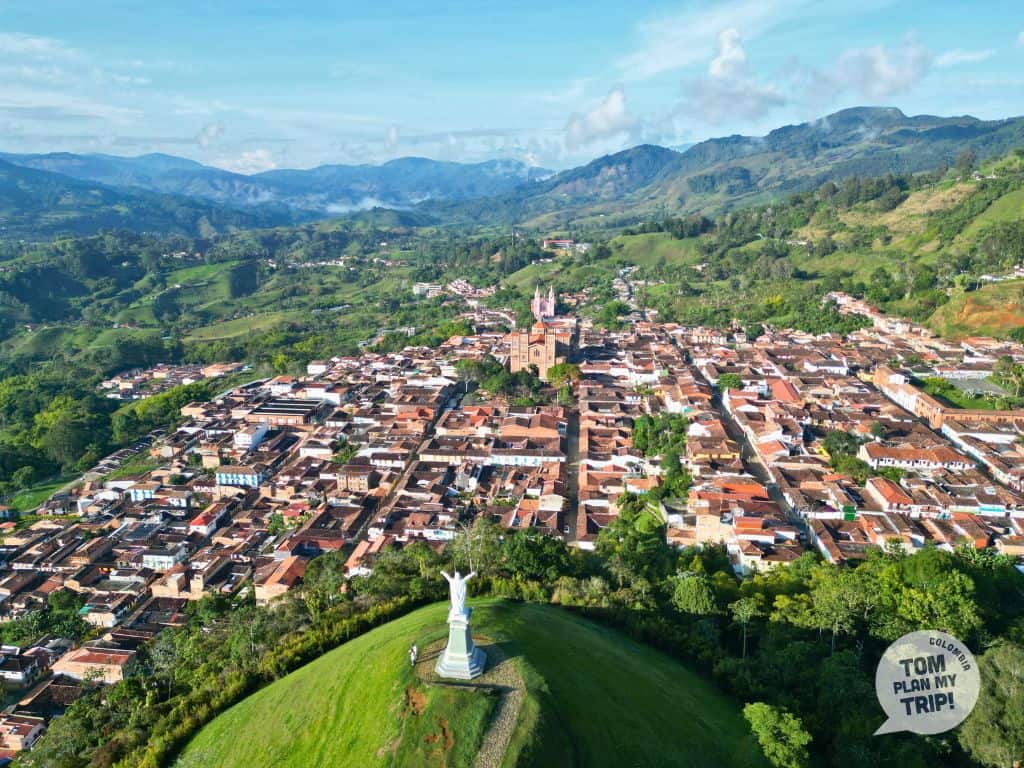
Its cobbled, steep streets and its colorful houses with elaborate wooden balconies are typical of Antioquia’s architecture. On the large shaded square, an imposing church dominates a lively plaza where locals love to gather.
You’ll see men wearing the traditional sombrero, carrying a carriel (leather bag) over their shoulder, and horses saddled, tied in front of the cafés, patiently waiting for their riders.
A major pilgrimage site (Santa Laura Montoya, Colombia’s first saint, was born here), the village draws many Colombians during Holy Week.


Get lost in the colorful streets of Jericó. Enter the cathedral on the main square and the Santuario de Santa Laura, painted in bright pink and blue.
Visit a workshop for handmade carriel or cardamom candies. A tour through three small museums in beautiful colonial houses tells you the history of the village.
Before sunset, cross the botanical garden and climb up to the Cristo Redentor overlooking Jericó.
Nature lovers will take the Las Nubes trail for a dizzying view of the Cauca canyon, or hike to the waterfall of La Quebradona, before visiting a coffee farm perched above the void. The more adventurous will go paragliding.
End your day with coffee and a good dessert in the cozy atmosphere of a patio.

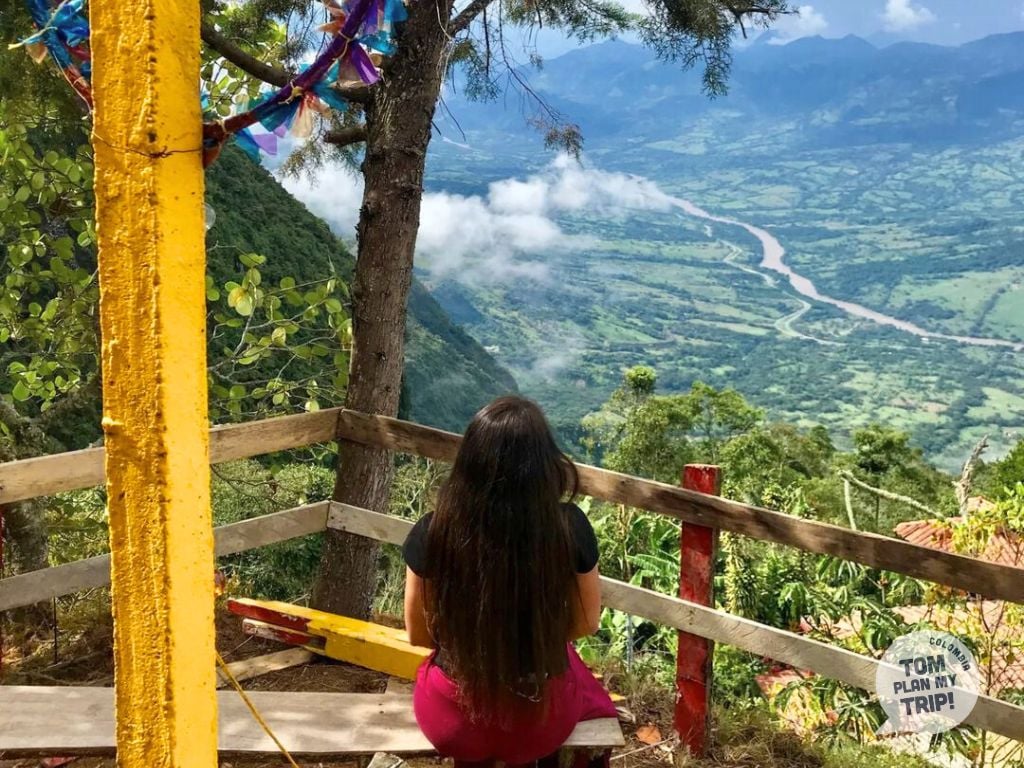


One day is enough to discover the village itself.
But plan for 2 to 3 nights if you want to explore the surroundings — coffee farm, hiking trails, paragliding over the Cauca canyon and, above all, enjoy the village atmosphere.
© Tomplanmytrip
JARDÍN
For hikers and waterfall lovers.
Jardín is located in the department of Antioquia, in the western mountain range, southwest of Medellín (about 4 hours by road), nestled in a valley bordered by coffee and banana plantations.
The village is also accessible from Jericó by chiva (traditional bus), via a winding and bumpy road.
Perched at an altitude of 1,750 m, the climate is mild all year round, with frequent rains and average temperatures around 23 °C during the day, 18 °C at night, almost constant.
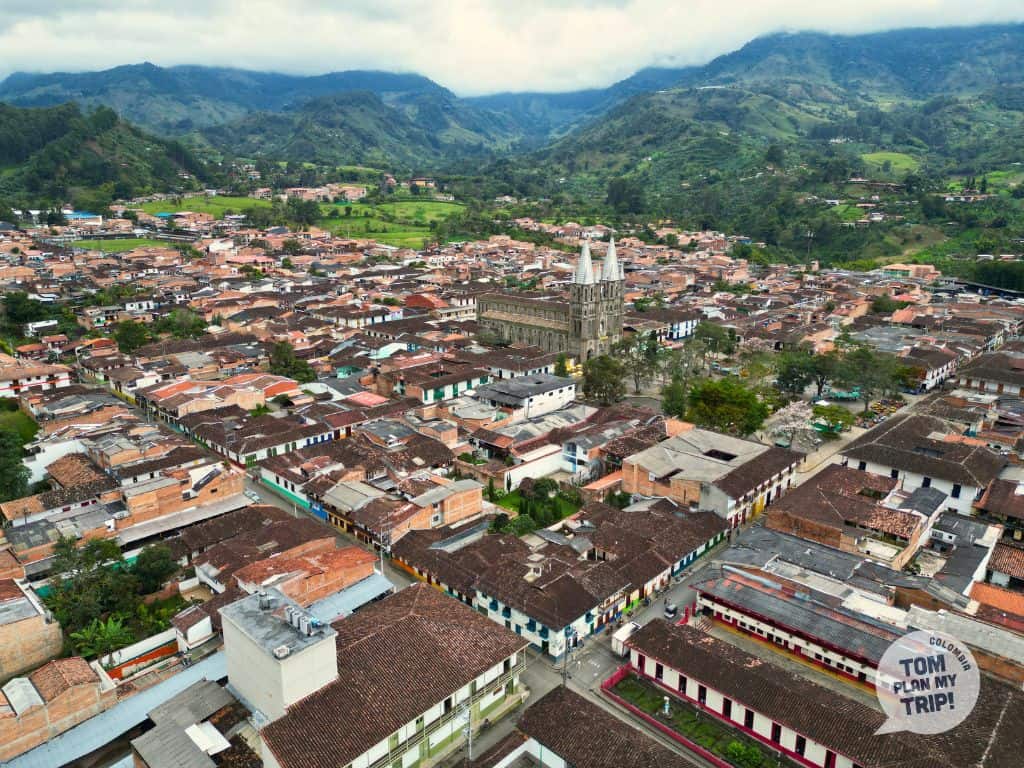
Founded in the mid-19th century, Jardín is surrounded by lush vegetation that gives it its name.
The peaceful village has preserved its authenticity and paisa spirit: a lively main square, cafés with colorful cowhide chairs, a basilica illuminated at night, streets with white houses, painted woodwork and flowered patios.
At nightfall, men with a cowboy look, traditional hats on their heads and carriel on their shoulder, gather in the square for a beer and a game of cards.
Named “Best Tourism Village” by the UN Tourism in 2024, Jardín attracts more and more visitors every year, especially on weekends and during high season.
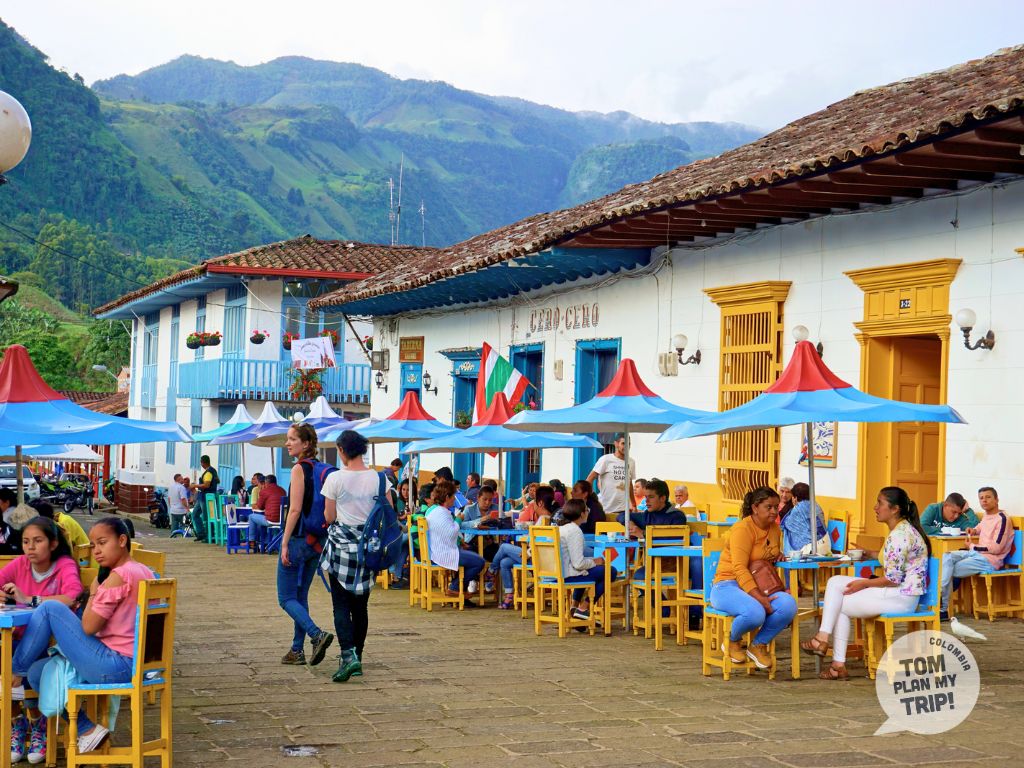
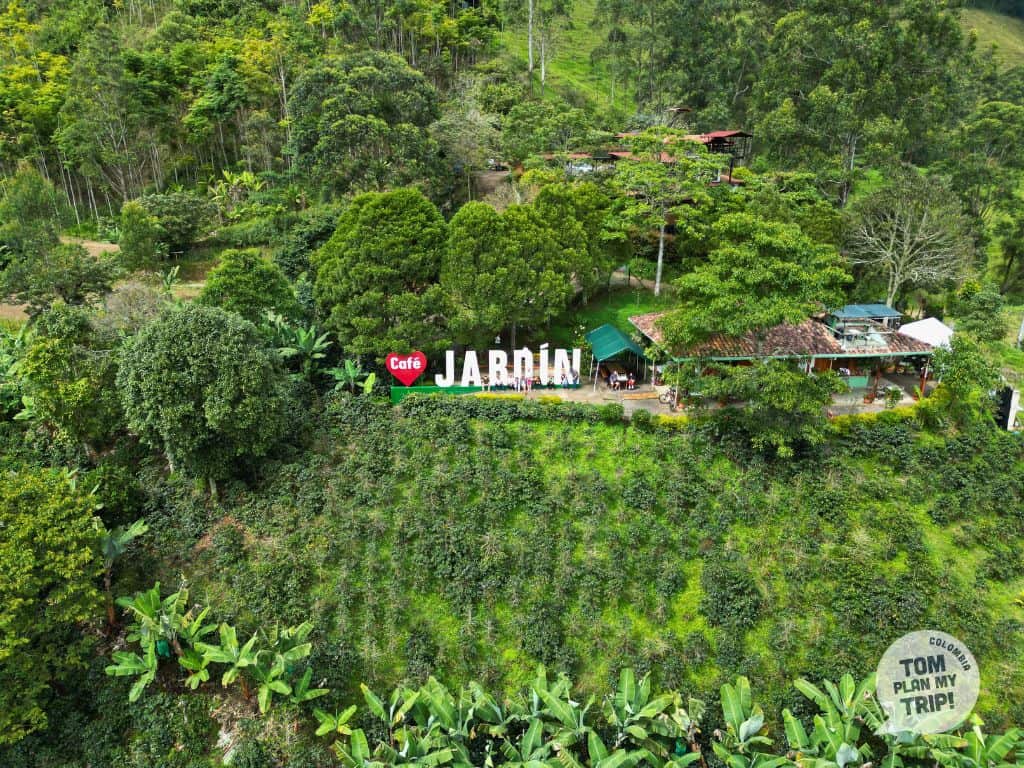


Start by soaking up the rhythm of the village while sipping a good coffee in the main square, then stroll through the streets.
Walk or take a tuk-tuk up to Cristo Rey to admire the view of the village and the surrounding peaks. Take La Garrucha, the picturesque local cable car overlooking a lush ravine.
The surroundings are full of hiking trails for all levels: the Cueva del Esplendor and its waterfall bursting from the rock, or the trek of the Siete Cascadas.
Go for a horseback ride, visit a coffee plantation; just outside the village, observe the flamboyant Andean cock-of-the-rock up close, an emblematic bird.
Food lovers can enjoy pastries like the postre d’aguacate and dine in one of the good restaurants.
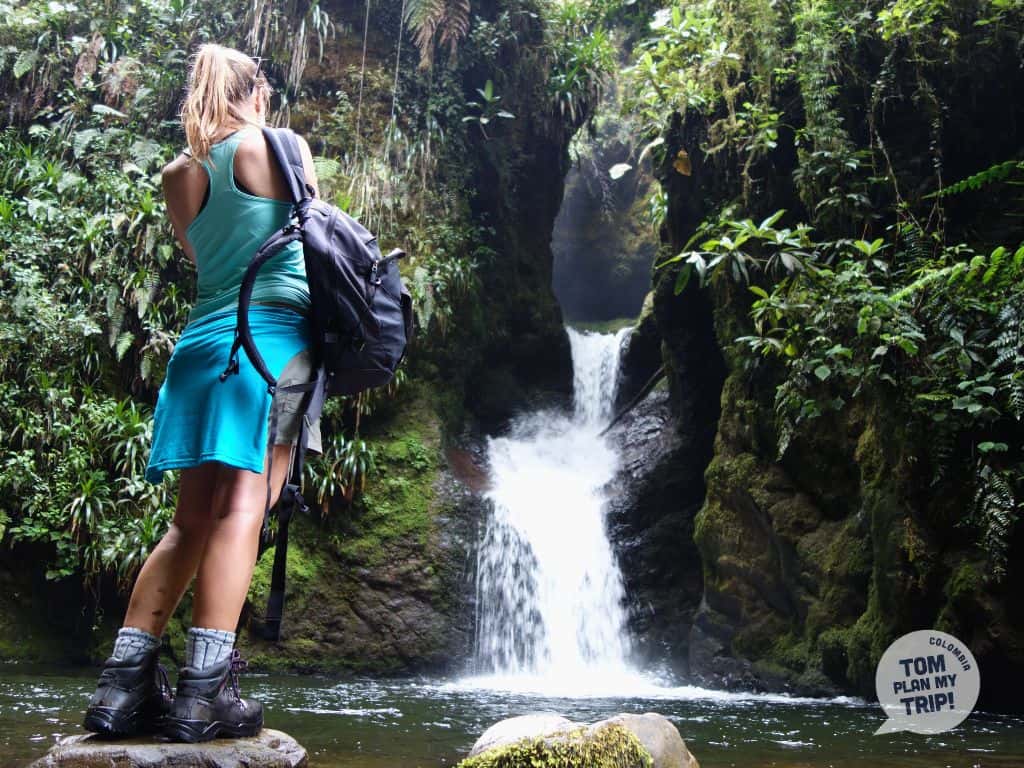


There is plenty to do in Jardín; spend at least 3 nights if you want to alternate between hiking and quiet moments to feel the village atmosphere.

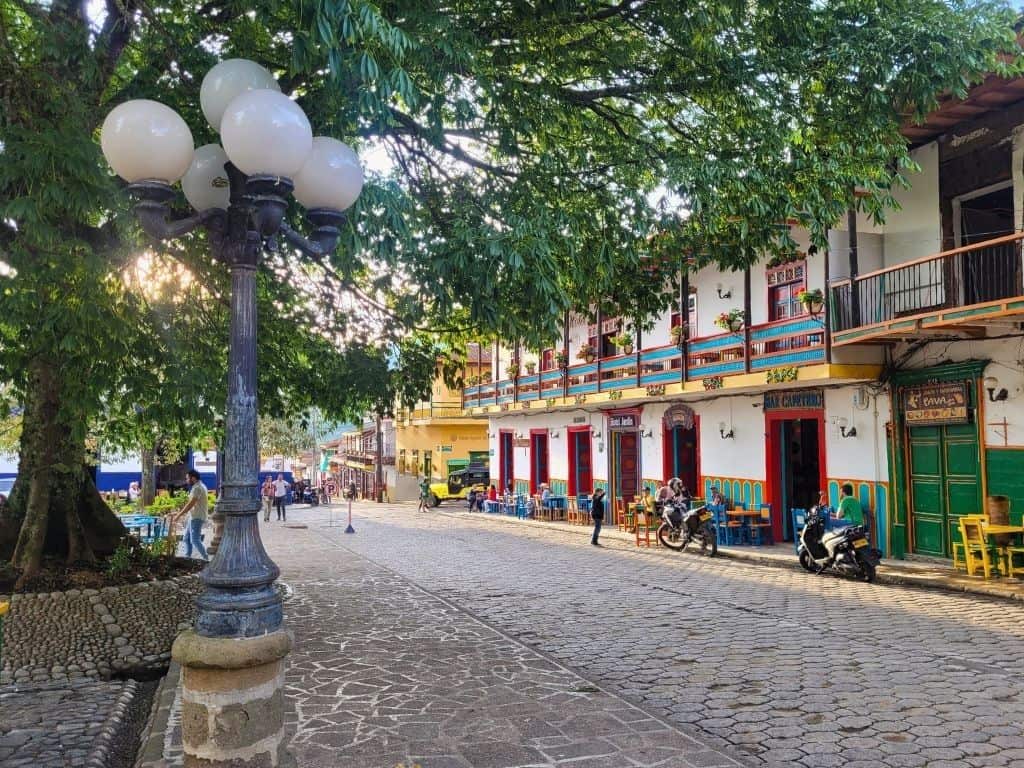
© Tomplanmytrip
SALAMINA
A small town in Colombia of artists and poets.
Salamina is located in the department of Caldas, in the Andean region, on the western slope of the central cordillera, 73 km from Manizales and 168 km from Medellín.
At an altitude of 1,822 m, the village enjoys a temperate and humid climate, with an average temperature of 20 °C.
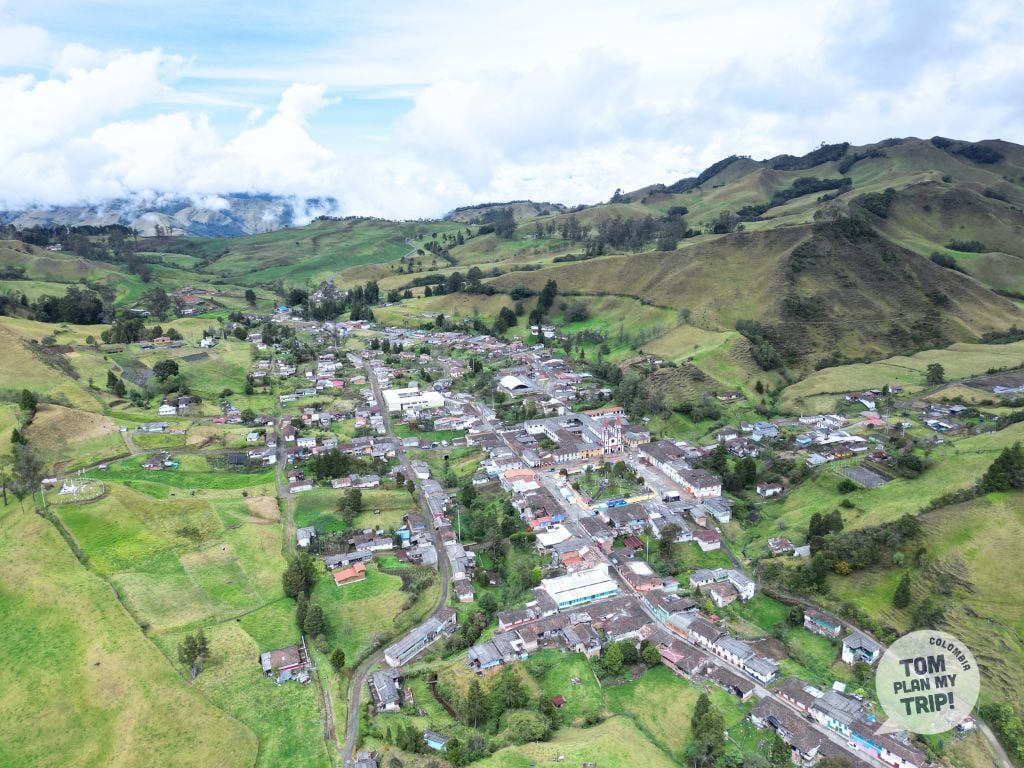
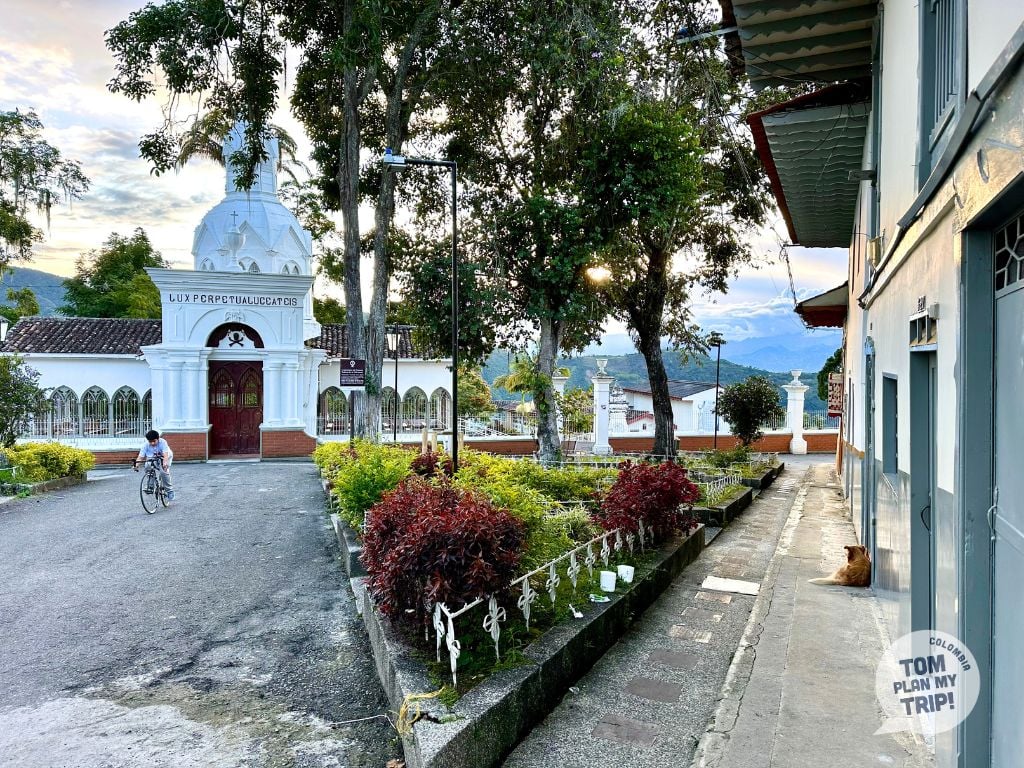
Built on a hill with steep streets, Salamina exudes a peaceful charm, far from the classic tourist circuits — with only a slight increase in Colombian visitors during holidays and weekends.
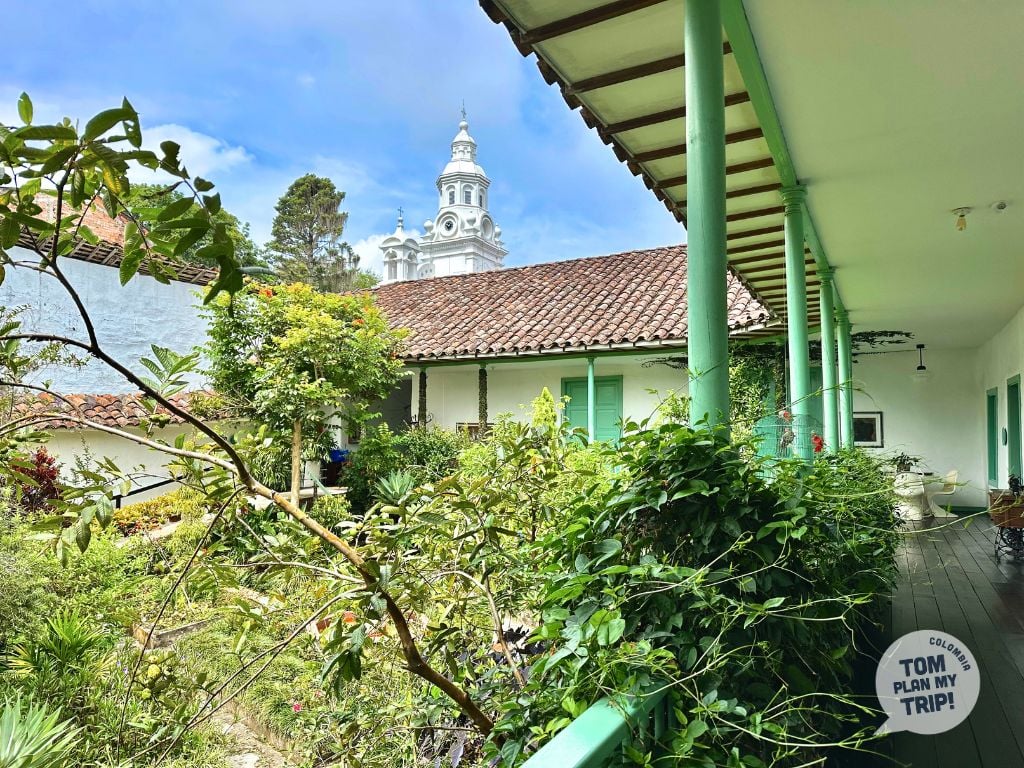
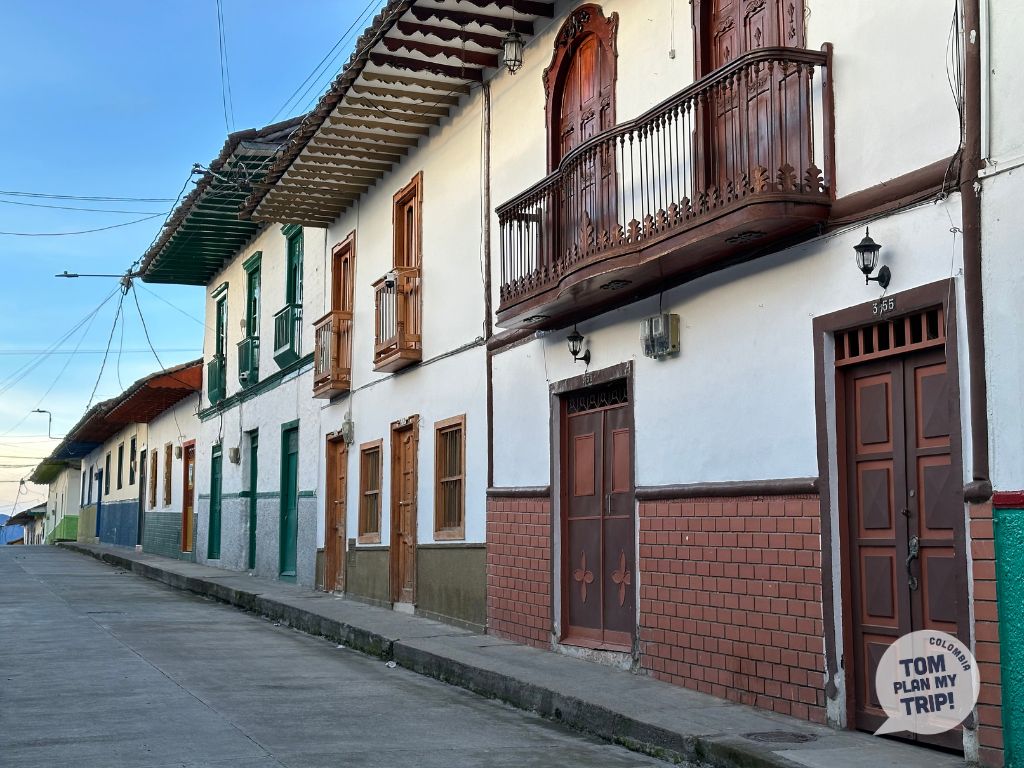
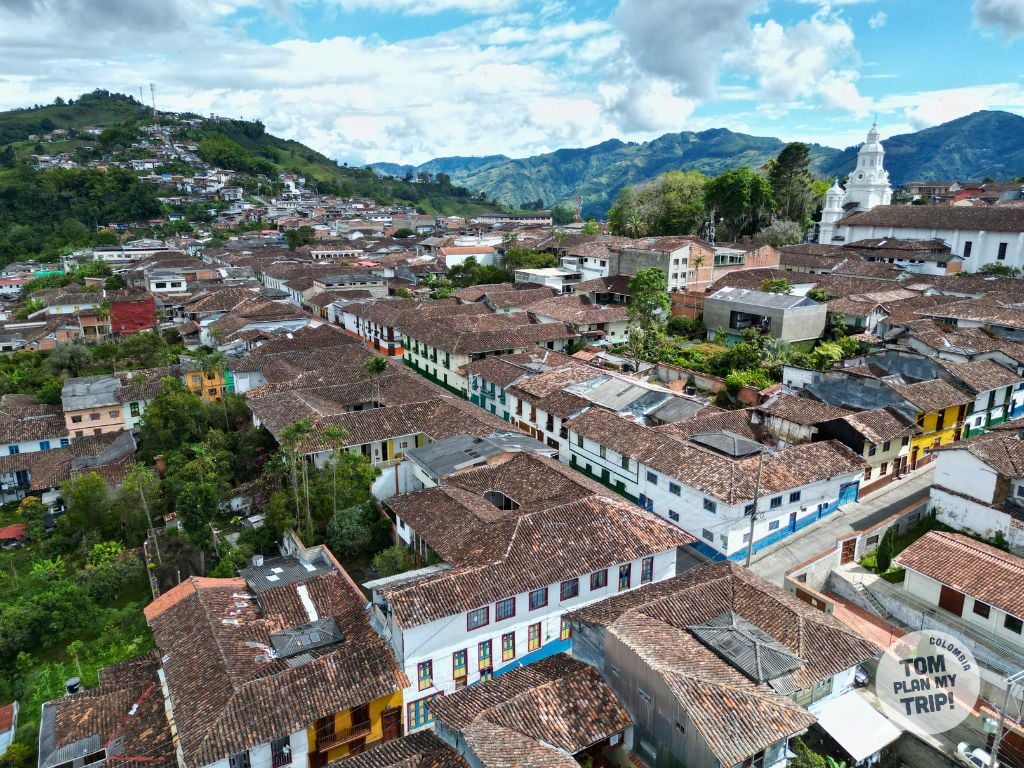
The village has given birth to poets, painters, and musicians — hence its nickname ” Ciudad Luz.” Ornate facades still bear witness to this literary and artistic heritage that the residents keep very alive by continuing the tradition of tertulias, these friendly gatherings around literature, in the cafés.
In terms of atmosphere, the village has two faces: the historic center exudes a bourgeois calm, while the market district is more popular and lively.
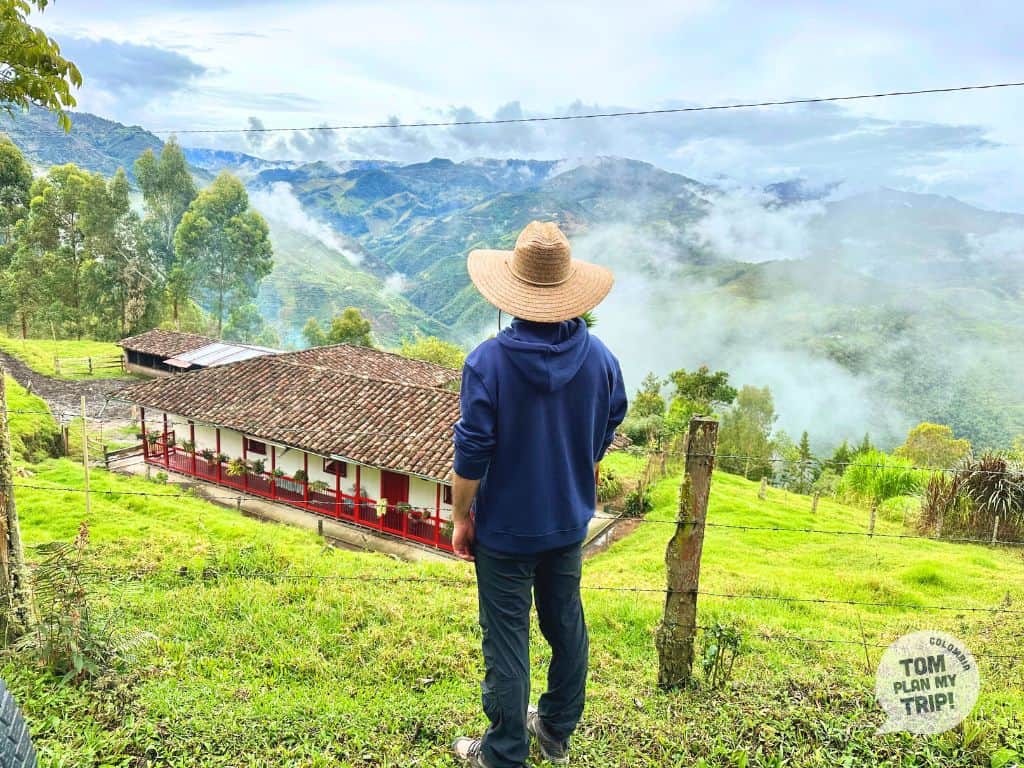
Climb to the Mirador Alto de las Cruces in the morning to enjoy the view over Salamina.
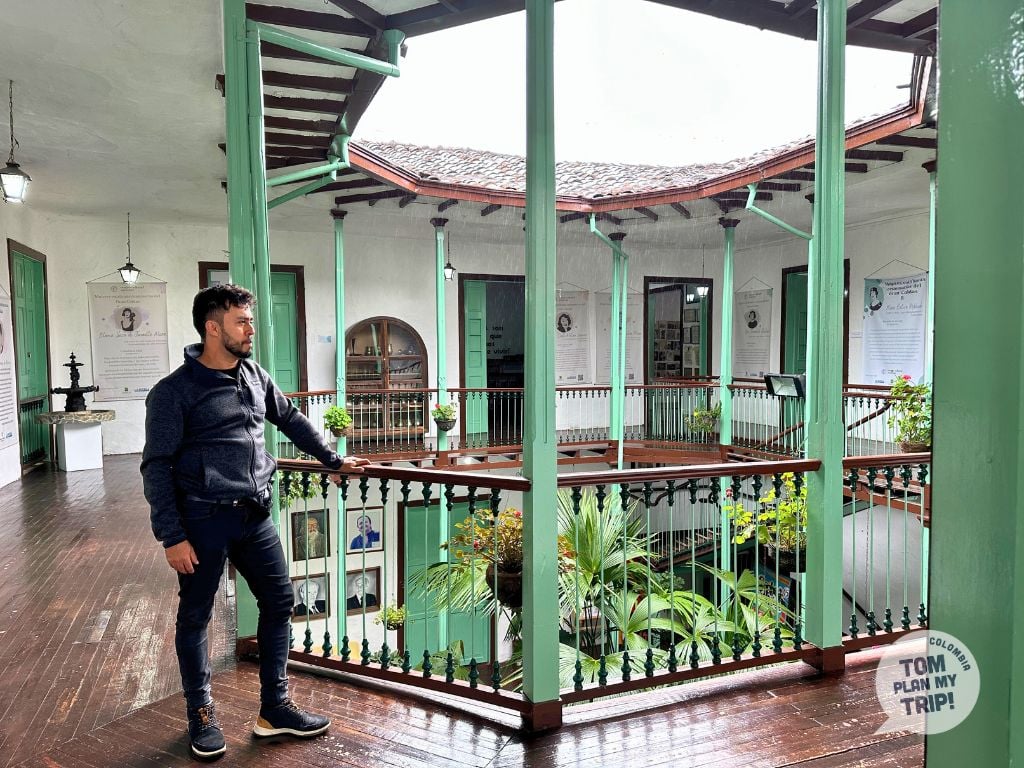
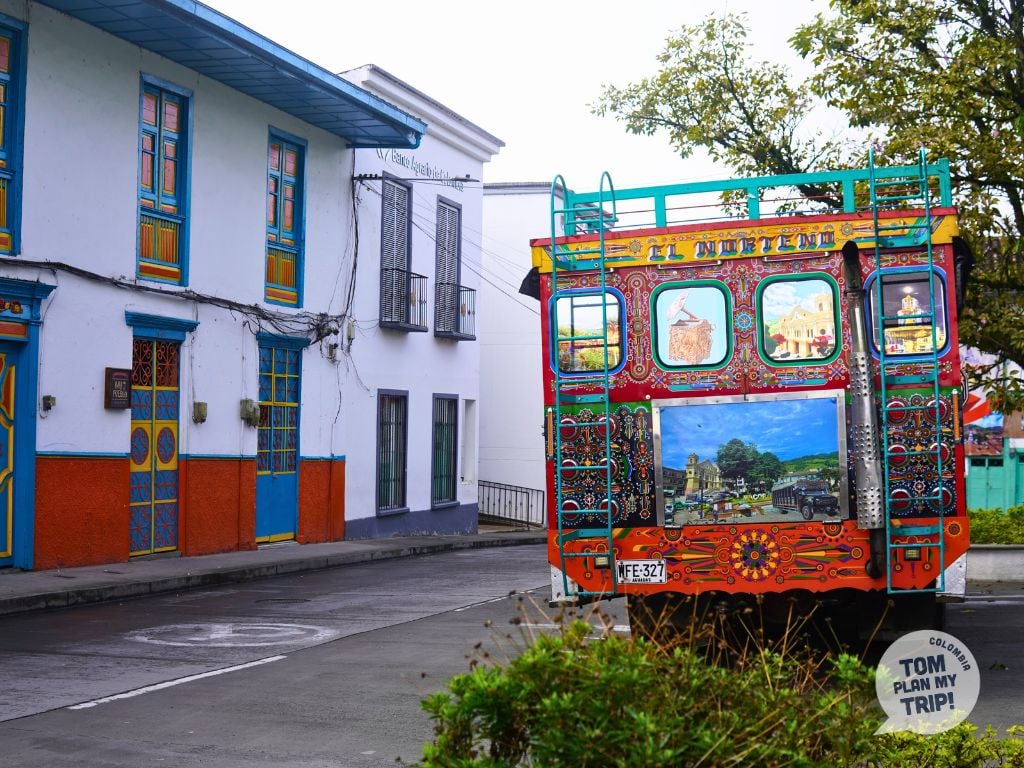
Then explore the village on foot: carved balconies and doors, the basilica with unique architecture, the Casa de la Cultura, and the historic cemetery.
Visit the covered market and the artisanal workshop of fique (local plant fiber) and sheep wool, where rugs and ruanas (traditional ponchos) are woven.
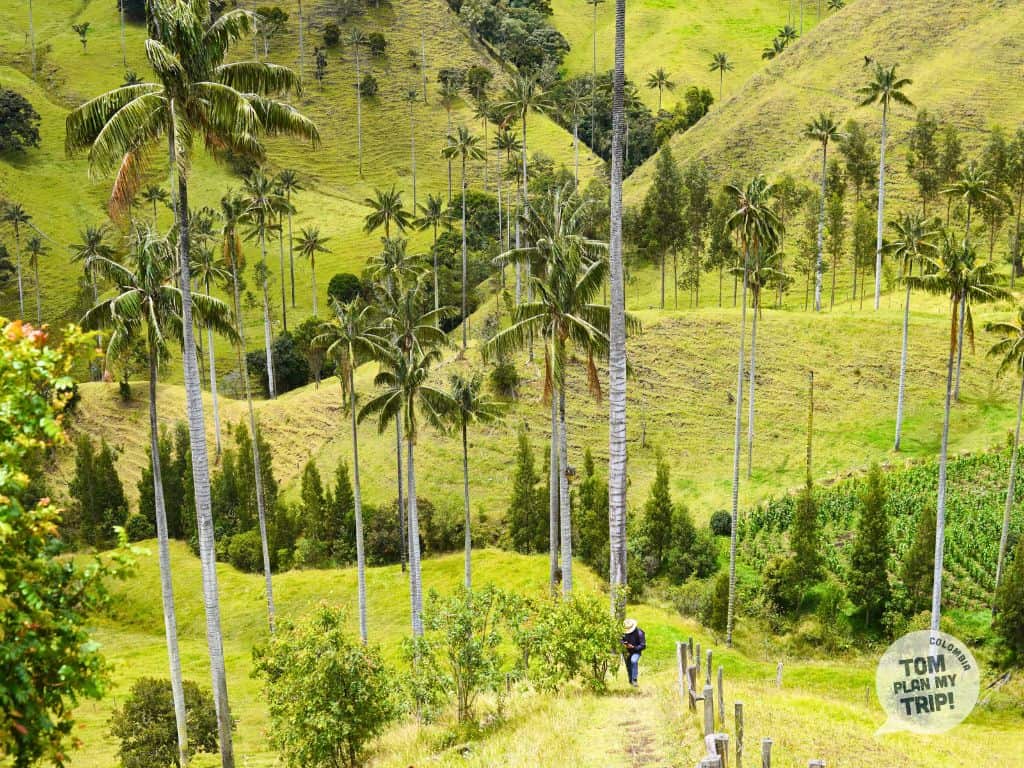
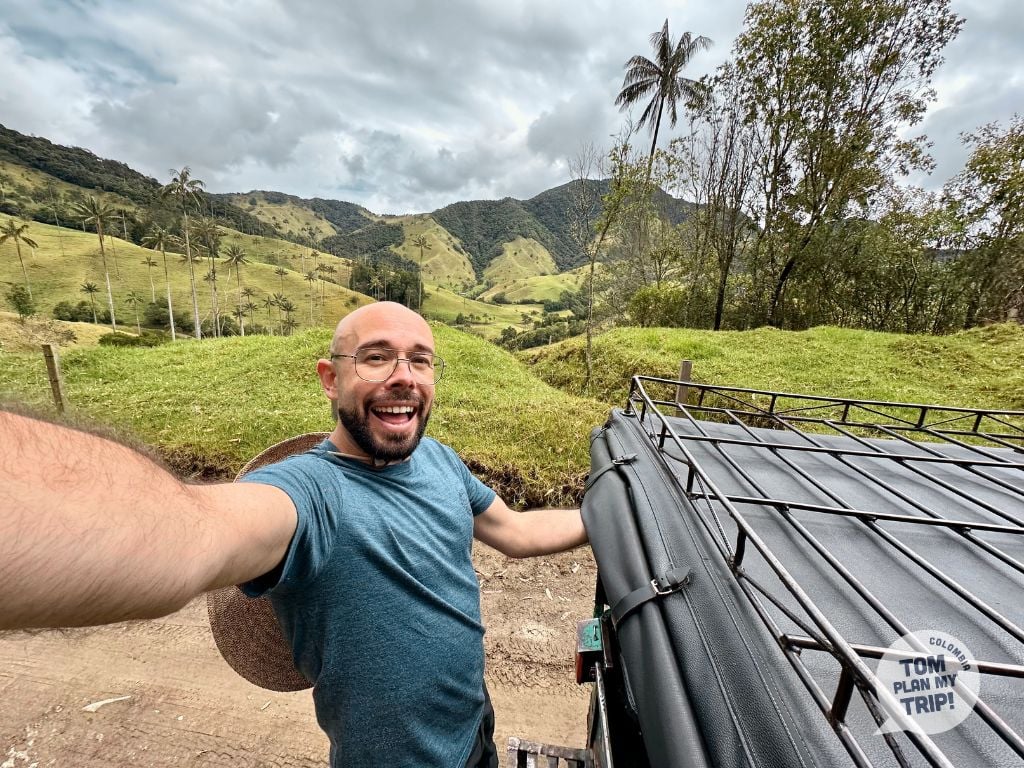
Hop in a Willys jeep for a tour of the Samaria Valley, an alternative to the Cocora Valley — even more wax palms and much less crowded.
You can also visit a coffee finca or San Félix, a peaceful high-altitude village known for its dairy production.
Two nights give you time to discover the village and the Samaria Valley.
Add a third night to explore a coffee finca or to relax in San Félix.
© Tomplanmytrip
PIJAO
The authentic and campesino small town of Quindío.
Located in southern Quindío, on the central mountain range, Pijao is about 31 km from Armenia and 60 km from Salento.
Nestled at 1,650 m above sea level, in a steep valley surrounded by mountains, rivers, and rugged landscapes, the village enjoys a temperate mountain climate, with an average temperature of 18 °C.
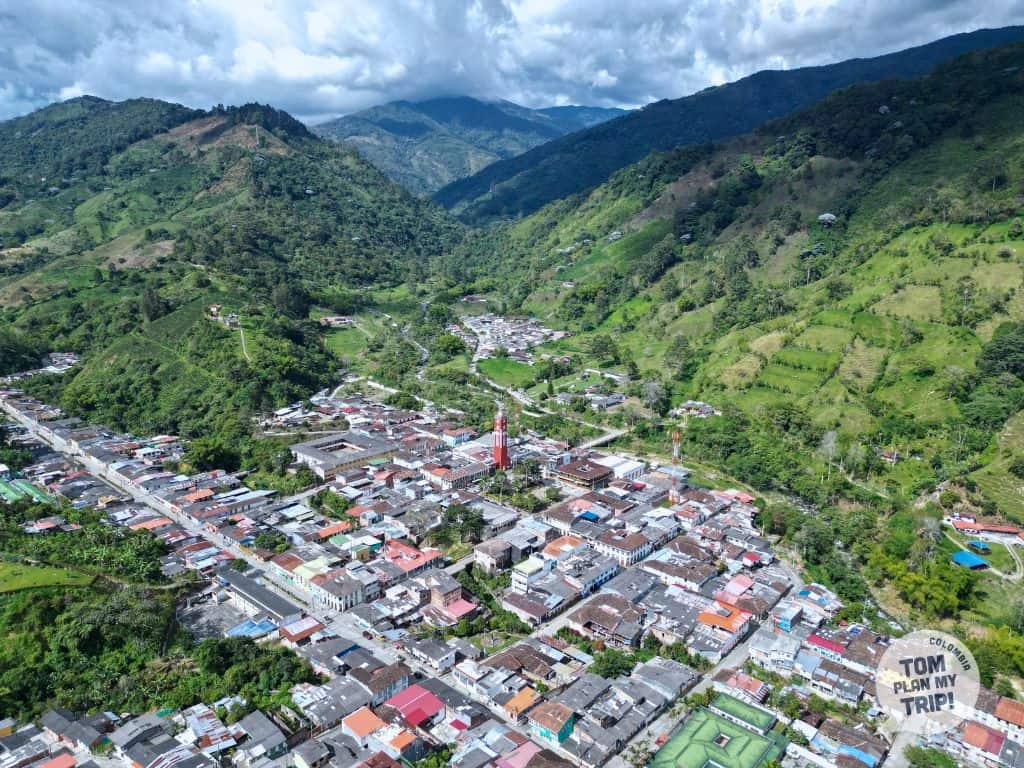
Renowned for its gentle way of life, Pijao is also a village “in its own juice,” deeply campesino, as evidenced by the large fincas, the laborers with weathered faces from working the fields, and the lively weekends on the main square.
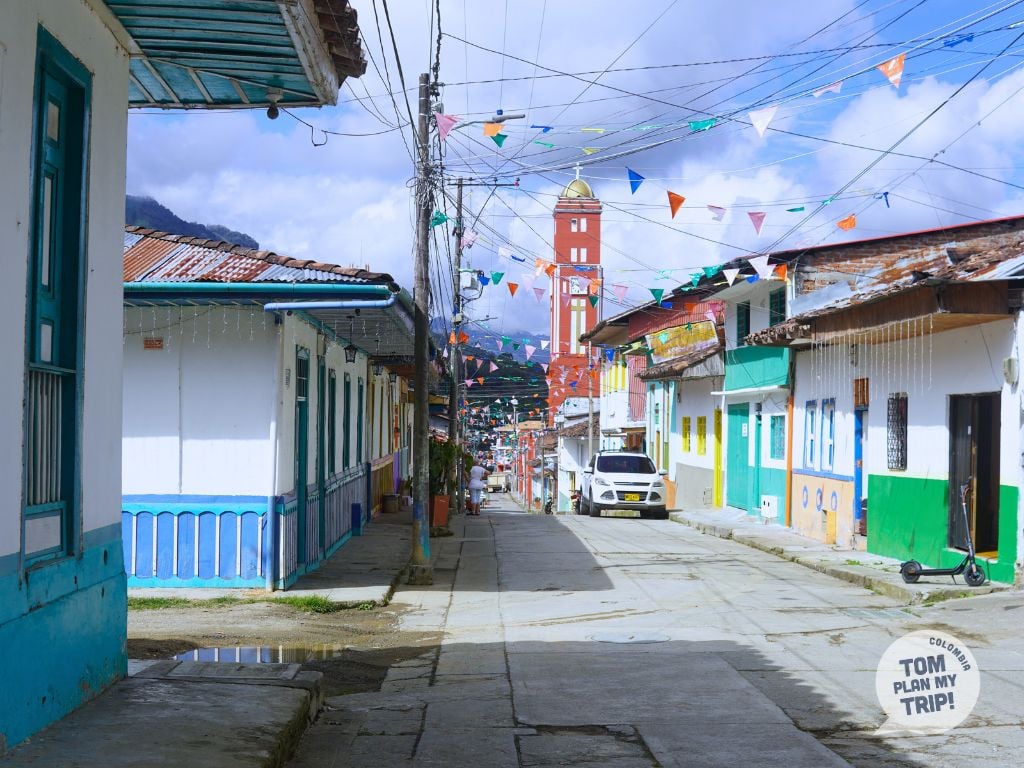
The village features traditional architecture in bahareque (construction technique) – colorful facades and flowered balconies.
The warm and sincere inhabitants love to tell the story of their village. Seldom visited by tourists, Pijao is a beautiful alternative to Salento for immersing yourself in the local culture.
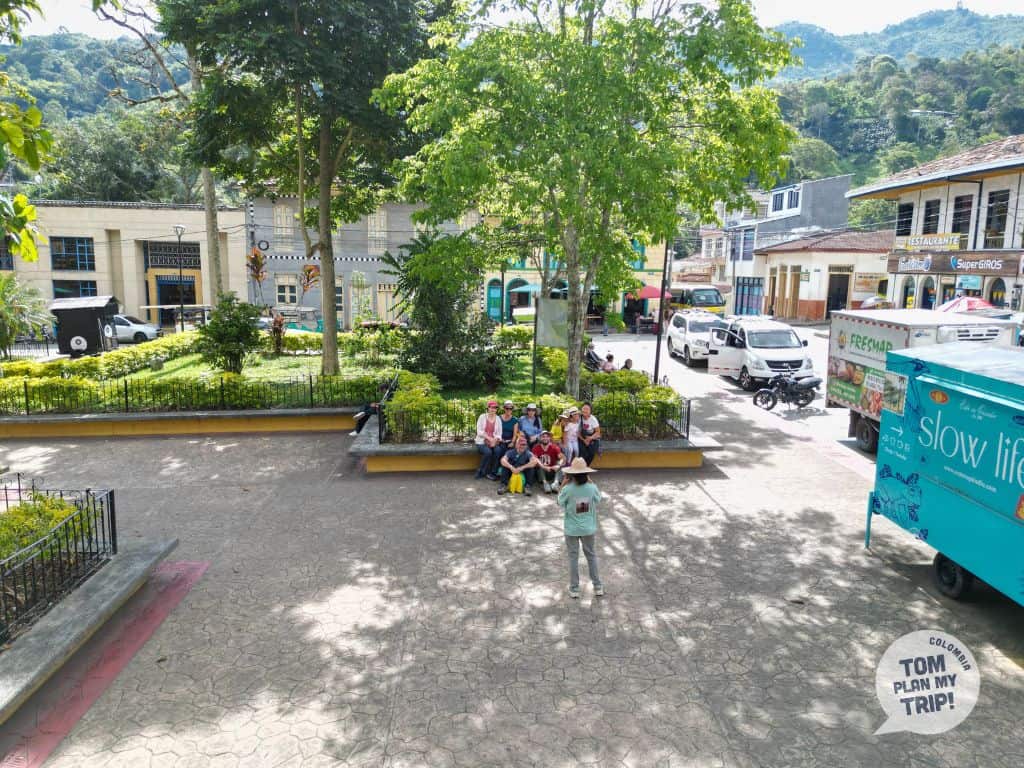
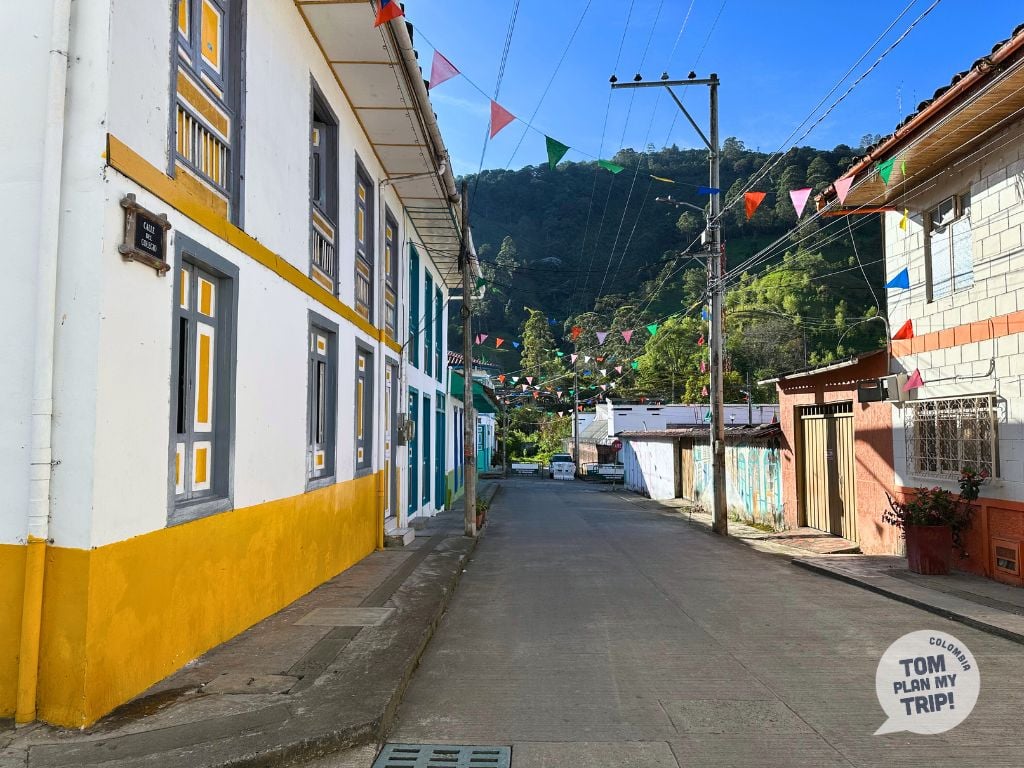
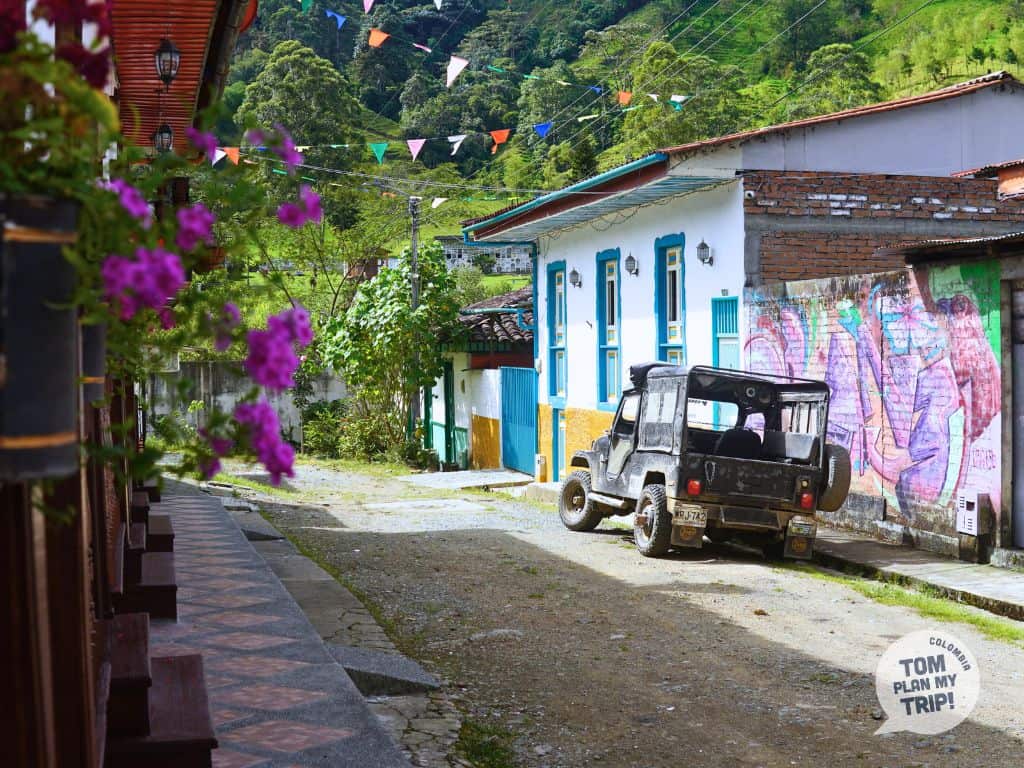
Stroll through the colorful streets while savoring a handcrafted ice cream, have a quick lunch from the menu del día at the covered market, and taste local coffee brews.
In the late afternoon, take a break at the Bar Social, with its century-old coffee machine and authentic atmosphere.
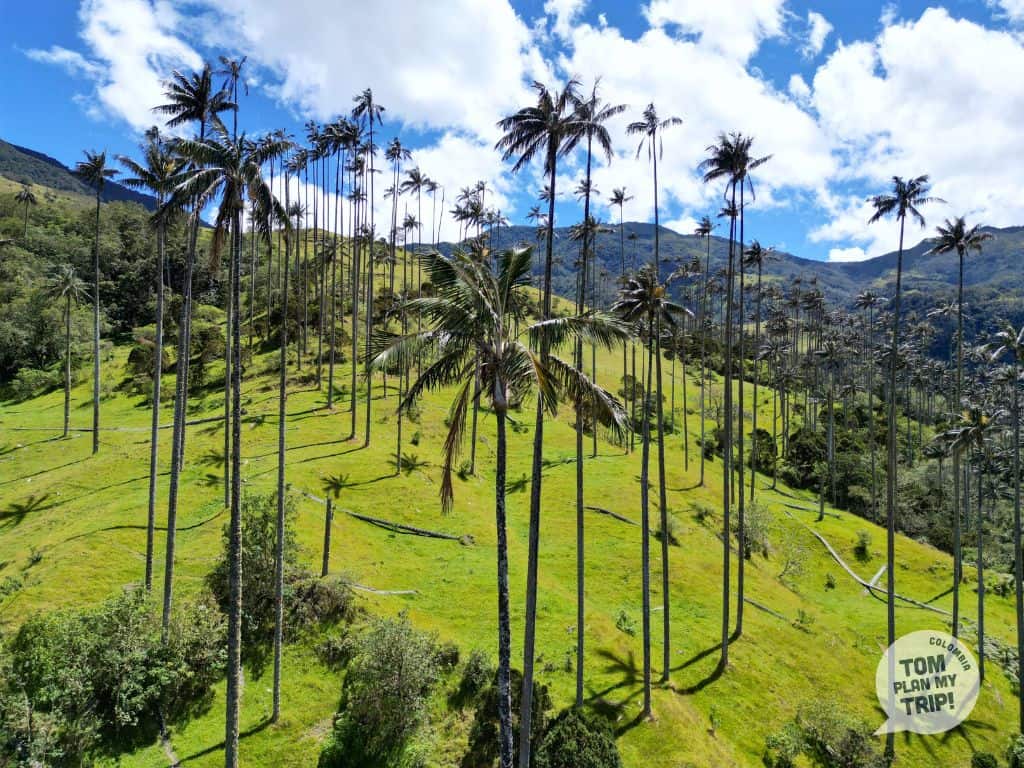
Go on a hike in a forest of preserved wax palms on a private property, or climb the páramo del Chilí with a local guide to walk among the fraijelones.
The nearby coffee farms, less visited than in Salento, are also worth a visit; Quindío is renowned for its richness in bird species.
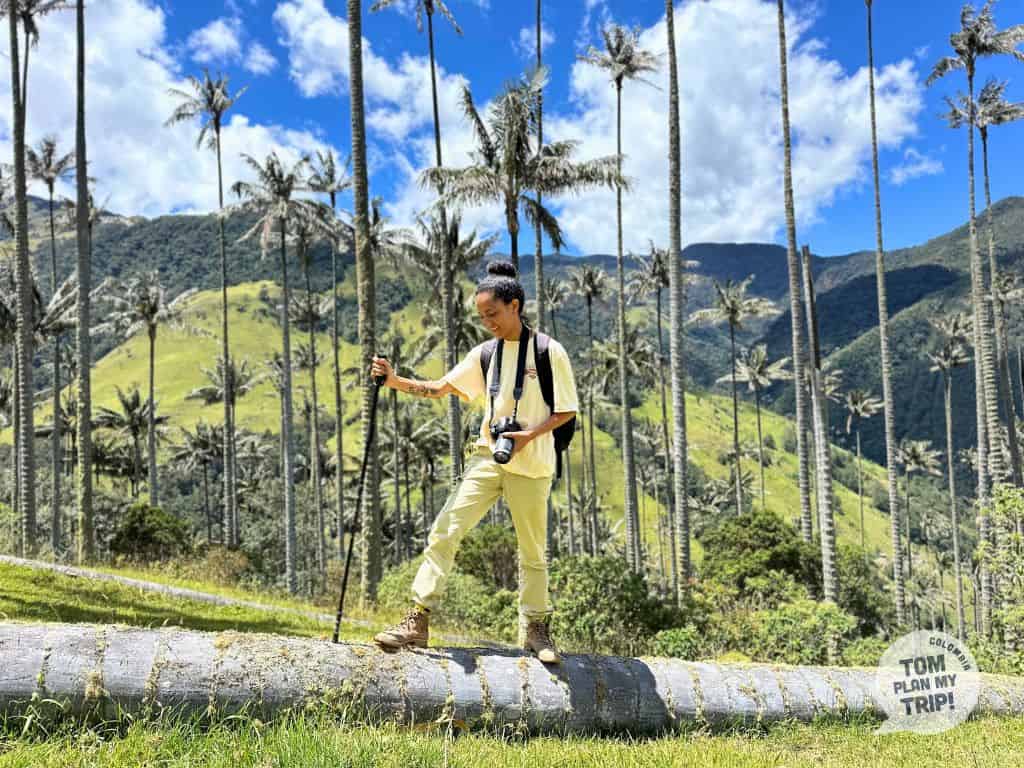
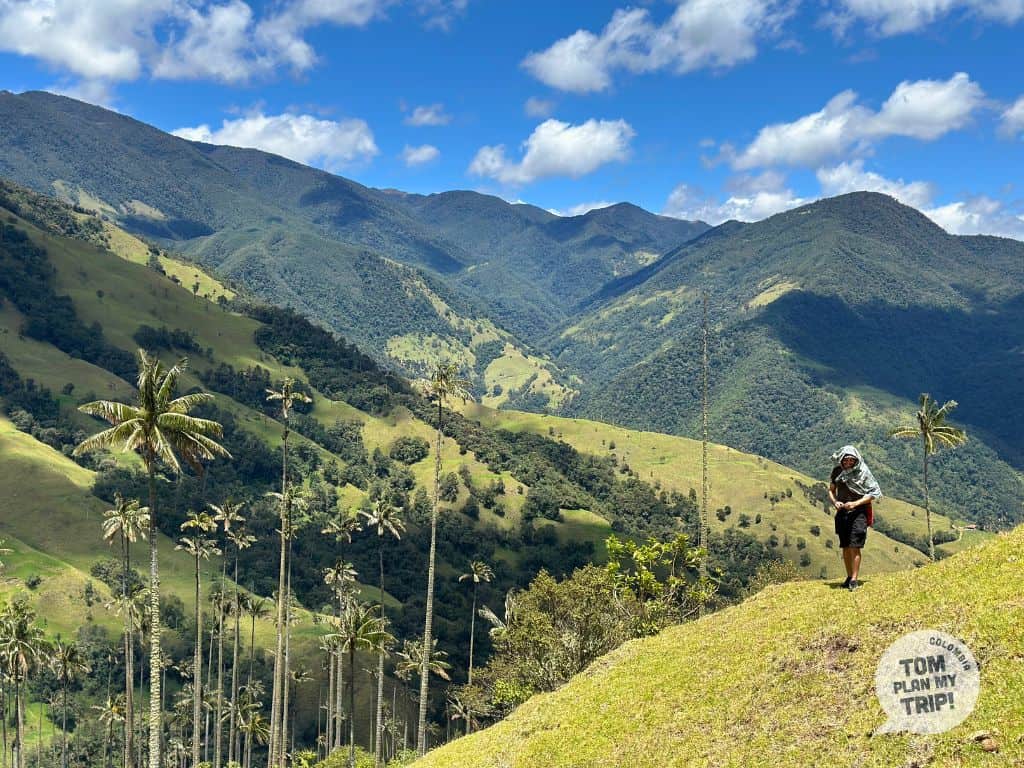
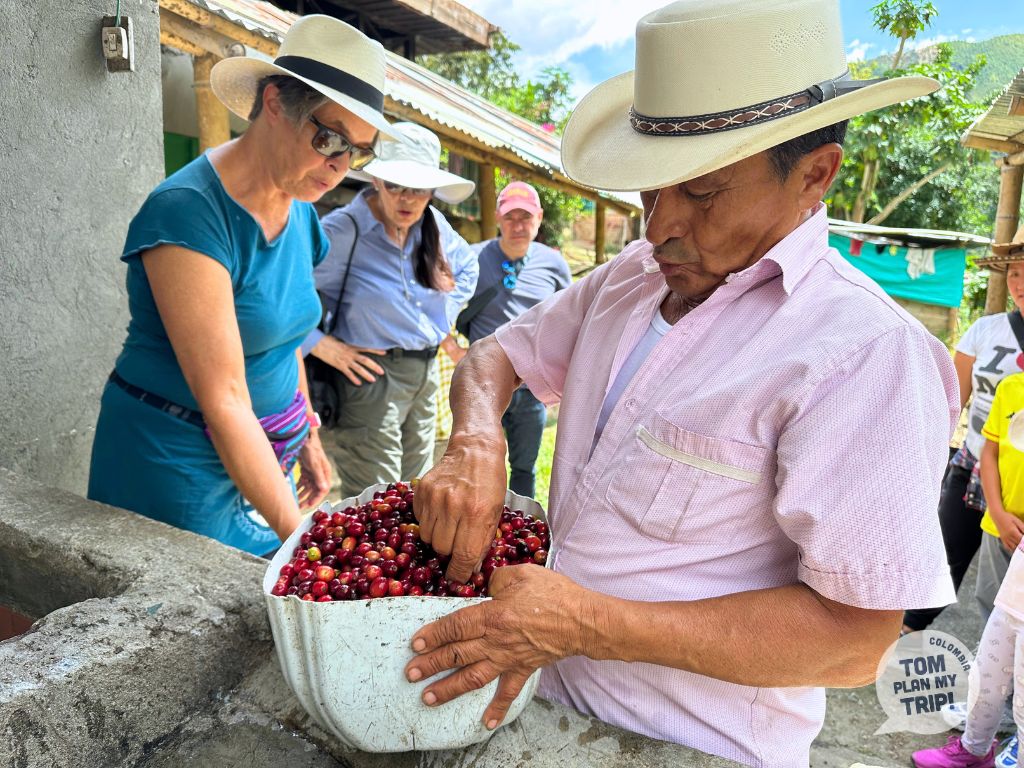
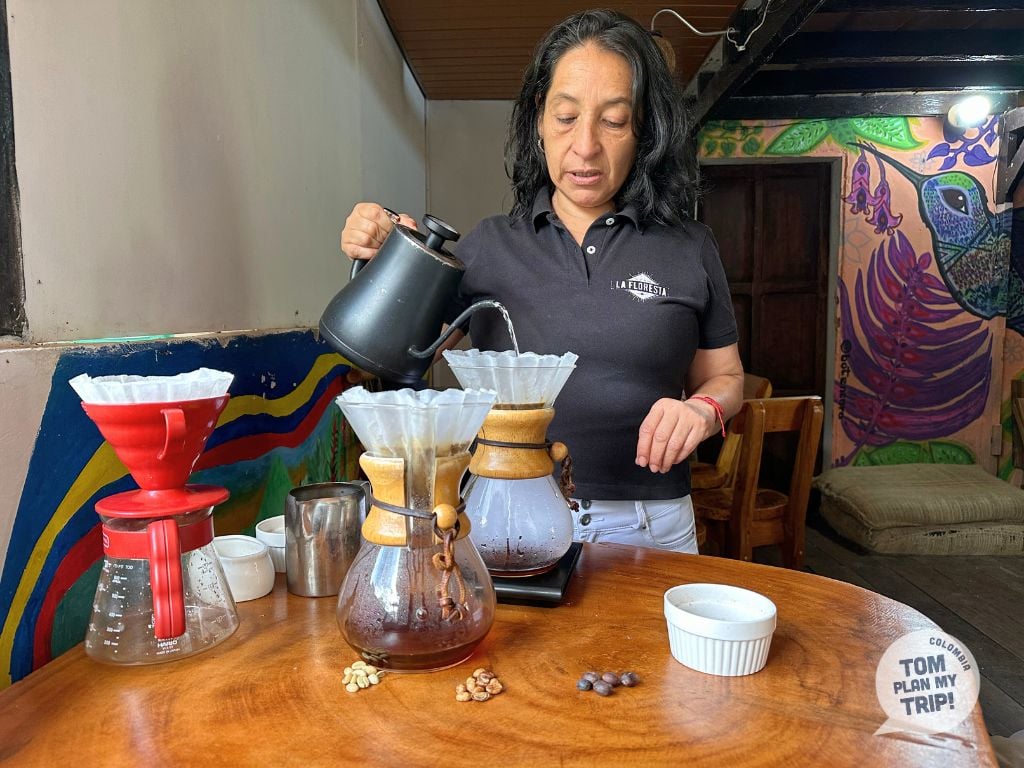
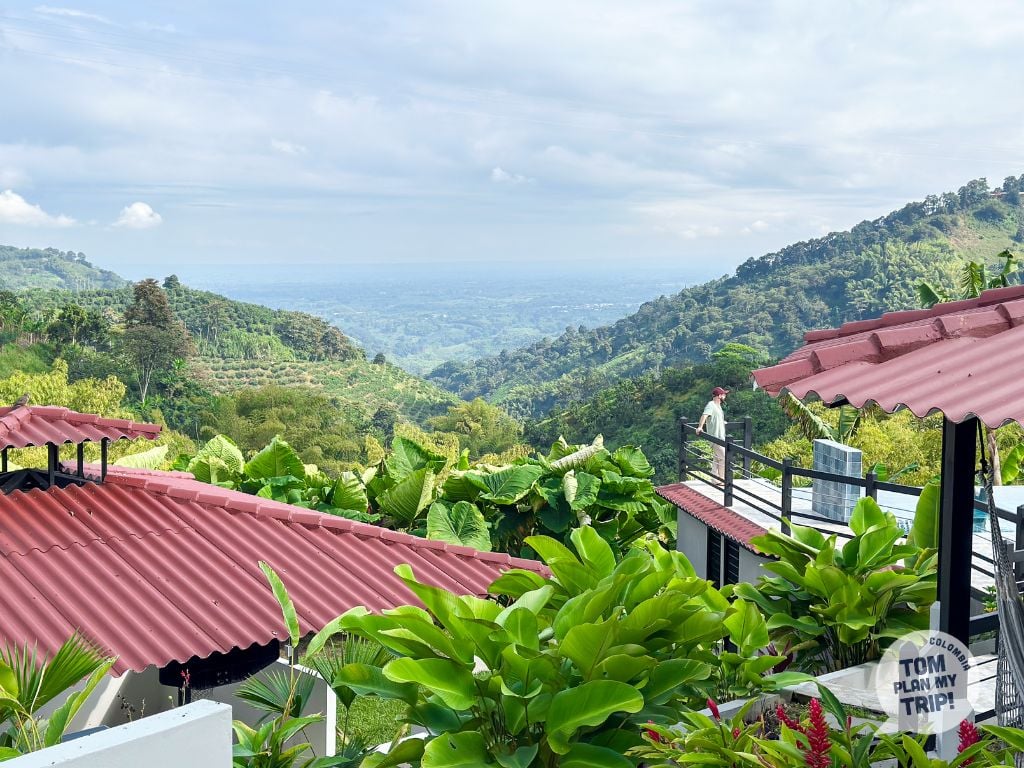
2 nights are enough to discover the village, climb to the Páramo de Chilí, and walk to the wax palms. Plan for 3 nights for a more relaxed pace and to make a quick visit to Buenavista, 20 min away.
Avoid coming to Pijao on a day trip from Salento or Armenia; you’ll miss all the authenticity of the village.
© Tomplanmytrip
SALENTO
The star small town of the Eje Cafetero.
Salento is located in the department of Quindío, an hour’s drive from Pereira and Armenia, in the Andean region, on the foothills of the central cordillera.
The village, perched at 2,000 m altitude above a valley, enjoys a temperate mountain climate with mild days averaging around 20 °C and cooler evenings, near 15 °C.
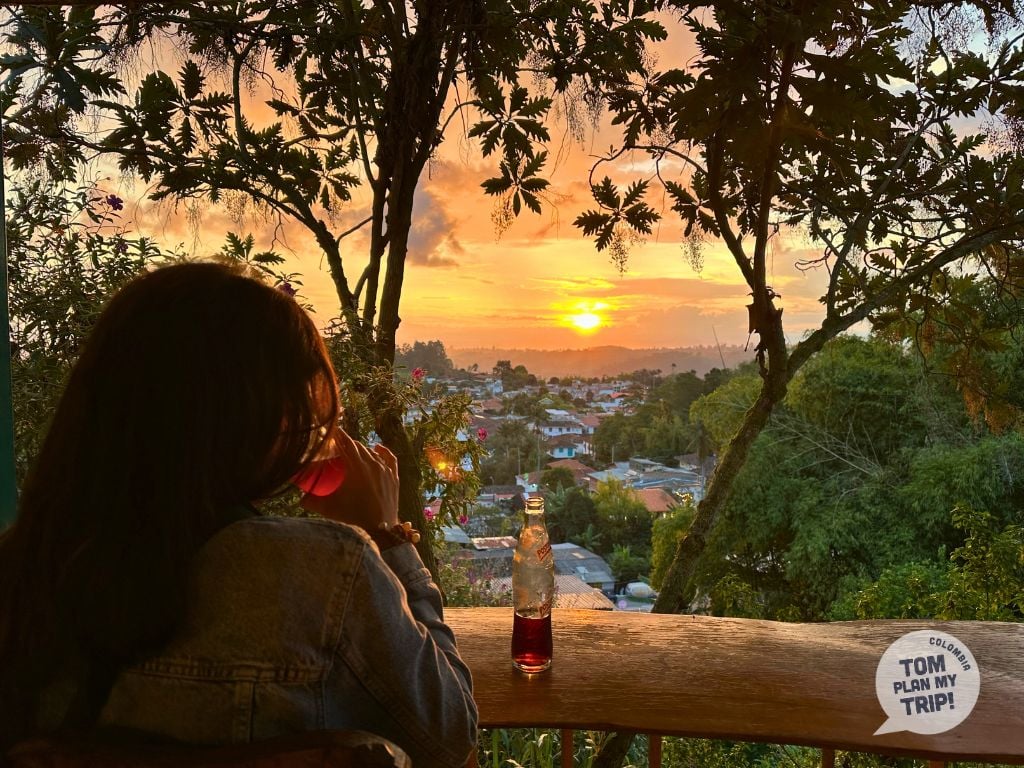
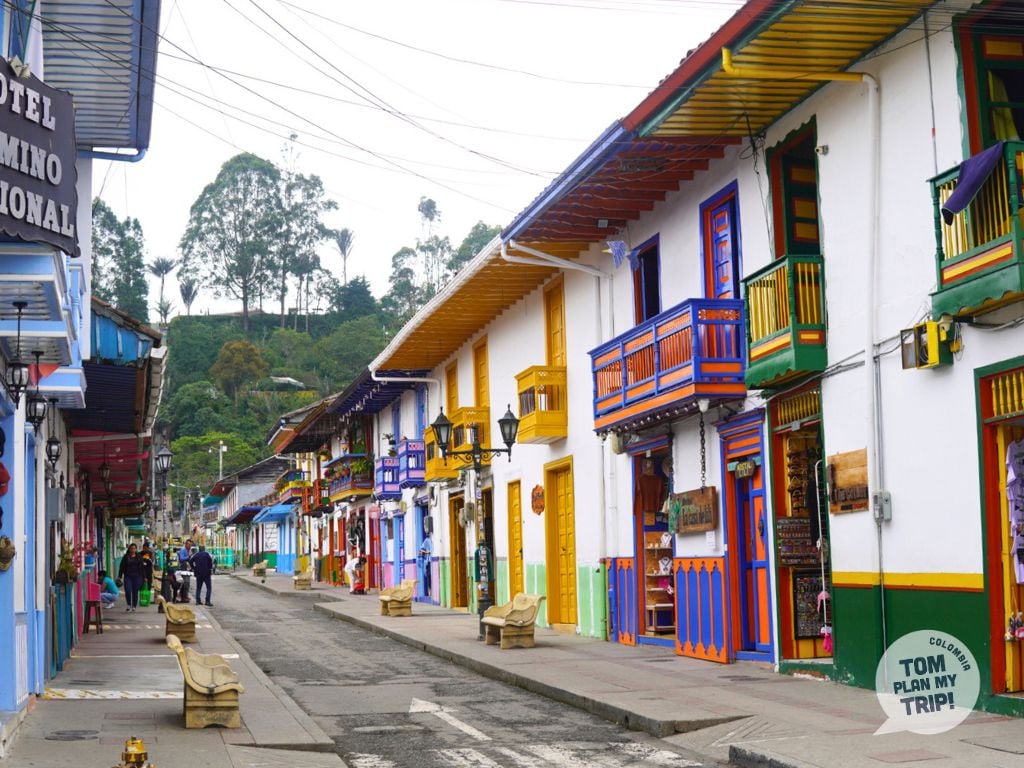
Salento has become the most visited destination in the Eje Cafetero, as evidenced by the tourist shops, international restaurants, and improvised guides. So much so that many residents have left the village.
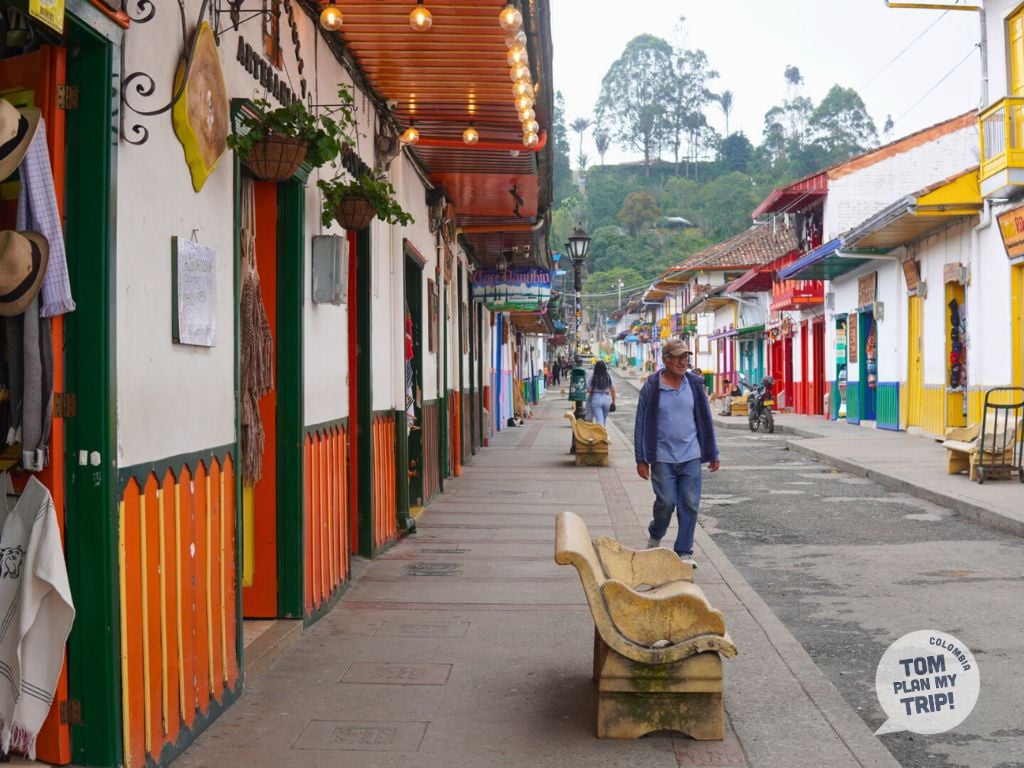
Salento is known for its beautiful colonial architecture: bahareque houses with wooden balconies and doors painted in bright colors, its cafes, and its central square lined with Willys jeeps.
During high season and weekends, the village is crowded. On weekdays and outside of holidays, the village regains some of its old charm.

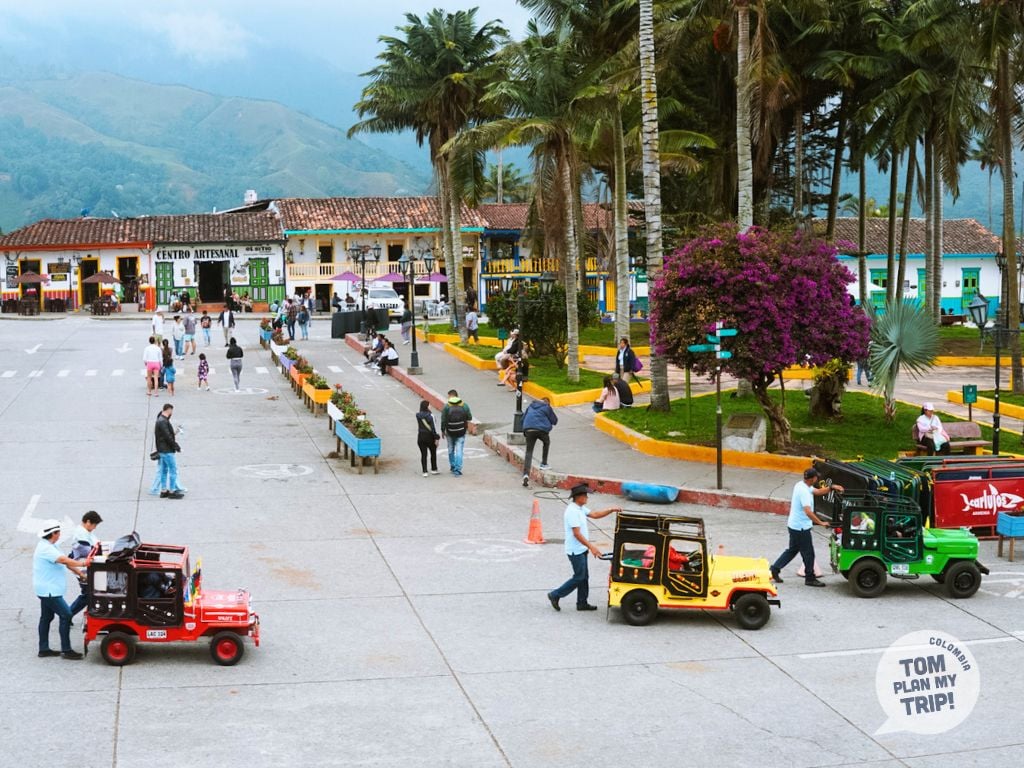
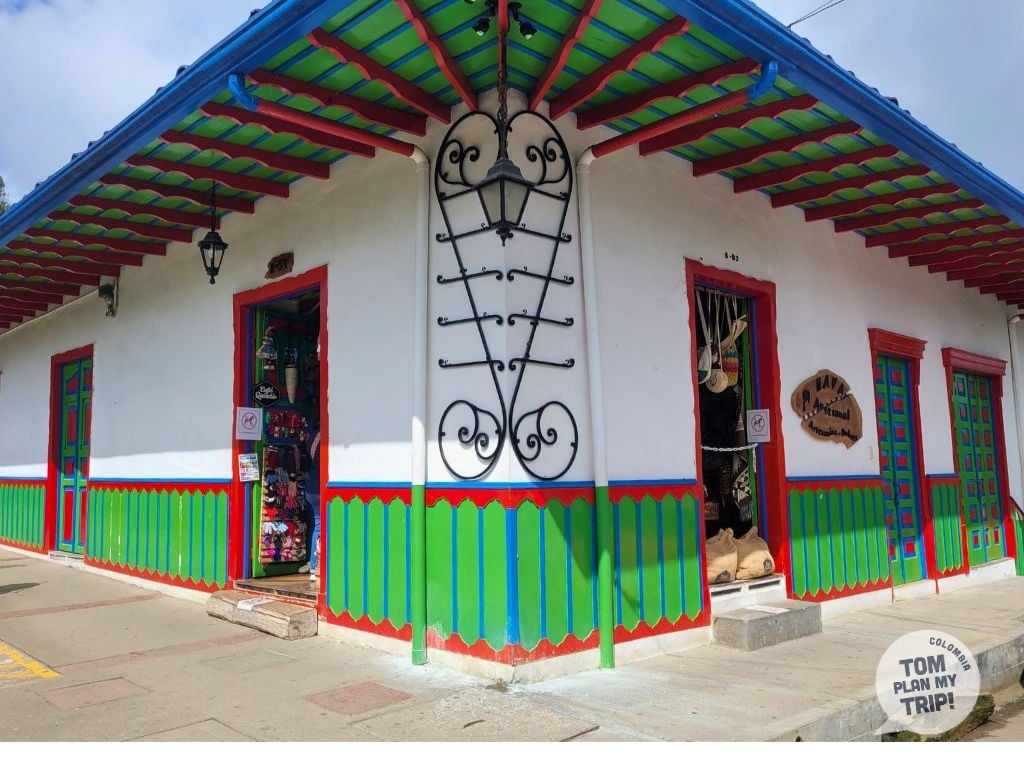
Explore the village by strolling (1 – 2 h): Calle Real and its craft shops, Plaza Bolívar, then take a gourmet break at a cafe or try the local specialty, trout.
Climb to the Mirador Alto de la Cruz to enjoy the view over the valley.
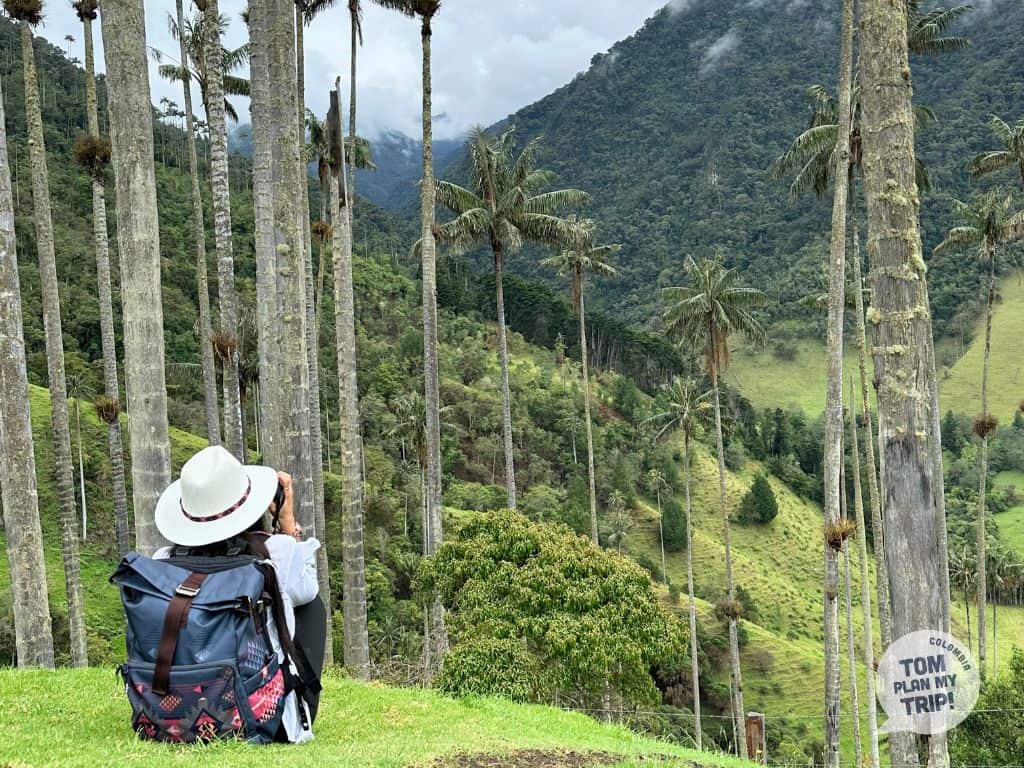
The must-do activity remains the Cocora Valley, 30 minutes away by Willys jeep, and its immense wax palm trees, to explore on foot.
Complete with a visit to a coffee finca, a horseback ride or mountain biking, or a trip to Filandia, a quieter alternative to Salento.
If you are an experienced hiker, Salento also serves as a gateway to multi-day treks in Los Nevados park.
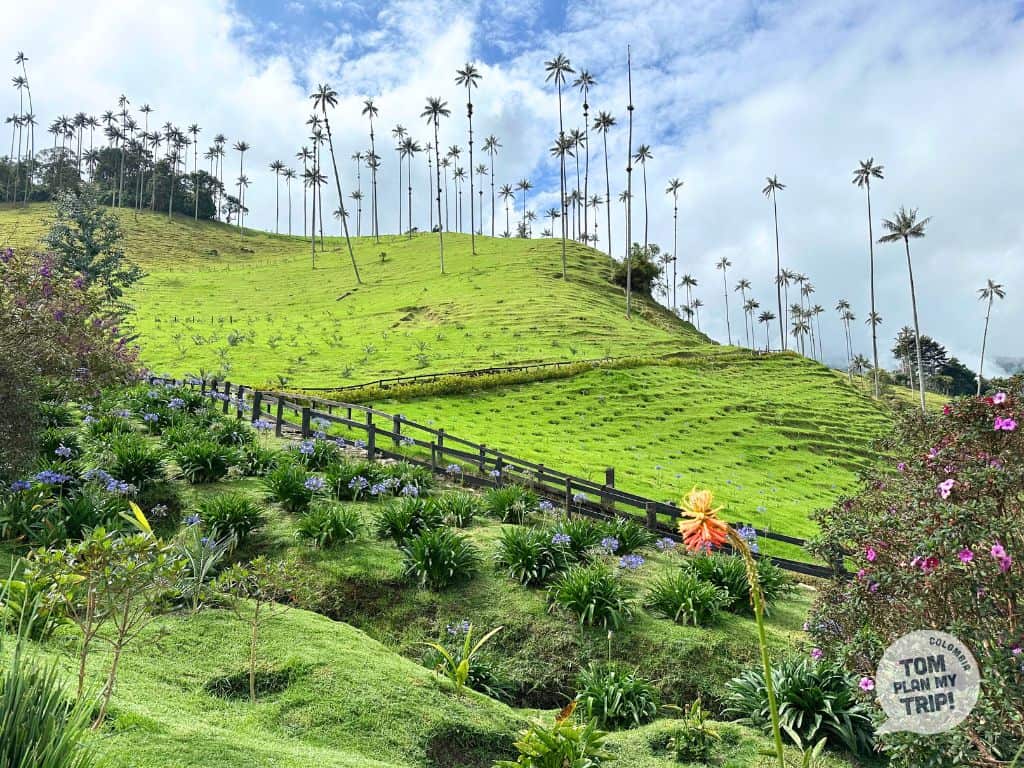
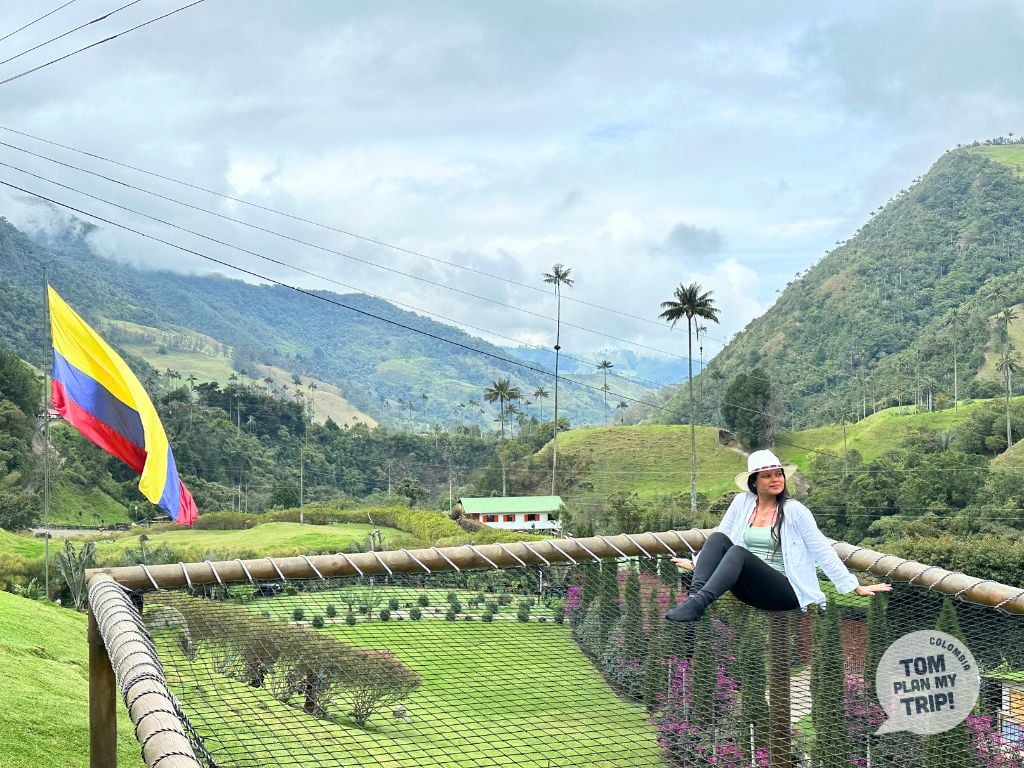
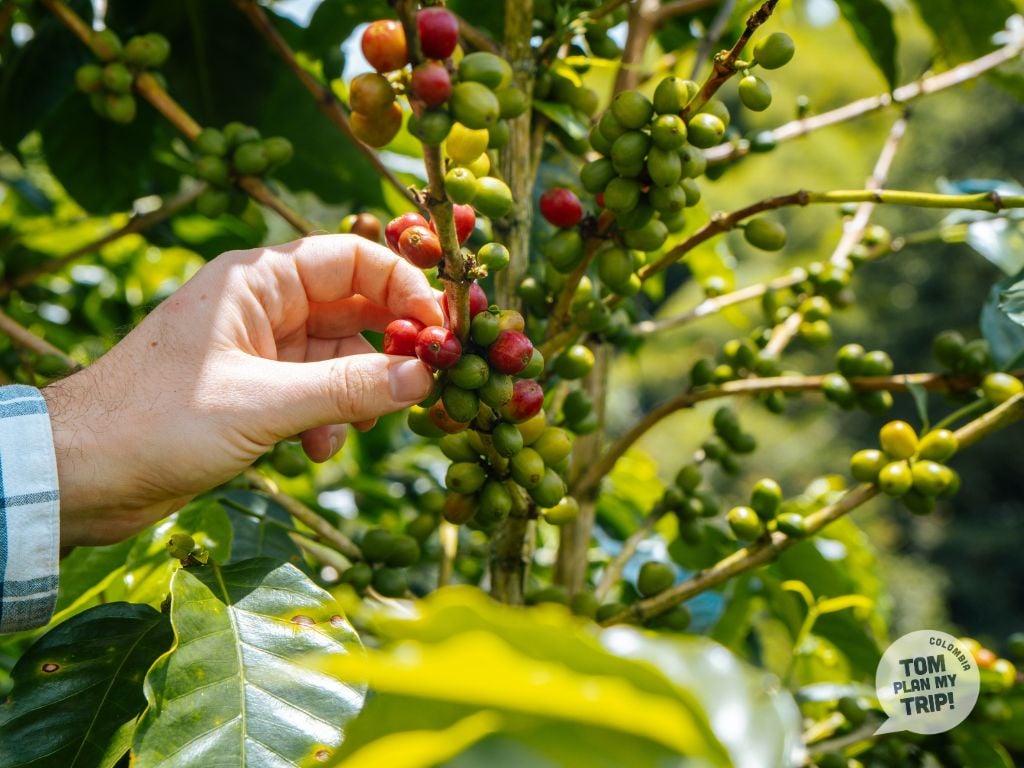

1 to 2 nights are enough to visit Salento, the Cocora Valley, and a coffee farm.
Plan for more only if you are considering a trek in Los Nevados.
If you are considering Salento as a base to explore the region, be aware that there are more strategic ones.
© Tomplanmytrip
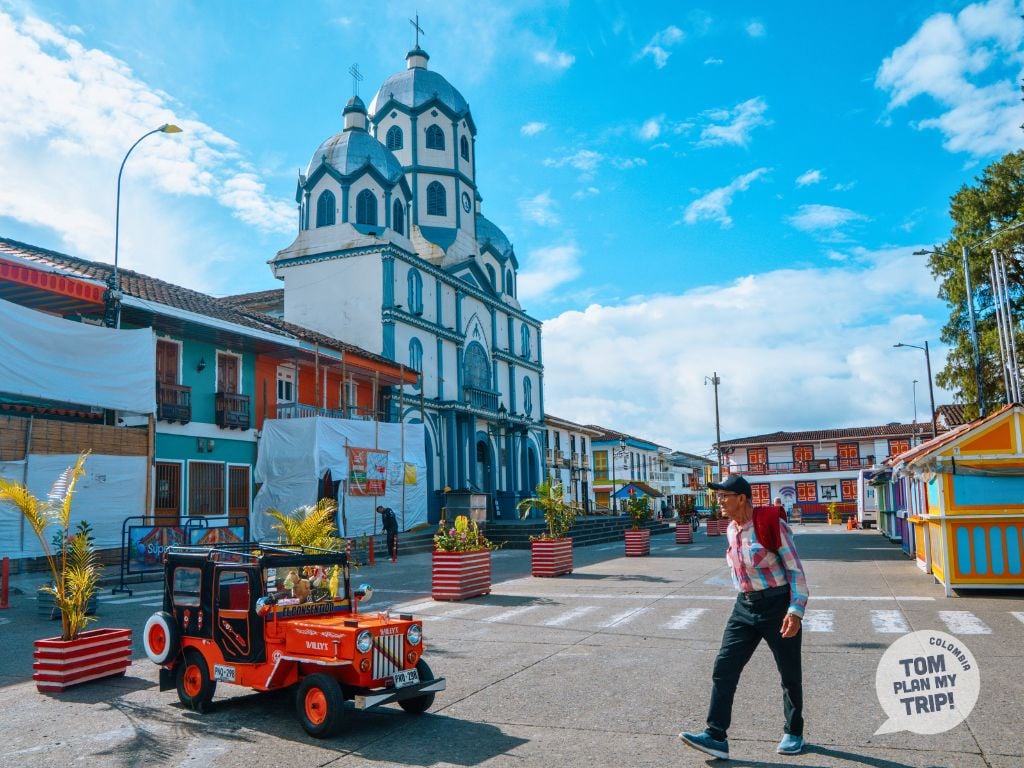
FILANDIA
A charming and lesser-known alternative to Salento.
Filandia is located in the north of the Quindío department, on the western foothills of the central cordillera, in the heart of coffee plantations and cloud forests.
At an altitude of 1,900 m, halfway between Pereira and Armenia (30 km from each) and 20 km from Salento, the village enjoys a temperate and humid climate, with days around 22°C and cooler nights, near 17°C.
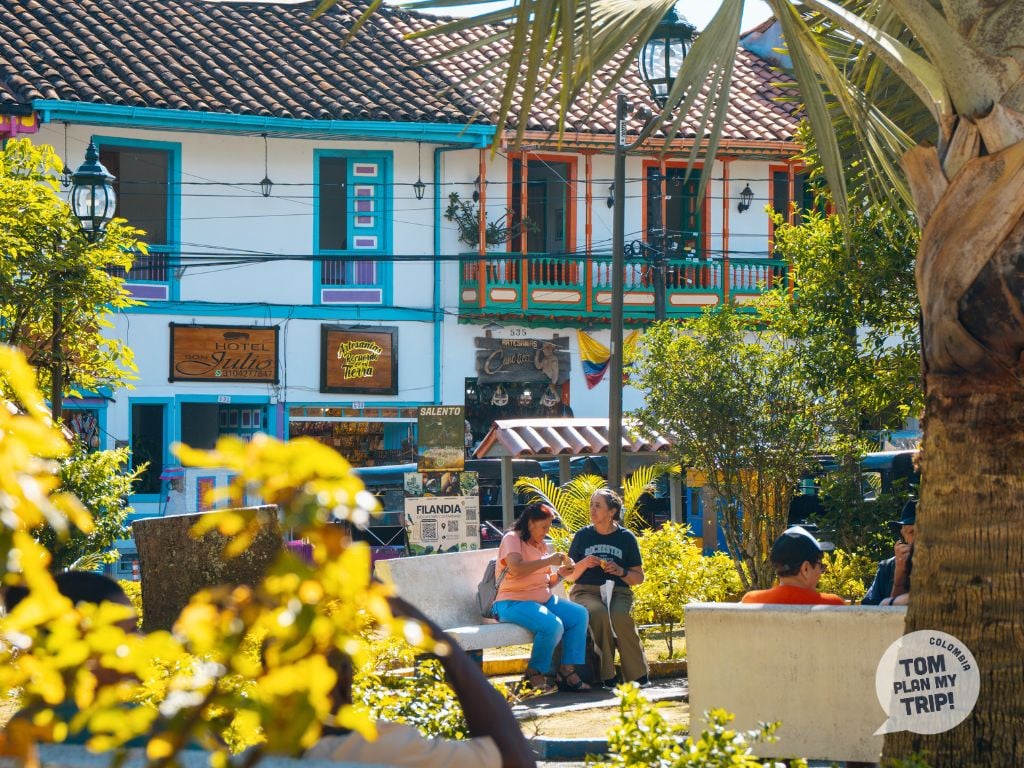
Filandia is the dream alternative to Salento for immersing yourself in local life during the week: quieter, more charming, and just as typical.
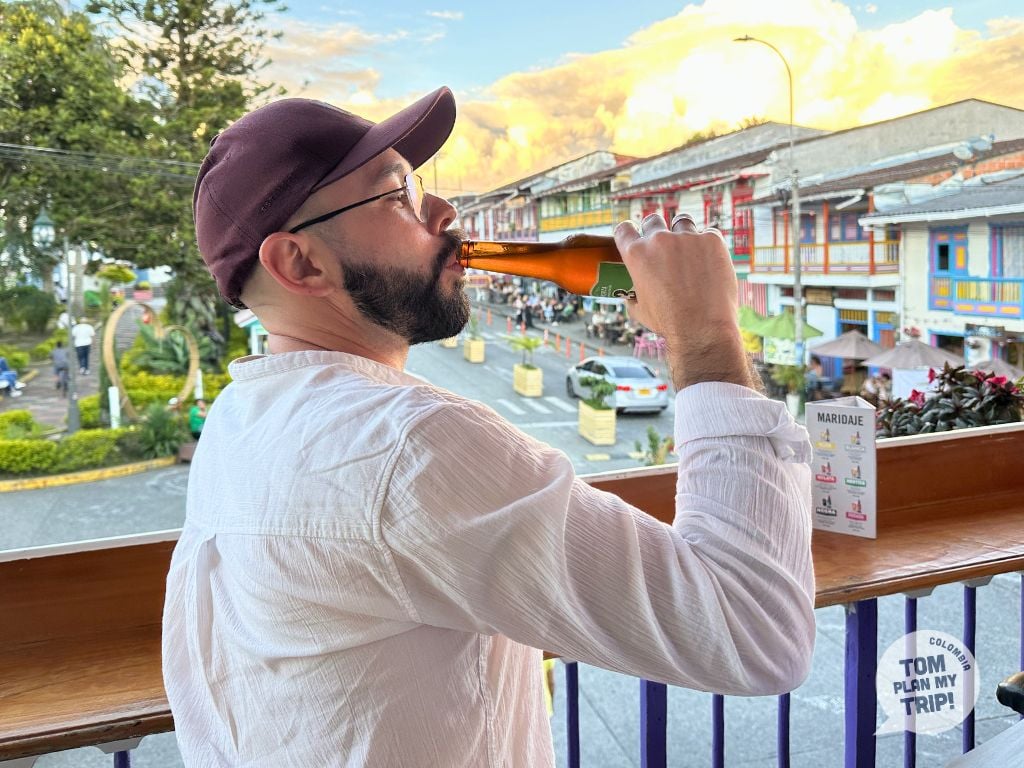
Its bicentennial colonial houses, with vivid colors and carved wooden balconies, and its cafés and restaurants, beautifully decorated, are concentrated along about ten streets where you will meet warm locals, wearing the traditional hat.
The small village lives at the pace of coffee culture and local craftsmanship. It comes alive mainly on weekends with Colombian visitors, then returns to its tranquility during the week.
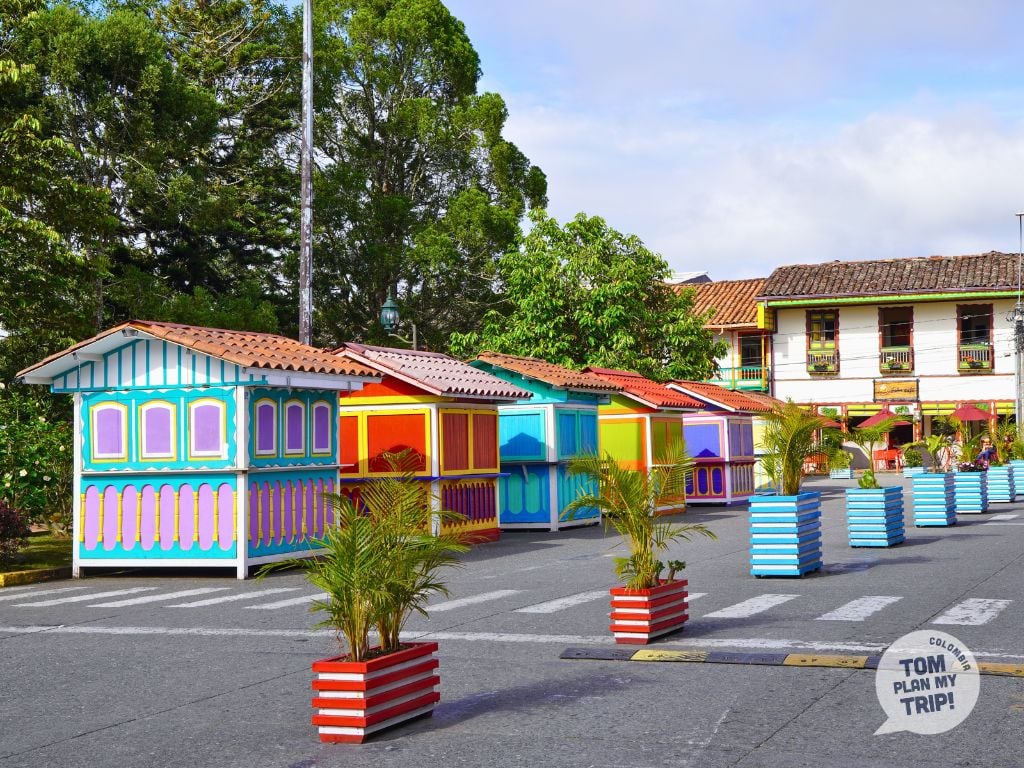
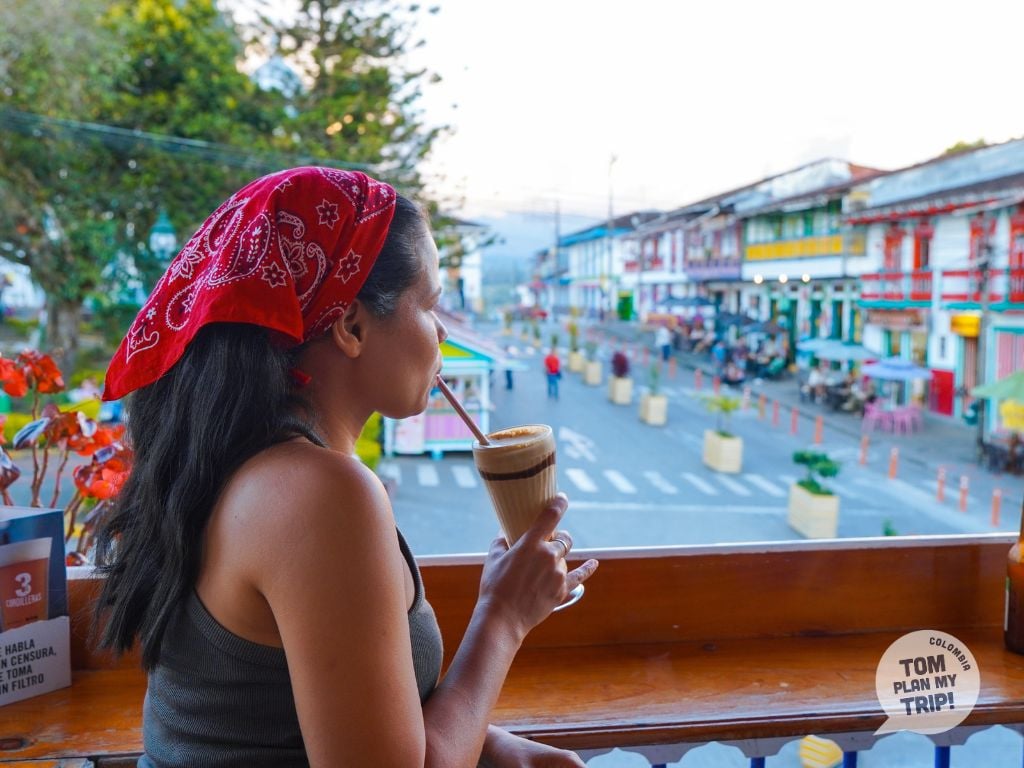
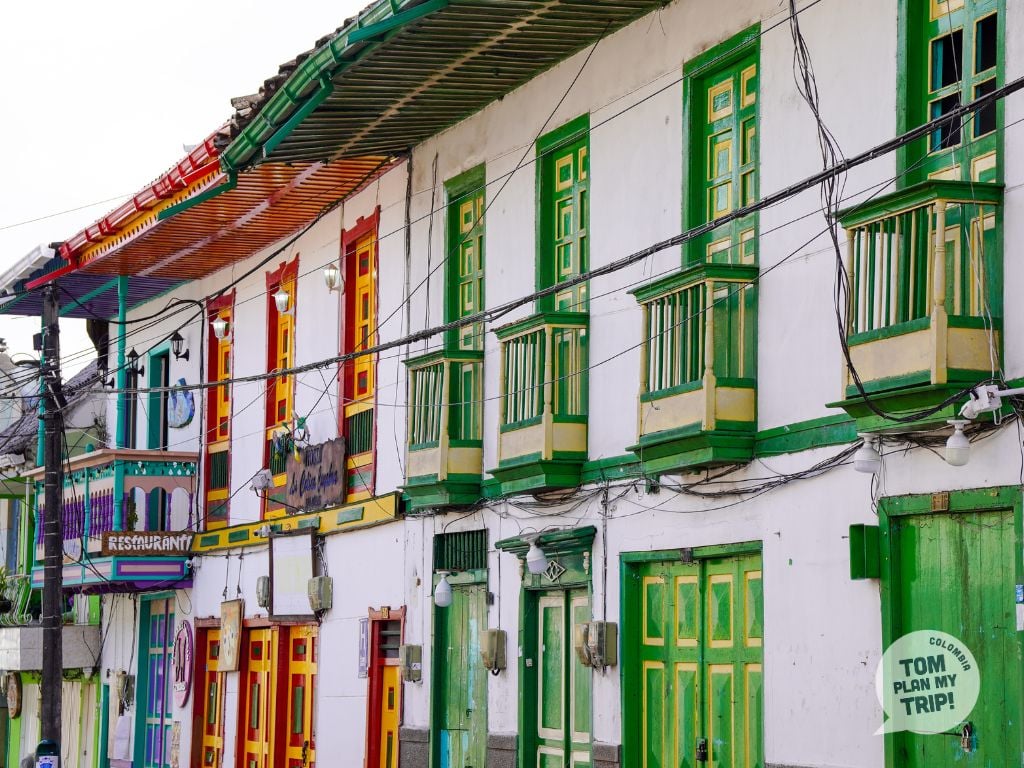
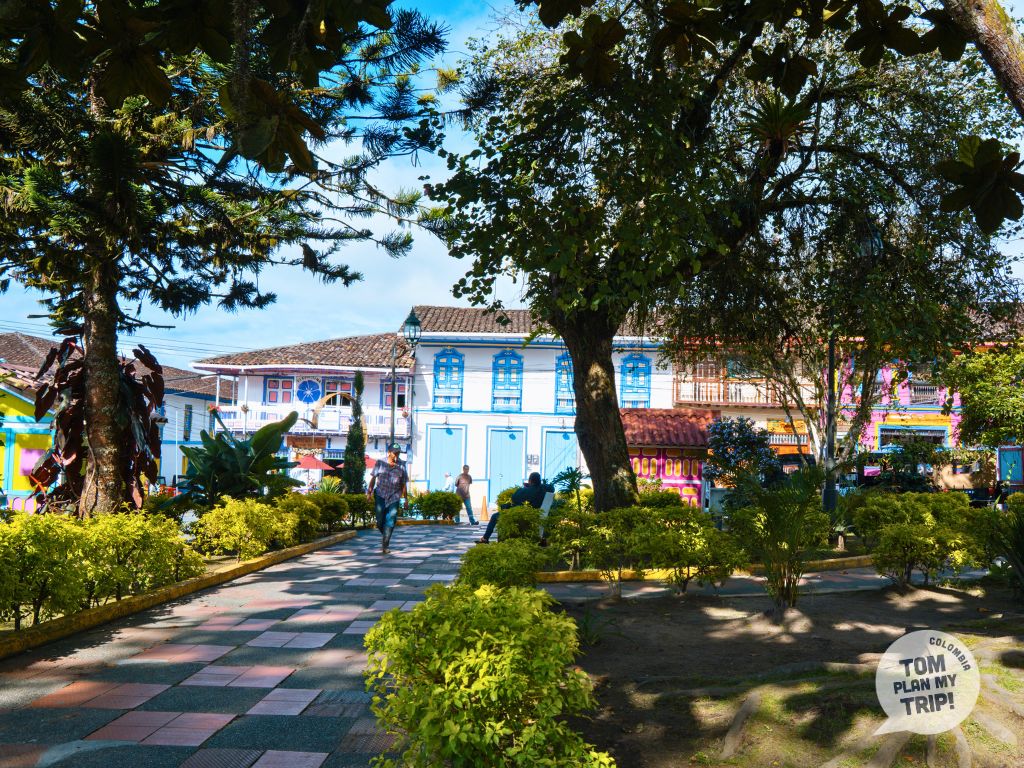
Stroll through the streets of the village and its main square, admire its architecture, and don’t forget to take one or more gourmet breaks in one of the many good cafés and restaurants.
Visit a basketry workshop in a museum dedicated to this craft.
Climb to the Mirador Colina Iluminada (1 km from the village) for a lovely walk, discover the surroundings by bike, and visit a coffee finca that has preserved its authenticity.
Early in the morning, explore the Barbas Bremen reserve (15 min by jeep) to watch for howler monkeys.
You can also head to the Cocora Valley—there are Willys jeeps that make the Filandia <> Salento trip (reserve your ticket the day before), then from Salento, you can take another jeep to Valle de Cocora.
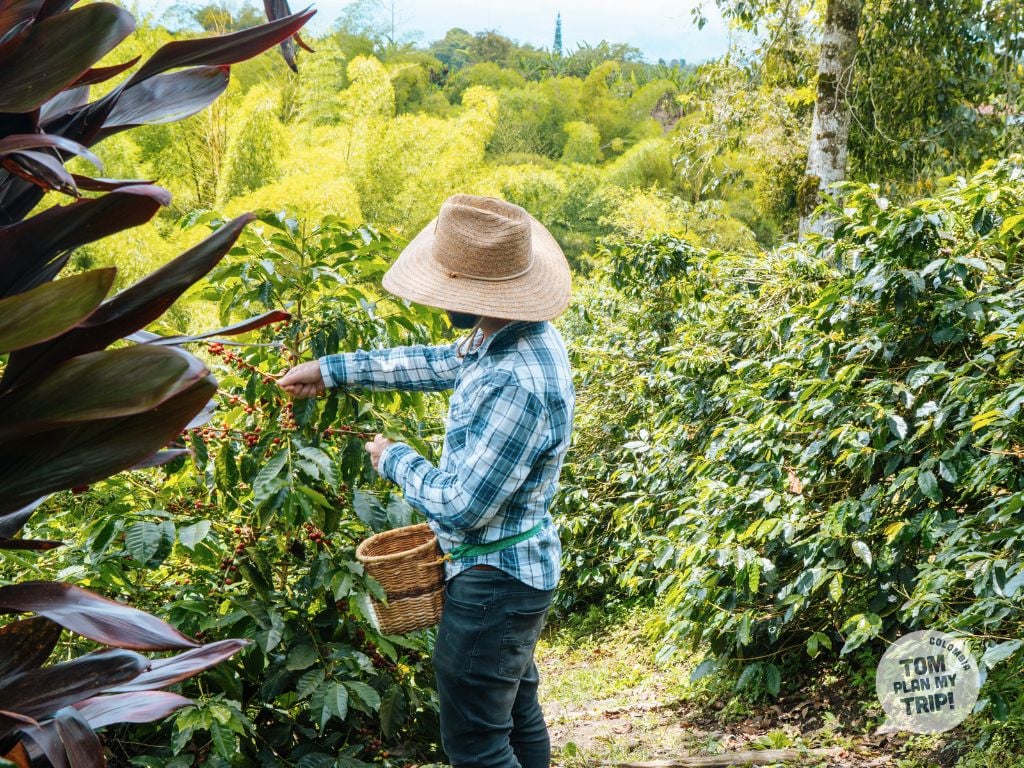
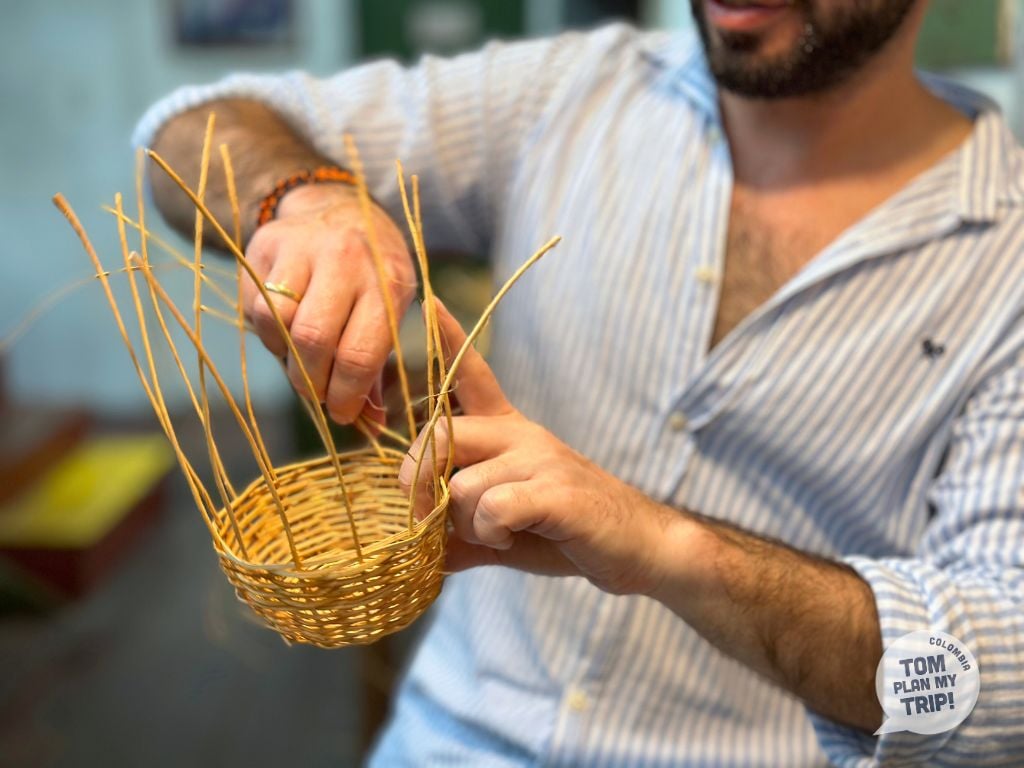
One day is enough to discover Filandia: the Barbas Bremen reserve, then the village and a basketry workshop.
2 nights if you want to fully enjoy the atmosphere.
3 nights if you choose Filandia instead of Salento as a base camp.
© Tomplanmytrip
PUERTO NARIÑO
Between river and jungle, in the heart of the Amazon.
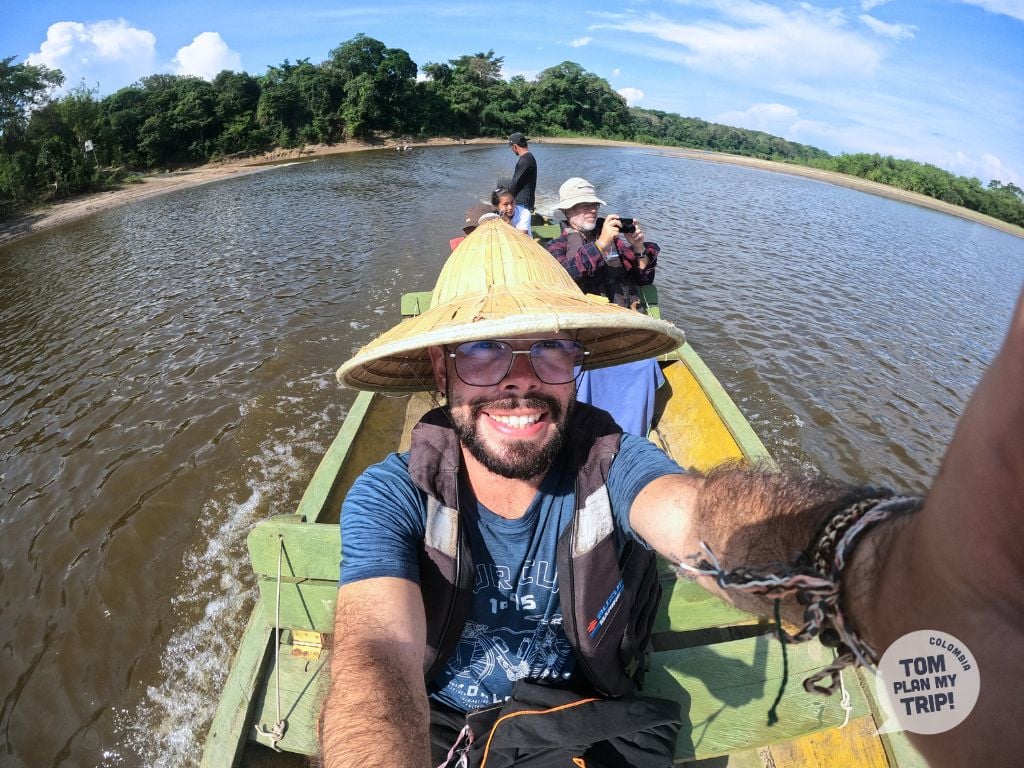
Puerto Nariño is located in the far south of Colombia, in the department of Amazonas, at the border with Peru.
Surrounded by jungle and on the banks of the Río Loretoyacu, a tributary of the Amazon, the village is only accessible by boat from Leticia, about 80 km downstream.
The climate is hot and humid all year-round, with an average temperature of 26 °C.

In Puerto Nariño, no motorized vehicles circulate: people get around on foot or by bicycle on its wide streets, paved in pink and laid out in a grid — it’s easy to find your way around.
The atmosphere is peaceful and authentic, far from the hustle and bustle of Leticia. The large, slightly naive statues standing at street corners and the colorful graffiti adorning the houses illustrate local Amazonian legends.
The inhabitants are warm and welcoming.
The Internet is fickle; there is no public lighting, and night falls quickly.


Stroll through the streets and note the statues and graffiti before climbing to the Mirador Naipata for a breathtaking view of the village, the jungle, and the river.
Take a break for handmade ice cream with local fruits flavors.
Visit the Fundación Natütama, a beautiful evocation of life on the Amazon River between traditions and the water cycle that rhythms the region’s life.
Take a boat to Lake Tarapoto (30 minutes from the village) and watch the pink dolphins (high waters). In the late afternoon, you can practice fishing for piranha.
Meet an indigenous community for an immersive experience.
More adventurous travelers may be tempted by a hike in the jungle to admire the legendary ceibas, watch for monkeys and sloths, or even spend a night in the middle of the forest.


One night is enough to visit the village, the foundation, and Lake Tarapoto.
If you make Puerto Nariño your Amazon exploration base, with hiking, jungle camping, and meeting a community, plan for 3-4 nights.

© Tomplanmytrip
The Most Beautiful Small Towns in Colombia
Now that I’ve introduced you to these beautiful small towns in Colombia, here are some recommendations to help you choose among those that appeal to you and to capture their atmosphere as best as possible.
Whether it’s deciding the right time to visit Salento or Guatapé, finding an alternative to Palomino, or simply adopting the right pace to soak up the atmosphere of Jardín or Mompox.
TOM’S ADVICE
Take a look at our article on the geography of Colombia to discover the country’s natural wonders and our Inspiration page to get an idea of its extraordinary diversity.
To complete this overview of the small towns, read our article on the major Colombian cities and feel free to contact us to organize your adventure.

My Tips for Enjoying These Small Towns in Colombia
Choose the right small town and savor the moment.
SMALL TOWNS IN COLOMBIA for a Beach Getaway


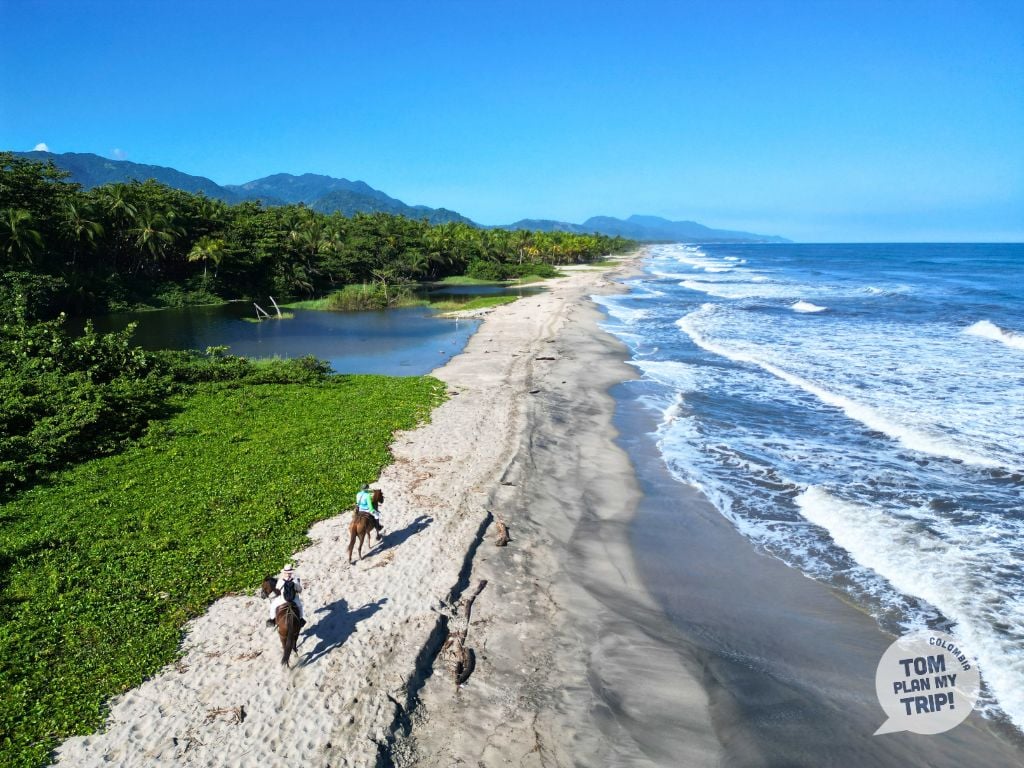
For a true beach vibe, opt for Rincón del Mar, Mendihuaca, or Sapzurro.
The first is charmed by its authenticity as a fishing village, with a mix of relaxation and coconut trees.
Mendihuaca, a haven of tranquility, is particularly appealing to surf enthusiasts – a friendly community and good spots still under the radar.
Sapzurro, isolated at the Panama border, without cars or hustle, lends itself to disconnecting with its secret beaches and clear waters.
I’m less of a fan of Capurganá, noisy and chaotic, and Palomino, with its festive, hippie vibe that won’t suit everyone and whose beach is not ideal for swimming.
The SMALL TOWNS IN Colombia for good eating
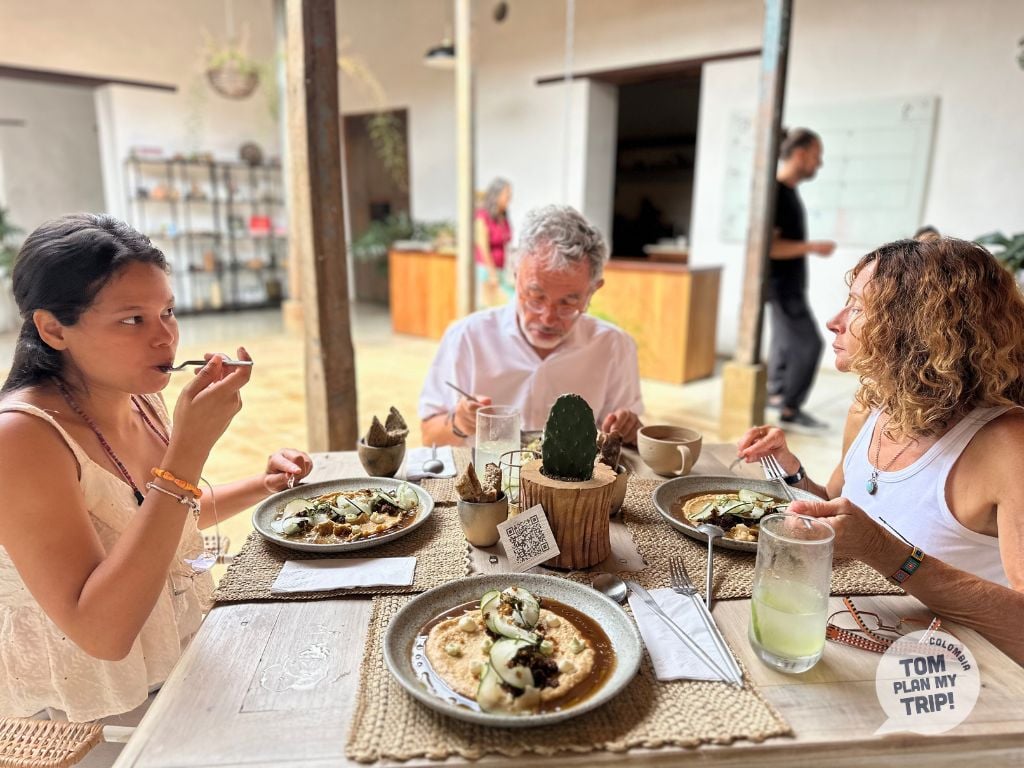
Some small towns in Colombia cultivate the art of dining.
Jardín offers authentic paisa cuisine — traditional arepas and freshly caught trout — as well as artisanal coffees to enjoy in the main square.
In Rincón del Mar, you’ll enjoy simple and generous seafood cuisine – fresh fish, homemade ceviches, and freshly pressed tropical fruit juices.
Barichara wonderfully combines traditional gastronomy with a creative and tasty reinterpretation of classic santandereanos.
Finally, Villa de Leyva is full of gourmet spots where authentic Boyacense cuisine and more audacious tables blend together.
The most picturesque SMALL TOWNS in Colombia


In my opinion, four small towns in Colombia stand out for their architectural charm inherited from the colonial era.
In all its elegance, Barichara, perched on the slopes of a spectacular canyon, enchants with the harmony of its ochre tones and the immaculate white of its facades.
From Jericó, surrounded by mountains, with its colorful facades, carved woodwork, and lively square, emanates the warm spirit of Antioquia‘s culture.
The discreet village of Concepción retains the same colonial heritage in a rural bucolic setting, between green hills and pastures.
Villa de Leyva, with its gigantic cobblestone square and white houses with wooden shutters, embodies one of the best-preserved colonial ensembles.
The small towns in Colombia with the most authentic atmosphere
If you want to feel the true local life, four small towns stand out.
Jericó keeps its campesino traditions alive, with its handicraft workshops, horses tied in front of cafes, and its lively life around the main square.
This authenticity is even more noticeable in Concepción with peasants on horseback in the cobblestone streets and mules loaded with sugar cane to supply the panela mills.
Salamina cultivates a more intellectual heritage, with its literary meetings perpetuated in the cafes of the historic center.
Jardín, finally, combines paisa authenticity — cowboys in the square, card games in the evening — with a surrounding nature that is sumptuous.
The SMALL TOWNS IN Colombia where it is easy to meet locals

If you love interacting with locals, three small towns in Colombia are particularly well-suited for meeting people, either with a guide or by participating in a workshop.
The history of Mompox, told by a local guide, is fascinating, and learning about goldsmithing from a craftsman is a great opportunity to understand its grandeur and decline.
In Barichara, several artisan workshops — ceramics, basketry, stonework, paper — offer the chance to interact directly with the locals.
In Salamina, the covered market and the fique and wool workshop offer an equally friendly immersion into local daily life.
The SMALL TOWNS IN Colombia for nature outings
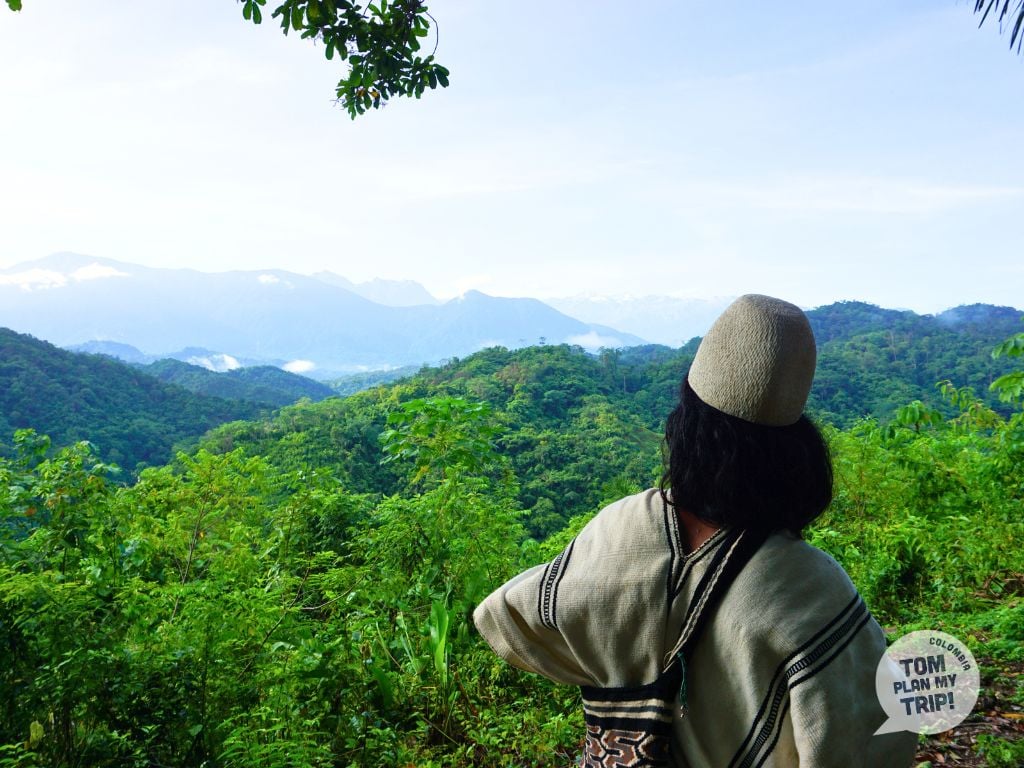
Three small towns in Colombia offer easy access to spectacular nature.
From Puerto Nariño, you can easily enter the Amazon jungle, just steps from the village, watch for monkeys, and navigate the river to Lake Tarapoto.
Jardín, surrounded by greenery, offers hiking trails of varying difficulty to discover waterfalls and observe birds. You can also go horseback riding.
Minca, nestled in the Sierra Nevada, allows you to reach waterfalls, natural pools, and viewpoints on foot, without a guide. It is also the perfect setting for bird enthusiasts.
The tourist SMALL TOWNS for which I prefer to find alternatives

Some small towns in Colombia, due to their success, have lost a bit of their soul.
In the coffee region, you will find in Filandia the same colonial charm as Salento, in a more authentic atmosphere. Or even better, the small village of Pijao.
In the very photogenic village of Guatapé, whose atmosphere is often crowded, even over-frequented, I prefer the serenity of Barichara, with its stunning monochrome aesthetic and much richer to explore.
For nature lovers, Jardín, surrounded by greenery and hikes for all levels, has nothing to envy from Minca.
For a beach getaway, Mendihuaca, more authentic than Palomino, or, for even more privacy, Rincón del Mar and Sapzurro, are beautiful alternatives.
small towns in colombia to avoid in peak season
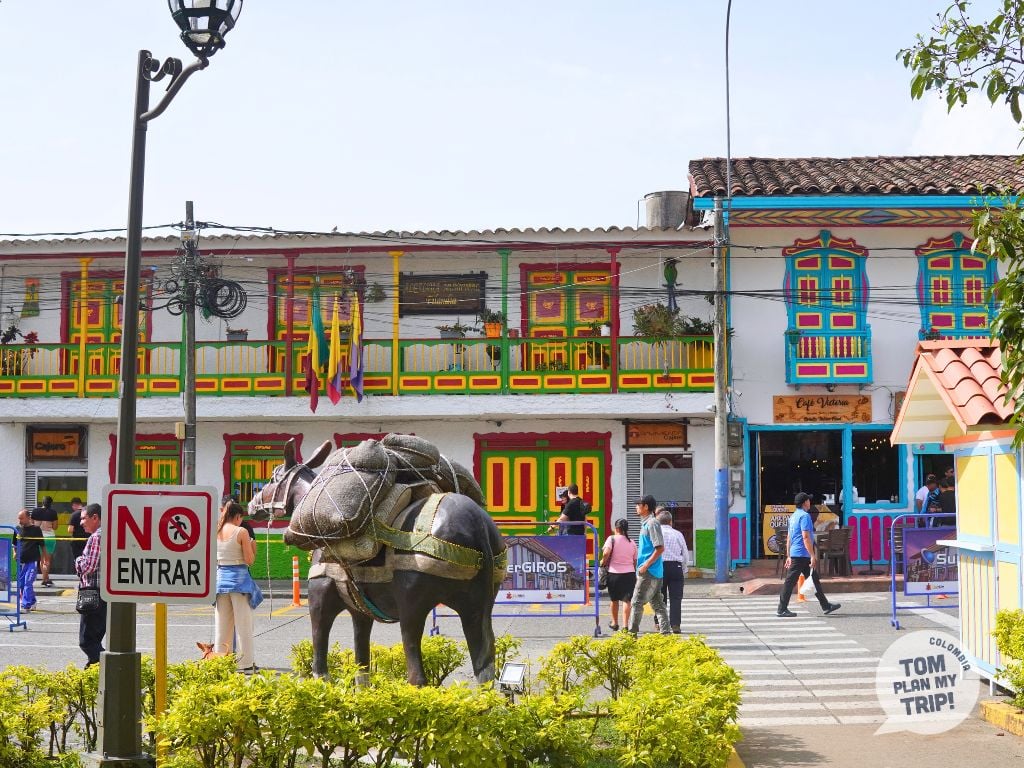
Salento, Minca, Guatapé, Santa Fe de Antioquia, Jardín, Filandia, or Villa de Leyva are among the most visited small towns in Colombia; it’s best to avoid them in peak season — between December 20 and January 15 — as well as during Semana Santa.
Just like long weekends, with a public holiday on Monday, which are very popular among Colombians.
On Sundays, local attendance also increases, but the atmosphere remains pleasant, though livelier.
The small towns in Colombia are best enjoyed without rushing
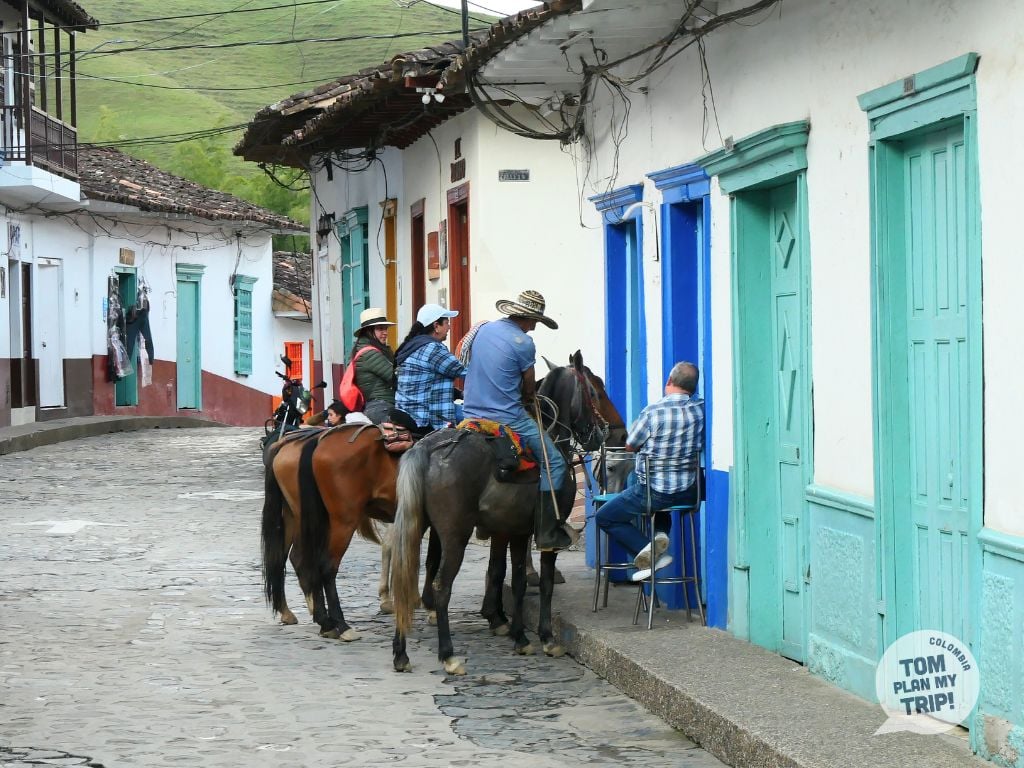
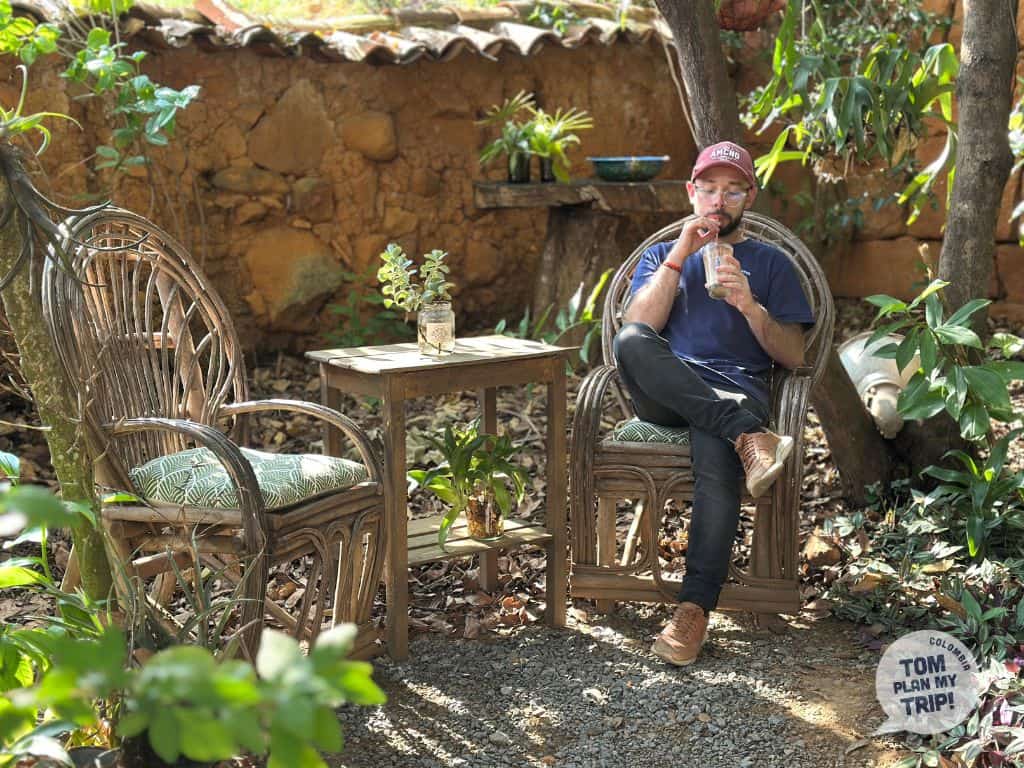
The best way to experience these small towns in Colombia is to take your time: sit on a terrace in the main square with a coffee, observe the local life, and stroll through the craft shops. This slowness gives the experience its charm.
In my opinion, a day trip is rarely the best option to fully enjoy it — except for Santa Fe de Antioquia, Guatapé, or Salento, which are well-suited for a day trip from Medellín, Pereira, or Armenia. Personally, without local life, I don’t see much interest in staying overnight.
The reassuring atmosphere of small towns in colombia
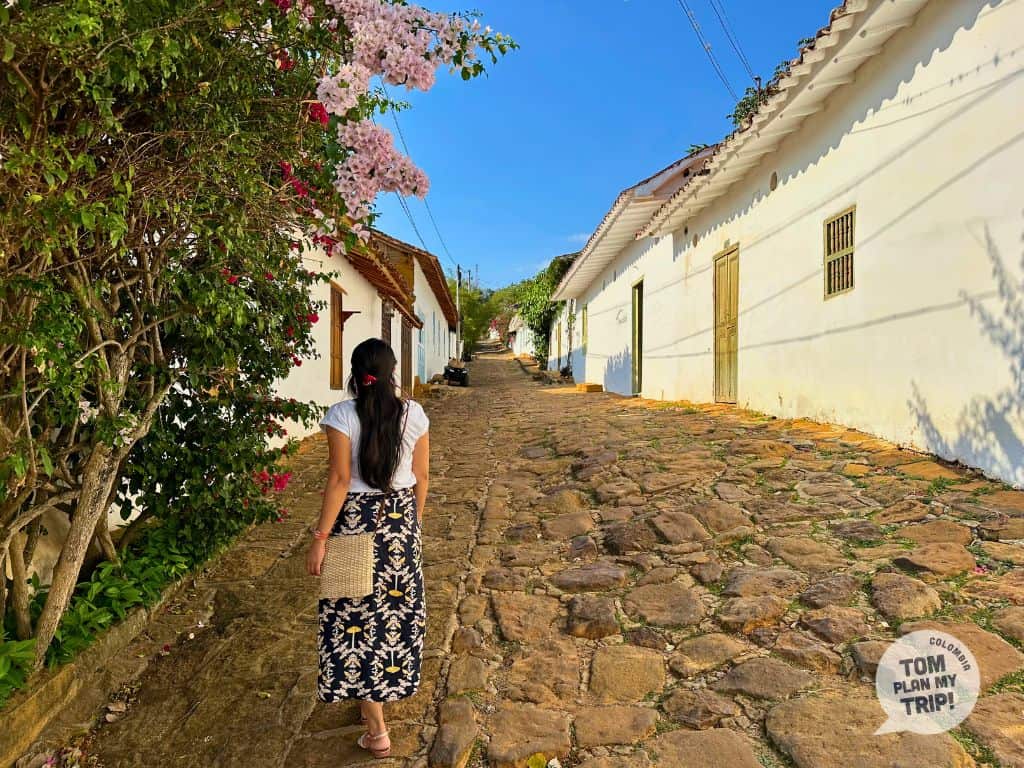
In these small towns in Colombia, you will generally feel more secure than in the big cities.
This doesn’t mean you can let go of all caution — the rule of “no dar papaya” still applies — but you can move around more freely on foot, day and night.
A few exceptions require more vigilance: Lorica, the areas around Mompox and Honda.
Cash is king in some small towns in Colombia

In some Colombian small towns, you won’t find an ATM.
This is the case in Palomino, Mendihuaca, Minca, Puerto Nariño, Rincón del Mar, Capurganá, and Sapzurro.
Make sure to withdraw enough cash before going there. Also, know that on-site, payments by credit card are not always possible.
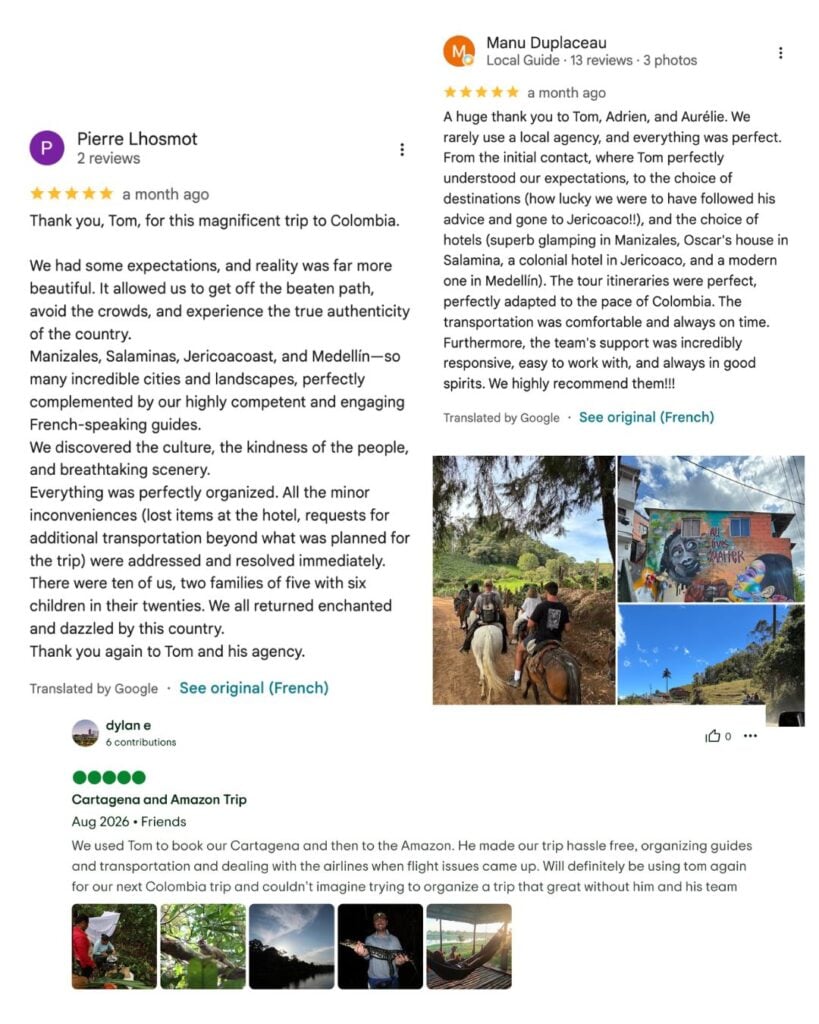
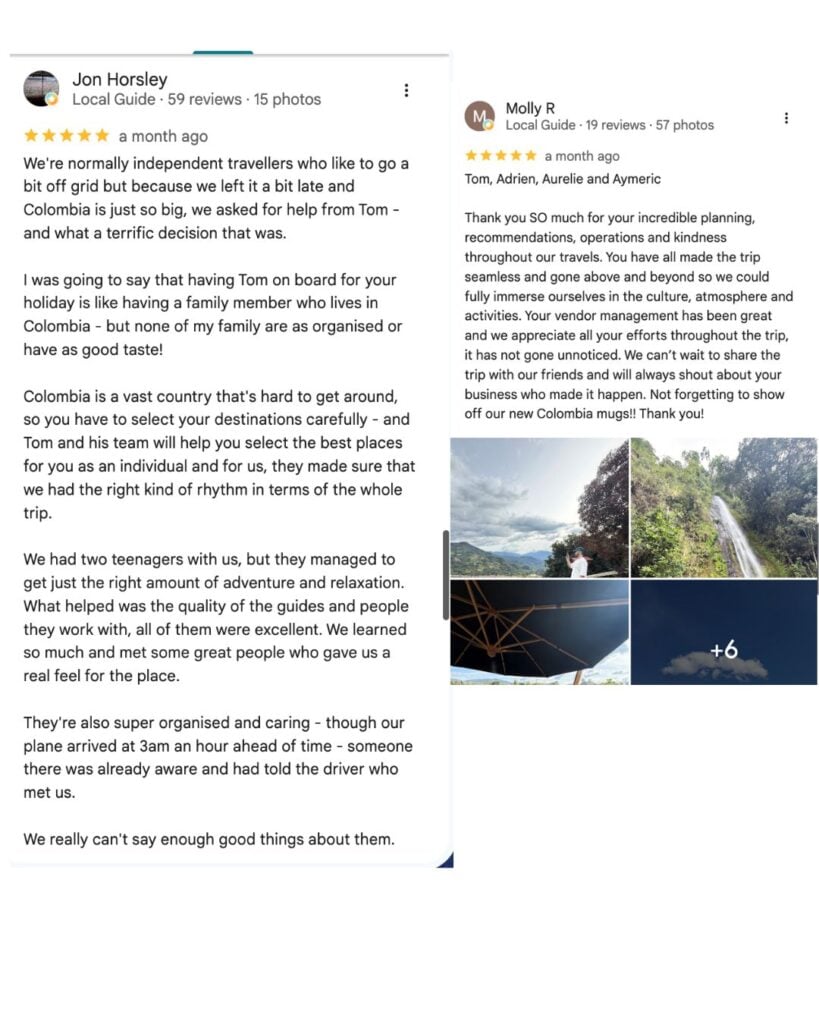
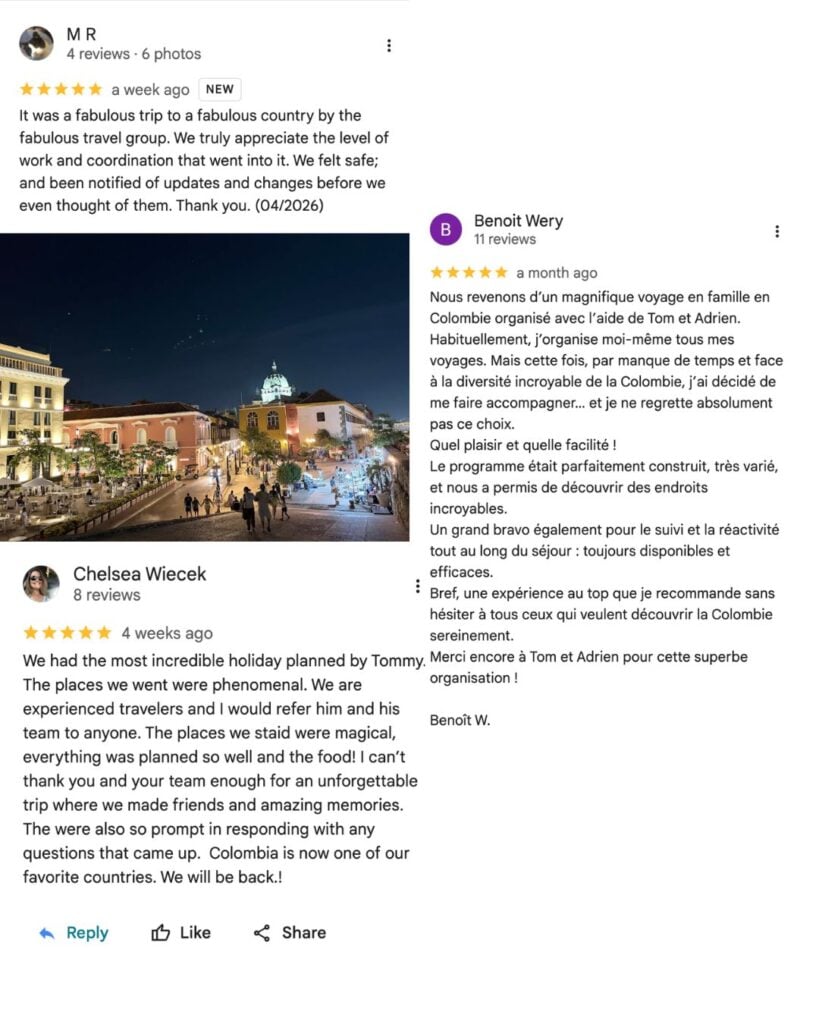
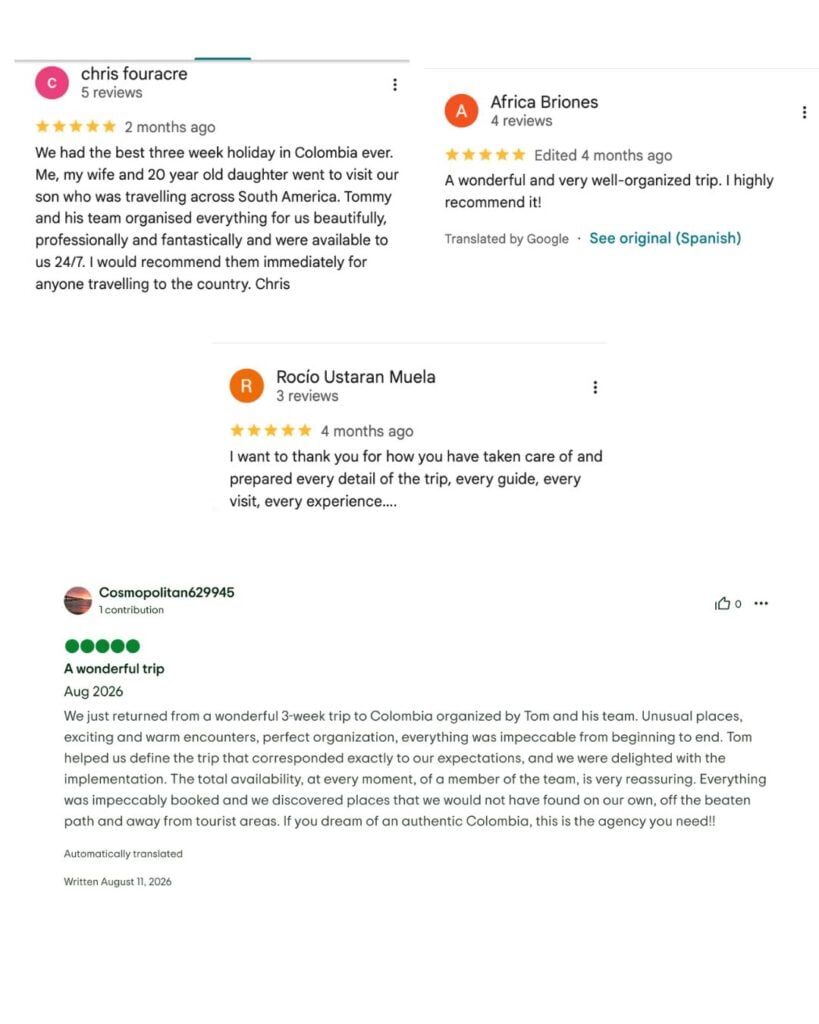
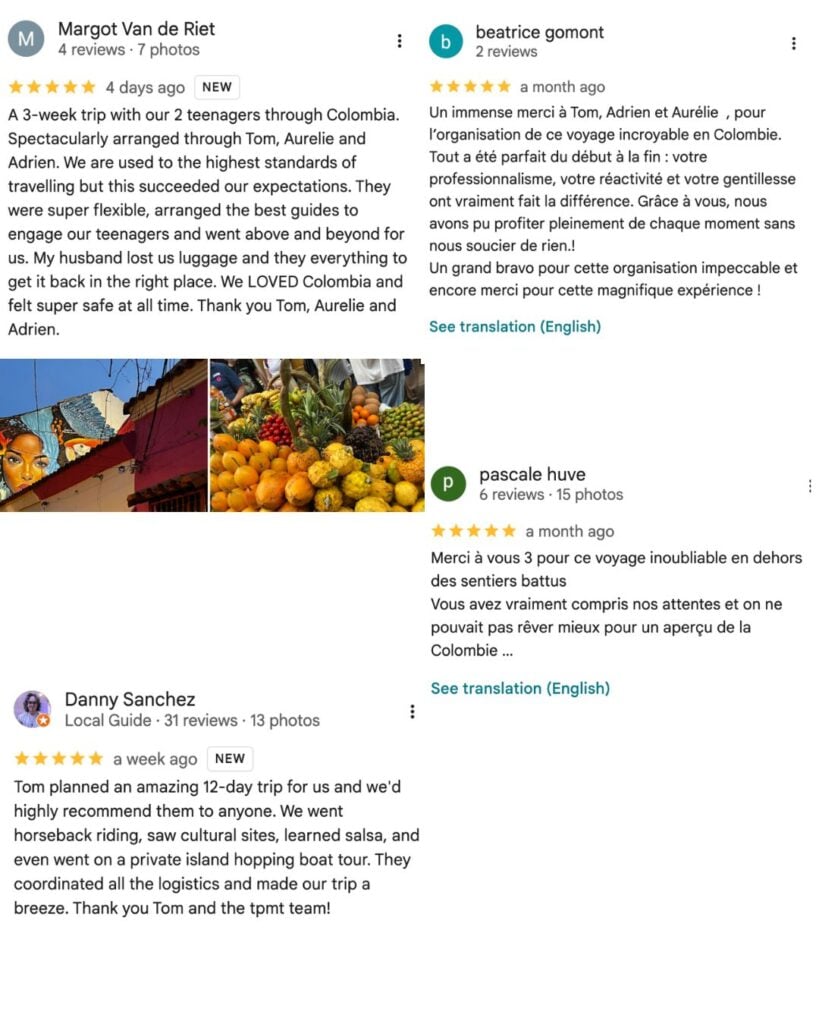
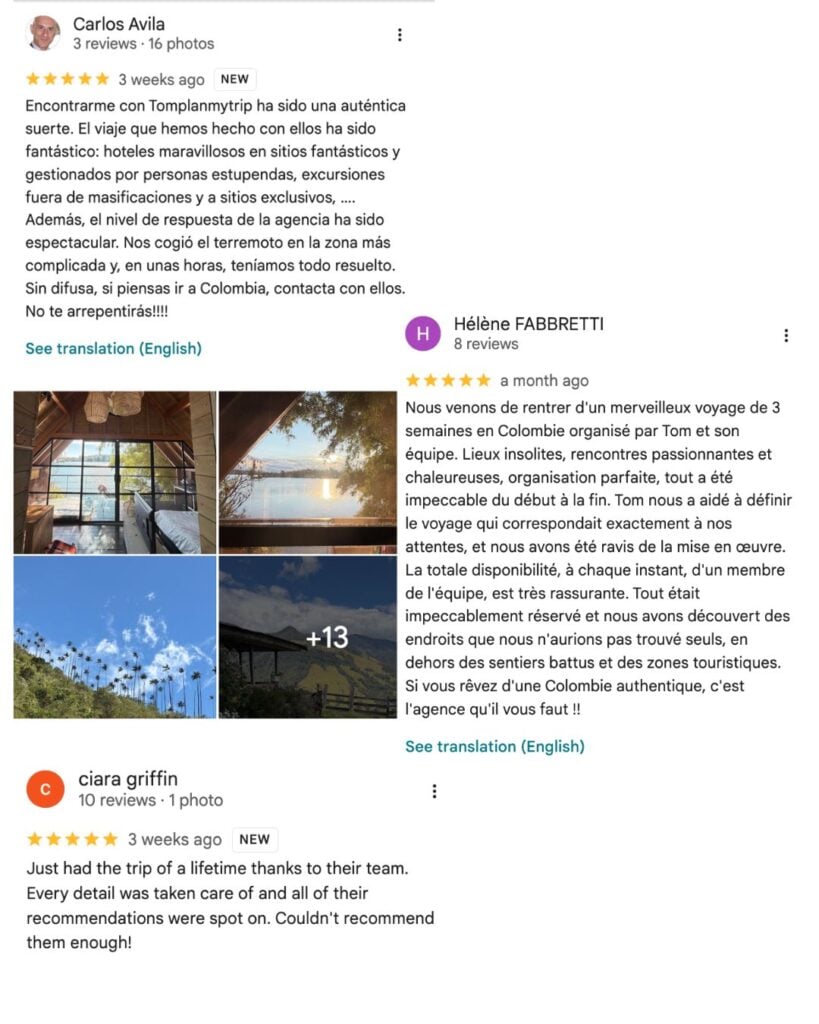
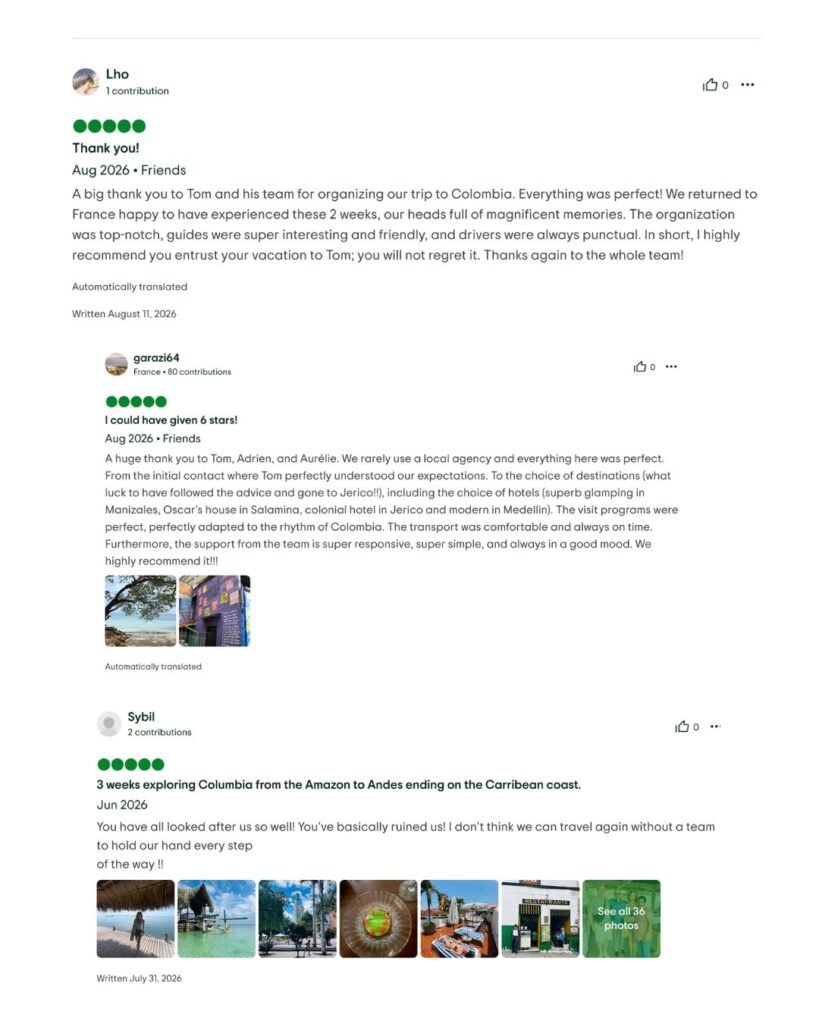
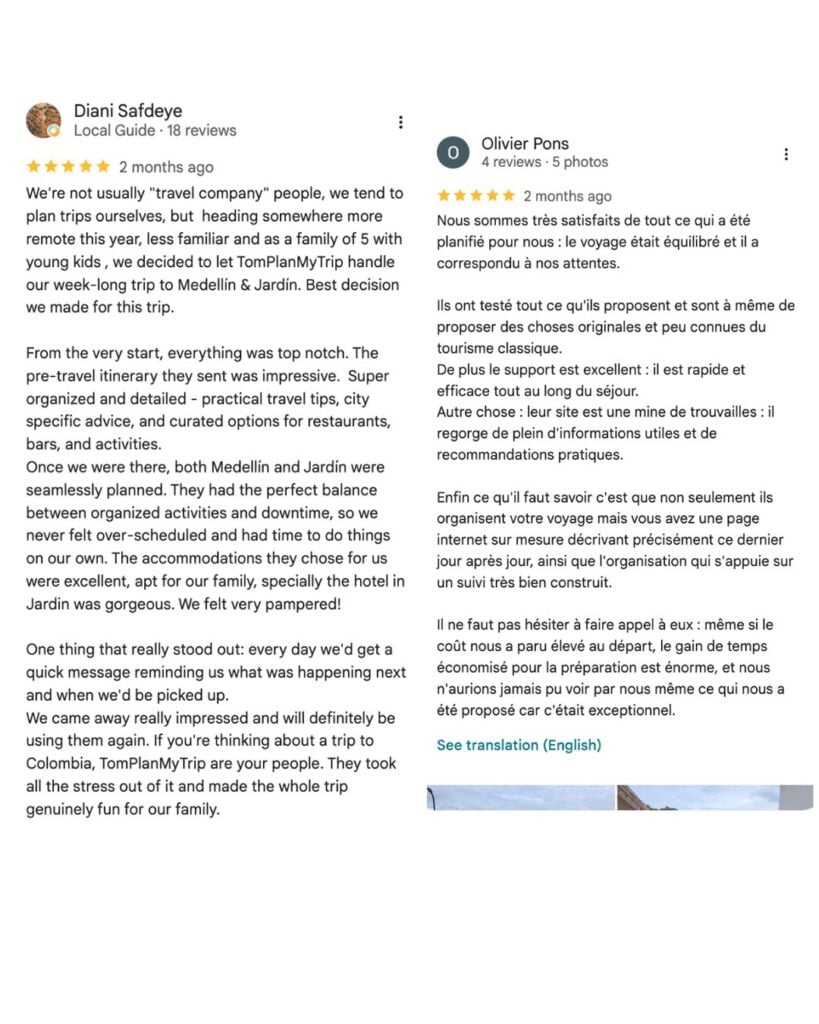
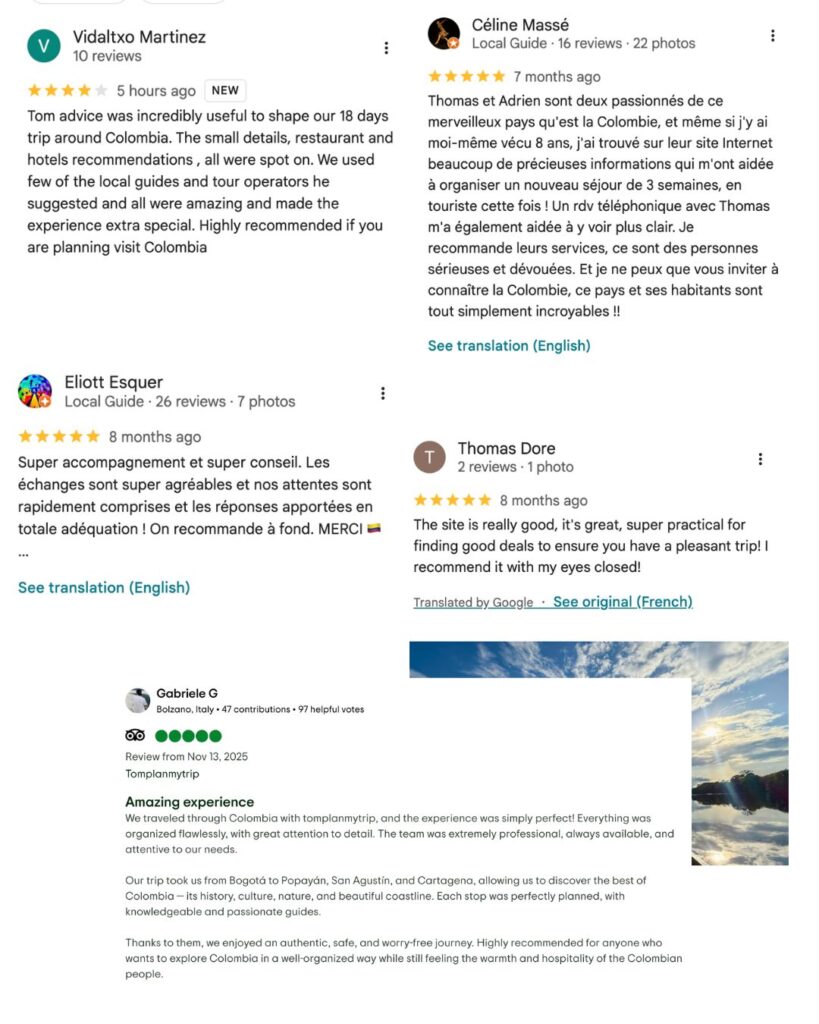
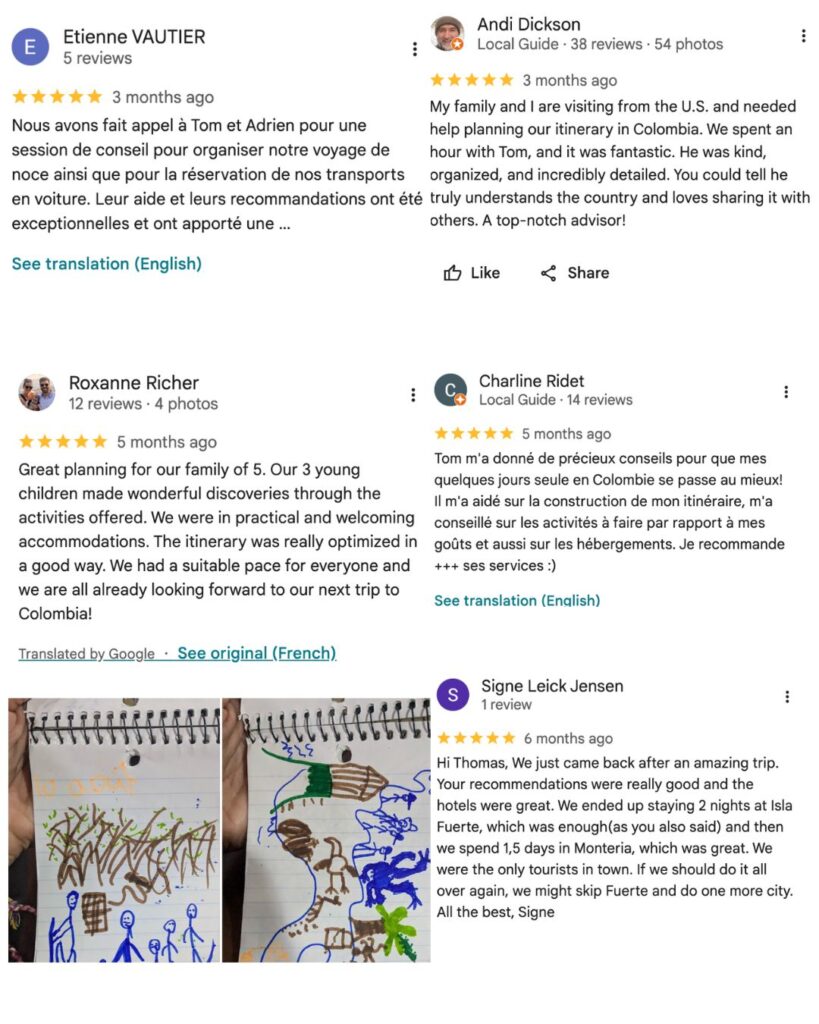
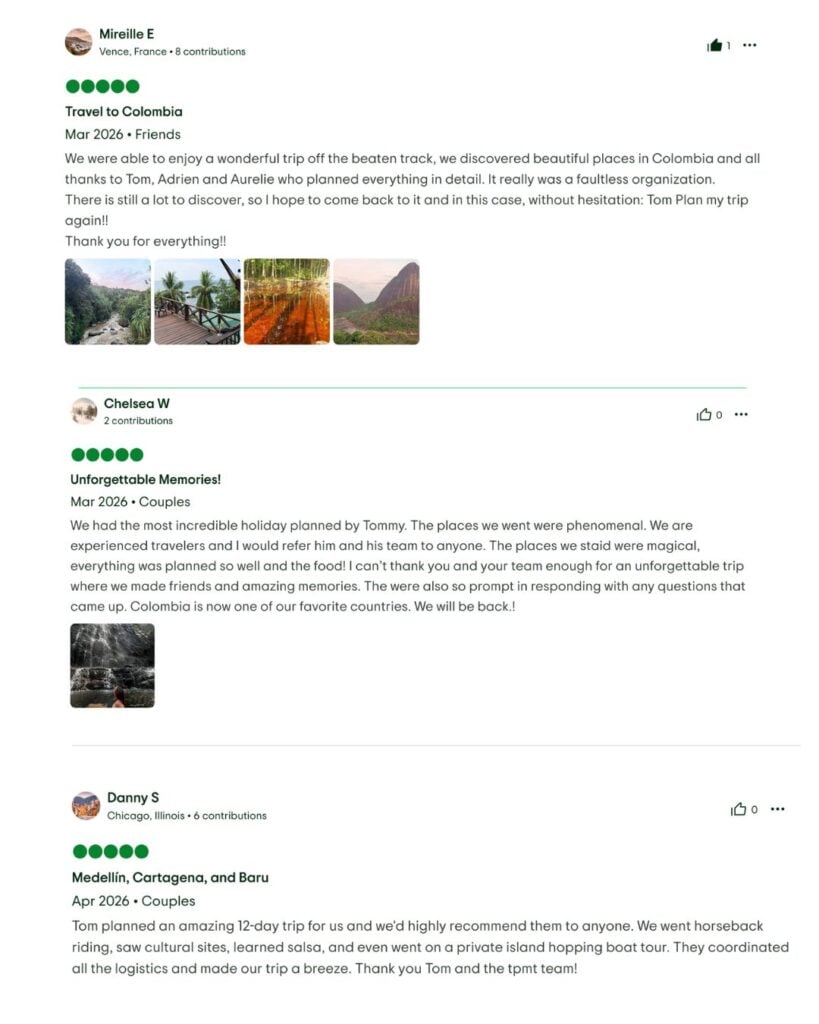
+185 five-star reviews on Google Maps


The solution for a successful Colombia trip
“Usually, I don’t go through a travel agency. But for Colombia, I needed help — and this agency transformed my experience in this country.”
That’s the kind of comment you’ll find most often in our reviews (we’ll let you read them 😉).
Let’s explore together for a quality, one-of-a-kind trip that lets you truly connect with the country:
- Undiscovered Colombia — adventures off the beaten path
- Easy Colombia — stress-free, fully comfortable
- Premium Colombia — high-end that stays authentic
What type of trip suits you?
Every trip is unique, but you might see yourself in one of these themes.
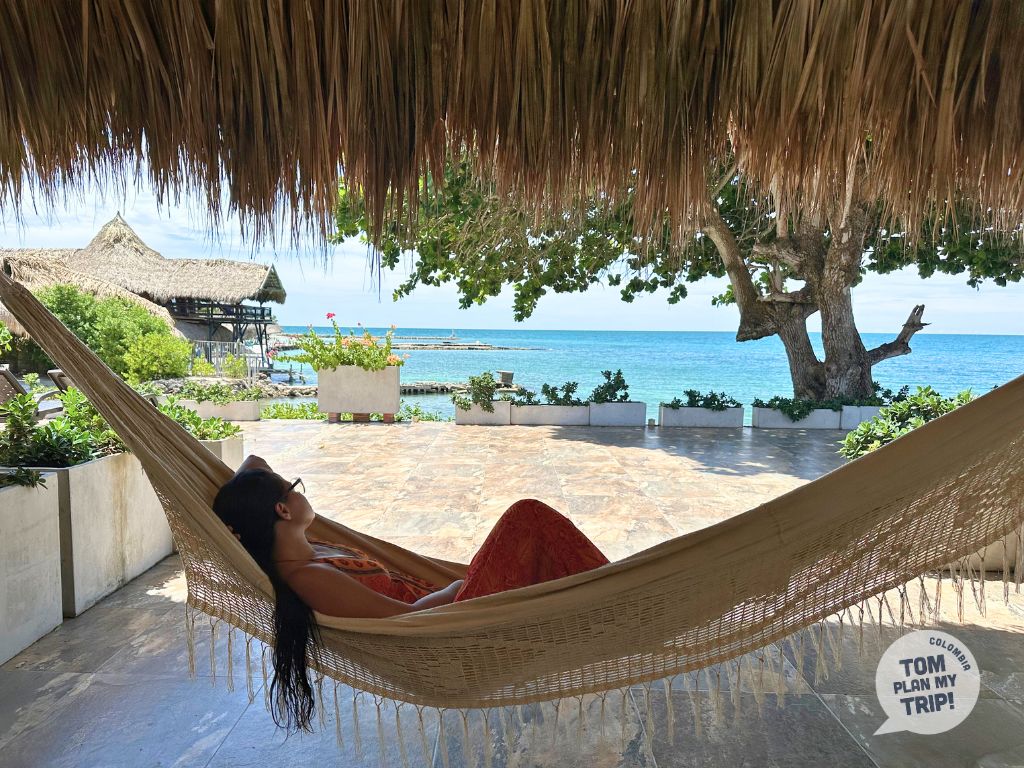
EASY
Colombia stress-free, comfortable and at your own pace — Say goodbye to vacations that leave you drained. We design a trip where every day is a pleasure, balancing exploration and relaxation.
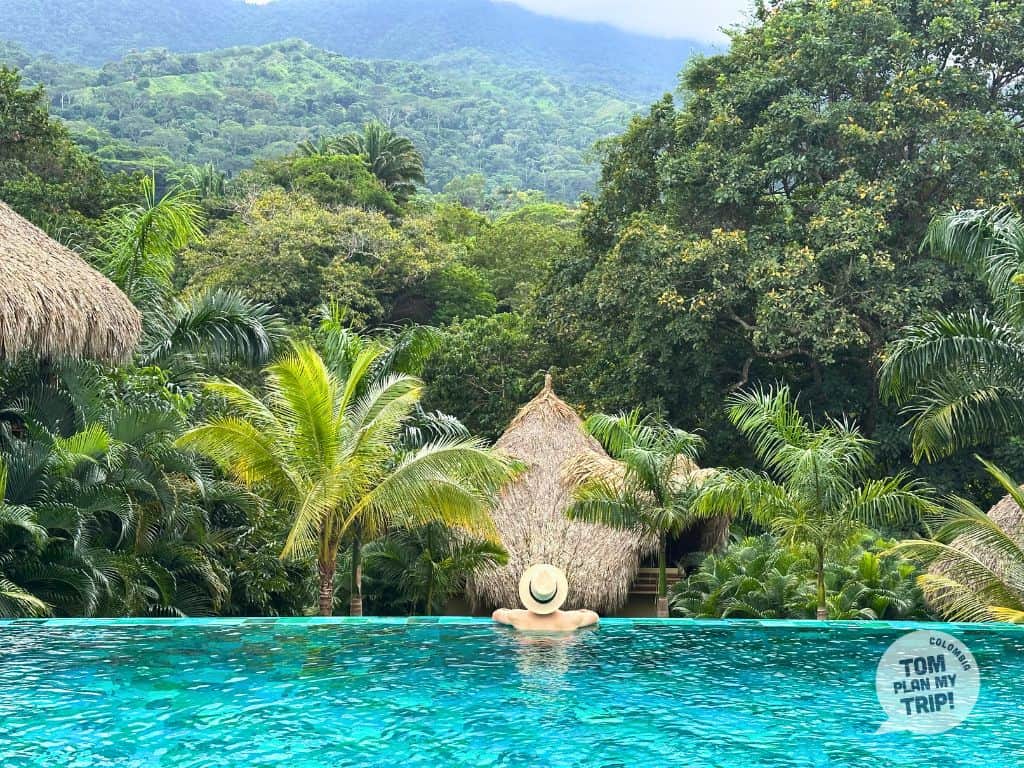
PREMIUM
Premium journeys through the heart of Colombia — Comfort, character, authenticity. You shouldn’t have to choose between a luxury experience and a genuine connection with the country. We give you both.
HIDDEN
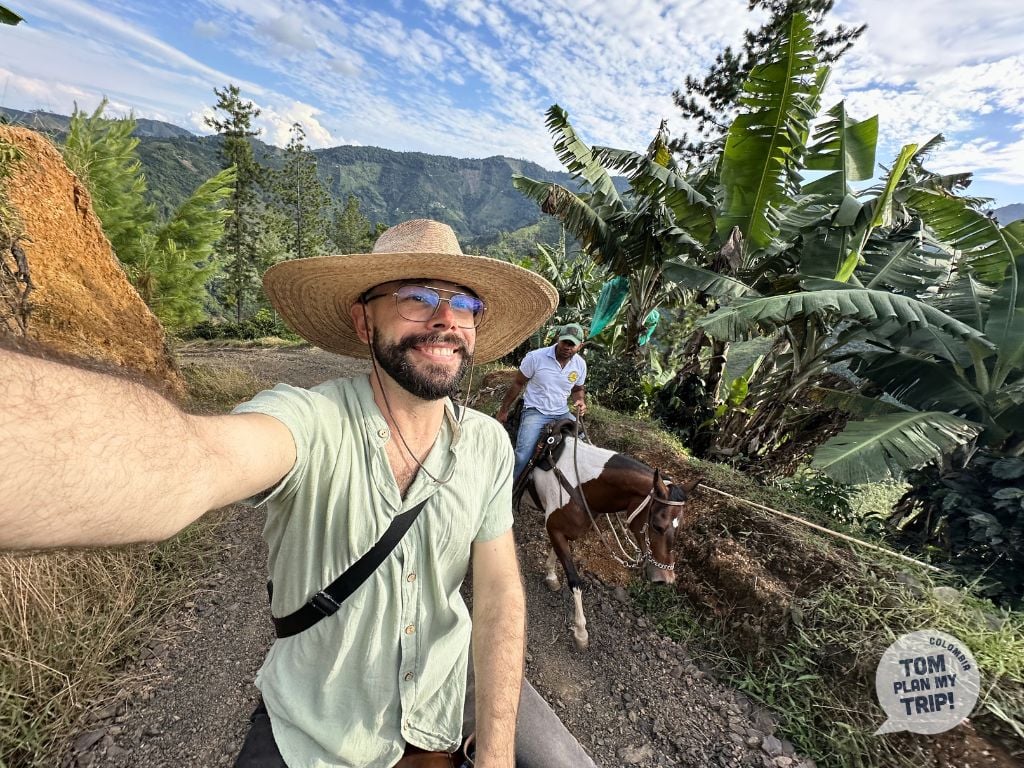
The Colombia beyond the tourist trail — We don’t take you on a tour of Colombia. We immerse you in it, sharing unforgettable moments with your loved ones in stunning places you’d never have discovered on your own.
Learn moreWhat our clients say
Learn more about Colombia
Select a Region of Colombia


Western Caribbean Coast
Colombian Destinations Listed Alphabetically
Places from A to I
Places from J to P
Places from R to Z
- Rincon del Mar
- Riohacha
- Rosario islands
- Salento
- San Agustin
- San Bernardo Islands
- San José del Guaviare
- Santa Marta
- South of Colombia
- Tatacoa
- Tayrona National Park
- Termales
- Villa de Leyva
- Yopal
Follow us on Instagram!


Our secret to actually enjoying your Colombia vacation
Colombia is twice the size of France. There’s no point trying to see it all in 15 days. Our trips distill 11 years of boots-on-the-ground exploration into the essentials: the very best of the country, without the stress of racing around.
