
Whale Watching in Colombia: My Favorite Spots and Lodges

Editor
Updated on
Do you dream of seeing whales in Colombia and have heard that the waters of the Colombian Pacific coast are a magical place to meet these fascinating giants of the sea? True!
After several excursions in this remote region, I have gathered all the essential information for whale watching in Colombia. Discover my favorite spots, the best times to go, and incredible ecolodges to plan a true adventure.

We constantly explore Colombia to find what’s truly worth it — authentic places, stays and experiences, far from tourist traps. Then we build your ideal trip in a logical and optimized way, so you make the most of it, without rushing everywhere, truly connected to the country.
→ About us | ⭐⭐⭐⭐⭐ + 185 reviews | → Our service

- In Colombia since 2015
- + 1025 tested experiences
- + de 145 local partners
- + 335 trips created




Whale Watching in Colombia: The Guide
Discover the best places and book with our local partners
GENERAL INFORMATION
Colombian Pacific, a whale’s paradise.
In Colombia, every year, around early July, the first whales arrive near Bahia Malaga on the Pacific coast (Valle del Cauca).
As the months go by, they become more and more numerous in the warm waters of the Colombian Pacific coast.
The best months to observe them are from late July to September with a peak in August during the breeding and birth period of the calves. The groups are then denser, making observation easier.
It is generally on the side of Bahia Solano (Chocó), that in early October we observe the last whales, many of which have begun their journey back to the southern seas.
The best times of the day to observe them are early in the morning and in the late afternoon when the sea is calmer, and the sun is less strong. In the middle of the day, the cetaceans are more discreet due to the heat and sea conditions, and the observation conditions are more uncomfortable on board the small boats (rolling and intense sun).

In Colombia, there are 5 strategic destinations to see whales.
Heading up the Colombian Pacific coast from south to north, the first favorite spot for whales is Isla Gorgona, an island lost off the coast. It is accessible from the village of Guapi (Cauca), south of Buenaventura and is part of the Isla Gorgona Natural Park.
Next is Bahia Malaga (Valle del Cauca) north of Buenaventura. Sightings take place within the Uramba Bahía Málaga Natural Park.
Continuing up the coast, Nuqui, in the Gulf of Tribuga (Chocó), is the most well-known destination on the Colombian Pacific coast for whale watching. The destinations south of Nuquí, like, Coquí, Guachalito, Termales, Arusí, or Punta Brava are wonderful destinations for this experience.
A little further north, El Valle and Bahia Solano (Chocó) are two other strategic places, which house the Utria National Park, a true marine sanctuary.

Every year, after gorging on the food that abounds in the cold waters of Antarctica and southern Chile, the whale population of the southern hemisphere undertakes a migration of more than 8000 kilometers in one go and without feeding, across the Pacific to move up near the equator.
It is there, in the protected bays with calm and warm waters of the Colombian Pacific coast, that they reproduce and give birth to the calves conceived the previous year, and who, not yet having enough fat, would not withstand being born in the cold waters of Antarctica.
They will return after a few months to the waters of the southern lands, once the young are more developed and capable of surviving the long journey back, thanks to the very rich maternal milk.

Around 7-8am you will leave with a guide in a small motorized boat to the areas frequented by cetaceans to watch for the spouts emitted by whales surfacing to breathe, indicating their presence.
When a group is spotted, the boat approaches slowly while maintaining the regulatory distance. Then it’s showtime 😉 Often a rounded back at the surface of the water, sometimes a tail fin rising before diving again, and with more luck, acrobatic jumps or a calf side by side with its mother.
During the outing, which lasts from 3 to 5 hours, the boat will explore several sites and you may encounter several groups.
Cetaceans are also sometimes visible from land and even from your lounge chair if your ecolodge offers a breathtaking view of the ocean, like this incredible ecolodge in Punta Brava.

Most ecolodges on the Colombian Pacific coast offer packages that include a trip to watch whales. In my opinion, this is the simplest and most recommended option. You are taken care of on-site and are in direct contact with your guide.
Some ecolodges have their own boat, but most rely on local fishermen they are accustomed to working with.
The probability of seeing whales is quite high during peak season, but it is never guaranteed 100%; remember that Mother Nature is in charge 😉 In case of a no-show and depending on the situation, the outing can be rescheduled.
You are also not immune to the whims of the very rainy weather on the Pacific coast. The rain makes observations less enjoyable and sometimes disappointing, you might be forced to postpone your outing.
I advise you to choose a stay package of at least 4 days if your budget and travel schedule allow it.

© Tomplanmytrip
Breathe, and let us take care of this beautiful adventure
Colombia is twice the size of France, with a diversity of landscapes that’ll make your head spin — and a real logistical puzzle, with roads winding through the Andes mountains.
What kind of adventure do you want to live? Is it really right for what you’re looking for? Is it safe? Is it too touristy?
Guessing and hoping you made the right call — sometimes that works. But not always.
And I won’t even get into the stressful surprises that force you to make some changes mid-trip.
Look, we’ve been doing this for years — and if you check our reviews, you’ll see we know what we’re doing. In less than an hour on a call, we figure out your ideal destinations together. We handle the rest.

© Tomplanmytrip
Whale Watching near Bahia Solano and El Valle
An area “more easily” accessible.
Bahia Solano, in the northwest of the Pacific coast, has a regional airport (José Celestino Mutis). Regular flights depart from the Enrique Olaya Herrera airport in Medellín. The airlines serving the area are Clicair, Satena, and Moon Flights.
From the airport, you will head to the heart of the small port town by tuktuk – expect about 40 minutes of travel time.
If you prefer the boat and especially if you are the adventurous type who has all the time, there are 2 to 3 departures per week from Nuquí to Bahia Solano and once a week a cargo ship makes the connection in 24 hours from Buenaventura.

Bahia Solano is, along with Nuquí, the most important city in the Gulf of Tribuga. It is easy to get around by tuktuk, especially to reach your hotel or ecolodge. Additionally, accommodations are generally affordable.
I know an excellent ecolodge committed to an eco-friendly approach closely linked with the local community, organizing quality whale watching tours with biologists.
You can easily combine a whale watching tour with another activity, such as discovering waterfalls, surfing, hiking in the jungle, fishing, or relaxing on beautiful beaches.
It is also an interesting destination if you want to organize activities on your own.

To be honest, I don’t like Bahia Solano as a town because it has no charm or touristic interest.
There are still some nice beaches in the area — only accessible by boat, so it retains a certain charm.
In general, travelers prefer to settle in El Valle, a small village about thirty minutes by tuk-tuk from Bahía Solano. The atmosphere there is more pleasant for spending a few days.
The thing is, the area is becoming more and more popular, especially among backpackers. We’re still far from mass tourism, but accommodations are popping up everywhere, and inevitably, you lose a bit of that feeling of being alone at the end of the world.

Discover the Cascada de Nabugá and its beautiful 20 m waterfall in a pool surrounded by lush vegetation, accessible after a 15-minute walk with an Embera guide from the coastal village of Nabugá, north of Bahia Solano.
South of El Valle, the Utría National Park is ideal for exploring the primary forest and the mangrove with incredible biodiversity.
Don’t feel like trekking through the jungle? A lancha will drop you off at Isla Playa Blanca, a tiny island close to the coast, with soft sand and crystal-clear calm waters perfect for snorkeling.
North of El Valle, relax at Playa Juna, a peaceful beach with an estuary formed by a river, and have lunch at the small family restaurant.
On the way, stop at Cascada el Tigre, a beautiful tiered waterfall that bursts from the jungle and falls onto the beach.

Towards El Valle, I have two places I recommend without hesitation.
For those looking for a good level of comfort (and who have a bit of a budget), there is the most well-known ecolodge in the region. It’s super well organized: carefully prepared meals, well-designed cabins, and plenty of nature activities starting from the lodge. Clearly a safe bet.
The other option, simpler but full of charm, is a small eco-hotel run by Luisa. There are only three rooms, set in the heart of a flower-filled garden. Louisa knows the area like the back of her hand, she can connect you with really great local guides. For the region, it’s a great value for money option.
In Bahia Solano, another charming Luisa welcomes you to a cozy ecolodge. It’s a great option if you really want to disconnect, with your feet in the sand, far from everything. Plus, they offer excellent tours for nature and whale-watching enthusiasts.


© Tomplanmytrip
Whale Watching near Nuquí
In the heart of incredible and remote nature.
Thanks to its small regional airport, Nuquí is served by regular flights from Enrique Olaya Herrera airport in downtown Medellín. The connections are operated by the airlines Clicair, Satena, and Moon Flights.
Once in Nuquí, to reach your ecolodge, you will need to take the public boat (one departure per day) or a private boat. All boats leave from the Muelle Turístico which is a 5-minute walk from the airport. If you prefer, you can also take a tuktuk.
If you are coming from Bahia Solano, a boat provides transport to Nuquí 2 to 3 times a week. The journey takes 1.5 to 2 hours.

The south of Nuquí is for me the most beautiful area of the region. With its vast beaches bordered by the jungle, the coast is more romantic and more wild. The further you go down towards Cabo Corrientes, the more it becomes mysterious, with coves sheltering hidden beaches and islets covered with vegetation that the sea sweeps with the tides.
Depending on where you choose to stay, you will feel wonderfully cut off from everything. I loved my eco-lodge lost on a deserted beach near Coquí, and I really had the sensation of reaching the end of the world at Punta Brava.
Here, some eco-lodges offer breathtaking views. At Guachalito, I gazed at the infinite horizon from my eco-lodge perched on a rocky promontory. At Punta Brava, I felt the full power of the ocean from a superb terrace.
And if you’re lucky, you can watch the whales without leaving your hammock or lounge chair.

I don’t like the city of Nuquí. I find it ugly and messy. I’ve never spent more than a few hours there, just enough time to wait for the boat to get to my ecolodge or my flight back to Medellín.
The surroundings of Nuquí are wilder and therefore more isolated. Generally, you’ll have to go through your ecolodge to organize your activities and you’ll have your meals there. Between you and me, it’s not unpleasant 😉
If you like to feel a bit more free with your choices, I recommend staying on the side of Termales or Arusí, two peaceful coastal villages.
Isolated also means expensive. Accommodations near Nuquí are generally more costly than those near Bahia Solano or El Valle.

In addition to whales, there are plenty of other things to discover around Nuquí.
In Coquí, a small, authentic, and peaceful village, you can have a culinary experience with a local chef or explore the beautiful mangrove in a traditional canoe.
For a paradisiacal beach and a good location on the coast, choose an ecolodge in Guachalito. You can go diving there and taste the traditional drink Viche.
If treks in the jungle tempt you and you want a bit of independence, choose Termales or Arusí, two pleasant villages a little further south on the coast.
In Termales, you can also enjoy some nice waves if you are a surfer and relax in the village’s natural hot springs.
In Arusí, you can go snorkeling and discover the local culture and traditional crafts with friendly locals.
Finally, at Punta Brava you will disconnect from the world and feel close to a wild and captivating nature, while being deliciously cocooned. You can go snorkeling from the beach below.

Here are the great accommodations discovered during my various trips on the Pacific coast.
→ A cozy ecolodge and elegant on a deserted beach in Coquí to feel alone in the world.
In Guachalito, I have 4 favorites. An ecolodge on a rocky promontory with a view of the ocean, another that has built beautiful cabins in a lush garden, a third located alone on a dream beach and the last hidden in the jungle lulled by the sounds of animals.
Close to the village of Arusí, a stylish cabin ecolodge, a super attentive manager and an awesome guide. And for a tighter budget, an ecolodge with a cool vibe, perfect for meeting other travelers.
At Punta Brava, my stay was unforgettable at Alejandro’s ecolodge with its amazing contrast between raw nature and a privacy full of attention.


© Tomplanmytrip
Whale watching near Bahia Malaga
Less expensive but very crowded.
From Cali in the department of Valle del Cauca, you will need to take a bus that will take you to the port city of Buenaventura. It takes about 3 hours by road.
From there, you will go to the Tourist Dock to take a boat to the village of Juanchaco, located next to the Bahia Malaga Natural Park. The journey takes about 1 hour and 30 minutes.

Bahia Malaga, a bay with warm and protected waters, is globally recognized as a favorite spot for whales, so the probability of seeing them is high.
Additionally, Bahia Malaga is relatively easy to access, you don’t need to take a plane.
If your budget for whale watching on Colombia’s Pacific coast is a bit tight, it’s around Buenaventura and Bahia Malaga that you’ll find the most affordable prices.
Personally, I prefer the village of La Barra in this area.

The Bahia Malaga area is very crowded during whale season. In addition to the many foreign tourists, there are Colombians for whom it is very easy to come and spend the weekend from Cali. Juanchaco is particularly overrun during these times.
You will only find basic accommodations there, more suited for backpackers. To date, I haven’t had a favorite among any of them.
Most hotels and several agencies offer outings but very few respect the environment and the rules of observation.
Buenaventura is not a safe city; I advise against staying overnight. Just pass through to catch the boat at the Muelle Turístico.
In addition to the beautiful black sand beaches, you will find mangroves, rivers, waterfalls, and natural pools perfect for great hiking.
Accessible by lancha from Juanchaco, the Cascada de la Sierpe is a beautiful set of 3 waterfalls with natural pools where you can swim amidst lush vegetation.
You can also venture out in a kayak among the mangroves, an ecosystem with amazing vegetation full of birds.
Surfers will find nice waves at the beach of La Barra, a fishing village, the most peaceful in the area. Stay cautious when the tide comes in.
Avoid staying in Juanchaco, it’s really crowded, especially on weekends. It’s better to go to Ladrilleros or, even better, to La Barra.

I don’t have favorite accommodations on the Bahia Malaga side, but I can recommend those that seem the most suitable to me.
At La Barra, choose this nice hostel, just steps from the beach, quiet and cozy. Surrounded by vegetation, with a nice social area, hammocks, and a hanging net, it’s perfect for relaxation and the sunsets are sublime.
Between La Barra and Ladrilleros, for more privacy, choose this B&B with a magnificent view of the ocean, comfortable wooden rooms, a hut to sip a cocktail facing the sea, and truly caring local hosts.

© Tomplanmytrip
Whale Watching at Isla Gorgona
A scent of adventure that has a price.
Located about 35 km from the coast, Isla Gorgona, along with Isla Gorgonilla, is one of the two islands of the archipelago that make up the Isla Gorgona National Natural Park. You can only get there from Guapi, a small town in the Cauca department situated in a narrow bay on the bank of the Rio Guapi.
You will arrive in Guapi either by plane from Cali, with a daily flight connecting in 50 minutes, or if you have sea legs and time, by boat from Buenaventura. There is one trip per day, and the schedule may vary depending on sea conditions. Plan for a good 4 hours of sailing on the open sea.
Once in Guapi, you will need to take a boat that will take you to the waters of Isla Gorgona in about 1 hour and 30 minutes.
Former high-security prison, Isla Gorgona is a true paradise of biodiversity with its lush tropical forest covering a mountainous terrain and its waters home to an astonishing wealth of fauna and flora, including several endemic species. The prison was closed, and the archipelago was declared a national natural park in 1984. Isla Gorgona is listed as a Unesco World Heritage Site.
Going to Isla Gorgona is in itself a little adventure, which adds some spice to your experience.
It is the least known of the 5 strategic places to observe whales on the Colombian Pacific coast, thus guaranteeing fewer people. Moreover, its status as a natural park protects it from mass tourism.
Finally, there are beautiful beaches and the waters teeming with life around the island delight diving enthusiasts.
Whale watching at Isla Gorgona requires a bit more planning, which inevitably makes your expedition more expensive.
It’s better to have a little adventurous side to go whale watching at Isla Gorgona. The boat trip to the island takes about 1.5 hours (one way) and depending on the sea conditions, it may seem rough and long. Between travel and observation, you will spend several hours on a boat.
There is also only one lodging option, that of the concession that manages the island.
Isla Gorgona is a dream destination for nature lovers.
Beautiful beaches such as Playa Palmeras and Playa Yundigua are accessible either by boat or after a short walk through the forest. They are perfect for relaxing or snorkeling.
Isla Gorgona is also one of the best spots for diving in Colombia with its waters teeming with incredibly rich marine life. The coral reef to the east is particularly well-preserved, and you might encounter turtles, sharks, and manta rays.
You can also visit the remains of the old prison overtaken by vegetation. A guide will tell you the story of this prison hell from 1960 to 1984. It will be an opportunity to discover a magnificent tropical forest.
Finally, enjoy your stay in Guapi by soaking up the local atmosphere as you stroll through the streets of the village and the market. You can also take a cultural tour or discover crafts by participating in a workshop.
On Gorgona Island there is a hotel, managed like the natural park, by a community association of the inhabitants of Guapi in the form of a concession granted by the natural parks of Colombia.
In Guapi, the choice is limited. There are a few rather modest hotels, many are noisy.

© Laurabenitezbe
Tips for Whale Watching in Colombia
To not miss out on this memorable experience.
A lot of people dream of seeing whales, so you won’t be alone, especially at the most easily accessible sites such as Bahia Malaga and El Valle.
I advise you to plan ahead, at least 6 months in advance and more if you can, to book your accommodation and to buy your plane tickets.
Depending on your destination and budget, the availability of accommodations is limited and small planes provide connections to the regional airports on the Colombian Pacific coast, so seats are limited.
Whale tourism can sometimes attract unscrupulous actors.
I strongly encourage you to choose only ecolodges or agencies that respect the environment and adhere to good practices governing whale watching: respecting the regulatory distance, never cutting off individuals, especially separating a calf from its mother, and limiting the number of boats around the same group.
Be vigilant, especially in Bahia Malaga.


The Pacific Coast of Colombia is one of the rainiest regions in the world, and the whale season is outside the dry season (January-March). It will rain often.
You will encounter cloudy skies but no rain alternating with periods of intense showers followed by nice weather.
The sea can sometimes be rough.
Depending on the type of tour you take, expect to spend between 150 and 250,000 COP per person for a minimum of 2 people.
Sometimes it’s more advantageous to take the accommodation + activities package offered by your ecolodge. I encourage you to do some calculations 😉
For your information, these packages average 130 – 160 euros/person/day for a minimum of 2 people.
For plane tickets, expect to pay around 250-300,000 COP for a trip.

Remember to bring your binoculars if you have them. From the boat, you will be at a distance of 100 to 200 meters, and depending on where you are staying, you might be able to see the whales from your ecolodge.
It will rain, and you will spend time on the boat. Bring a raincoat.
Similarly, the sun is strong. Protect yourself: hat, sunglasses, polarized are even better when you’re on the water, and sunscreen. I recommend wearing long sleeves.
If you are prone to seasickness, remember your medication.
Finally, bring enough cash before heading to the Pacific coast. Most experiences are paid on-site in cash, and you won’t find any ATMs.


© Tomplanmytrip
Get to Know These Fascinating Whales Better
Giant Sea Travelers
The humpback whale (Megaptera novaeangliae) is a cetacean with baleen, a kind of filter that allows small crustaceans to pass through, which they mainly feed on, along with small species of fish.
On the Colombian Pacific coast, it is called Jorobada or Yubarta.
Adults measure an average of 14 meters long (up to 19 m) and weigh up to 40 tons, with the female being slightly larger than the male.
Its massive body is dark on the back and whitish on the belly with distinctive patterns depending on the individual. The head and lower jaw have characteristic tubercles of the species.
The humpback whale is recognized by its very large pectoral fin, which can reach up to one-third of the body’s length.
Its name is said to come from the very pronounced roundness that its back forms when the animal dives, accentuated by the presence of a protuberance.
Humpback whales live in all the oceans, except in the Arctic and the eastern part of the Mediterranean.
One population lives in the Northern Hemisphere, the other in the Southern Hemisphere. Each year, they migrate from their feeding areas (North Atlantic and Pacific, or Antarctic) to their breeding area near the equator.
It is the Southern population that is observed on the Pacific coast of Colombia.
After a journey of more than 5,000 miles without eating, humpback whales mate and give birth to the calves conceived the previous year, in the warm waters.
Once the calves are strong enough, they return to their feeding grounds.
Intensively hunted since the 17th century, the humpback whale saw its population decline, putting the species at risk. Thanks to now regulated hunting, it currently numbers about 84,000 individuals.
Humpback whales are generally solitary. They don’t have a true social structure like other species such as dolphins, but they can gather in small temporary groups such as a mother and her calf or even in much larger groups during the mating season and in feeding areas when food is abundant.
They can also hunt in an organized pack to trap a school of fish.
The humpback whale is rather friendly with other species of whales or dolphins.
Females are mature around 5 years old, males around 7 years old, and their lifespan averages 50 years.
Mating occurs in the warm and calm waters of the tropics. This leads to confrontations between males and courtship rituals, such as fin slapping or the famous songs.
Gestation lasts 11 to 12 months. Females give birth to a single calf weighing about 900 kg at birth and measuring between 3 to 4.5 meters.
Once strong enough, thanks to the very rich mother’s milk (up to 45 kg per day), the calves leave with their mother to the feeding area.
During this entire period, the mothers live solely on their reserves.
Weaning occurs between 6 and 10 months, but the calves stay with their mothers until the beginning of their second year.
The humpback whale feeds on small crustaceans (krill) and small fish as it encounters them.
And no, Jonah did not meet a humpback whale 😉
Outside the breeding season, feeding is its main activity (up to 1 ton of food per day).
They can cooperate to hunt a school of fish by trapping them in a cylinder of bubbles and they hit the surface of the water with their fins to stun them.
The males emit moving songs with a still unknown role (seduction, echolocation, intimidation). In the water, this song can be heard up to 20 km away.
Like all mammals, they need to breathe and come up to the surface every 15 to 30 minutes to expel air through their blowhole in a loud and noticeable spout from afar (Sometimes 3 meters high and audible from 200 meters away).
During mating season, they perform impressive acrobatic jumps. An unforgettable moment, believe me 😉

© Tomplanmytrip
My Adventure to observe Whales in Colombia
The captain looks me in the eye and says: “Only 10% battery left on your drone, hermano.” My heart races. Adrien desperately scans his control screen, but it’s impossible to locate us on this vast blue expanse of the Colombian Pacific. And I was dreaming of filming the whales with our new toy…
But let’s start at the beginning of this adventure that reminded me why I love this wild coast so much.
TOM’S ADVICE
Take a quick look at our partner ecolodges that offer a stay dedicated to whale watching. And they are not the only animals you can encounter in Colombia.

My spectacular arrival on the Pacific coast


The contrast struck me (as it does every time) as soon as I got off the plane. 30 minutes only to go from the orange rooftops of Medellín to this thick jungle that spills onto black volcanic sand beaches. I got chills in that little 40-seater plane that sways as it flies over the western Andes mountain range – and believe me, seeing Medellín shrink from the air is both magnificent and slightly scary.
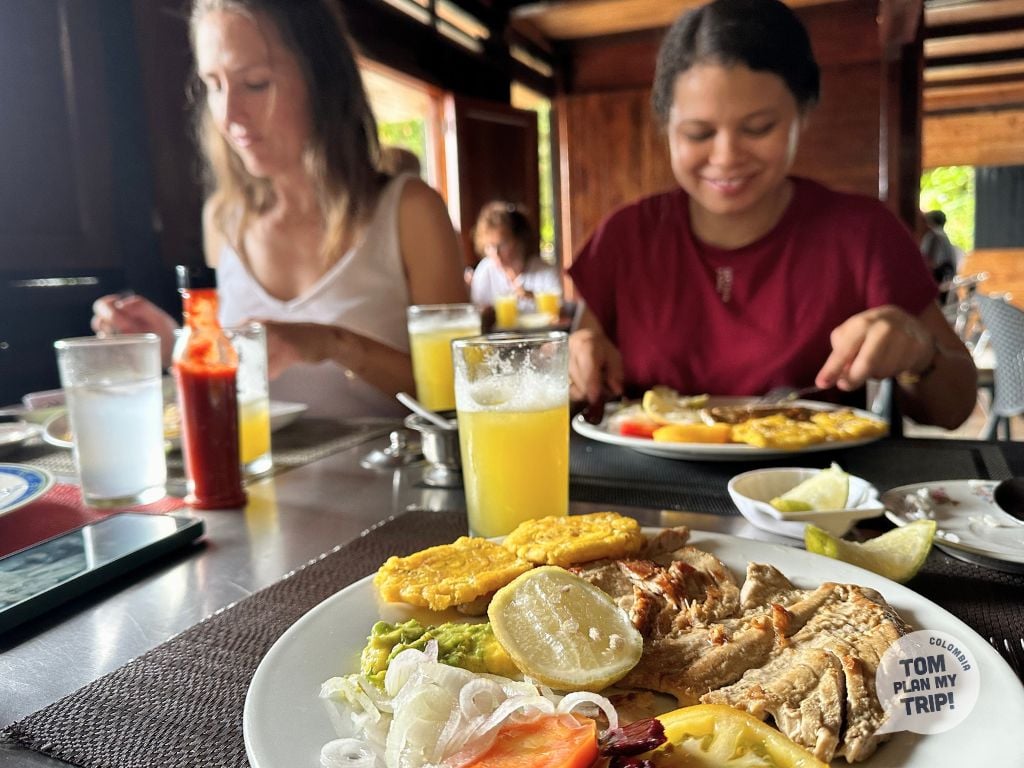
First instinct upon arrival: rush to a menu del día with grilled tuna and coconut rice. You’ll quickly understand that in the Pacific, it’s sacred.
Whale watching: between dream and reality
Are we going to be able to see them? I’m keeping my fingers crossed.
The departure with Vanessa, our passionate biologist

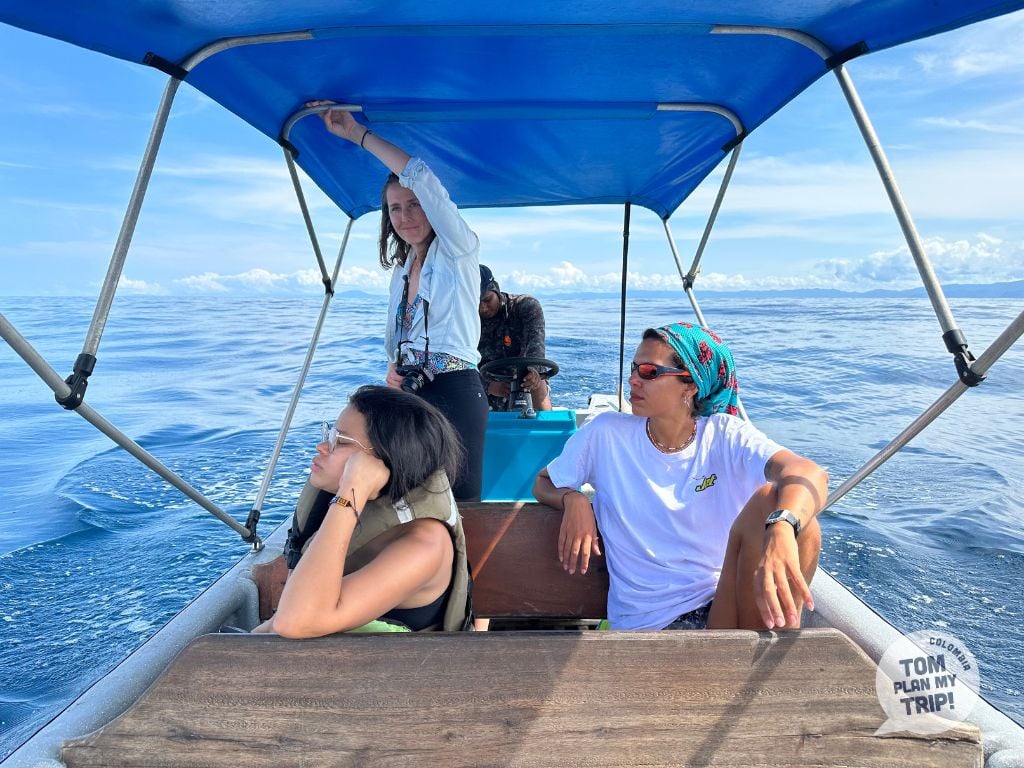

7 AM, heading to the small port. Vanessa, a marine biologist and partner of one of our ecolodges, is waiting for us with her contagious smile. I had chosen a private tour to be able to combine whale watching, snorkeling, and waterfall – the best decision ever.

ADRIEN’S ADVICE
End of September marks the end of whale season (July-October). There are fewer people and more availability in nice accommodations, but a bit fewer acrobatic shows than in July-August when the males are showing off.
The magical moment: my first whale


20 minutes. That’s all it took for Nené, our captain with eagle eyes, to spot the first water spout on the horizon. The secret? Stare at the sea until you see those natural geysers they create when they breathe.
Then there… BOOM! A whale jumping completely out of the water, as if levitating. I saw the scene in slow motion, mouth open like a kid. My phone? Still in my pocket, of course.
We were 4 whales and us, alone in the world. Not a boat on the horizon. They breathed every 5 minutes, staying on the surface for a minute – enough for us to realize they are bigger than our boat.
The lost (or almost) drone drama

So, hold on. First flight with our new drone over the Pacific. Adrien at the controls, me more stressed than ever. Suddenly, just blue on the screen. Impossible to find the boat. The battery? 10% and dropping.
My heart stopped. Hundreds of euros that were going to end up at the bottom of the ocean. Fortunately, Nené recognizes a piece of the island on the screen and guides us. Engines at full speed, race against time. At 3% battery, miracle: we recover our baby. I aged 10 years in 5 minutes.
The Hidden Gems of the Tour
Whales are present all along the Pacific coast, so you have a good chance of spotting them on your way to other cool spots. Might as well take advantage of it and combine whale watching with another activity.
Nabuga Waterfall: A White Curtain in the Jungle


After the excitement, head to Nabuga. 20 minutes of walking on a black sand beach to discover this waterfall cascading down the cliff like a white coat. Cool water after the Pacific heat? Paradise.
Picnic fiambre with tuna steak, coconut rice, and salad. I love this concept: your meal wrapped in a large plantain banana leaf, you eat with your hands or an aluminum spoon. All recyclable, incredible flavors, and that Pacific authenticity I seek.
The Whales’ Farewell Gift
On the way back, once again: a mother, her calf, and an escort male. One last spectacular jump, as if to say “see you later,” and they continued their journey peacefully to… where exactly? Mystery.
TOM’S ADVICE
On another day at sea, heading to Utría Park — another great spot for whale watching, south of El Valle — I had the chance to follow a harpoon fisherman. During our underwater dives, I could hear the whales’ songs resonating underwater. A memory that still gives me chills.
Why choose our local partners
Vanessa and her team are not just guides. They are passionate biologists who truly respect the whales: engines off, safe distance, zero stress for the animals. Esteban, the CEO, has trained the entire team and it shows.
They speak English, and one of them even speaks French. But most importantly, they know these waters like the back of their hand and know how to create an authentic and responsible experience.
This team works exclusively in Bahía Solano, but there are plenty of other great spots for whale watching, with amazing accommodations to mix a romantic stay, comfort, and adventure. Every partner we recommend can help you integrate a great whale watching tour (or even two) with local, serious, and passionate people.
How to easily watch whales


Do you want to experience this without the hassle of organizing?
Check out our Pacific experiences pages – each accommodation has its own character, atmosphere, and little extras that make a difference. Lodging on an isolated beach? Treehouse with a jungle view? Comfortable cabins surrounded by a tropical garden?
Once you’ve fallen in love with a place, it’s super simple: fill out our form in 2 minutes and you’ll be in direct contact with the managers. No middleman. Just you and passionate people who will answer your questions and explain how to make the most of your stay.
Why do we do it differently? Because we’ve visited (and often stayed!) in each lodge, eaten at their table, and talked with their teams until late. They aren’t just “partners” on paper – they are friends who share our vision of authentic and responsible travel.
With whom to see whales in Colombia
Contact the best local agencies directly to organize these experiences

Guachalito: Peaceful ecolodge on a deserted beach 4d
Colombia
4 Days
1 place
Go spend a few days in a no-frills ecolodge, where the real highlight is the untouched beach.
View this tour
Coqui: An intimate eco-lodge by the Pacific 4d
Colombia
4 Days
1 place
Dive into a bubble of comfort on a secluded beach, and share authentic moments with the locals.
View this tour
Guachalito: Cliffside Ecolodge Facing the Ocean 4d
Colombia
4 Days
1 place
Enjoy an incredible view and share great moments with fellow travelers.
View this tour
Punta Brava: Remote ecolodge with ocean balcony 4d
Colombia
4 Days
1 place
Rest in a cabin nestled between jungle and ocean horizon, far from the crowds.
View this tour
El valle: Whale watching and upscale ecolodge 4d
Colombia
4 Days
1 place
Let yourself be enchanted by the spectacle of the whales, the ambiance of your eco-lodge, and the charm of the village.
View this tour
El valle: The magic of the Pacific in an upscale ecolodge 4d
Colombia
4 Days
1 place
Succumb to the wonders of the Pacific, the beauty of its raw nature, and the vibrant atmosphere of El Valle.
View this tour
Guachalito: Eco-lodge nestled in the jungle, by the sea 4d
Colombia
4 Days
1 place
Settle into a tree-surrounded cabin, close to the ocean, and soak in the peaceful, wild atmosphere.
View this tour
Guachalito: High-end ecolodge by a stunning beach 4d
Colombia
4 Days
1 place
Enjoy a top-notch accommodation nestled between lush tropical greenery and a dream beach.
View this tour
Arusi: Charming ecolodge just steps from the village 4d
Colombia
4 Days
1 place
Relax in a cozy cabin, open to the garden, mangrove, or ocean.
View this tour
See more activities?
We test and select the best activities in Colombia especially for our readers.
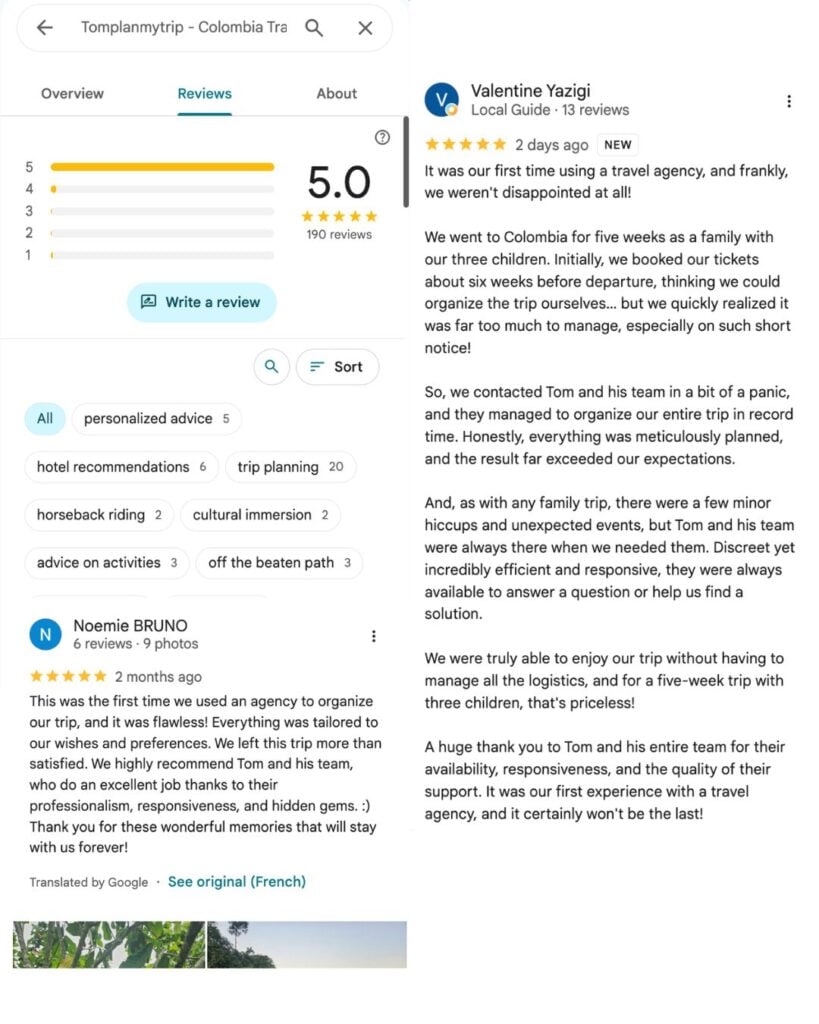
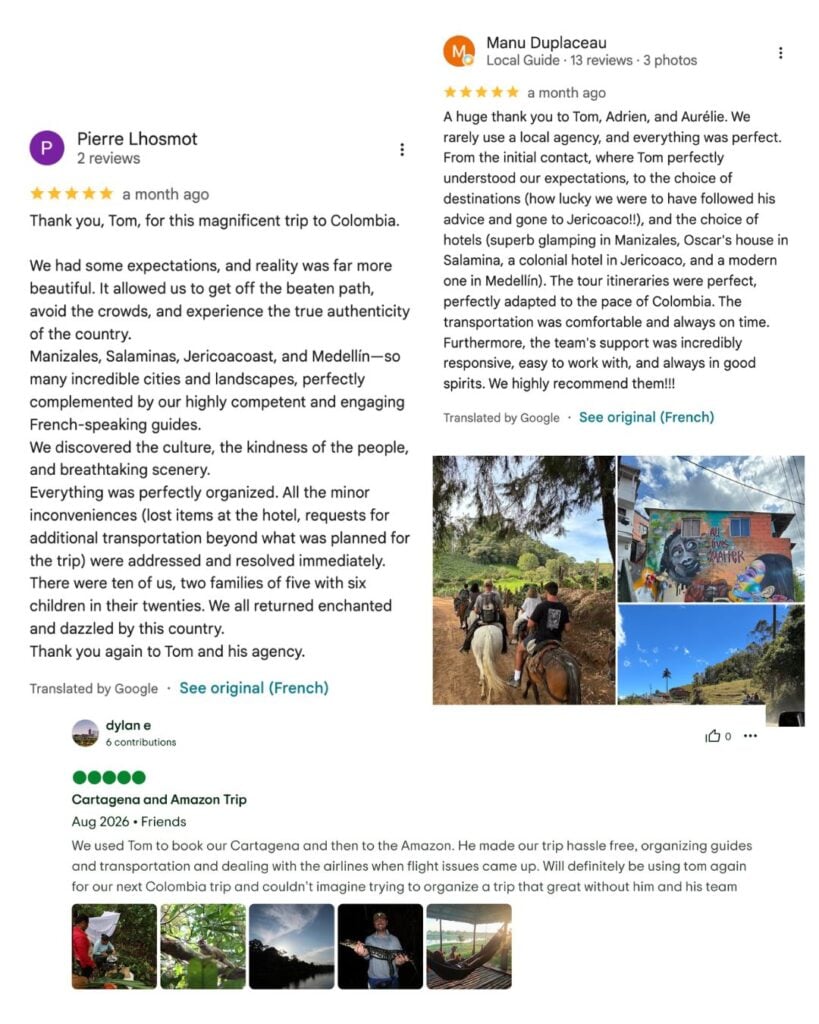
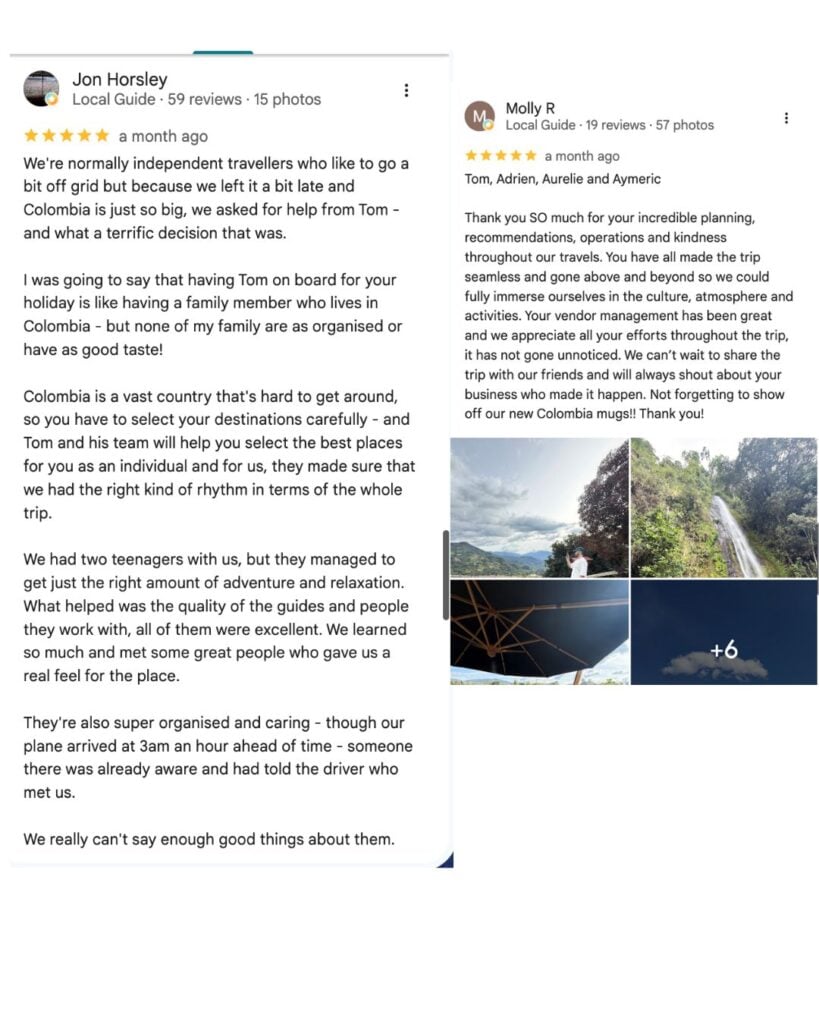
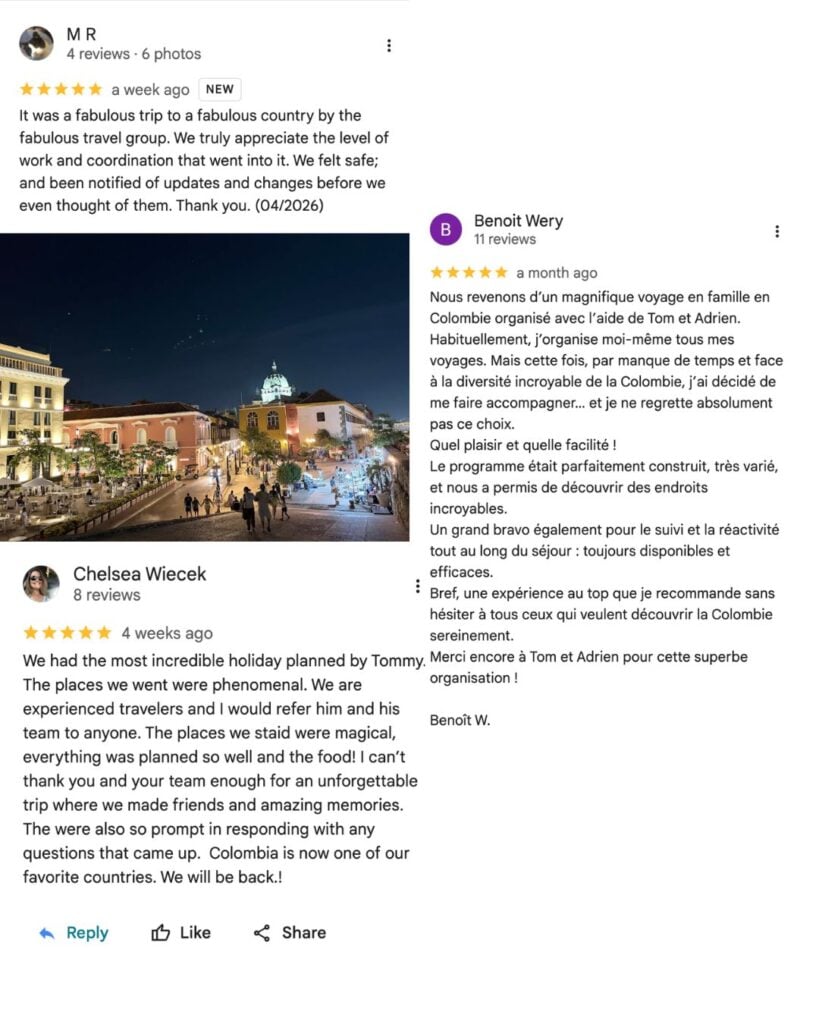
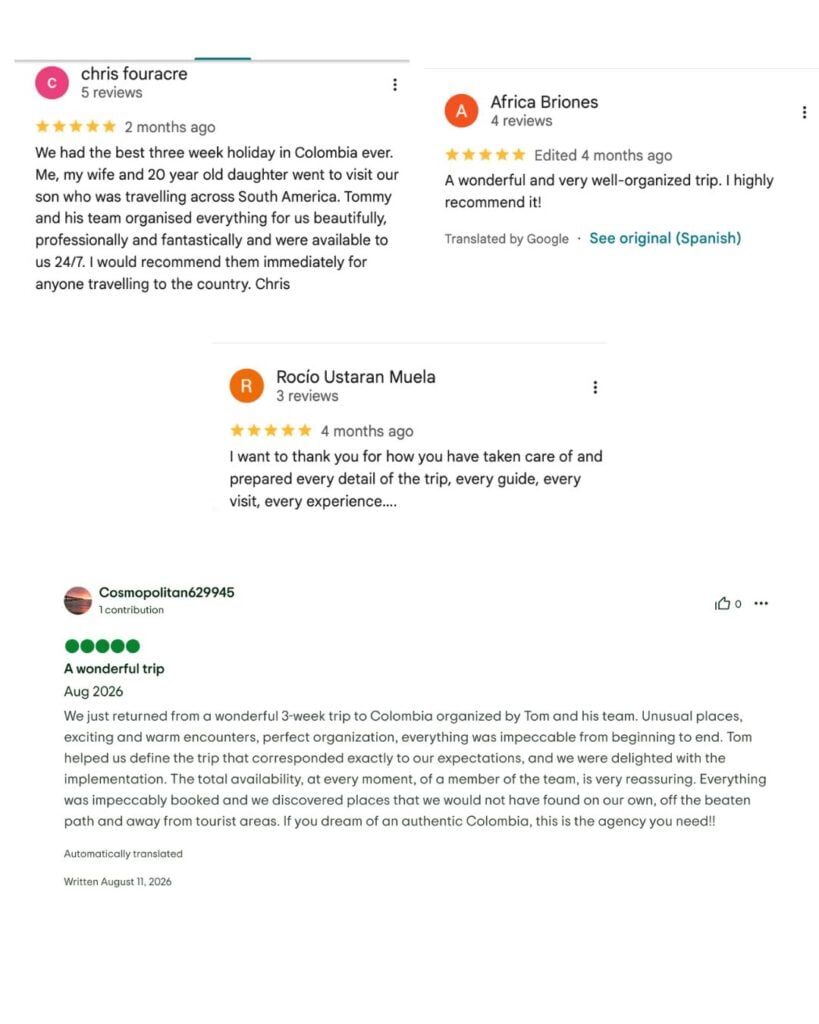
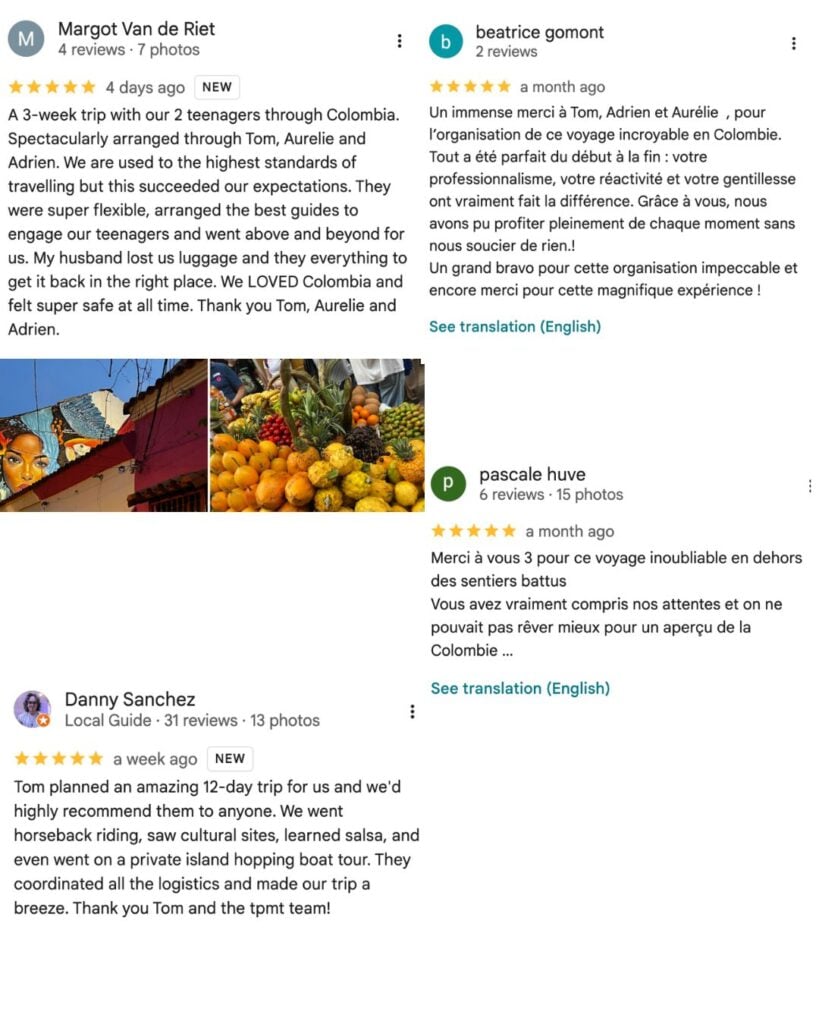
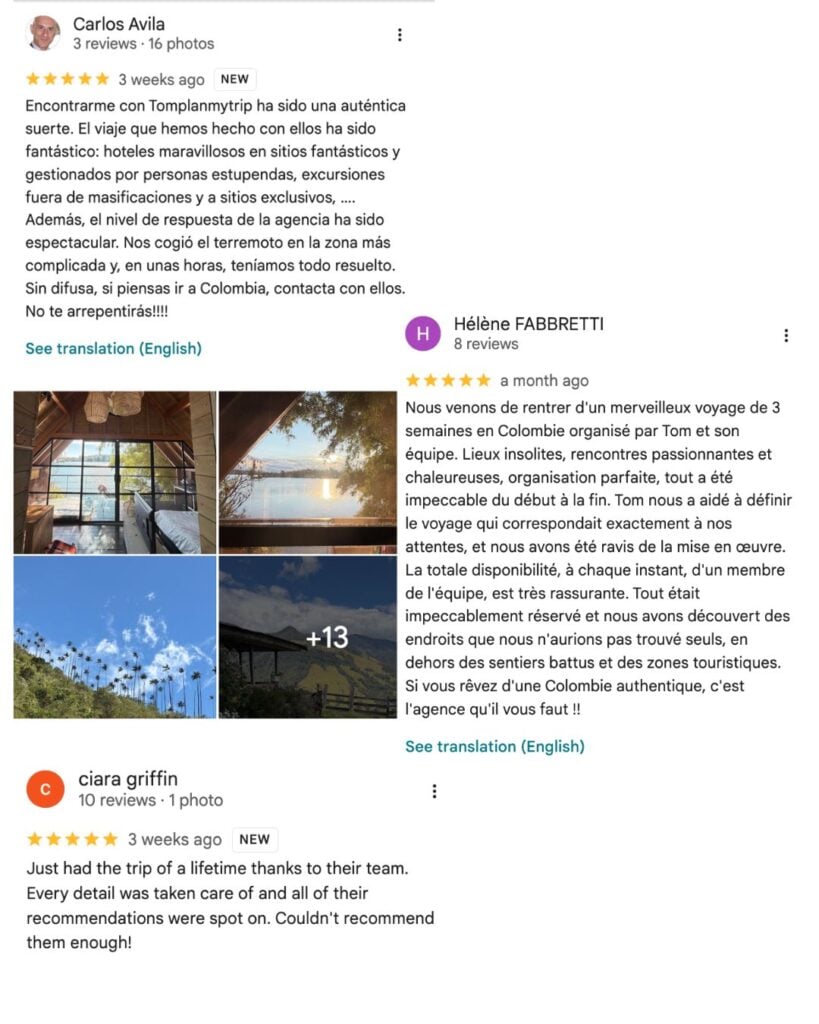
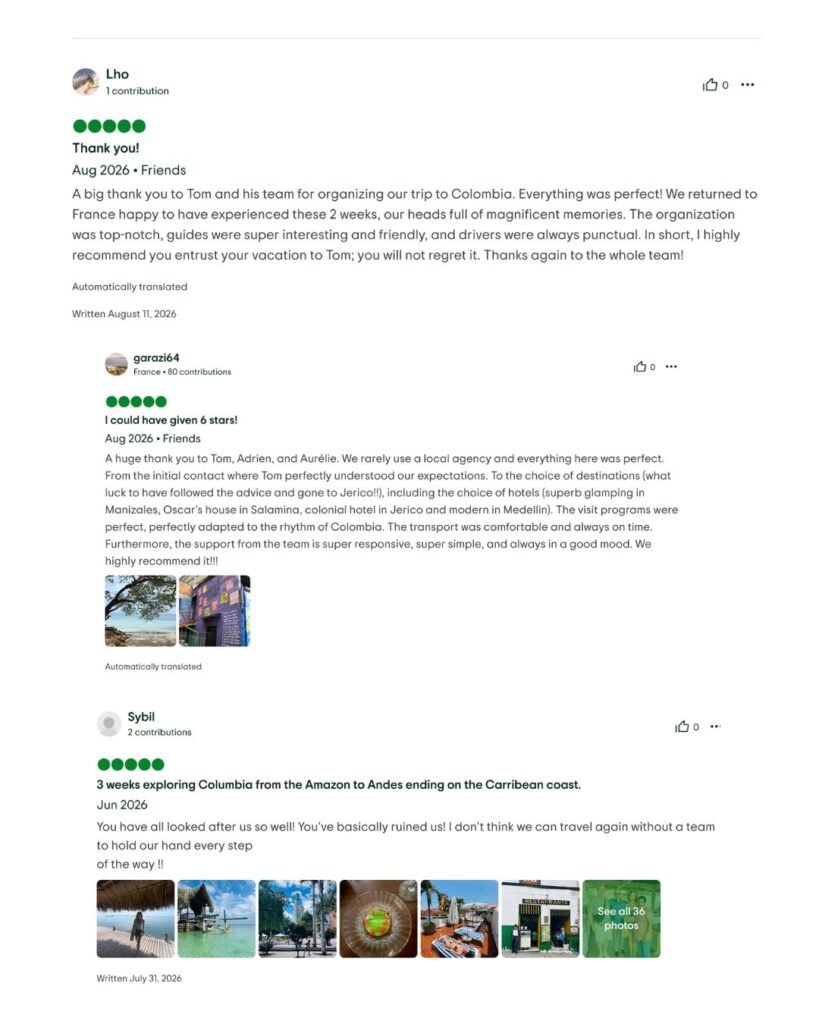
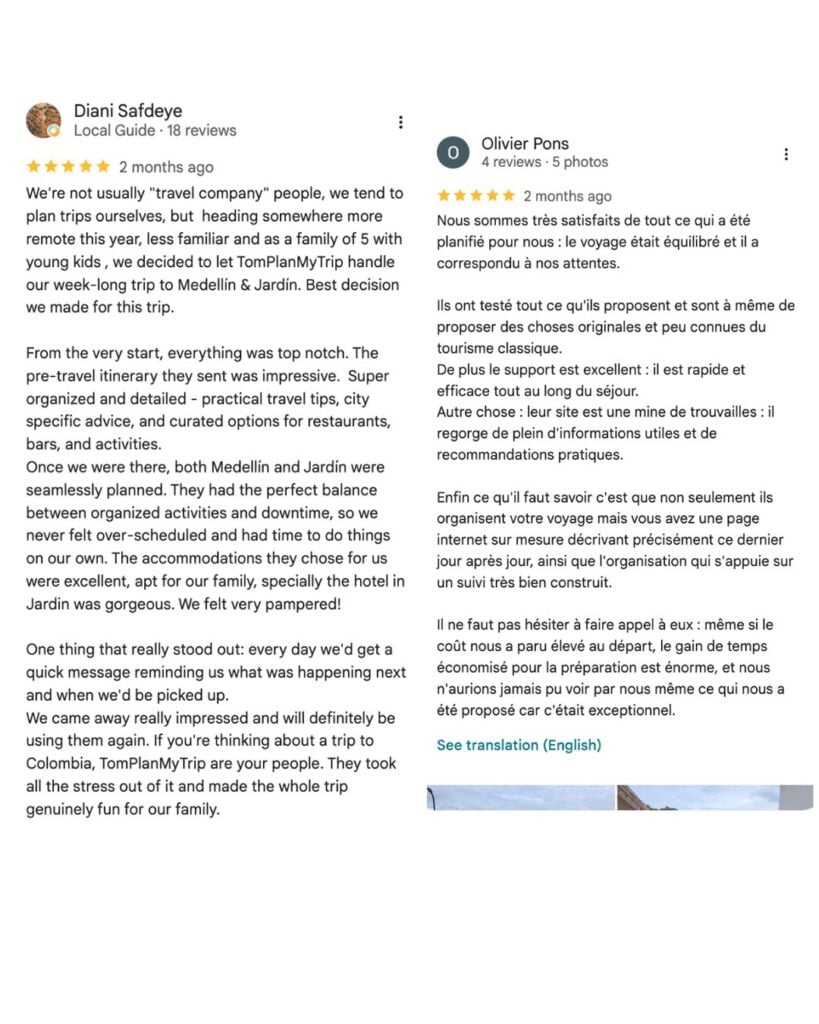
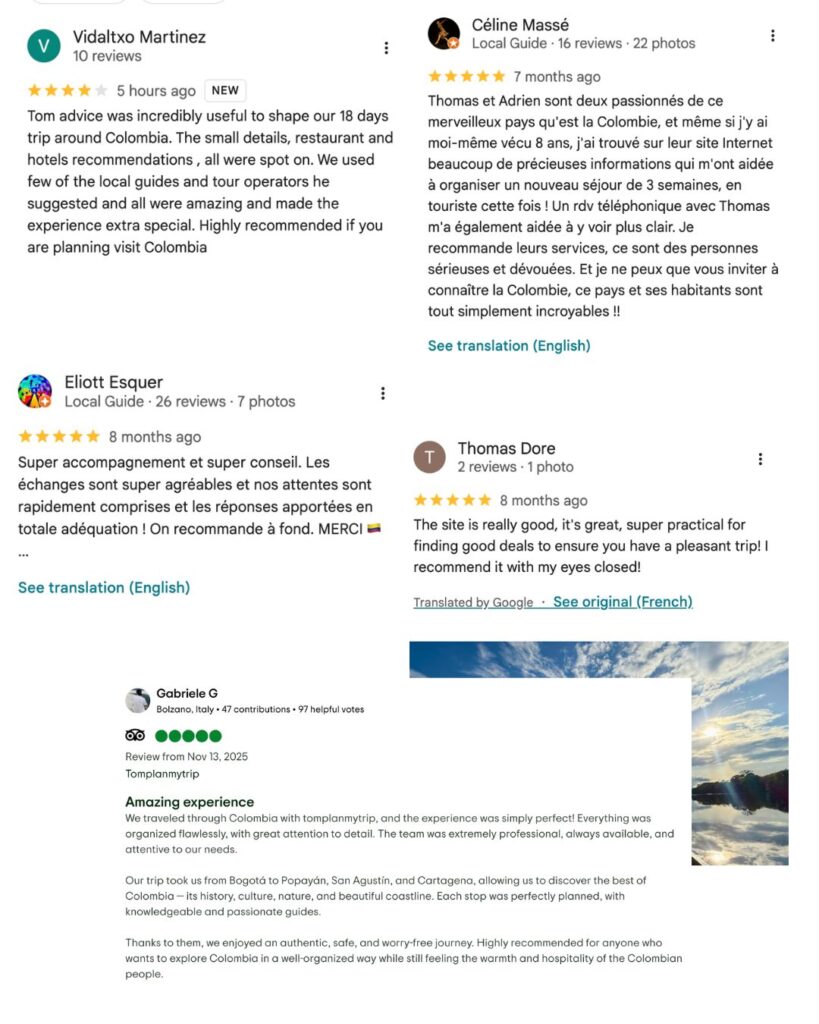
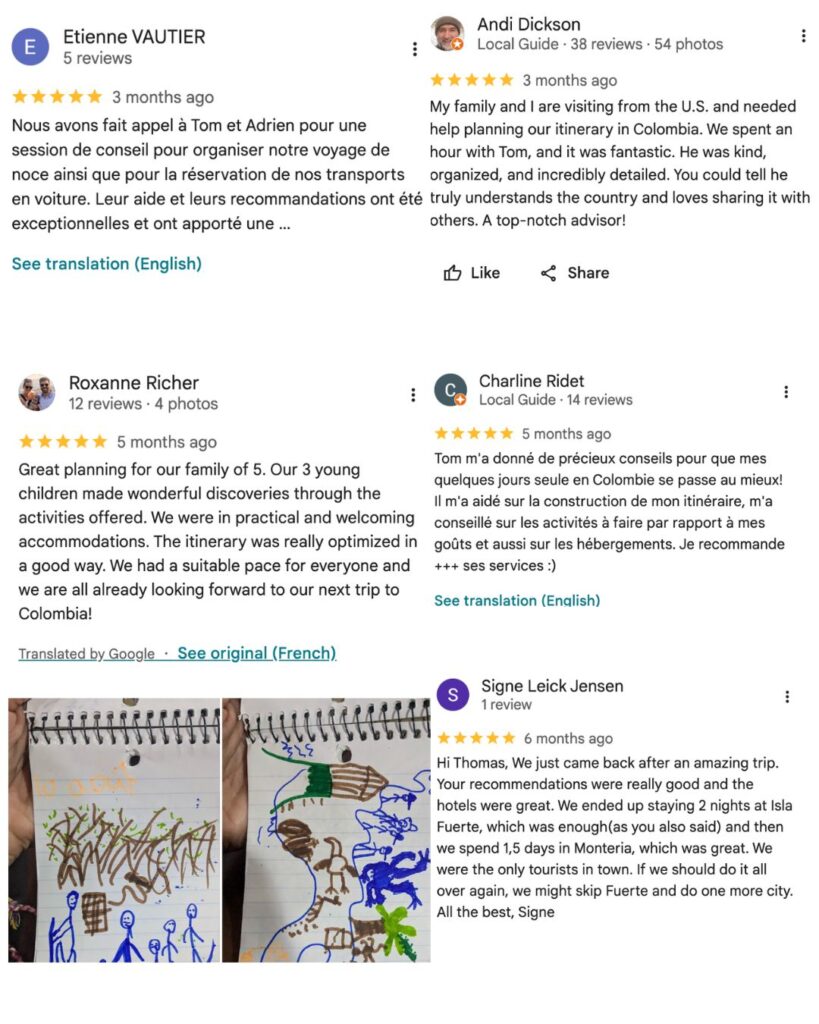
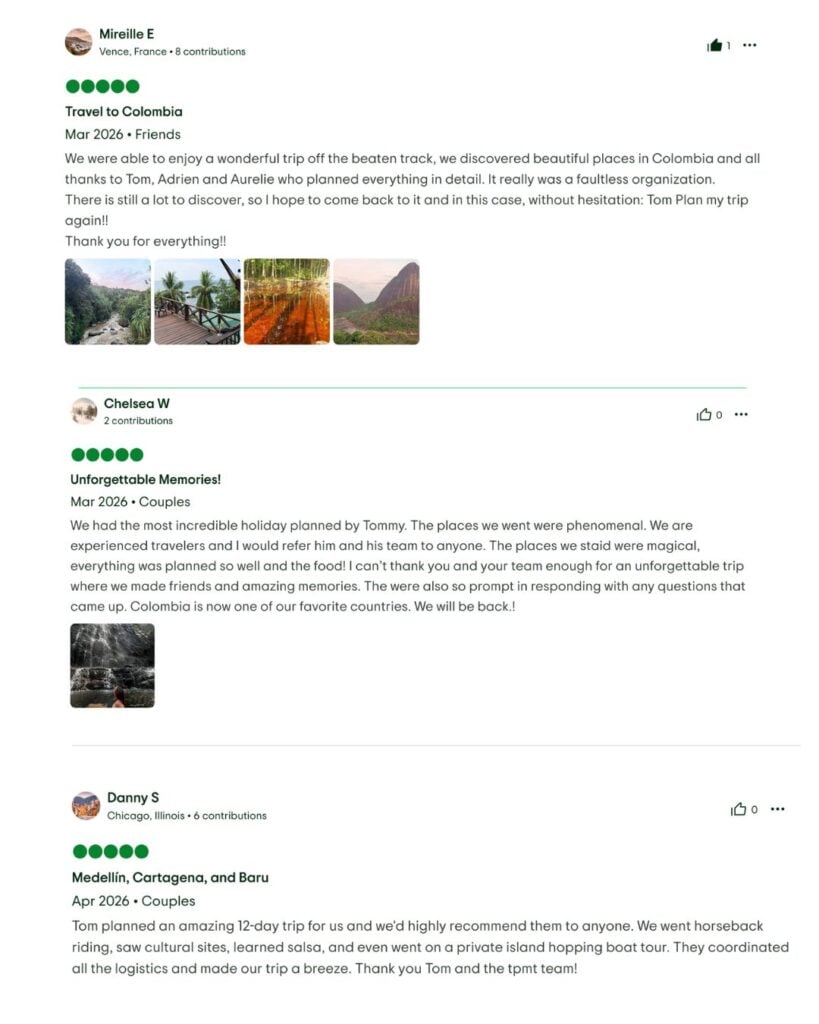
+185 five-star reviews on Google Maps

The solution for a successful Colombia trip
“Usually, I don’t go through a travel agency. But for Colombia, I needed help — and this agency transformed my experience in this country.”
That’s the kind of comment you’ll find most often in our reviews (we’ll let you read them 😉).
Let’s explore together for a quality, one-of-a-kind trip that lets you truly connect with the country:
- Undiscovered Colombia — adventures off the beaten path
- Easy Colombia — stress-free, fully comfortable
- Premium Colombia — high-end that stays authentic
What type of trip suits you?
Every trip is unique, but you might see yourself in one of these themes.
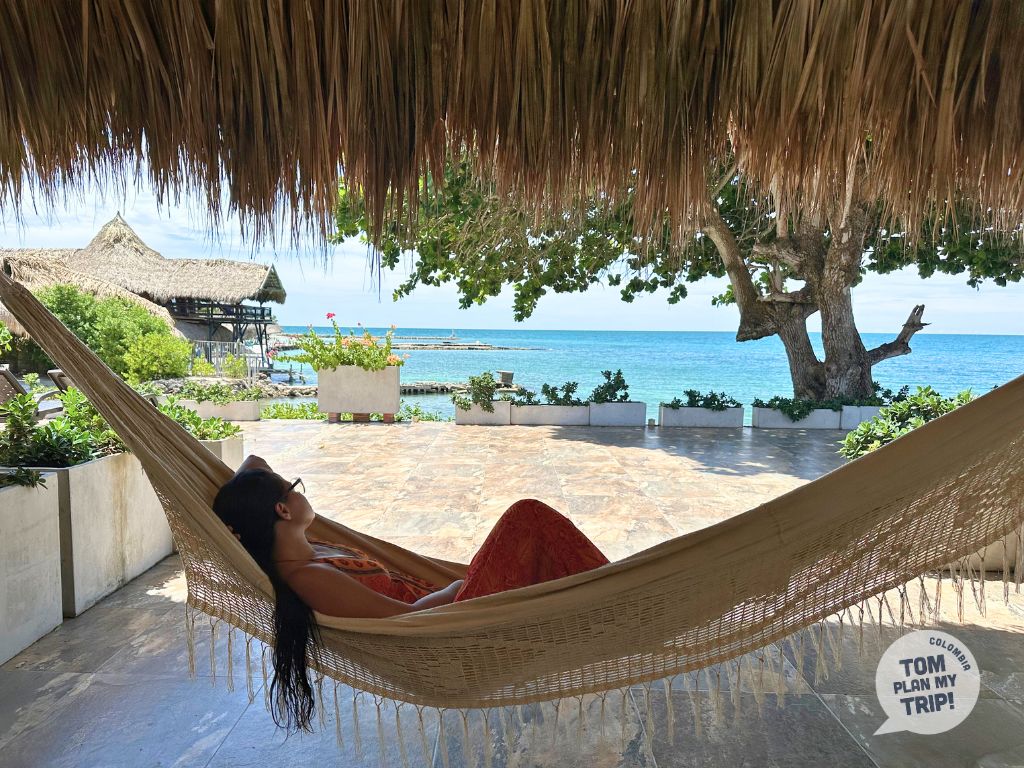
EASY
Colombia stress-free, comfortable and at your own pace — Say goodbye to vacations that leave you drained. We design a trip where every day is a pleasure, balancing exploration and relaxation.
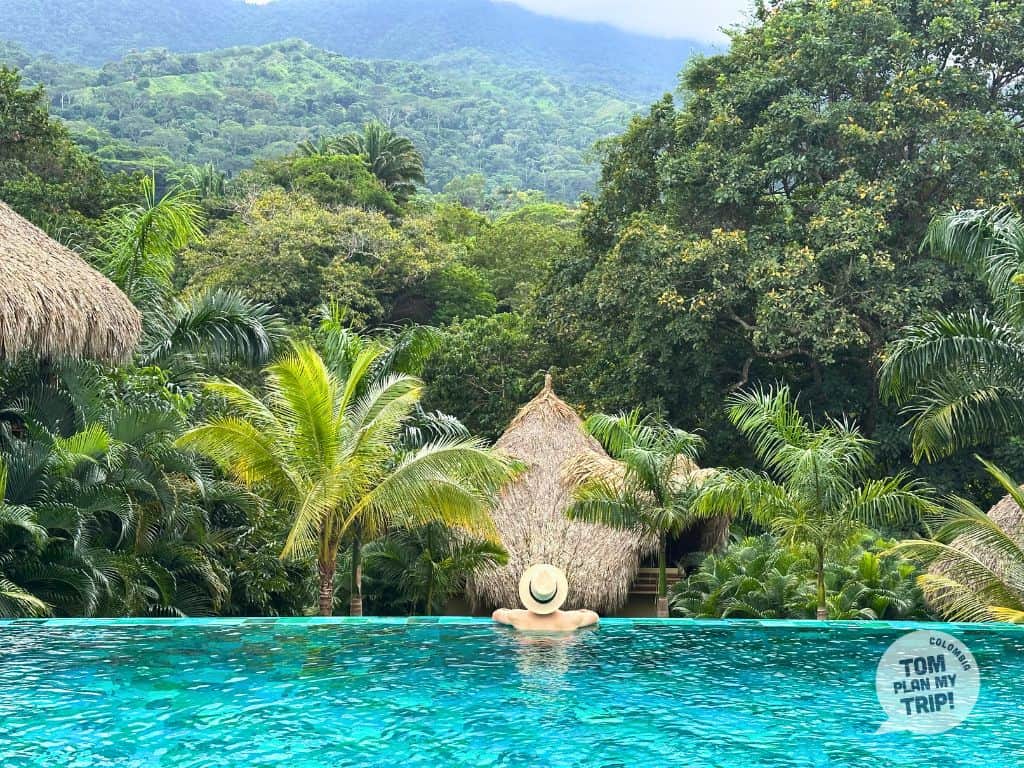
PREMIUM
Premium journeys through the heart of Colombia — Comfort, character, authenticity. You shouldn’t have to choose between a luxury experience and a genuine connection with the country. We give you both.
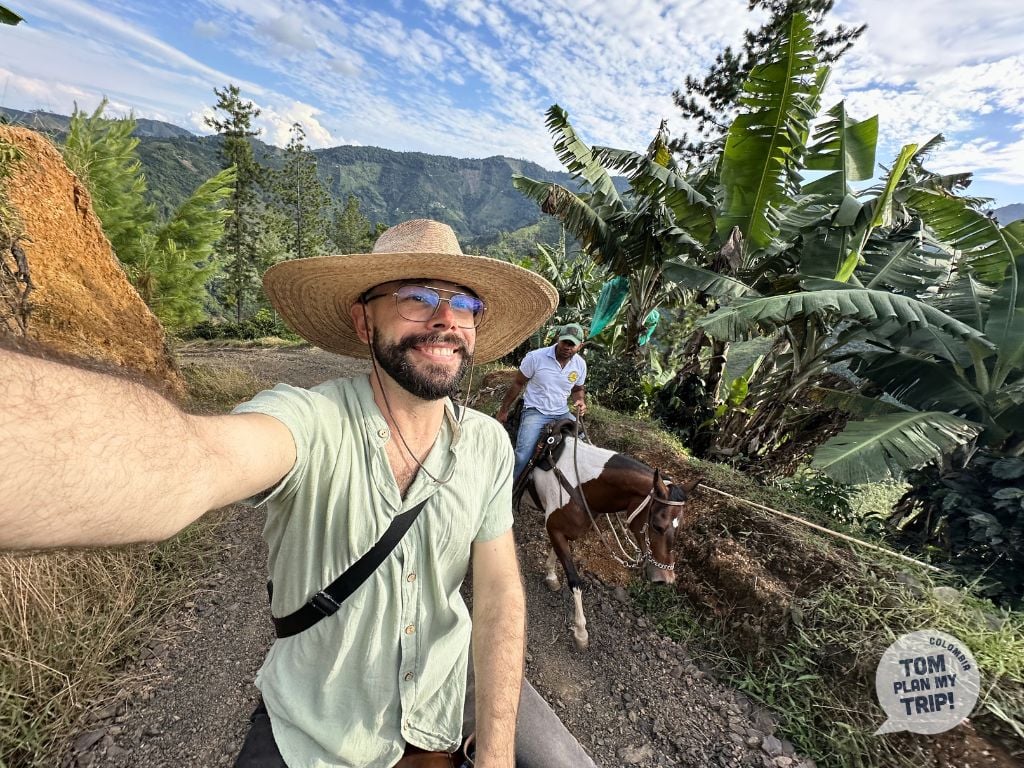
HIDDEN
The Colombia beyond the tourist trail — We don’t take you on a tour of Colombia. We immerse you in it, sharing unforgettable moments with your loved ones in stunning places you’d never have discovered on your own.
Learn moreWhat our clients say
Learn more about Colombia
Where to see whales in Colombia


El Valle
Colombian Destinations Listed Alphabetically
Places from A to I
Places from J to P
Places from R to Z
Follow us on Instagram!

Our secret to actually enjoying your Colombia vacation
Colombia is twice the size of France. There’s no point trying to see it all in 15 days. Our trips distill 11 years of boots-on-the-ground exploration into the essentials: the very best of the country, without the stress of racing around.
