
Most Famous Colombia Landmarks: Where Are They?

Editeur
Last updated
Should you see all the famous Colombia landmarks? I would say no. There are simply too many (unless you plan to stay for six months?), and some are less interesting than others.
I’ve been exploring Colombia since 2015, and here’s a list of the most famous natural sites and how to enjoy them—you’ll have to avoid the other tourists!

We constantly explore Colombia to find what’s truly worth it — authentic places, stays and experiences, far from tourist traps. Then we build your ideal trip in a logical and optimized way, so you make the most of it, without rushing everywhere, truly connected to the country.
→ About us | ⭐⭐⭐⭐⭐ + 165 reviews | → Our service

- In Colombia since 2015
- + 1025 tested experiences
- + de 145 local partners
- + 335 trips created


Most Famous Colombia Landmarks: Where Are They?
I am not necessarily for seeing a country’s most famous places and monuments. There are often too many people, and the photos on Instagram (+ filters) make them overrated.
However, I must admit that some places are just too beautiful to ignore.
Here are the landmarks in Colombia that have amazed me the most and where I always return with pleasure.
- The Cerros de Mavecure made me feel like I had traveled back to the era of dinosaurs.
- The stunning colors of the Caño Cristales River.
- The sea of frailejones in the paramos—like during my trek in Los Nevados.
- Feeling like I’m alone in the world at an ecolodge on the beautiful Guachalito Beach.
- Organizing a romantic weekend in the city of Cartagena.
TOM’S TIP
There are more incredible locations that I haven’t listed here. Visit my Inspiration Page to fall even more in love with Colombia. And don’t hesitate to contact us to experience these adventures easily!

Famous Colombia Landmarks: Landscape
The following are some of the most breathtaking natural wonders in Colombia.
26# The Massive Piedra del Peñol

This gigantic, 200-meter-tall rock (also known as an inselberg) is located on one of the edges of the Guatapé reservoir in Antioquia. To see the beautiful landscape from atop, you must climb the 740 steps to reach the summit and the best viewpoints.
One of the landowners first climbed the monolith in 1954, and since then, it has become a travel destination for thousands of tourists per month. It’s located 80 km west of Medellín, a trip that takes almost two hours.
From the top, you can see the different branches and islands of the reservoir, boats, a bridge afar, houses, and beautiful shades of green and blue. Did you know that the estimated weight of the rock is 66 million tons?
25# The tallest palm tree of Valle del Cocora

The Cocora Valley has it all: great weather all year long, stunning landscapes, and the tallest wax palm trees in the world.
You can walk around this valley, but the hike takes 5-6 hours, so make sure you pack water and snacks, or plan a picnic.
This Colombia landmark is located near the small town of Salento, Quindío, from where you can take a ride in one of the famous Jeeps from the 1950s. You may spend the night at a hotel or camp in the open. It’s a very safe place, full of friendly and helpful people.
24# The Tatacoa desert and its starry night

This almost-barren, massive expanse of land in southern Colombia is one of the country’s most famous tourist attractions.
The two-colored landscape (red and gray) lets you walk for hours before reaching a swimming pool in the middle of the desert, which turns into a well-deserved reward after bearing scorching temperatures of up to 42 degrees Celsius.
There is also an observatory run by Universidad Nacional, from which you can gaze at the stars at night for a small fee. There are plenty of accommodation options, from luxury hotels to camping areas, without losing the feeling of being in the middle of nowhere.
The easiest way to explore the Tatacoa Desert is to go on a tuk-tuk from Villavieja.
23# The vast Páramo de Sumapaz

This Colombia landmark is the biggest paramo worldwide, rising to 4,275 masl. One of the most iconic plant species is the frailejon, a protected plant that grows up to 8 meters tall (only a few centimeters per year).
Sumapaz covers more than 300,000 hectares and is a perfect place for hiking and walking. The natural park, created in 1977, is located in the district of Bogotá. Entry is free of charge.
Once you get there, you should visit Laguna del Alar, a small lagoon surrounded by frailejones. You should avoid going to the lake’s edge for two reasons: first, to protect the fragile lake’s ecosystem, and second, to avoid ending up in a swamp and getting your feet wet. There are also some ancient ruins of a former prison built under the presidency of Gustavo Rojas Pinilla in the 1950s.
22# Los Nevados Glaciers—soon gone

These three peaks, El Ruiz, Santa Isabel, and Tolima, are part of Los Nevados National Park. Before reaching the snow, visiting the glaciers offers all kinds of weather and landscapes.
Depending on the time of year, you may see snow starting at 4,500 masl. Sadly, due to global warming, permanent snow is bound to disappear.
However, going there lets you see and walk through rainforests and paramos. There are several accommodation options, mainly camping and shelters. And there’s always the possibility of a plunge in the nearby natural thermal pools.
Even if entering the park with a guide is not mandatory, I advise you to go with one to avoid getting lost (there are very few signs).

ADRIEN’S TIP
Don’t hesitate to contact us to prepare well and choose your trek in Los Nevados National Park.
21# Caño Cristales, a rainbow river

The most beautiful river in the world will take your breath away when you see the multiple colors it features: hues of red, green, orange, yellow, and pink adorn this natural wonder. This is because a special kind of aquatic plant grows on the riverbed between June and November.
This natural park is located in Sierra de la Macarena, a mountain that rises independently from the Andes range. To go there, you must take a tour and arrive by plane.
This is one of Colombia’s most well-taken-care-of places, for visitors must follow the rules to avoid damaging the ecosystem: from the ban on plastics and insect repellants to eating your meals on banana tree leaves are part of the established norms. You cannot swim or go everywhere you want in Caño Cristales, but you can take plunges in several nearby cascades instead.
This rainbow river is one of the most spectacular landmarks in Colombia.
20# La Chorrera waterfall, the tallest one!

This beautiful waterfall is located very near Bogotá, on the way to the town of Choachí, east of Bogotá. It’s less than two hours away.
Cascada La Chorrera is almost 600 meters tall and surrounded by thick vegetation. It’s the tallest in Colombia and the 60th tallest in the world. Sometimes, in the dry season between November and January, the water dries, so it’s best to visit after February. Also, avoid going there on weekends (too many people).
In the nearby waterfall of El Chiflón, there is a restaurant where you can eat typical Colombian dishes at very affordable prices. Although it sits at a similar altitude—just 200 meters lower than the capital city—this place feels warmer than Bogota.
19# Cabo San Juan, Tayrona’s famous beach

Cabo San Juan is a peaceful, paradise-like place where you can swim in its beautiful, tranquil, blue waters. The spot is part of the Tayrona National Park, located north of Castilletes (a 2h30 walk from the main entrance).
If you walk from Castilletes, there’s a well-marked trail where you can enjoy the thick tropical rainforest. Some local indigenous people by the path sell coconut water and handicrafts.
Cabo San Juan has a viewpoint from where you can take pictures or take a nap on a hammock and where you can even spend the night. There is a camping area with a restaurant, also. Once you pay the park entrance fee, you can stay there as long as you want and move freely on its vast territory and its numerous beaches.
18# The mighty Amazon river

The south of Colombia has a significant share of the Amazon rainforest and its massive river. You can visit the area any time of the year, but depending on the month, you’ll find two different landscapes: the high-water and low-water ones.
In September, when rainfall is scarce, you can see the river banks and even walk in the jungle, accompanied by a guide at all times, and you can see monkeys and macaws in the trees.
In contrast, in May, when the rainy season is in full display, the river level rises 10 meters and floods the whole area, which affects activities such as kayaking and fishing.
The most accessible Colombian city to plan a boat ride on the Amazon is Leticia.
17# The Mysterious Chiribiquete Park
This is Colombia’s most significant natural park, established in 1989. It covers 43,000 square kilometers and is located in southern Colombia, between the departments of Caqueta and Guaviare. It covers part of the Amazon and part of the Llanos (the eastern plains).
The park’s landmark is the mountains that rise in the middle of the plains, known as inselbergs. These massive rocks feature drawings from ancient indigenous tribes considered a “library of knowledge” of the peoples who used to inhabit this almost unspoiled land. They look a bit like the famous Mount Roraima in Venezuela.
Visiting this area is prohibited.
16# Cerros de Mavecure

Los Cerros de Mavicure, or Mavecure, consists of three gigantic rocks located southwest of Colombia, 50 km south of Inírida, the capital of the Vaupes Department. This is one of the furthest areas from civilization in the country’s far east.
The three rocks are known by the names of Pajarito (little bird, at 712 masl), Mono (monkey, at 480 masl)), and Mavicuri (170 masl).
The rocks are surrounded by extensive plains and mighty rivers, which are the only way to reach them. This makes the spot one of the most extraordinary places to visit. Four-day tours, including flight tickets, are available from Bogota.
15# The Coffee Triangle and its landscapes

The Colombian Coffee Culture Landscape was declared a World Heritage by UNESCO in 2011.
The Coffee region covers 47 towns in the departments of Risaralda, Quindio, Caldas, and north of Valle del Cauca, on the west range of the Andes mountains. The landscape is characterized by its unique variety of green hues, rivers, waterfalls, great temperature, frequent rains, and of course, vast coffee plantations.
No matter where you go in the area, you can always learn about the coffee culture and taste different varieties of one of the best coffees in the world. People in this area are amiable and selfless.
14# The deep Cañon de Chicamocha

The Chicamocha Canyon is the second-largest canyon in the world, after the Yarlung Zangbo Grand Canyon in China. It is 2,000 meters deep and 270 kilometers long.
It is located in the department of Santander, center-north of Colombia, one hour south of Bucaramanga, and about seven hours north of Bogota (by car). The canyon features breathtaking landscapes and a variety of extreme sports, such as cave exploring, rafting, and paragliding.
There are some colonial towns in the area that are worth seeing. The food is excellent and is abundantly served. Baked and roasted lamb are the specialties of the region, accompanied by manioc, that are watered down with guarapo, a fermented drink made of brown sugar and pineapple peel.
And don’t get me started on the spectacular views there are all along, or you’ll never finish reading this article 😉
TPMT Tip: Go to Mesa de los Santos.
13# Providencia and the sea of seven colors

Providencia is a Colombian Caribbean island in the San Andres archipelago. Although it was hit by hurricane Iota two years ago, it’s a perfect place for relaxing, scuba diving, and riding a golf cart.
Providencia is quieter and unspoiled than neighboring San Andres, so staying there for a few days can replenish your energy and soothe your body and soul. Thanks to its cool, never-worrying Rastafari culture, they speak English, Spanish, and a sort of Papiamento, their own language.
The Caribbean Sea showcases seven beautiful colors, ranging from yellowish tones to a variety of greens and blues. After the hurricane, many houses were destroyed, so if you visit, you may see that there is still a lot of rebuilding. Santa Catalina is a smaller island nearby that you shouldn’t miss, either.
12# The beautiful Guachalito beach

One of the most visited beaches in Choco Department, west of Colombia, and one of the rainiest in the world, is Guachalito. This lovely spot is located in the Gulf of Tribugá. You have to first land in Nuquí (from Medellín) and then jump on a speedboat for 40 minutes.
This is one of the most breathtaking and relatively unknown places on Colombia’s Pacific coast. You find waterfalls, thick rainforests, and beautiful mountains that act as backdrops for the whole landscape.
Sand on the Pacific coast beaches tends to feature dark colors, and Guachalito is no exception. It’s also a strategic place for whale watching from July to October and for a romantic trip with your partner.
Famous Colombia Landmarks: Archeological
Colombia is more than landscape and nature. It is also a paradise for archeologists. Rock paintings and millenary statues tell a lot about the origins of the Colombian people.
11# Cerro Azul, beautiful rock paintings

Located in the Guaviare Department, Cerro Azul is known for its recently discovered (between 2014 and 2015) rock art paintings of hunters, animals, and erotic scenes of the indigenous people who lived there for about 12,500 years.
Even though there is scientific proof that these people lived there all that long ago, the making of the paintings poses an enigma, for it’s unlikely they survived intact all those years.
Archeologists still work in the area by analyzing the soil at different depths to reconstruct the habits and conditions of the ancient inhabitants.
Cerro Azul is always part of multi-day packages to explore San José del Guaviare’s secrets.
10# Ciudad Perdida (Lost City)

Some foreign visitors to Ciudad Perdida, in the north of Colombia, find it more breathtaking than the ruins of Peruvian Machu Picchu. This is probably because getting to Ciudad Perdida takes 4 days in total.
The legend says that Ciudad Perdida was inhabited by the Tayrona indigenous people, whose remains or cemeteries have never been found. The terraces literally sit in the middle of the jungle.
You will walk through the jungle and cross clean, crystal-clear rivers. Finally, you have to climb the last 1,200 steps, built by the Tayronas, that lead straight to Ciudad Perdida.
9# San Agustin Archaeological Park

The village of San Agustin is known for its gigantic collection of stone statues. It was founded in 1935 and declared a World Heritage by UNESCO in 1995. It’s located in the Huila Department, in the south of Colombia.
San Agustin is said to be among the largest necropolis in the world and the biggest complex of its kind. It features at least 500 megalithic monuments from pre-Columbian America (3300 BC) represented in the shape of tigers, monkeys, eagles, frogs, owls, snakes, and lizards. Statues such as the ‘Double Me’ stand out. The place is located in the upper valley of the Magdalena River.
The study of San Agustín is of paramount importance to understanding the development of political organizations not only in Colombia but in the whole of South America. To get there, you can land in Pitalito, then take a 1-h jeep.
Famous Colombia Landmarks: Architecture
Colombia exhibits a variety of architectural trends, but its landmarks fall into the Spanish heritage realm that stayed after de colony.
8# Monserrate and its views over Bogotá

Monserrate is one of the mountains near downtown Bogota. At 3,172 meters, it is the ideal viewpoint for seeing at least 80% of the city.
On top, you can find the Nuestra Señora de Monserrate church, a pilgrimage place built in 1620. Locals and visitors go up every day of the week, either along its 3-kilometer-long trail or by cable car.
On the summit, you can enjoy several famous fine restaurants, among which is San Isidro, which serves typical Colombian dishes. You’ll find places to take a break and have something to drink or eat on the path, and you may also buy handicrafts.
7# Castillo San Felipe de Barajas

This Spanish-style castle is one of the landmarks of Cartagena and has existed for about 500 years. It has survived despite being invaded by pirates and being a place where battles took place.
This national monument was declared a World Heritage by UNESCO in 1984. Nowadays, visitors can walk around the castle, see its 68 cannons, and walk through the tunnels. One nice thing to do in some of the tunnels is whisper something and have a friend hear at the other end of the hall. This was a characteristic of its architecture as a means of quiet communication between soldiers.
We recommend standing on the highest part of the castle to enjoy a magnificent view of the walled city.
6# The romantic Cartagena historic center

Cartagena’s walled city is a must-see if you visit the capital of the Bolivar Department. After Bogota, Cartagena is the second most widely visited Colombian city.
Its republican and colonial architecture, with flowery balconies and lovely facades, separated by narrow and colorful streets, makes this part of the city the ideal place for a romantic walk after dinner. There are many fancy restaurants in the area. Don’t leave your camera or cell phone behind since this is a paradise for photography.
The center of Cartagena consists of 2 districts: El Centro and San Diego. Some recommended places to visit are Plaza de Los Coches, Plaza de La Aduana, Plaza de Santo Domingo, Plaza de Bolivar, and Plaza San Diego.
TOM’S TIP
We help you easily organize your visits to Cartagena with the best local guides.
5# The salt cathedral of Zipaquirá

The cathedral, built in an old salt mine a few kilometers north of Bogota, is considered one of the most remarkable achievements of Colombian architects. It represents the cultural, environmental, and religious heritage of Colombians.
The monument was built in the 1950s, and it underwent total remodeling between 1991 and 1995. Bogota-born architect Roswell Garavito Pearl led the project.
Inside the cathedral, you will find a rich artistic collection of salt and marble sculptures. Its lighting effects are also worth mentioning since they provide this unique gem with a somewhat spiritual atmosphere that attracts thousands of tourists every year.
4# The majestic Las Lajas Sanctuary

This beautiful Catholic church is an architectural masterpiece that stands between two mountains. It is used as a pilgrimage and tourist destination. It is located 7 kilometers from the town of Ipiales, Nariño Department, in the very south of Colombia, and just 10 kilometers from the Ecuadorian border.
The best time of day to appreciate the building’s grandness is after 6 p.m. when the colorful lights highlight its magnificence.
The sanctuary is located at 2,900 masl, so the temperature can drop to as low as 8 degrees Celsius in the afternoons or evenings. So, if you want to stay late, bring a coat with you.
3# Comuna 13 and its street art

This neighborhood in Medellín is considered the place where infamous drug lord Pablo Escobar used to recruit his hitmen. In the 1980s, the place was the epicenter of violence and drug dealing in the capital of Antioquia.
After all the community’s efforts, La Comuna 13 is now full of murals, graffiti, and walkways that tell the notable history of tragedy and resilience of its dwellers.
2# La Candelaria, Bogotá’s historic center

La Candelaria is the old town of Bogota, where the capitol and the Primada Cathedral are located. Most of the houses and buildings from the colonial era remain in this area. Famous museums include the Gold Museum, the Botero Museum, and the Luis Angel Arango Library.
There is a place known as Chorro de Quevedo, where the city was presumably founded on August 6, 1538. In this little plaza, you find nice and cozy restaurants and bars. There is a narrow street called Calle del Embudo that connects Chorro de Quevedo and Plaza de la Concordia. It is known for selling chicha, a fermented maize drink that the Musica indigenous people used to drink.
La Candelaria is a place to walk and enjoy, for it’s full of churches, places of interest, and a variety of architectural styles.
1# Santa Cruz de Mompox

This secluded little town in the Bolivar Department stands next to the mighty Magdalena River. The colonial town seems to have stopped in time. It retains its architecture in almost the same form as in 1537, when it was founded.
Santa Cruz de Mompox was declared a World Heritage by UNESCO in 1995 and has been the location for movies such as Chronicle of a Death Foretold, based on the novel by Nobel prize winner Gabriel García Márquez.
In colonial times, Mompox was a place where Spaniards brought gold from Cartagena and hid it from the eyes of hungry pirates. For this reason, many goldsmiths and silversmiths settled in the town.
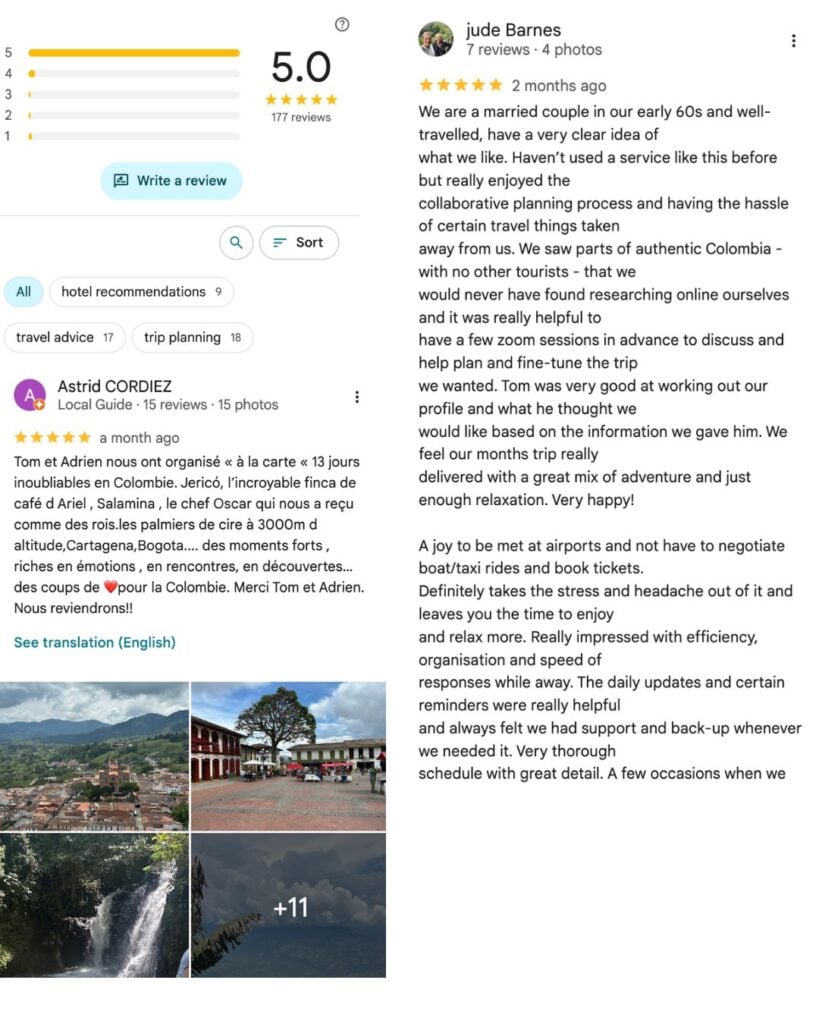
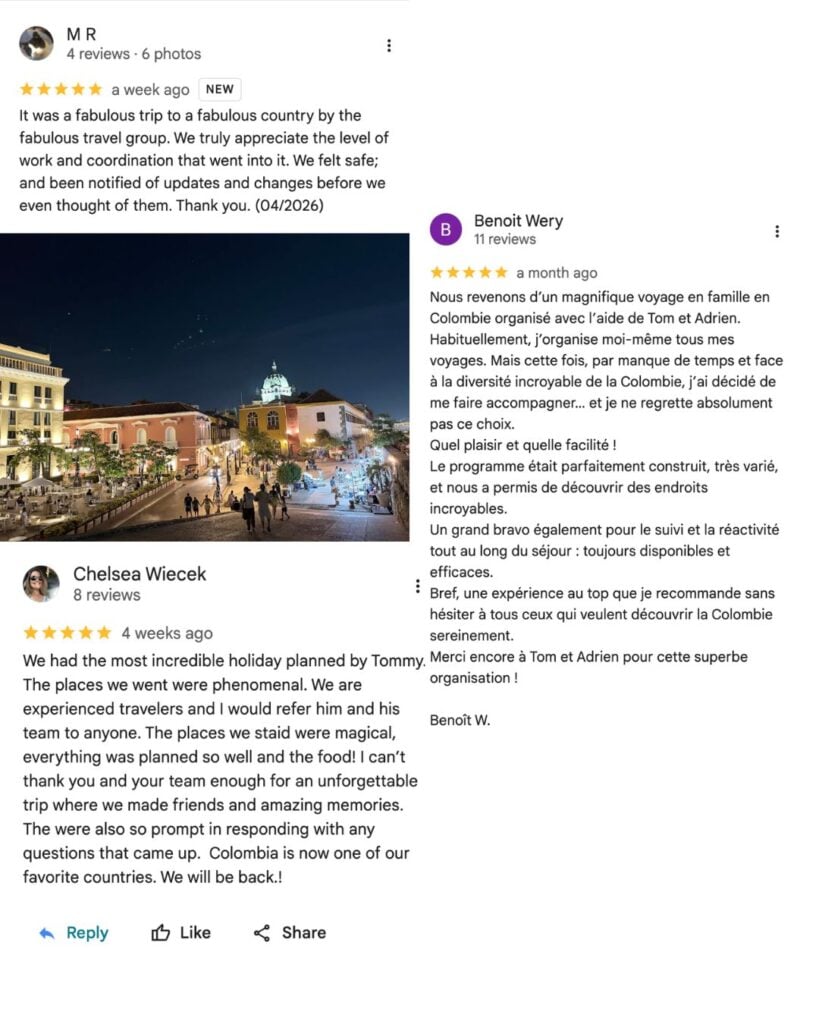
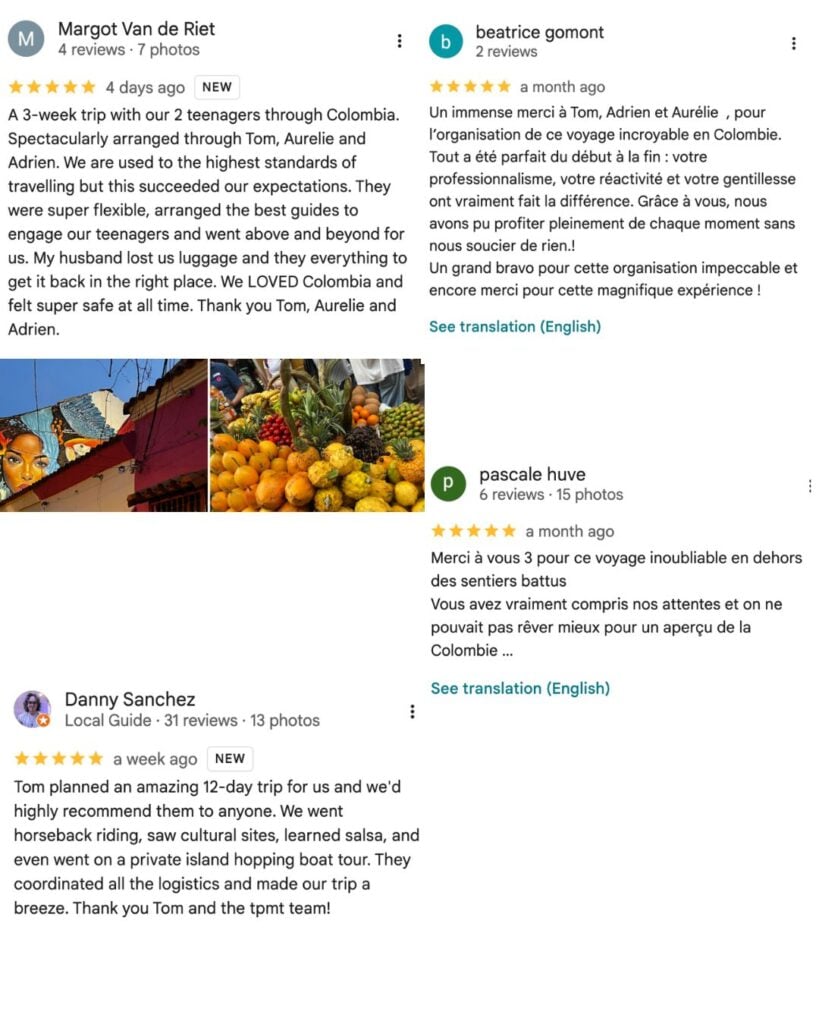
+175 five-star reviews on Google Maps

Your local travel agency in Colombia
Want to discover the best of Colombia without rushing around or overcomplicating things?
We’ve spent 11 years solving the perfect trip equation: maximize jaw-dropping experiences, eliminate unnecessary transfers, and avoid tourist hordes.
The result? The Colombia we fell in love with—not the cookie-cutter routes designed for everyone else—savored at a pace that lets you fully live each moment. No more superficial, exhausting trips.
What type of trip suits you?
Every trip is unique, but you might see yourself in one of these themes.
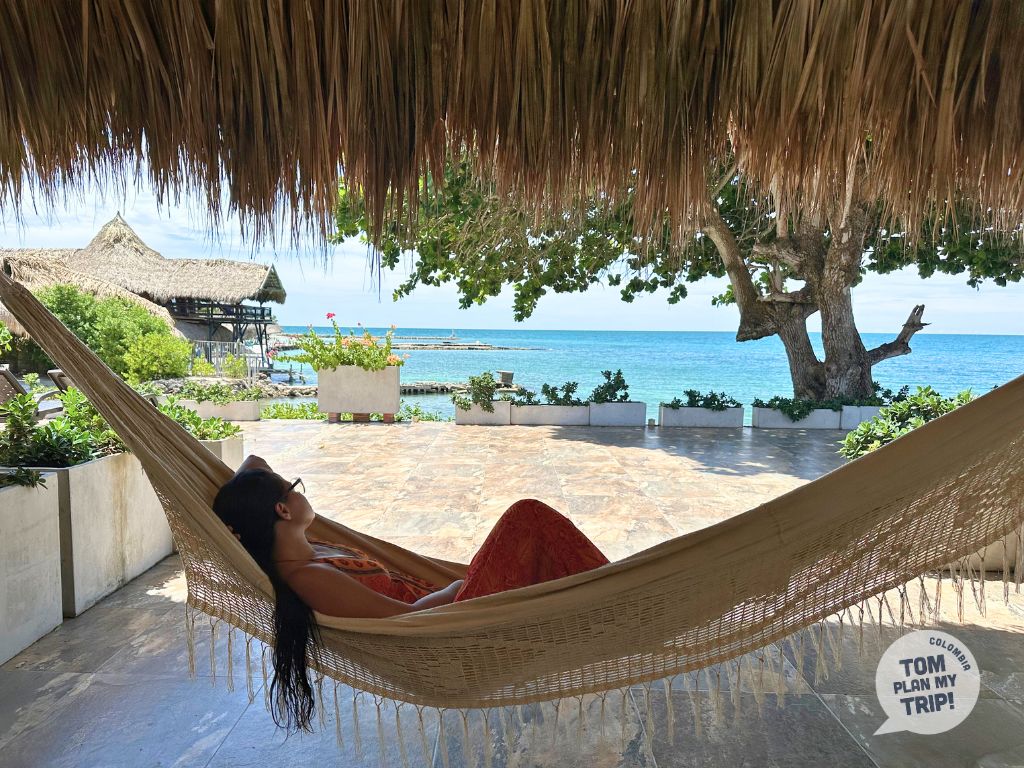
EASY
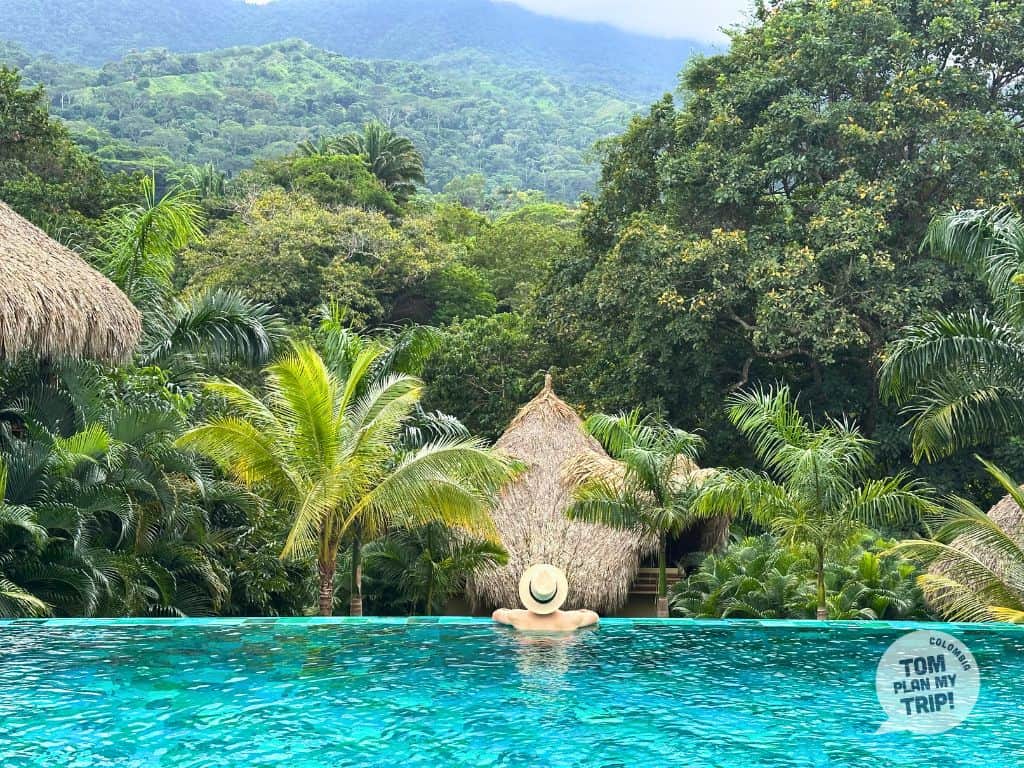
Colombia stress-free, comfortable and at your own pace — Say goodbye to vacations that leave you drained. We design a trip where every day is a pleasure, balancing exploration and relaxation.
PREMIUM
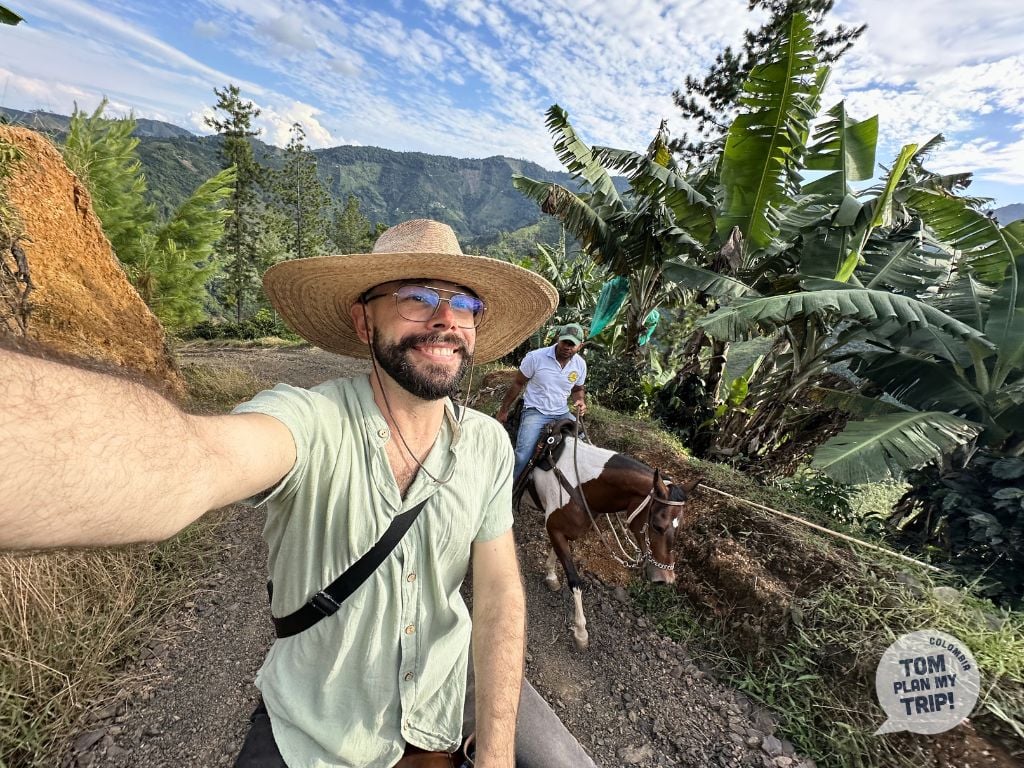
Premium journeys through the heart of Colombia — Comfort, character, authenticity. You shouldn’t have to choose between a luxury experience and a genuine connection with the country. We give you both.
HIDDEN
The Colombia beyond the tourist trail — We don’t take you on a tour of Colombia. We immerse you in it, sharing unforgettable moments with your loved ones in stunning places you’d never have discovered on your own.
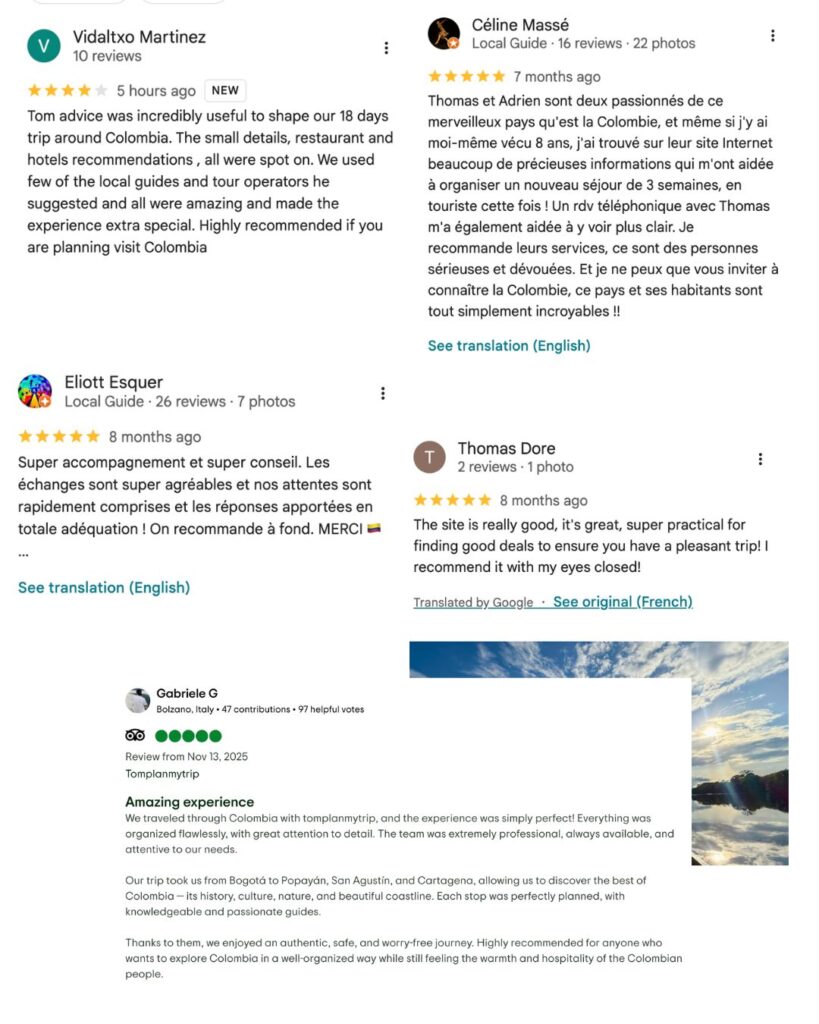
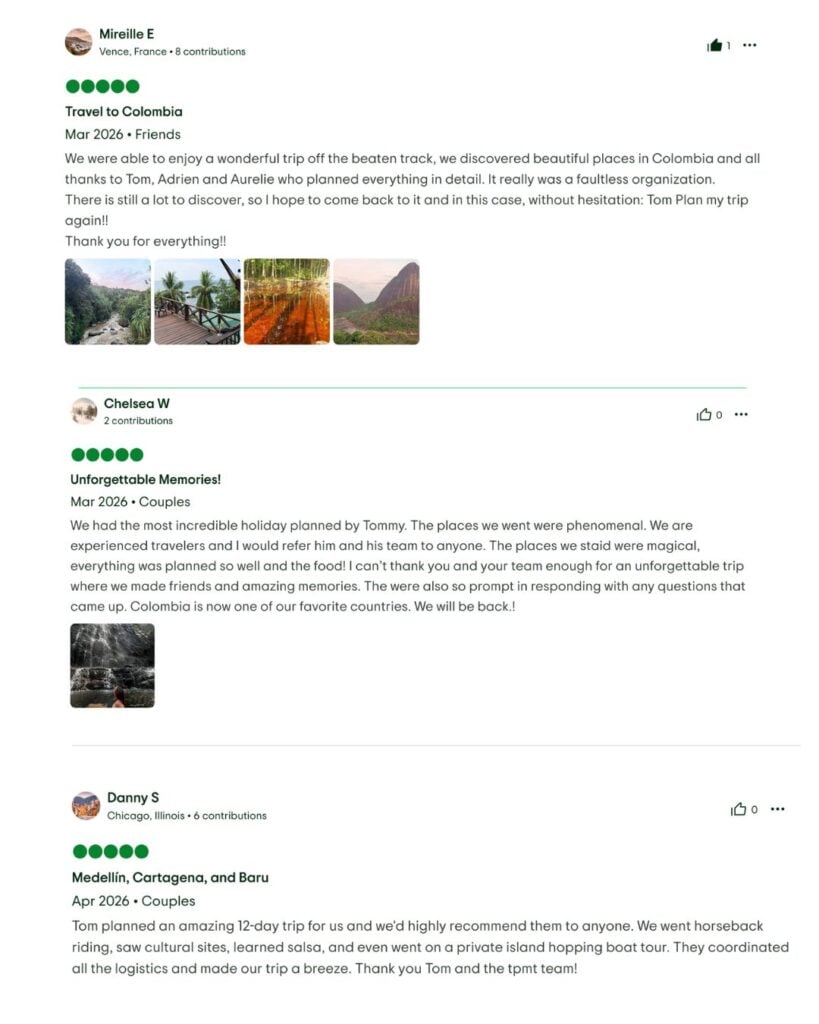
Learn moreWhat our clients say

Learn more about Colombia
Select a Region of Colombia


Western Caribbean Coast
Colombian Destinations Listed Alphabetically
Places from A to I
Places from J to P
Places from R to Z
- Rincon del Mar
- Riohacha
- Rosario islands
- Salento
- San Agustin
- San Bernardo Islands
- San José del Guaviare
- Santa Marta
- South of Colombia
- Tatacoa
- Tayrona National Park
- Termales
- Villa de Leyva
- Yopal
Follow us on Instagram!


Our secret to actually enjoying your Colombia vacation
Colombia is twice the size of France. There’s no point trying to see it all in 15 days. Our trips distill 11 years of boots-on-the-ground exploration into the essentials: the very best of the country, without the stress of racing around.
