
Explore the Andean Region of Colombia: Travel Guide

Editor
Updated on
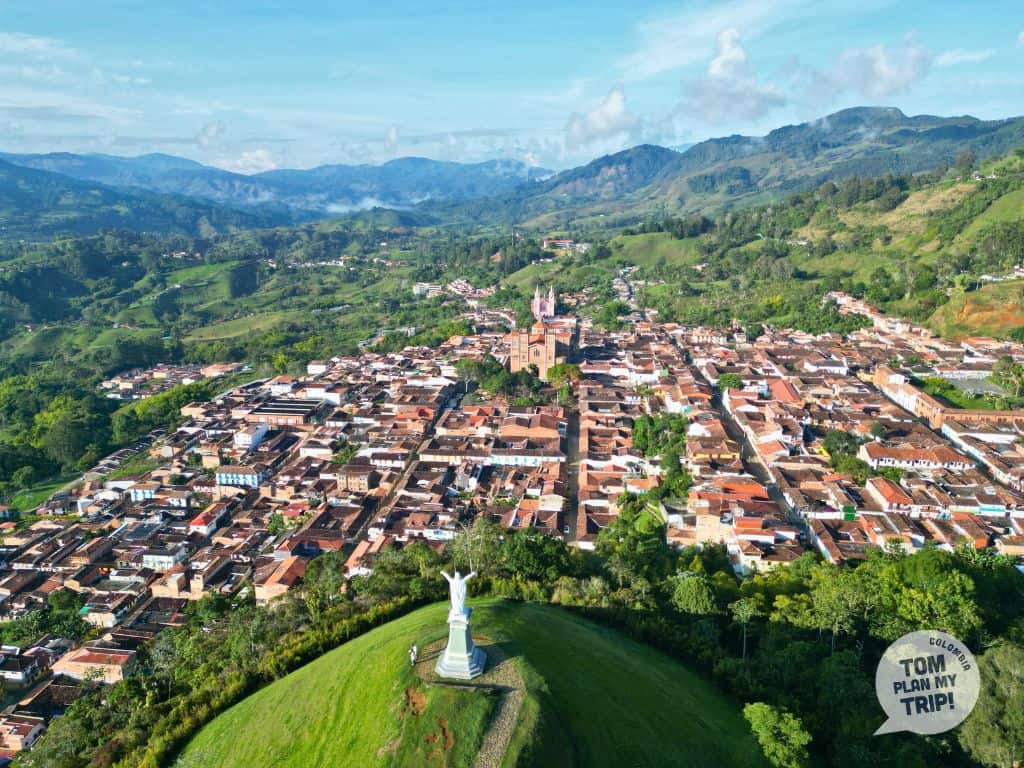
The Andean region of Colombia, crossed by three mountain ranges, is the heart of the country: 7 out of 10 Colombians live there, between Bogotá, Medellín, and Cali, the three largest cities, and peaceful colonial villages.
In the coffee region, coffee plants cover the hills and wax palms rise up to 60 m. Higher up, the strange frailejón colonizes the páramos, which are crossed by trails leading to the snowy peaks of Cocuy and Los Nevados.
Hummingbirds, Andean condors, and spectacled bears inhabit these varied ecosystems. All year round, festivals resonate to the rhythm of bambuco and Cali salsa.
11 years exploring Colombia, 500,000 travelers helped every year through our online guides. And for families who want a trip everyone will love, without lifting a finger, our agency designs a tailor-made journey to discover the best of the country, far from the tourist traps.
→ About us | ⭐⭐⭐⭐⭐ + 185 reviews | → Our service

- In Colombia since 2015
- + 1025 tested experiences
- + de 145 local partners
- + 425 trips created


VISIT THE ANDEAN REGION OF COLOMBIA
To make good decisions quickly and easily.
GENERAL INFORMATION
The many faces of Colombia’s backbone.
The Andean region occupies the center of Colombia, between the Caribbean coast to the north, Ecuador to the south, Los Llanos to the east, and the Pacific coast to the west. It spans about 282,500 km², nearly a quarter of the territory.
It consists of three mountain ranges that cross the country from south to north and are separated by two large valleys: the Cauca Valley, between the western and central mountain ranges, and the Magdalena Valley, between the central and eastern mountain ranges.
It is one of Colombia’s 6 natural regions. It covers 10 departments: Cundinamarca, Antioquia, Boyacá, Santander, Norte de Santander, Tolima, Huila, and the three departments of the coffee region, Caldas, Quindío, and Risaralda. Seven other departments, including Valle del Cauca, Cauca, and Nariño, overlap the Andean region.
It is home to the three largest cities in the country, Bogotá, Medellín, and Cali, but also Bucaramanga and Pereira, and concentrates about 70% of the Colombian population.
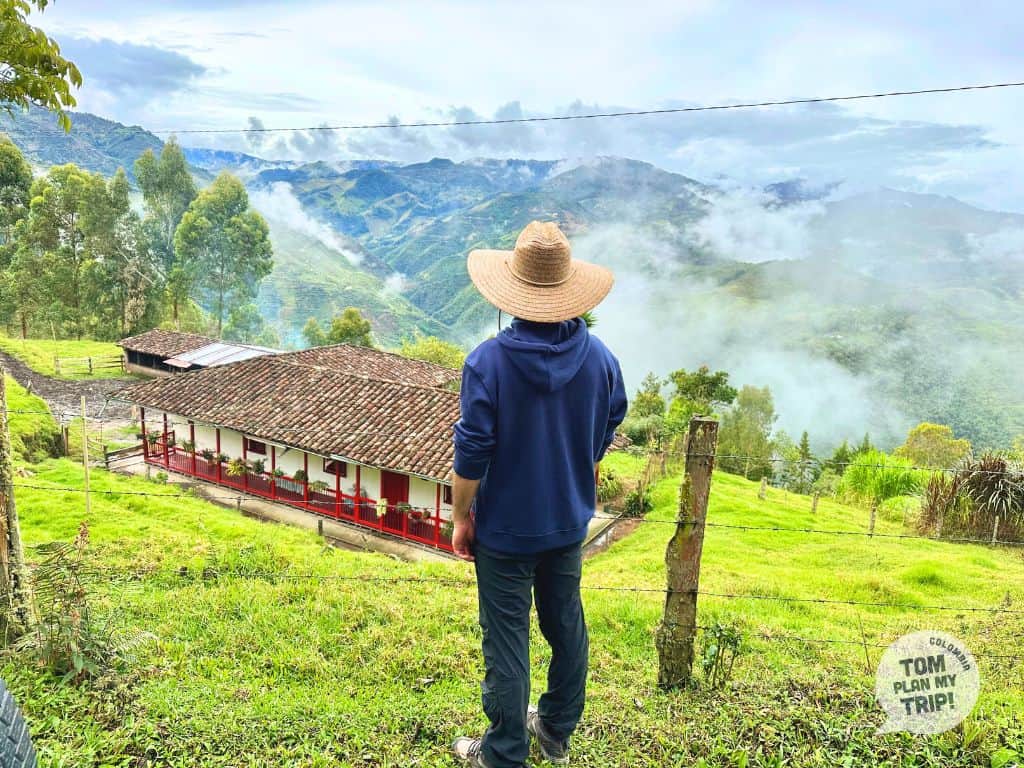
Few regions are as varied as the Andean region: tropical valleys, cloud forests, páramos and snow-capped peaks.
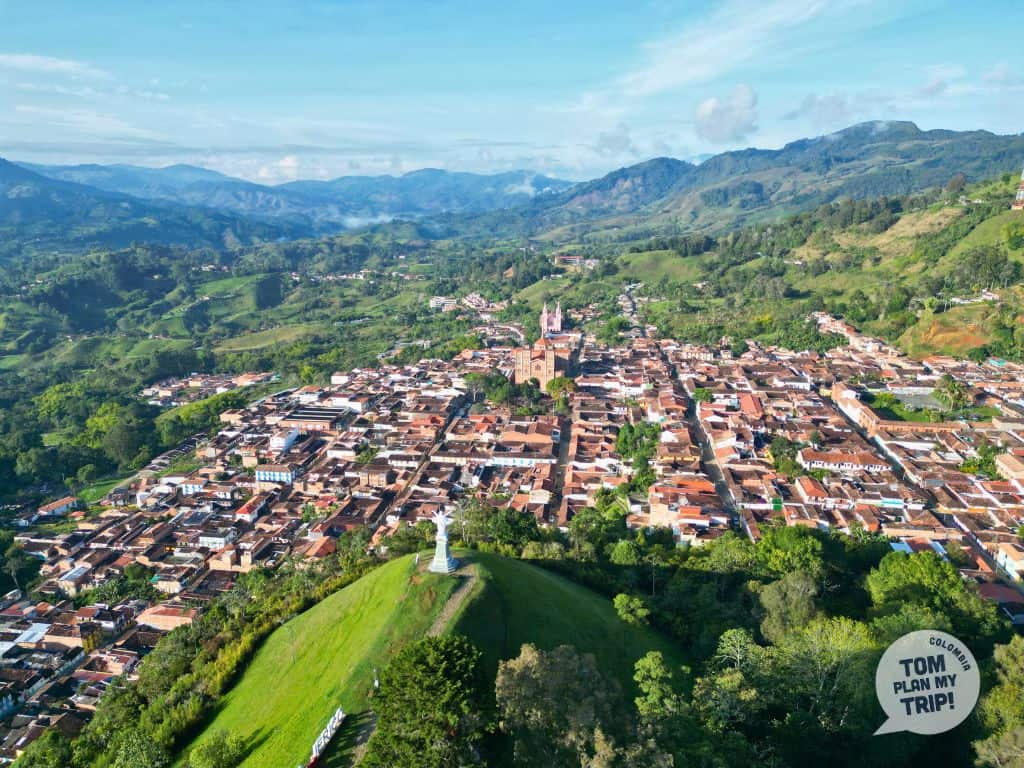
The historic neighborhoods and museums of Bogotá and Medellín tell the story of the country. The colonial villages, such as Villa de Leyva, Barichara and Jericó, with their lively squares, whitewashed houses and flowered balconies, invite you to the sweetness of life.
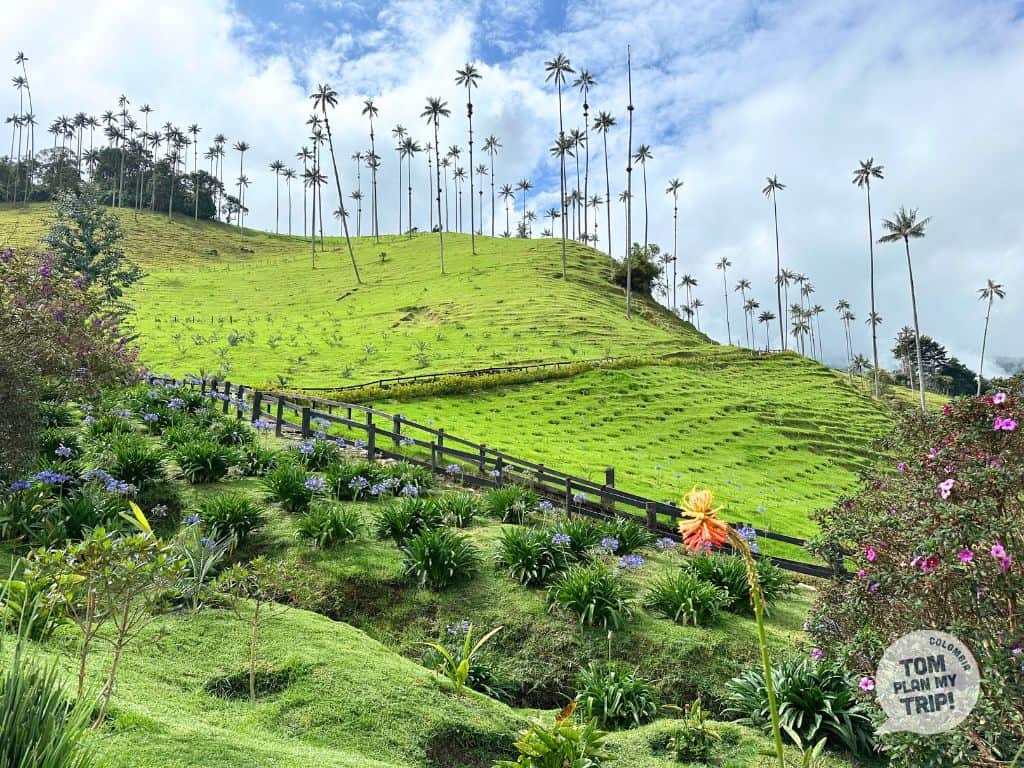
Classified by UNESCO, the coffee region reveals hills covered with fincas, valleys of wax palms, and hot springs.
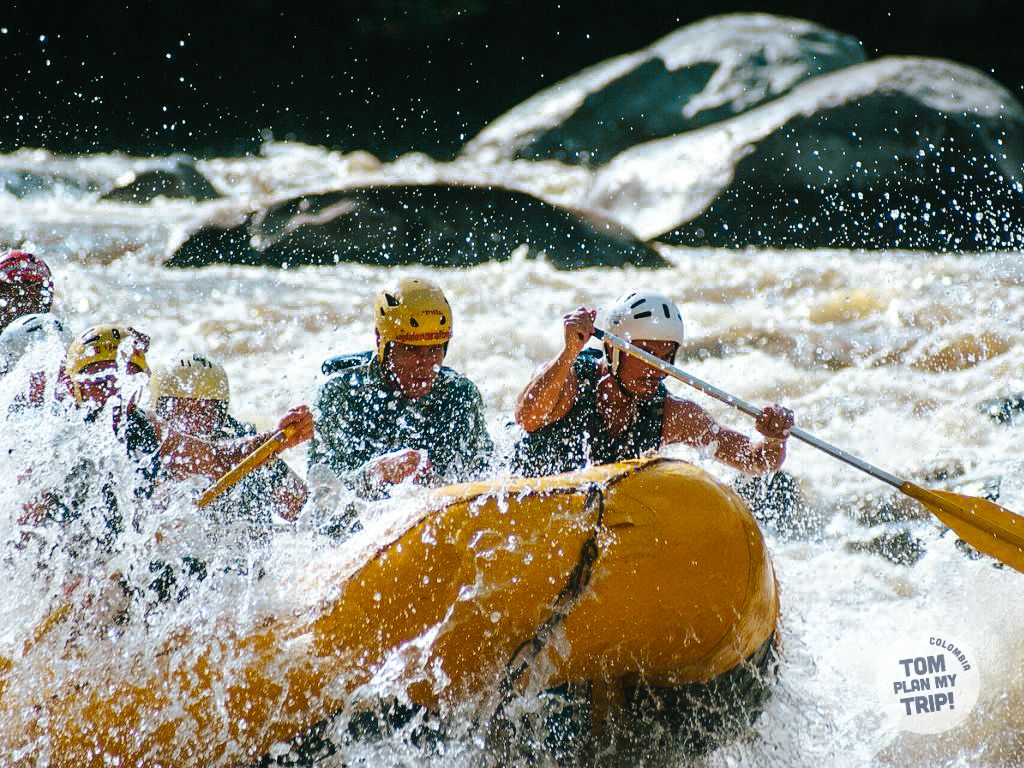
The parks of Los Nevados and El Cocuy offer some of the country’s most beautiful treks, and the adventurous can go rafting and paragliding around San Gil and above the Chicamocha canyon.
On the wildlife side, there are more than 1,000 species of birds, including the Andean cock-of-the-rock and the Andean condor, while the páramo of Chingaza is home to the spectacled bear, the only bear in South America.
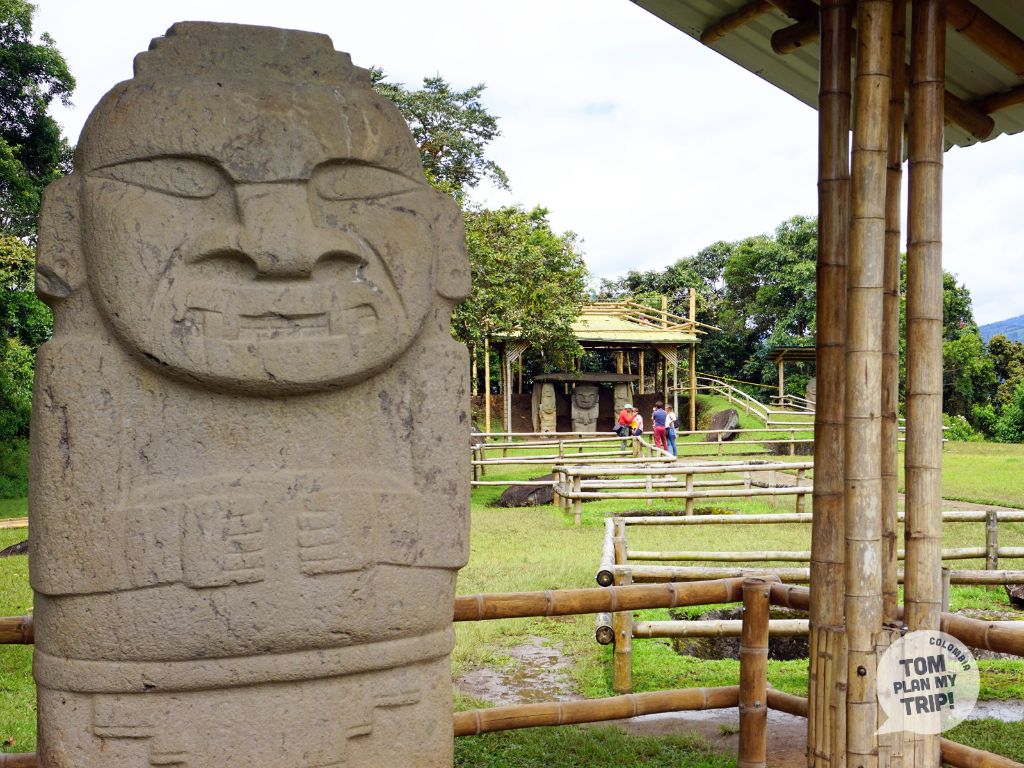
Finally, the region includes the archaeological sites of San Agustín and Tierradentro, as well as a strong culture expressed through its traditional cuisine and music.
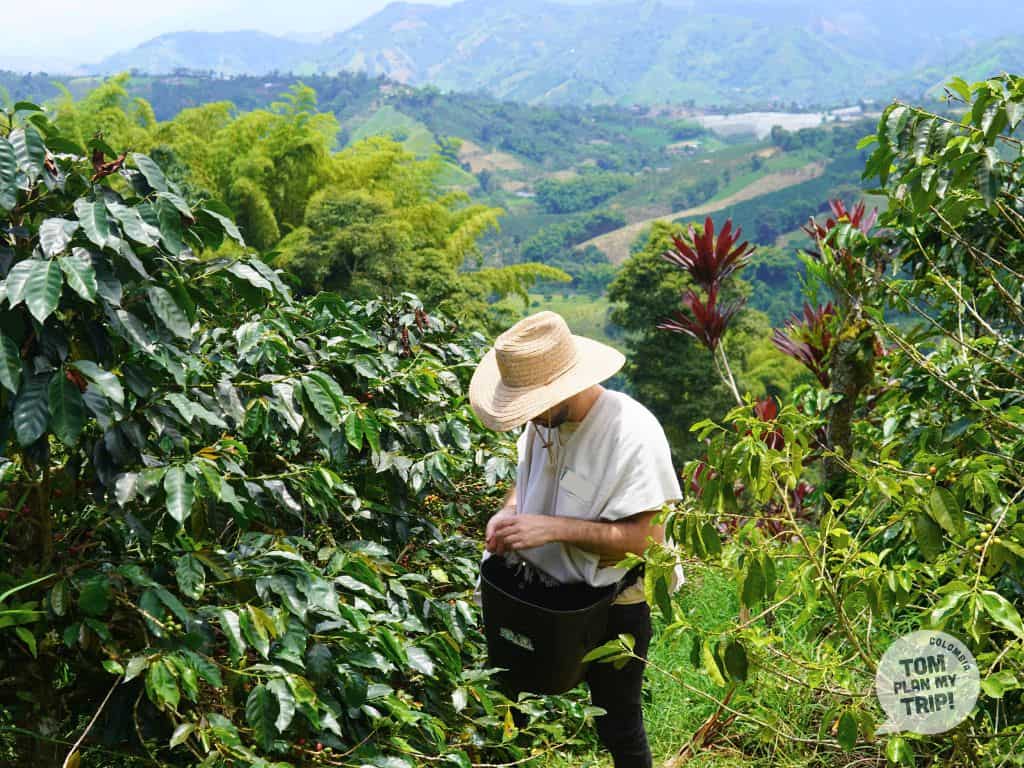

You can visit the Andean region year-round: altitude, more than the season, determines the temperature. On average, it’s about 22 °C in Medellín, the city of eternal spring, 14 °C in Bogotá, cool and unpredictable, and less than 10 °C at night in the páramos, above 3,000 m.
The most sunny days are from December to March and in July-August. April and May are the rainiest months, but even in the rainy season, the mornings often remain clear: get up early. Save the dry season for treks in the páramos, when the trails are passable.
If you want to attend the coffee harvest at a finca, choose to come between October and December in Antioquia and the coffee region, and between March and June in the south.
As for festivals, in August, Medellín celebrates the Feria de las Flores and Villa de Leyva flies its kites, Neiva dances the bambuco at the end of June, and Popayán experiences its Holy Week, listed by UNESCO.
If you avoid crowds, avoid the Colombian holidays (end of December to mid-January, Holy Week, and June) and prefer September to November, despite more frequent showers in the afternoon.
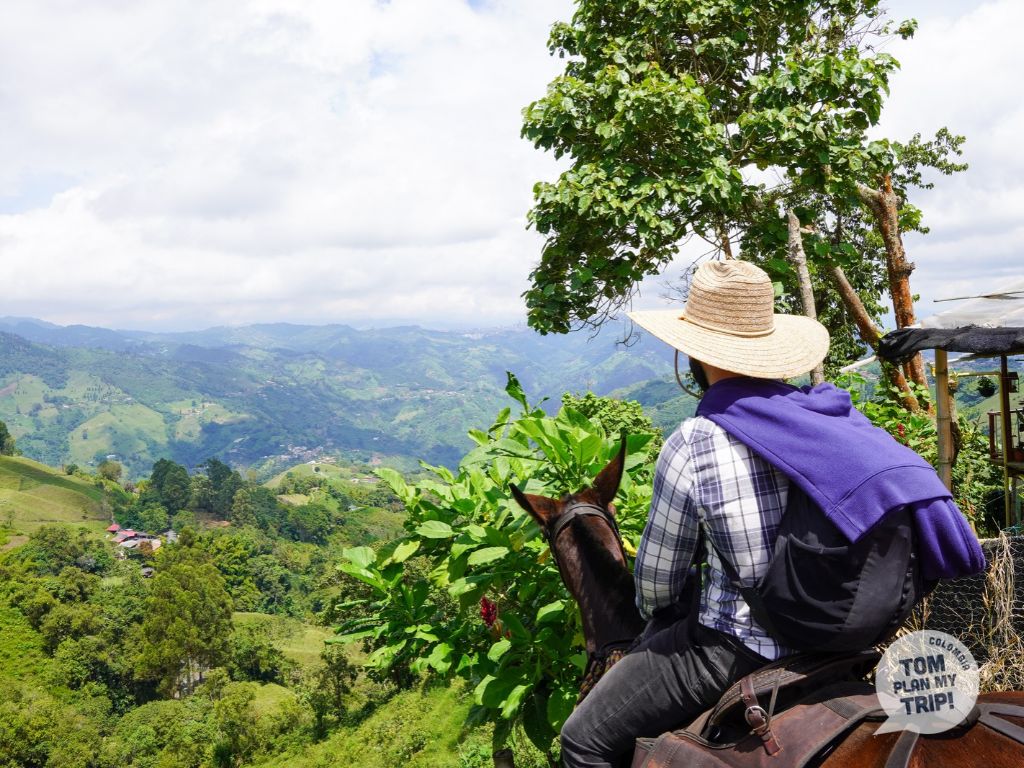
Between its big cities, colonial villages, the coffee region, and natural parks, the Andean region of Colombia is so varied that you could spend months there. For a first visit, plan for at least 7 days.
Also keep in mind that the mountain roads are winding; the terrain can lengthen journeys. I advise you to focus on just one part of the Andean region. Also consider that private transportation is a good way to save time.
You can thus, without rushing, discover a large city and its museums, then set down your luggage in a village to savor its atmosphere. For example, Bogotá then Villa de Leyva, or Medellín and Salento, or Filandia, more peaceful.
Don’t try to do more. See less, but better 😉
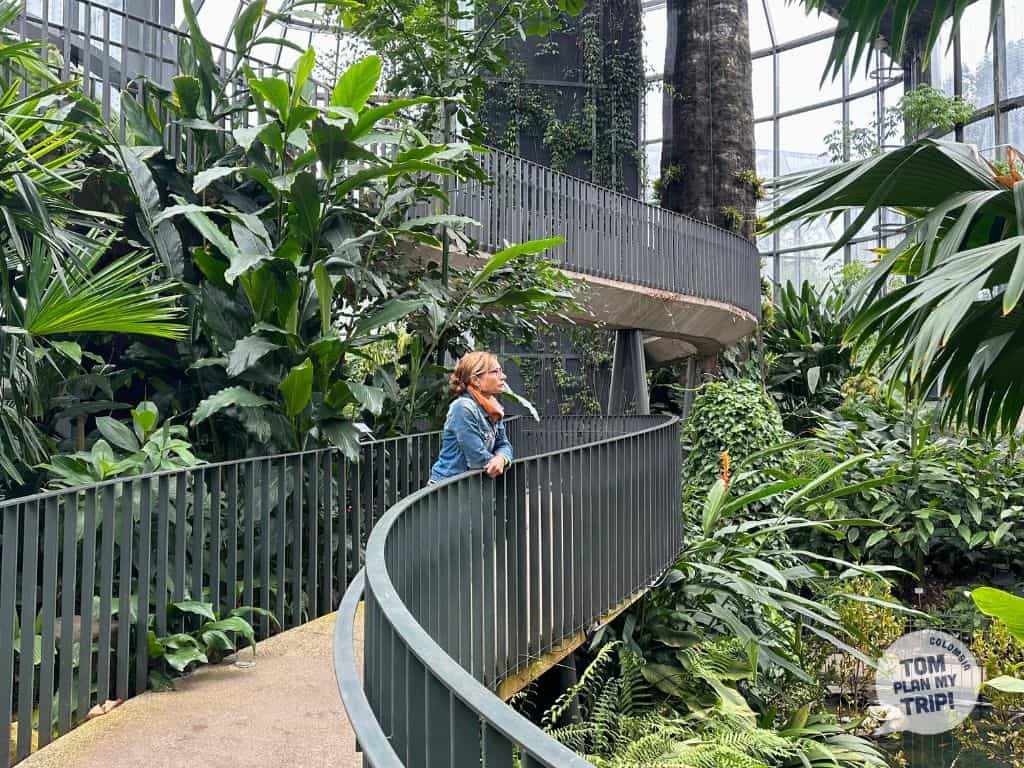
© Tomplanmytrip
Your Signature Journey: fall in love with Colombia as a family
Which adventures will your family love? Is it really right for everyone? Is it safe? Is it too touristy? Is it really worth it? How many days should you plan?
Guessing and hoping you made the right call — sometimes that works. But not always.
And I won’t even get into the stressful surprises that force you to make some changes mid-trip.
Look, we’ve been doing this for years — and if you check our reviews, you’ll see we know what we’re doing.
Enjoy the trip instead of carrying the weight of it. Tell us what you love, and we’ll handle the rest.

© Tomplanmytrip
AREAS TO VISIT IN THE ANDEAN REGION OF COLOMBIA
Each territory has its own character.
Covering more than 63,000 km² and 80% mountainous, the department of Antioquia is a mosaic of coffee plantations, páramos, and rivers, between the western and central cordilleras of the Andes.
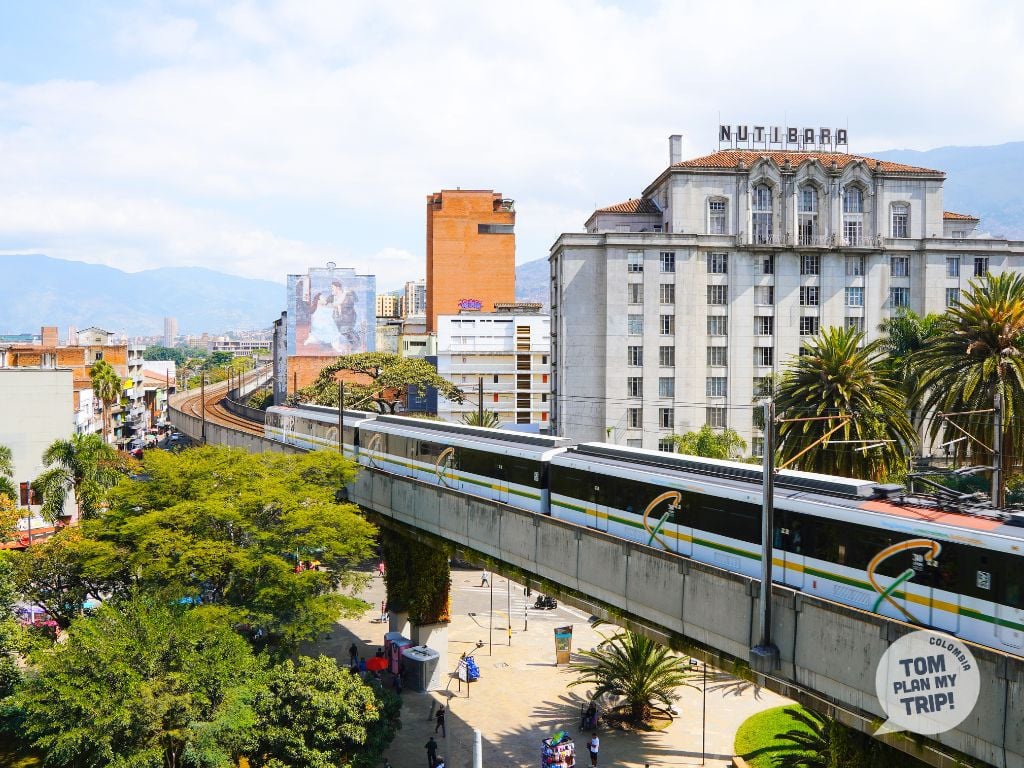
Its capital, Medellín, located at an altitude of 1,500 m, is the second largest city in the country. Lively and welcoming, it boasts a creative and committed cultural scene, driven by Botero’s sculptures, the street art of Comuna 13, and the Museo Casa de la Memoria. Its nightlife, from the rooftops of El Poblado to the salsa bars of Laureles, is renowned far beyond the country’s borders, and its gastronomy blends traditional dishes with creations from daring chefs.
It’s enough to leave Medellín to change the tempo. The colonial villages invite you to experience the paisa life: Jericó and its coffee farms, Jardín and its trails and waterfalls, or Guatapé and its Piedra del Peñol.
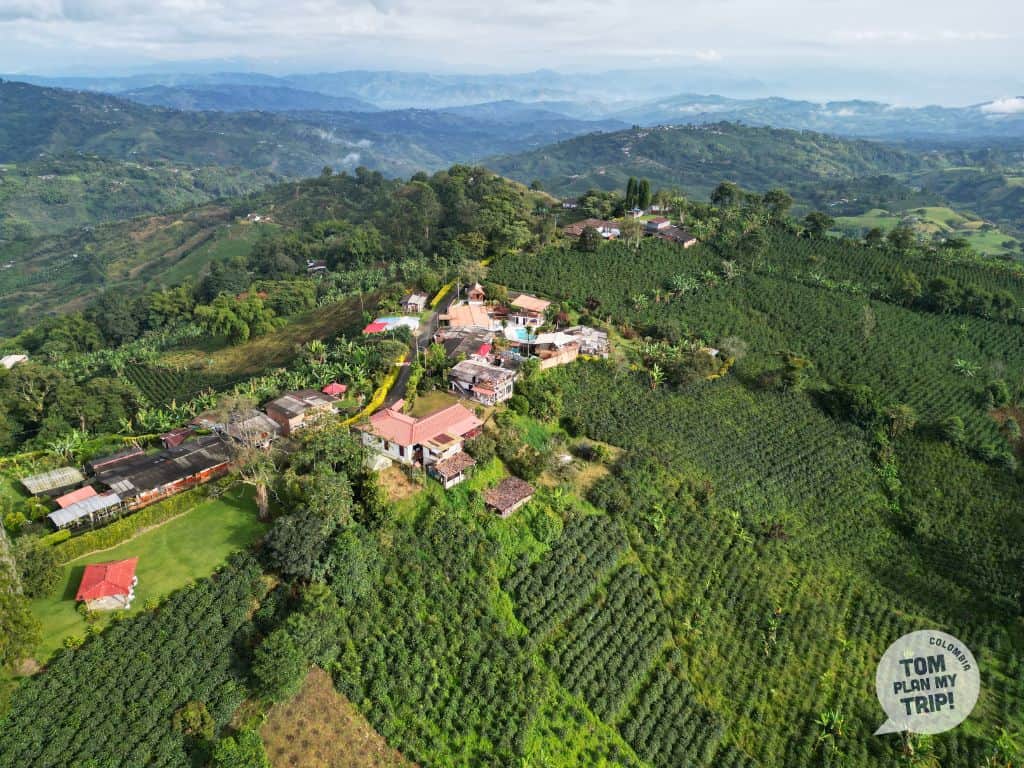
Covering nearly 13,900 km², the Coffee Region (eje cafetero) mainly extends over the departments of Caldas, Risaralda, and Quindío.
It offers a mix of green hills covered with coffee trees and misty valleys, extending to the foot of the snow-capped peaks of the Los Nevados National Park, dominated by the volcano Nevado del Ruiz. Volcanic activity feeds hot springs amidst beautiful vegetation, like in Santa Rosa de Cabal.
Its cultural landscape, inscribed as a UNESCO World Heritage site in 2011, is dotted with fincas, family farms with bahareque walls, a traditional material, and flowered galleries opening onto orchards.
Here, for generations, life has been lived to the rhythm of coffee culture and harvests.
In the villages, like Salento, at the gates of the Cocora Valley and its wax palms, Filandia, with its white houses with colorful balconies, or Pijao and Salamina, with a more peaceful atmosphere, people linger on the terrace in the lively squares while the indestructible Willys jeeps, inherited from the post-war period, come and go.
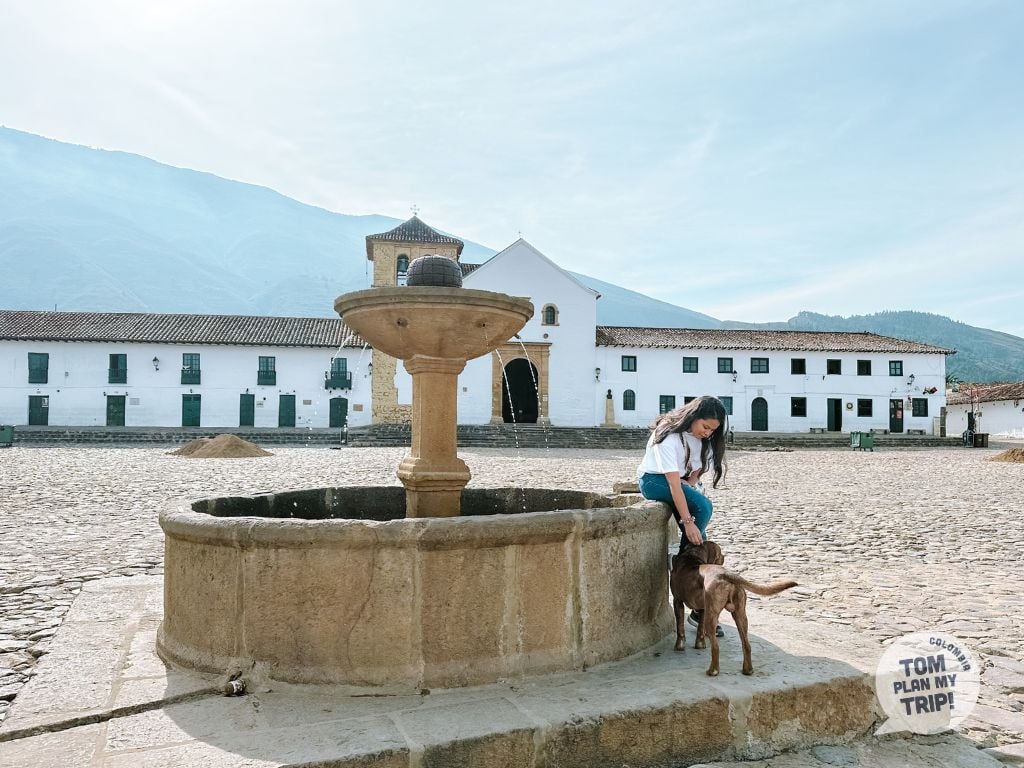
Spanning over 23,000 km² in the eastern mountain range, Boyacá has preserved a strong colonial and religious imprint visible in its villages often perched above 2,500 m.
The inhabitants, proud of their rural roots, welcome visitors with a warm politeness and, in the countryside, the ruana, the traditional poncho, is still worn daily.
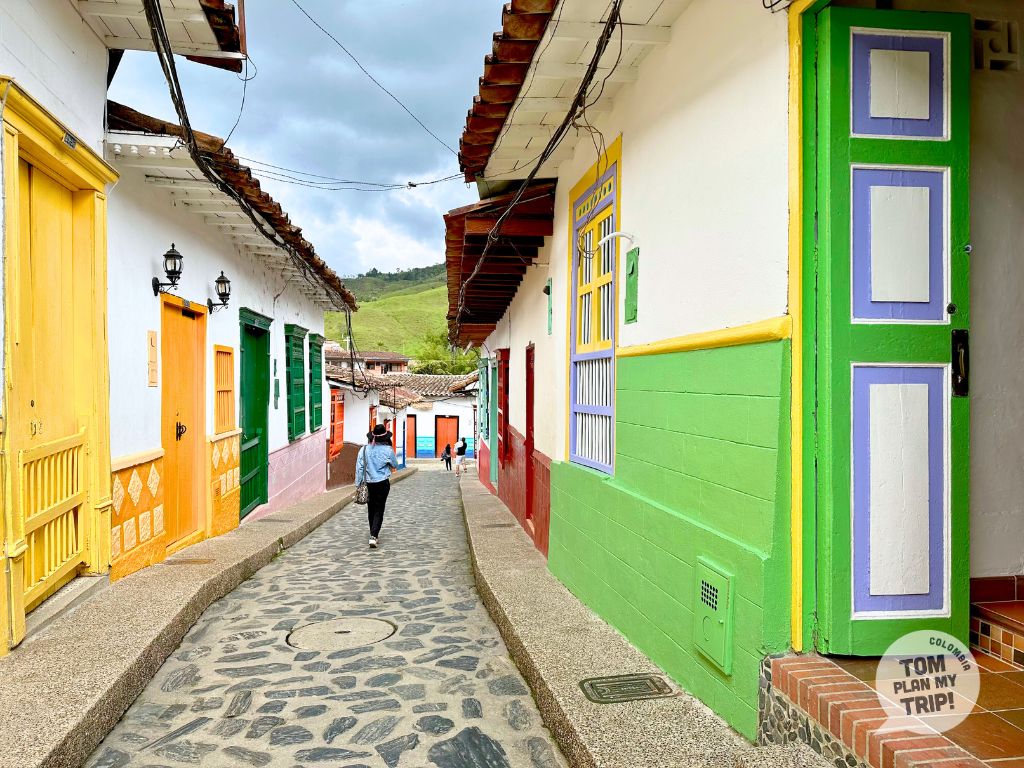
Here, we take our time: Villa de Leyva and its white facades around a huge cobblestone square that comes alive on weekends, Ráquira and its pottery displayed in the street, or Monguí, nestled in the mountains, with its houses with green doors.
Gaining altitude, the scenery becomes more wild, between the Laguna de Tota and its white sand beach, perched at over 3,000 m, the frailejones of the páramo of Ocetá and the snow-capped peaks of the El Cocuy national park.
With an area of over 30,000 km², in the eastern mountain range, Santander is a land of character, where colonial villages cling to the sides of dizzying canyons. Ancient cobblestone paths descend through semi-desert vegetation bristling with cacti, down to the villages on the valley floor, like Guane and Jordan, sweltering in the heat.
Contrasting with the harshness of the landscape, a peaceful atmosphere emanates from the villages. Like Barichara, perched above the Suarez canyon, with its white houses lining steep streets with ochre cobblestones and its inhabitants faithful to the traditions of their Guane ancestors.
Spanning over 200 km and plunging down to 2,000 m deep, the Chicamocha Canyon beautifully expresses the rugged terrain of Santander. Further south, around San Gil, the Fonce and Suárez rivers are ideal for rafting.
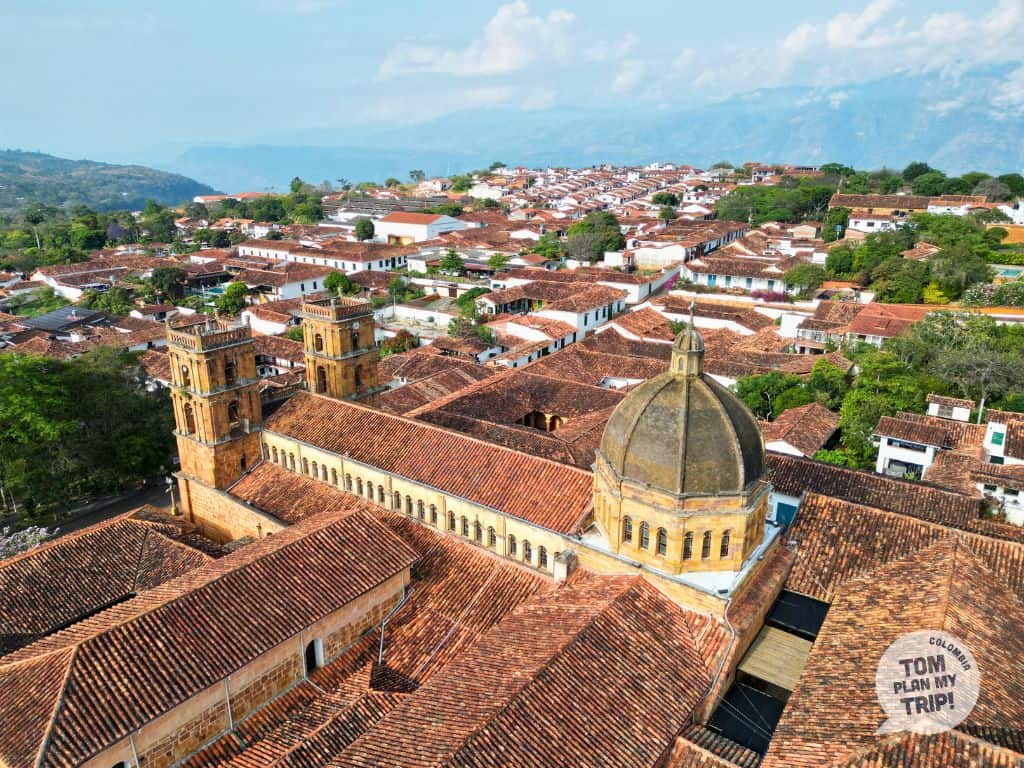
More isolated and still underdeveloped for tourism, the south of Colombia remains off the beaten path of major tourist circuits.
It begins in the Cauca Valley, amid sugarcane fields and mountains, where Cali lives to the rhythm of salsa.
Further south, on a plateau dominated by volcanoes, Popayán, the white city, with its whitewashed facades and colonial churches, bustles during the UNESCO-listed Holy Week.
On the other side of the central mountain range, in Huila, the roughly 500 statues of the San Agustín site watch over green hills above the gorges of the Magdalena River, while Neiva, overwhelmed by the heat, opens the road to the red and gray desert of La Tatacoa.
At the gates of Ecuador, in the department of Nariño, Pasto stretches at the foot of a volcano, surrounded by a mosaic of sloping fields, on the road leading to the sanctuary of Las Lajas, suspended above a canyon.

© Tomplanmytrip
HIKES IN THE ANDEAN REGION OF COLOMBIA
From snow-capped peaks to arid canyons.
To the northeast of Boyacá, the El Cocuy National Park is a protected area of snow-capped peaks up to 5,330 m, glaciers, clear-water lagoons, and valleys covered with frailejones – enough to satisfy high mountain enthusiasts.
Because this land is sacred to the U’wa people, only three one-day hikes, without camping, are allowed. All start around 4,000 m and lead to the foot of a glacier, either Ritacuba Blanco (14 km round trip), Púlpito del Diablo (15.6 km), or Cóncavo peak, above Laguna Grande de la Sierra (19.6 km).
The altitude requires preparation with one or two nights of acclimatization in El Cocuy or Güicán. You need to be accompanied by a certified guide, start at dawn, and return by 1 PM at the latest. The dry season, from late December to late February, offers the best conditions.

Between the coffee region and Tolima, the Los Nevados National Park is home to three snow-capped volcanoes: the Ruiz (5,321 m), the Tolima (5,215 m), and the Santa Isabel (4,965 m), which tower over páramos of frailejones and high-altitude lagoons.
The Ruiz, always active, is not climbed, but many treks are possible. Here are the three most well-known:
- From the Cocora Valley, the Paramillo del Quindío (4,750 m) is climbed in three days through the cloud forest and then the páramo, with nights in a finca and a final ascent without technical difficulty.
- The Santa Isabel is climbed in two to three days, preferably via the Laguna del Otún, with a final night ascent.
- More demanding, the Tolima requires four days from the Cocora Valley and a roped passage on the glacier.
A certified guide, insurance, and a reservation are mandatory. Favor January-February or July-August and take into account the annual closures.

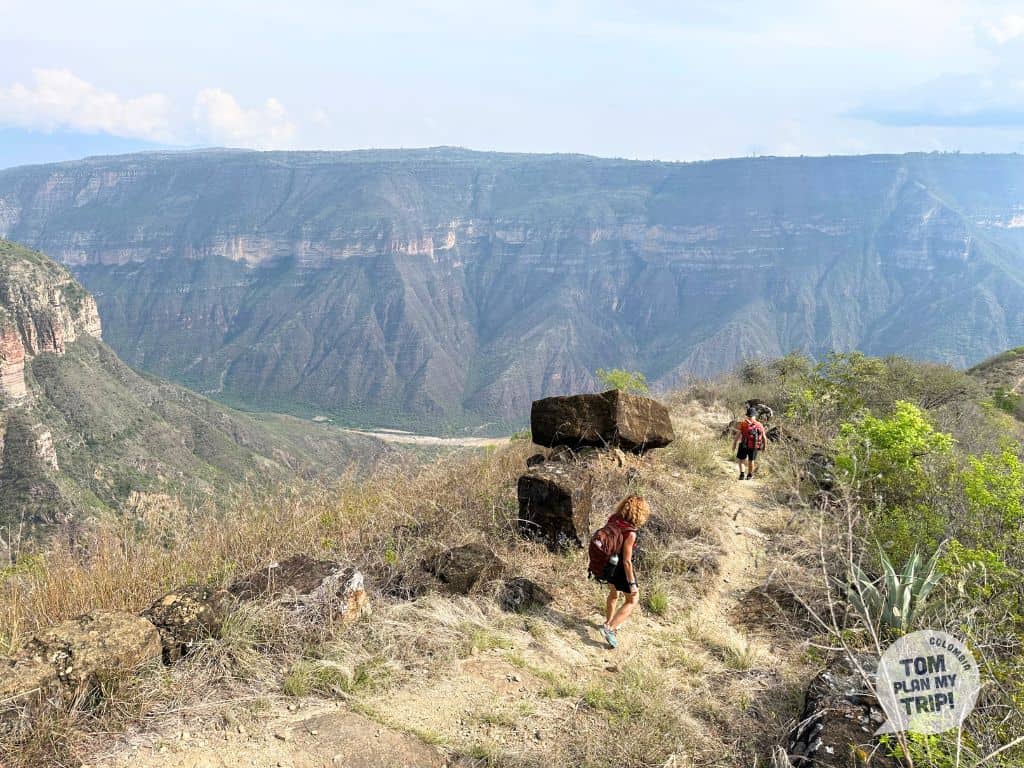
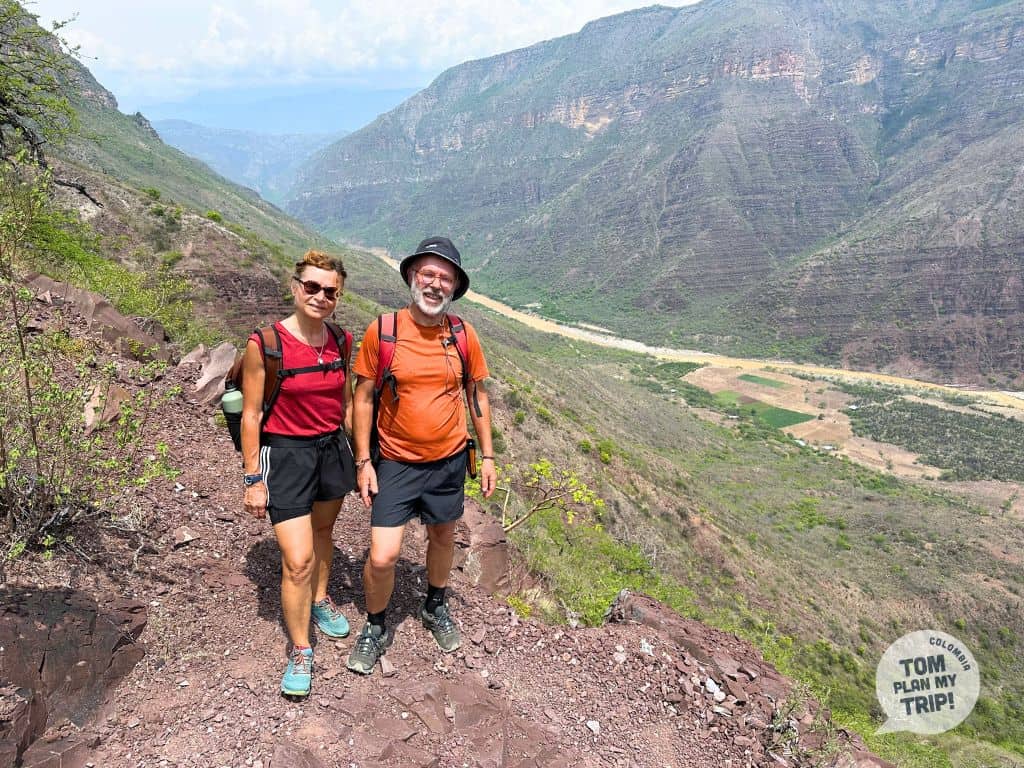
The Chicamocha Canyon can be explored on foot via the caminos reales, paved paths inherited from the pre-Columbian Guane people.
The easiest hike, the Camino Real de Guane, descends from Barichara over nearly 7 km, offering wide views of the canyon, to the peaceful village of Guane.
The most seasoned can connect Barichara to Mesa de Los Santos in two days, via Guane, Villanueva, and Jordán (about 31 km).
The most spectacular section descends from Los Santos in switchbacks over nearly 900 m of elevation change, through increasingly arid vegetation where cacti stand tall. Each turn reveals a breathtaking view, and the heat rises as you approach Jordán, a sleepy hamlet by the river where you spend the night, before climbing more than 1,200 m up to Villanueva.
This hike requires good physical condition and an early start. The trail marking is uneven, but the locals are happy to point the way; otherwise, take a guide. The rainy season remains the most pleasant, when the canyon greens up.
© Tomplanmytrip
CULTURAL EXPERIENCES IN THE ANDEAN REGION OF COLOMBIA
Between memory, local produce, and expertise.
Between pre-Columbian heritage, the Spanish conquest, independence, and then half a century of conflicts involving guerrillas, paramilitaries, and drug traffickers before the peace agreements, Colombia’s history is complex, and a guided tour of a major city helps you to understand it better.
Bogotá is particularly suited for visiting La Candelaria, its historic center, just like Medellín with the Museo Casa de la Memoria and Comuna 13, whose transformation illustrates the rebirth of an entire country.
The free walking tours offer a good introduction, but the groups often exceed twenty people; nothing beats a private tour: the guide adapts to your pace and answers all your questions.


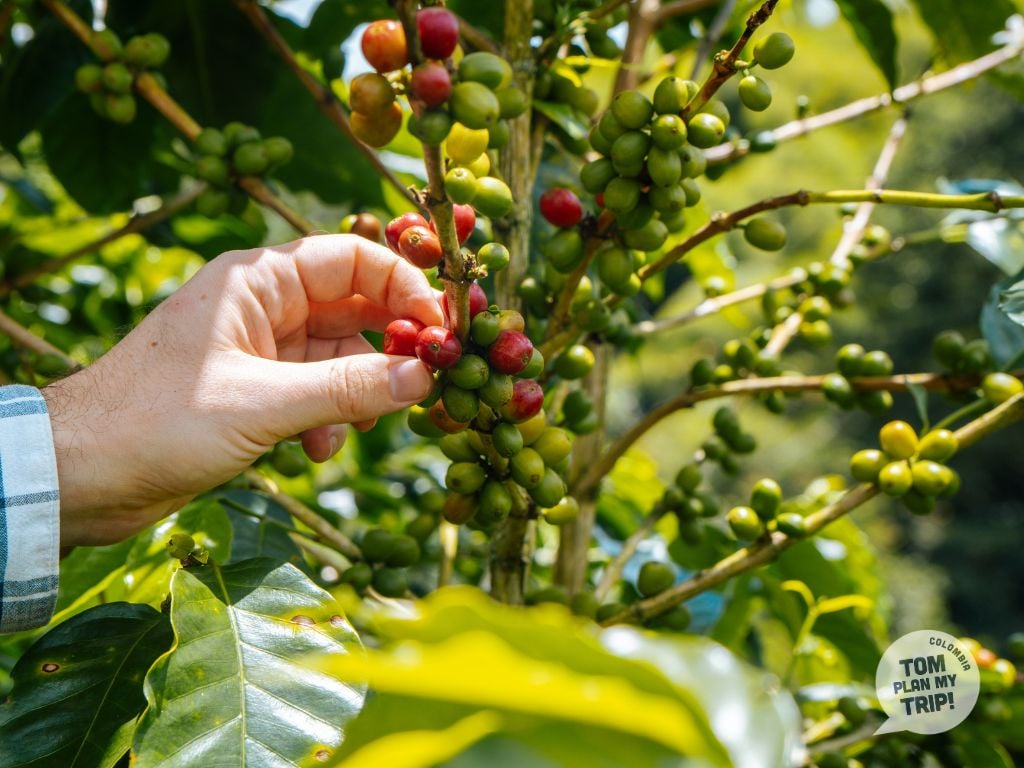
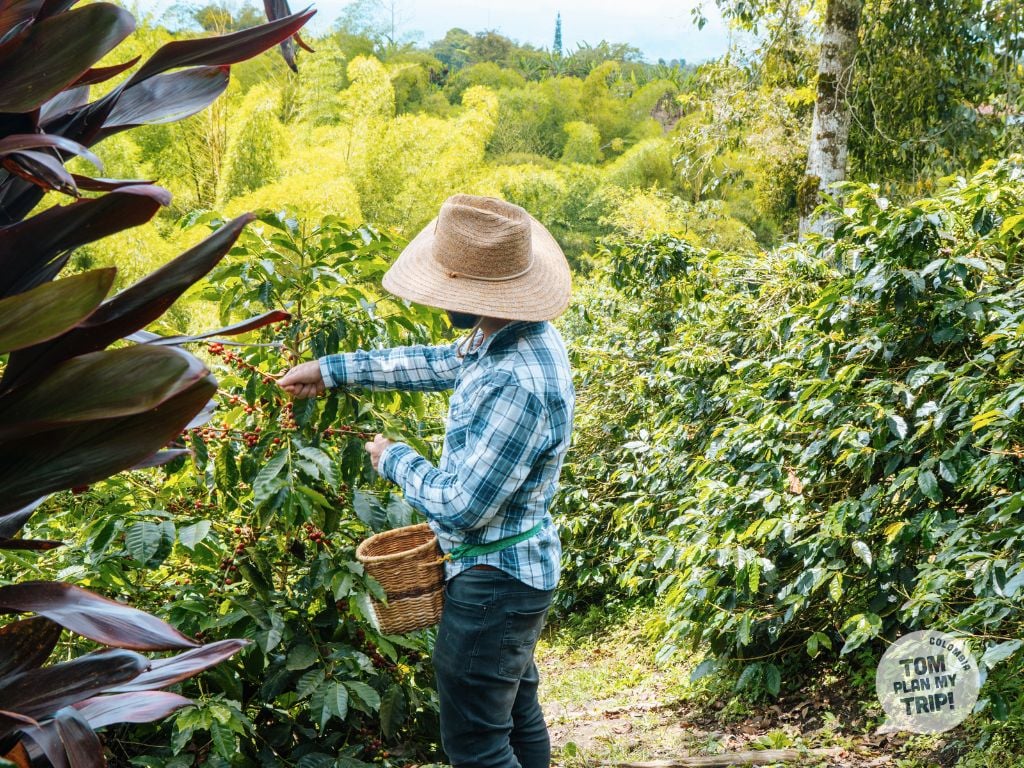
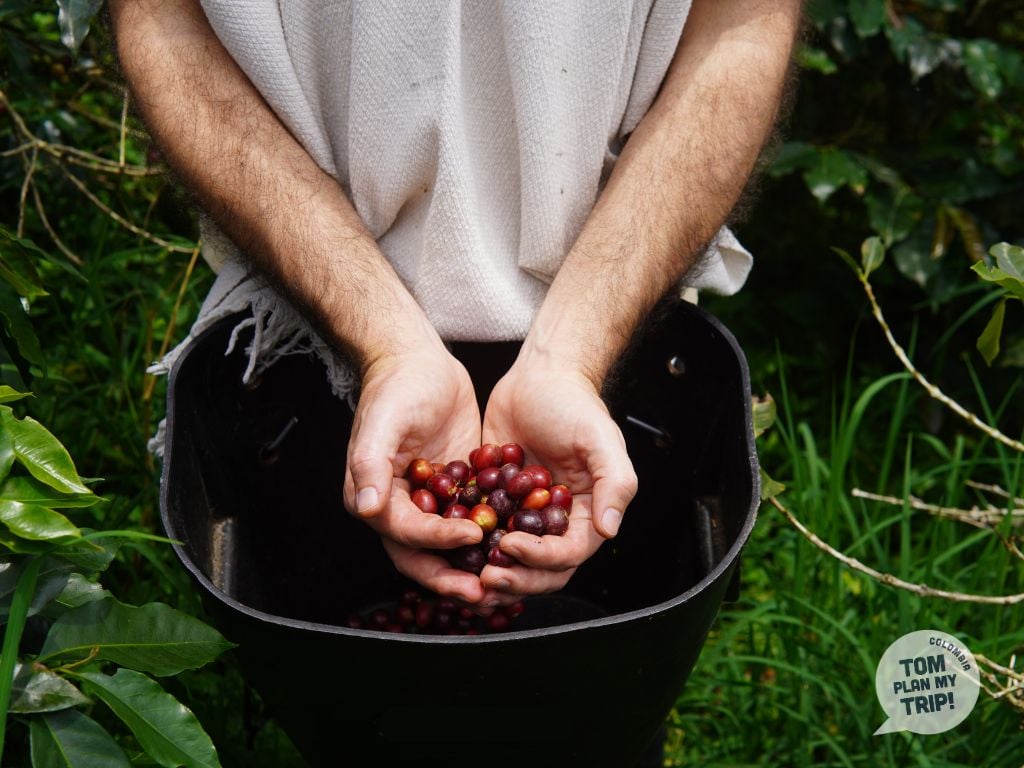
Pillar of the rural economy, coffee, with some 550,000 families of producers, is also a marker of identity.
From the hills of Antioquia to the valleys of Huila, the country’s leading producer, coffee fincas dot much of the Colombian Andes, far beyond the Eje Cafetero.
Visiting a finca allows you to understand this expertise: a walk among the coffee trees, the harvest (if you come at the right time), the stages of processing the bean, then a tasting, even more memorable if it is followed by a traditional meal with the family.
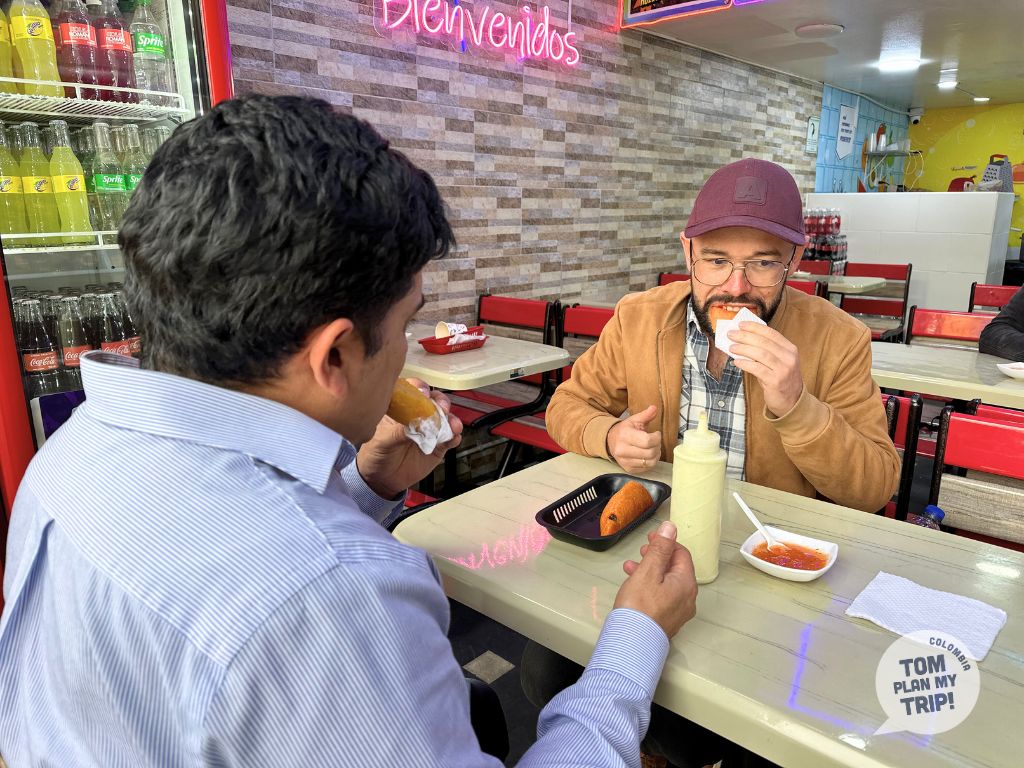
No time to visit a finca? The specialty coffee shops, increasingly numerous in town, showcase the country’s best beans, long reserved for export. A barista introduces you to tasting: you learn to recognize acidity, sweetness, and aromas, and to feel how each preparation method changes the taste.
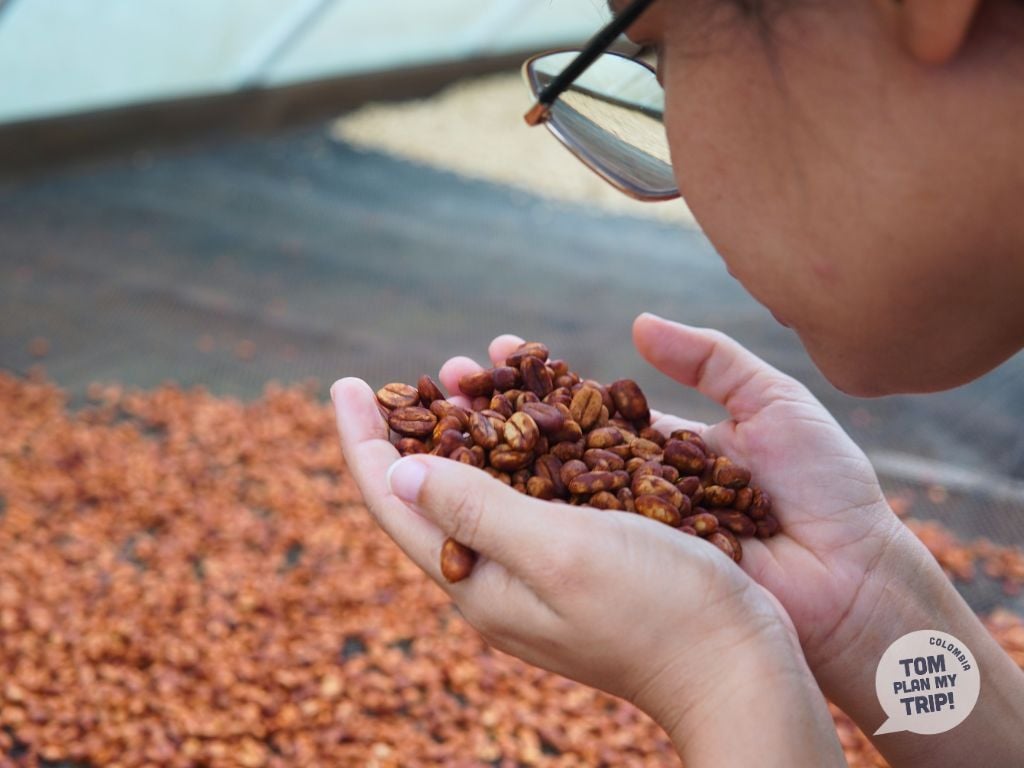
Long overshadowed by coffee, Colombian cocoa is gaining recognition; it is internationally recognized as a fine aromatic cocoa and awarded in major competitions. It grows in the warm valleys of the Andes, below the coffee plantations.
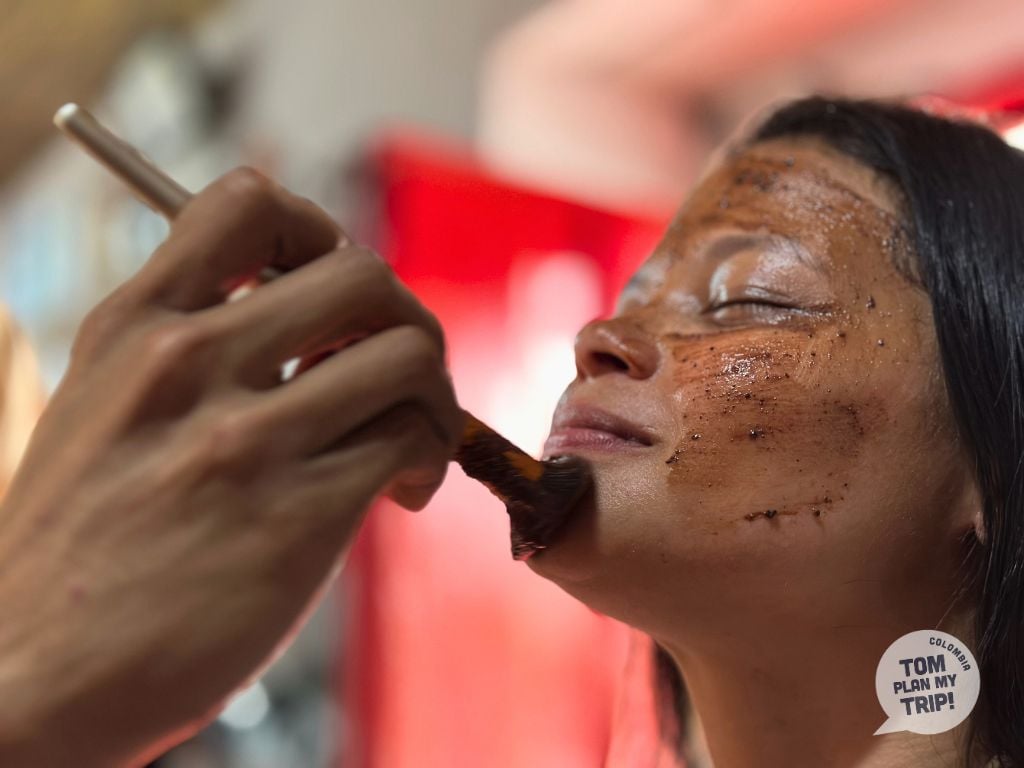
To the east of Medellín, the fincas of San Francisco and San Rafael guide you through the transformation of cocoa, from the pod to the bar. To finish, some invite you to coat yourself with cocoa, known for its exfoliating properties, before rinsing off under a waterfall.
In the coffee region, cocoa is establishing itself in the lowlands of Quindío, abandoned by coffee producers due to climate change. A few fincas around Circasia and Quimbaya offer tours.
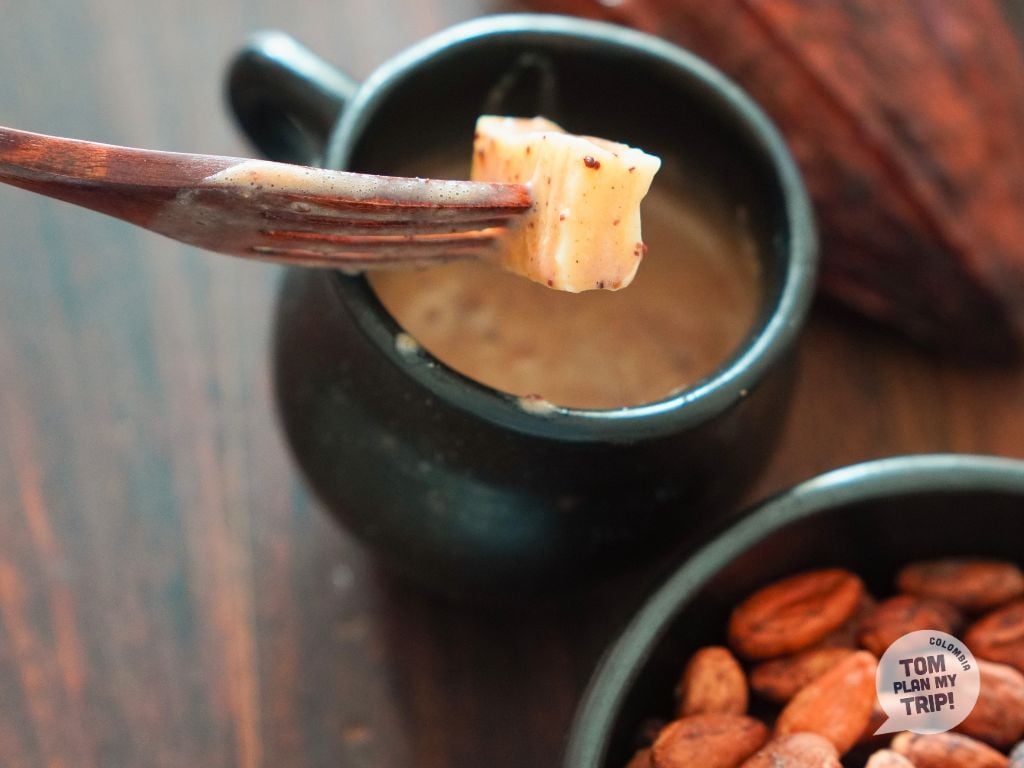
If you pass through Bogotá, try the chocolate con queso, pieces of cheese melted in a cup of hot chocolate – a bit puzzling but very comforting on a rainy day.
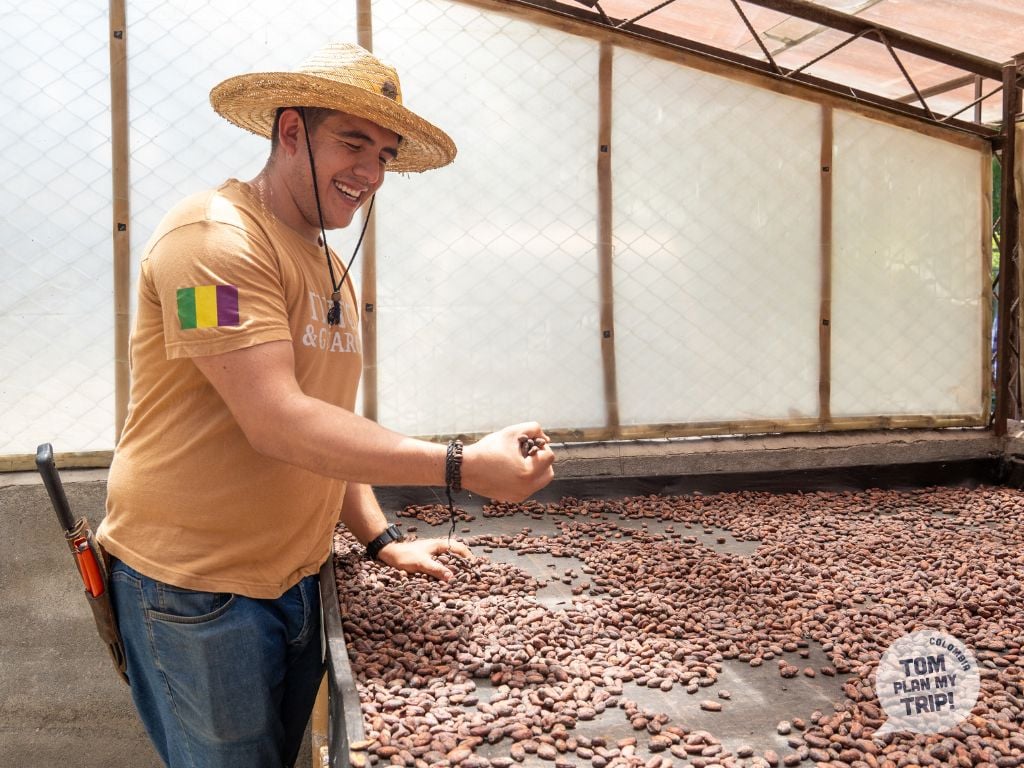
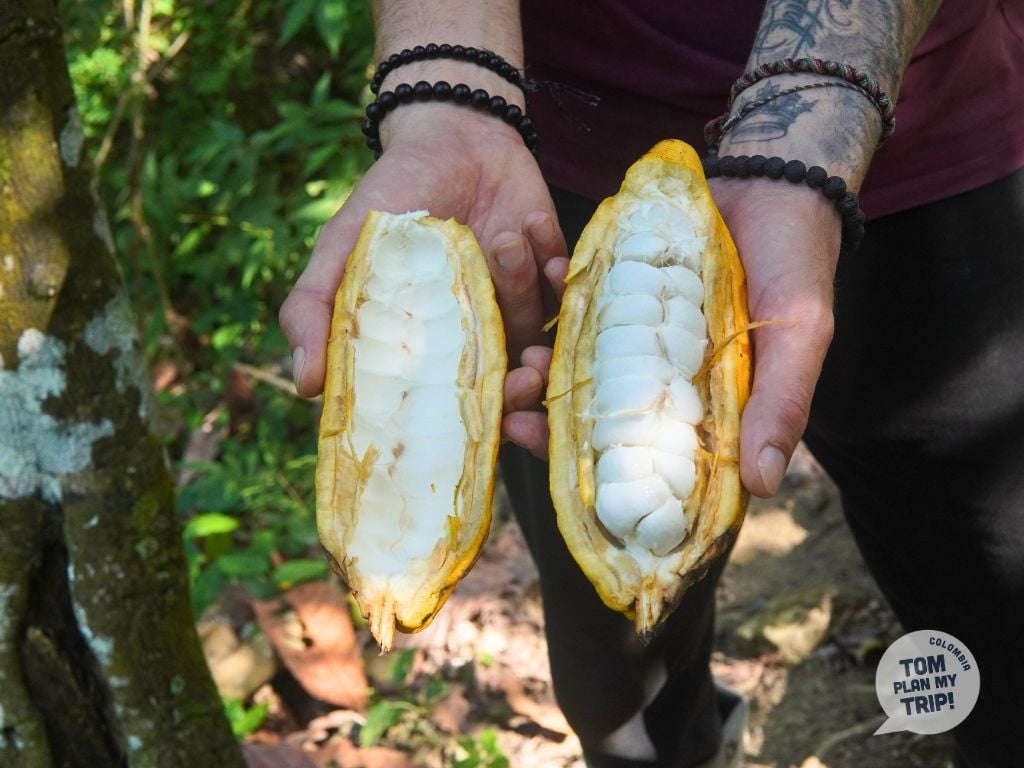
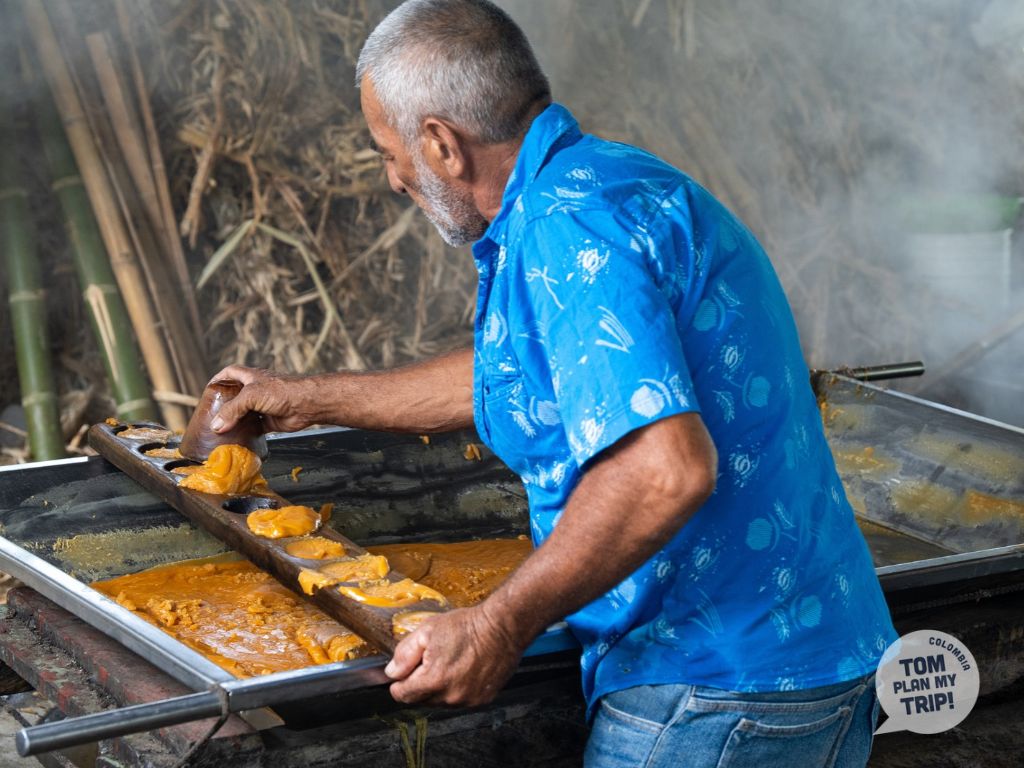
Sugar of the people, panela is present in every household in Colombia. This unrefined cane sugar, with caramel notes, is commonly used to prepare aguapanela, a traditional drink that is consumed hot or cold. Colombia is the second-largest producer in the world, behind India.
To understand its production, head to a trapiche: these small family mills scattered in the Andean countryside of Cundinamarca, Boyacá, Antioquia, or the coffee region. The cane is crushed there, then its juice is cooked in large vats over a fire fueled by the stalks, stirred and molded into blocks.
Most trapiches only operate a few days a week: check ahead if you want to see them in action. And in town, try a guarapo, cane juice pressed before your eyes by a street vendor.
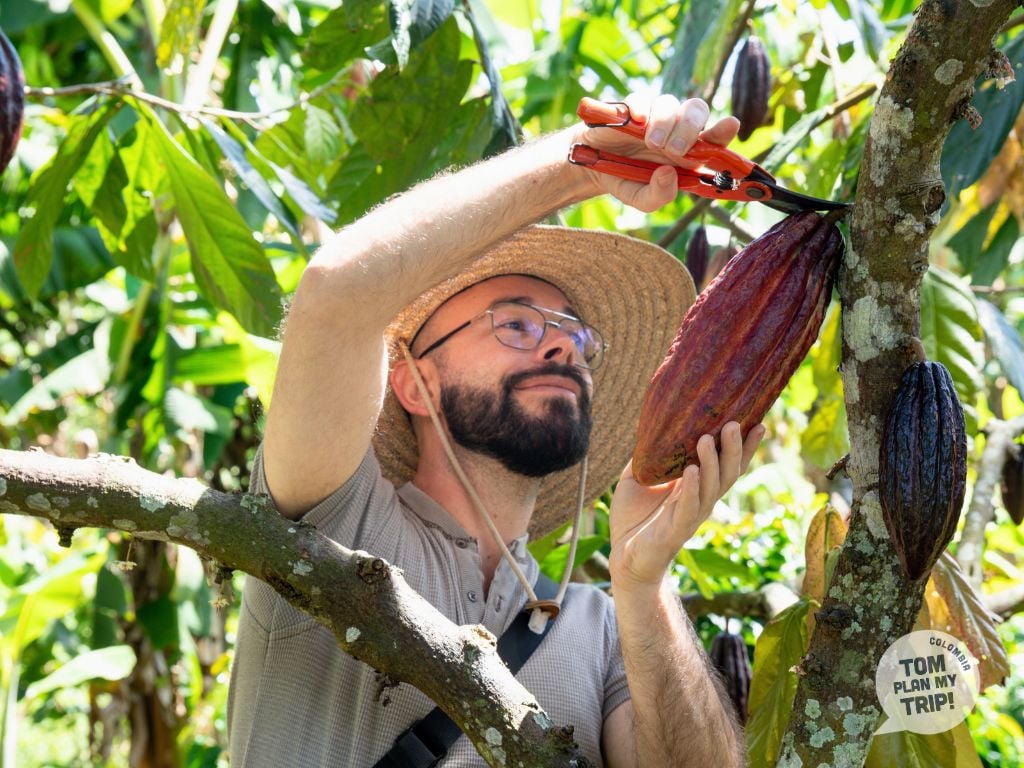
In the Colombian Andes, craftsmanship is not just folklore: it is a profession that supports families and is passed down through generations.
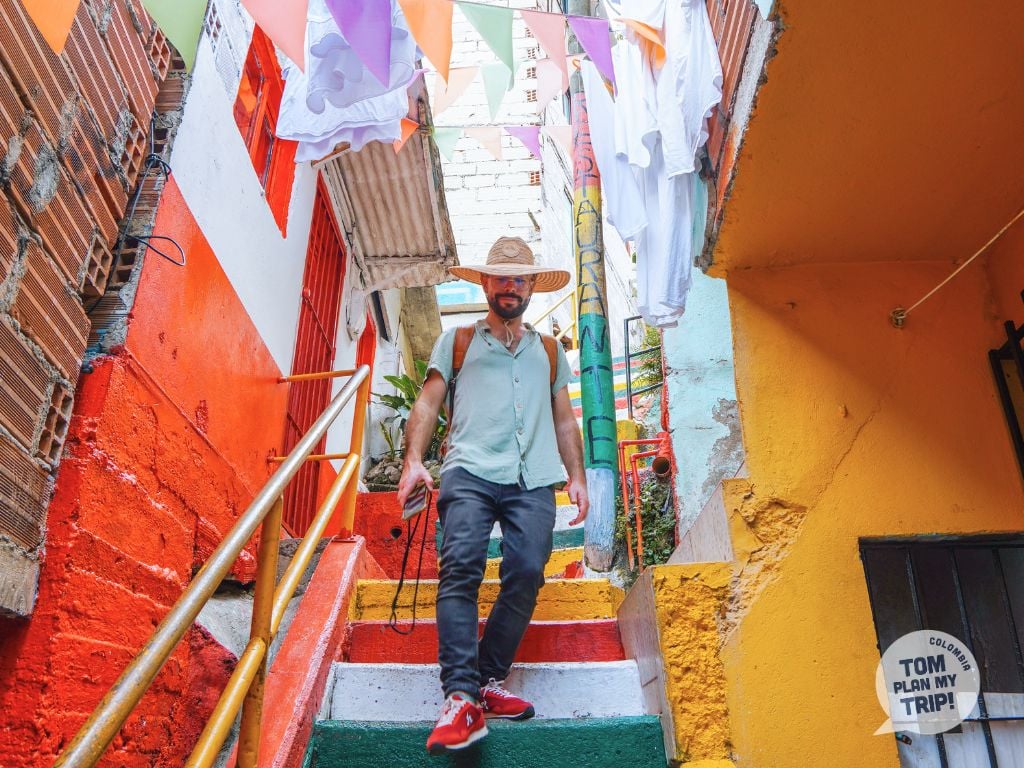
In Aguadas, in Caldas, weavers shape the aguadeño hat from iraca palm fiber, still worn in the countryside. In Jericó, workshops still sew the carriel, the leather bag of mule drivers with secret pockets, which the men of the village wear crossbody. In Filandia, basket weavers braid vines to make the baskets used for coffee harvesting.
The village of Barichara has preserved a well-established artisanal tradition in its daily life. More than a hundred artisans carve the stone used to build houses, pave streets, and sculpt fountains and ornaments. They also continue basket weaving, cultivate tobacco to make cigars, and a women’s collective transforms fique (agave fiber) into paper. These are all living skills that artisans are happy to share during workshops.

© Tomplanmytrip
OUTDOOR ACTIVITIES IN THE ANDEAN REGION OF COLOMBIA
The Andean terrain, a land of sensations.
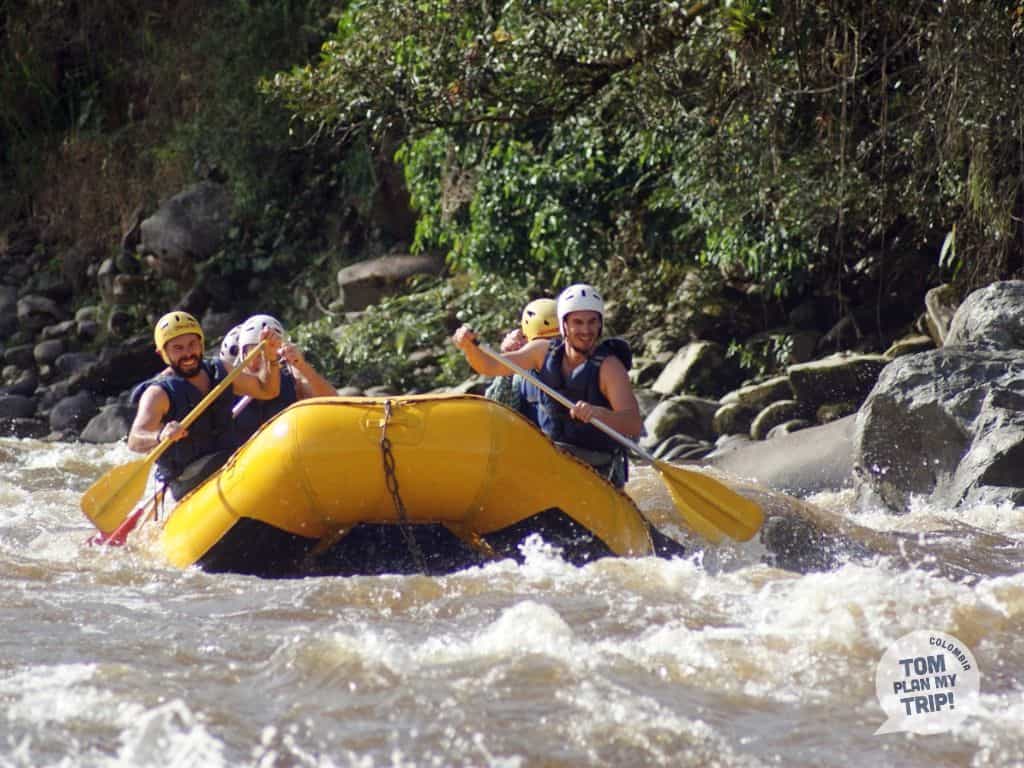
With their rugged terrain and whitewater rivers, the Andes of Colombia are well-suited for rafting.
In eastern Antioquia, about 3 hours from Medellín, the rios Calderas, Verde, and Samaná wind through a lush jungle, in water of great clarity. Their class II to IV rapids are suitable for both beginners and more experienced practitioners. The Río Verde can even be descended in two days, with a night in a bivouac on its banks.
In Santander, San Gil has established itself as the Colombian capital of adventure sports. The Río Fonce, which runs through the city, offers class II-III rapids accessible to families. An hour’s drive away, the Río Suárez plunges into a canyon, where class IV-V rapids follow one another, reserved for thrill-seekers.
The river’s level varies by season: during the rainy period, the flow increases and the rapids gain in power.
In eastern Antioquia, the mountains surrounding San Carlos are full of waterfalls. It’s a great playground for canyoning: at El Chispero canyon, you can do a series of rappels under the falls, jump into pools, and natural slides.
In Jardín, options are more limited, but there are also some interesting routes, including a waterfall about sixty meters high that you can descend by rappel.
Introductory courses, supervised by guides who provide all the equipment, allow beginners to experience the thrills of canyoning in good conditions.

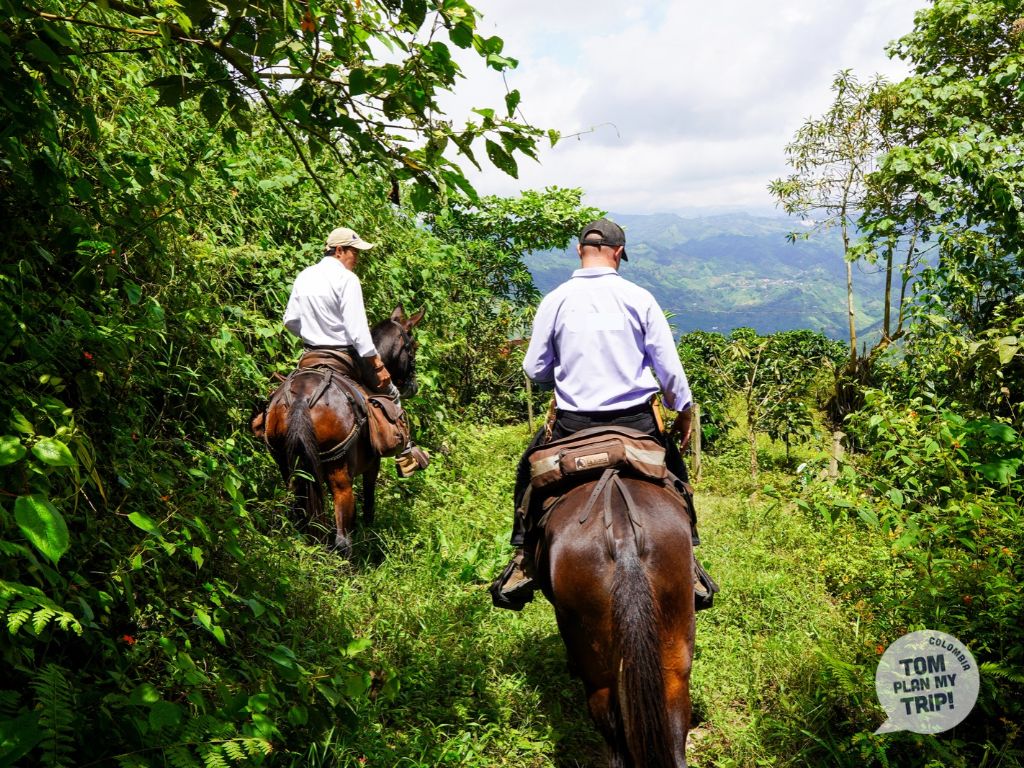
For centuries, the arrieros and their mules traveled the Andes of Colombia, transporting coffee and goods from village to village.
In the villages of Antioquia, the horse is still part of everyday life. In Jericó, they patiently wait for their riders in front of the cafés; in Concepción, a peaceful rural village, their hooves echo in the cobblestone streets, and you come across mules loaded with sugar cane heading up to the trapiche.
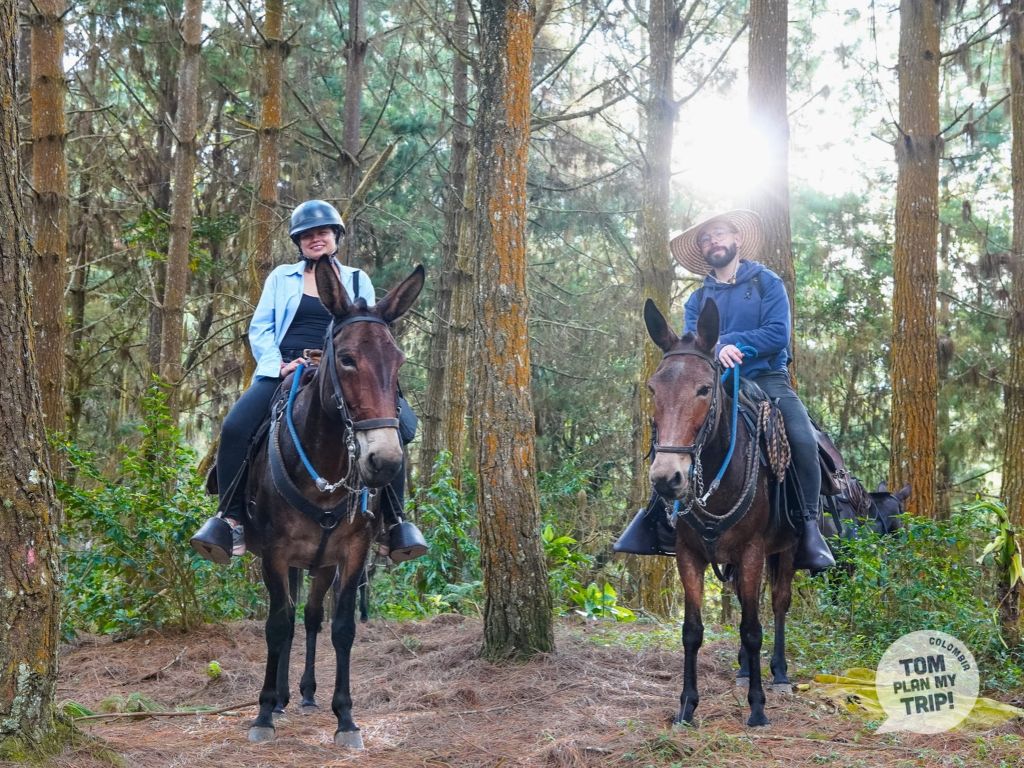
A horseback ride remains a beautiful way to explore the Andean countryside. In Jericó, you take a trail to a viewpoint over the Cauca Canyon and make a stop at a coffee finca. Several routes allow you to discover the surroundings of Jardín, some leading to waterfalls, while in Filandia, they wind through woods and streams.
To rediscover the arriero spirit, you can also set off on a mule, which is very sure-footed on steep terrain.
From the sky, you will measure all the majesty of the Colombian Andes: a panorama of peaks as far as the eye can see, carved with canyons and lush valleys. This terrain is well-suited for paragliding, which is accessible even to beginners, in tandem with an instructor.
An hour from Medellín, you take off from San Félix to fly over the Aburrá Valley and its hills. In Jericó, you take off from Cerro Las Nubes and fly over the village, the coffee plantations, and the Cauca canyon.
In Quindío, in Buenavista, a small village nicknamed the “balcony of Quindío,” you glide over the coffee farms.
Finally, from San Gil, you float along the air currents along the cliffs of the dizzying Chicamocha canyon, the river winding far below.
Choose an agency whose instructors are certified, and avoid days of rain or strong wind.

© Tomplanmytrip
WILDLIFE AND FLORA OF THE ANDEAN REGION OF COLOMBIA
The richness of the Andean mountains.
A páramo is a high mountain ecosystem mainly found in the tropical Andes, extending between the forest limit and the snowline at altitudes between 3,000 and 4,500 m. Colombia is home to nearly half of them worldwide.
Prairies of tufted grass, waterlogged bogs, and lagoons shrouded in mist create a stunning landscape where the frailejón reigns, an endemic plant of the páramos, with a sturdy trunk resembling motionless walkers.
The páramo plays an essential role in the country’s water balance by capturing moisture from the fog and releasing it slowly: nearly 70% of the water consumed in Colombia comes from it.
The most accessible are Chingaza, near Bogotá, and Ocetá, in Boyacá, starting from the village of Monguí. In Los Nevados and Cocuy parks, trails cross páramos and lead to glaciers. Sumapaz, primarily dedicated to preservation, can be visited subject to restrictions.

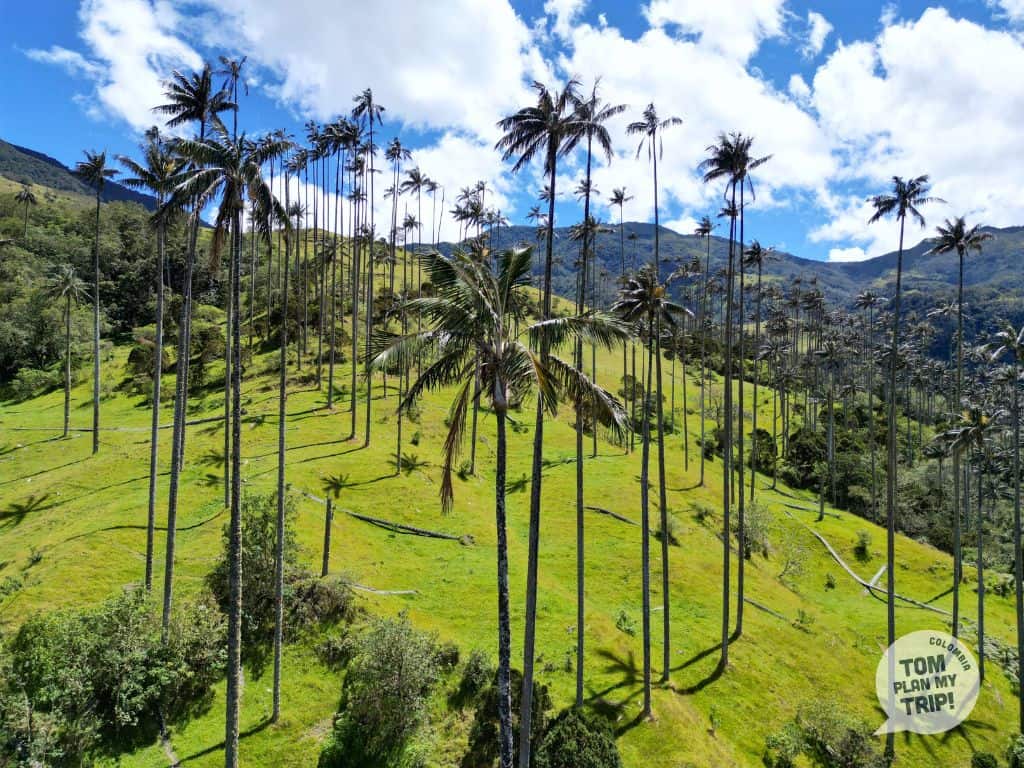
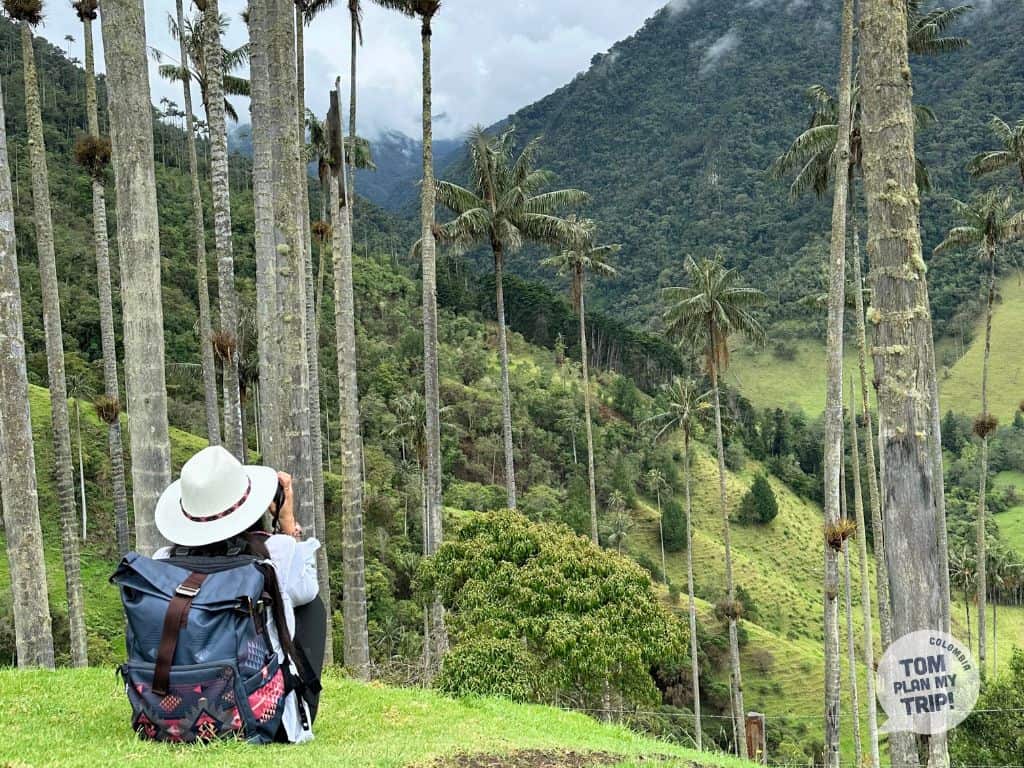
The National tree of Colombia, the wax palm, can reach 60 m. It owes its name to the wax that covers its trunk, once used to make candles. Protected since 1985, it long suffered from the harvesting of its young leaves, now prohibited, for Palm Sunday celebrations.
The most famous site to observe these giants is the Cocora Valley, near Salento, accessible by Willys jeep and very crowded.
The Samaria Valley, near Salamina, offers a more peaceful journey with a guide who explains the different stages of palm growth.
Around Pijao, a 4×4 trip, then on foot, leads to the palms of the hamlet La Palmera.
Finally, in Tolima, Toche is home to a large portion of the country’s palms, now protected within a sanctuary.
With over 1,000 bird species recorded in its cloud forests and páramos, the Andean region promises you beautiful observations wherever you are.
In Jardín, in southwest Antioquia, a reserve at the village’s exit is home to the Andean cock-of-the-rock, and the Ventanas road, which runs along the cloud forest, is ideal for lovely encounters.
Around Manizales, the Río Blanco reserve is known for its antpitta feeders. In the Cocora Valley, near Salento, you will spot the golden-plumed parakeet whose life cycle is linked to the wax palms.
Near Cali, the km 18 area is renowned for observing tanagers and hummingbirds.
Around Bogotá, the cloud forest of Chicaque, the hummingbird observatory of La Calera, and the páramo of Chingaza let you spot different species at different altitudes.
Further south, near Popayán, Puracé Park allows you to see the Andean condor, a symbol of the country: feeding attracts it every morning near a viewpoint.

The Colombian Andes are also home to some large animals that you can observe with a bit of patience and, sometimes, luck.
In the Chingaza park, less than two hours from Bogotá, lives the spectacled bear, the only bear in South America. Shy, it is difficult to see, but a guide will show you its tracks: footprints, scratches on the trunks, nibbled vegetation.
The howler monkey, whose cry is among the most powerful in the animal world, inhabits the forests of Barbas-Bremen, near Filandia, and Otún Quimbaya, near Pereira, where its howls resonate in the early morning.
As for the Andean tapir, you will need a lot of luck to spot it in Los Nevados or in Puracé.

Colombia has 4,270 species of orchids, its national flower, many of which grow in the cloud forests of the Colombian Andes. Some are endemic.
You can’t miss them: many live attached to trunks and branches amidst mosses and other plants related to the pineapple.
Near Manizales, a 3 km trail in the Río Blanco reserve allows you to observe them in their natural environment, and the ecopark of Recinto del Pensamiento offers a guided walk in its orchid forest and an annual exhibition in late February-early March.

THE CULTURE OF THE ANDEAN REGION OF COLOMBIA
Vibrant traditions and contrasting temperaments.
The traditional music of the Colombian Andes, grouped under the name música andina, is played with string instruments: guitar, bandola, cousin of the mandolin, tiple, and requinto, typical small guitars.
The most well-known, the bambuco, is danced during festivals, including one festival dedicated to it every year in Neiva.
In Bogotá, a UNESCO Creative City of Music, the independent scene mixes rock, rap, electro, and reimagined cumbia.
Medellín, where the tango legend Carlos Gardel died in 1935, has embraced this music, especially in the Manrique neighborhood, and has seen the rise of reggaeton stars J Balvin, Maluma, and Karol G.
Further south, Cali lives to the rhythm of salsa, known for its fast and precise footwork.

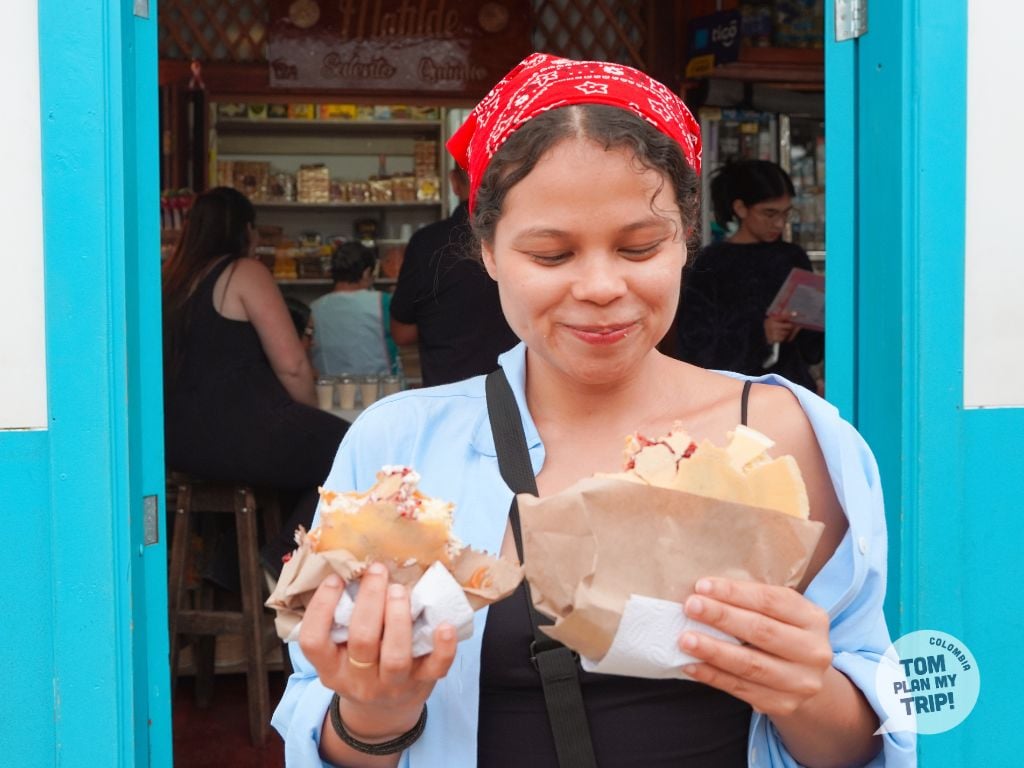
Inherited from peasant traditions and blended with indigenous and Spanish influences, the Andean cuisine is hearty, mildly spiced, and varies from one department to another.
On the high plateaus of Bogotá and Boyacá, people eat ajiaco, a potato and chicken soup flavored with guasca, an Andean herb.
In Antioquia and in the coffee region, the bandeja paisa, an old muleteer’s dish, combines red beans, rice, meats, egg, arepa, avocado, and plantain.
Tolima and Huila reserve lechona, stuffed and roasted pig, for celebrations.
Santander serves cabro con pepitoria, goat with rice and offal, and mute, a thick soup of corn and tripe.
In the south, Popayán, distinguished by UNESCO for its gastronomy, is famous for its empanadas de pipián, and in Nariño one can enjoy cuy, a roasted guinea pig, served during family meals.

In the Andes, the festivals punctuate the year.
Pasto opens the festivities at the beginning of January with the Carnival of Negros y Blancos, listed as UNESCO intangible heritage, which celebrates the diversity and equality between the indigenous, African, and Spanish cultures.
The Holy Week processions in Popayán are also recognized by UNESCO.
In June, during the San Juan and San Pedro festivals, Neiva celebrates the bambuco and the sanjuanero, its festive variant, danced in pairs.
At the end of July and beginning of August, Medellín celebrates its Feria de las Flores, with the parade of silleteros carrying impressive floral arrangements on their backs.
In August, the sky of Villa de Leyva fills with kites. In Bogotá, Rock al Parque gathers more than 300,000 spectators every year, for free.
Finally, from December 25 to 30, Cali ends the year in salsa with its Feria, inaugurated by the Salsódromo, a parade of a thousand dancers.

Welcoming and helpful, the Colombians do not have the same character from one place to another.
In Antioquia and in the coffee region, the paisas have a reputation for being very kind, hardworking, and enterprising.
On the high plateaus, the Bogotanos, nicknamed rolos, seem more reserved and formal in a cosmopolitan and student-filled capital where cultural life plays a central role. The Boyacenses are naturally shy but friendly. In neighboring Santander, people seem discreet at first, then warm and straightforward.
Heading down towards Cali, the atmosphere changes again: the Caleños are known for loving parties and living to the rhythm of salsa.
Further south, Cauca and Nariño have a significant indigenous population, notably the Nasa and Pastos, and residents who are quite reserved.

© Tomplanmytrip
WHERE TO STAY IN THE ANDEAN REGION OF COLOMBIA
Between colonial charm and pure nature
In the villages of the Colombian Andes, some colonial buildings have been transformed into hotels with a few rooms, usually organized around a patio. I find them incredibly charming.
Mostly located just steps from the main square and built with local materials, boutique hotels reflect the village style: whitewashed rammed earth walls in Barichara, colorful houses with wooden balconies in Jericó and Jardín, or white walls and green woodwork in Villa de Leyva.
A cozy atmosphere, traditional furniture, carefully crafted decoration, attentive but not intrusive service, local products on the breakfast table: everything is done to make you feel good.

Fall asleep to the sound of the river, be awakened by the birds: the eco-hotels of the Andes focus on immersion. Their mission is to minimize their impact on the environment: local materials, few rooms, cuisine based on products from the garden, connections with neighboring communities.
In San Rafael, in Antioquia, lodges are set up along rivers with crystal-clear waters, featuring natural pools for swimming.
In the cloud forest, around Cali or in Caldas, others have focused their concept on bird watching, with feeders and guides on site.
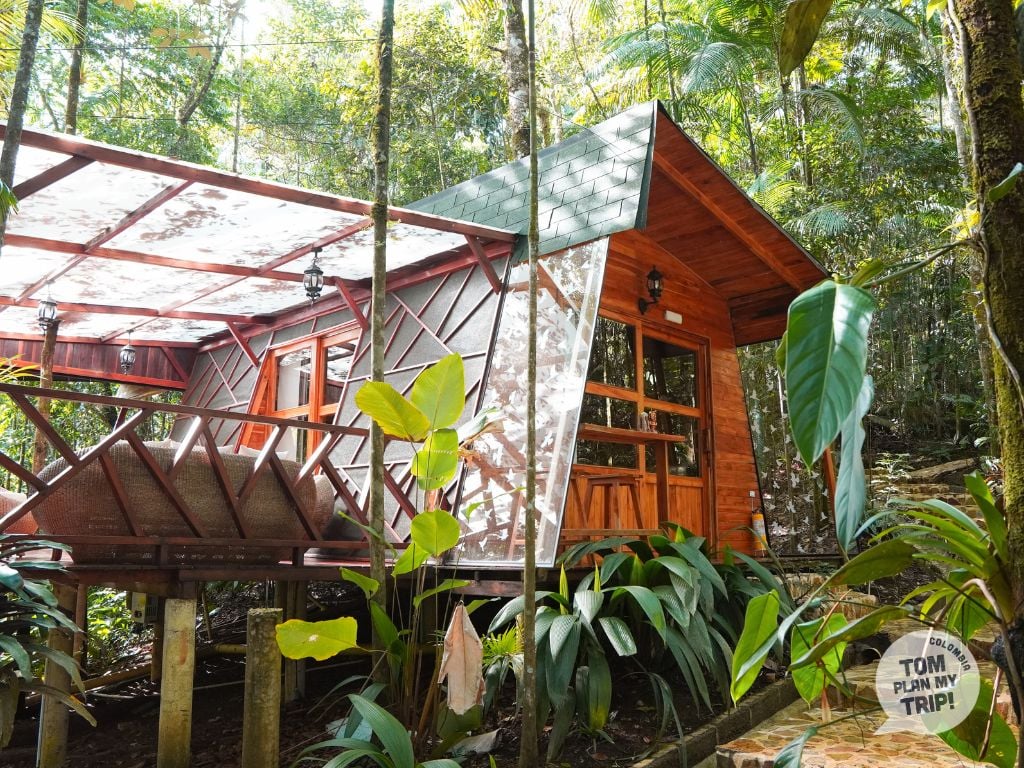
Sleeping in a coffee finca means sharing the daily life of a family of coffee growers in a rustic and soothing atmosphere.
The houses, often built with bahareque, a traditional technique mixing bamboo and clay, and topped with tiles, are nestled in the heart of lush hills covered with coffee trees. Their galleries open onto gardens and orchards.
In the morning, you wake up to the sound of birds singing and enjoy some typical dishes made from farm products with the family.
Some fincas are modest and intimate, others more comfortable. They are mainly found in the coffee region, but also in Antioquia, Huila, and Santander.
And of course, your hosts will invite you to discover their farm and taste their coffee.

Glamping has been a strong trend in Colombia for a few years. Domes, safari-style tents, treehouses, or transparent bubbles: these accommodations are always set in the middle of nature, often with a superb view of the mountains, a lake, or a valley.
The landscapes of the Colombian Andes lend themselves particularly well to this concept: around Bogotá, in Boyacá, on the edge of the Tota lagoon, in Antioquia, on the shores of Lake Guatapé, perched above the canyon in Barichara, or even near the Cocora Valley, in the coolness of the cloud forests.
Not all are equal, and the comfort doesn’t always match the price. Choose wisely, check accessibility (many are isolated), and plan to bring something to cover yourself for the cool evenings.

Volcanic activity in the Colombian Andes generates numerous thermal springs, some of which are exploited by thermal establishments.
In Santa Rosa de Cabal, in the coffee region, you can bathe at the foot of a large waterfall, in water at about 40 °C. Higher up, the San Vicente hot springs, located in a humid forest at over 2,200 m altitude, offer cabins, some with a private pool.
Near Manizales, at the Ruiz hot springs, you can take a hot bath at altitude, among the hummingbirds. Finally, in Boyacá, Paipa, nicknamed the capital of the country’s hot springs, has several thermal hotels.
For more tranquility, choose weekdays over weekends and holidays.


© Tomplanmytrip
TRANSPORTATION IN THE ANDEAN REGION OF COLOMBIA
From the plane to the chiva.
To connect the major cities in the Andes, flying remains the fastest solution. Bogotá, Medellín, whose international airport is located in Rionegro, and Cali are the best served.
Pereira, Armenia, Manizales, Bucaramanga, Popayán, Neiva, and Pasto also have their own airports, which can save you from long journeys by road.
Medellín has a second airport, Olaya Herrera, in the city center, from where small planes depart for regional destinations.
Morning fog and, in Manizales, ash from Nevado del Ruiz regularly cause delays, or even airport closures. I therefore advise you to allow extra time and avoid connecting with an international flight on the same day.
A wise tip: by choosing a coherent itinerary, you will avoid multiplying flights and round trips and make a small gesture for the planet.

The car remains another means of transportation, but know that in the Andes, distances are measured in hours rather than kilometers.
The roads are winding, trucks slow down traffic, and during the rainy season, landslides can interrupt it for several hours. Always plan for a buffer, especially if you’re connecting with a flight.
Private transport can save you time and avoid stress: the driver knows the roads, takes you directly to your destination, and stops whenever you wish.
If you want more freedom, you can also rent a car. Prices are not the most competitive and, depending on the region, some roads are dirt and sometimes in poor condition.

Economical and available throughout the country, the bus allows you to reach almost any corner of the Andes.
For long distances, choose a reliable company, like Bolivariano, Copetran, or Rápido Ochoa, whose large buses are comfortable, with reclining seats and air conditioning.
For trips of nine hours or more, don’t hesitate to take a night bus: you save a day and a night in a hotel. Remember to bring something to cover yourself; the air conditioning is often set to the maximum. Keep your valuables in the bag you keep with you.
In general, booking is unnecessary, except on public holidays and during Colombian vacations.
For short trips, you can take a colectivo. These minibusses leave once full and connect the villages during the day. They make numerous stops and drop you off wherever you want. Comfort remains basic, and space for luggage is limited, so keep that in mind if your bag is bulky.

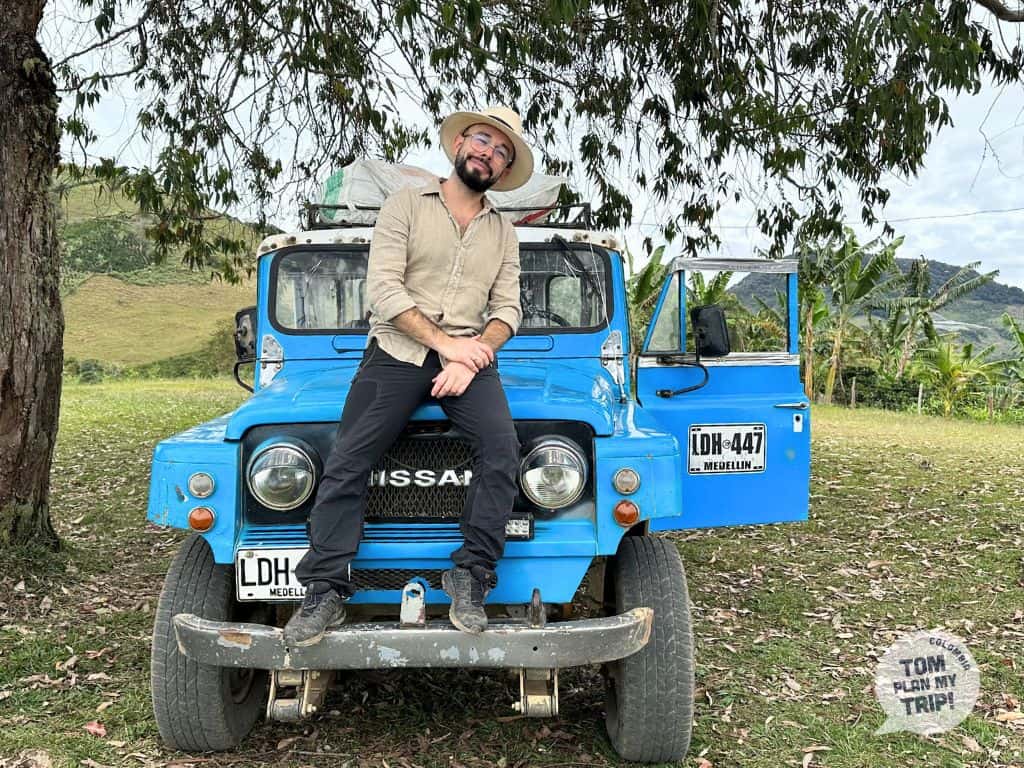
On the mountain roads of the coffee region, it is impossible not to notice the brightly colored Willys Jeeps, loaded with sacks of coffee and passengers.
Arriving in Colombia in 1946 and now recognized as a cultural heritage of the Nation, this sturdy model gradually replaced the mule on the steep paths connecting the coffee plantations to the villages.
In the coffee region, they serve as colectivos. You will find them stationed in the square of Salento, ready to take you to the Cocora Valley, Filandia, or the surrounding fincas. From Filandia, they also serve the veredas (hamlets) in the surrounding area.
Elsewhere in the Colombian Andes, like in Jardín or Jericó, there are other jeeps, just as durable, that carry passengers and harvest bags.
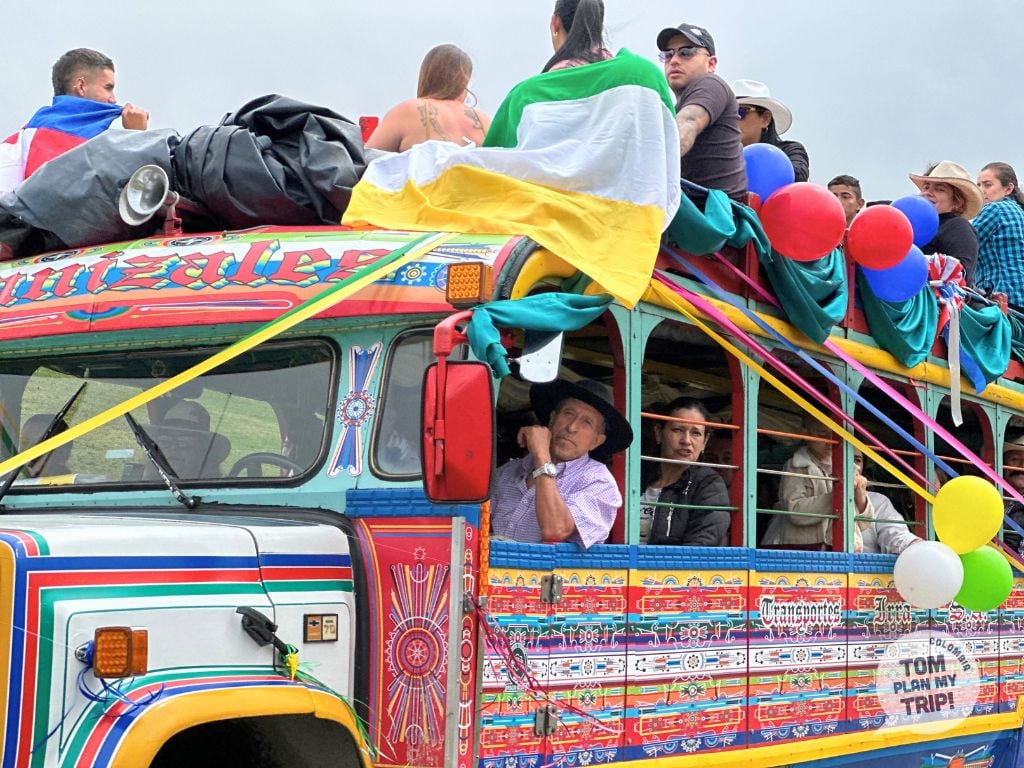
Born in Antioquia at the beginning of the 20th century, the chiva is a truck converted into a bus. Open on the sides, its wooden body is painted in bright colors, and its interior features simple wooden benches.
Climbing up requires a bit of agility. A ladder at the back allows you to hoist harvest or shopping bags, as well as luggage, onto the roof.
In southwest Antioquia, around the Andes, Jardín or Jericó, the chiva still connects the villages and the veredas via dirt tracks.
You travel crammed against your travel companions, sometimes in the company of animals, tossed at every rut, the music blaring, and you swallow a lot of dust. Exotic but nothing folkloric, you share the daily journey of the locals through the countryside. Personally, I love it.

© Tomplanmytrip
TIPS FOR TRAVELING IN THE ANDEAN REGION OF COLOMBIA
Dealing with the Andean terrain and a note on safety.
Lush valleys, colonial villages, páramos, canyons, coffee farms: the Andean region is simply incredible. Be careful of the trap of wanting to see everything in a single trip.
The mountainous terrain, the winding roads, and their condition are crucial for the duration of travel. Don’t rely on the kilometers shown on a map: they can quickly turn into several hours of driving.
My advice: choose one or two areas that attract you and take the time to explore them. By staying a few days in the same place, you can immerse yourself in the atmosphere, talk with the locals, and explore the surroundings on foot.
Medellín and Antioquia easily connect with the coffee region, or the villages of the coffee region, with a trek in Los Nevados starting from Salento or Pereira, or even Bogotá, before discovering Boyacá, then continuing to Santander.
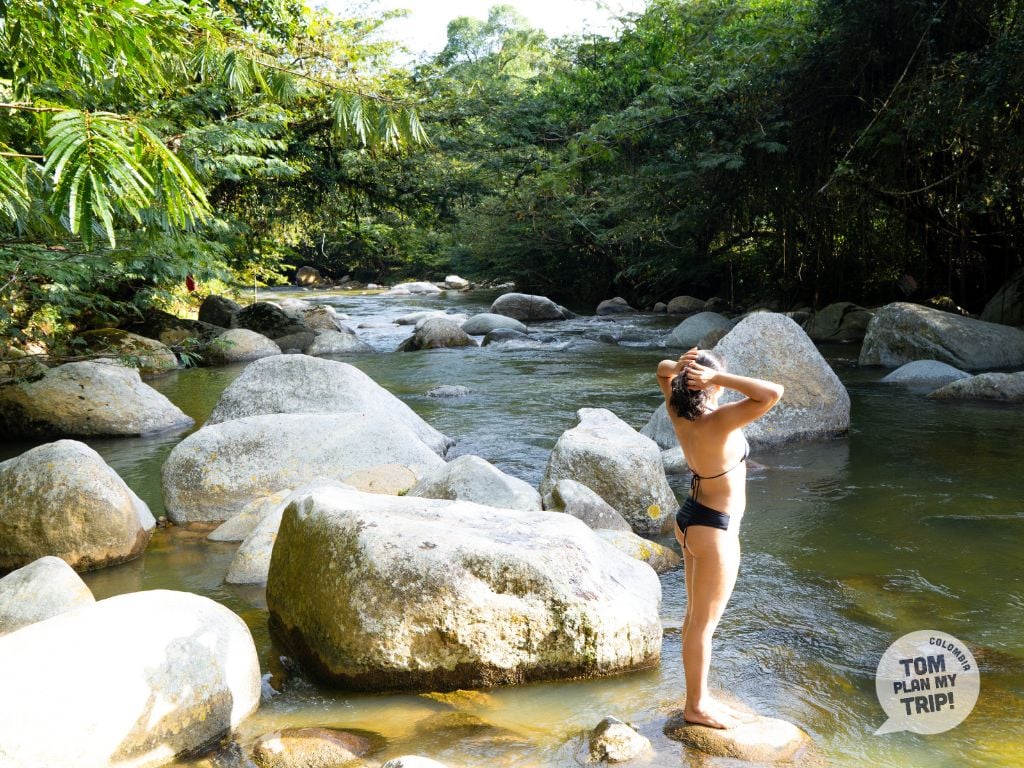
Don’t spend most of your stay in Bogotá or Medellín. A few days are enough to feel their energy and understand the country’s history. The highlight of the Andean region is its countryside and nature.
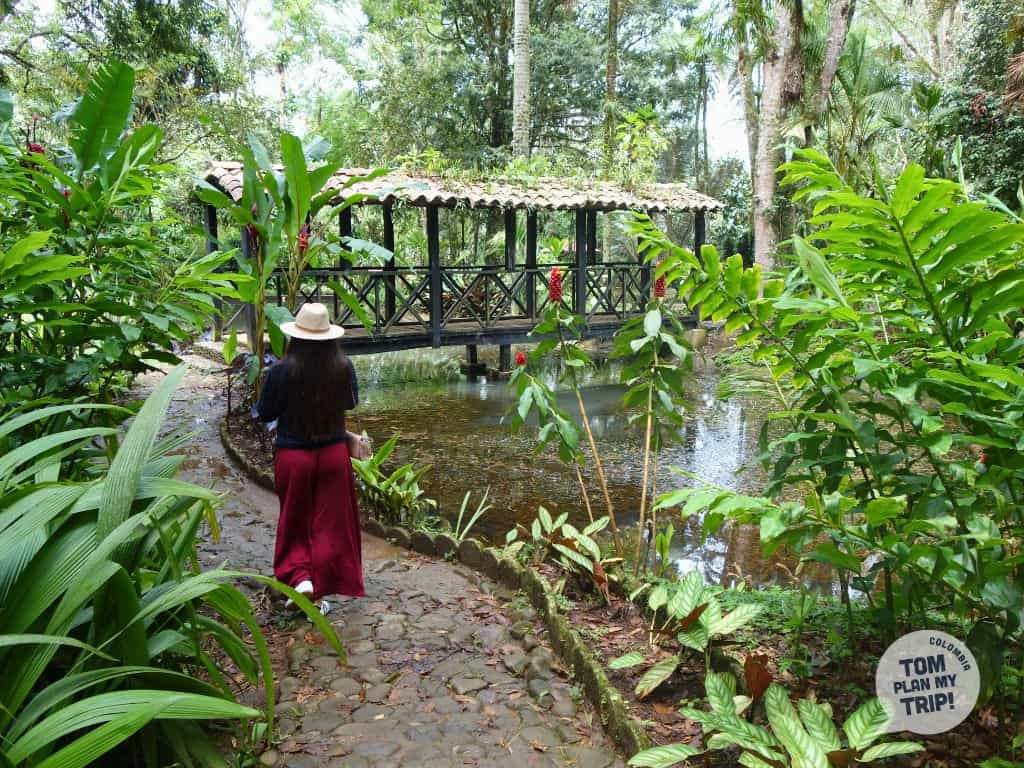
Once out of the cities, you cross valleys covered with coffee plants and banana trees, high-altitude pastures, and cloud forests.
Choose a village like Jericó, Salamina, or Monguí to drop your bag and explore the surroundings. Take the time to savor a good coffee in the square before taking the paths that lead into the countryside: they take you to a finca, a waterfall, a viewpoint, a river where you can swim, or the first trails of the páramos.
In the evening, back in the village, have dinner with a local dish and mingle with locals over a card game in a café on the square.
A simple way to experience the Colombian Andes, which you will remember for a long time.
In the Colombian Andes, you spend most of your stay at altitude.
Medellín is located at 1,500 m, Bogotá at 2,640 m, many villages are perched above 2,000 m, like Villa de Leyva, and the páramos reach up to 4,500 m.
Above about 2,500 m, altitude sickness can manifest as headaches, shortness of breath, or fatigue, especially on the second day. Gain altitude in stages, stay hydrated, limit alcohol, and pace your efforts according to your schedule.
The treks of Cocuy and Los Nevados require one or two nights of acclimatization.
The proximity to the equator combines with the effects of altitude: the sun is strong, even in cool or cloudy weather. Sunburns happen quickly without you realizing it. Never go out without sunscreen, sunglasses, and a hat.
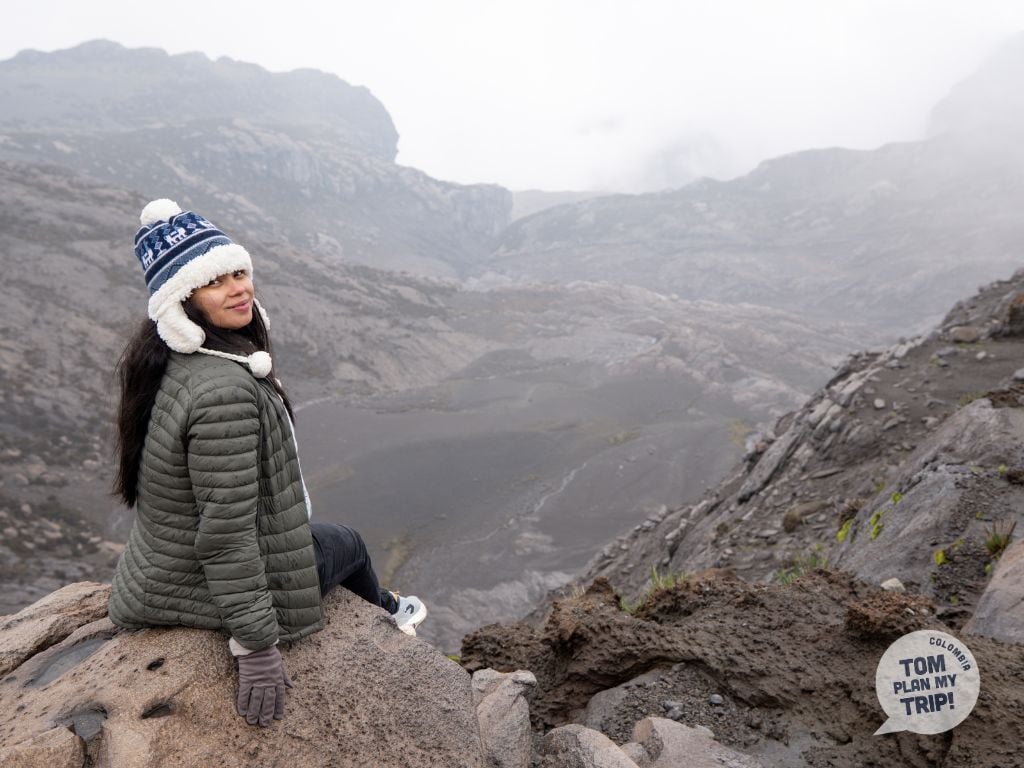
Don’t fill your suitcase only with shorts and T-shirts. They will be useful in the hot valleys, like the Chicamocha Canyon or Huila, but at altitude it is often cool, and temperatures change quickly throughout the day.
In Bogotá, you can experience temperatures from below 10°C in the early morning to 20°C in the afternoon, and the evenings become cool again, especially since houses and hotels are rarely heated.
Bring suitable shoes if you plan to walk, as the trails can be muddy and slippery after rain.
The rain usually falls in the afternoon, so take advantage of the mornings, which are clearer, to hike or go on an excursion.
If you are planning a trek in the high mountains, bring warm waterproof clothing and dress in layers: a T-shirt, a sweater or fleece, and a waterproof jacket that you add or remove depending on the time and altitude. Remember to bring good walking shoes.

Yes, you can visit the Andean region with complete peace of mind. But don’t venture just anywhere.
Avoid isolated rural areas far from places frequented by travelers. This is the case for some remote countryside in the southern Colombian Andes. Before leaving, read the travel advice from your country, without panicking: they are often stricter than the reality on the ground, which changes quickly. On site, ask locals or your hotel; they know what’s happening in their area.
In big cities like Bogotá or Medellín, the main risk remains petty crime: pickpockets in crowds, snatch theft. Stay attentive and adopt basic precautions. In the evening, take an Uber as soon as you leave the lively neighborhoods.
In the tourist villages, on the other hand, you can relax. They are usually very safe and, in the evening, you will mostly encounter families in the square.
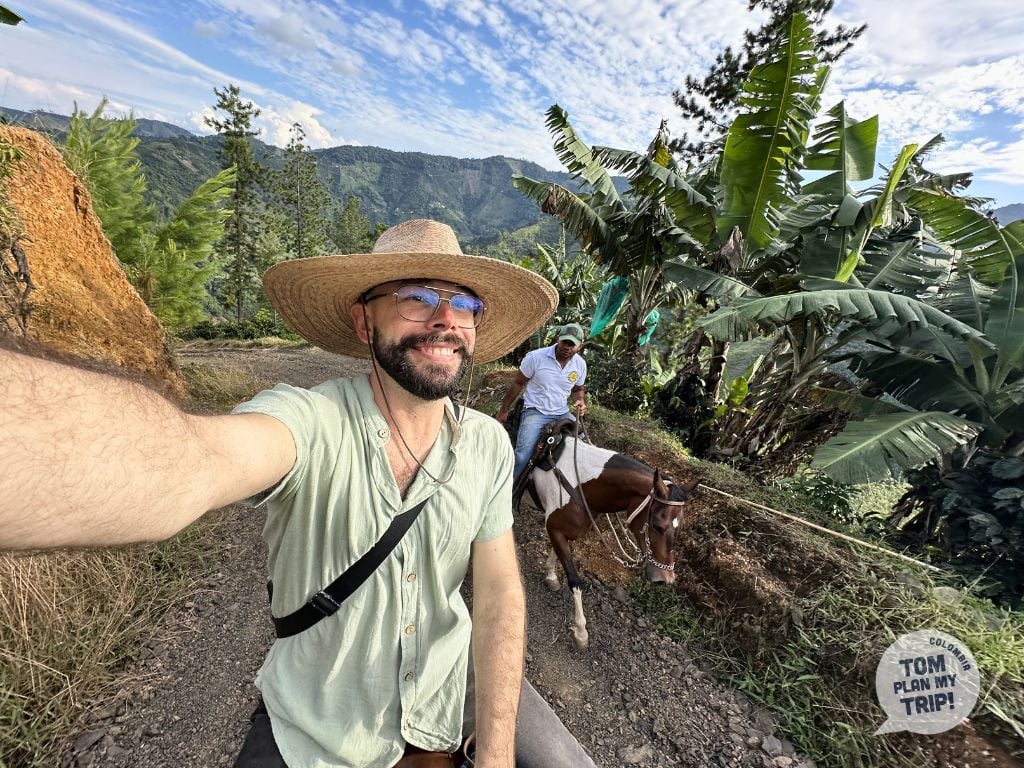
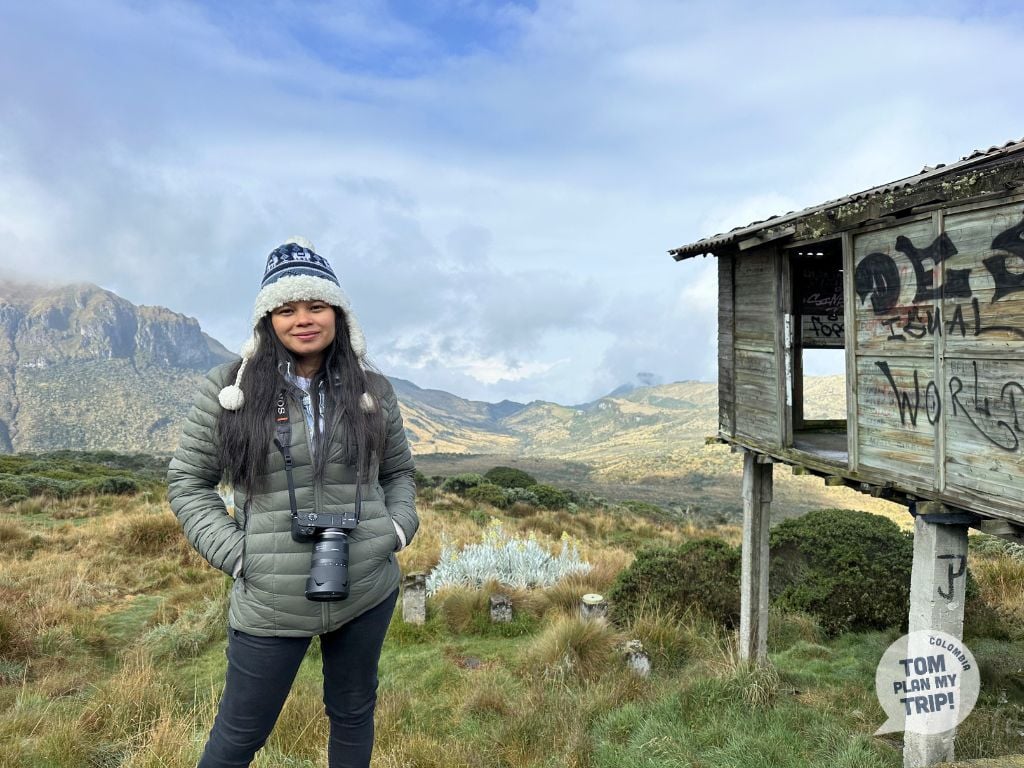
© Tomplanmytrip
+185 five-star reviews on Google Maps

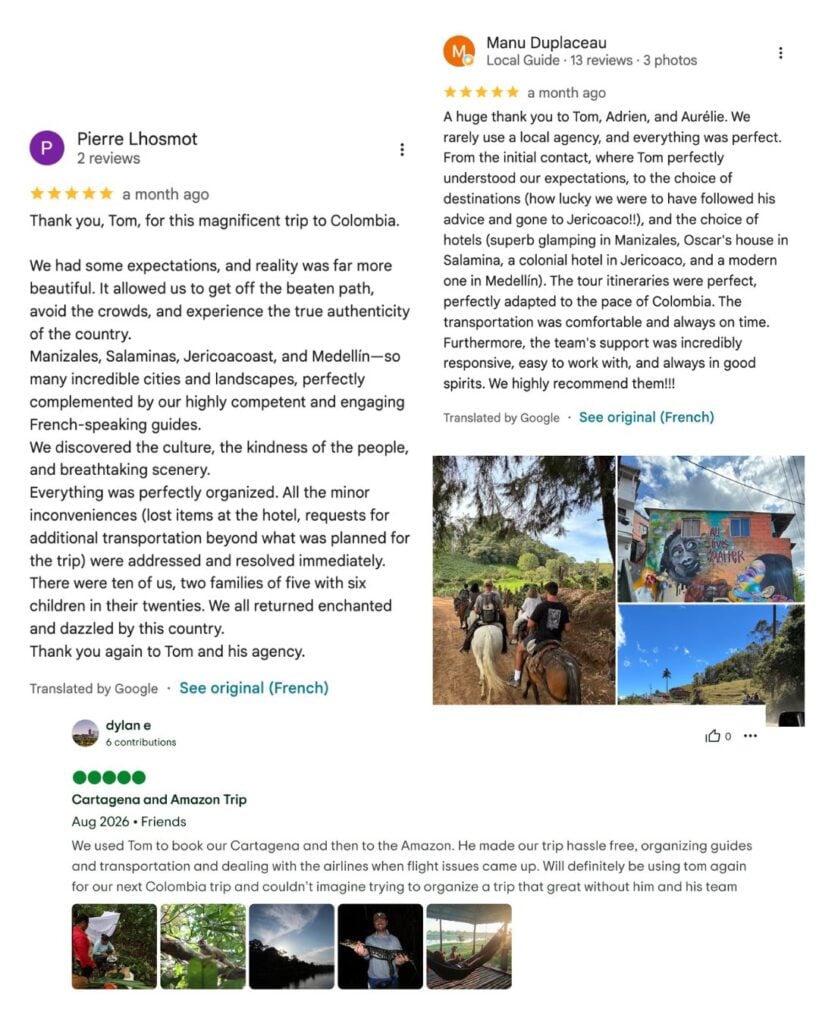
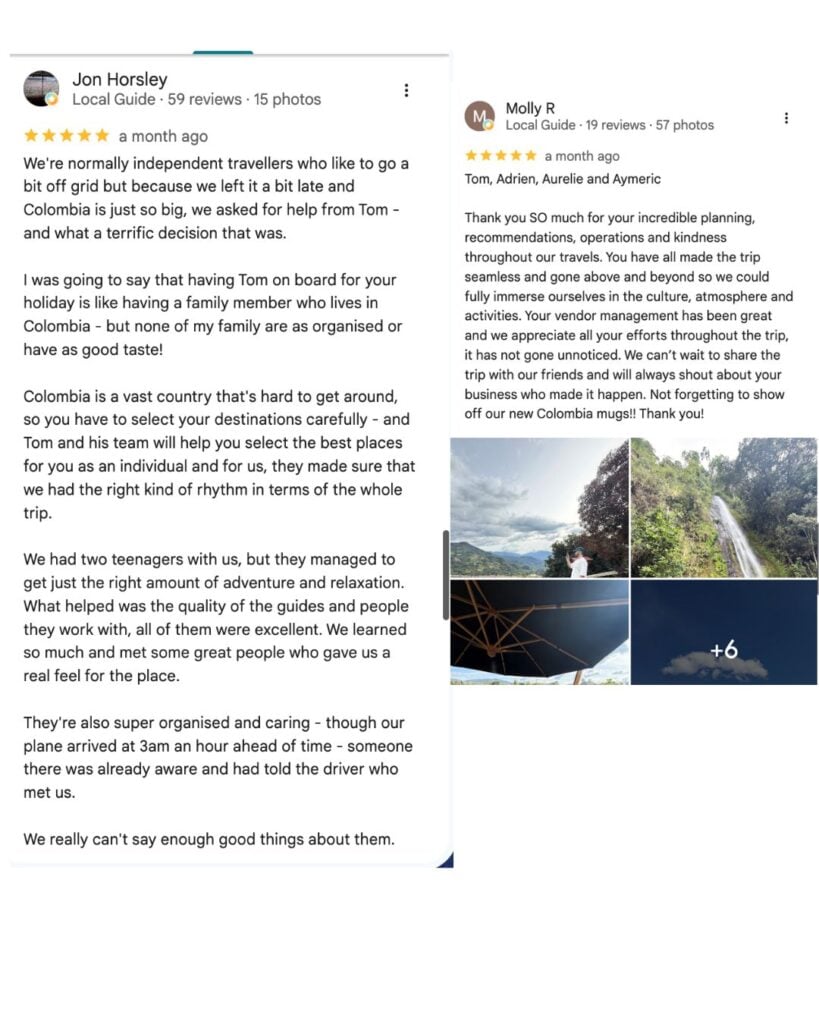
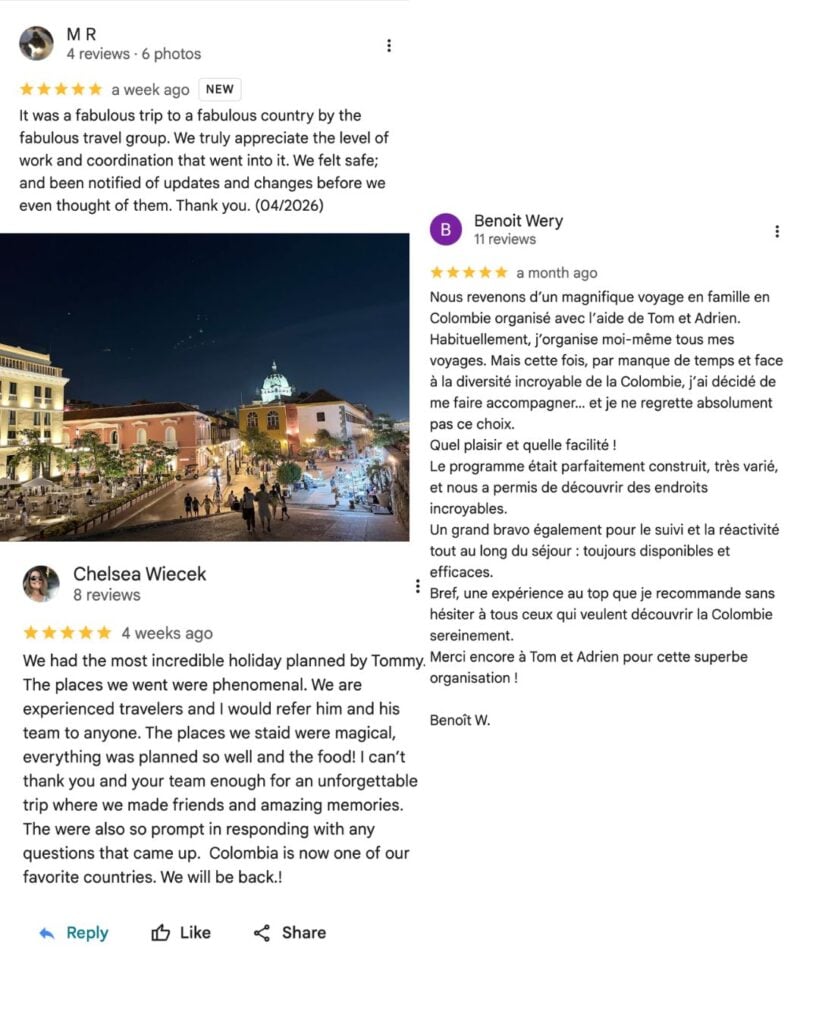
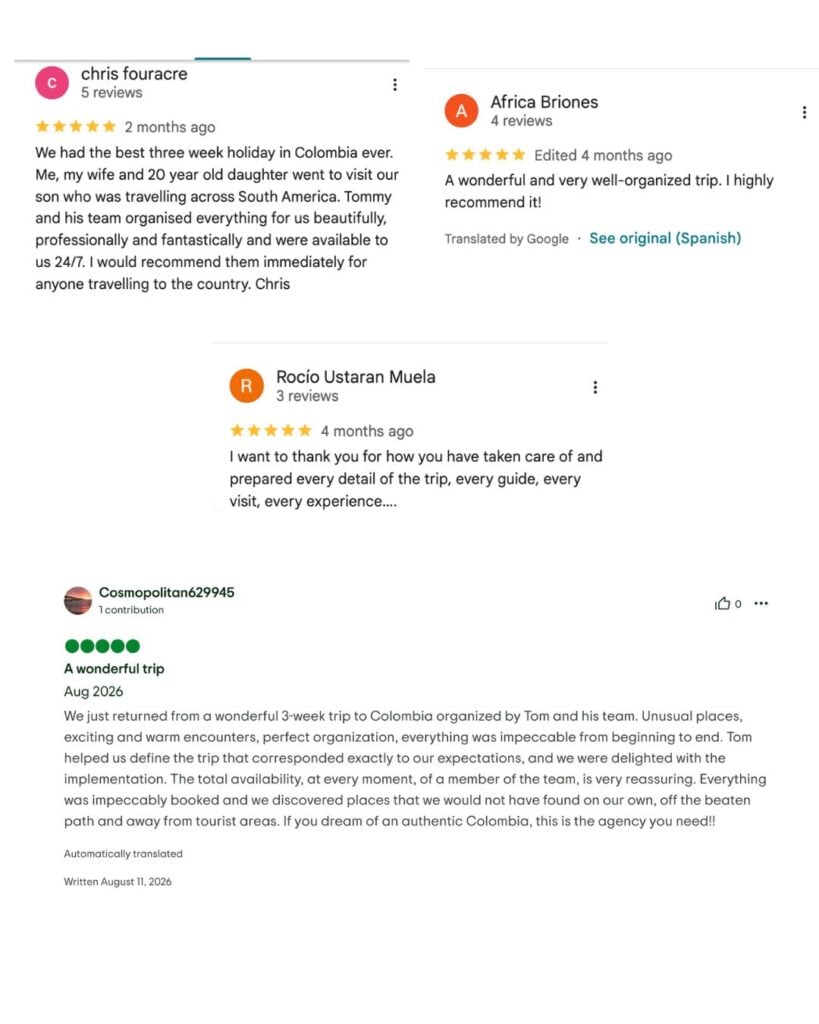
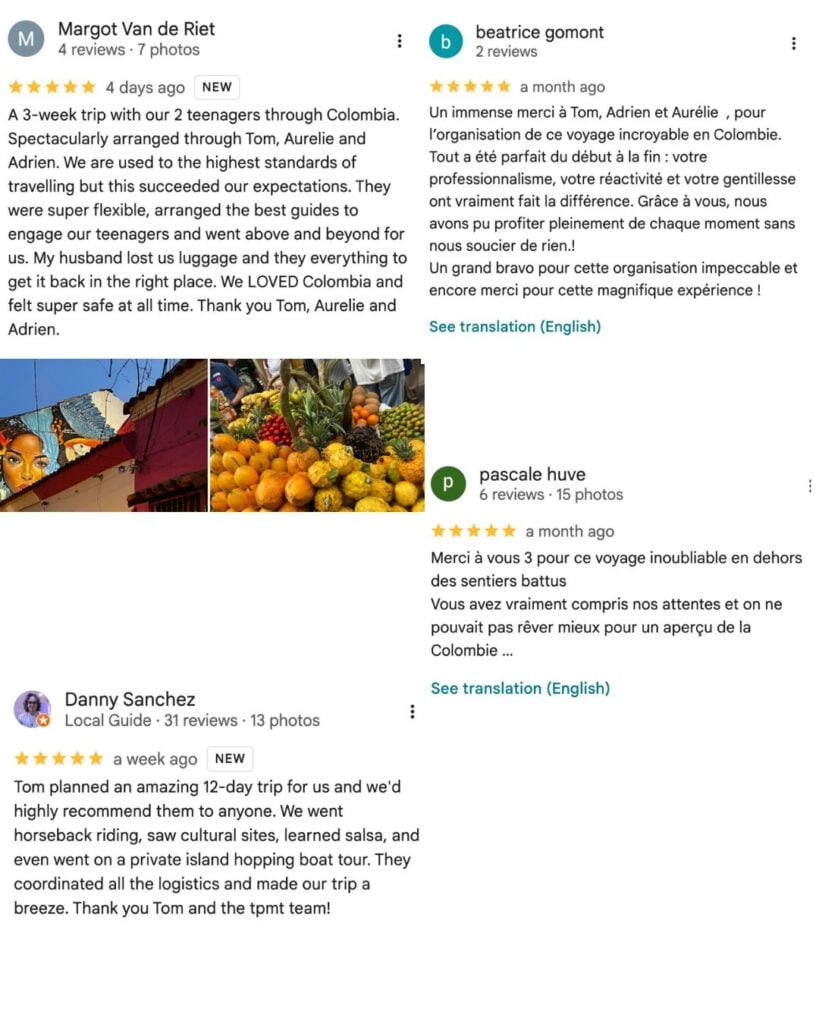

No more cookie-cutter trips made for the average family
“Usually, I don’t go through a travel agency. But for Colombia, I needed help — and this agency transformed my experience in this country.”
That’s the kind of review our travelers leave us. Instead of second-guessing yourself and putting off decisions, let us plan your trip. Unforgettable memories guaranteed.
What type of trip suits you?
Every trip is unique, but you might see yourself in one of these themes.
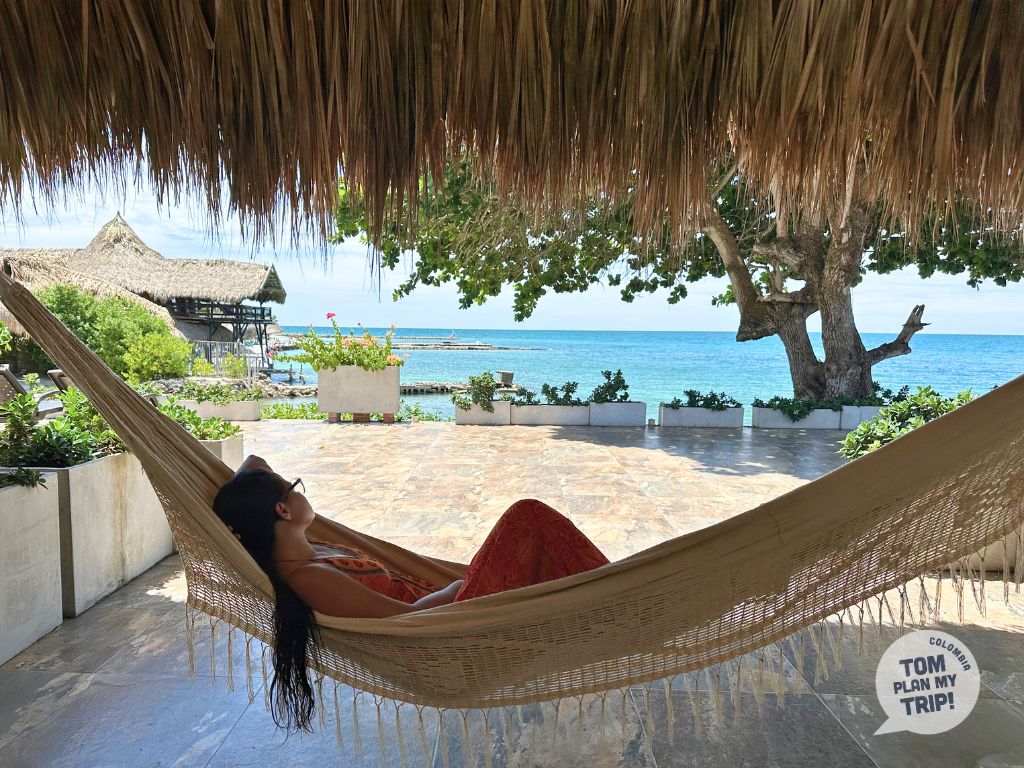
LAID-BACK
Your vacation doesn’t have to be 100% beach or 100% exploring. With our 11 years in Colombia, we plan your ideal trip so you can discover the country without rushing around. The best way to travel and recharge at the same time.
Learn more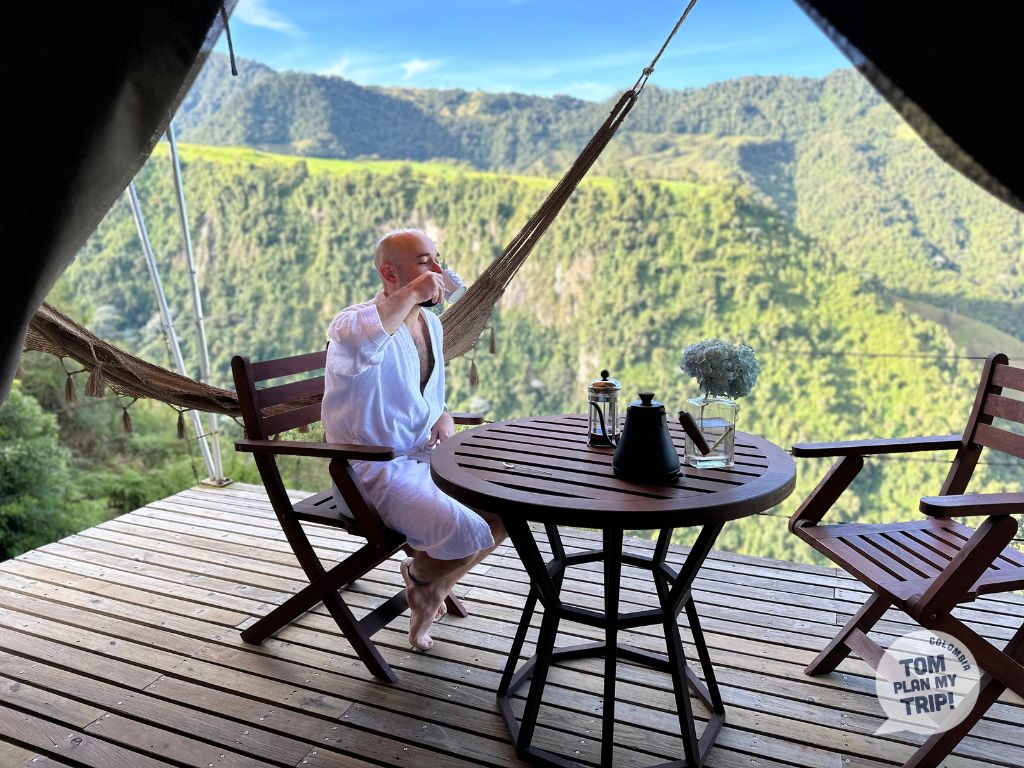
PREMIUM
You love beautiful places to stay and extraordinary experiences, but not cookie-cutter luxury? Drawing on our 11 years of exploring, we plan a premium trip so you can experience the most spectacular side of the country, in the best possible conditions.
Learn more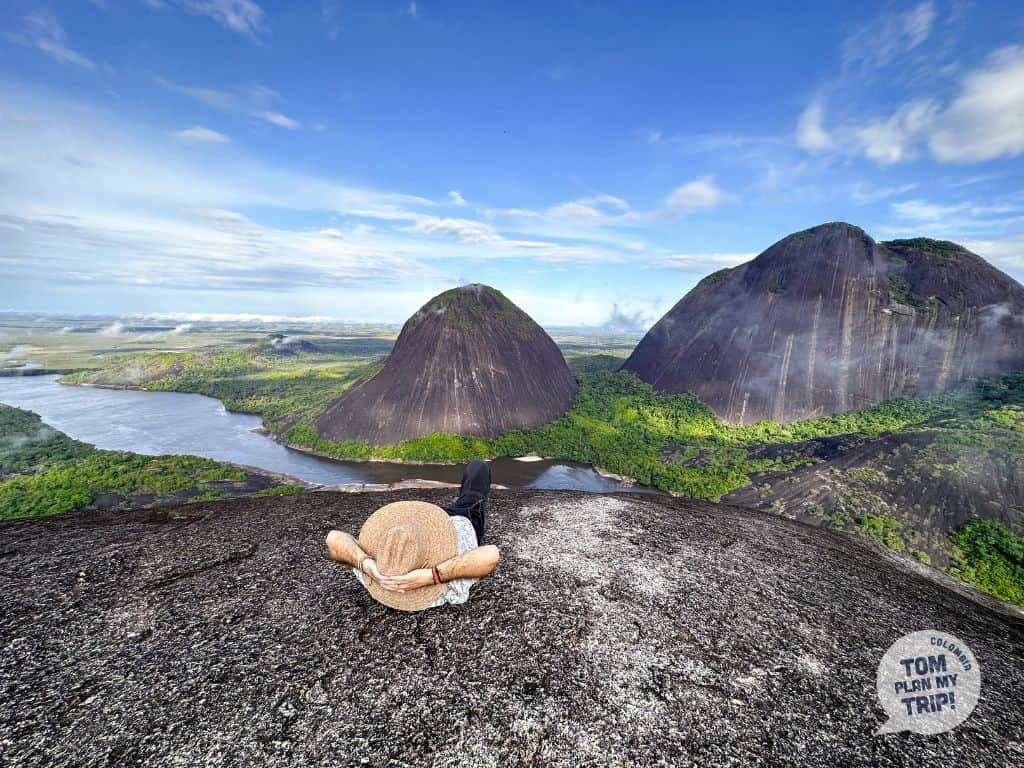
ADVENTURE
Not interested in the Colombia everyone already knows? Set off exploring with your loved ones and share unforgettable moments, with that feeling of being on another planet. All backed by our 11 years exploring the country.
Learn moreWhat our clients say
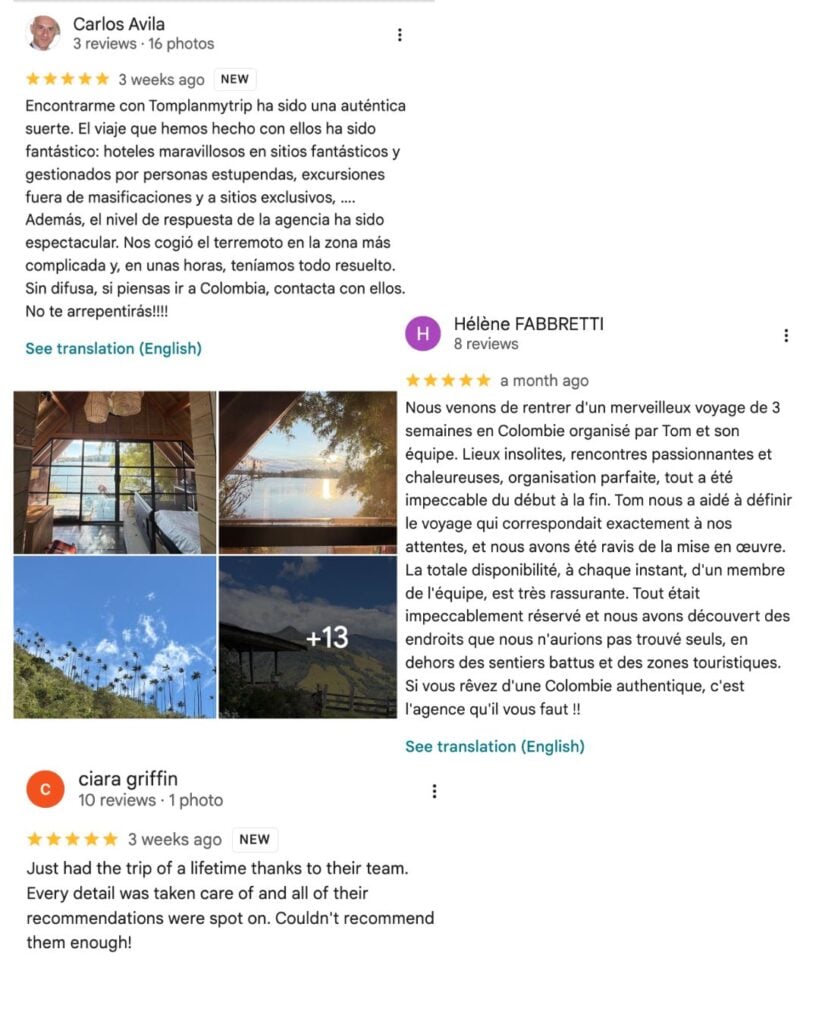
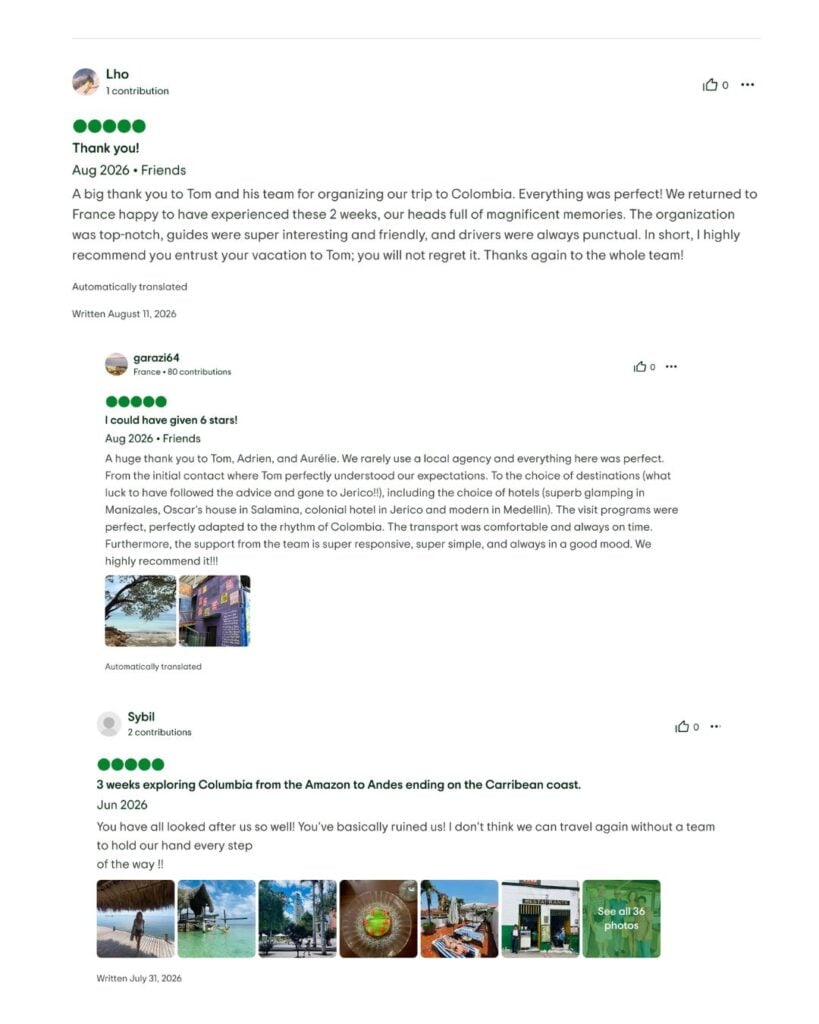
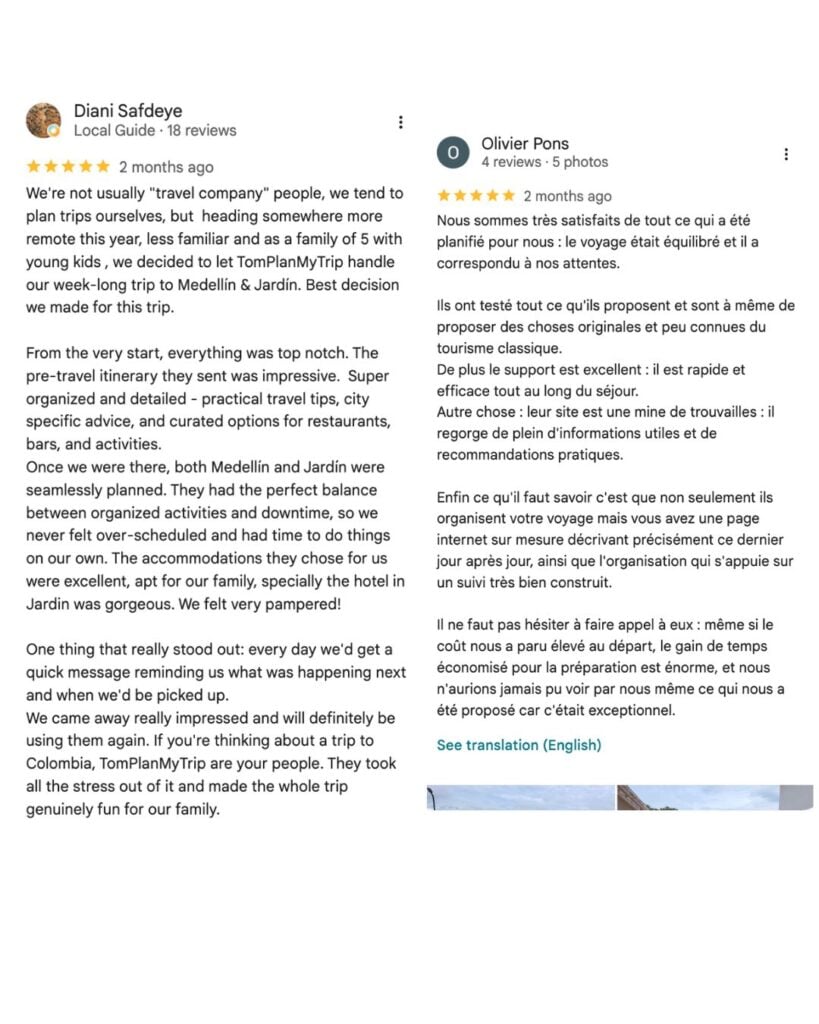
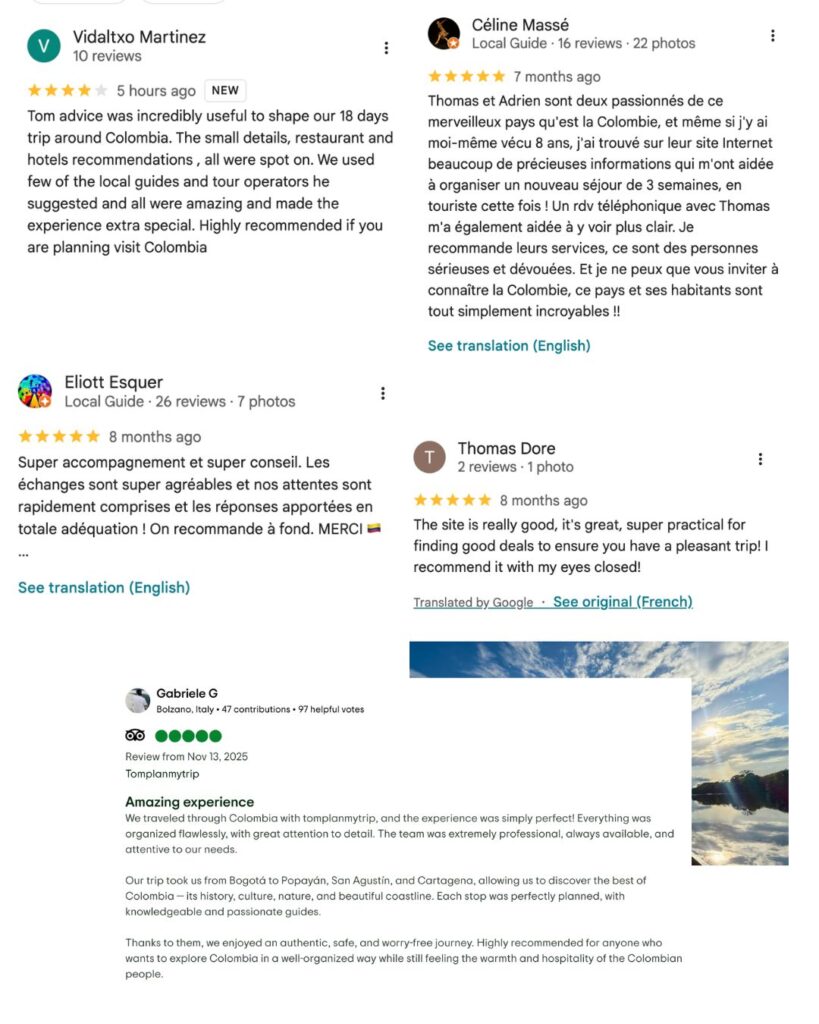
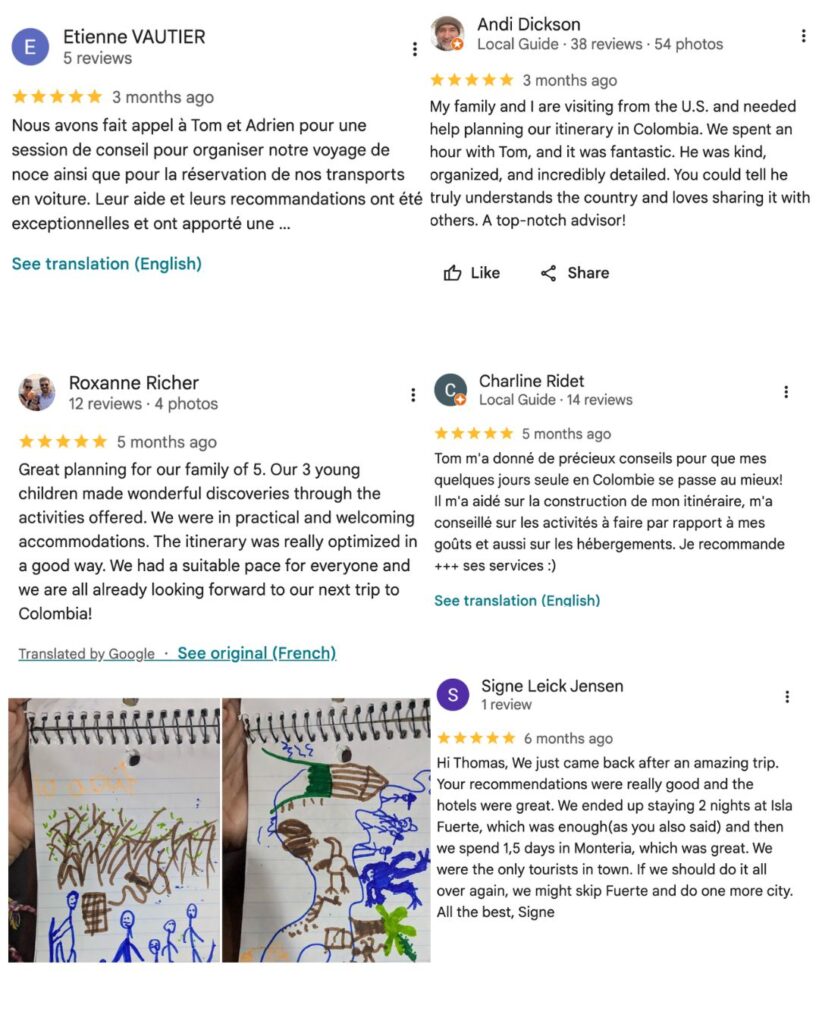
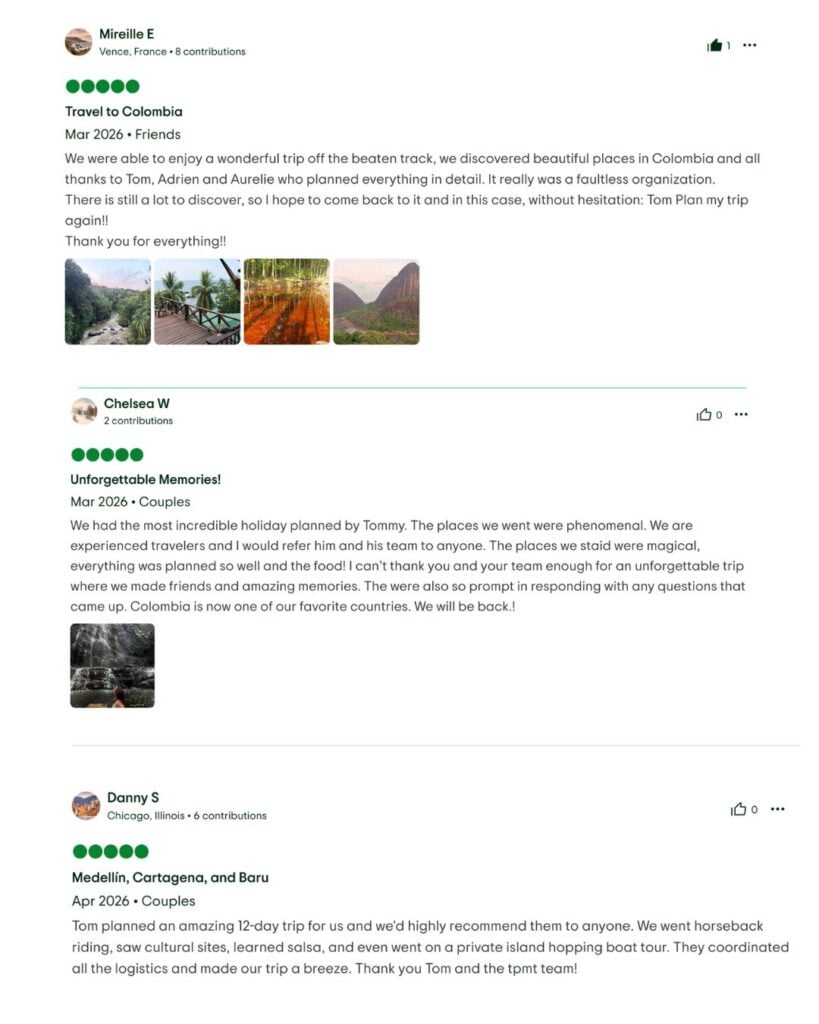
To inspire you
Select a Region of Colombia


Western Caribbean Coast
Colombian Destinations Listed Alphabetically
Places from A to I
Places from J to P
Places from R to Z
Follow us on Instagram!


Our secret to actually enjoying your Colombia vacation
Colombia is twice the size of France. There’s no point trying to see it all in 15 days. Our trips distill 11 years of boots-on-the-ground exploration into the essentials: the very best of the country, without the stress of racing around.
